Drift Lesson in Tokyo: Find a Class or Course - Ebisu Circuit School
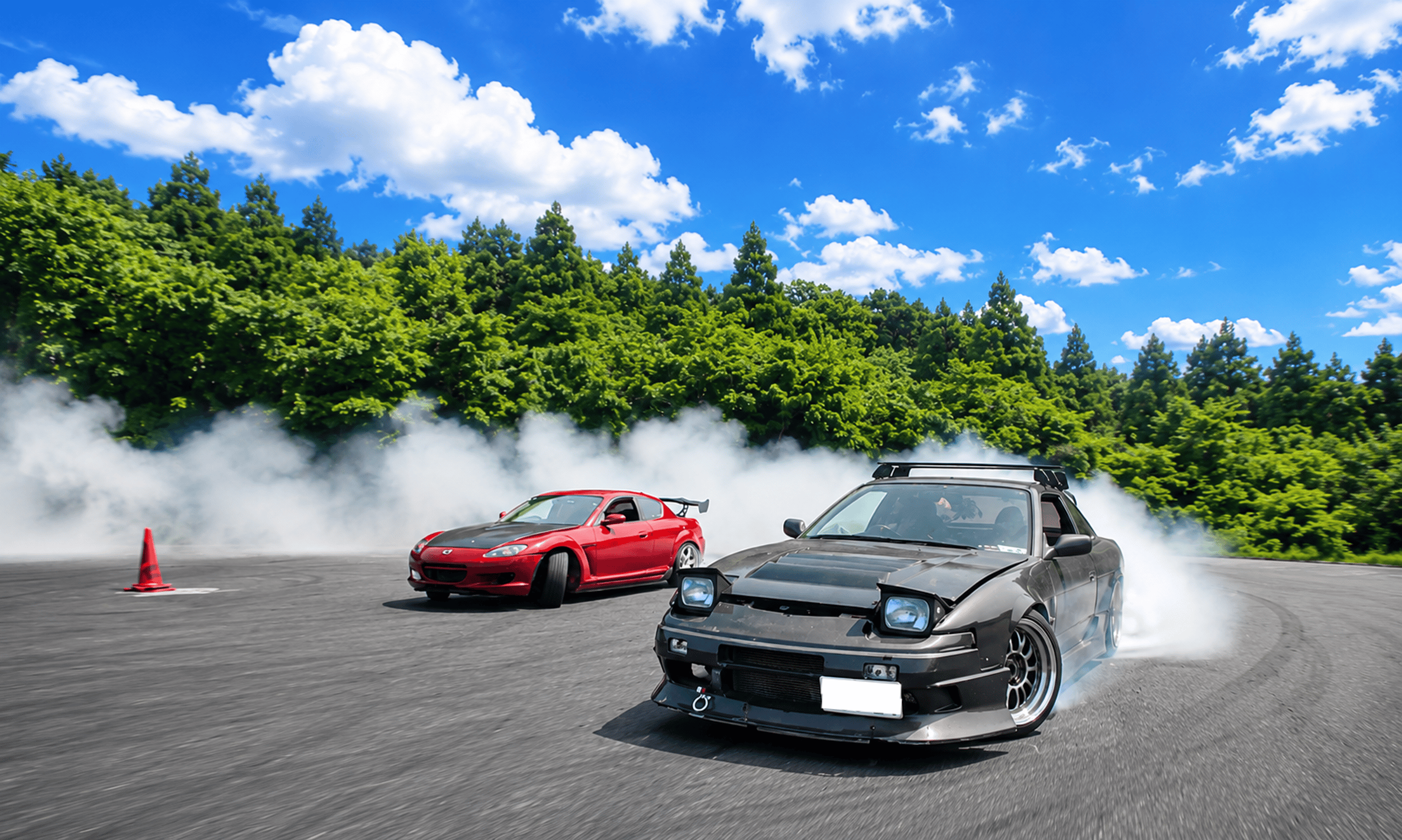
Learn to drift for real, with your own hands on the wheel. Take a private 3-hour lesson with an OG drift pro, master a donut or figure 8, and finish with a high-skill passenger run. Free Tokyo pickup, helmets and gloves included. Book your lesson today.
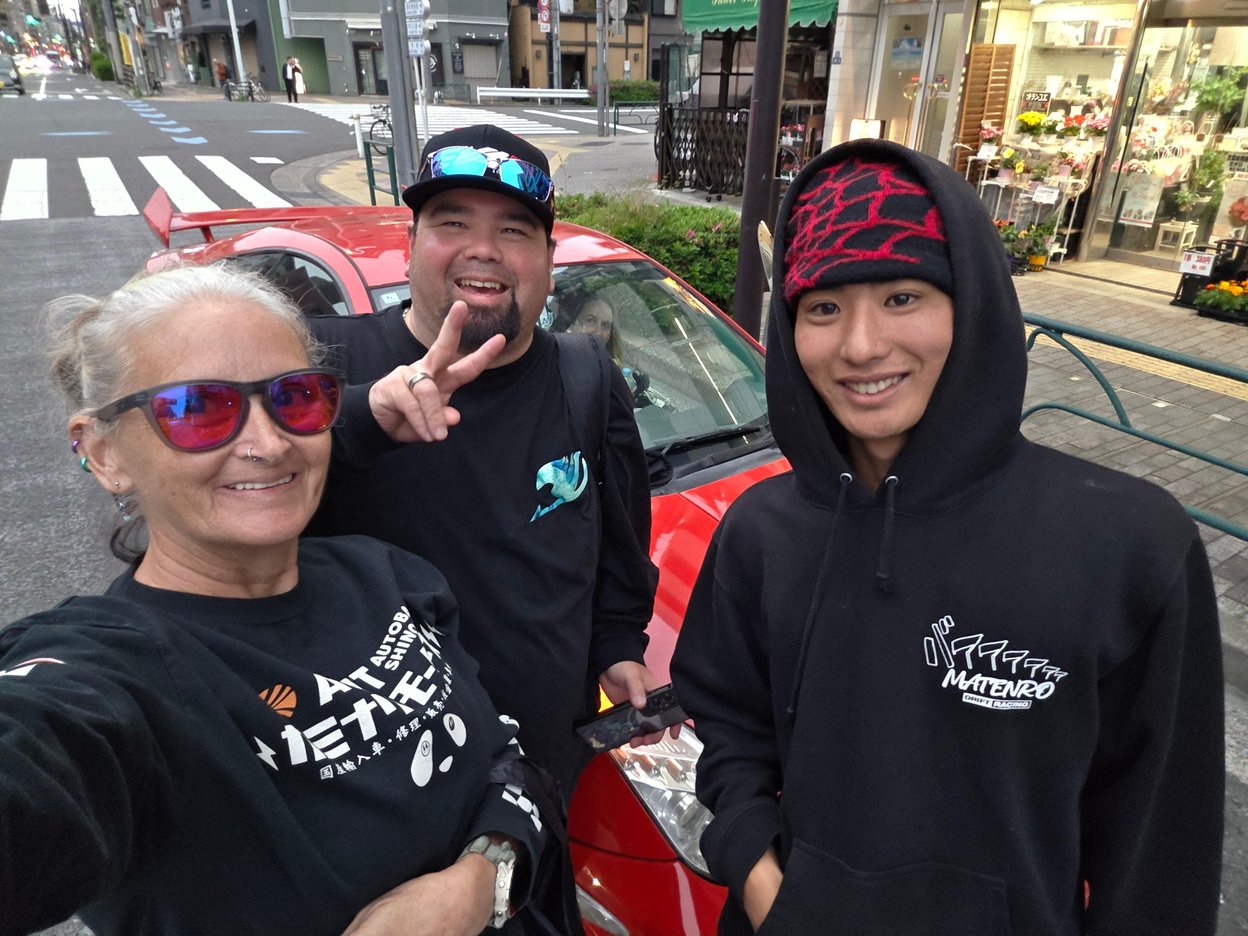
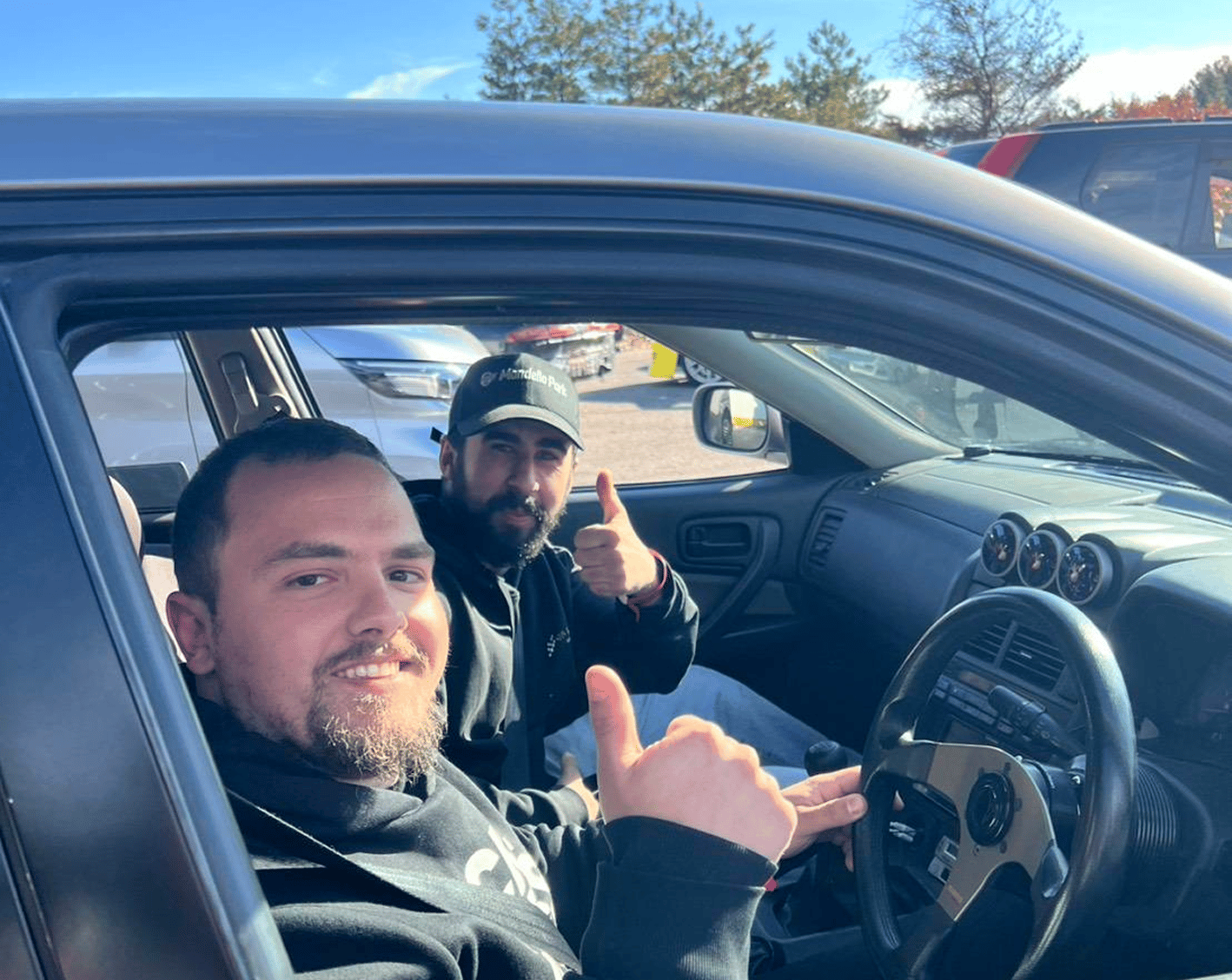
"As a couple from Australia, we were blown away by the drift lesson. Three instructors, three styles, and I learned both handbrake and turn-in drifting in just 3 hours. So happy!"
5.0★average rating123traveler reviews100%free cancellation21countries travelers came from
Choosing a drift lesson in Tokyo - guided day or private school
Three ways to learn drifting sit within reach of Tokyo, and the one difference that decides between them is who holds the wheel. Two are self-drive lessons with an instructor beside you; the third is a full day at Ebisu Circuit that mixes driving practice with a pro ride-along. All run on closed circuits, so no licence is needed.
LicenceNone of these lessons needs a driving licence or International Driving Permit, because they take place on closed circuits.
LegalityDrifting on public roads is illegal in Japan; every lesson here happens on a private circuit or closed track.
AgeThe minimum age for the private self-drive lesson is 18, and anyone under 18 must come with a parent or guardian; one Chiba experience is not suitable for children under 15.
ClothingBring long sleeves, long pants and sneakers; sandals and flip flops are not allowed on track.
GearHelmets and gloves are provided, and lesson cars carry roll cages and safety harnesses.
TimingThe private Tokyo lesson runs 3 hours on circuit with about 1.5 hours of transport each way, so plan most of a day.
BookingReserve ahead; one operator rents the whole circuit for the lesson and asks for at least a day's notice.
CancellationBoth self-drive lessons can be cancelled up to 24 hours in advance for a full refund.
SeasonEbisu Circuit closes its drift courses in winter and snow can shut courses without notice, so confirm by email close to your date.
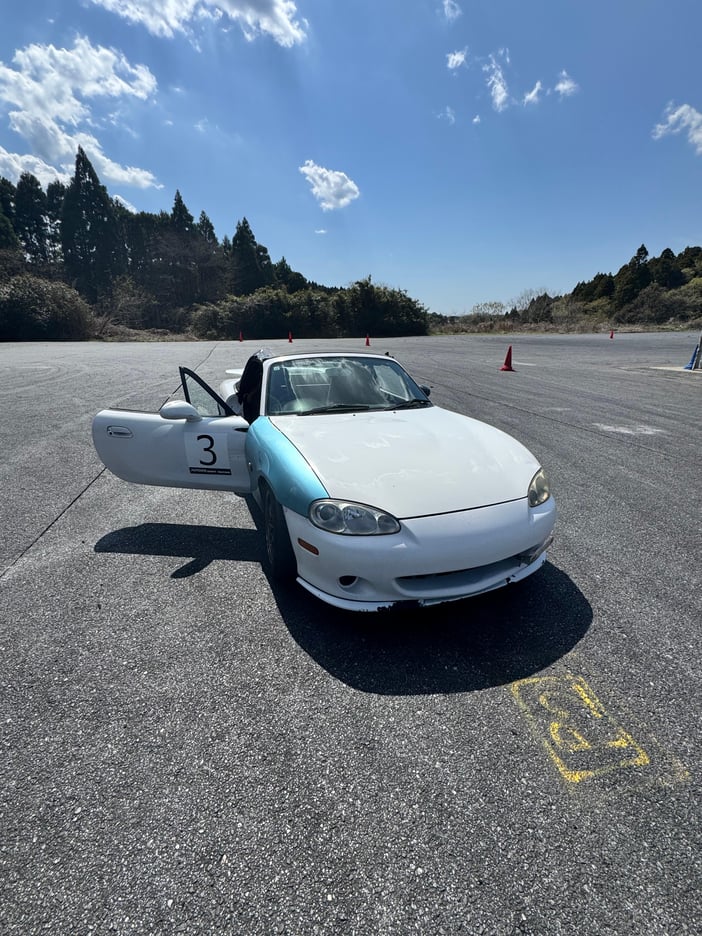
ProgressMost first-timers hold a steady circle by the end of the day; beginners start in a Miata and can move up to an RX-8 or 350Z once basics click.
sell-outDrift lessons run on private circuits and sell out, and some operators close bookings a day or more before the session.
Reserve your lesson before you arrive in Tokyo, ideally a week or more ahead, and check the operator's booking deadline when you pick a date.
Drift lesson options in Tokyo - compare the three
Most popular
6 hours·English, Japanese
5.0(48)
Self Drive Drifting Lesson with Pro Tokyo Drift Experience
The most booked drift lesson here: a fully private 3-hour practice with an OG instructor, 4.9 from 48 reviews, and a donut as the beginner goal.
Free cancellationHotel pickup includedDrift Driving Lesson by an expert teacher.
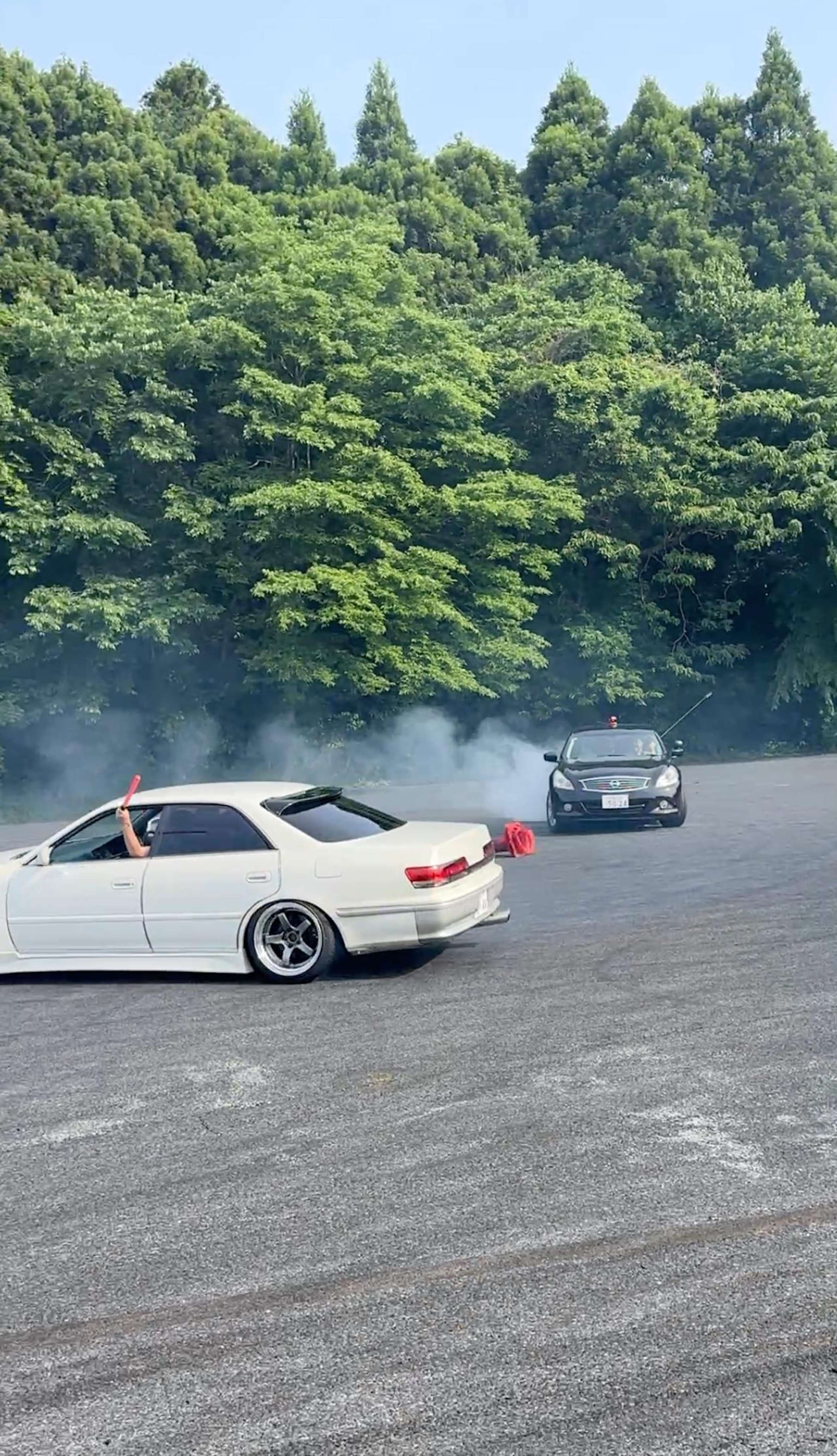
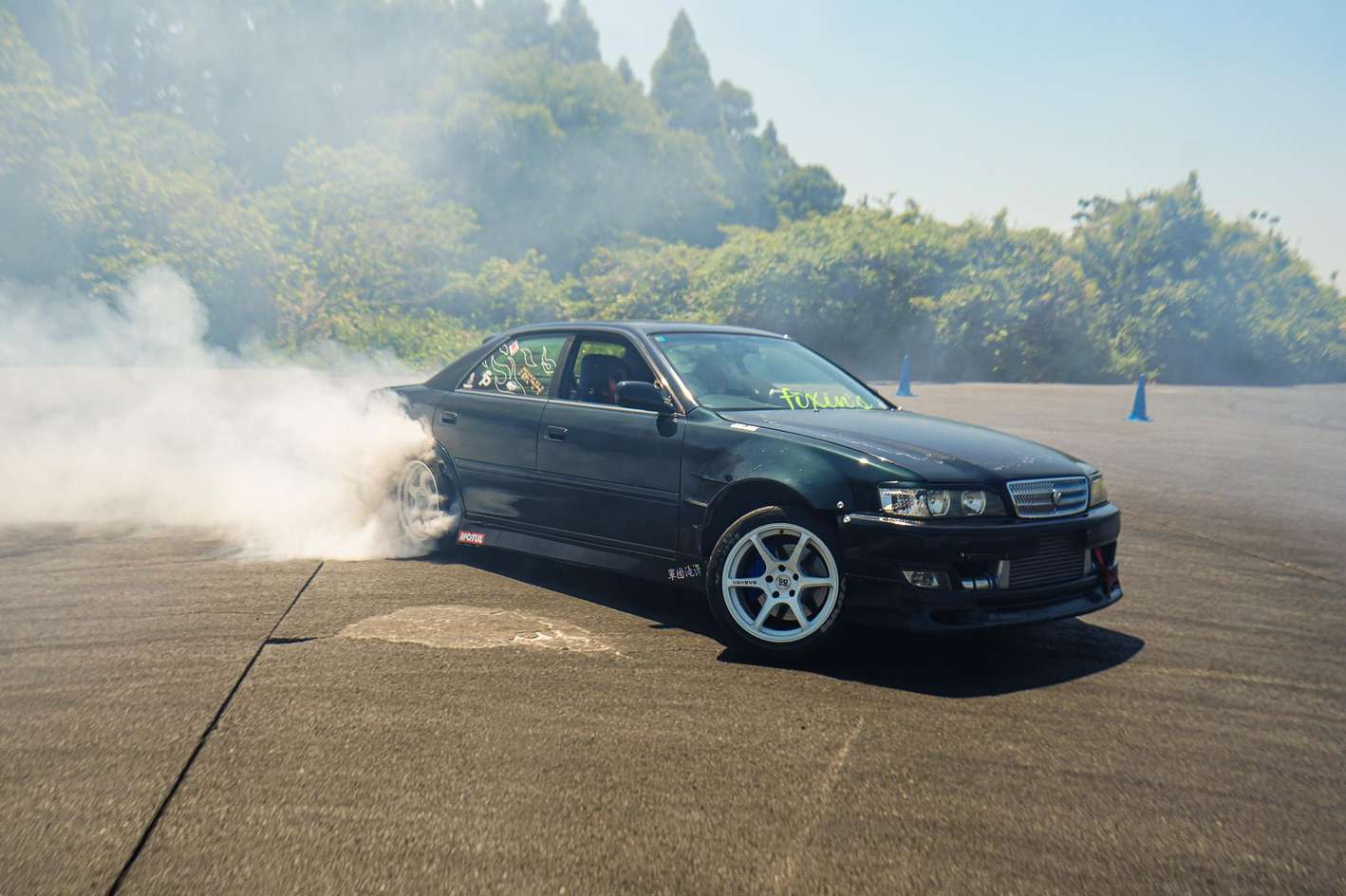
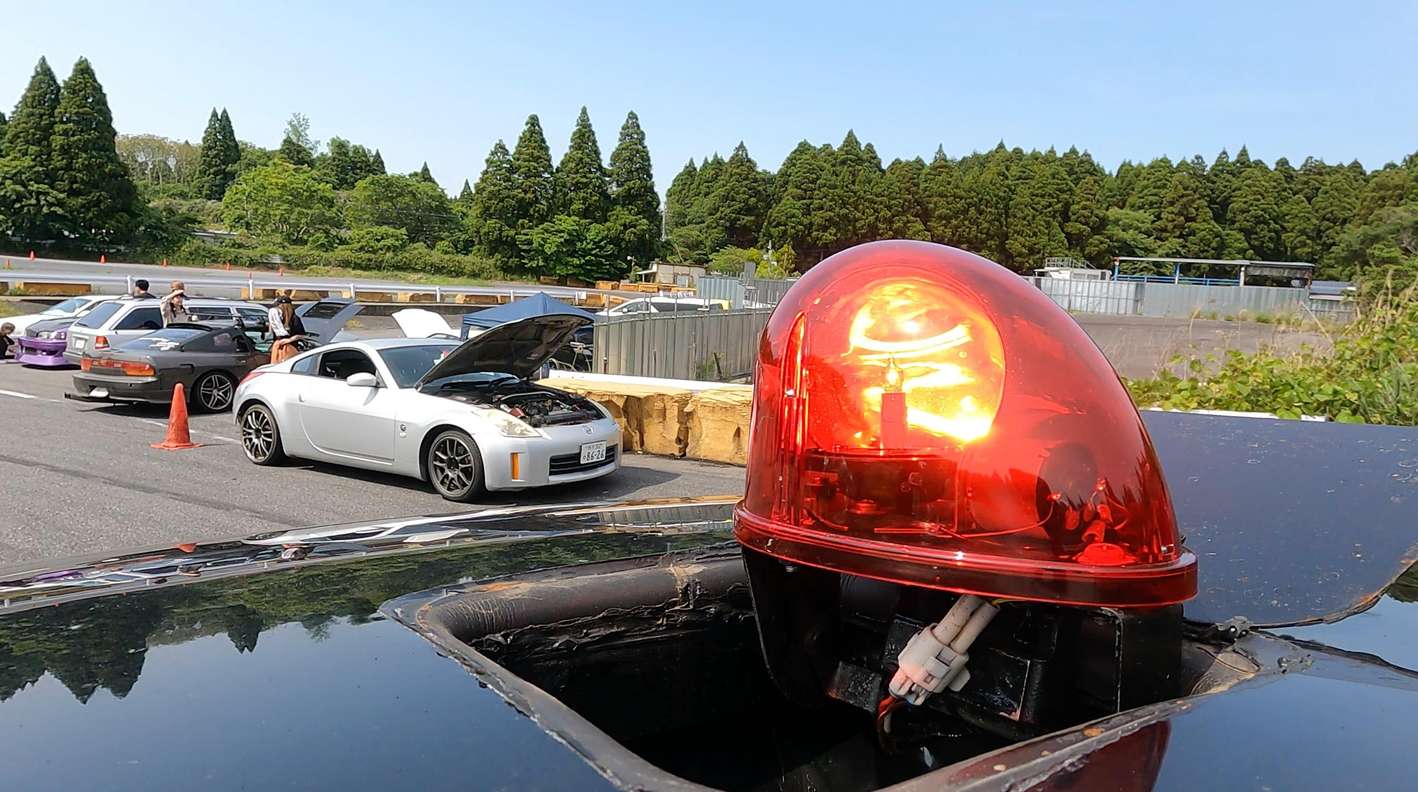
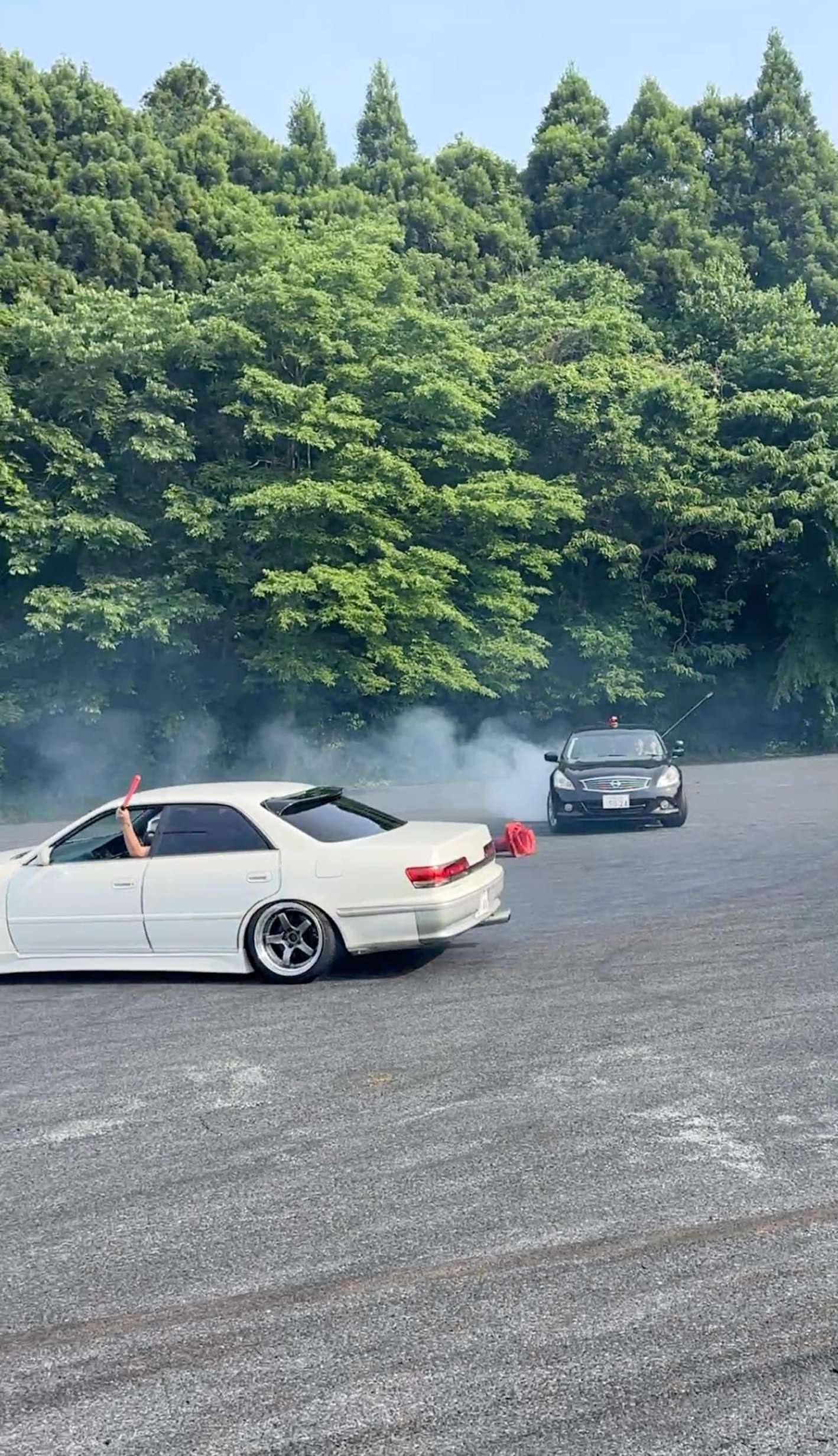
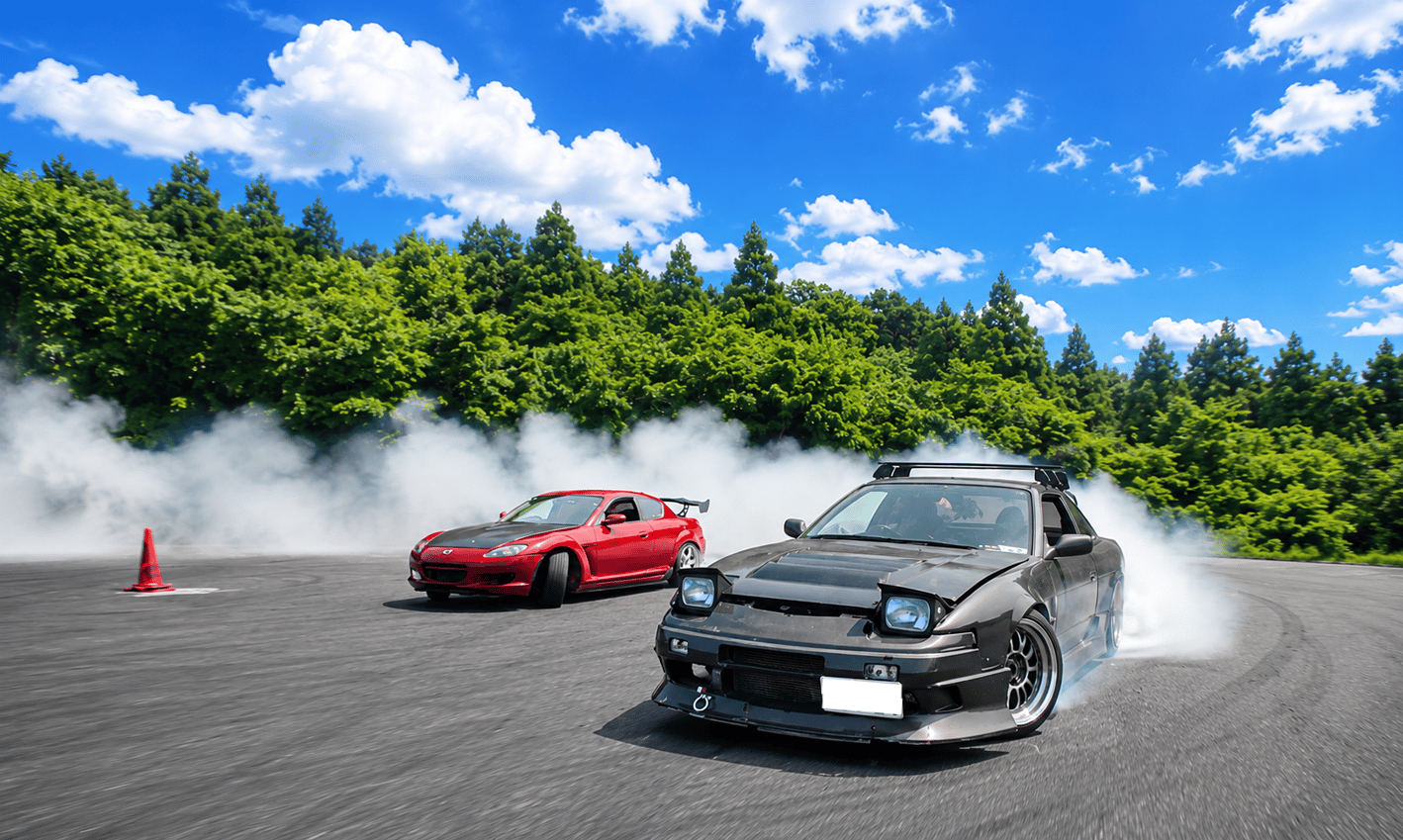
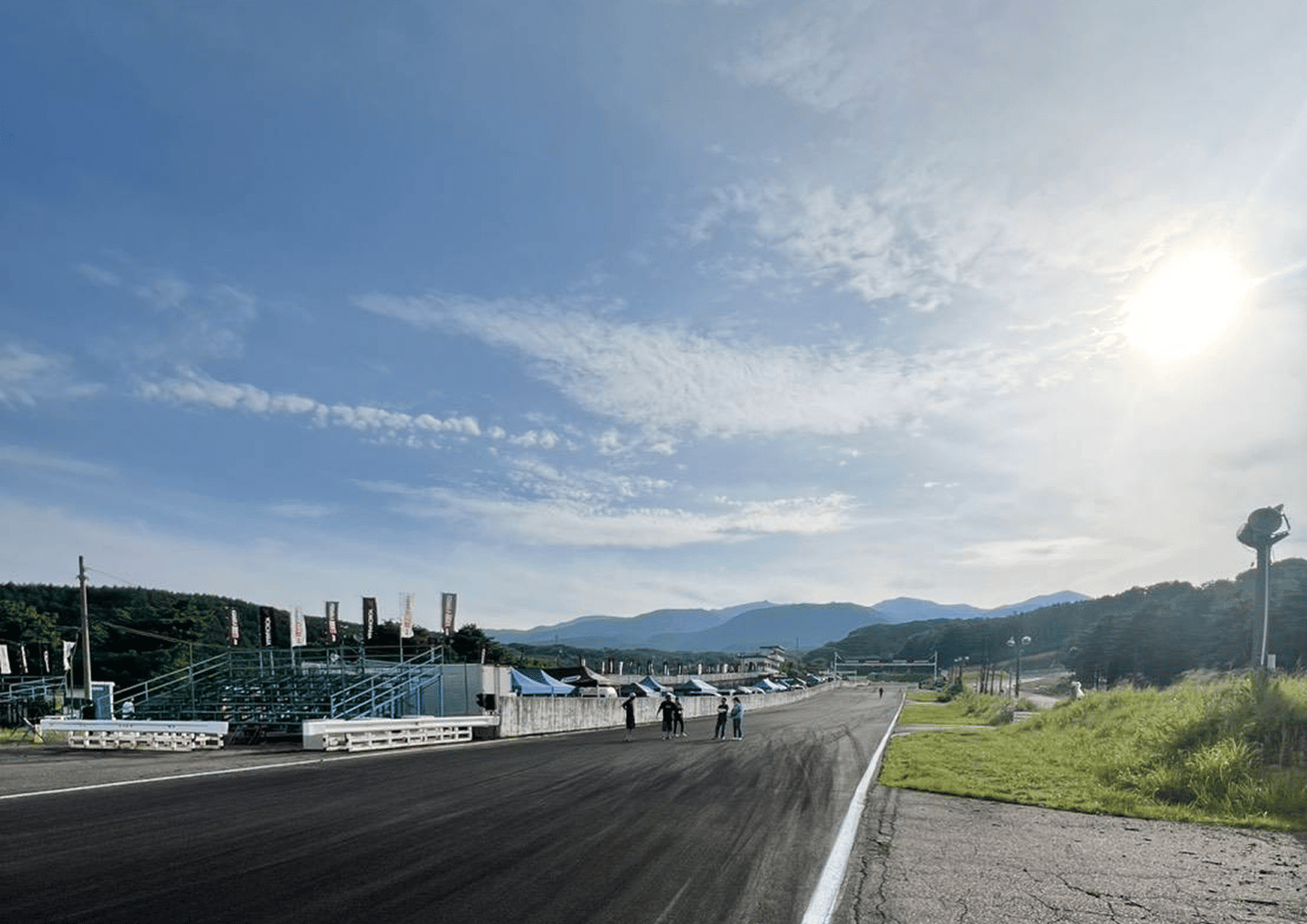
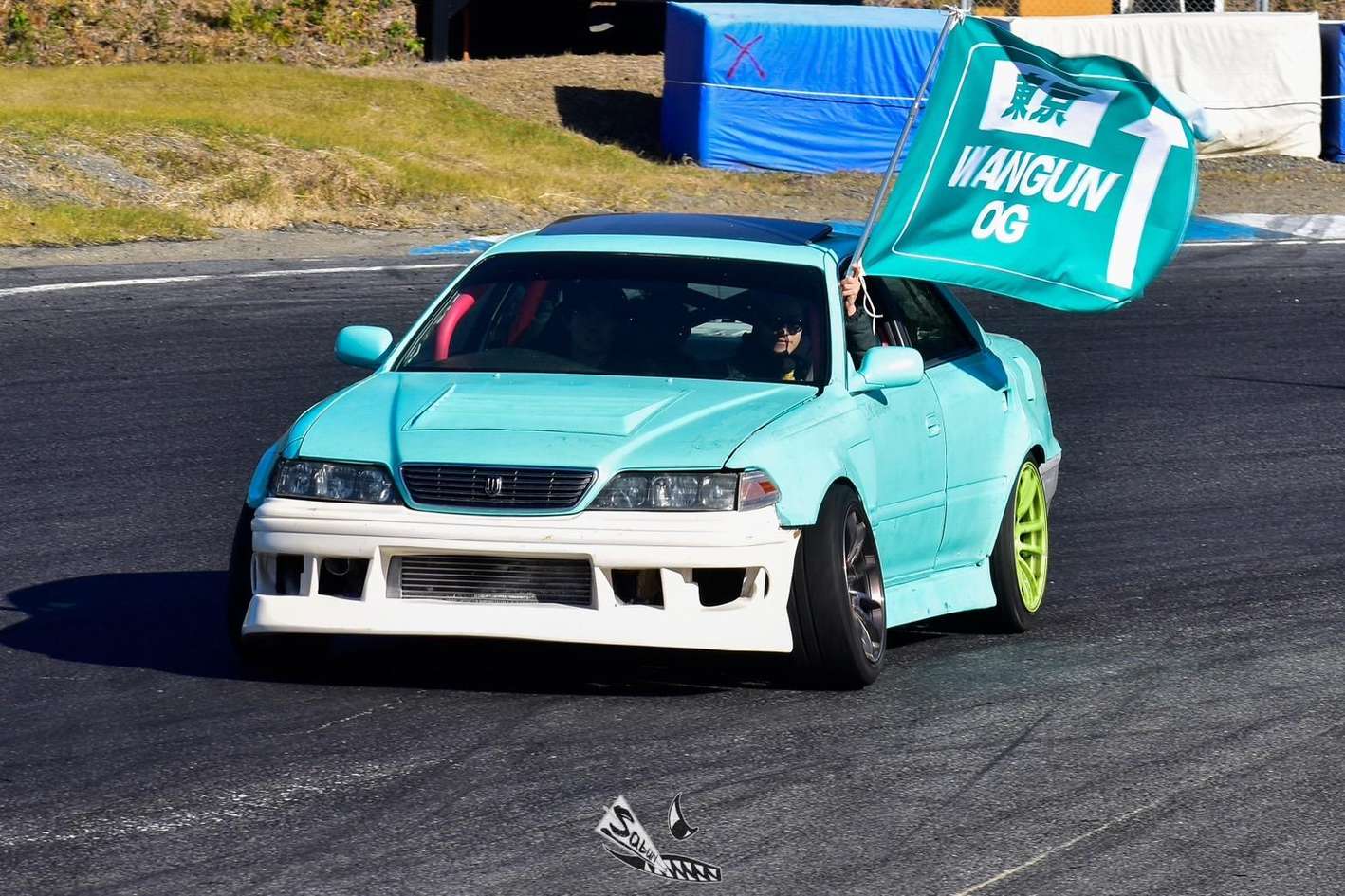
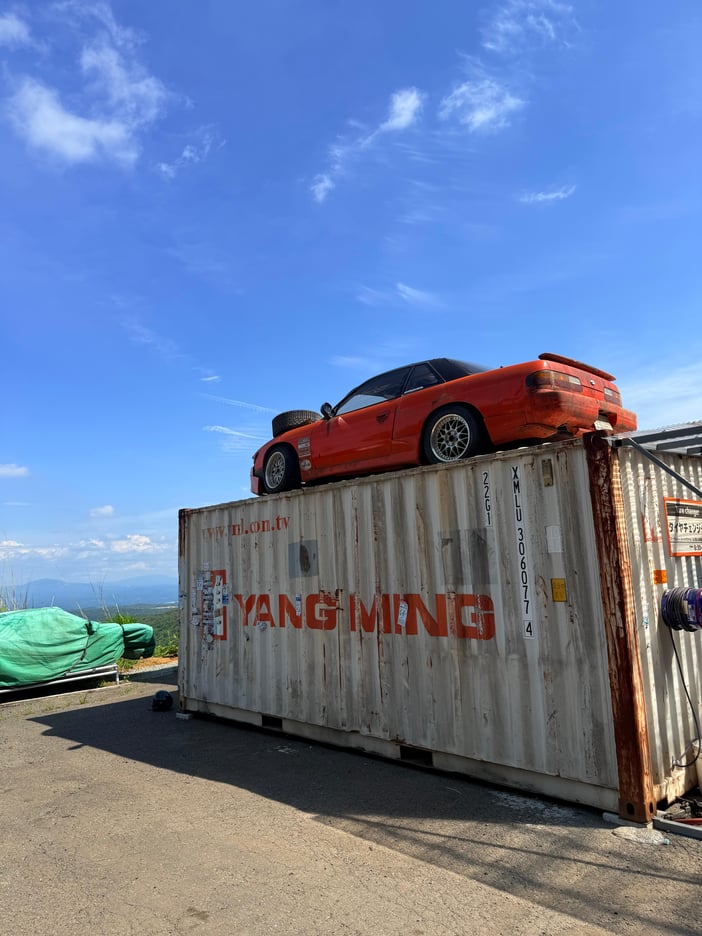
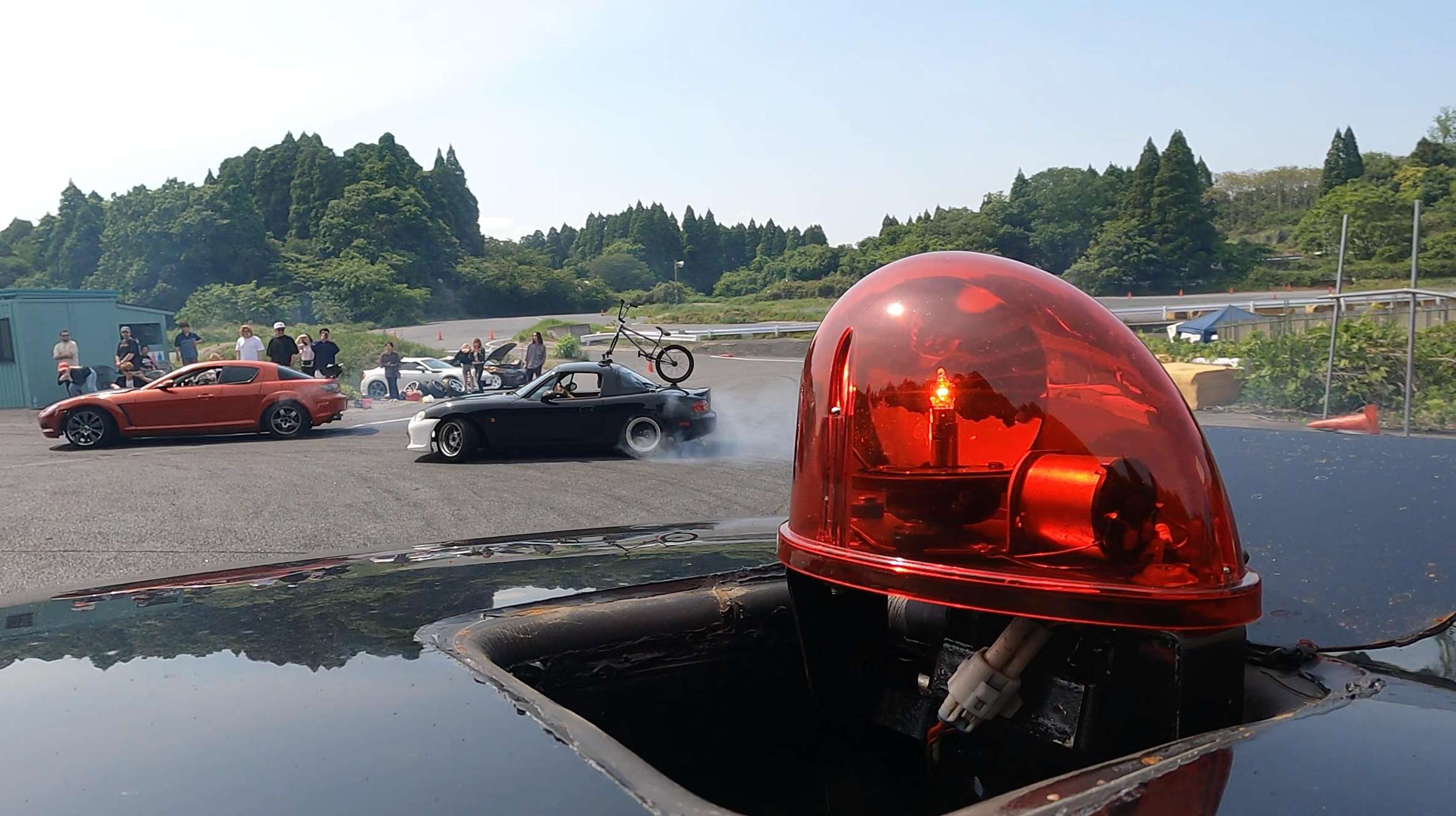
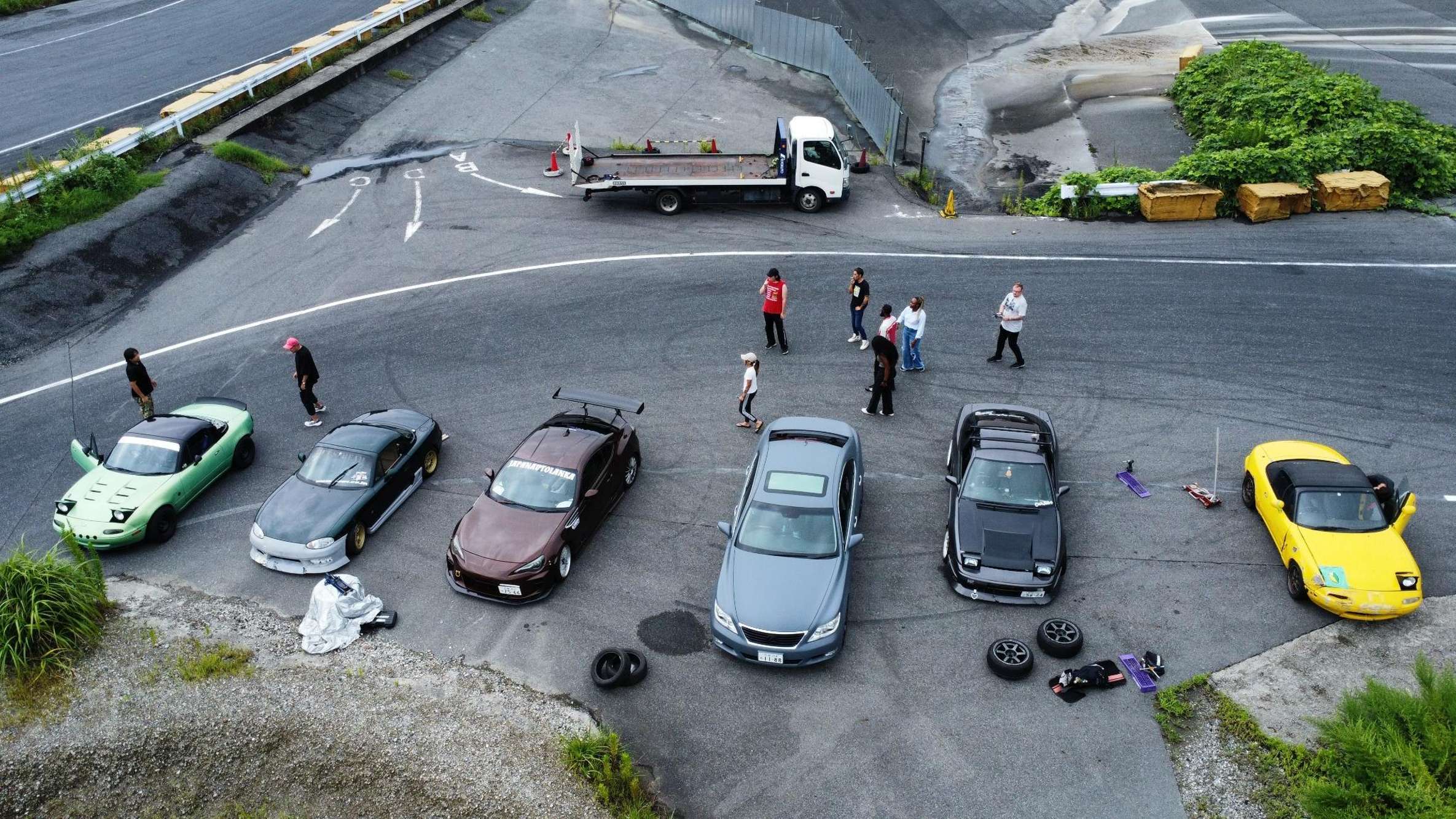
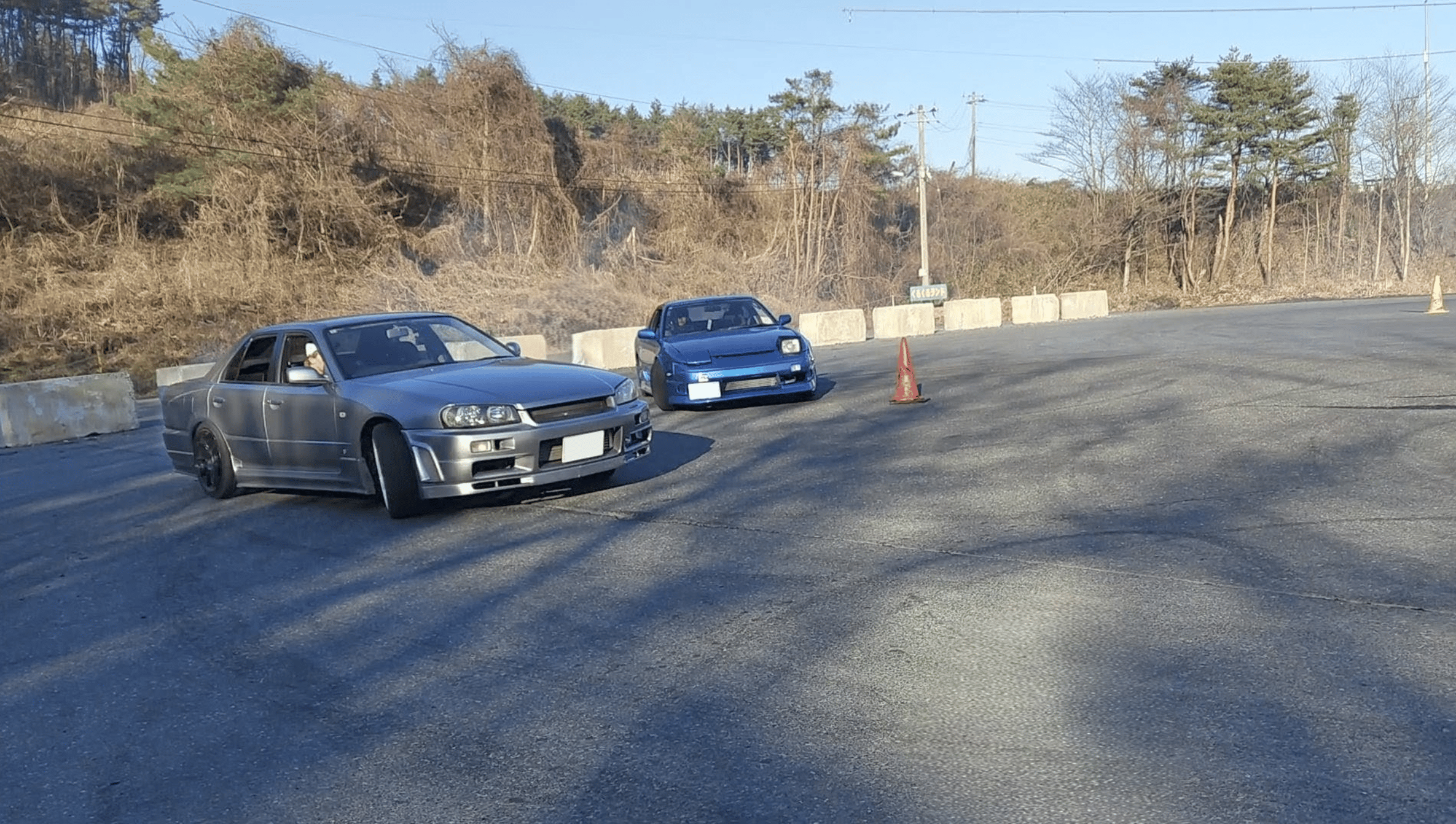
The day starts in Tokyo, where you meet your guide and the other drivers before the drive north. The circuit itself is the main event: three hours of drift practice on Ebisu's West Course, with a professional instructor beside you, plus time to walk the paddock and photograph the JDM cars that gather there.
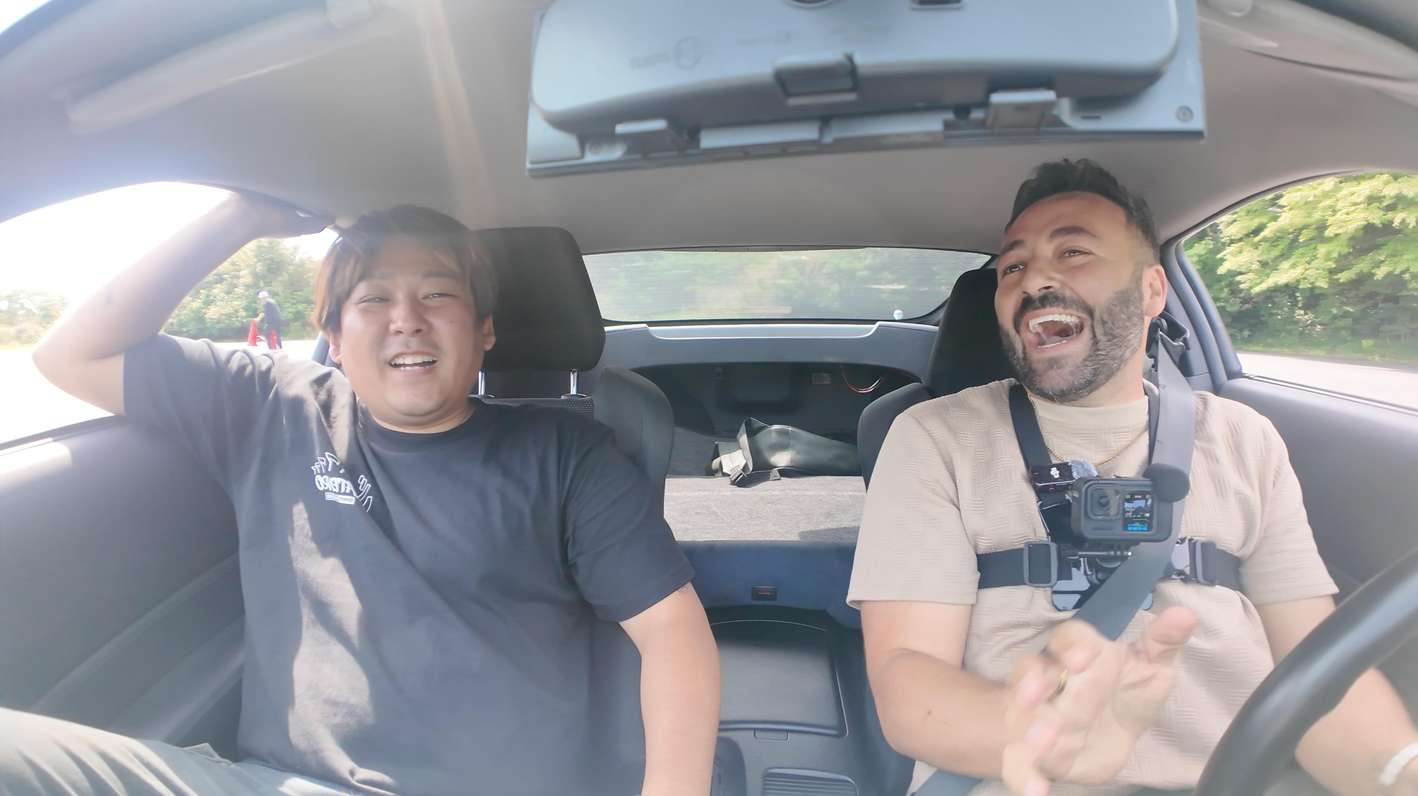
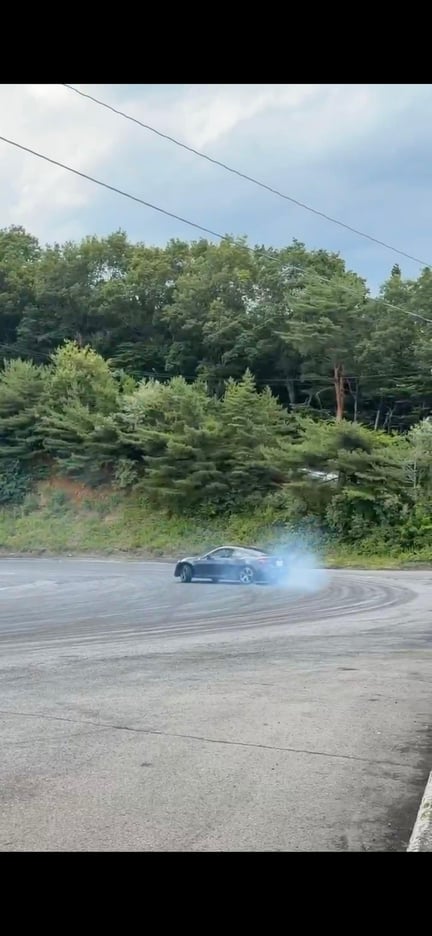
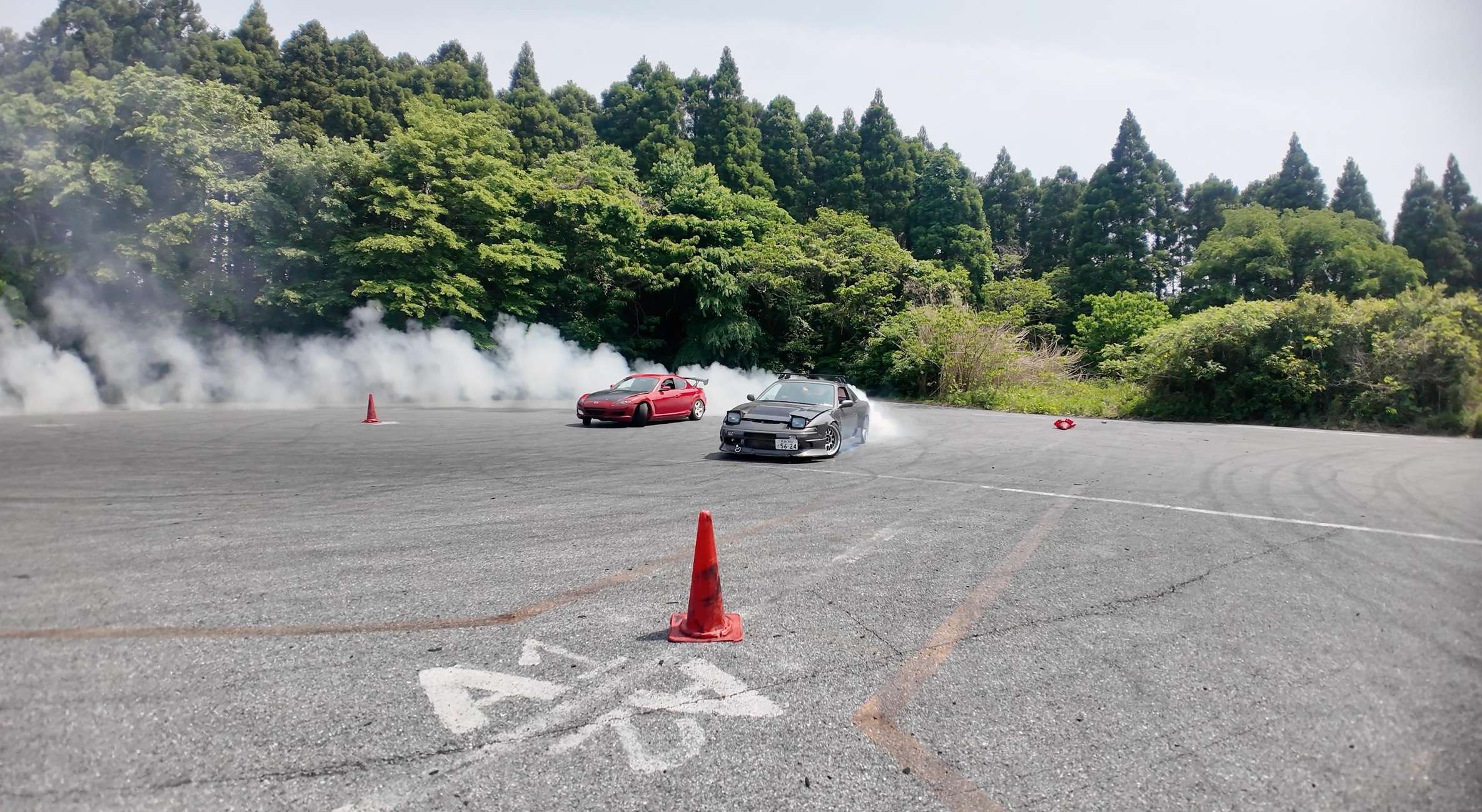
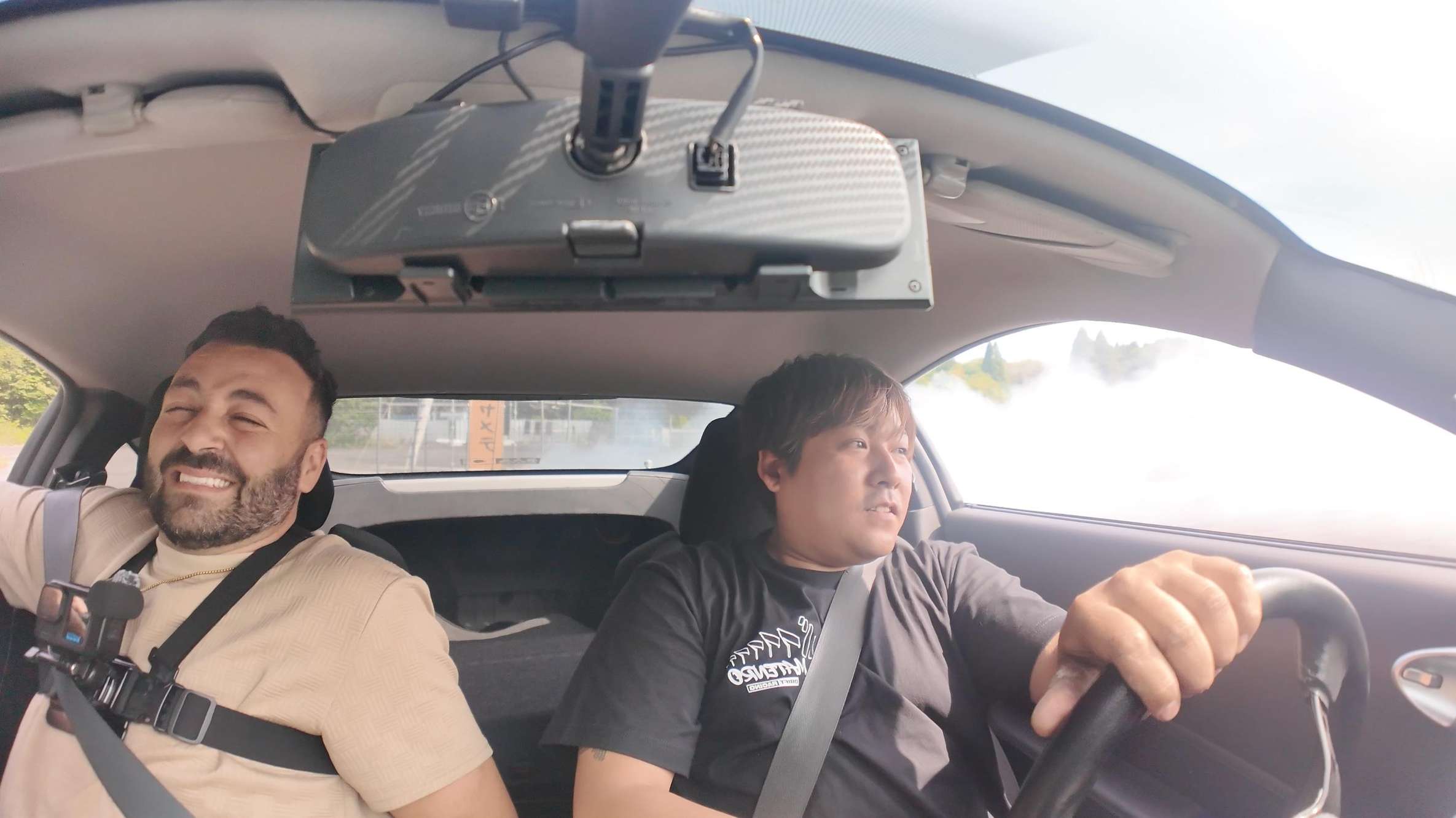
You also get a drift thrill ride as a passenger, so you feel tandem drifting from inside the car before or after your own seat time. Everything is handled for you: transport from Tokyo, fuel, tolls, admission, a souvenir, and drop-off back in the city at the end of the twelve-hour day.
Places you'll pass
Tokyo · 港南ふれあい広場 · Hanyu PaSar Northbound · Ebisu Circuit West Course · Ebisu Circuit
Included
Drift Driving Lesson by an expert teacher.Complete private lesson.Practice for 3 hours and master a donut or figure 8 for beginners and more advanced skills for intermediate drivers.Free pickup and drop off.Safety Helmets and gloves.Please bring Long sleeve shirts and long pants and sneakers (no sandals)
What travelers said about their Tokyo Drift lesson day
Choose a weekday if you can: the private self-drive lesson runs Monday to Friday with start times at 9 am or 1 pm. Booking 2 to 4 weeks ahead is recommended for specific dates, and weekends fill first.
Pro tipWeekday slots are the easy ones to get; the weekend version of the same private lesson exists but books up faster.
RecommendedLeave the whole day free. The circuit time is about 3 hours, with roughly 1.5 hours of transport each way from Tokyo.
02
Choose the right option
Decide whether you want to drive or mainly ride. The private lesson puts you behind the wheel with an OG instructor; the Ebisu Circuit day trip combines driving practice with a pro drift ride as a passenger.
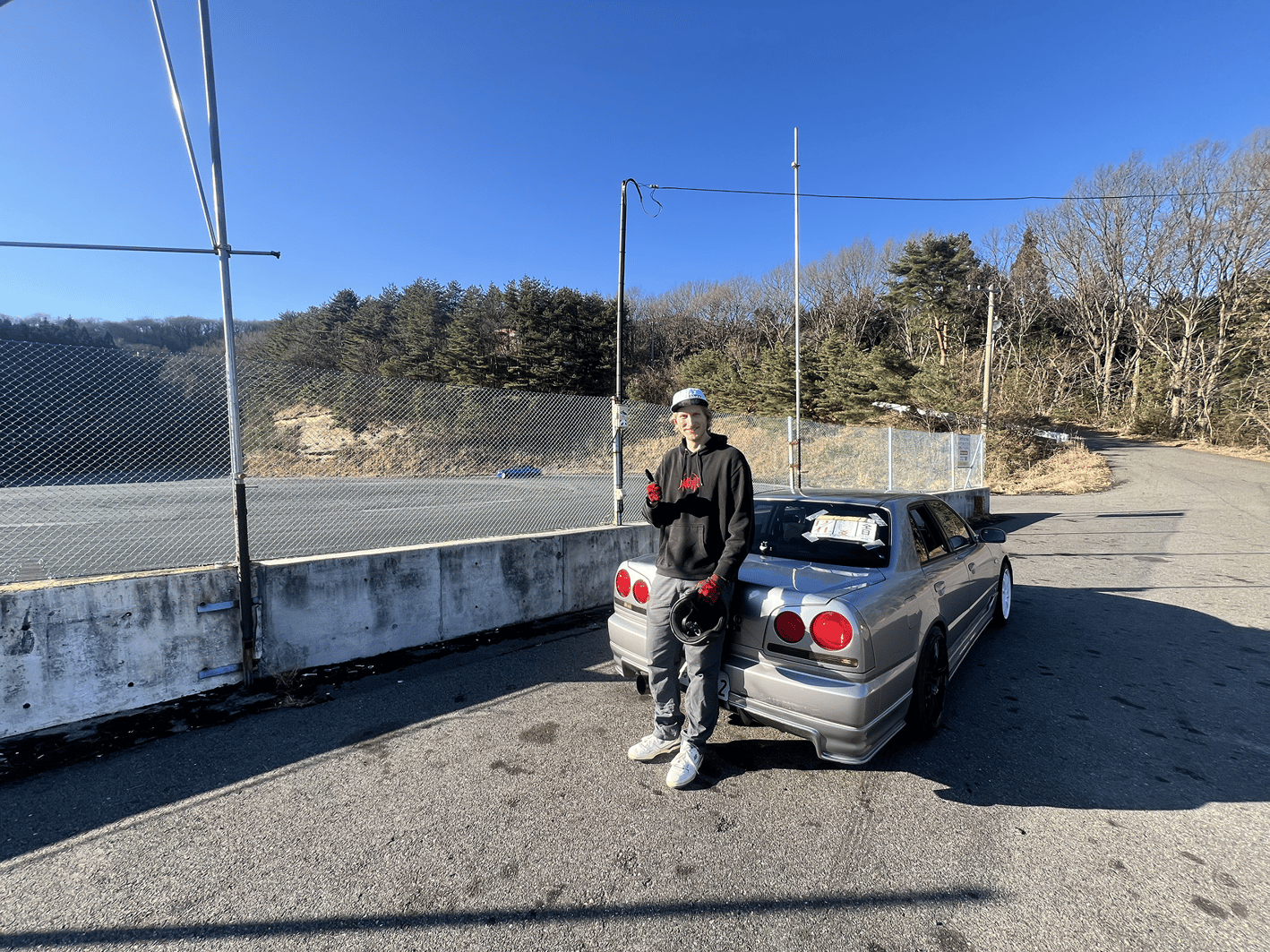
Pro tipMatch the option to your level. Beginners start in a Miata NB, intermediate drivers move to an RX-8 or 350Z, and advanced drivers can request an 180SX or JZX100.
Common mistakeSome Tokyo drift products are ride-alongs where a pro does the driving. Check that the option you pick has you holding the wheel.
03
Check the paperwork
Good news here: the private lesson takes place on a closed circuit, so no driving licence and no International Driving Permit are needed. You must be at least 18, or come with a parent or guardian if you are younger.
ImportantThe 18-year minimum is a hard rule. Under-18s can only join when accompanied by a parent or guardian.
Pro tipBecause no licence is required, this works even if you never drive abroad, which is why many first-timers pick it over a rental.
04
Confirm pickup and messages
After booking, arrange your pickup: the private lesson includes free pickup in Tokyo with drop-off at Tokyo Station, and the Ebisu day trip collects you for the long drive to Fukushima. Watch your email, since operators confirm details before the day.
Pro tipKeep notifications on for email or messaging apps. For the Ebisu trip, organizers confirm by email right up to the day before, especially in winter when snow can affect the circuit.
ImportantBoth lessons allow cancellation up to 24 hours in advance for a full refund, so book early and cancel free if plans change.
05
Prepare for the day
Wear a long-sleeved shirt, long pants and sneakers; sandals are not allowed on track. Helmets and gloves are provided, and the day starts with a safety briefing before you go out to practice donuts and figure eights.
Common mistakeFirst-timers arrive jerky on the clutch and throttle. Smooth inputs are what the instructors coach from the first minute, so relax and take the first runs slowly.
RecommendedEat before pickup and bring water. The lesson runs 9 am to 4 pm on full days with a one-hour lunch break around midday.
What to know before you book a drift lesson
Can stop the dayGood to knowGood news
01
ChoosingWhat it is, who it suits, when to go
3
Age limitsCan stop the day
Participants must be at least 18 years old for the private lesson. Anyone under 18 can join only if accompanied by a parent or guardian, so check this before booking for a teenager.
Timing
The private lesson runs Monday to Friday, starting at 9 am or 1 pm, with about 1.5 hours of transport each way from Tokyo. That makes roughly six hours door to door for three hours on the circuit, so plan the day around it.
First lesson
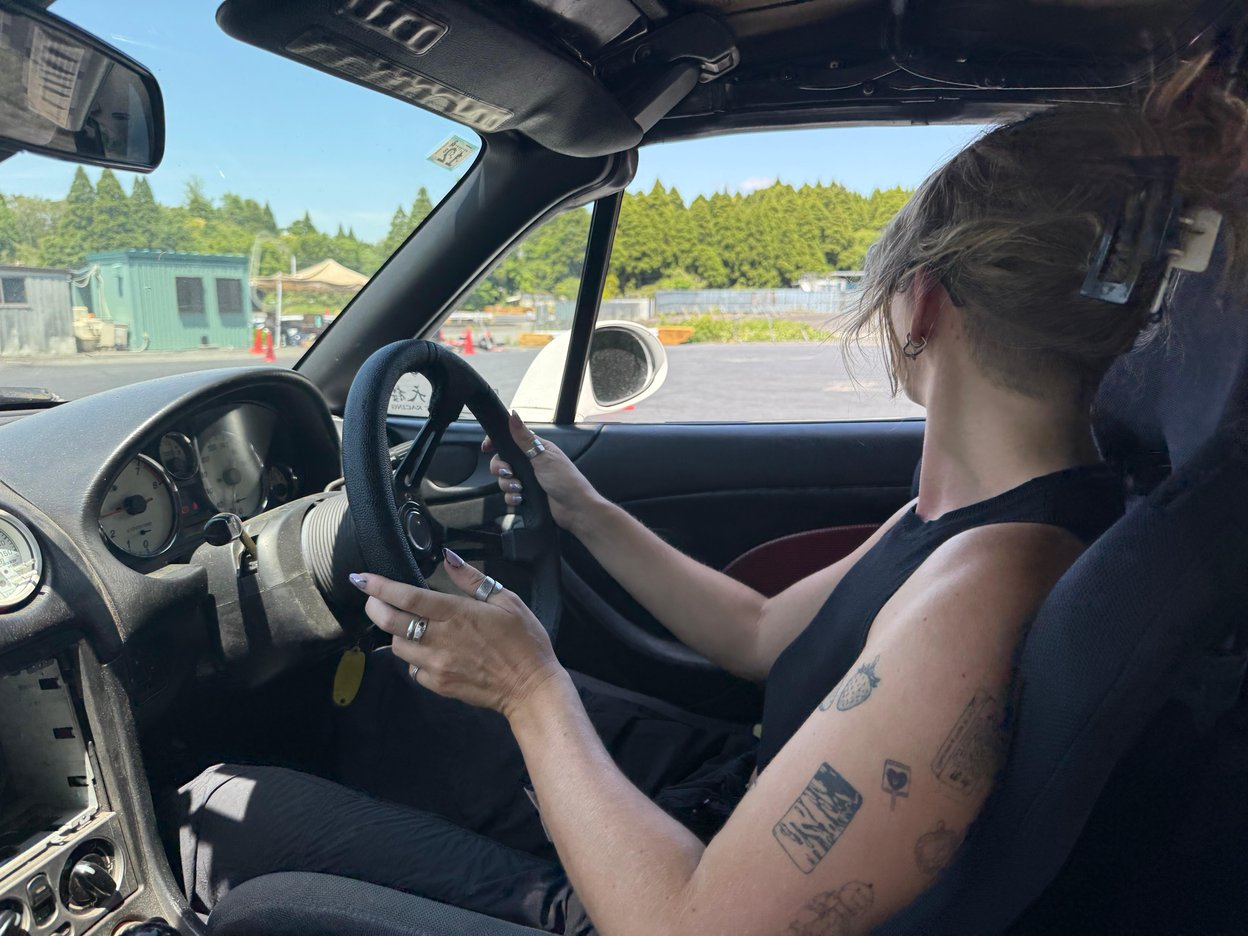
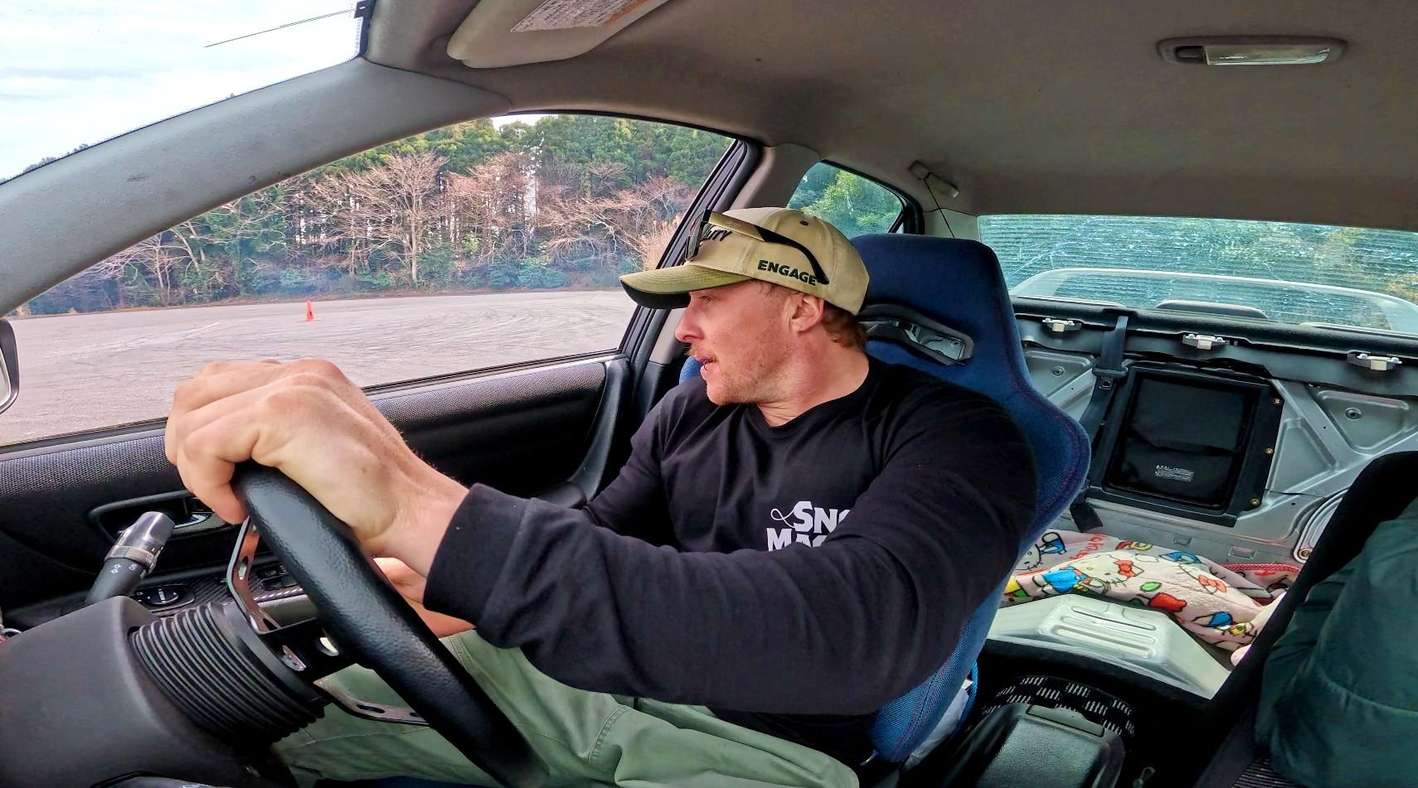
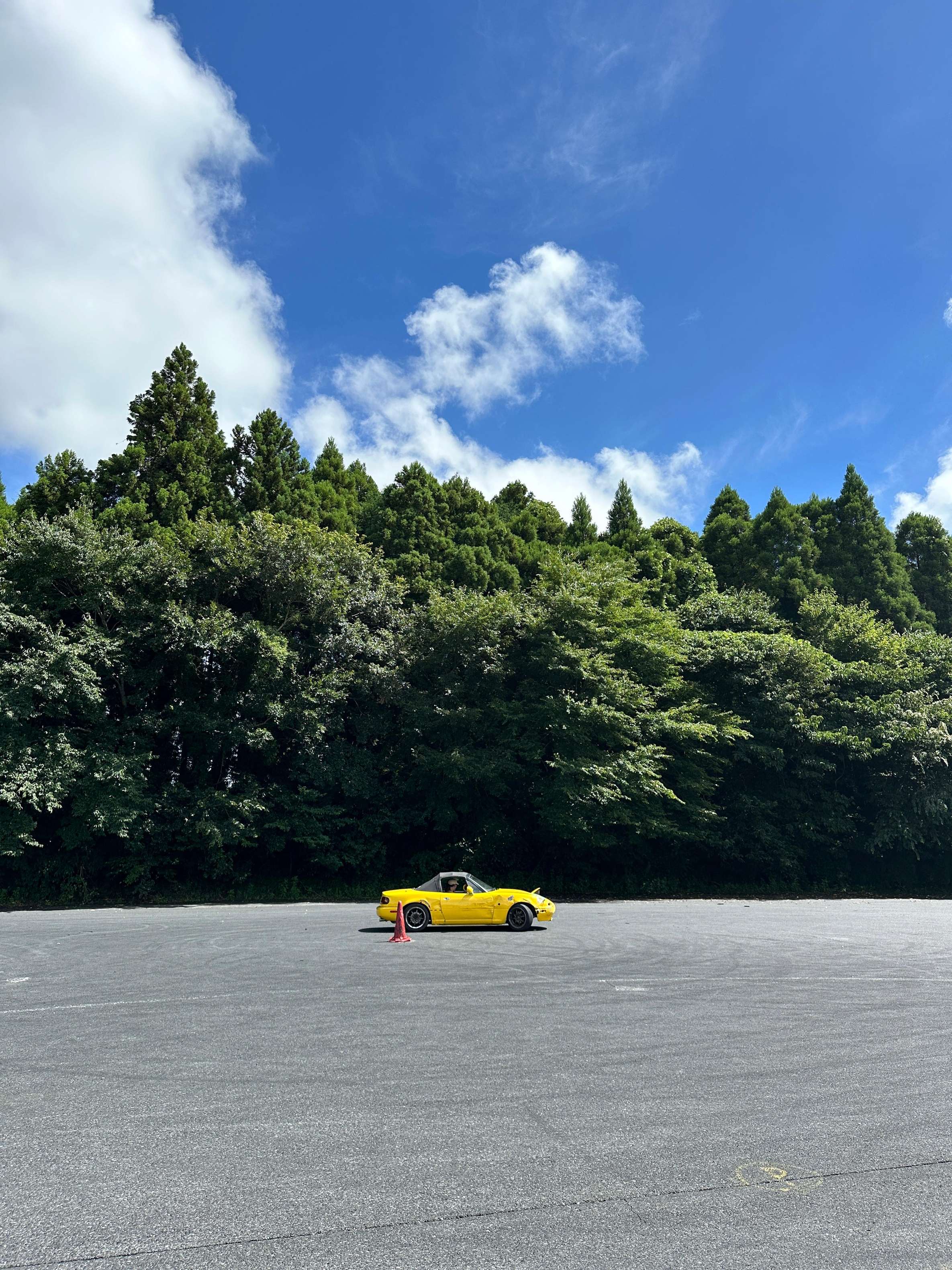
Beginners start in a Mazda Miata MX-5 and typically learn a proper donut within about 3 hours, with an instructor riding beside you the whole time. Stay smooth on the clutch and throttle: jerky inputs, not lack of talent, are what cause spin-outs.
02
BookingHow far ahead, and what happens if plans change
2
Booking
Book at least a day in advance, because the whole circuit is rented for your session. For a specific date, two to four weeks ahead is the safer window, especially in busy months.
Cancellation
Both the private lesson and the Chiba self-drive experience can be cancelled up to 24 hours in advance for a full refund. Winter snow is the one thing that can close a circuit, and organizers confirm by email right up to the day before.
03
Before you goPapers, health, what to bring
2
Licence
No driving licence is needed for the private lesson, because it takes place on a closed circuit and you are never on a public road. That also means no international driving permit, so visitors who never planned to drive in Japan can still take the wheel.
What to wear
Bring long sleeves, long pants and sneakers; sandals and flip flops are not allowed on the circuit. Helmets and gloves are provided, so you only need clothes you can move in.
04
On the dayWhere to be, when, and how you get there
1
Pickup
The private lesson includes free pickup in Tokyo, with drop-off at Tokyo Station afterwards. The Chiba circuit experience includes roundtrip transport from Tokyo as well, so you never need to arrange a car yourself.
A Tokyo drift lesson - from booking to your first slide
A real drift lesson means a closed circuit, an instructor in the passenger seat and about ninety minutes of actual sliding inside a six-hour day. Whether that day belongs in your trip depends on how much driving means to you, and which format you pick.
Tokyo· 35.68° N, 139.65° E
If you only remember three things
1
Book 2 to 4 weeks ahead: the private lessons run Monday to Friday at 9 am or 1 pm and the whole circuit is rented for you.
2
Beginners learn a proper donut in about 3 hours; the other 3 hours of the day go to transport and briefing.
3
Long sleeves, long pants and sneakers are non-negotiable, and gloves are the one item schools don't supply.
Is a Tokyo drift lesson worth a day of your trip
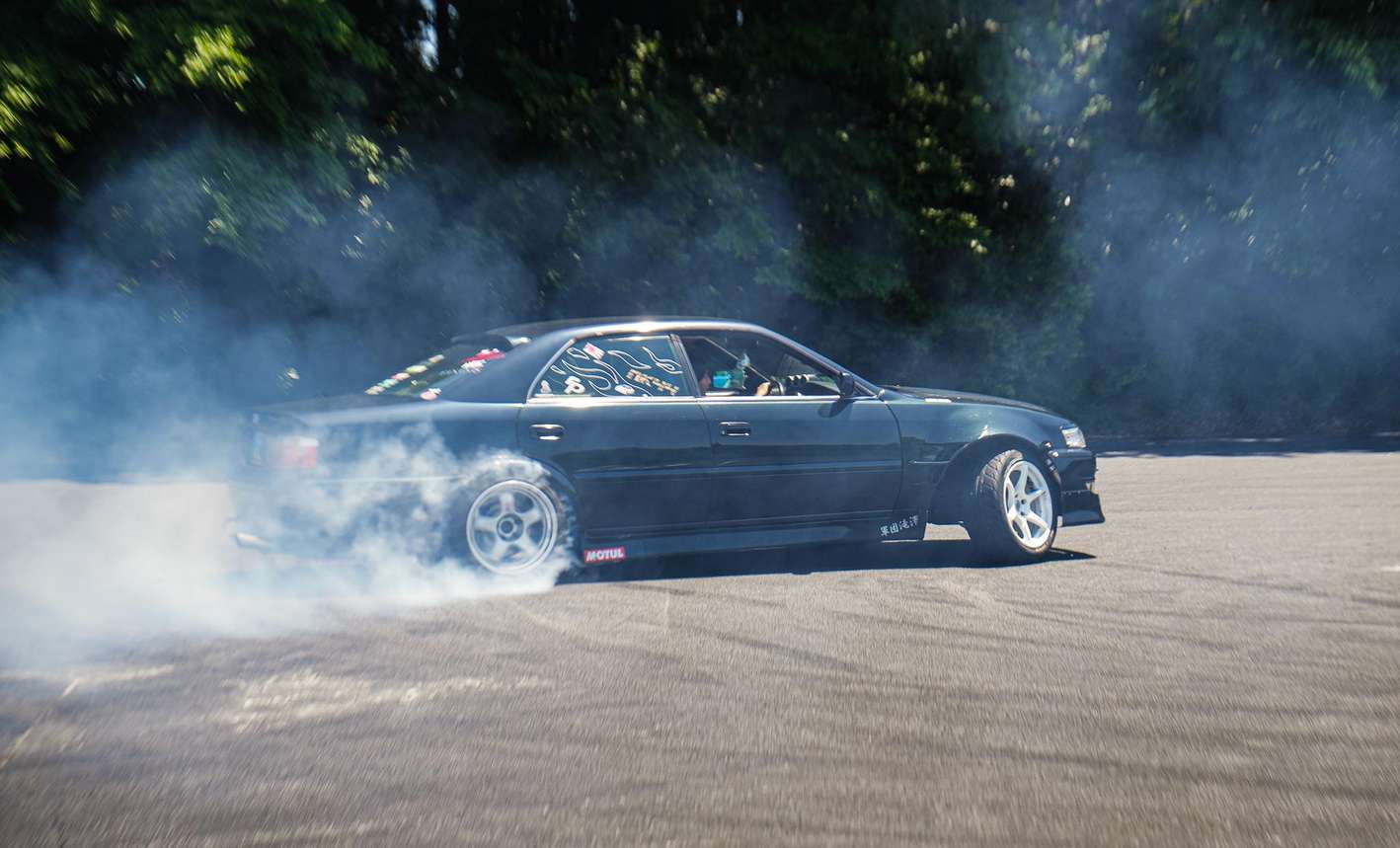
The engine note drops, the rear steps out, and the instructor's hand stays loose on his own knee because he has seen this a thousand times. That is the moment you are paying for, and it arrives about ninety minutes into a six-hour day.
Be honest about the arithmetic. A private lesson runs 3 hours on the circuit, with roughly 1.5 hours of transport each way from Tokyo, so the rest of the day goes to travel, briefing and breaks.
For serious JDM fans that trade is easy; travelers who did it call it an S-tier memory. For the mildly curious, a passenger ride gives 5 to 20 minutes of drift time and asks far less of your schedule.
The reassurance beginners need is real: about 90 percent of first-timers do a proper donut within 3 hours. The lesson happens on a private circuit, so no international driving permit is needed, and you don't even need a licence.
A traveler's note
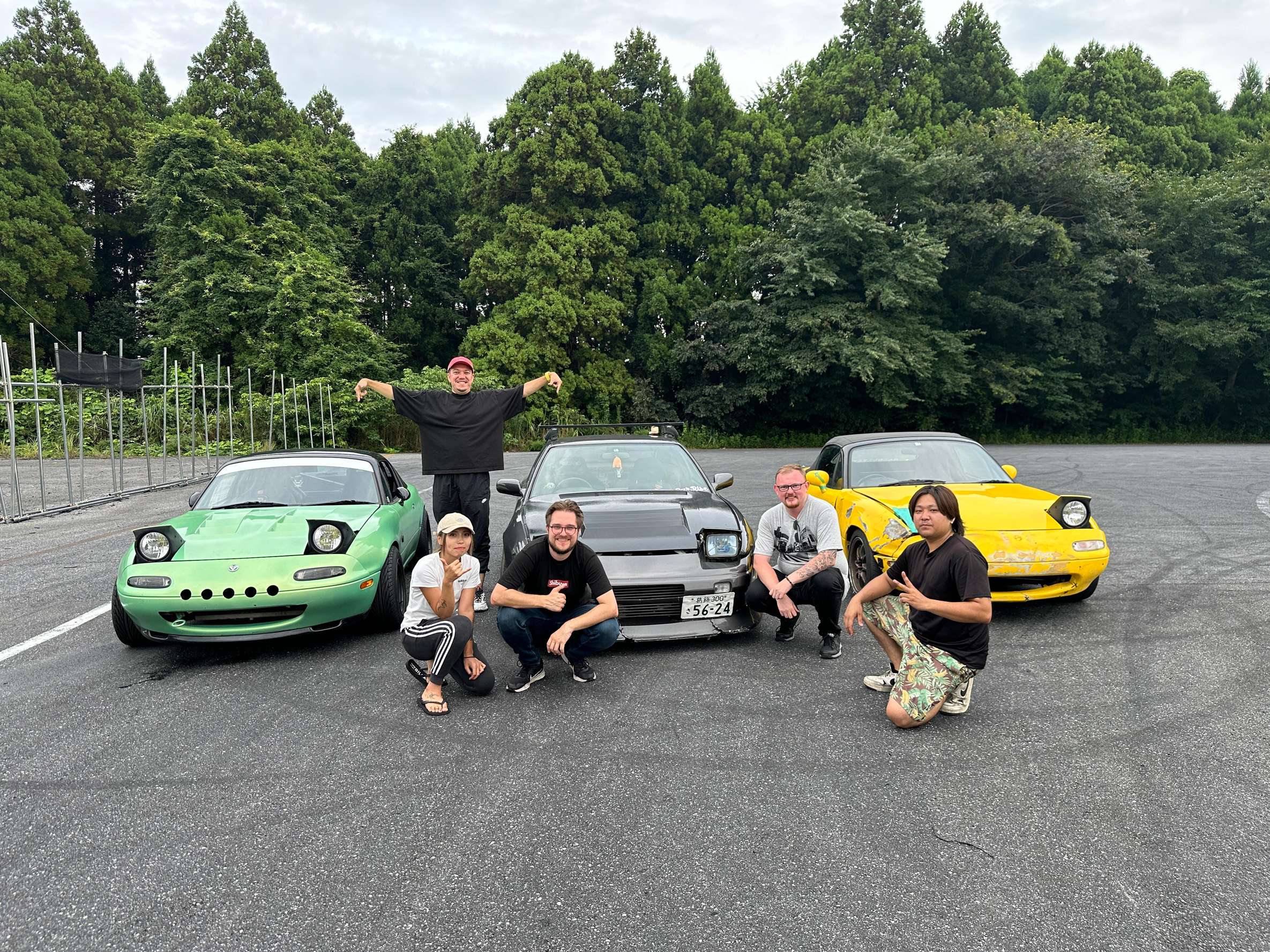
IF YOU'RE INTO CARS, THIS IS A MUST DO WITH MATENRO DRIFT RACING! Not enough words for this experience and the awesome, funny instructors. I literally drifted in Tokyo with amazing people!
If driving is the reason you came to Japan, that November traveler's verdict is the one to trust. If it isn't, the passenger seat will do more for you in an afternoon.
Tour for this
Self Drive Drifting Lesson with Pro Tokyo Drift Experience5.0★ (48) · 6 hours · Hotel pickup · Free cancellation
Before you book anything, know what you are stepping into. Drifting was born on the touge, the winding mountain roads around Tokyo, where Kunimitsu Takahashi began sliding his car through corners in the 1970s, first as a race technique, then as a show for the fans. Street racers copied him.
By the late 1980s Keiichi Tsuchiya, the Drift King, was practising those same passes and racing illegally on them. In 1988 he helped organise one of Japan's first official drift events with Option magazine's founder. The manga Initial D arrived in 1995 and carried the whole culture worldwide.
That history lives in the cars. The Toyota AE86, Nissan Silvia and Mazda RX-7 became drift legends because they are light, rear-wheel drive and balanced; the Silvia platform has won seven D1 Grand Prix championships.
The Tokyo Drift movie, for the record, was mostly shot in Los Angeles, because nobody could get permission to drift on Japanese public roads.
When you take the wheel of one of these cars on a circuit, you are touching the real thing.
Tour for this
Ebisu Circuit: Guided JDM Drift Practice & Ride-Along4.9★ (72) · 12 hours · Hotel pickup · Free cancellation
The skill ladder is shorter than you think and steeper than it looks. It starts with weight transfer and initiation: getting the rear to step out on purpose, using clutch kicks, power oversteer or the handbrake. From there you move to donuts, then steady circle drifting, then figure-8 transitions where the car swaps direction mid-slide.
An instructor rides with you the whole time, calling the corrections before you know you need them. Between runs you watch the experienced drivers, and throttle smoothness is the thing that sinks in. Solo runs in competition are judged on angle, line, style and speed, which tells you where the practice is heading.
Set expectations honestly. Progress varies widely: some people spend the day on donuts, others link turns on the school track by the afternoon.
A proper donut in 3 hours is the realistic goal, and the Self Drive Drifting Lesson with Pro Tokyo Drift Experience is built exactly around that, a completely private 3-hour session with an OG drift teacher, translators on hand, and a graduation challenge at the end.
The lesson is the point. Everything else on the day is the frame around it.
Tour for this
Tokyo Drift Self-Drive Experience with Pro Instructor5.0★ (3) · 3 - 5 hours · Free cancellation
Lesson, ride-along or guided day - which one is yours
Three formats, three different days. The private self-drive lesson puts you behind the wheel with an instructor beside you for hours of practice. The ride-along hands the driving to a pro while you sit in the passenger seat for chase runs, feeling tandem drifting from the inside.
The guided Ebisu day trip bundles both: drift practice, a JDM car driving experience and a thrill ride as a passenger, with transport from Tokyo and a guide explaining the cars.
The choice comes down to appetite and schedule. If you want to learn the skill, only the self-drive lesson gives you that. If you want the sensation without the workload, ride shotgun.
If you want the full pilgrimage to the circuit people call the drift mecca and can give up most of a day, the Ebisu Circuit: Guided JDM Drift Practice & Ride-Along is the format built for it, a 12-hour round trip into the Fukushima mountains.
Private self-drive lesson
Passenger ride-along
Guided Ebisu day trip
Who drives
You, with an instructor beside you
A professional drifter
You for practice, plus passenger hot laps
Time on track
About 3 hours of practice
Short passenger runs per person
A full day including seat time and rides
Best for
Beginners and intermediates who want the skill
The curious who want the sensation
Dedicated fans giving up most of a day
Private self-drive lesson
Who drives
You, with an instructor beside you
Time on track
About 3 hours of practice
Best for
Beginners and intermediates who want the skill
Passenger ride-along
Who drives
A professional drifter
Time on track
Short passenger runs per person
Best for
The curious who want the sensation
Guided Ebisu day trip
Who drives
You for practice, plus passenger hot laps
Time on track
A full day including seat time and rides
Best for
Dedicated fans giving up most of a day
Read the last row first. It is the one that decides the day, and it is the row most people skip.
Tour for this
Ebisu Circuit: Guided JDM Drift Practice & Ride-Along4.9★ (72) · 12 hours · Hotel pickup · Free cancellation
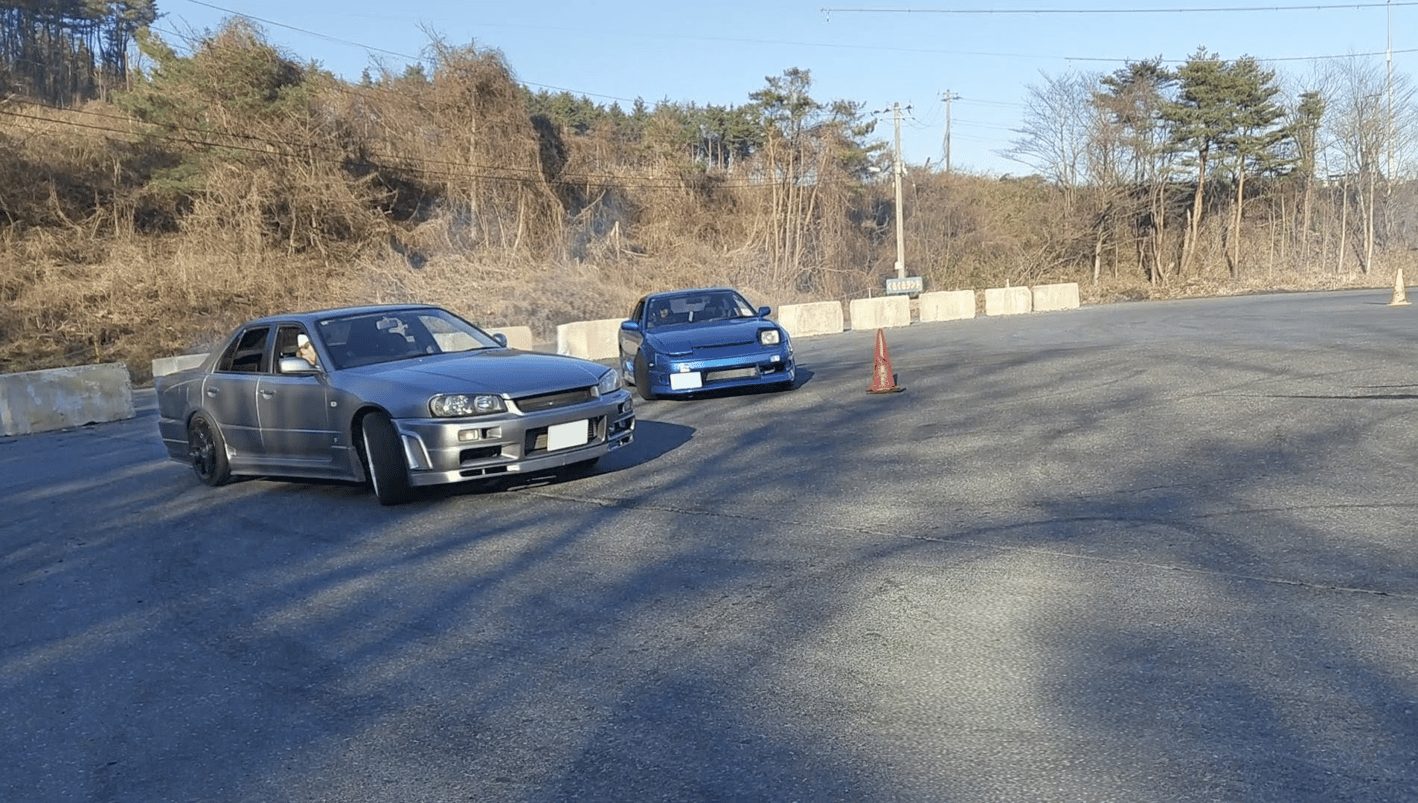
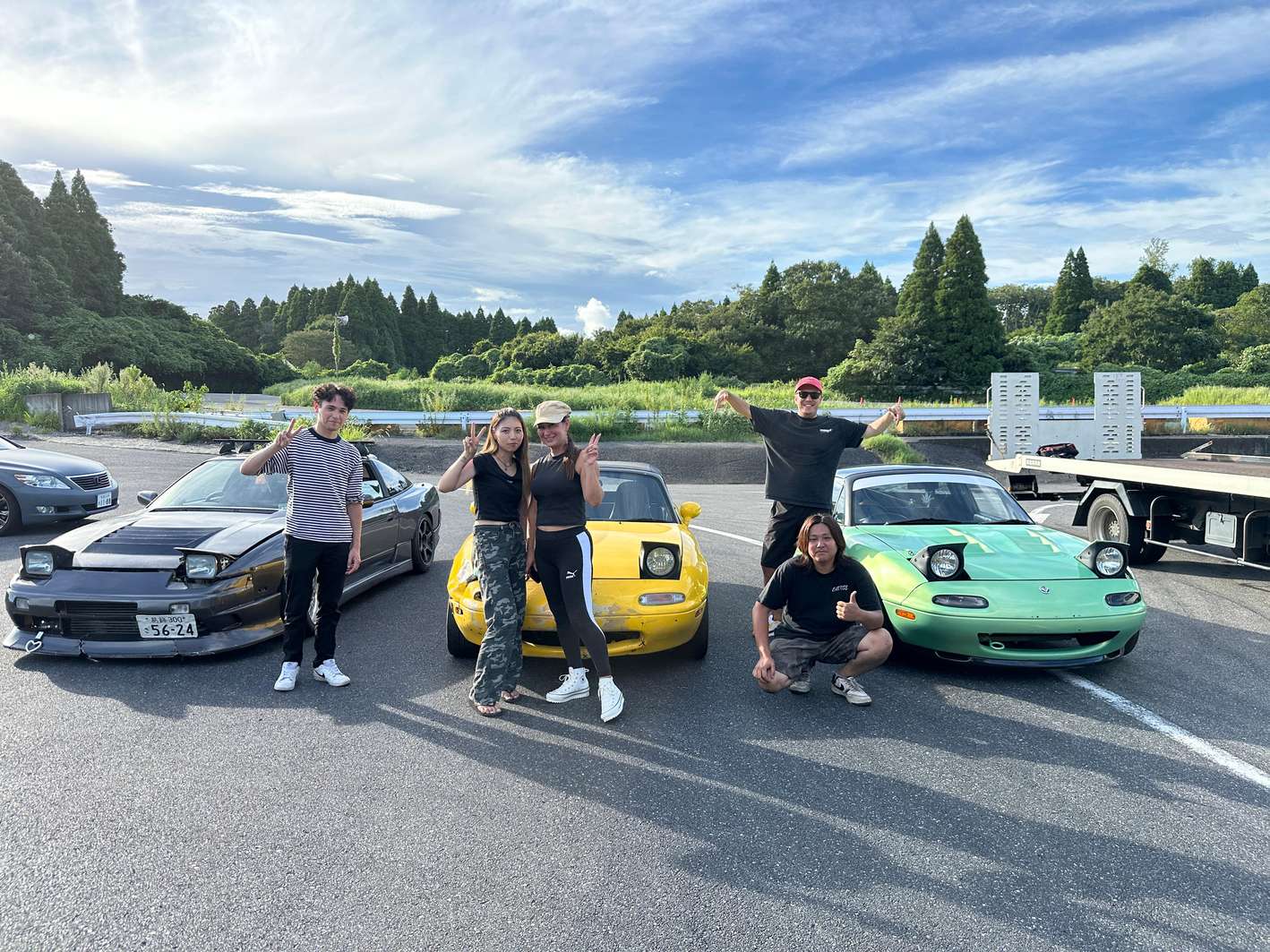
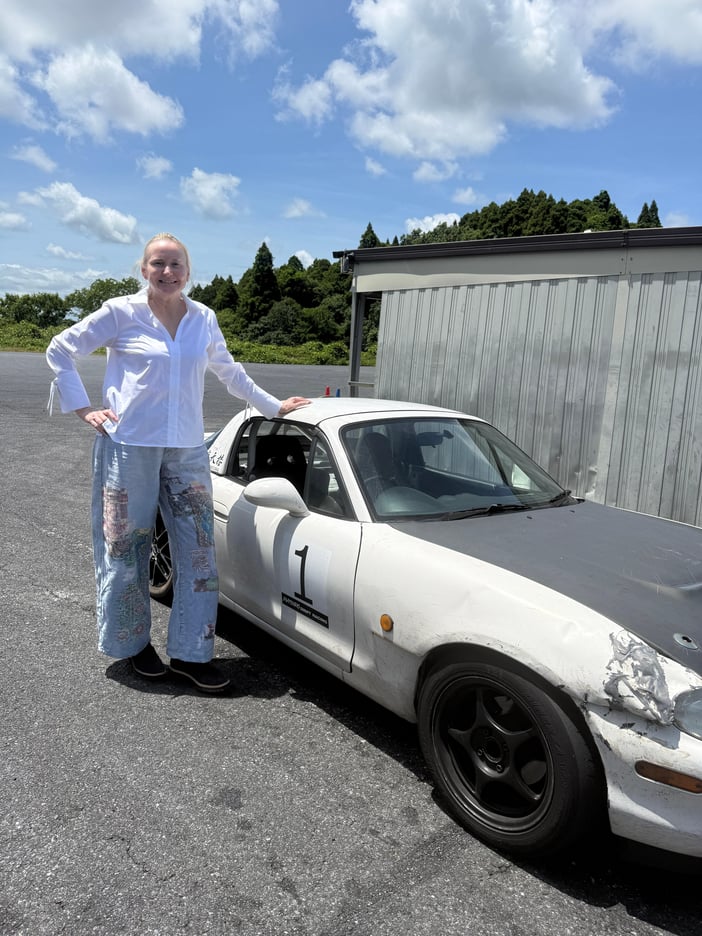
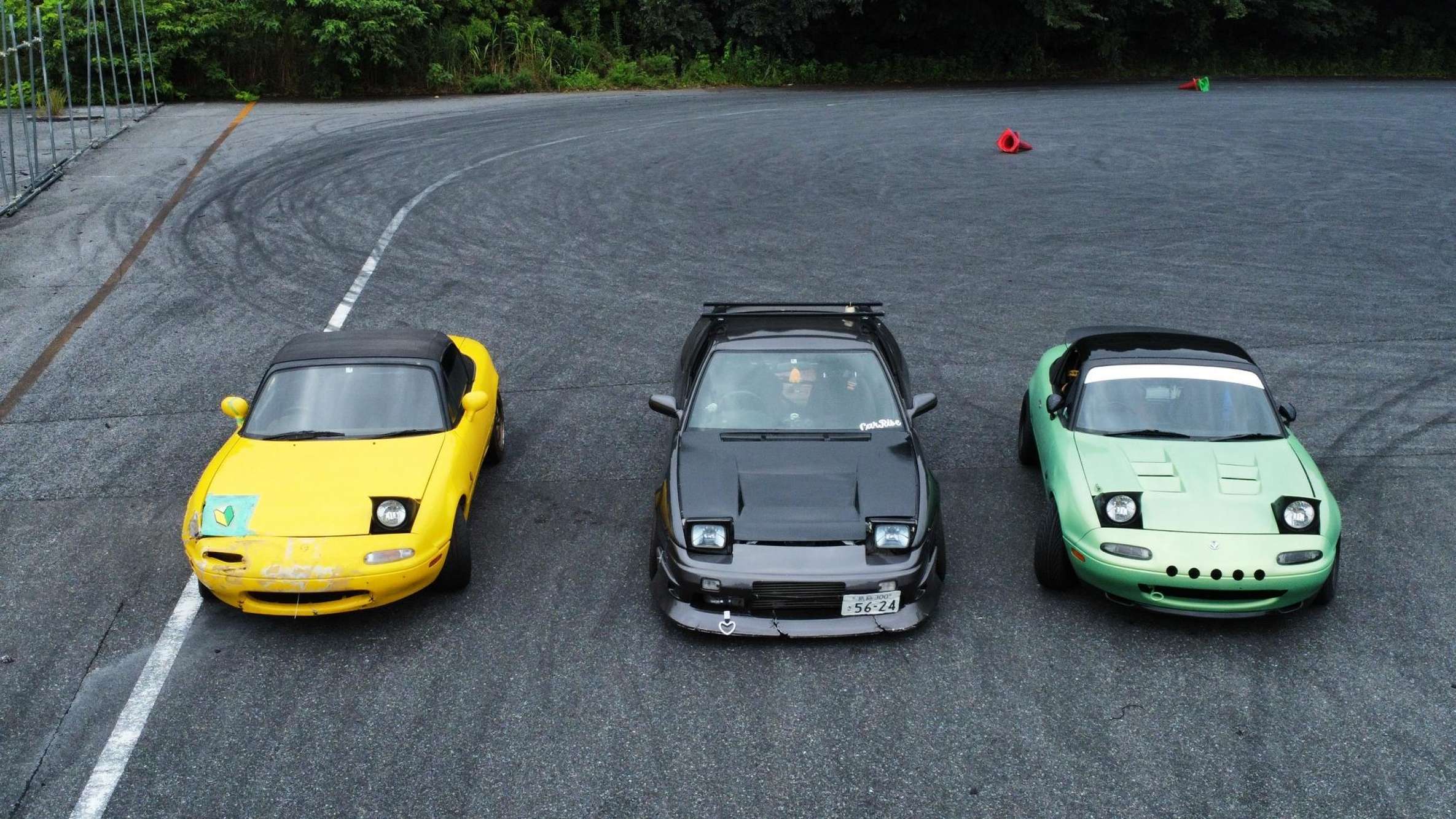
Schools match the car to the driver, so match yourself honestly. Beginners start in a Mazda Miata MX-5, forgiving and light, and may be upgraded to an RX-8 or Nissan 350Z once the basics land.
Intermediates move on to e-brake work and higher-gear changes. Advanced drivers can pay extra for a Nissan 180SX or Toyota JZX100.
A 3-hour lesson is considered enough for beginners; 6-hour sessions exist for intermediates. The private lesson run by the OG drift team takes participants from 18 and up, with under-18s allowed only alongside a parent or guardian.
Two checks before you pay. First, confirm whether you drive or only ride, because some Tokyo drift products are ride-alongs dressed as lessons. Second, confirm English instruction, since some options run in Japanese only, and a Japanese-speaking companion helps at Japanese-language schools.
Myth vs reality
MythEvery drift school is a dedicated school
Reality
Some operators are mechanic shops with a school or rental side run separately, so check who actually teaches
MythA one-day course means drifting full laps
Reality
Progress varies widely; donuts and figure 8s are the realistic first day
MythThe closer Chiba lessons are the same as Ebisu
Reality
The cheaper, nearer options can be more skid pan than full track, which suits beginners but not everyone
The car you learn in matters more than most people expect. If you grew up on a particular chassis, pick the school that teaches on it.
Tour for this
Tokyo Drift Self-Drive Experience with Pro Instructor5.0★ (3) · 3 - 5 hours · Free cancellation
When to book your lesson - months and the Ebisu calendar
Drift lessons run all year, but the sweet spots are March to May and September to November, mild and drier than the summer rainy season. March has a strong record: total beginners at Ebisu that month describe learning donuts, figure 8s and handbrake entries inside a 3-hour lesson.
April and October are the busiest months for these tours overall, so book early for those. Full-day lessons typically run 9 am to 4 pm with an hour for lunch, and specific dates want 2 to 4 weeks of notice.
Rain rarely stops anything; people drift in wet conditions regularly. Winter is the real constraint. The circuit sits in the Fukushima mountains, its drift courses close on scheduled winter-closure days, and snow can shut a course without notice. Organisers confirm by email right up to the day before.
One calendar trap: avoid planning a practice day in the week of Ebisu's biggest event, when the track is packed.
Tokyo month by month for JDM nights and car meets
April: 5 out of 5 for how busy it gets. The busiest month of the year, mild at around 20°C, though roughly 12 rainy days mean a wet night now and then.
HighestMar to Apr, Sep to Oct
In betweenJan, May, Aug, Nov
LowestFeb, Jun to Jul, Dec
Darker: a higher how busy it gets score, out of 5
Tap a month to read it.
January: 26.4 dry days. Cold nights around 9°C but 26 dry days make the drives reliable, and the tours run at a normal pace with smaller meets.
HighestNov to Jan22.8 to 26.4 days
In betweenFeb22.2 days
LowestMar to Oct15.6 to 19 days
Darker months: higher, from 15.6 to 26.4 days
Tap a month to read it.
March: 5.6 windy days. Things pick up as it warms to 15°C, but rain doubles to about 12 wet days, so pack for wet nights.
HighestFeb to May4 to 5.6 days
In betweenJan, Aug, Nov2.4 to 3.6 days
LowestJun to Jul, Sep to Oct, Dec0.6 to 1.8 days
Darker months: higher, from 0.6 to 5.6 days
Tap a month to read it.
The lesson itself is weatherproof enough; the trip to it is what winter can break.
Getting to your lesson - the journey is part of the day
There is no drift circuit inside Tokyo, so every lesson starts with a drive. Minami Chiba, the beginner-friendly option, sits about 1.5 hours away in Chiba.
Ebisu is a different animal: a mountain trip of 3 to 5 hours that no train reaches, and travelers report the hotel-to-circuit leg alone can take 3.5 hours in traffic.
Most operators solve this for you. The private lesson includes free pickup in Tokyo with drop-off at Tokyo Station, and the Ebisu day trip carries you from Tokyo to the circuit and back with fuel and tolls covered. That is the easy road, and for a first lesson it is the right one.
Going independently means rental groundwork: an international driving permit or, for licences from Switzerland, Germany, France, Belgium, Monaco or Taiwan, a certified Japanese translation arranged before you go. For Ebisu, add a car and quite possibly a night's lodging.
Ways to get there
Operator transport from TokyoPickup, tolls and routing handled; you just show up
Easy
Renting a car yourselfPermit or JAF translation needed, plus tolls and left-side driving
Moderate
The Ebisu trip independentlyNo train access; needs a car and often a night in the mountains
Difficult
For a first lesson, take the operator's transport. Save the independent road trip for a return visit, when the mountains are the point.
Driving yourself
Rent a car in TokyoCompare cars from the rental companies in one search, then pick yours.
The dress code is strict and simple. Long sleeves, long pants and sneakers, every season, no exceptions; sandals and Crocs are banned on the circuit. Helmets the schools supply, along with hairnets if you want them.
Gloves are the gap: they must cover the fingertips, and the schools don't provide them, so bring your own or buy a pair at the circuit shop.
Season decides the layers. December to February mornings at the Ebisu mountains sit around -3°C, so wear warm layers under the long sleeves. June to August is hot and very humid, and light breathable long sleeves keep you legal and cool. A rain jacket covers the wet months.
What to wear for your drift lesson at Ebisu Circuit
Long sleeves and long pantsThe circuit requires them for anyone on track, in every season, make them light and breathable in summer.
Sneakers or closed-toe shoesSneakers or racing shoes are required; sandals and Crocs are banned on the circuit.
Gloves covering the fingertipsRacing gloves that cover fingertips and wrists are required, and the schools don't supply them, bring your own or buy at the circuit shop.
Helmet (or use theirs)A full-face or jet helmet must be worn at all times on track; the schools provide helmets and hairnets, or bring your own.
Dec to Feb: warm layersMornings average around -3°C with occasional snow days at this mountain circuit, so layer warm clothes under your long sleeves.
Jun to Aug: light, breathable kitHot and very humid at 25-30°C with 15-22 wet days a month; light long sleeves keep you cool while meeting the rules.
Rain jacketJune to September bring roughly 180-195 mm of rain a month, so pack a light waterproof layer.
Light jacket for Mar, May, Oct, NovMild days of 12-21°C but cool mornings in the Fukushima mountains; a light layer over your long sleeves is enough.
Pack the night before. A lesson spent shivering, or turned away at the gate for the wrong shoes, is a lesson wasted.
The day opens with a welcome and a look at the cars, then the safety briefing: venue rules, basic drift mechanics, helmet and harness fitting. The lesson cars carry roll cages and safety harnesses, and the instructor rides with you or watches from trackside throughout.
Then the first runs, and here is where first-timers lose their day.
The classic errors are all the same family: jerky clutch and throttle instead of smooth inputs, which spins the car; hitting the brakes in panic when the car pushes wide, which spins it worse; and skipping steady-circle practice to chase figure 8s, which slows everything after it.
The fix starts before you fly. Practise counter-steering and clutch-in handbrake technique on a driving simulator, watch some videos, and arrive with the motions already in your hands. People who do that spend the lesson drifting. People who don't spend it learning where the pedals are.
1
Pickup in Tokyo
Collected for the drive to the circuit
About 1.5 hours each way
2
Welcome and briefing
Rules, drift mechanics, helmet and harness fitting
The cars are roll-caged
3
Steady circles
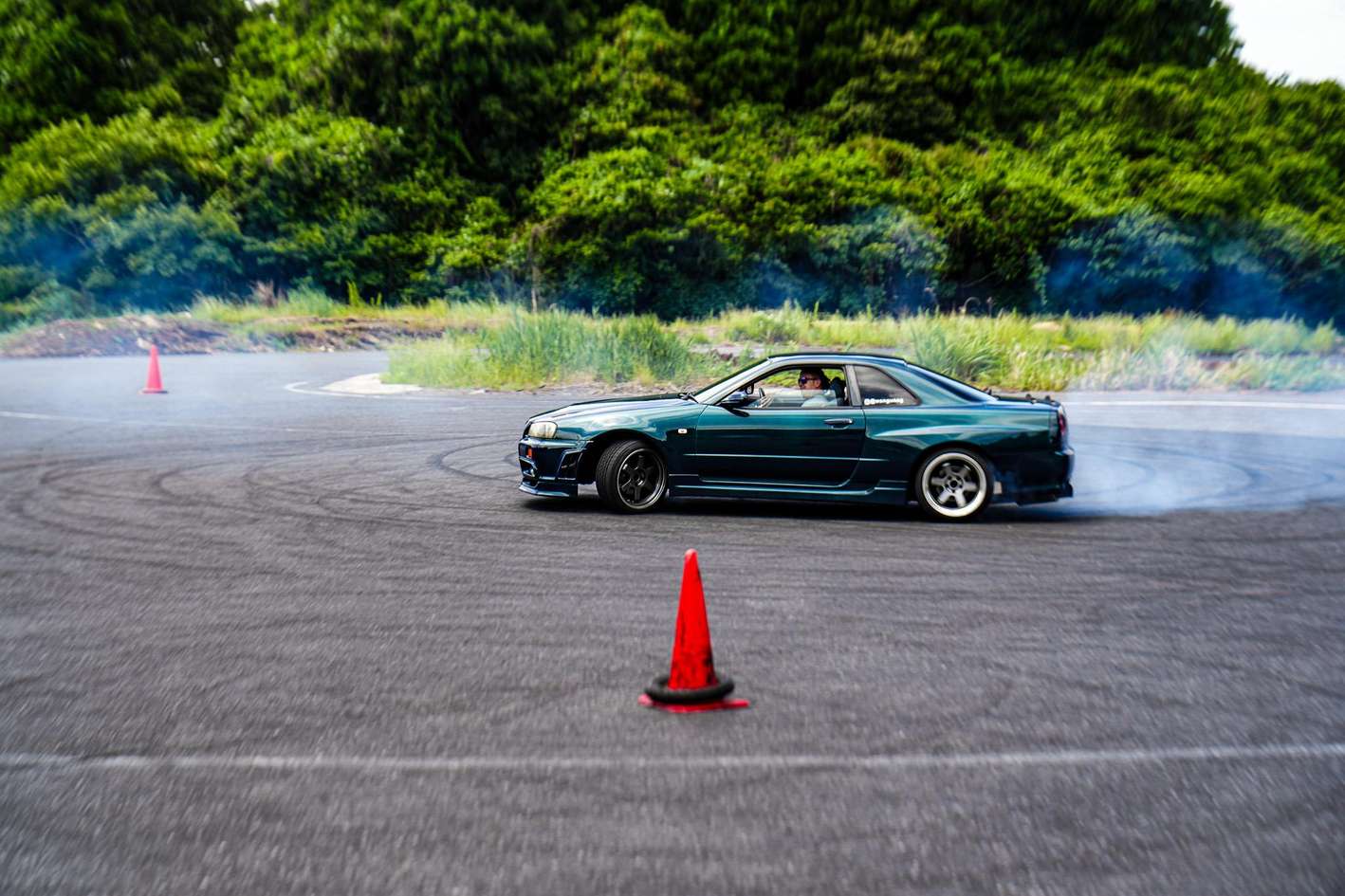
Donuts around cones until they hold
The foundation everything builds on
4
Figure 8s and transitions
Swapping direction mid-slide
Progress varies by driver
5
Graduation and ride home
Challenge course, then drop-off
Back at Tokyo Station
However your runs go, the shape of the day holds: briefing, circles, transitions, and a car full of tire smoke on the way home.
The law is blunt. Drifting on a public road is illegal in Japan, and not in a slap-on-the-wrist way: under article 68 of the Road Traffic Act it carries up to 2 years' imprisonment, plus 25 demerit points.
A visitor on an international driving permit can be banned from driving on that permit for up to five years for a Road Traffic Act breach.
This is exactly why the lesson exists. On a closed circuit or private land, drifting is ordinary motorsport, sold and insured like any track day. Nothing about your lesson touches the grey area.
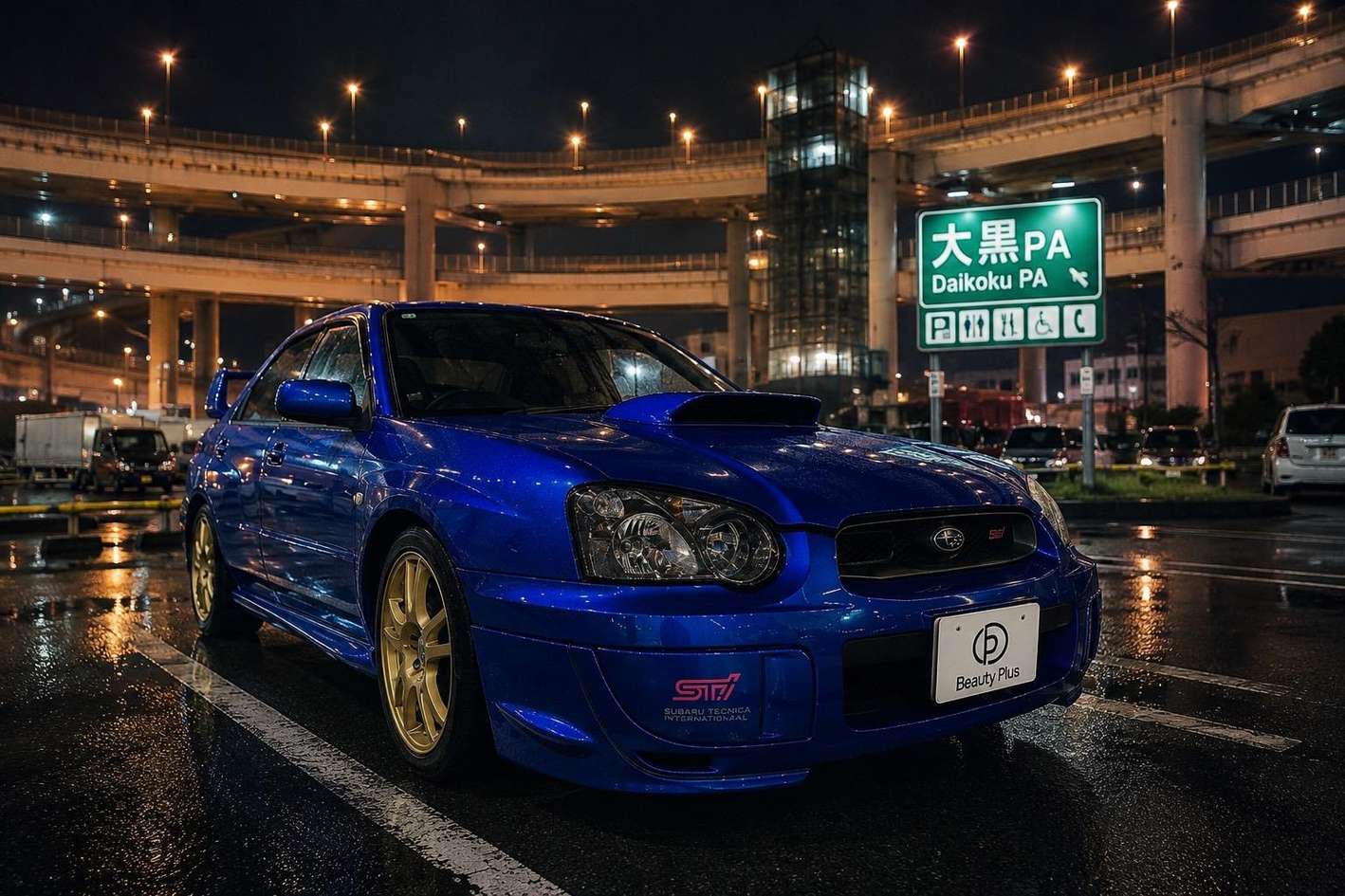
The same logic explains what you will not see. Daikoku PA is a parking lot, and drifting there would bring the police within minutes. The touge runs you read about online were illegal when the Drift King did them, and they still are.
Can stop the day
Drifting on public roads is illegal under article 68 of the Road Traffic Act Up to 2 years' imprisonment, 25 demerit points, and a permit ban of up to five years for visitors; keep every slide on the circuit
Enjoy the circuit for what it is: the one place in Japan where this is fully yours to do.
The mistake that ruins this plan is leaving it until you land. Tours sell out, and turning up in Tokyo hoping for a seat is a gamble people lose. Book 2 to 4 weeks ahead for a specific date, and earlier for April and October.
Know the closing rules too. Some operators' drift bookings close a day before the experience because the whole circuit is rented for you; one Tokyo operator wants a month's notice. Once booked, reply to the confirmation email, which usually arrives within 48 hours, and keep WhatsApp notifications on, because operators send updates before departure.
Contact schools early and by more than one route. Some travelers found operators slow to answer when they asked late, and a Japanese-speaking companion makes booking easier at Japanese-language schools. Ask upfront whether everything is provided: car, helmet, gloves and an English-speaking instructor.
What nobody tells you
Some operators close bookings a day or more ahead
The circuit is rented whole for private lessons, so late requests simply miss
One Tokyo operator wants a month's notice
Extreme-drive experiences plan cars and instructors far in advance
Weather calls are confirmed by email right up to the day before
Winter snow can shut a course without notice, so watch your inbox
Every one of these rules points the same way: the earlier you write, the more of the day belongs to you.
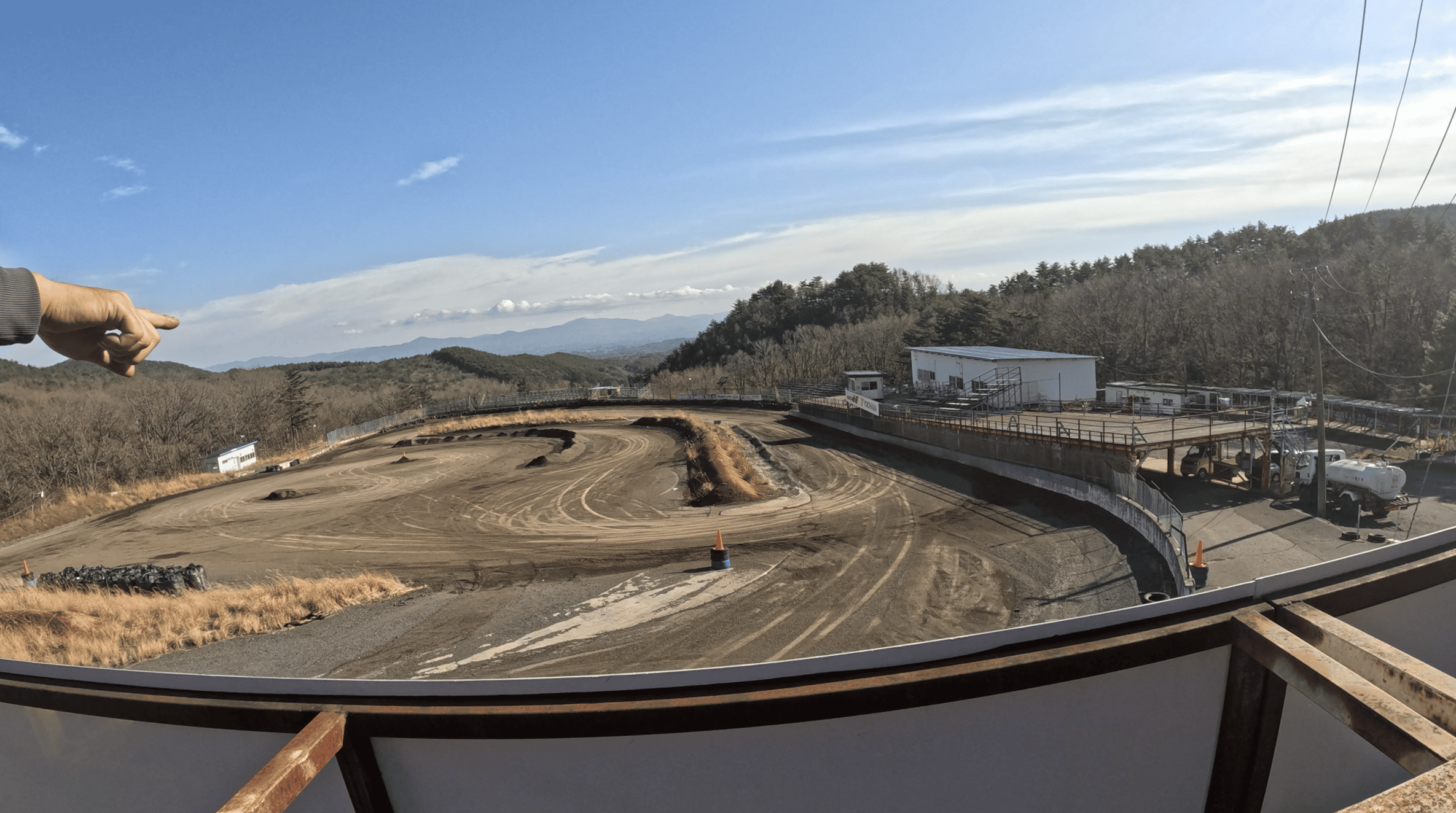
Ebisu rewards a longer stay. The site holds around ten courses, including the School Course and Drift Land, and the Drift Taxi lets a professional drift you through three of them, no licence needed, running April to November.
Drift Matsuri, held three times a year, pulls drivers from around the world. Stay over at The Drifters Lodge or the pension Mori no Izumi, and some travelers add Yamagata for the roads and the scenery.
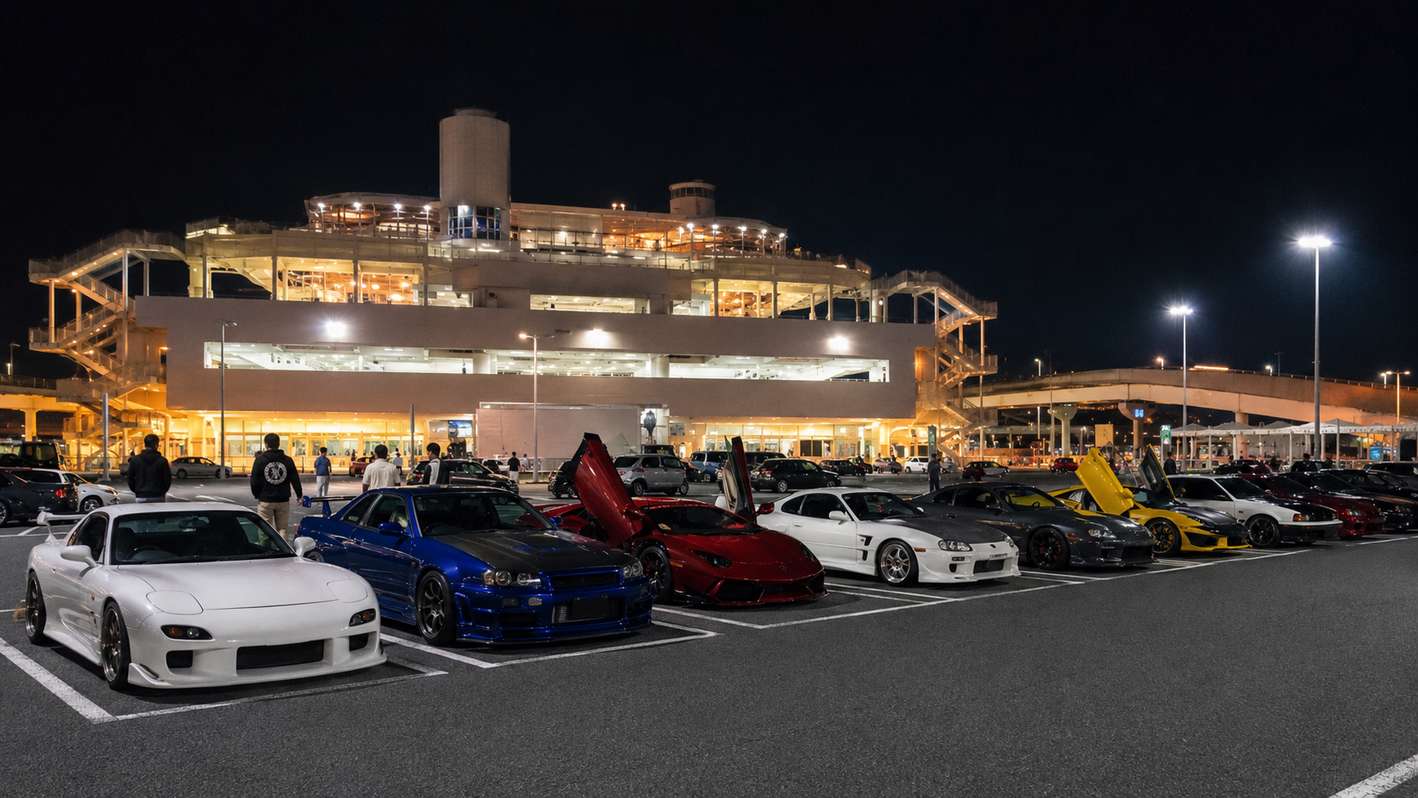
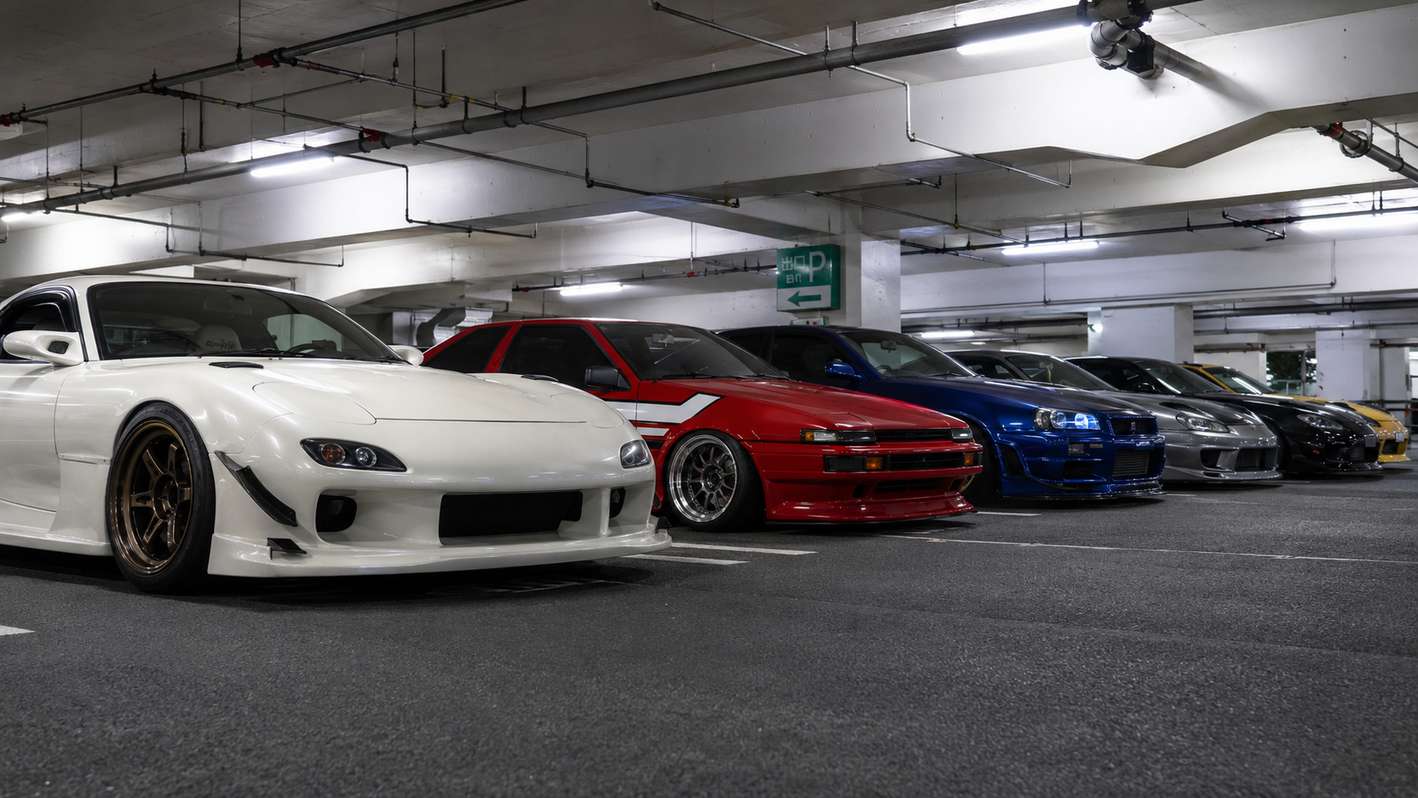
Back in Tokyo, the night rounds out the pilgrimage. Daikoku and Tatsumi Parking Areas fill with tuned metal after dark, and the Akihabara UDX underground garage is free to walk into on Friday and Saturday nights.
Time Attack fans should look at Tsukuba. Spectators who skip the wheel can still catch drift events at Ebisu or around the Tokyo area.
For someone who wants to drive, a private drift lesson is one of the best days Japan sells: a closed circuit, an OG instructor, and a donut you did yourself inside 3 hours. For the mildly curious, ride shotgun instead and save the day. Either way, book weeks ahead and pack the long sleeves.
Go ifYou want hands-on instruction with real track time behind the wheelYou can give a full day to travel, briefing and practiceYou are a JDM fan building the trip around the cars
Skip ifYour schedule is packed and you only want a taste of driftingYou are under 18 and cannot come with a parent or guardianYou expect to drift full laps on day one
Our pick to book
Self Drive Drifting Lesson with Pro Tokyo Drift Experience5.0★ (48) · 6 hours · Hotel pickup · Free cancellation
Short answers to what people ask before booking a drift lesson near Tokyo, from licences and locations to what you actually learn.
Can I take a drift lesson in Tokyo itself?
There is no drift circuit inside Tokyo. Lessons happen at circuits reached by transport from the city, usually about 1.5 hours away in Chiba, or at Ebisu Circuit in Fukushima. Most lesson providers include pickup in Tokyo and roundtrip transport, so you never have to drive there yourself.
Do I need a driving licence for a drift lesson in Japan?
No, not for the private lessons on this page. They take place on closed circuits or private land, so no licence and no International Driving Permit are needed. Complete beginners who have never driven a car can join.
Is drifting legal in Japan?
Only on a closed circuit or private land. Drifting on a public road is illegal and carries up to two years' imprisonment or a fine, and a visitor on an International Driving Permit can be banned from driving on it for up to five years. Every proper lesson keeps you on a circuit.
What is the difference between a drift lesson and a ride-along?
In a lesson you drive a drift car yourself while an instructor teaches you, starting with donuts and figure eights. In a ride-along, a professional driver does the drifting while you sit in the passenger seat. Some experiences combine both, with practice time plus passenger hot laps.
I have never drifted before. Is a lesson suitable for a complete beginner?
Yes. Beginners start in a Mazda Miata MX-5 and learn steady circles first, with an instructor riding beside you the whole time. Most people manage a proper donut within about three hours of practice, and patient instructors are used to teaching newcomers from zero.
What will I actually learn during a drift lesson?
The fundamentals: weight transfer, initiation, donuts and circle drifting, then figure-8 transitions. Intermediate drivers move on to e-brake use and higher-gear changes. Lessons end with a graduation challenge course so you can see how far you have come in the day.
What happens at Ebisu Circuit, and is it good for learning?
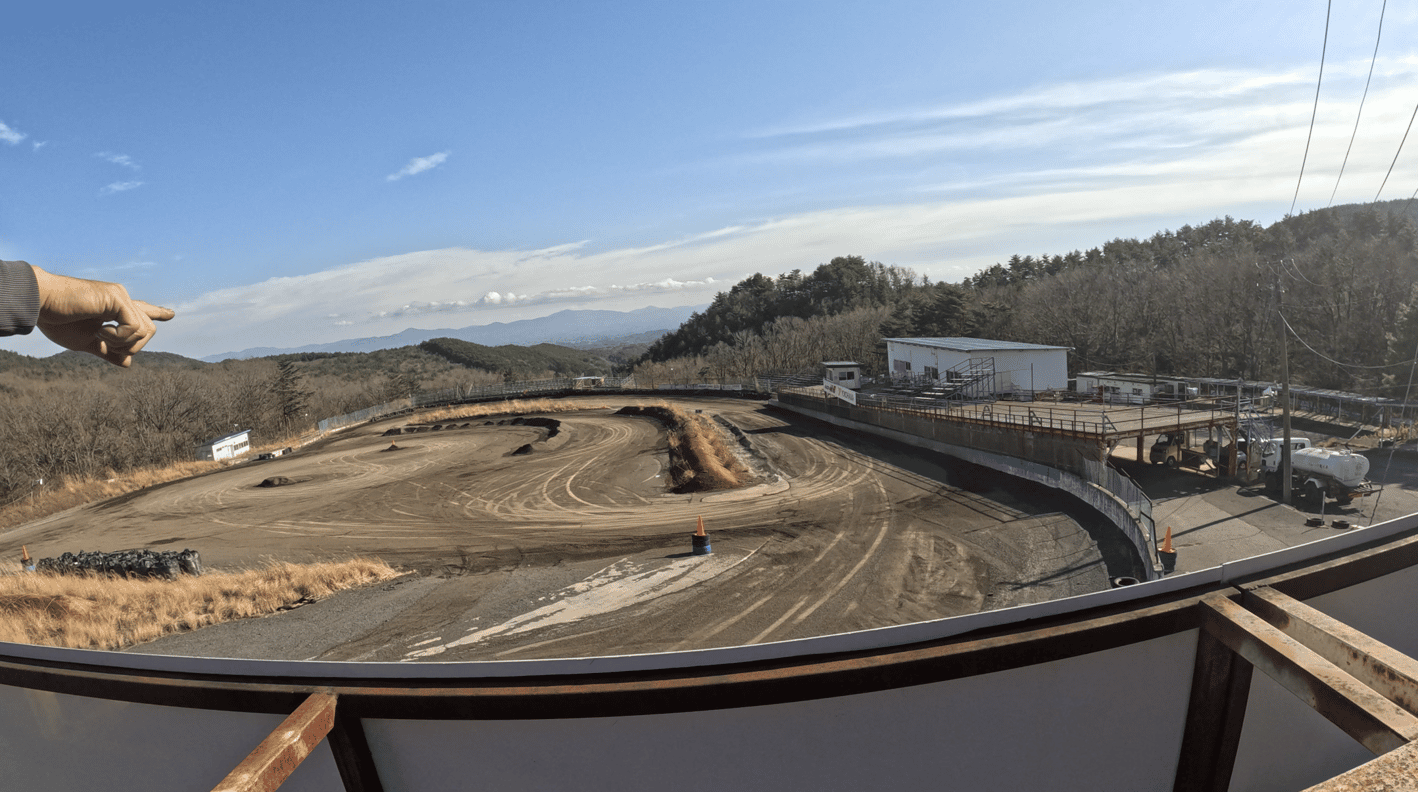
Ebisu Circuit in the Fukushima mountains is widely called the drift mecca, with around ten courses and a full drift school.
A guided day trip from Tokyo includes drift practice, a JDM car driving experience and a pro ride-along, and people who have done it often call it one of the best days they have had.
How long does a drift lesson take from Tokyo?
The private lesson itself runs about three hours on the circuit, with roughly 1.5 hours of transport each way, so plan for about six hours door to door. Full-day schools typically run from 9 am to 4 pm with a lunch break, and Ebisu day trips take around twelve hours in total.
What should I wear and bring to a drift lesson?
Long sleeves, long pants and sneakers are required; sandals and flip flops are not allowed. Helmets and gloves are provided, and lesson cars carry safety equipment. Bring a camera or charged phone, and leave large bags behind since space in the cars is limited.
Can a drift lesson be cancelled or spoiled by weather?
Both lessons can be cancelled up to 24 hours in advance for a full refund. Rain rarely stops a lesson, and drifting on a wet surface is often easier for beginners. Winter snow is the one real constraint at Ebisu Circuit, so organizers confirm by email right up to the day before.
Three hours on track with an OG pro, learning donuts and figure 8s in a real JDM drift car, with free pickup and full refund if you cancel up to 24 hours ahead.