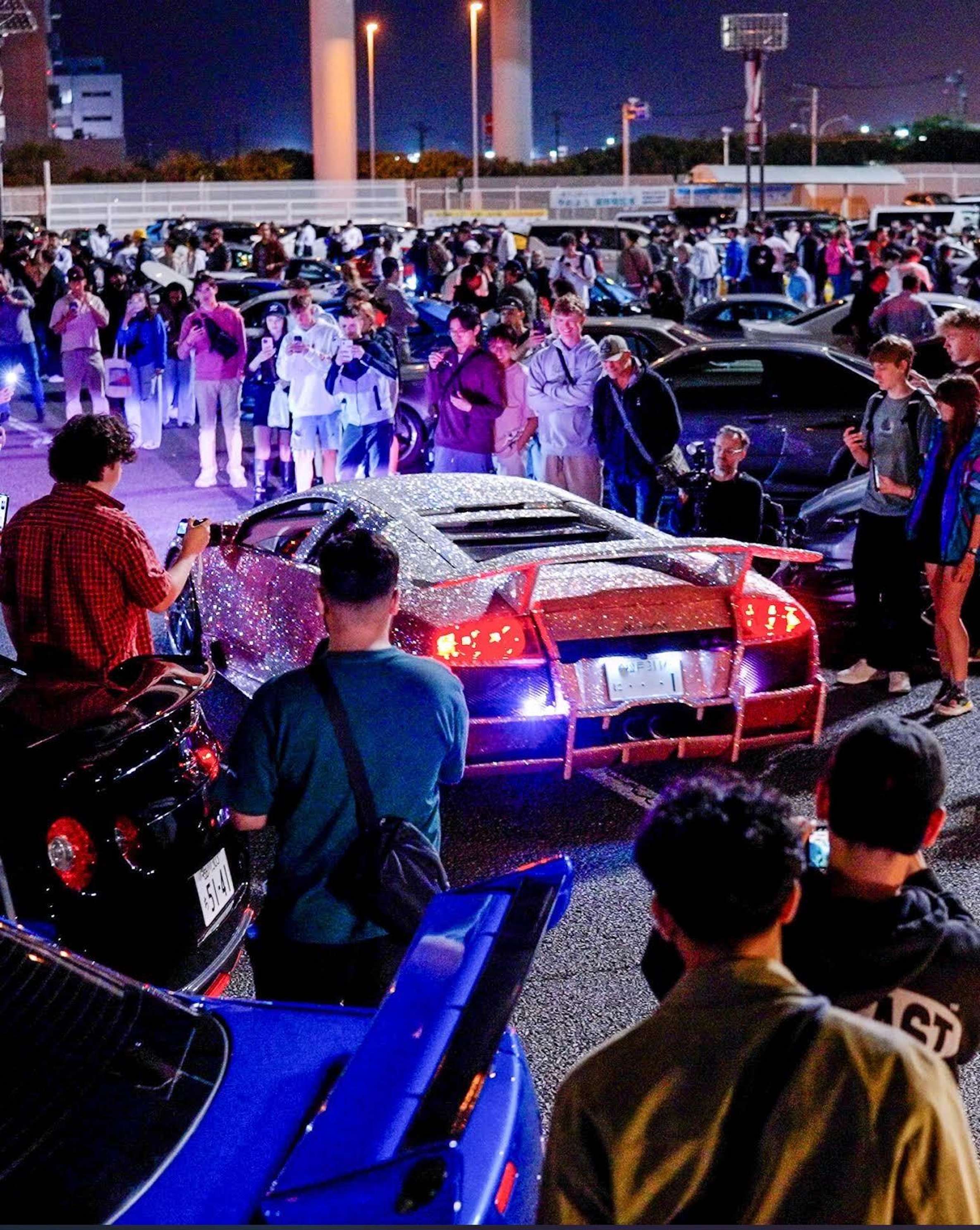
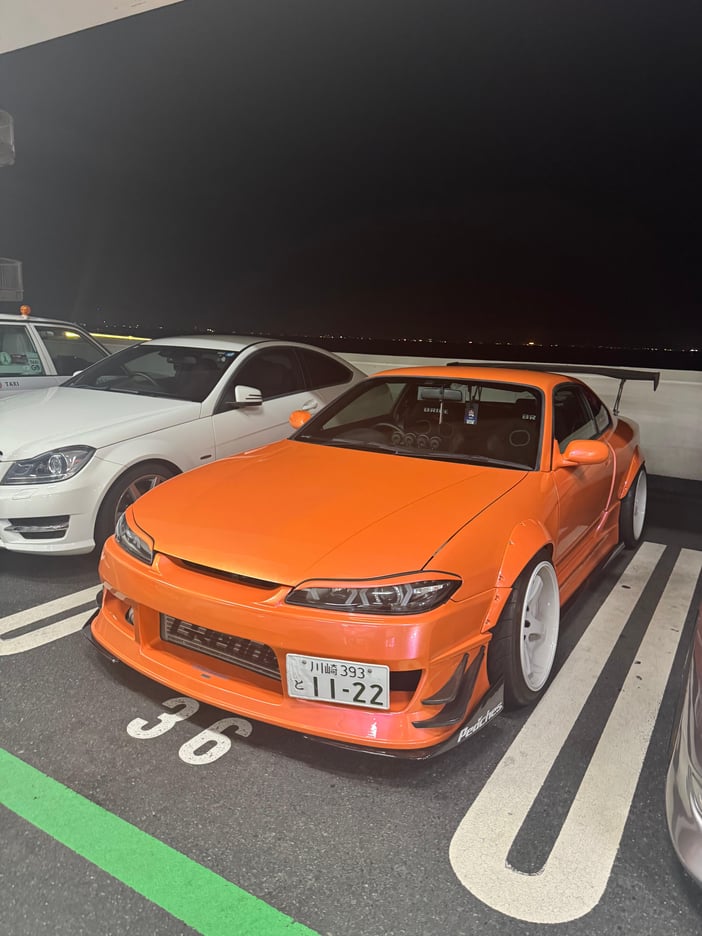
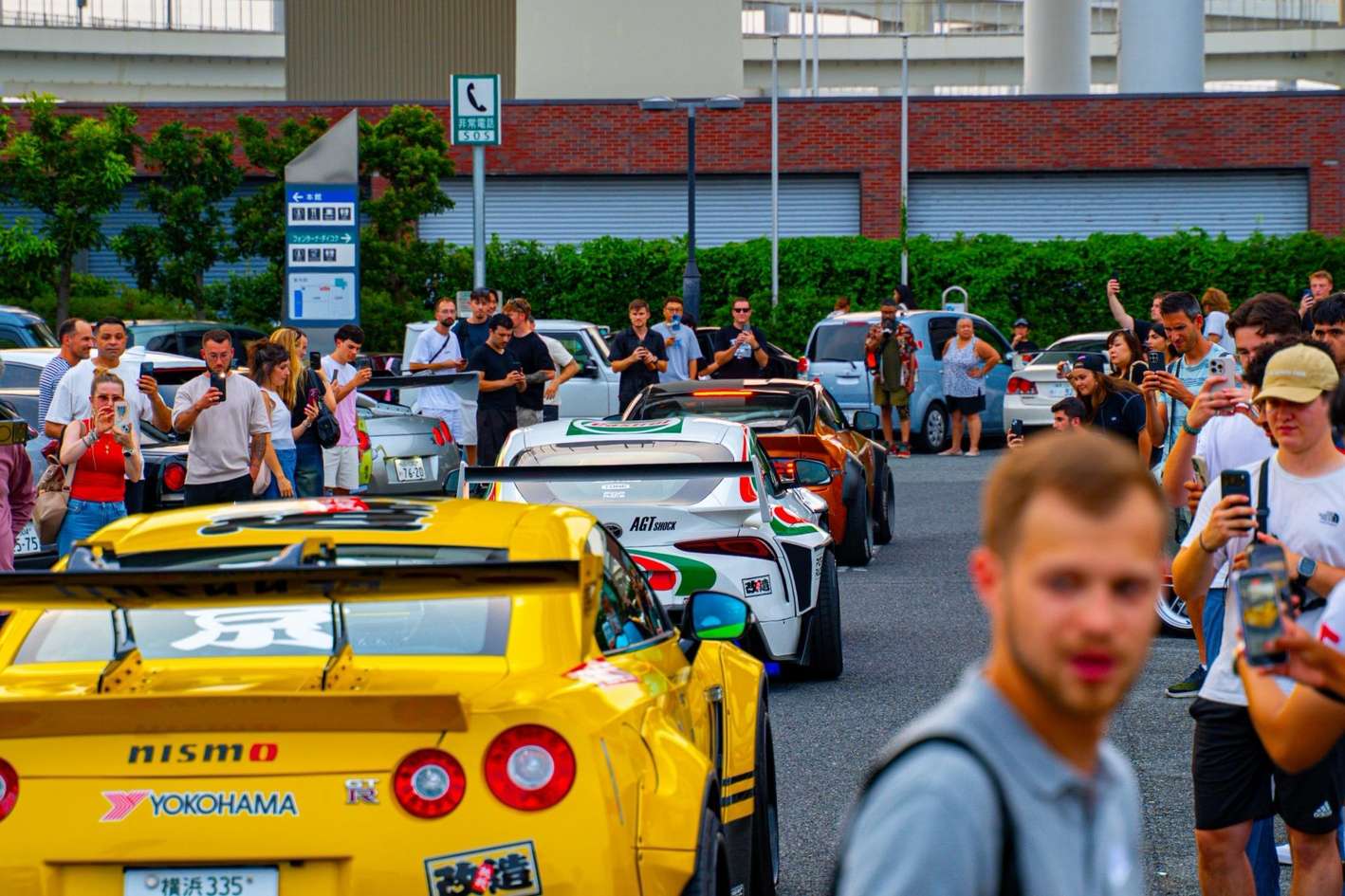
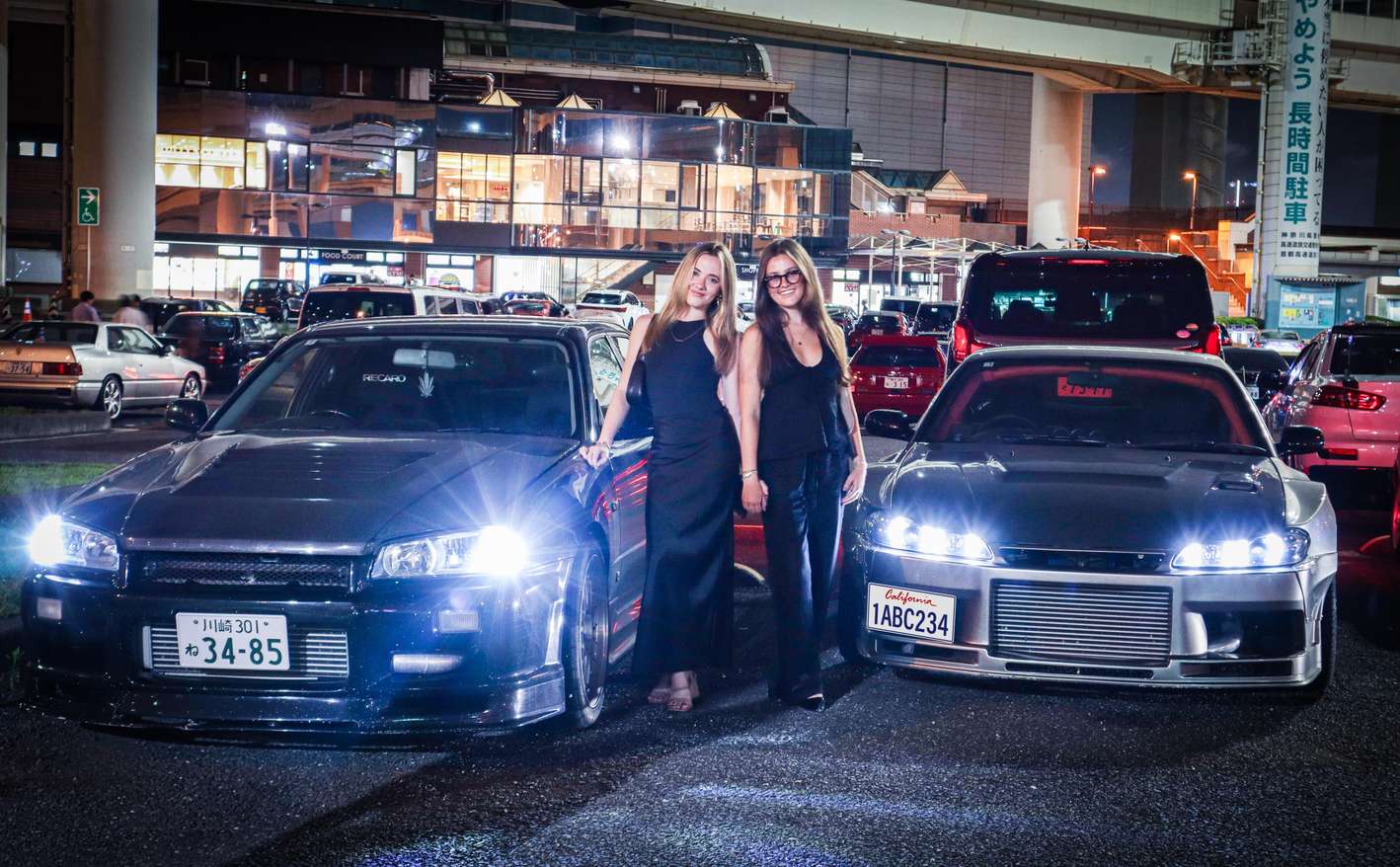
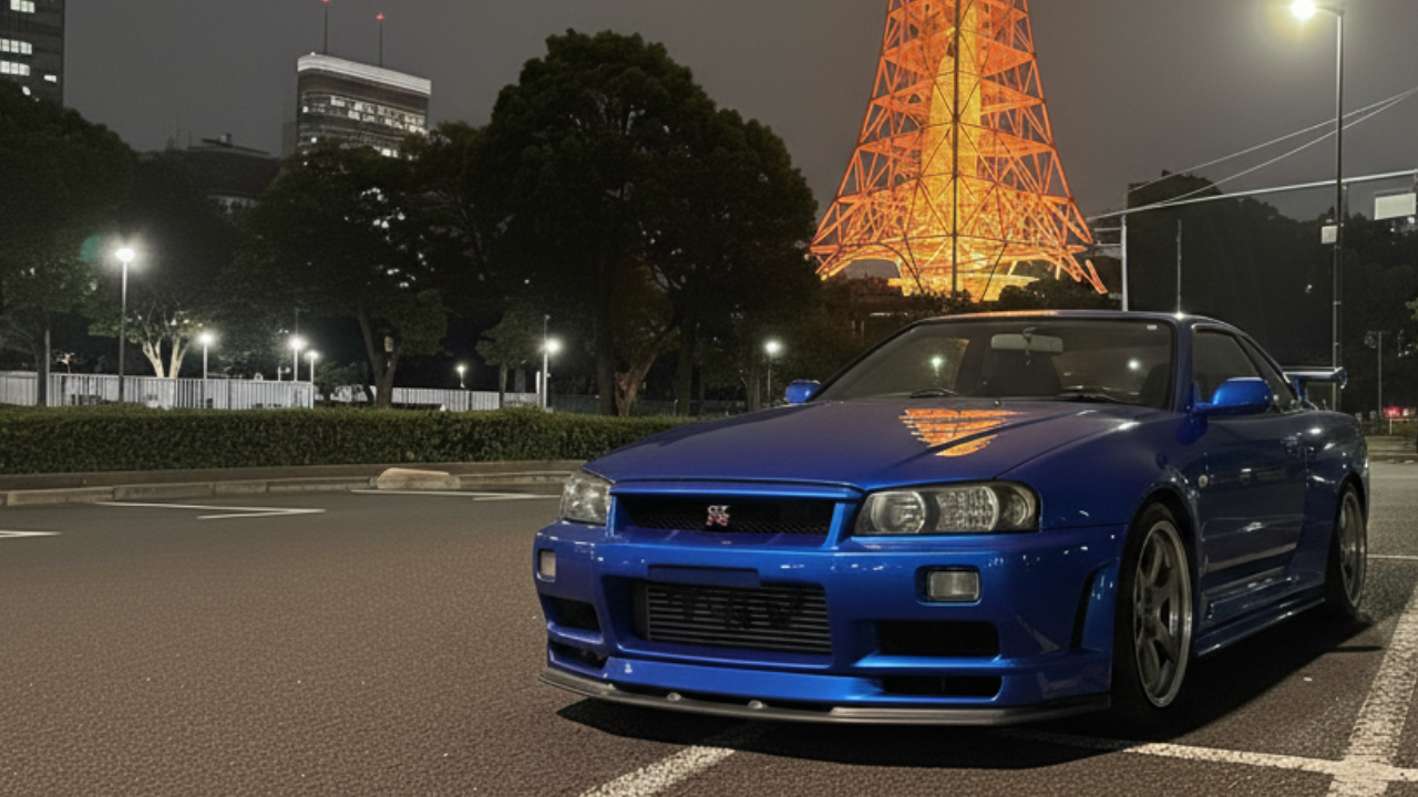
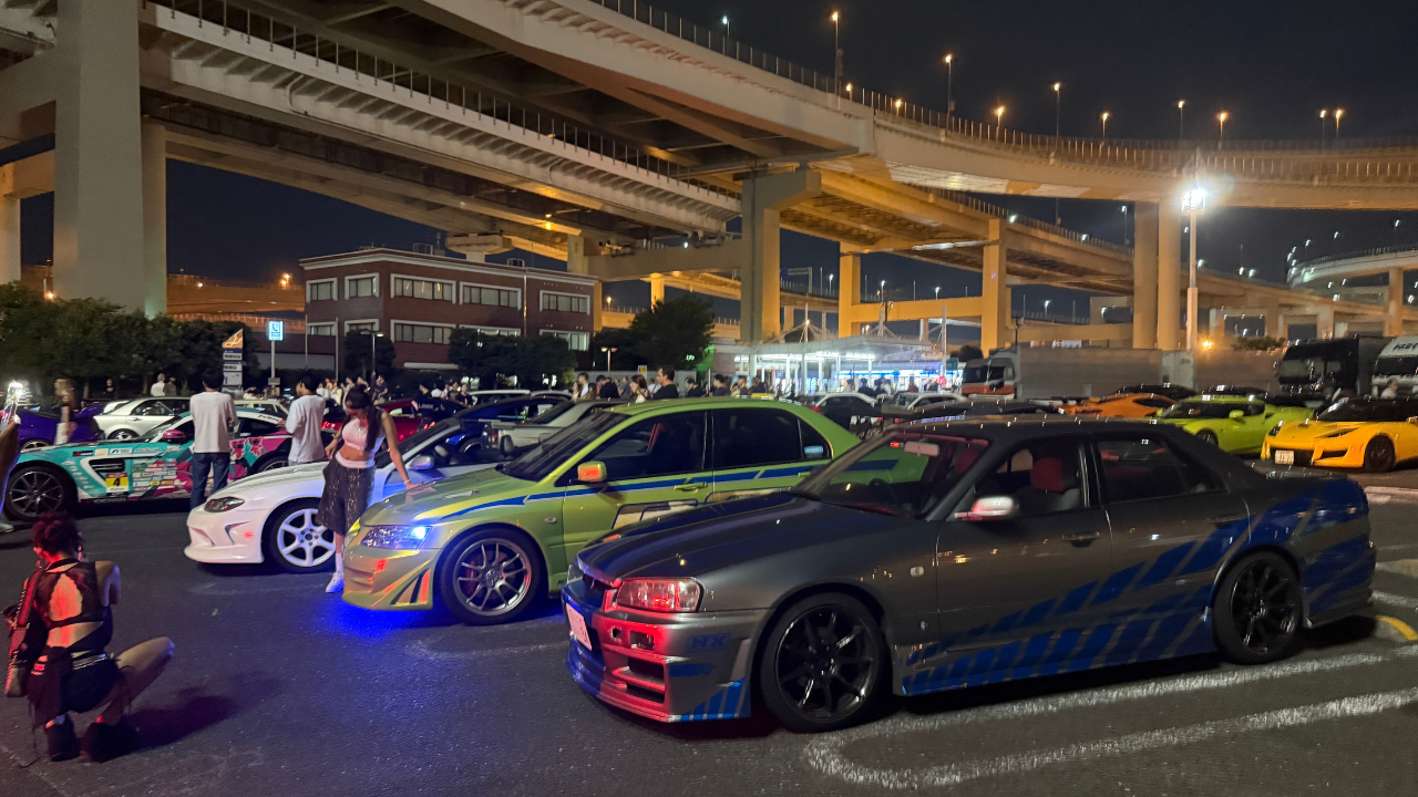
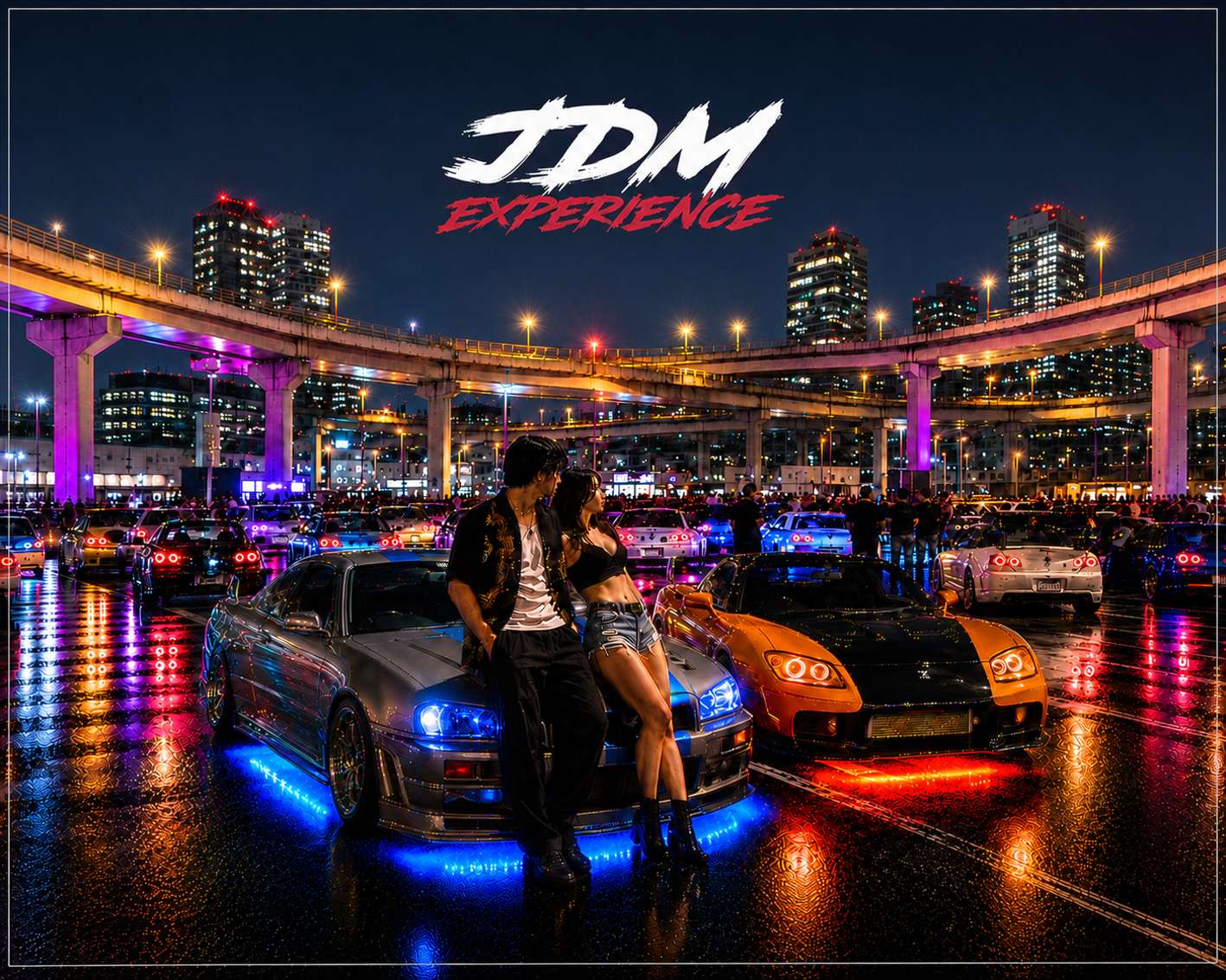
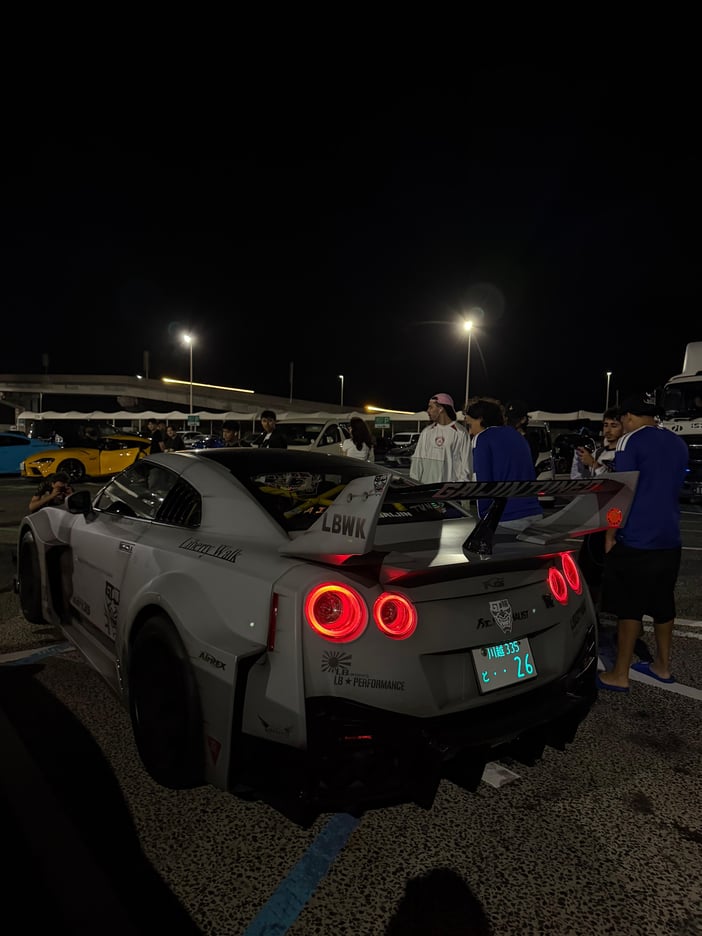
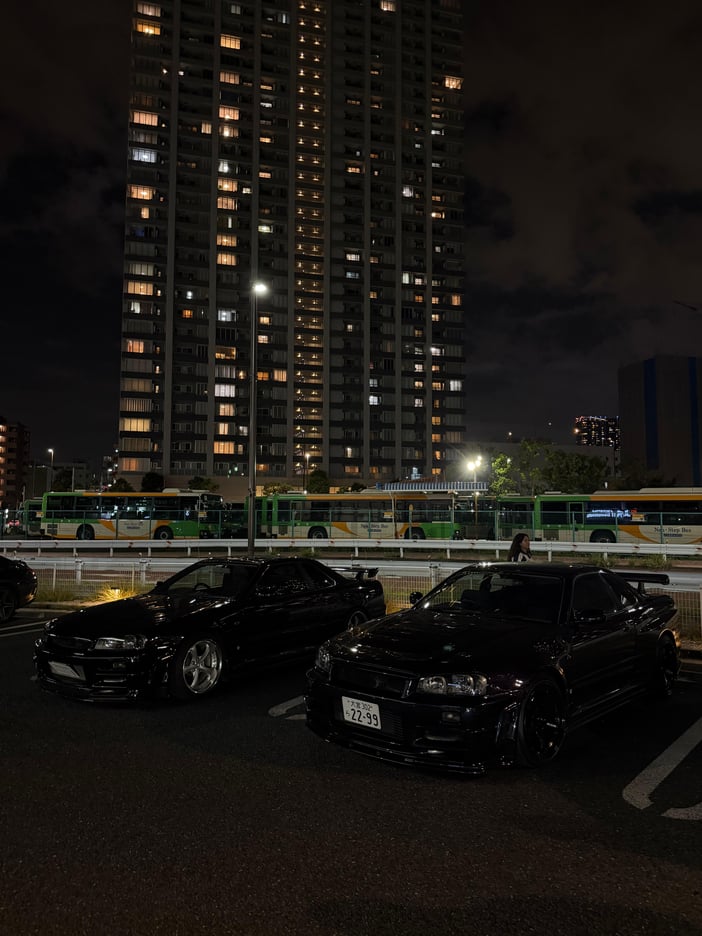
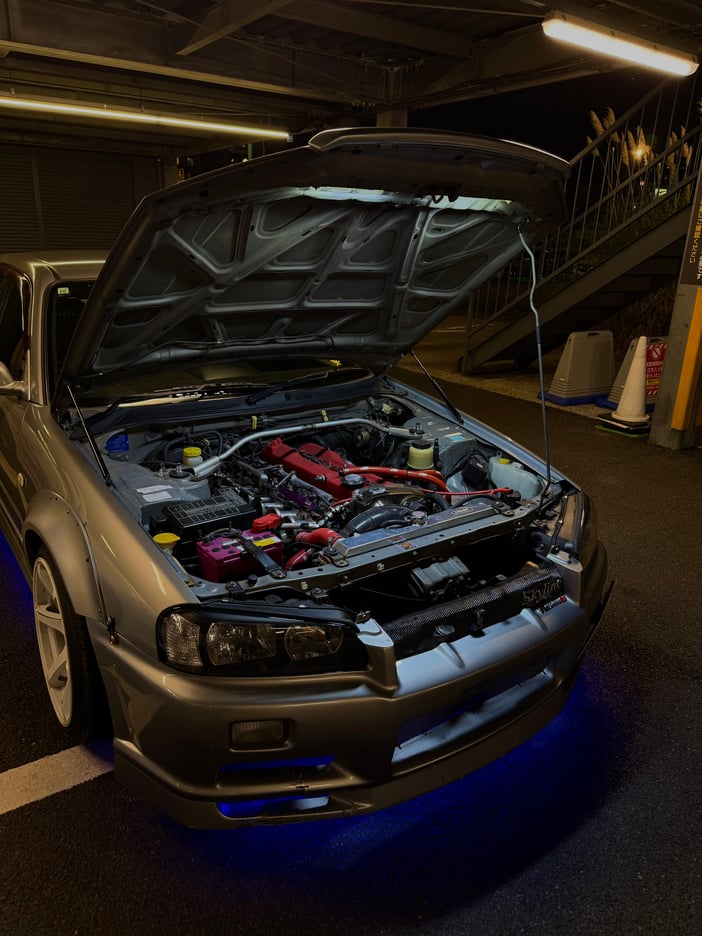
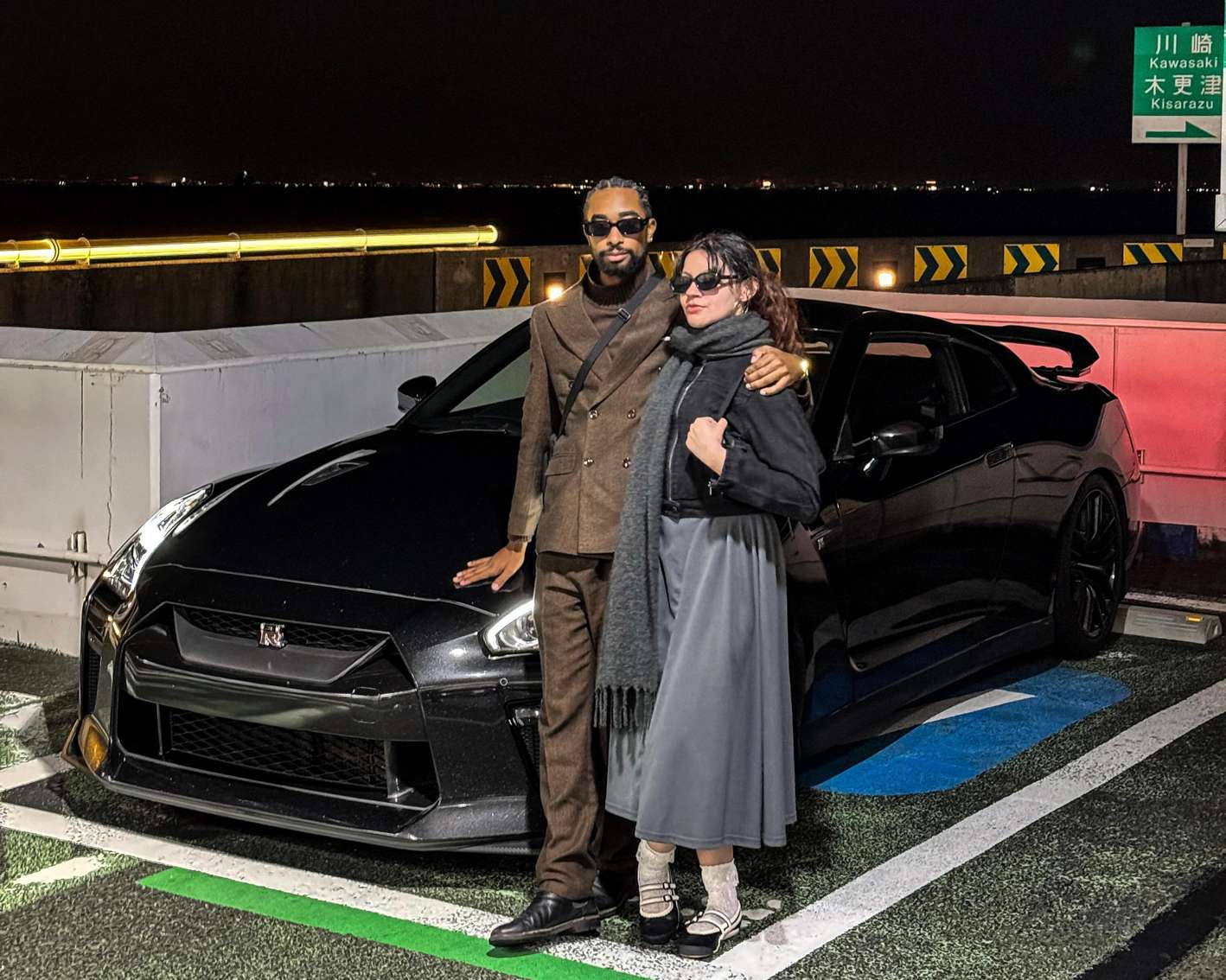
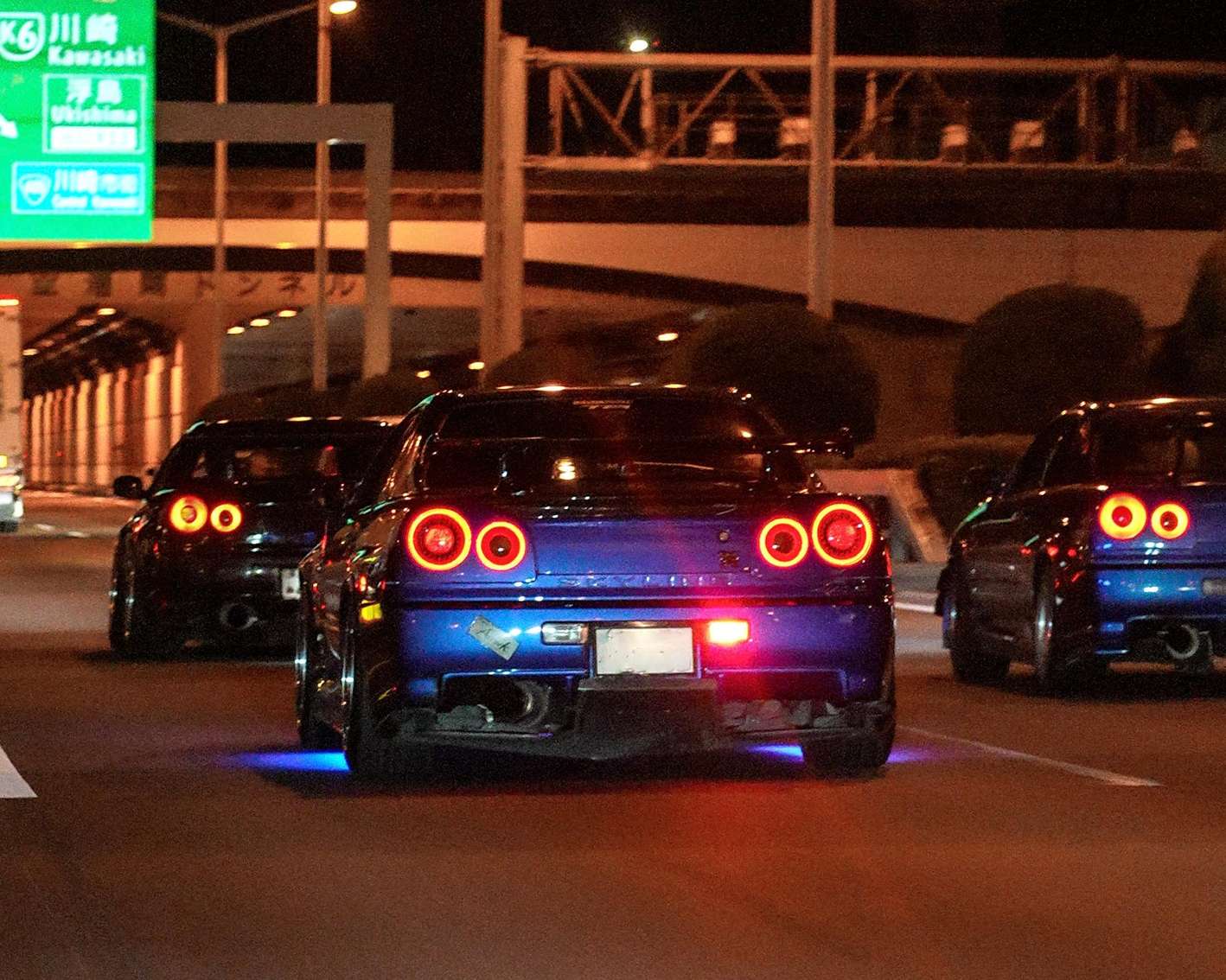
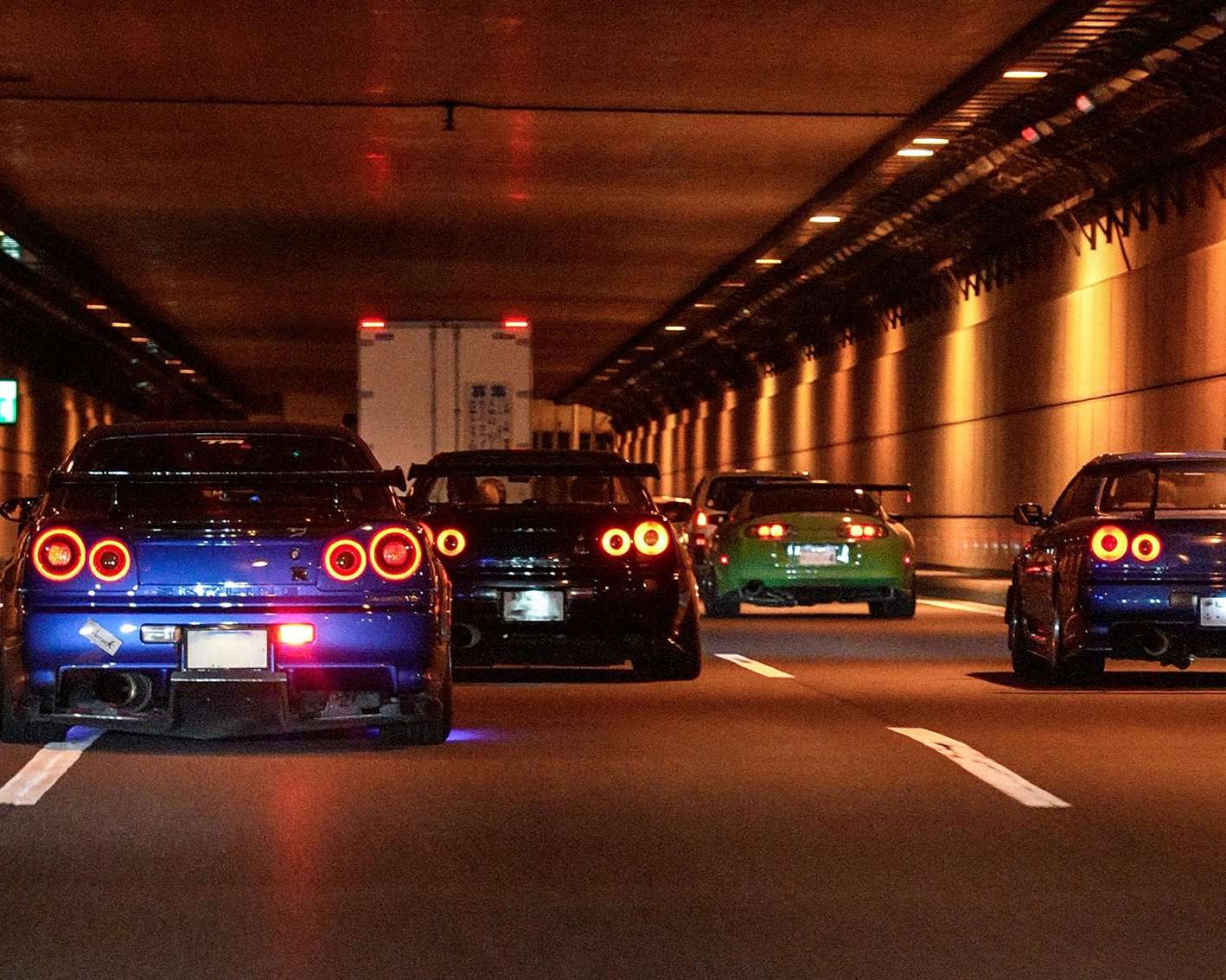
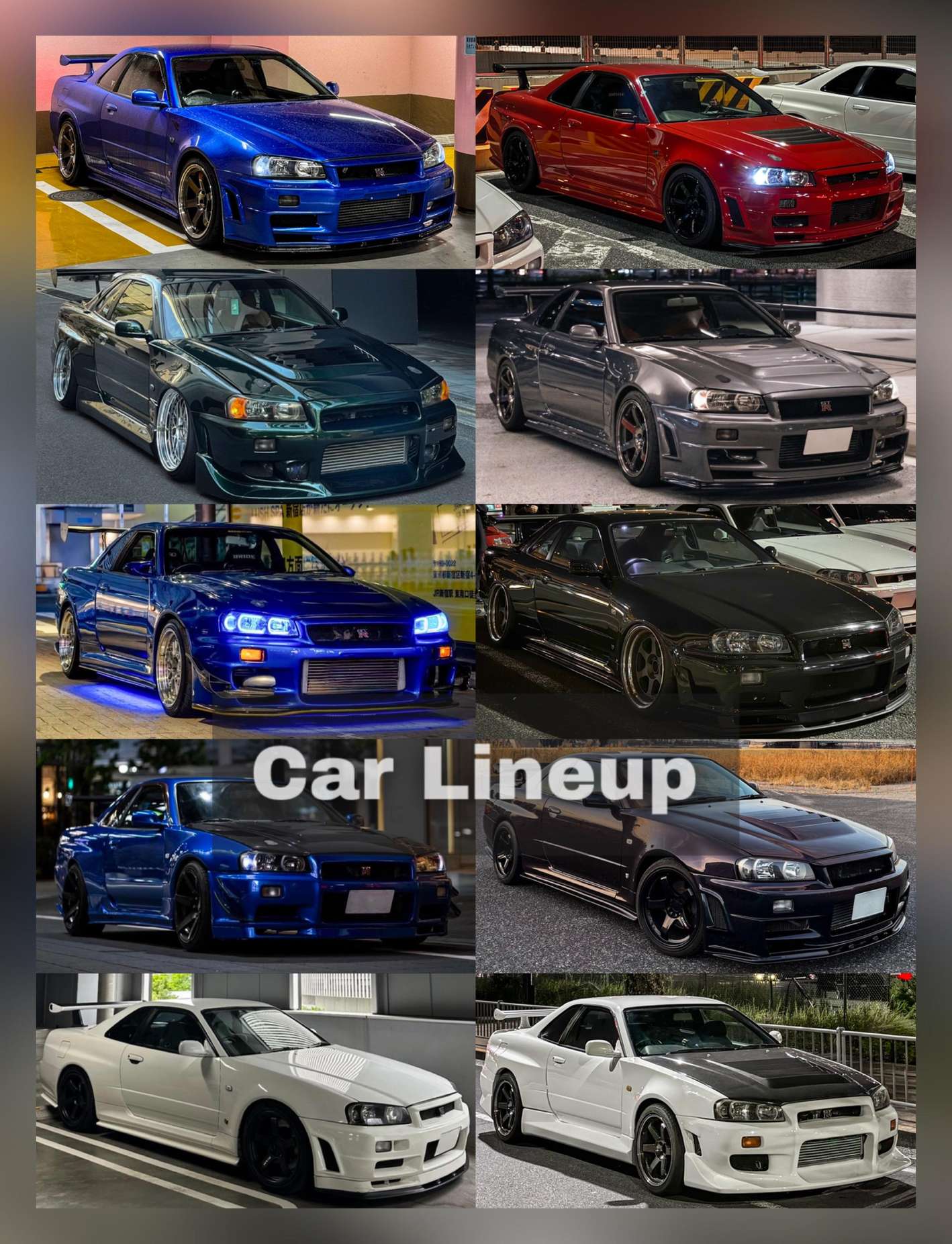
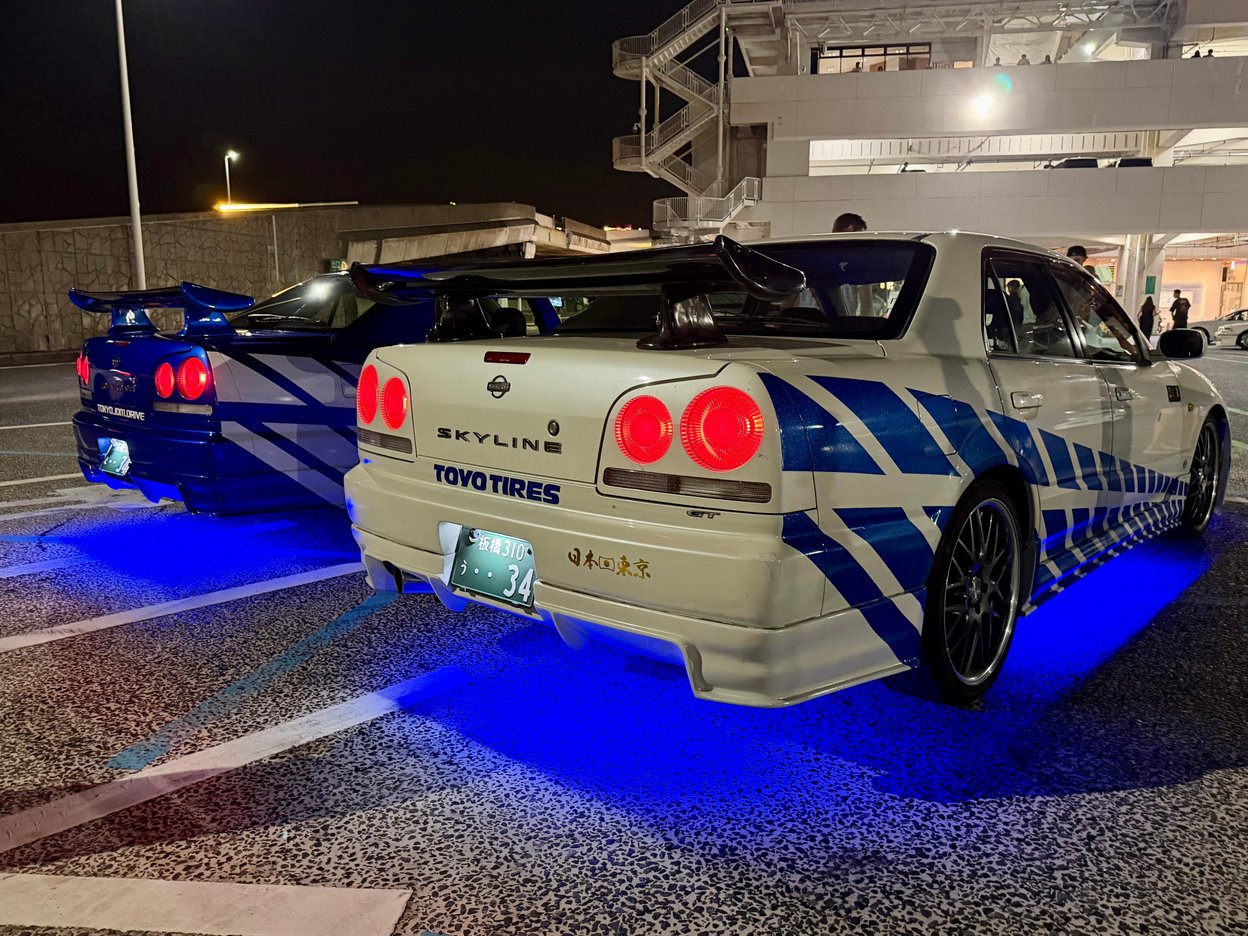
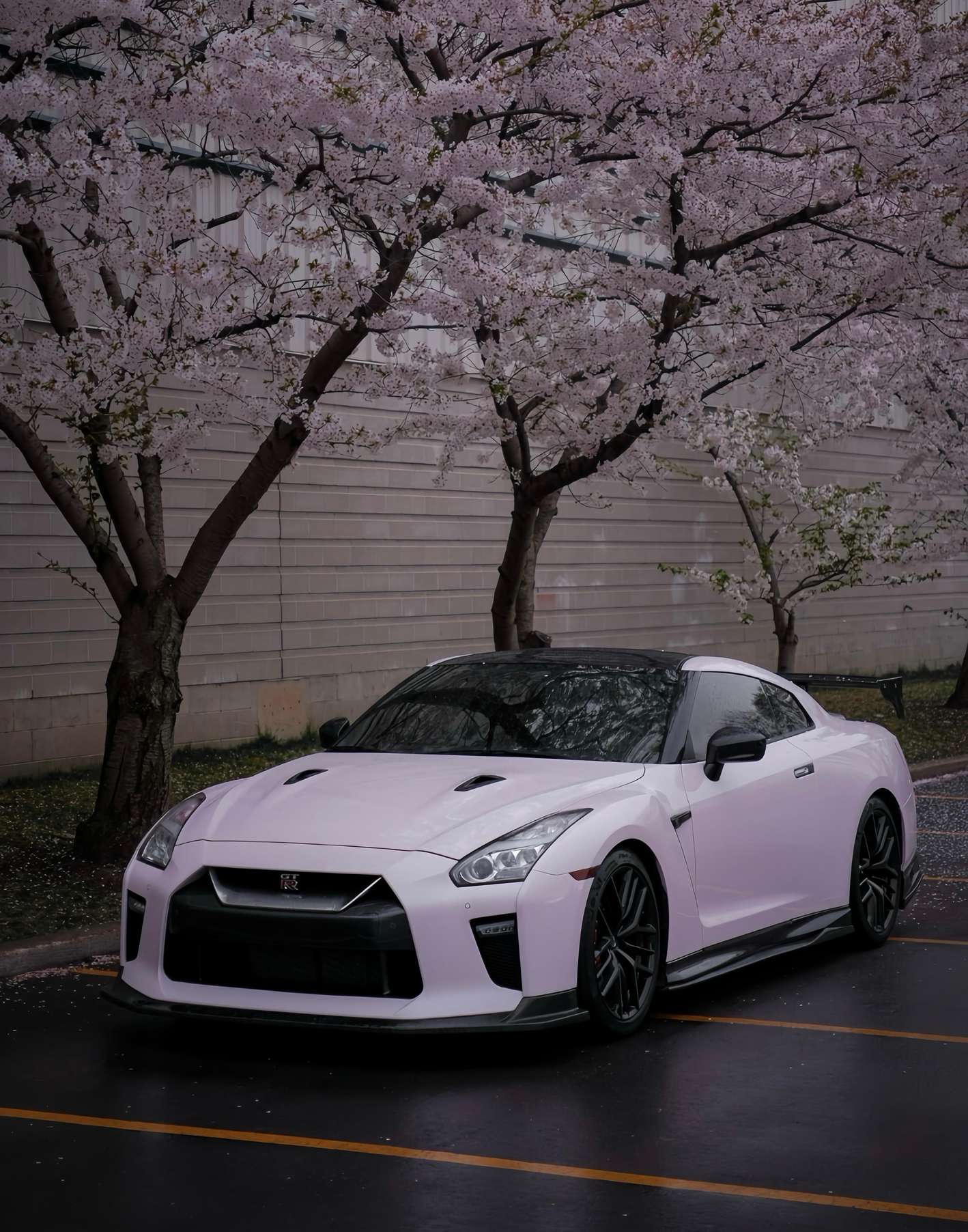
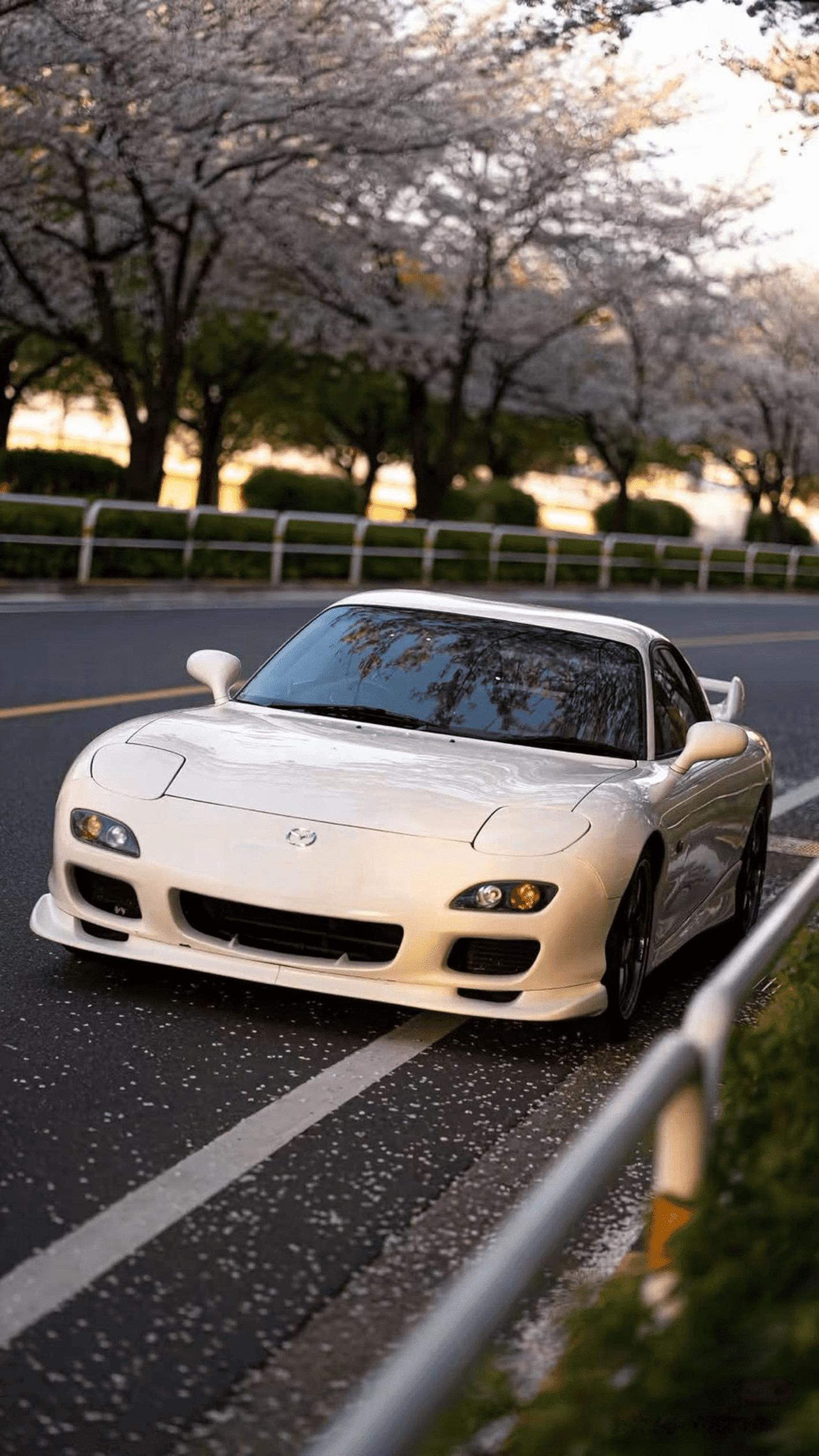
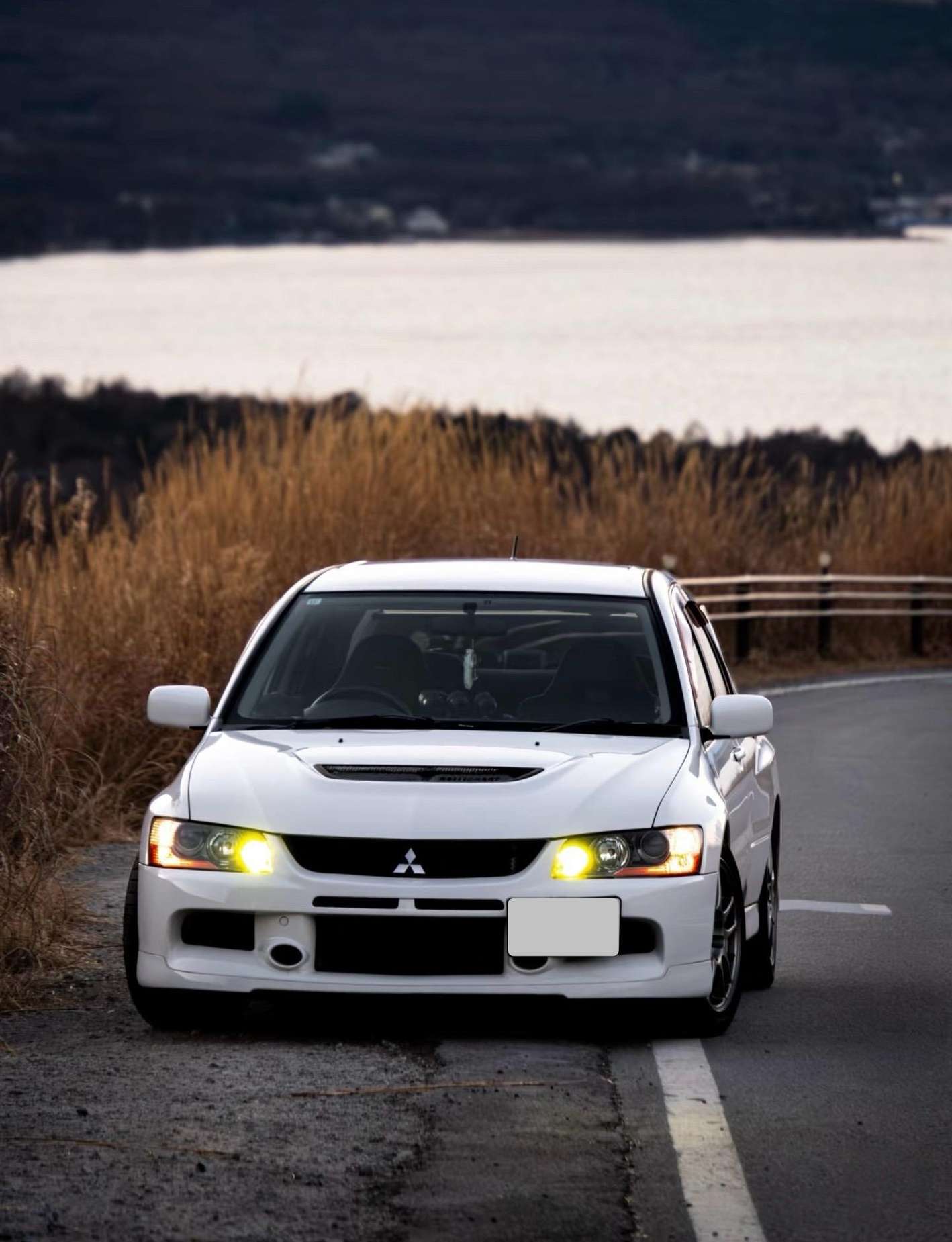
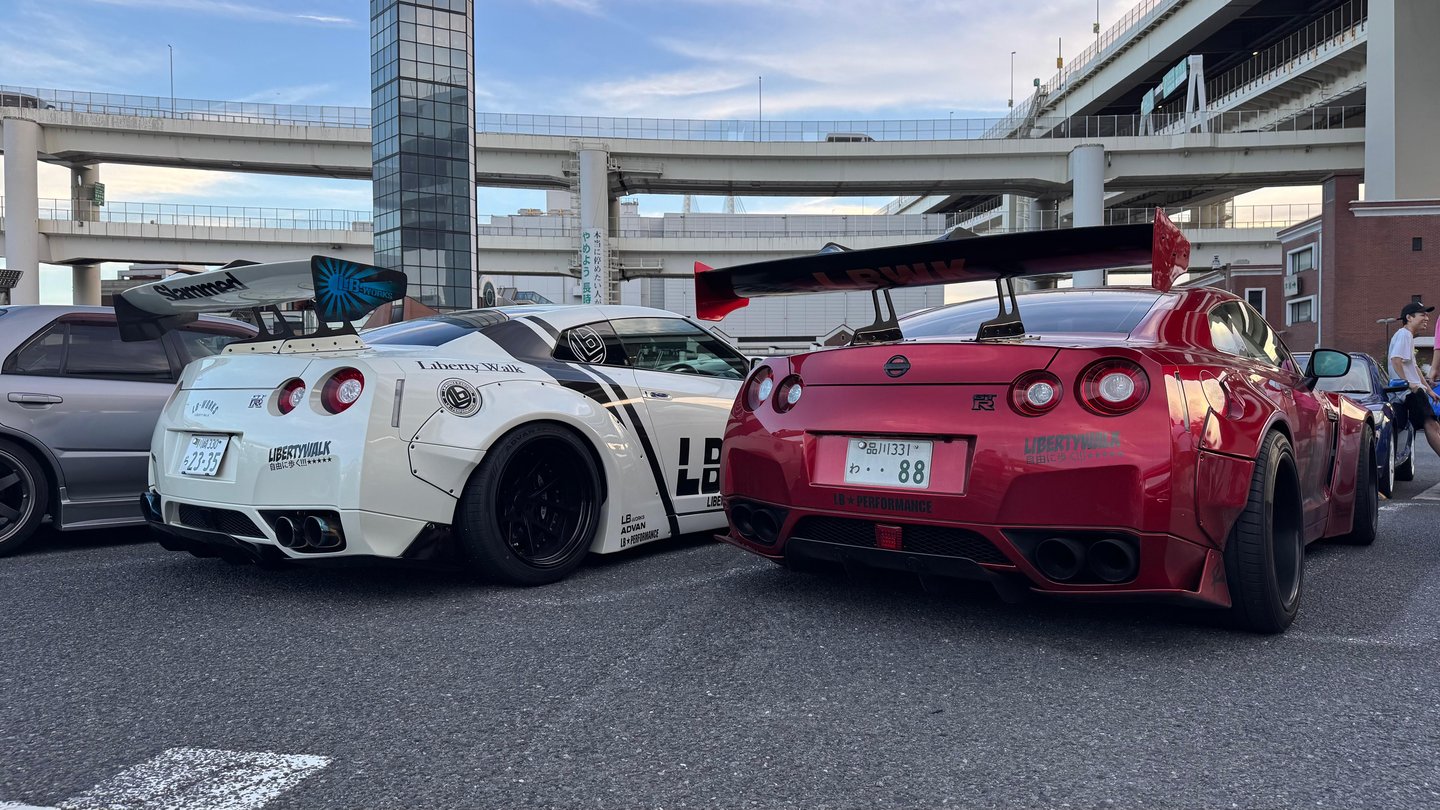
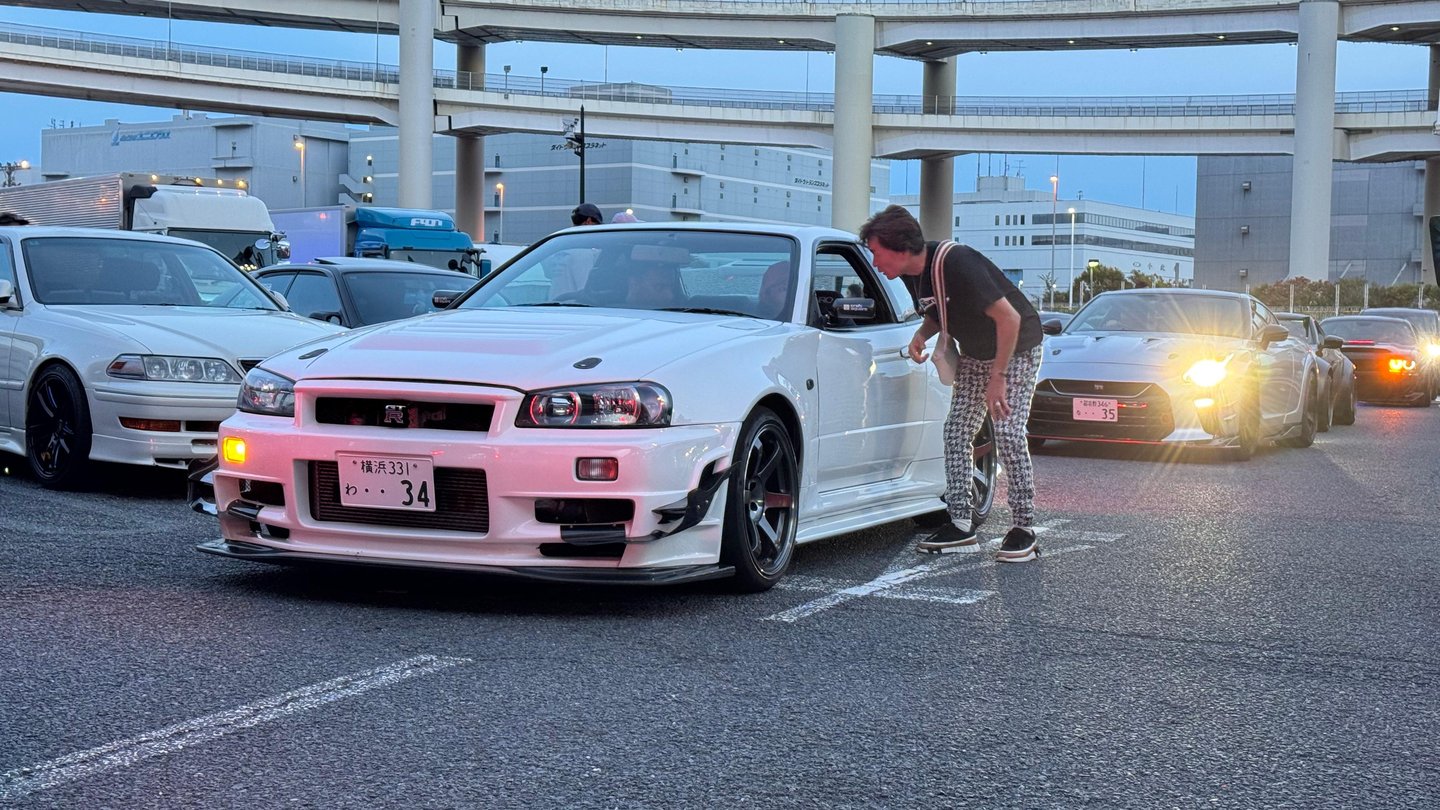
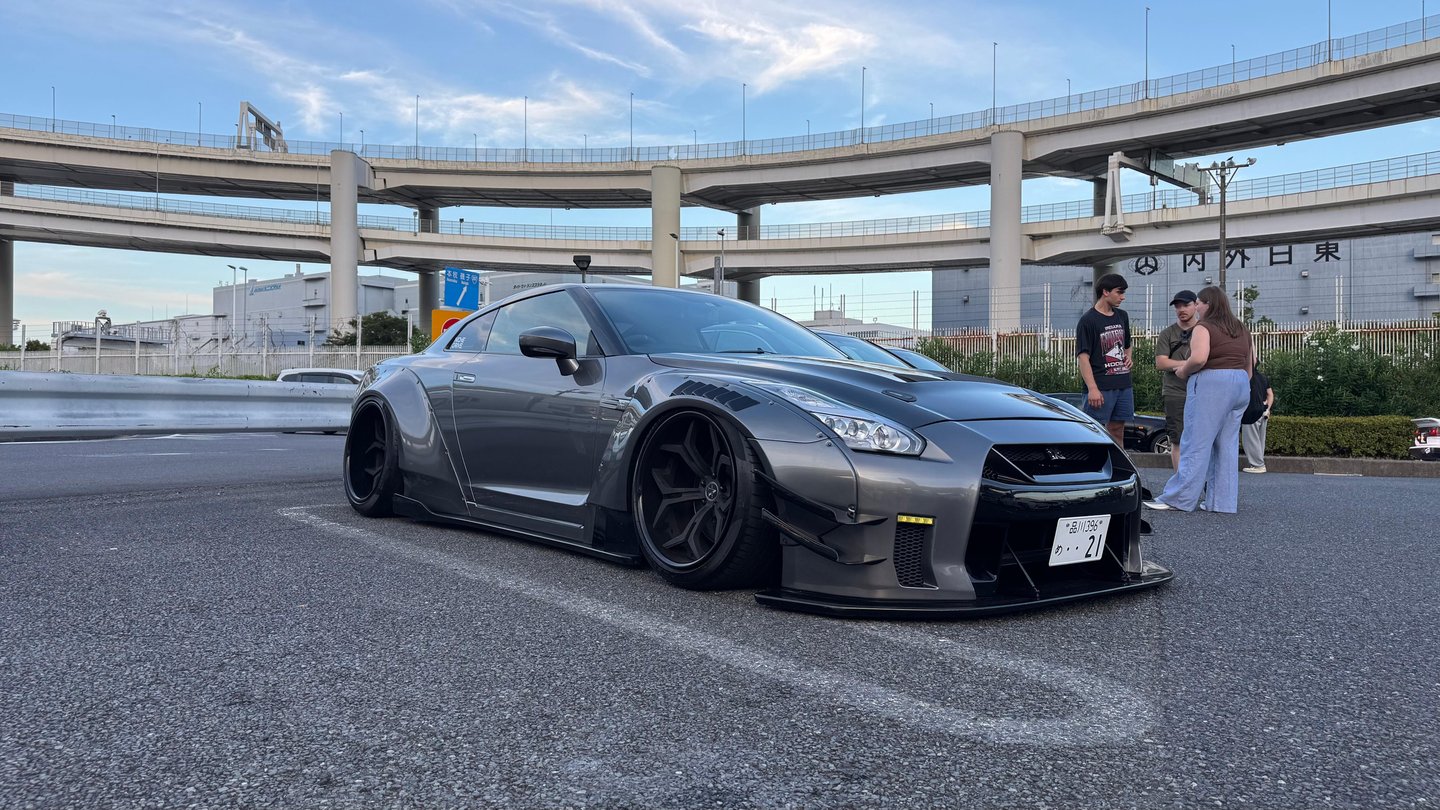
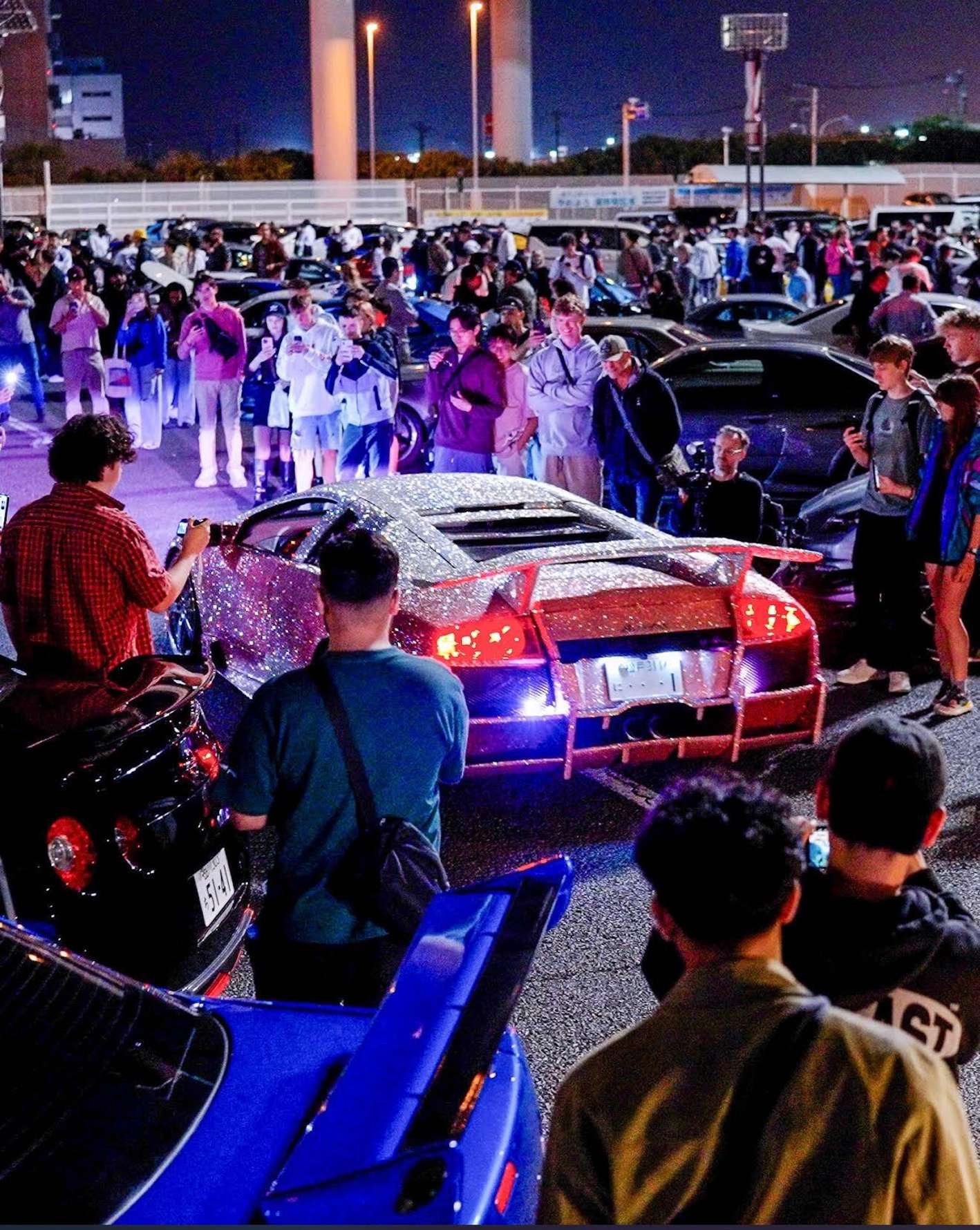
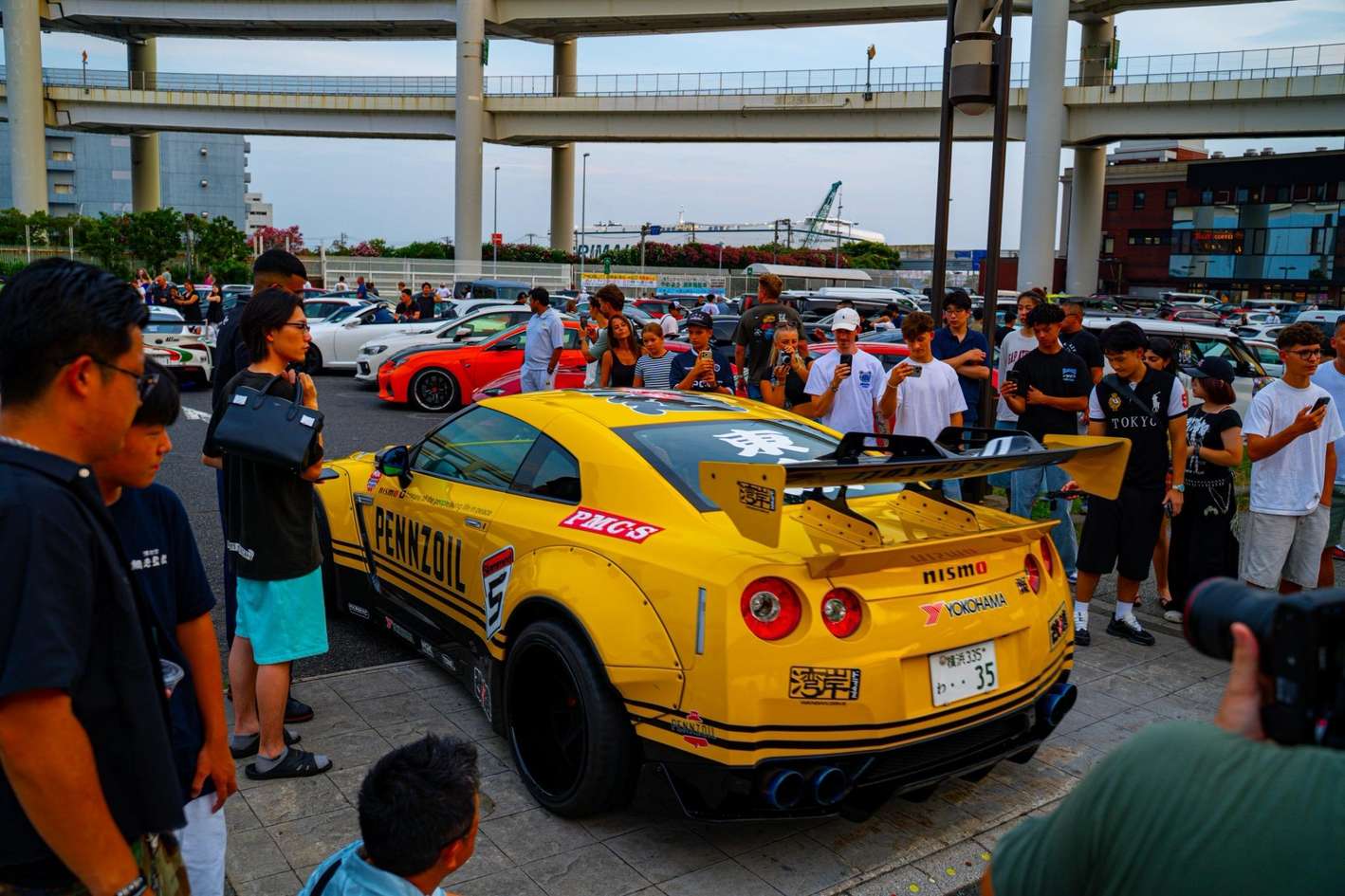
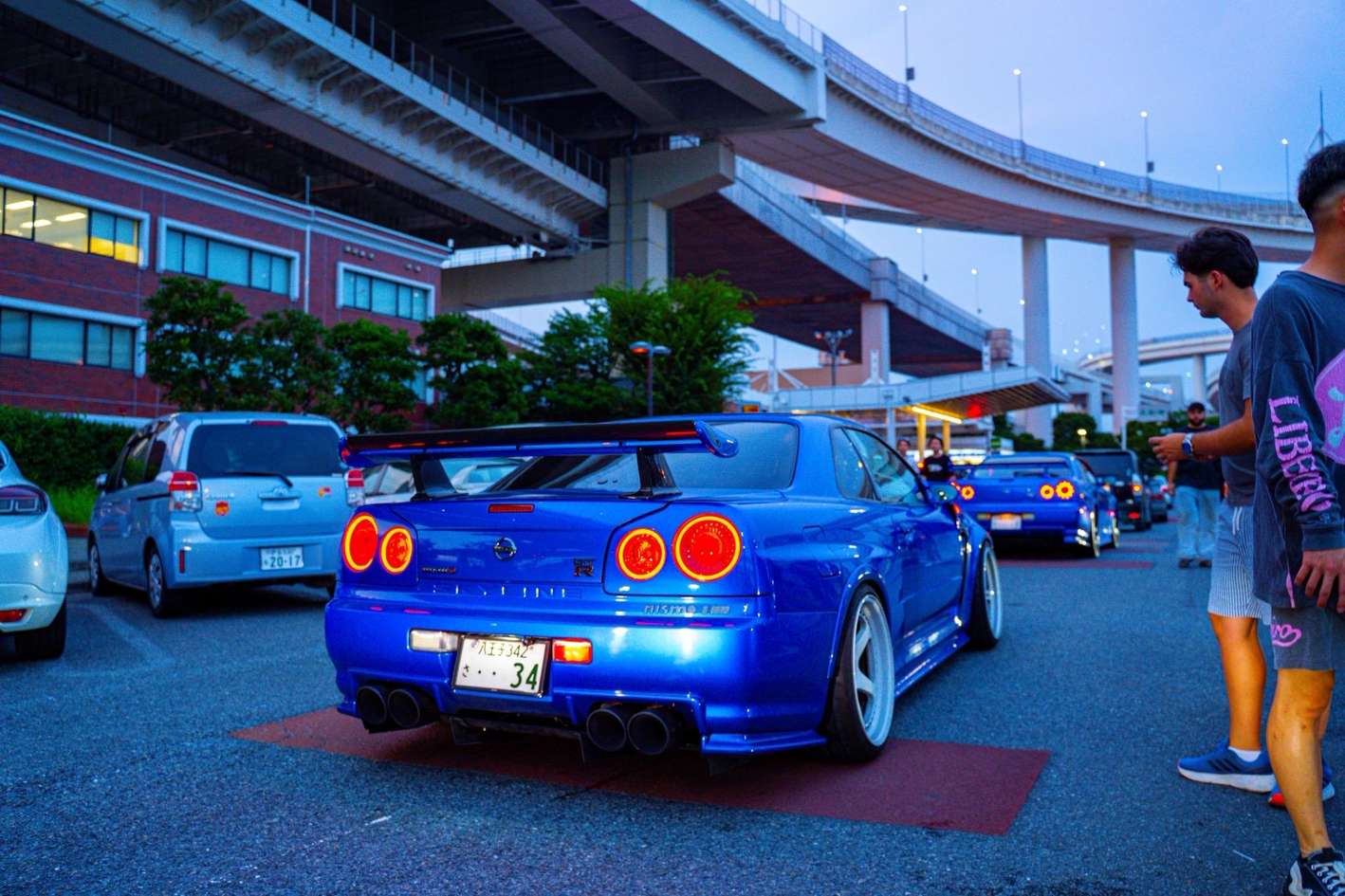
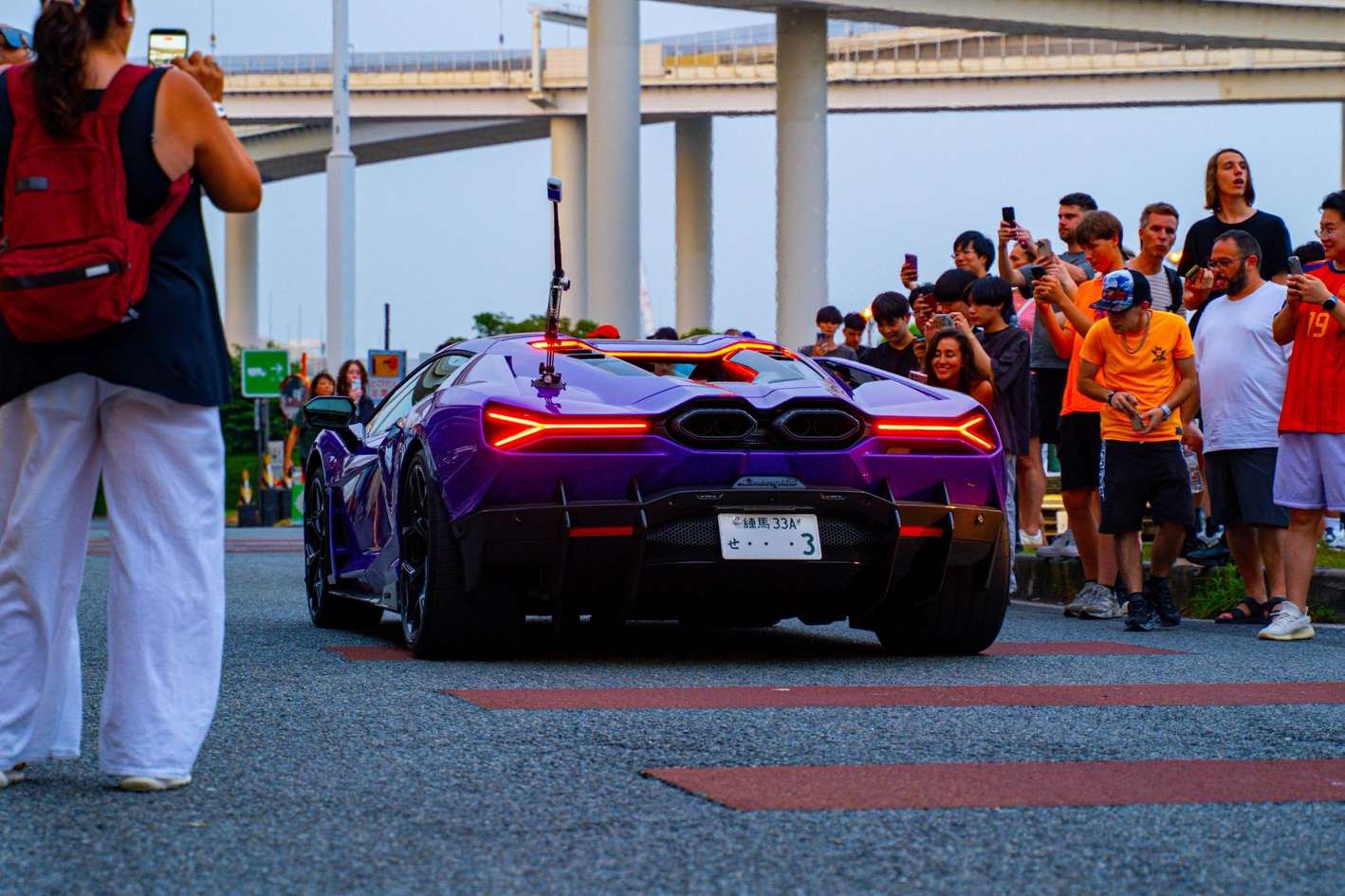
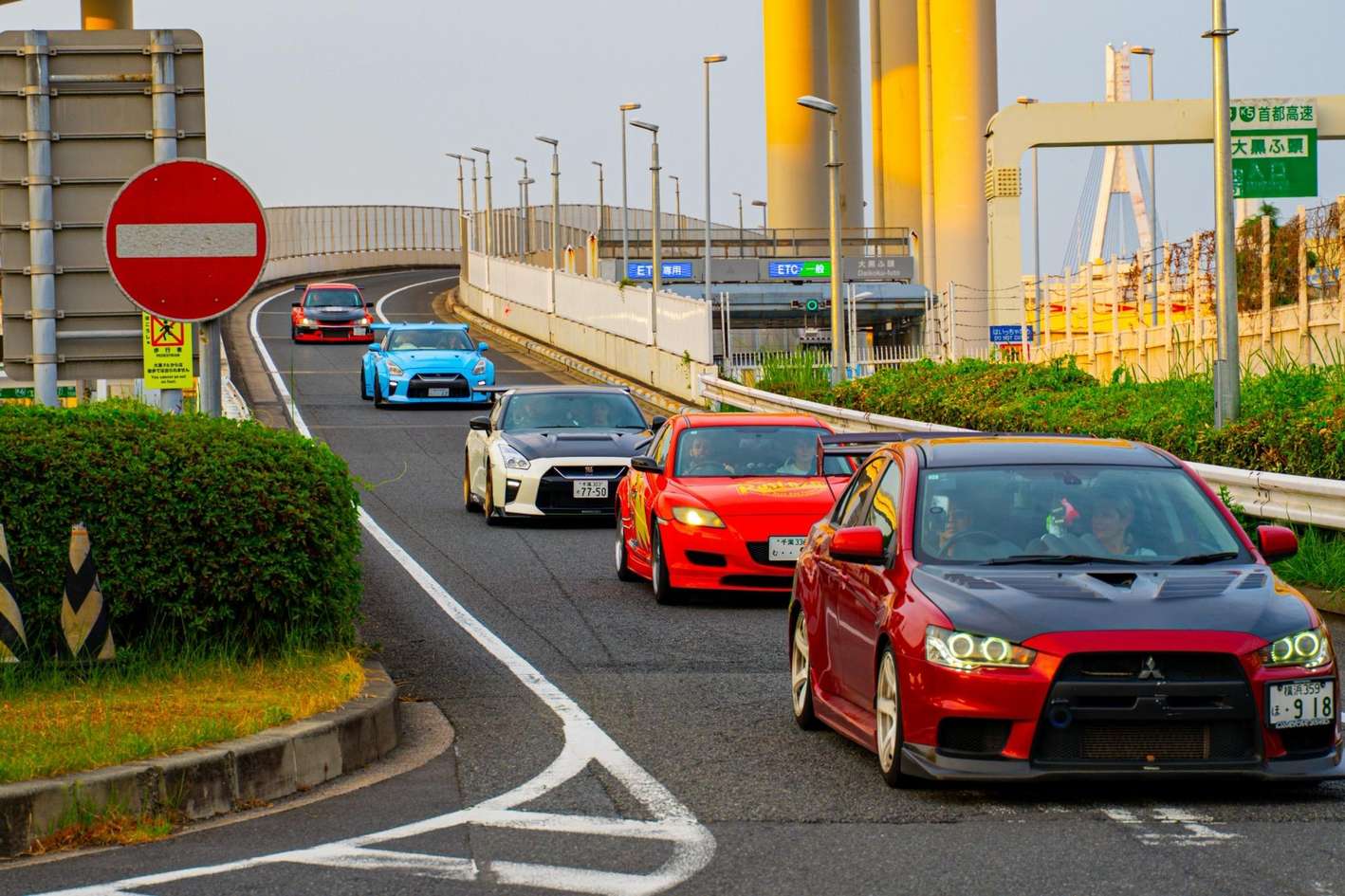
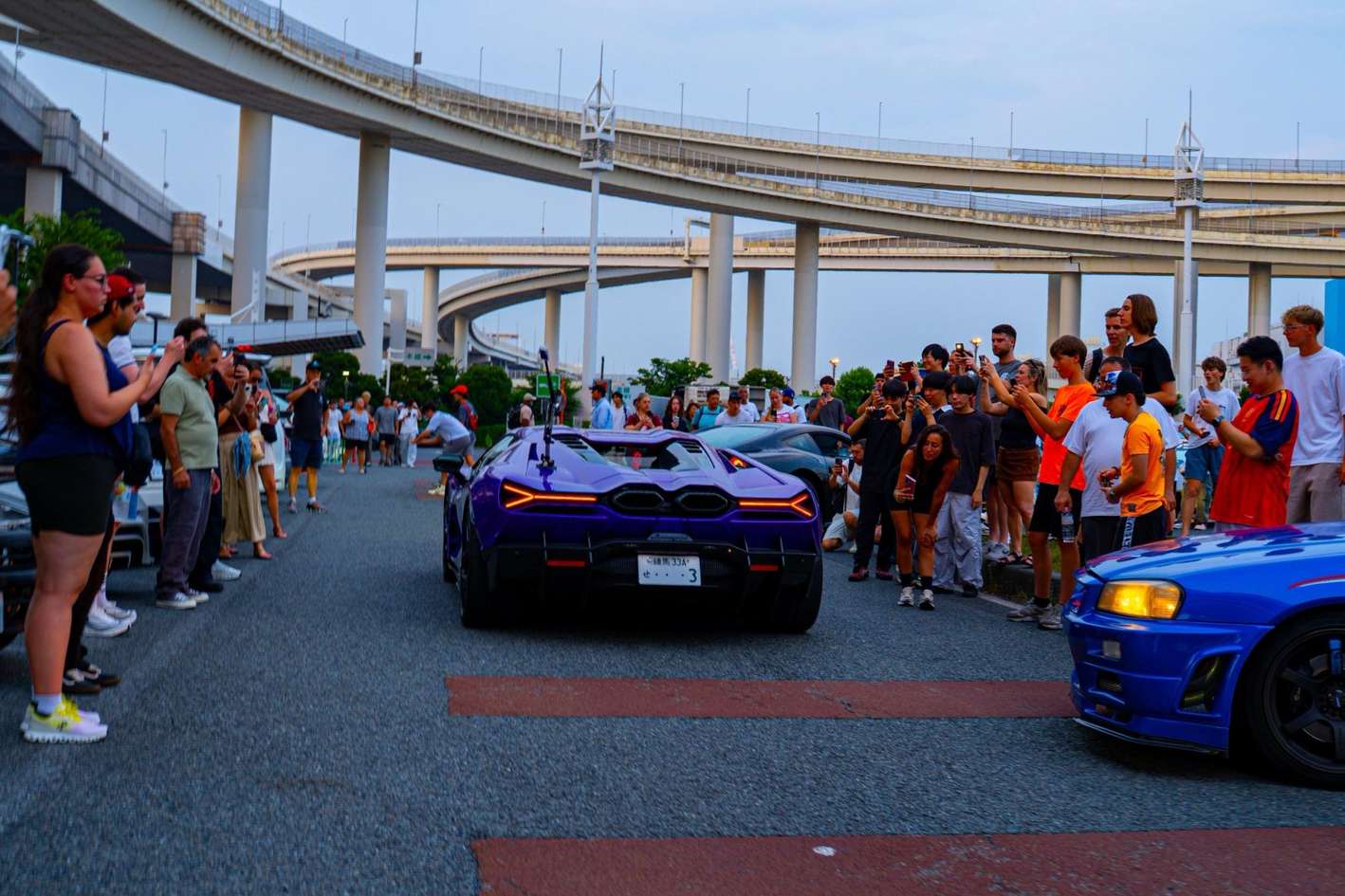
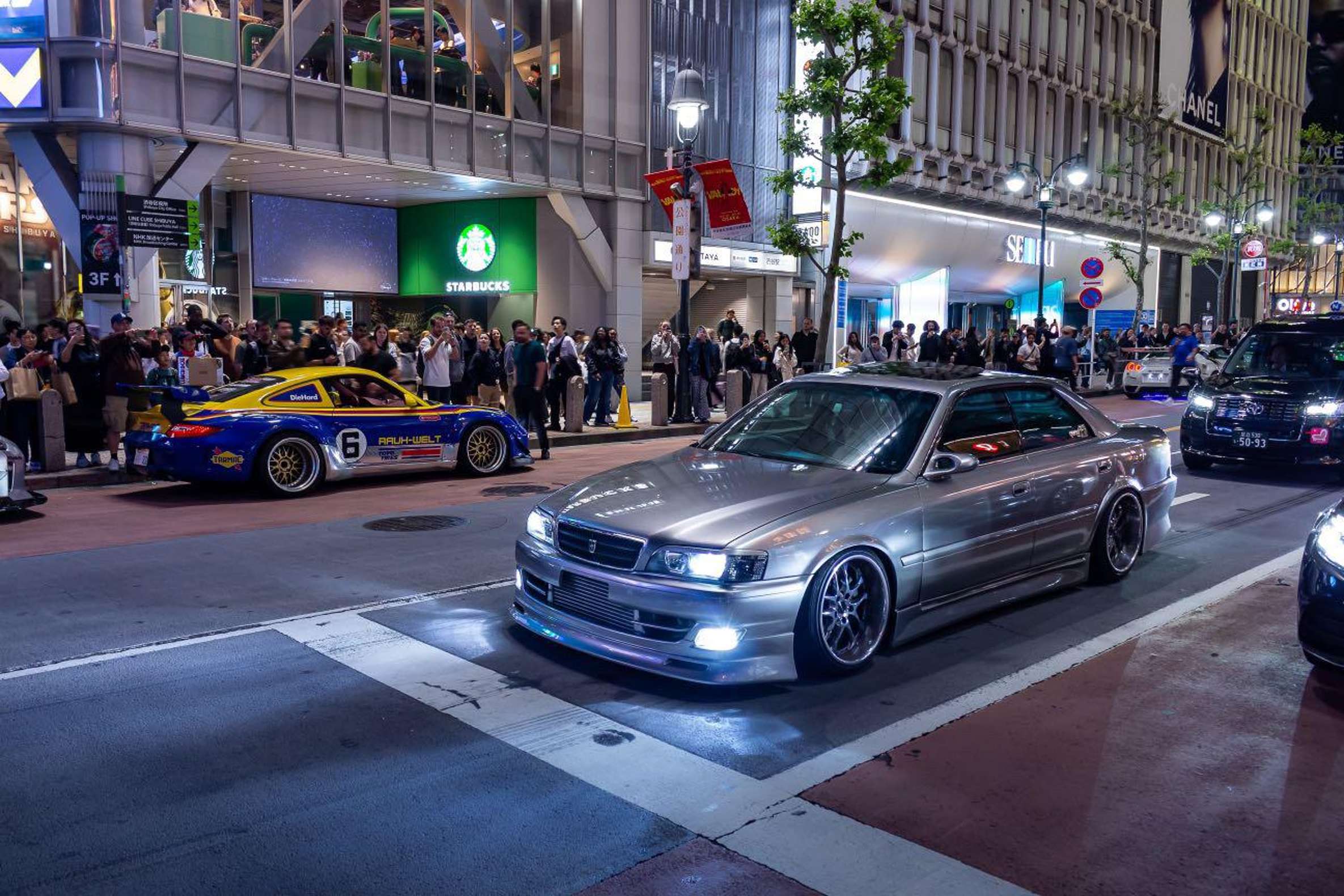
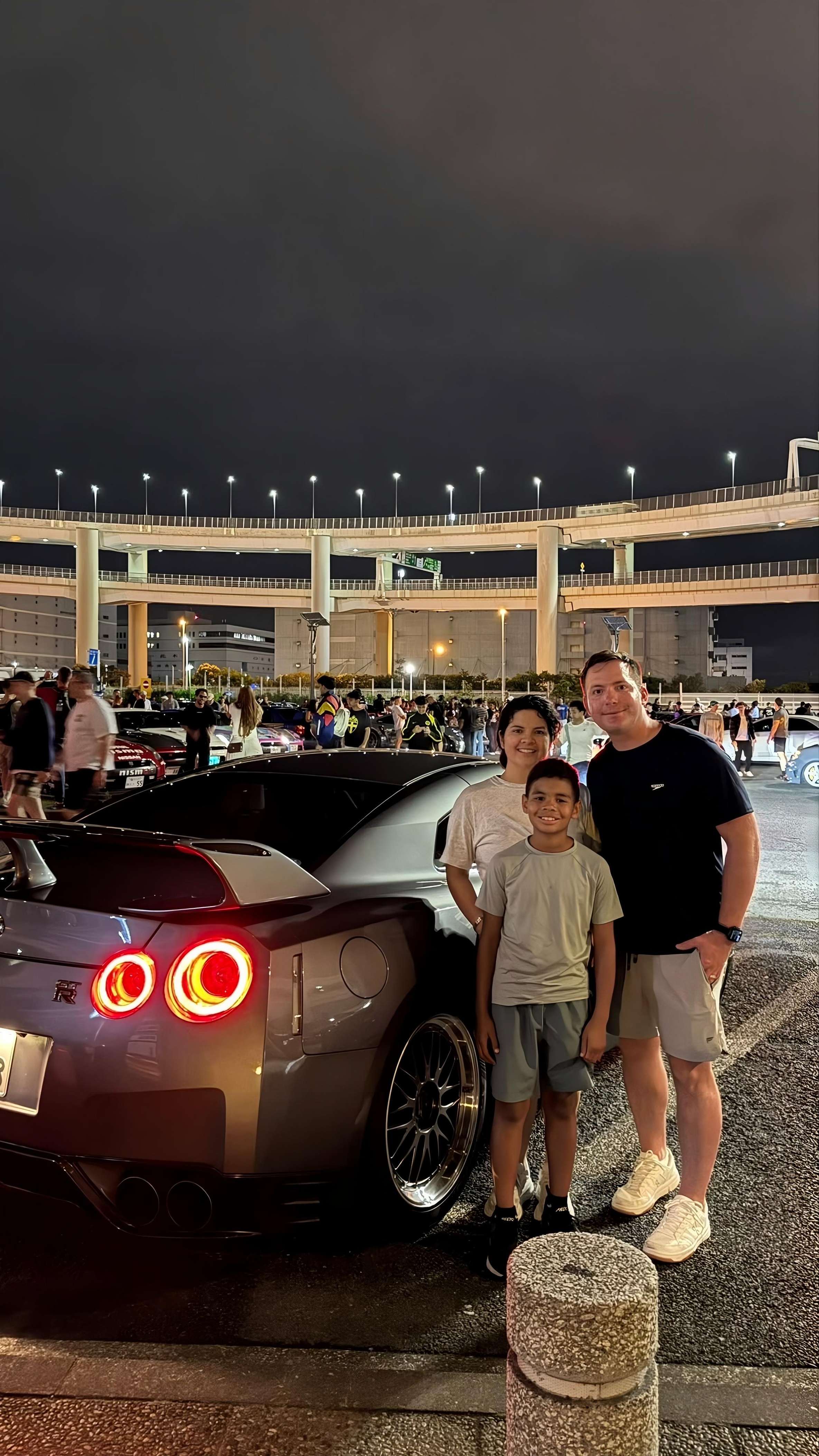
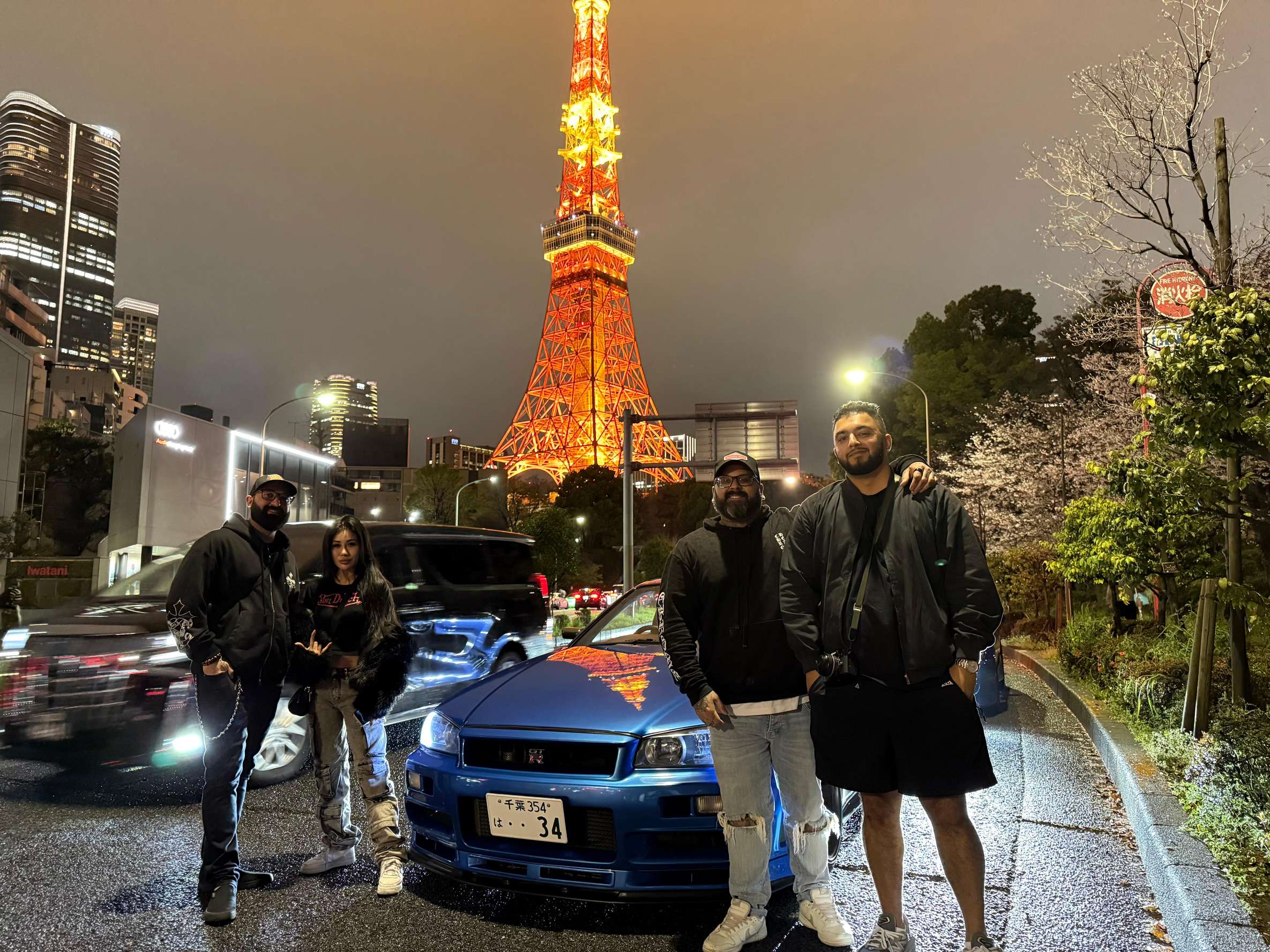
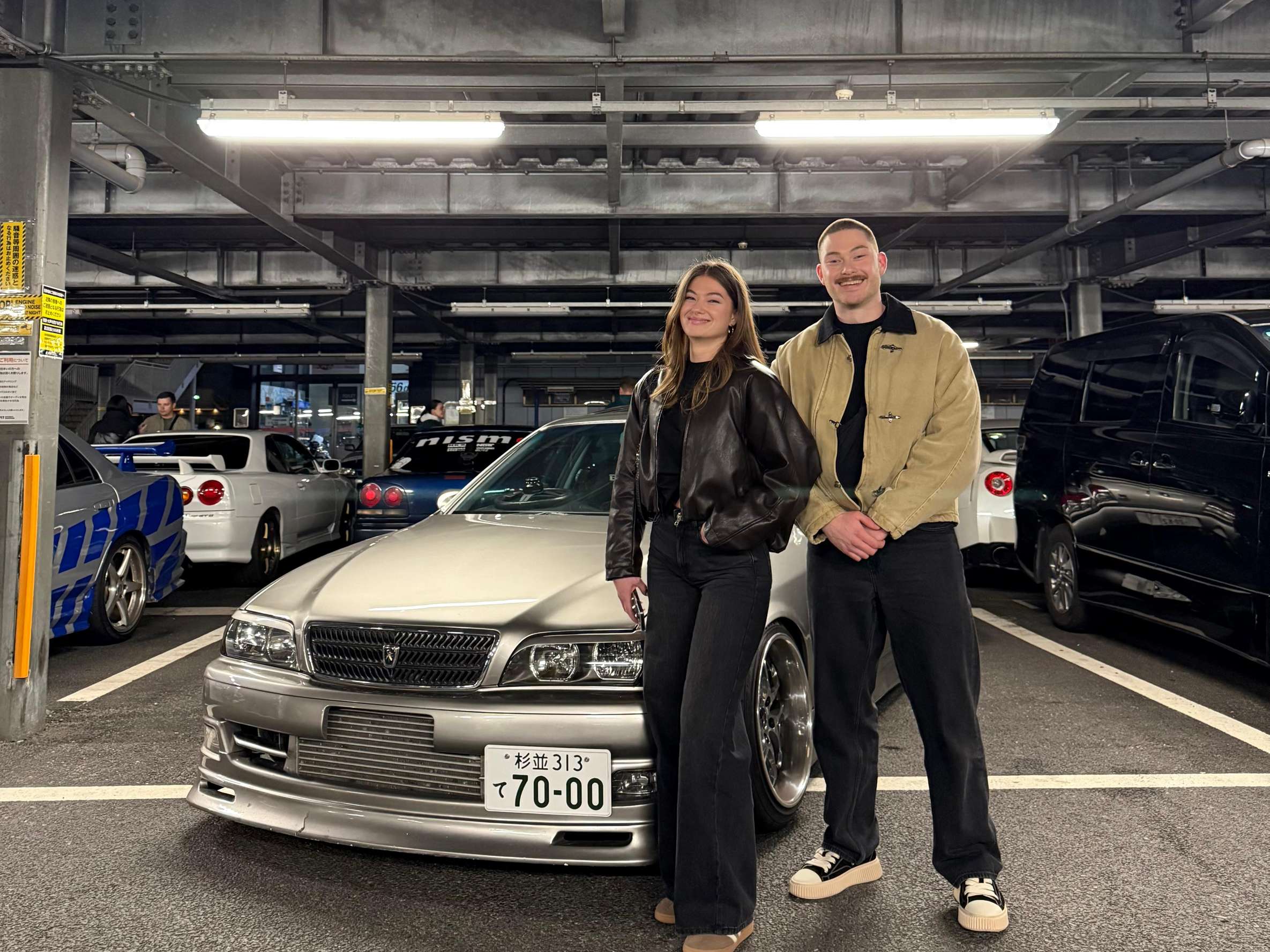
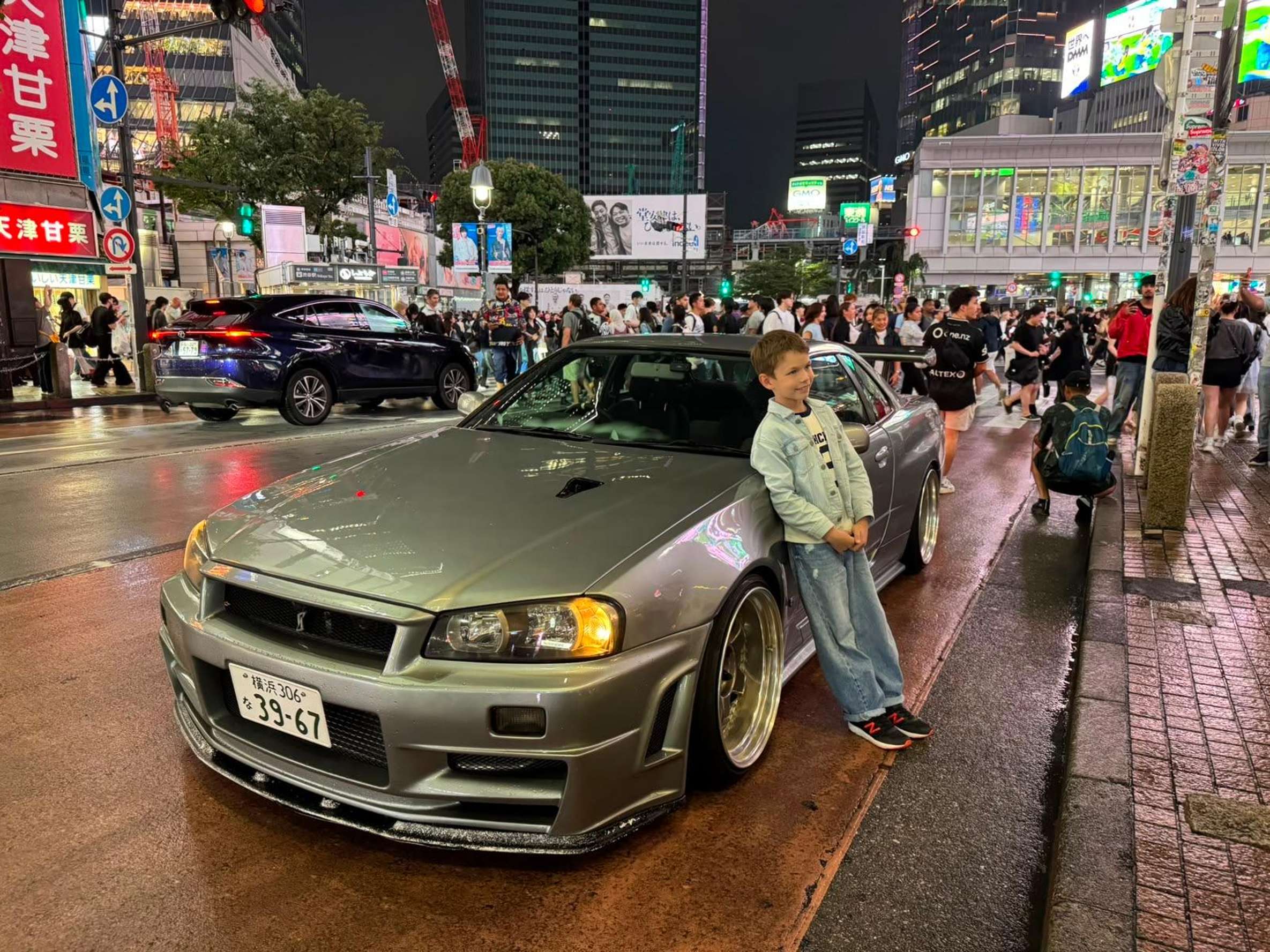
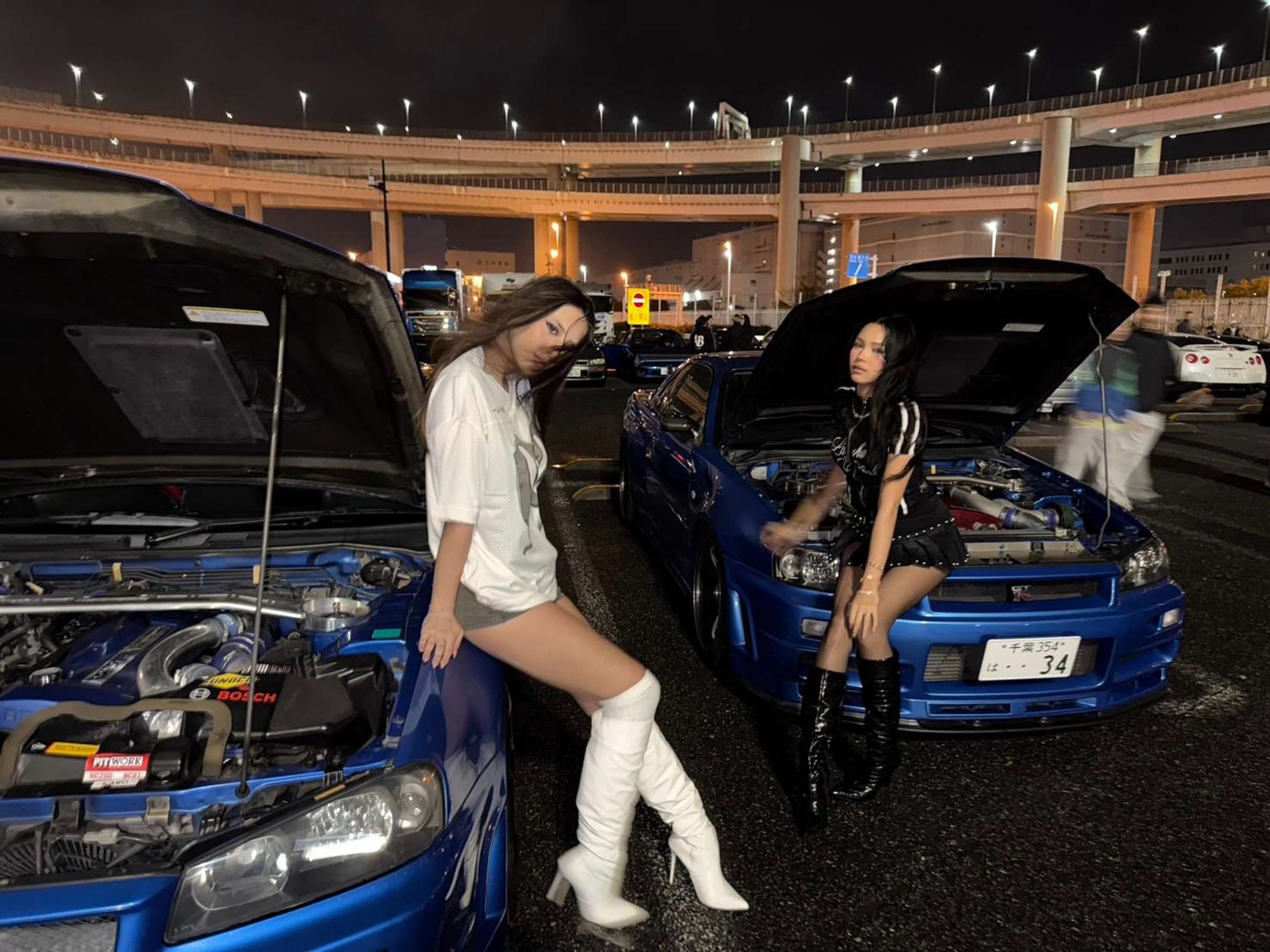
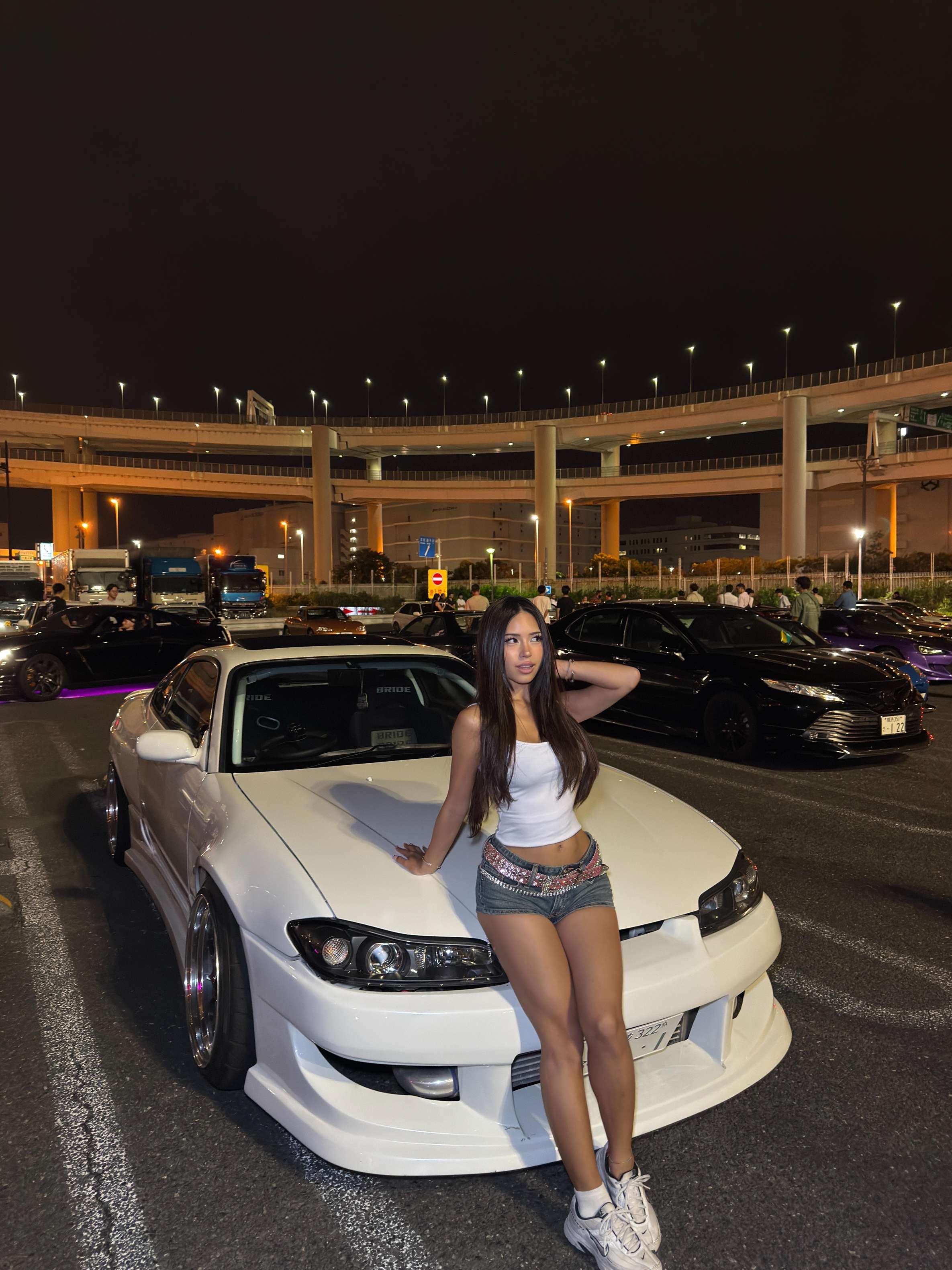
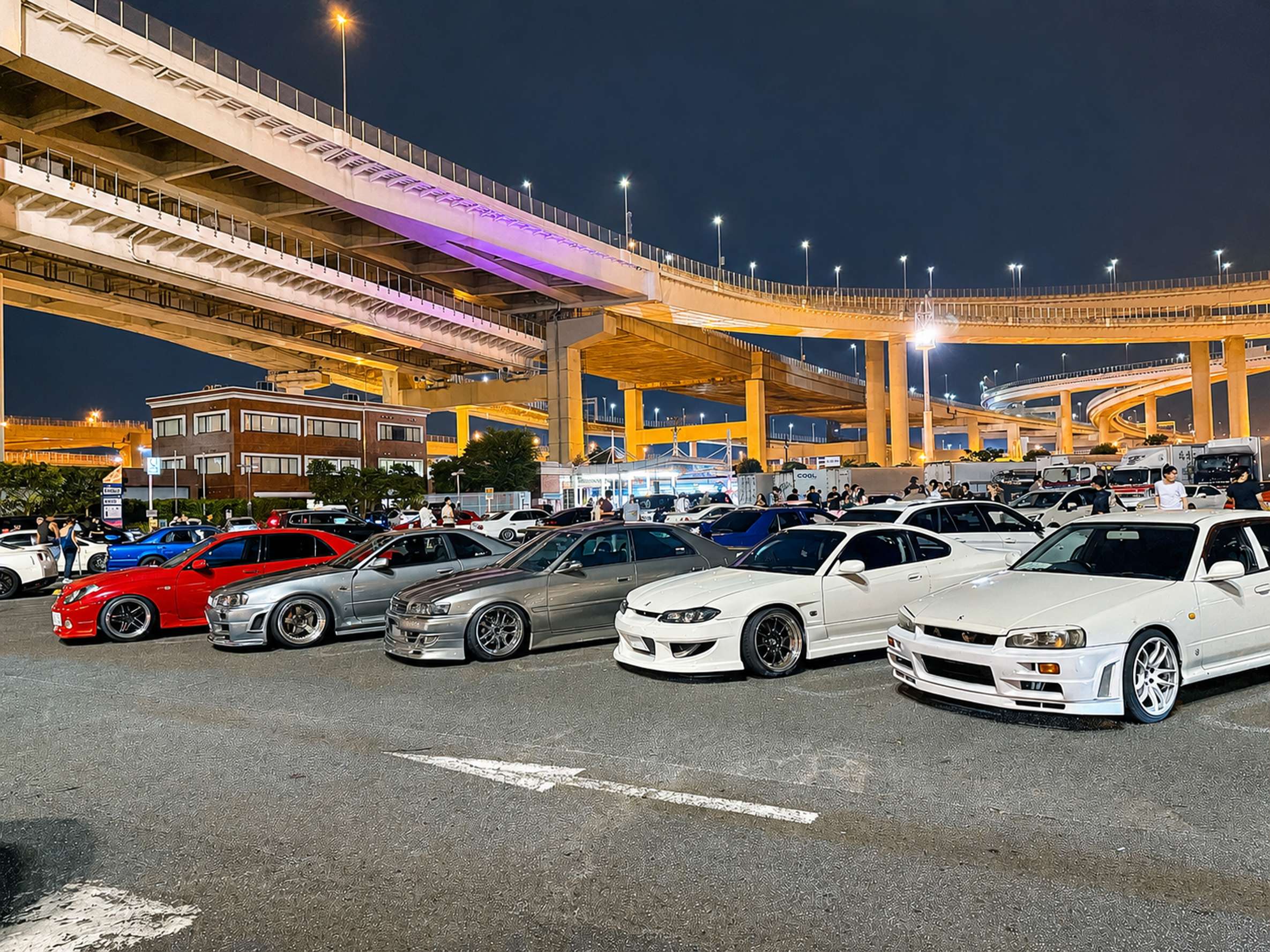
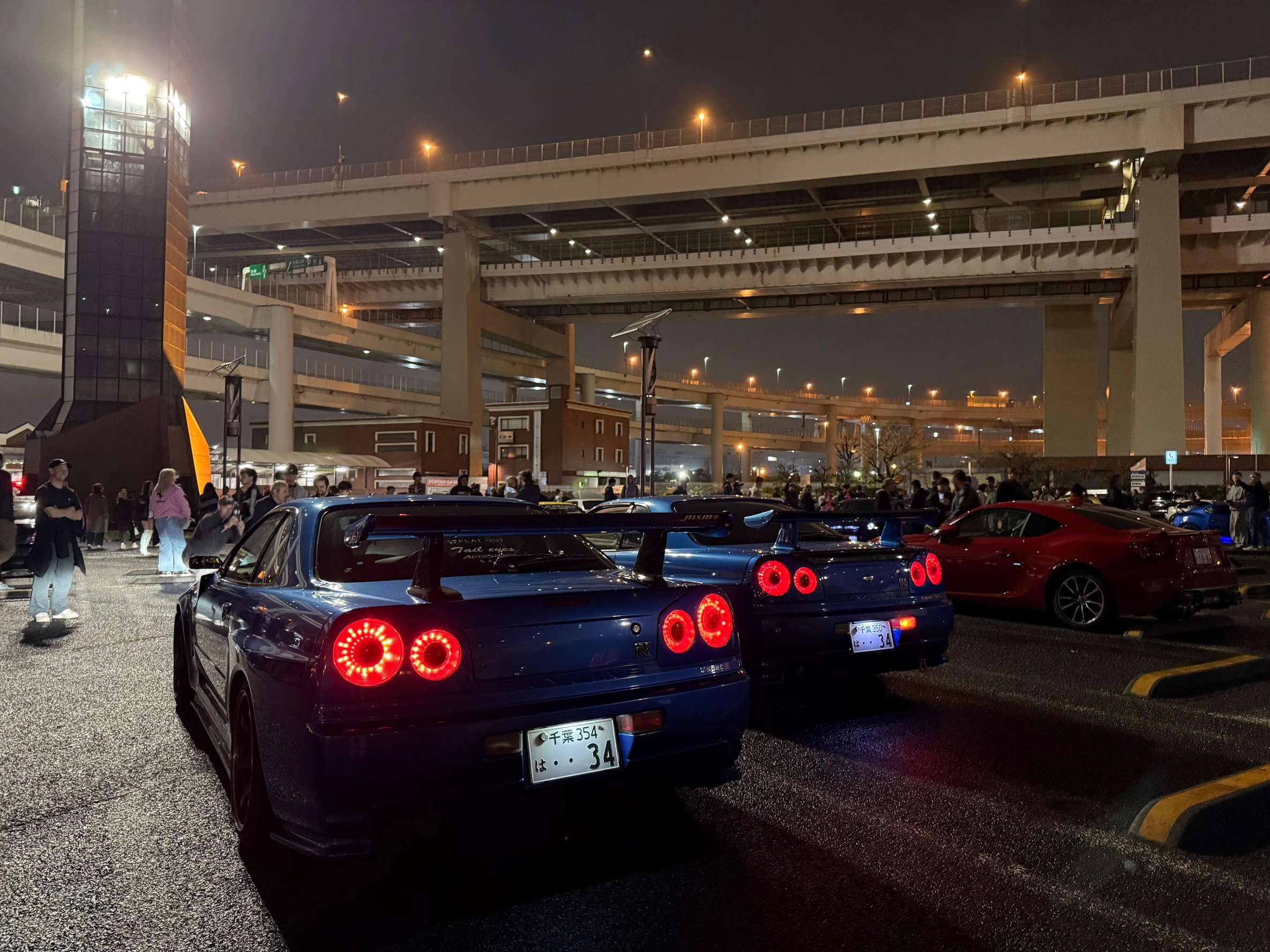
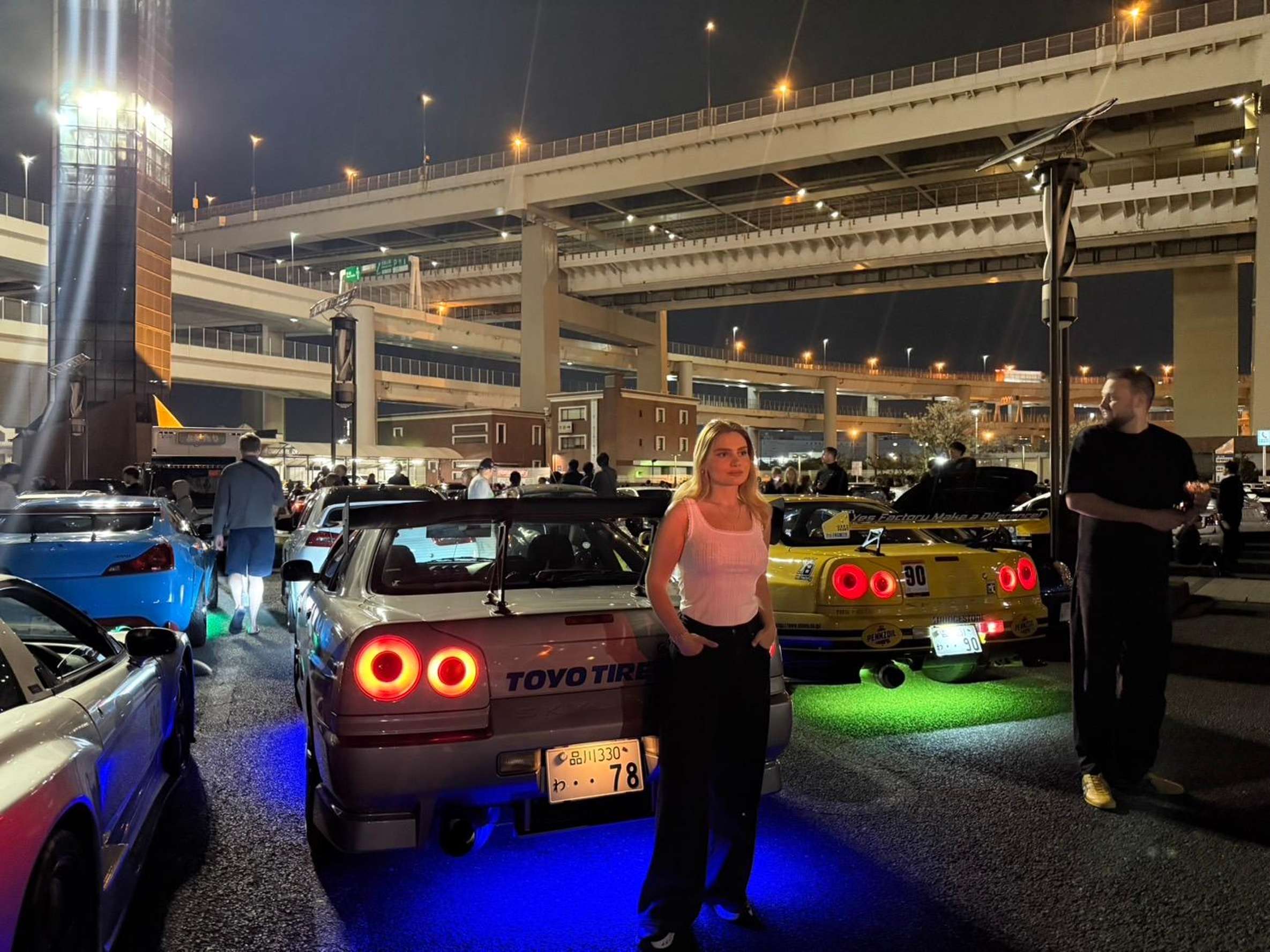
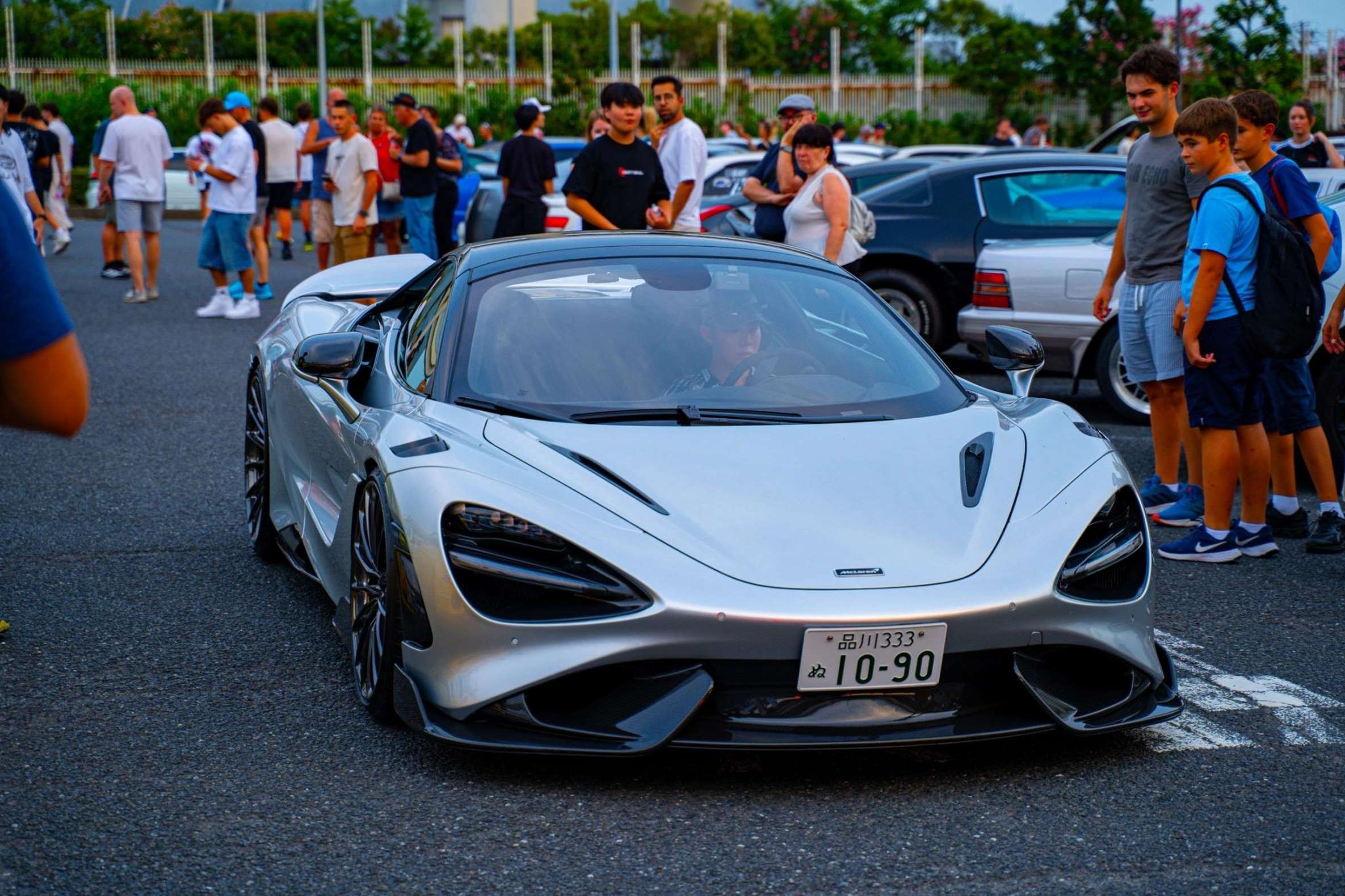
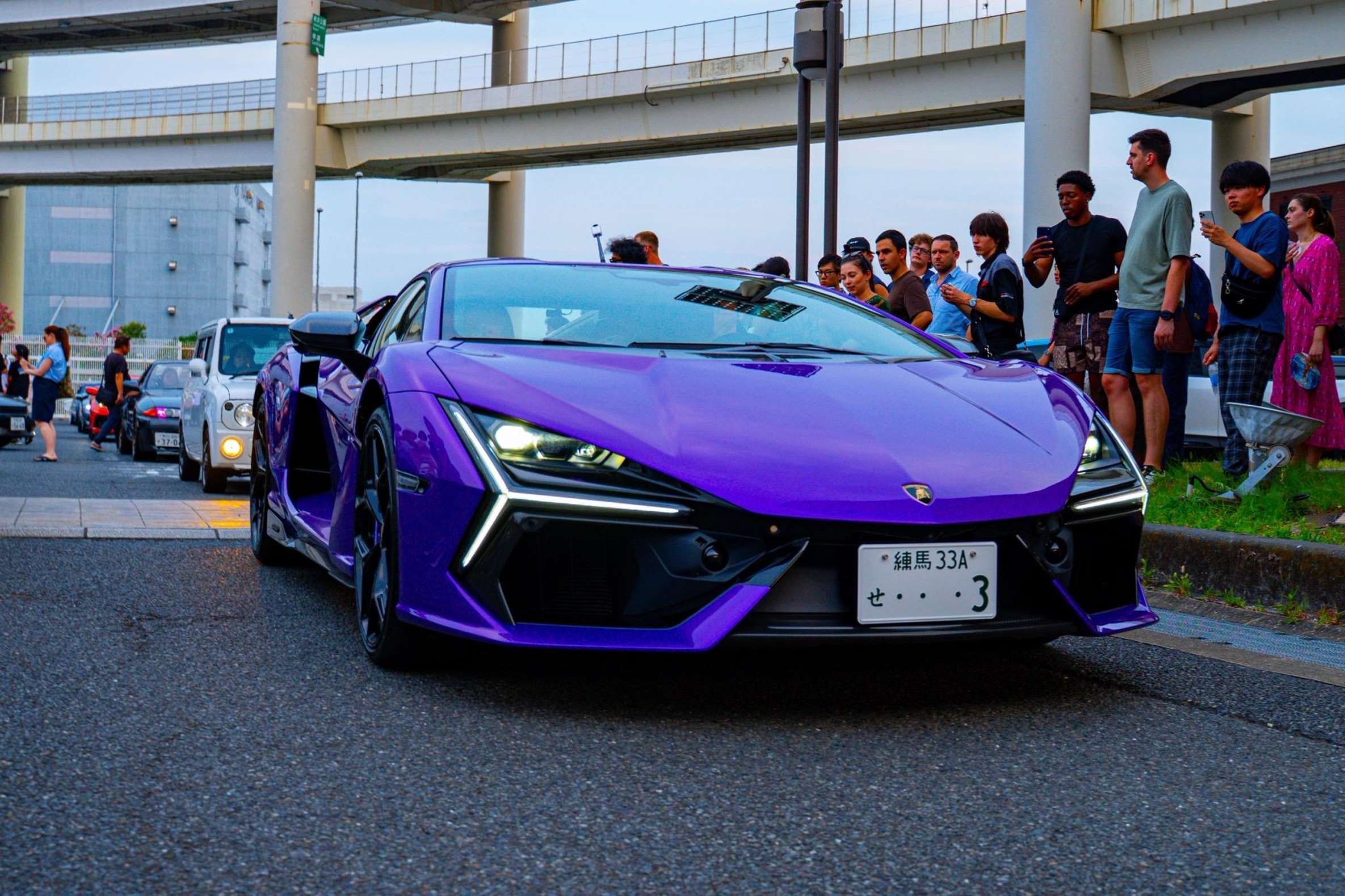
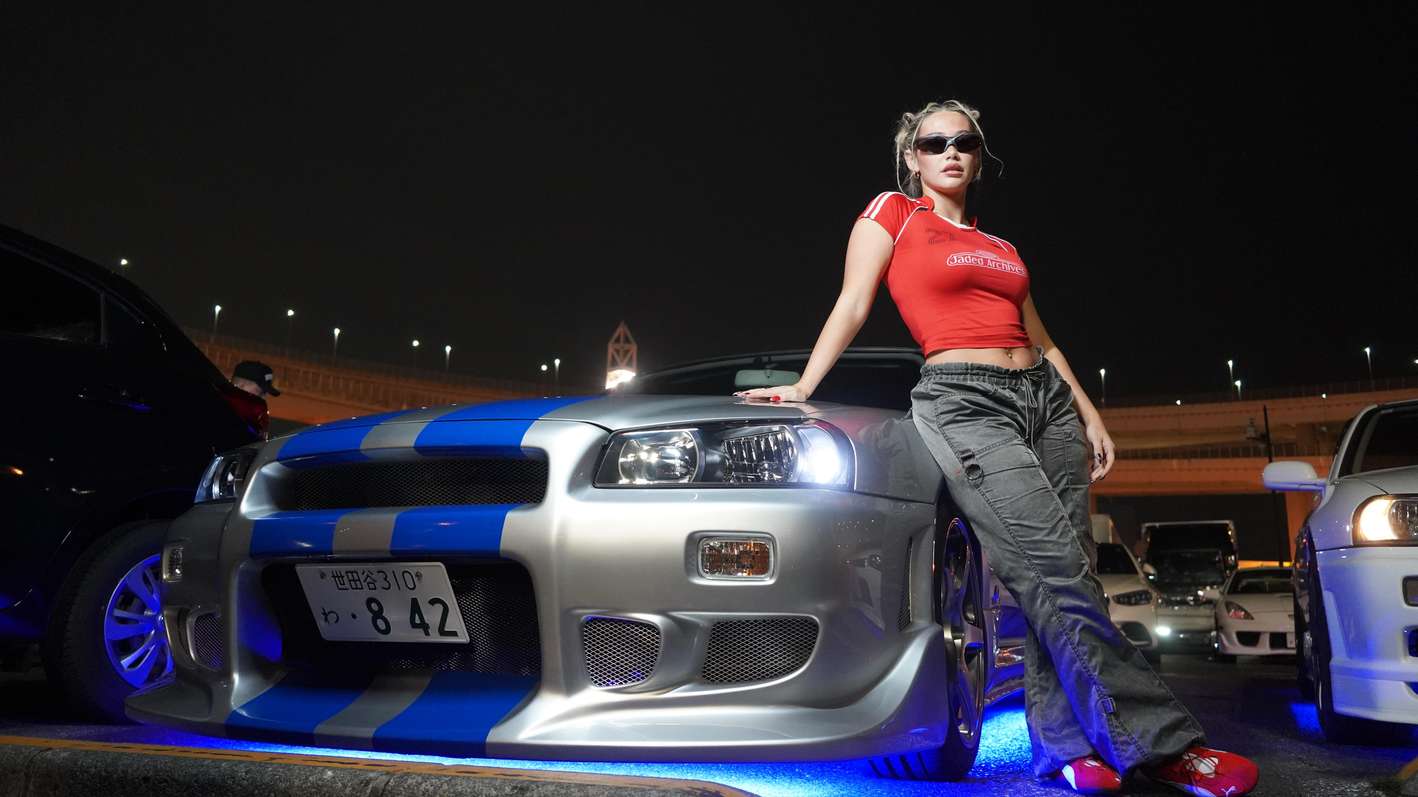
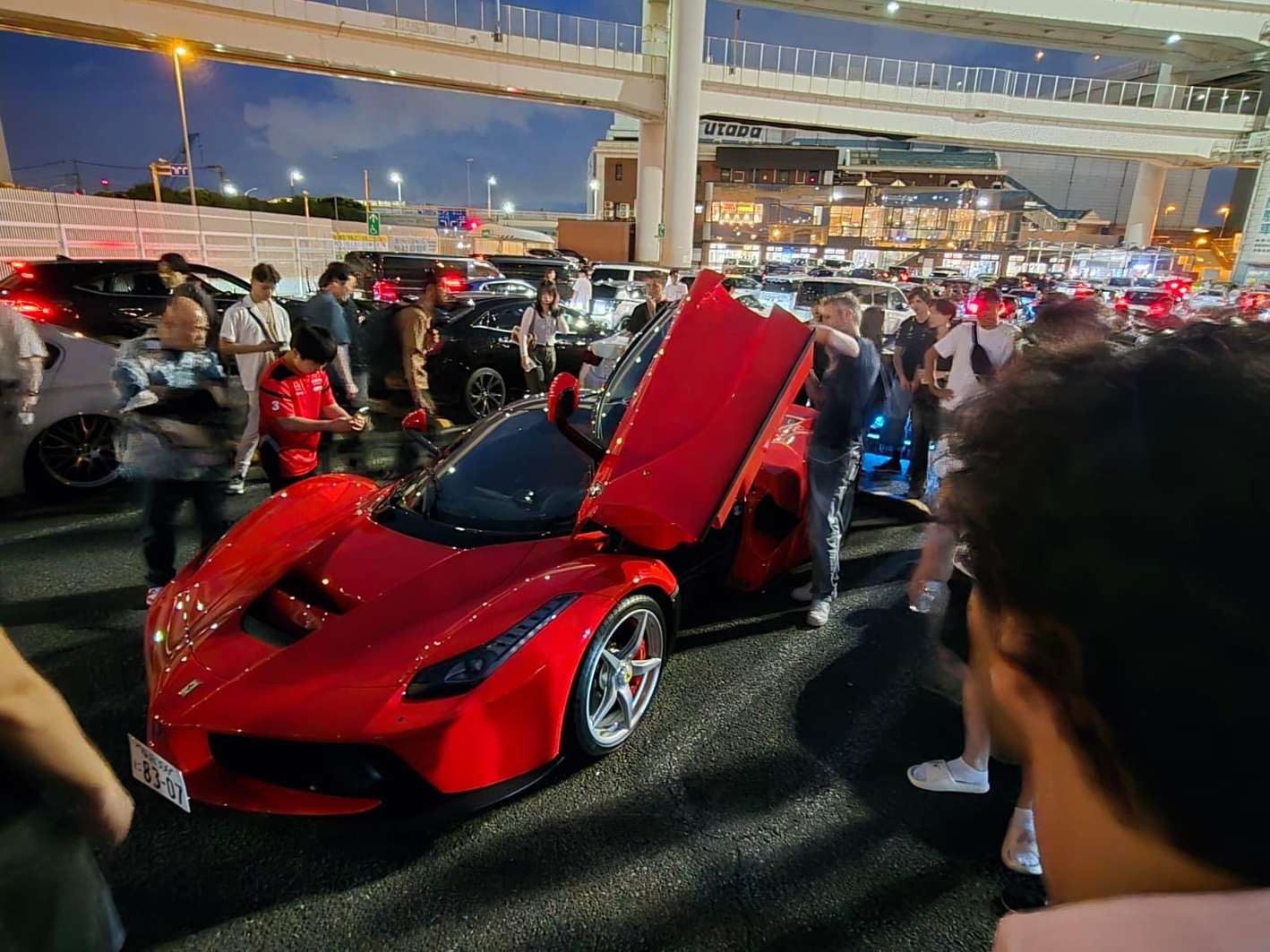
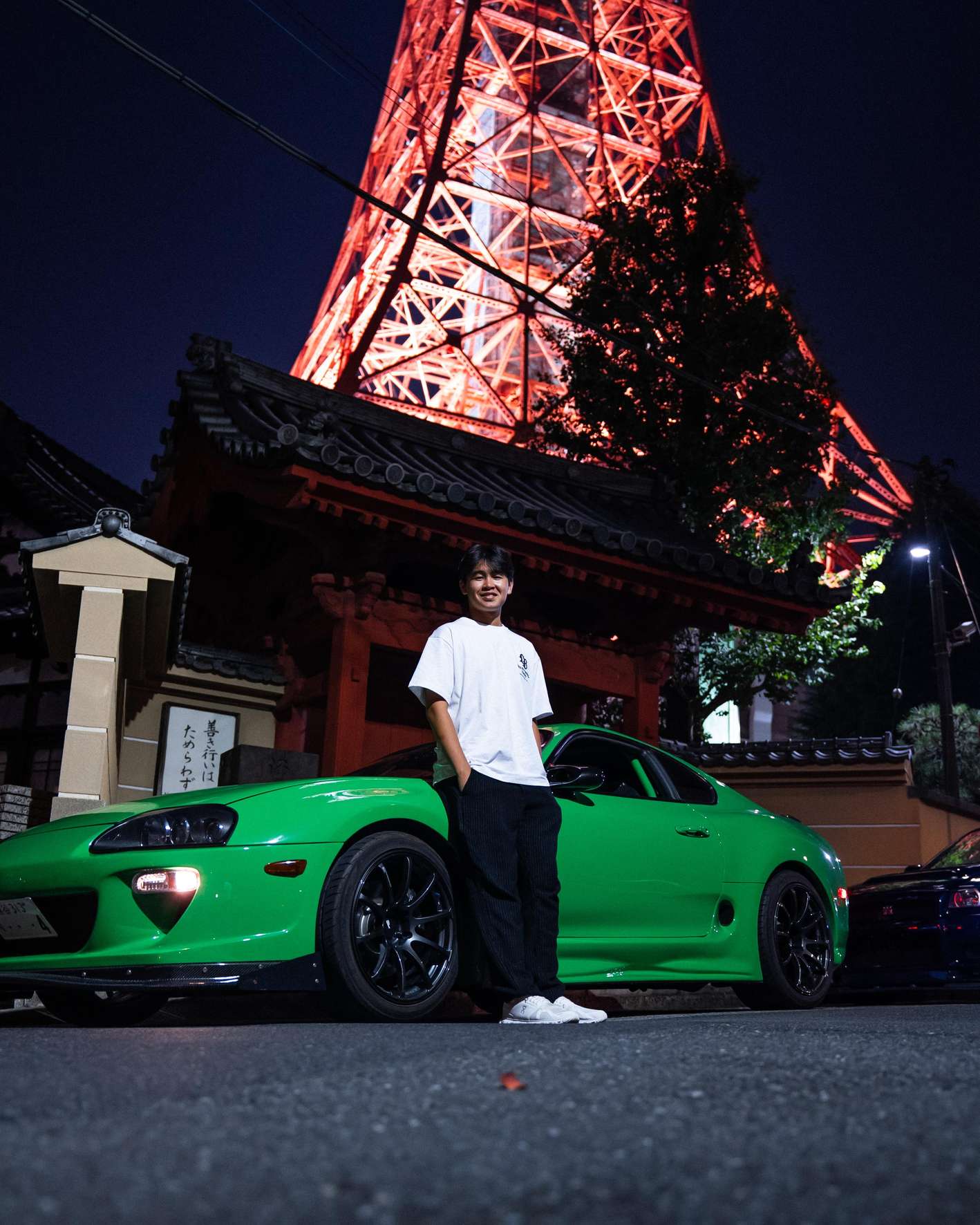
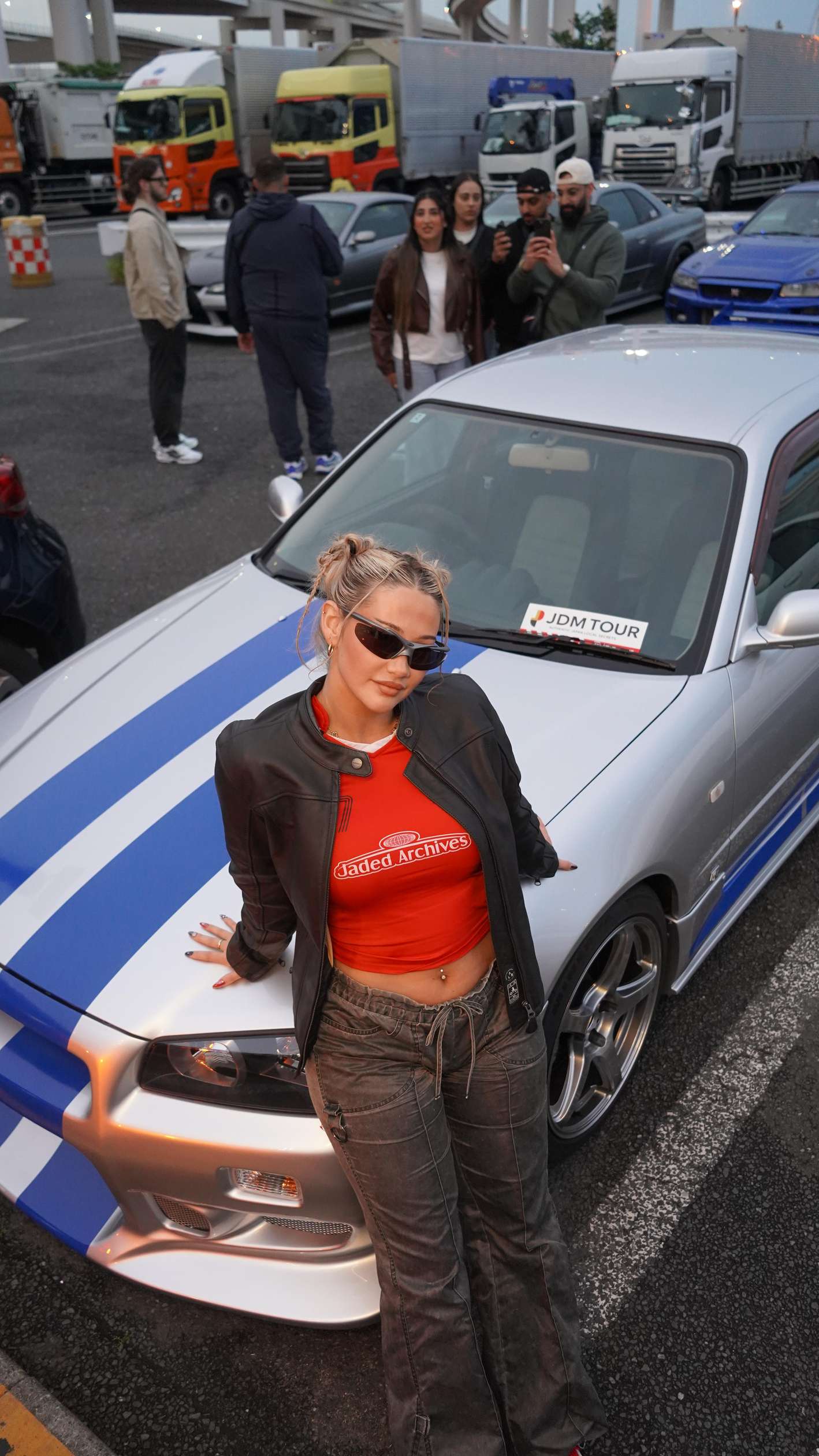
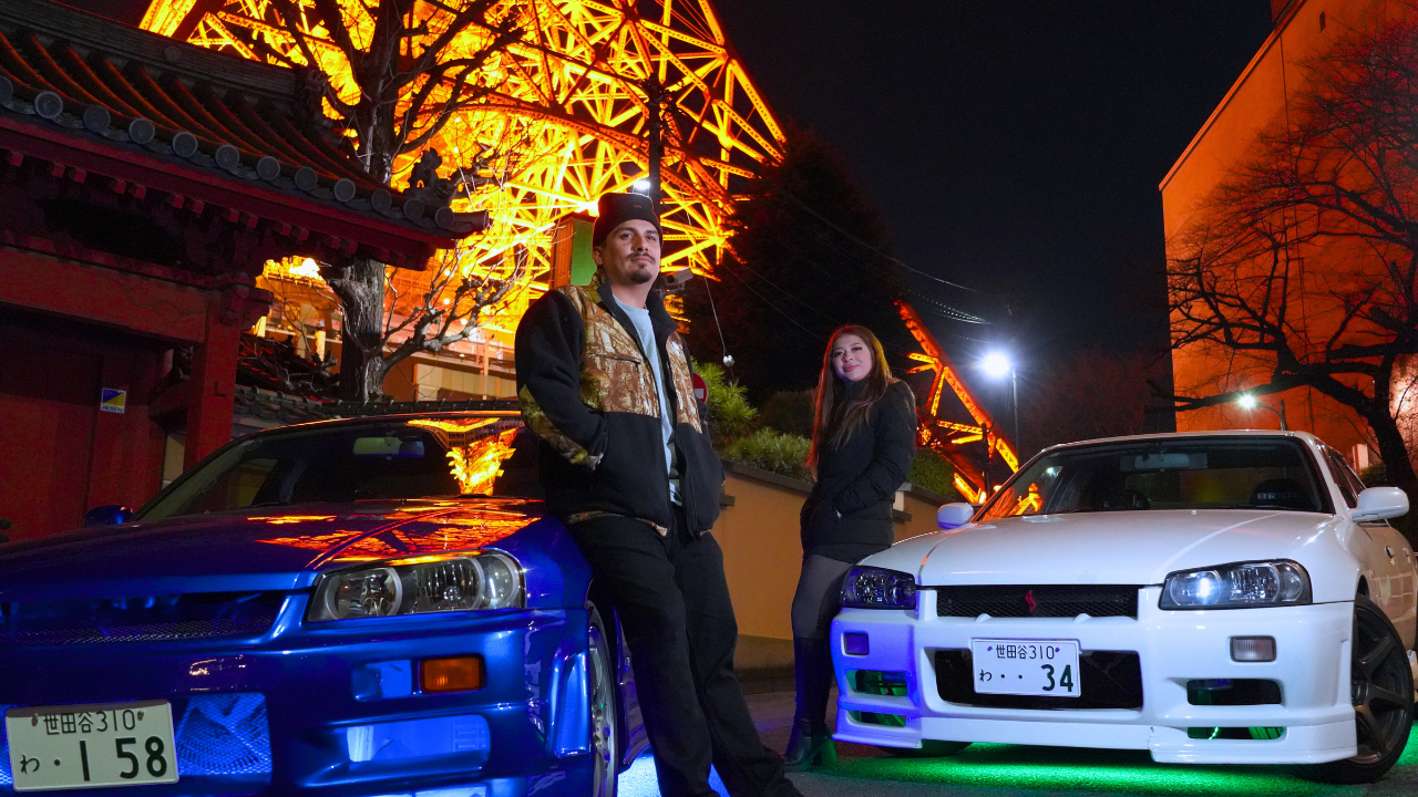
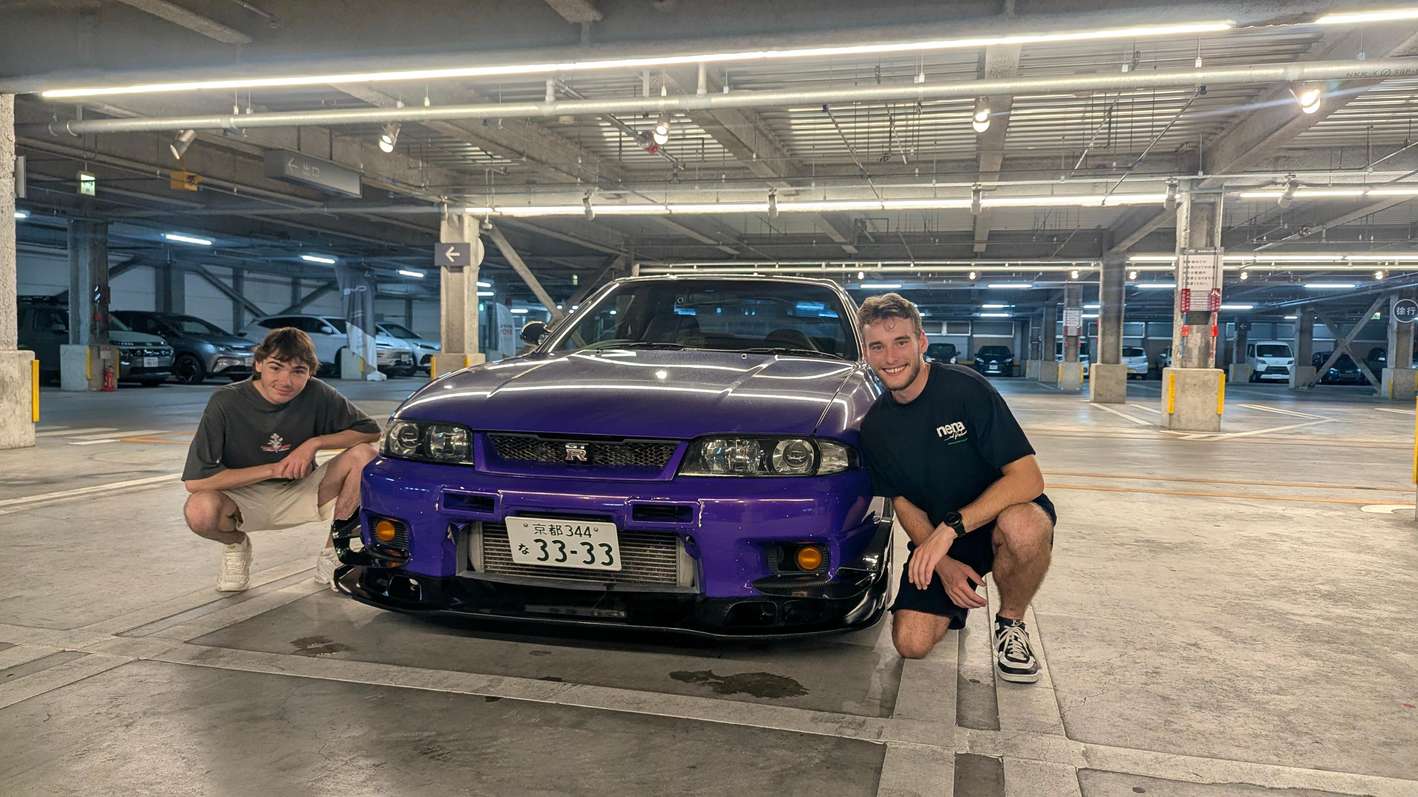
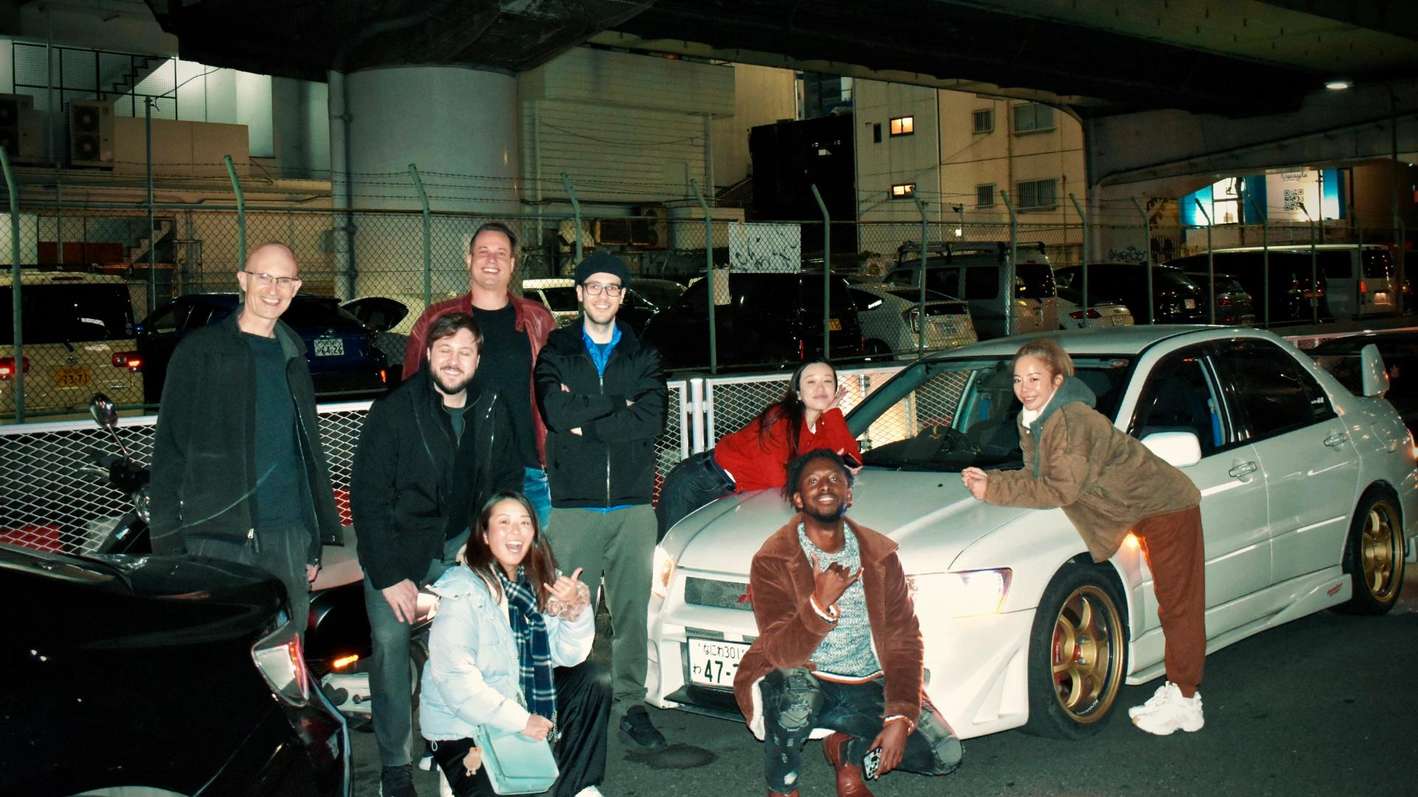
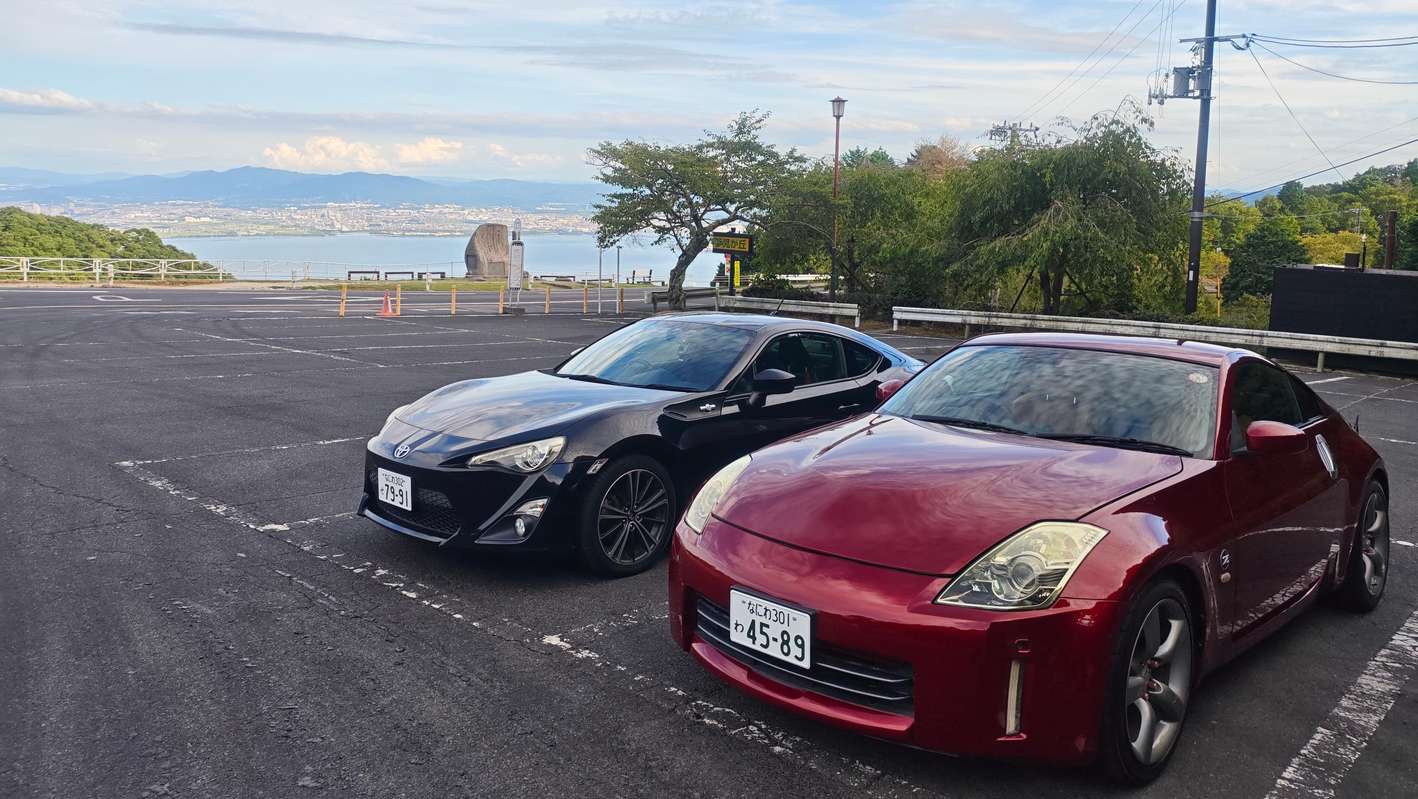
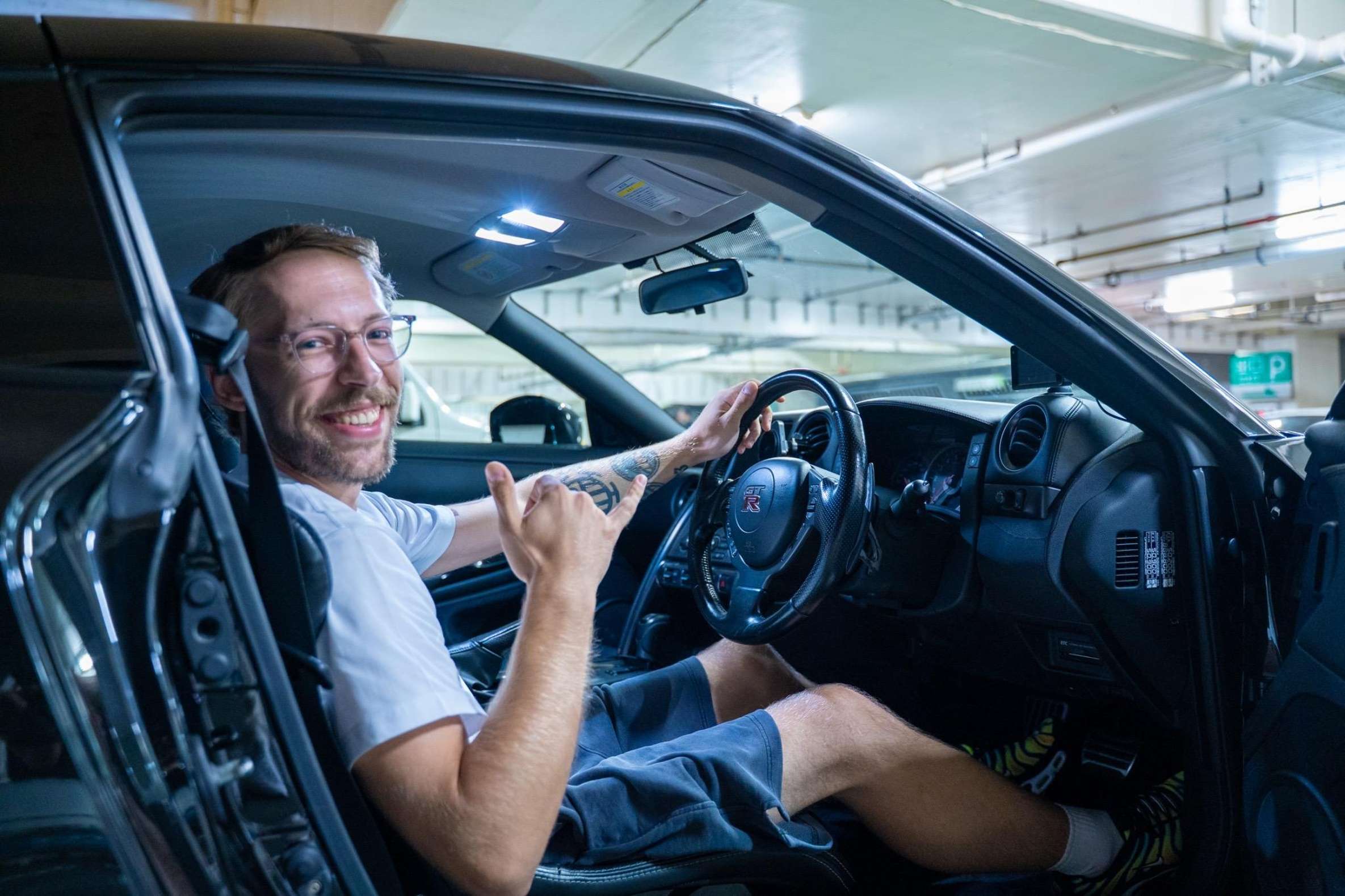
Ride shotgun in a real tuned JDM car on Tokyo's night highways. Local enthusiast drivers, the Wangan Route, Rainbow Bridge and a full stop at the Daikoku PA car meet. No driving licence needed. Pick your night and book your seat before the tours sell out.
"Flawless night! Hotel pickup, super friendly driver who explained everything and answered all our questions (7, 26, 52). Time to check out cars and snap pics. Cruising with the convoy was an adrenaline rush!"
4.8★average rating4,453traveler reviews100%free cancellation61countries travelers came from
JDM Passenger Tour - which ride fits you
Every ride here puts you in the passenger seat of a modified JDM car while a local driver handles the wheel, so the real choice is which car you want and how the night is run. Some tours run shared, some are private, and one hands you a surprise car on the night.
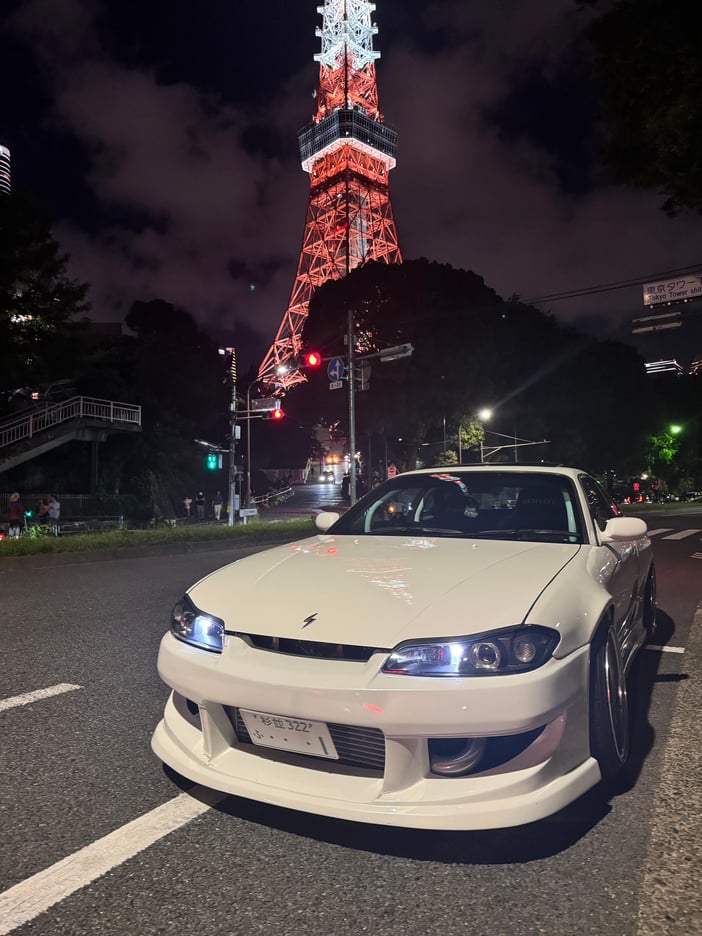
BookingTours sell out, so arrange your seat before you arrive in Tokyo. Turning up on the day and hoping for a ride is a gamble.
ClosuresPolice can close Daikoku PA on the night with no notice, most often on Thursday, Friday and Saturday evenings around 8:30 pm. If that happens, most tours move to Umihotaru PA or refund you.
EtiquetteNever touch, lean on or sit in a car without the owner's permission, and stay on the walkways. Owners notice, and police act on complaints.
BehaviorNo revving, burnouts or blocking lanes. That kind of thing is what triggers police closures of the meet.
ContactGive the tour operator a WhatsApp or Instagram handle after booking and keep notifications on, since changes get sent before start time.
WeatherTours run in the rain, and a wet night rarely kills the meet. Heavy storms or road closures get you a reschedule.
ClothingWear comfortable shoes and clothes you can stand around in outdoors at night. Tokyo nights run from near freezing in winter to over 25°C in midsummer.
CarsSpecific car requests are rarely guaranteed, since maintenance and same-day bookings change the lineup. Ask ahead if one model matters to you.
TimingMost rides run three to four hours in the evening or at night, so plan a late return and check your last train.
closurePolice close the Daikoku PA car park entrance without notice, usually on Friday and Saturday nights from around 8:30 pm, and once it shuts it rarely reopens that night.
Book a tour with an early pickup, around 4 to 5 pm on weekends, so you are inside before the closure builds, and pick one that diverts to Umihotaru or Tatsumi PA or offers a full refund if you decline the alternative.
Compare JDM passenger tours to Daikoku PA
Cheapest ride-along
2 - 3 hours·English, Japanese
4.5(16)
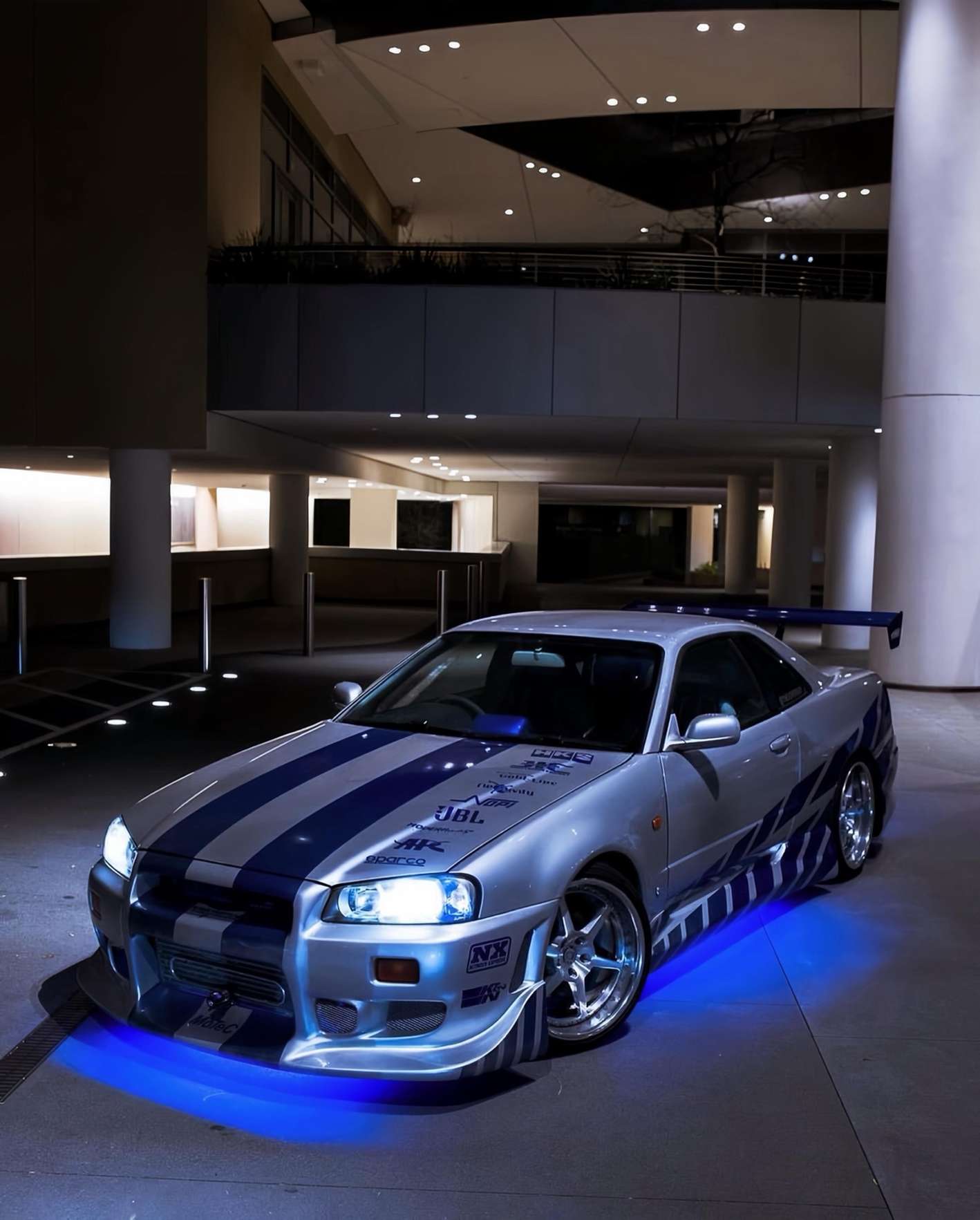
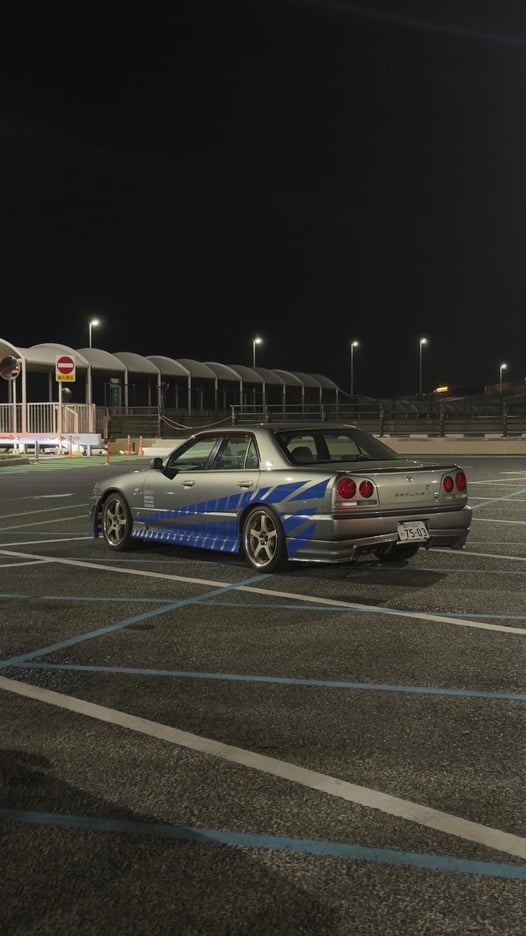
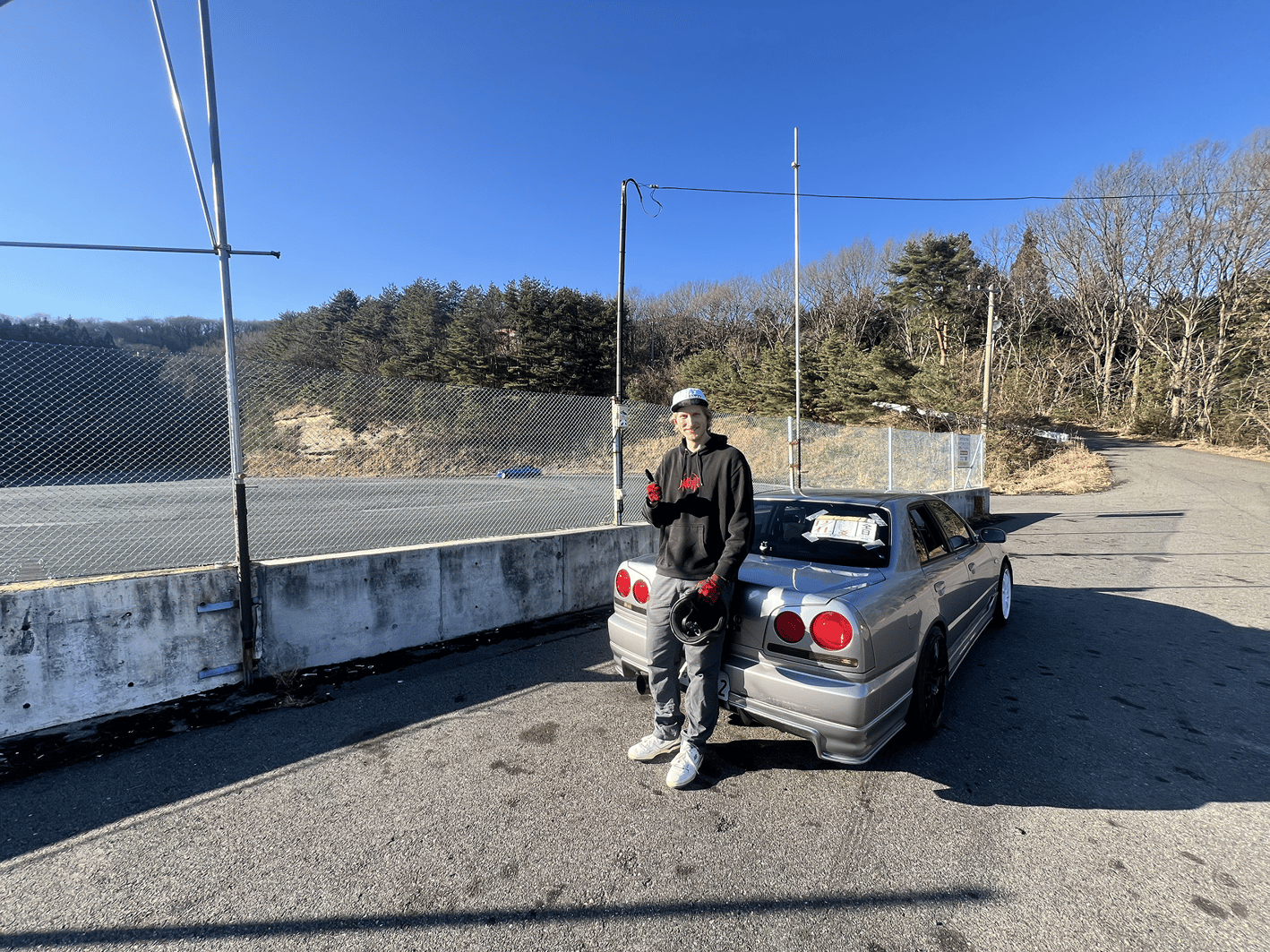
Tokyo: R34 & GT-R at Daikoku PA After Dark, Tokyo Drift Meet
The shortest format here at 2 to 3 hours, with a Tokyo Tower photo stop and pro DSLR photos on private plans.
Free cancellationPhoto stop at Tokyo TowerHosting in English and Japanese
What you'll see as a JDM passenger on the way to Daikoku
6 stopsabout 1.5 h12 places
The night starts in the city and ends at the most famous car meet in Japan. You ride as a passenger in a modified JDM car, no driving licence needed, while a local driver handles the expressways.
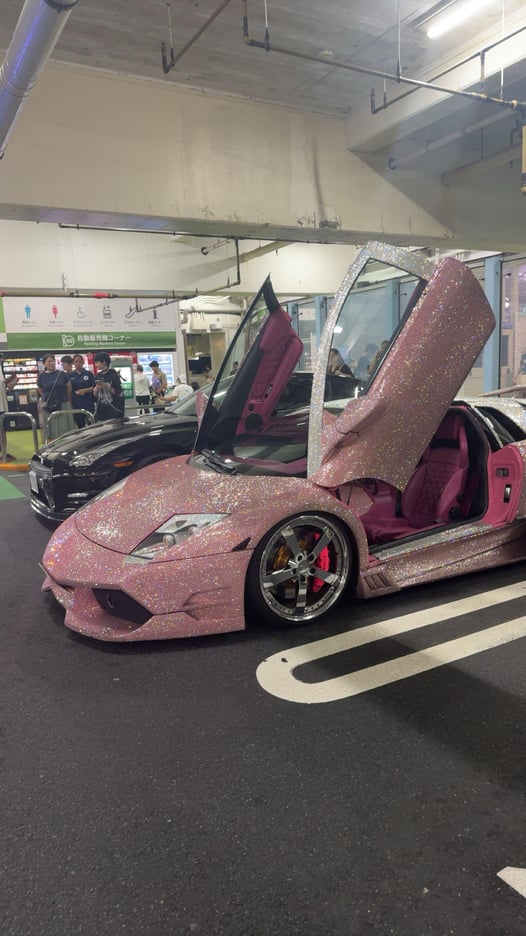
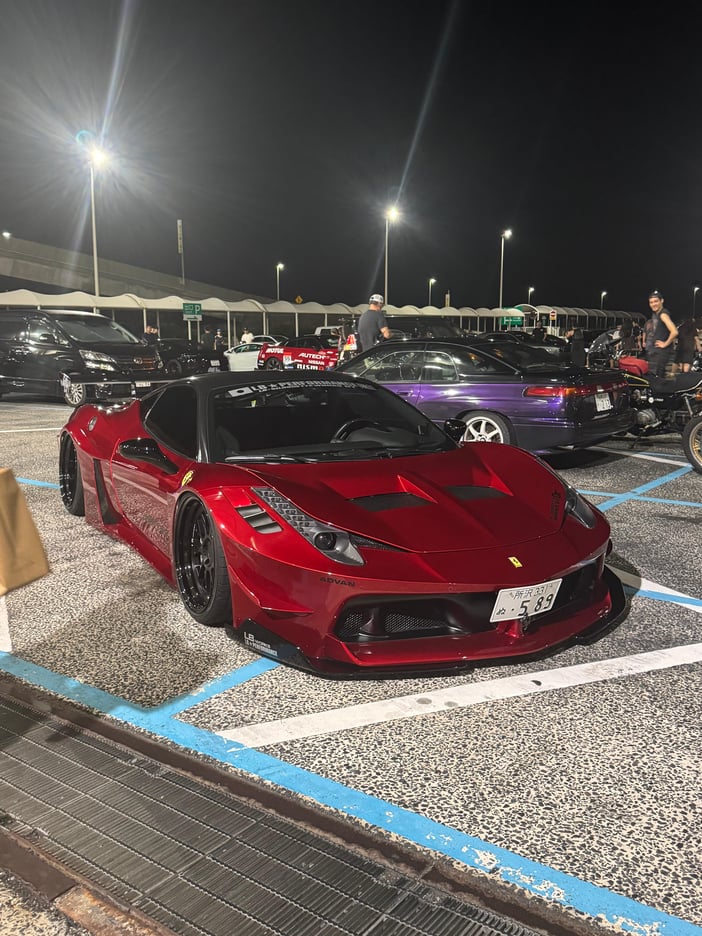
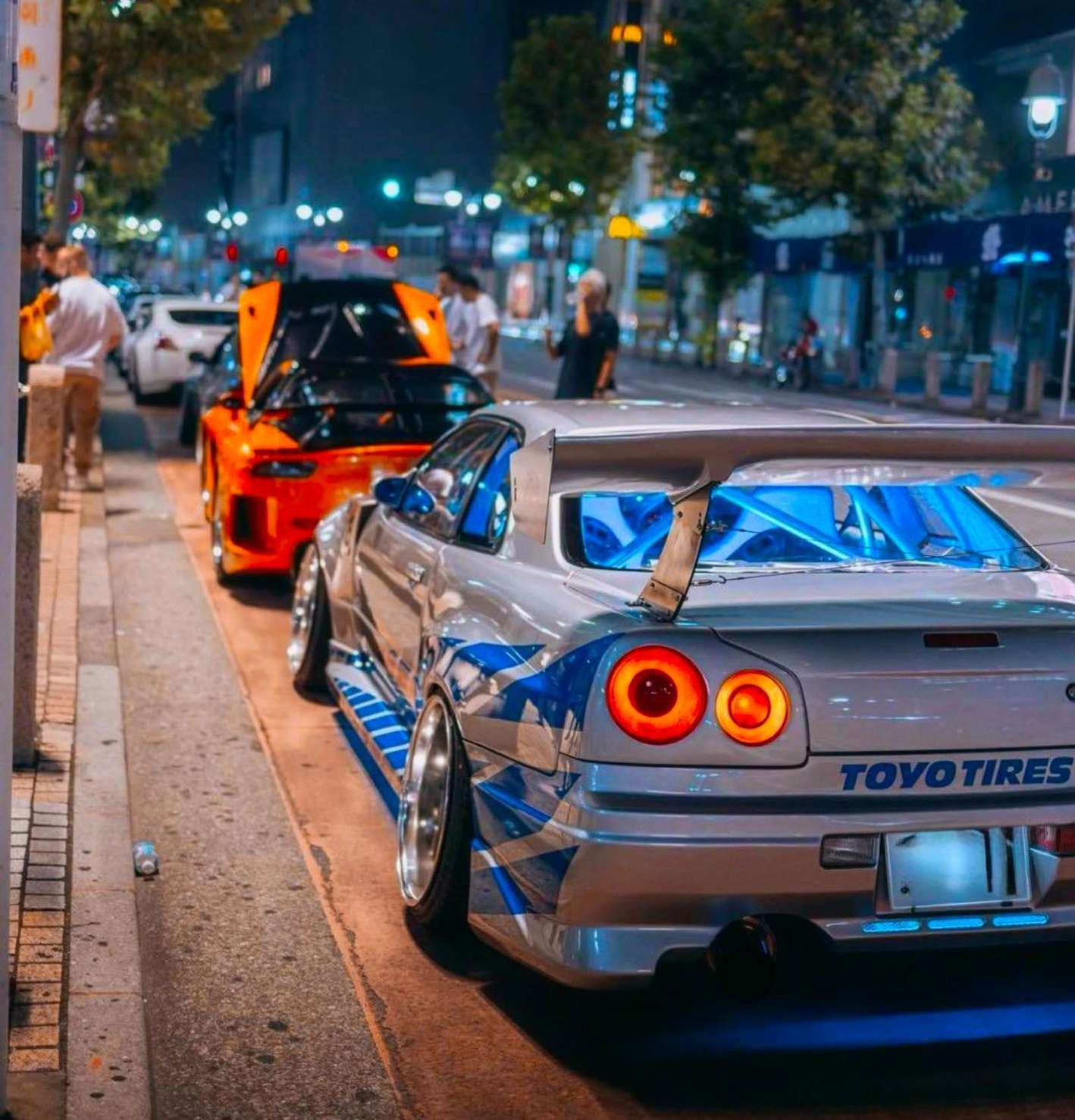
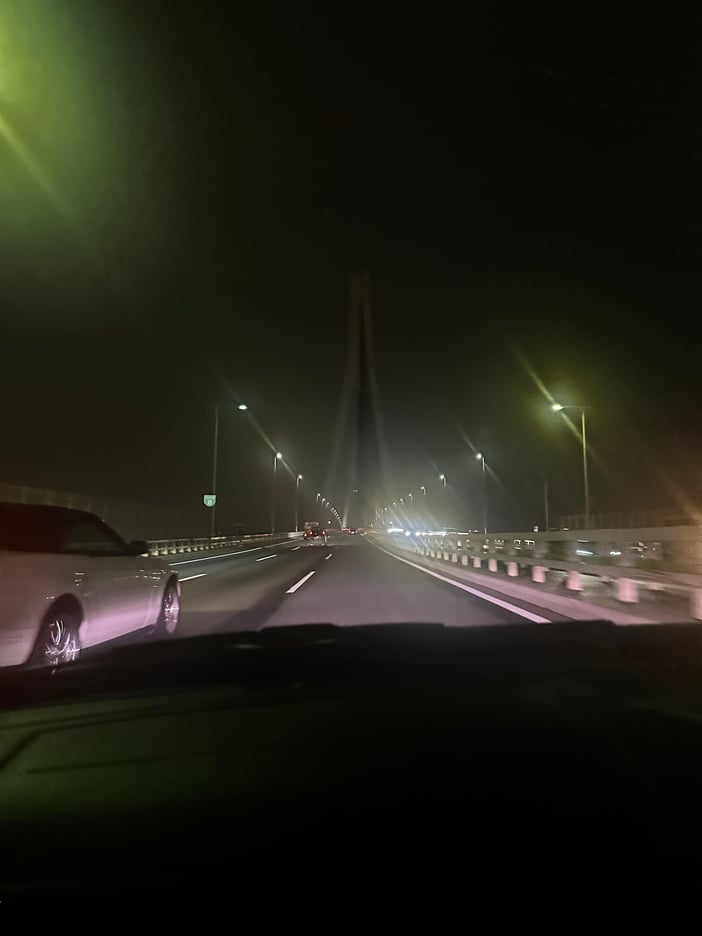
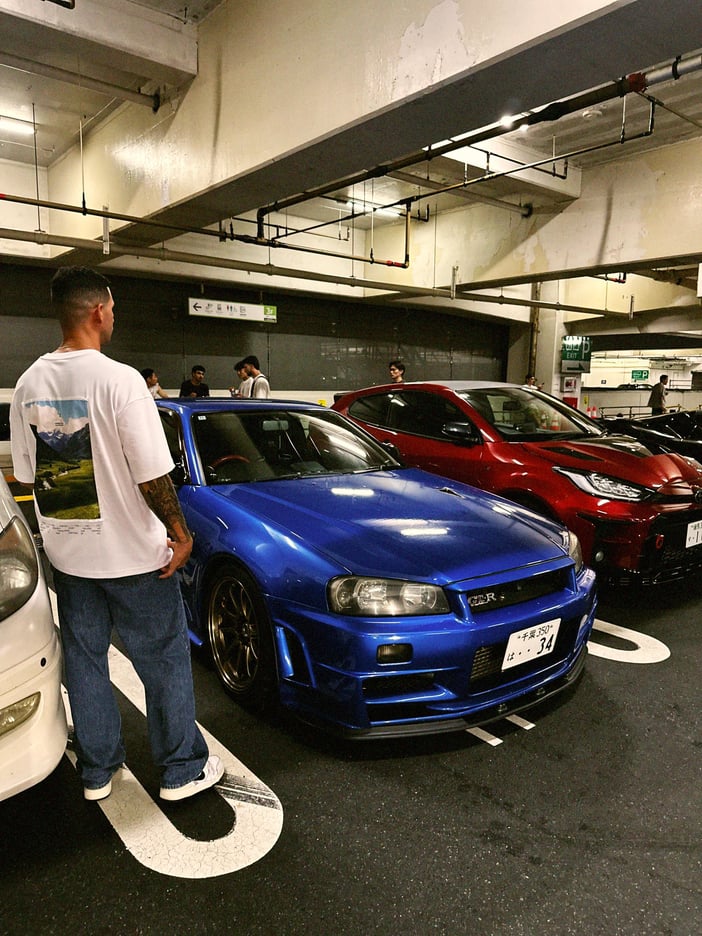
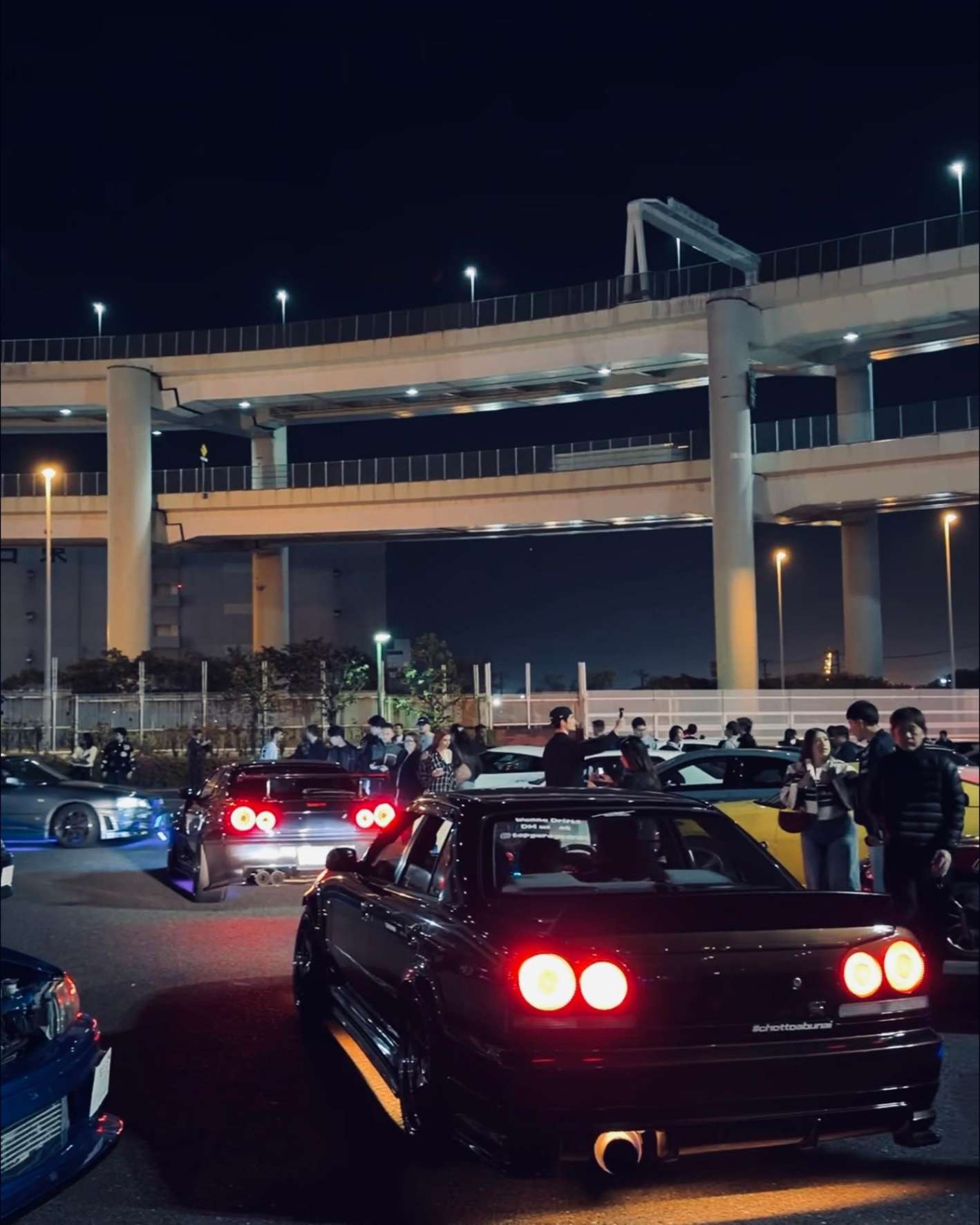
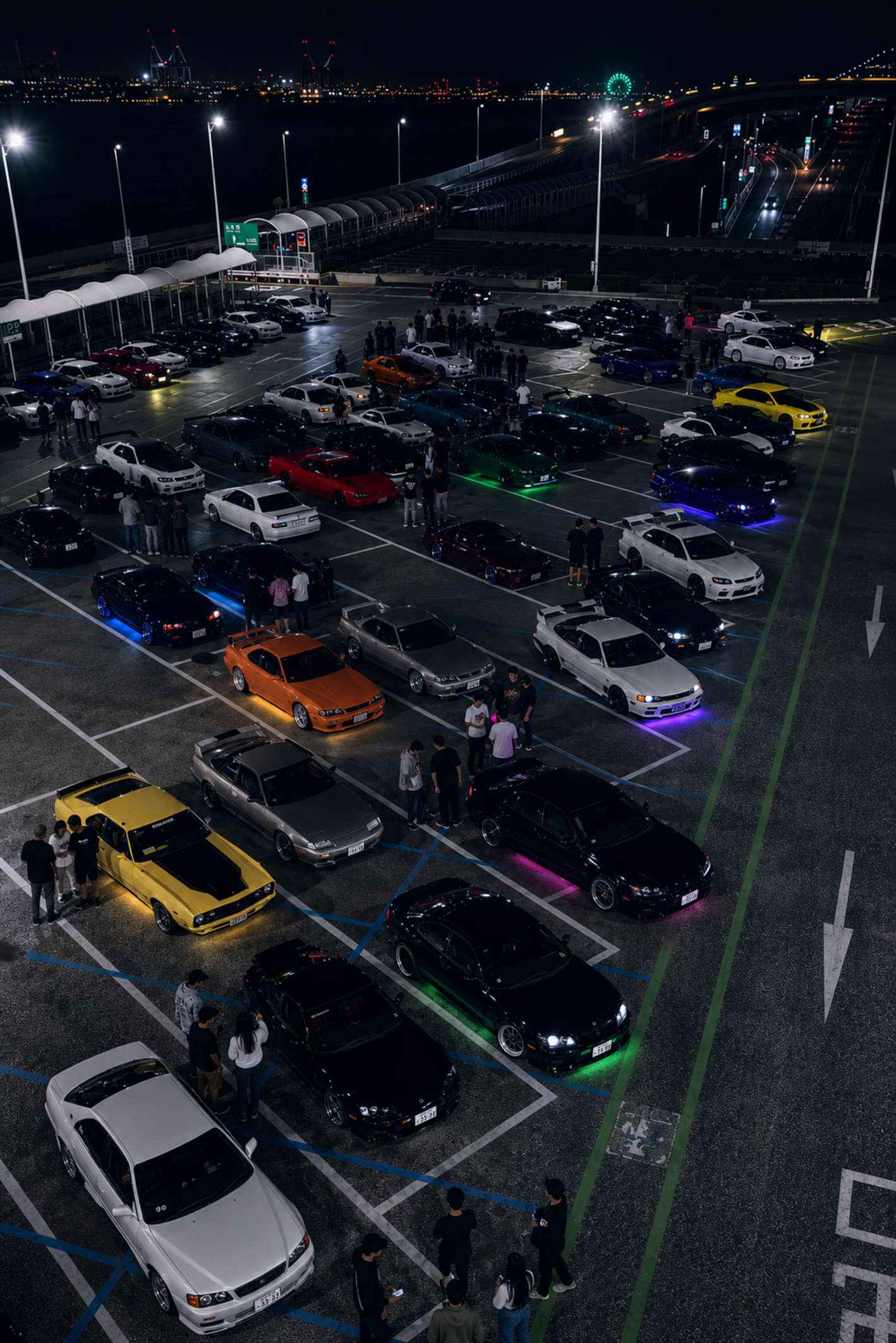
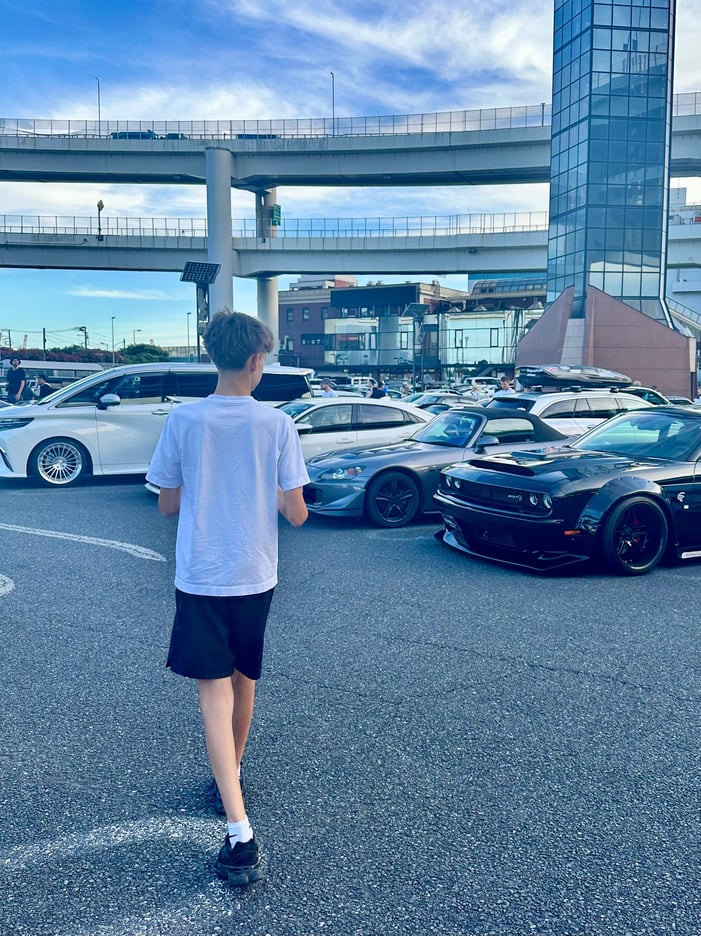
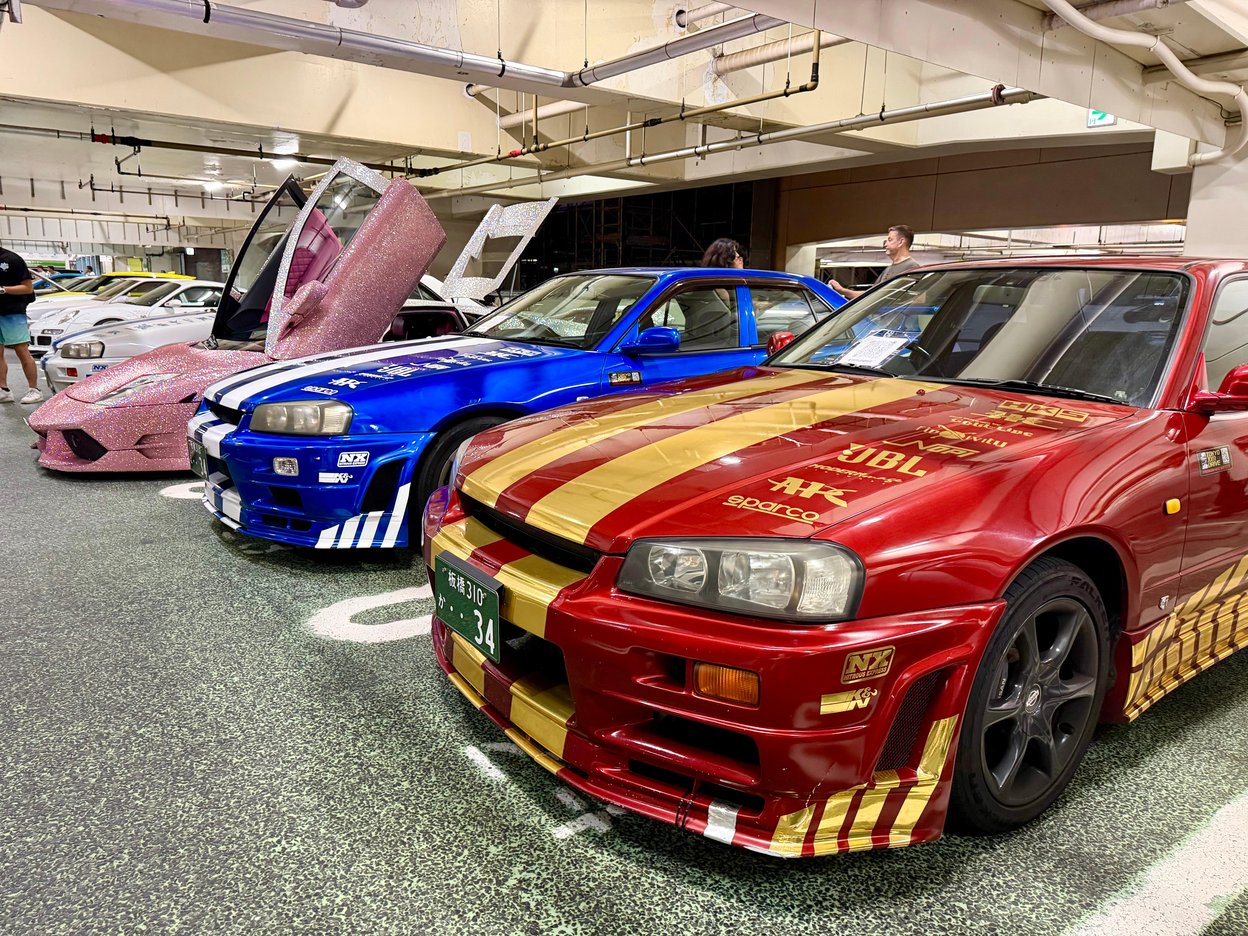
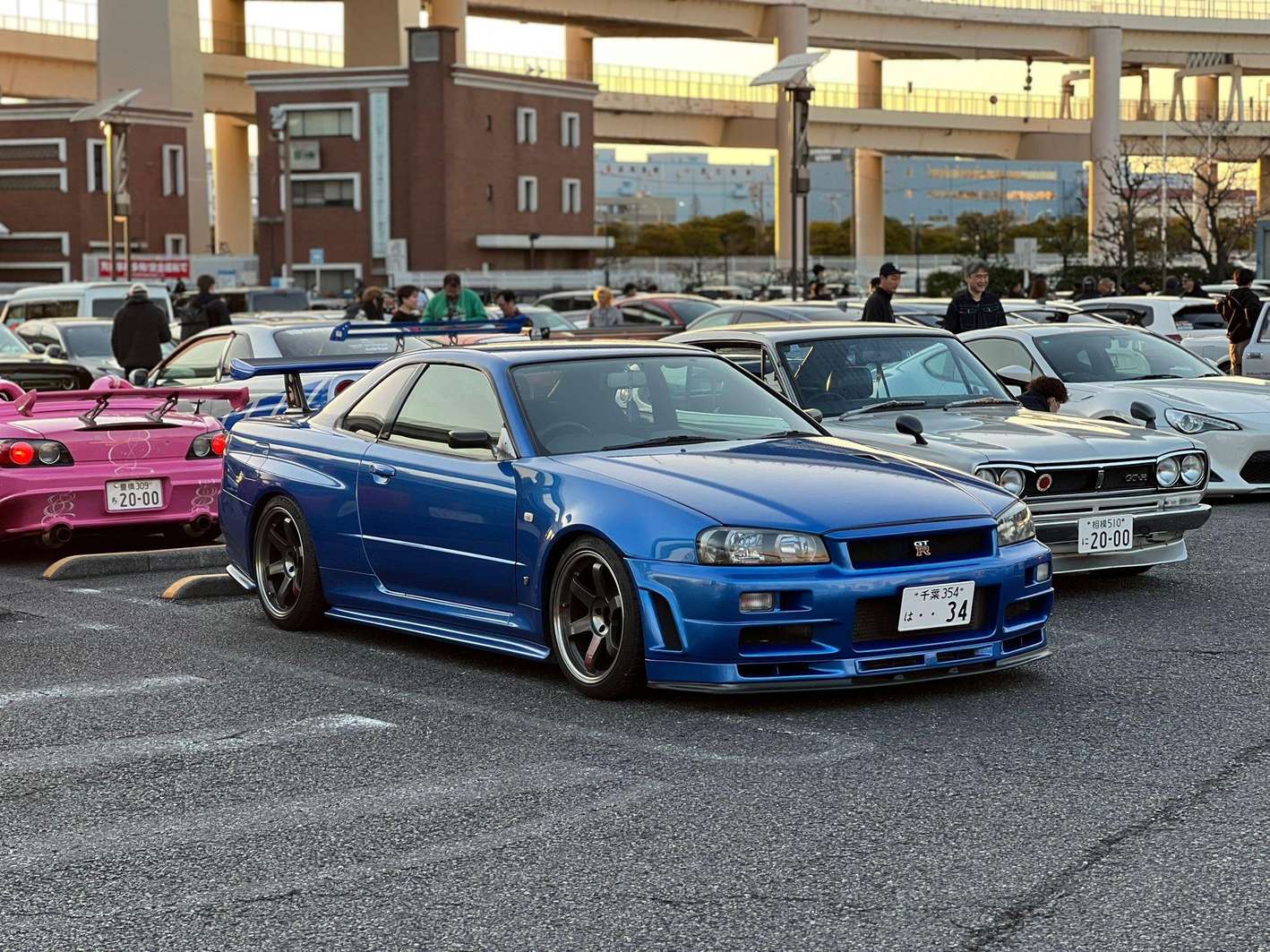
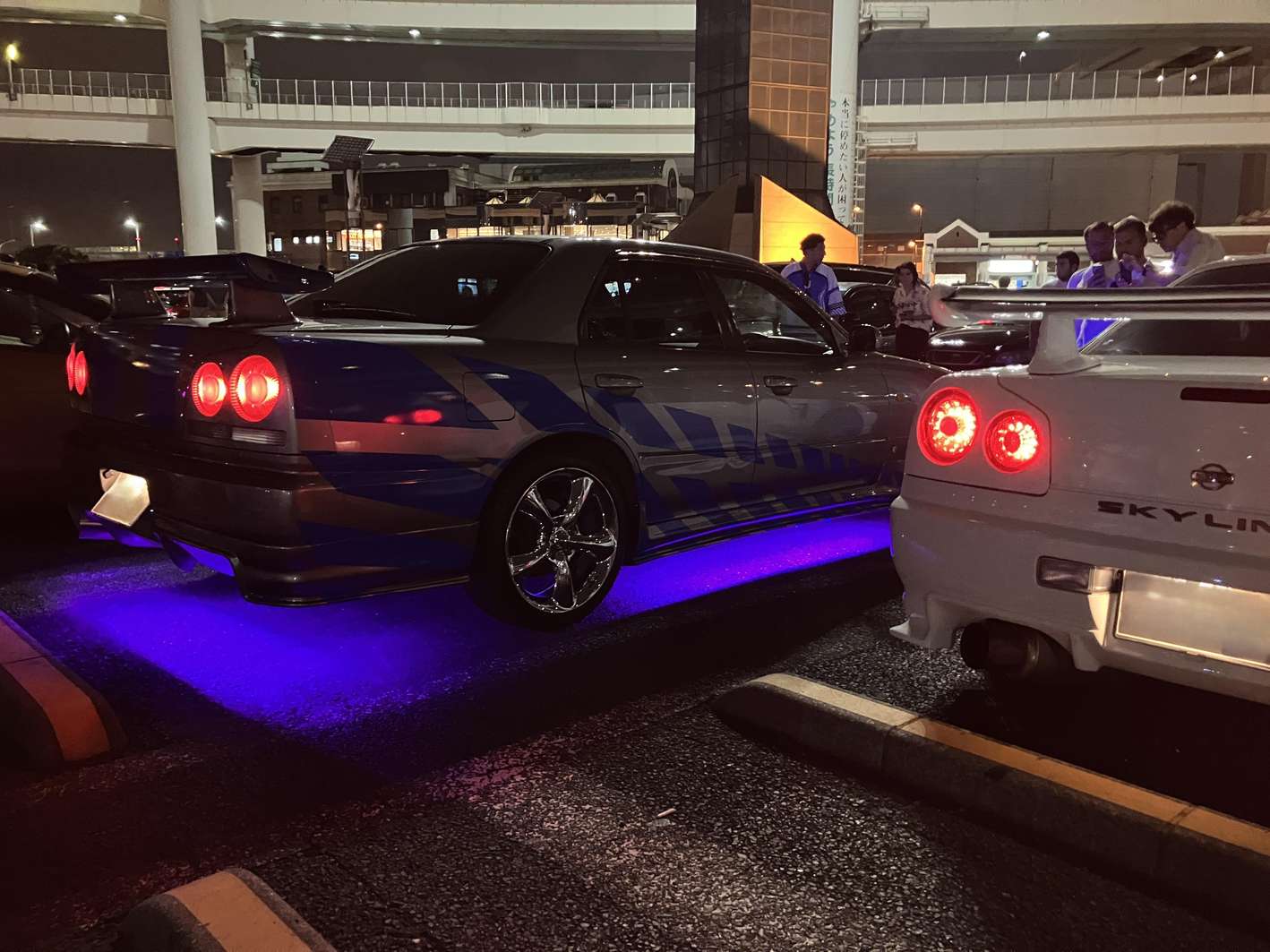
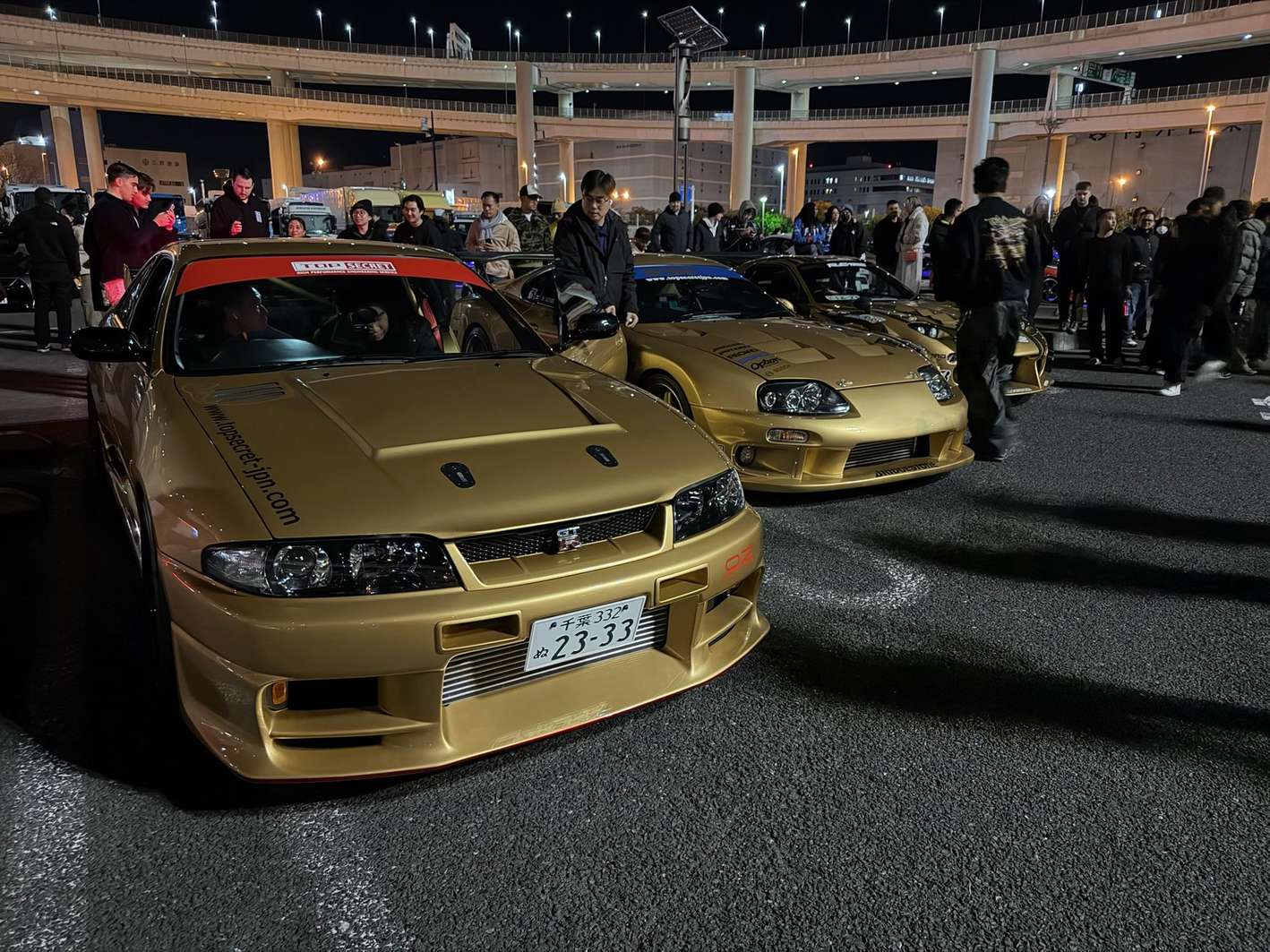
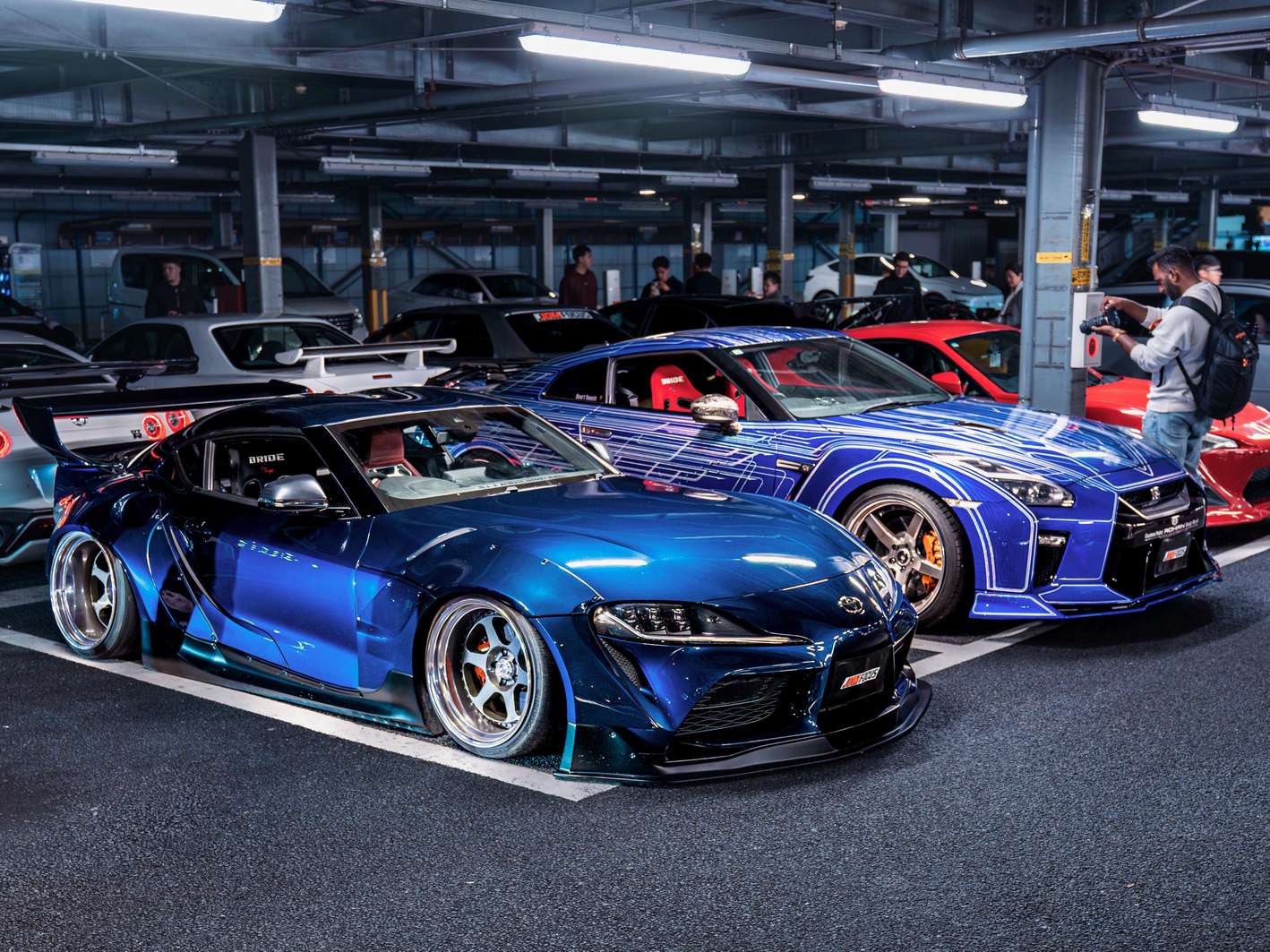
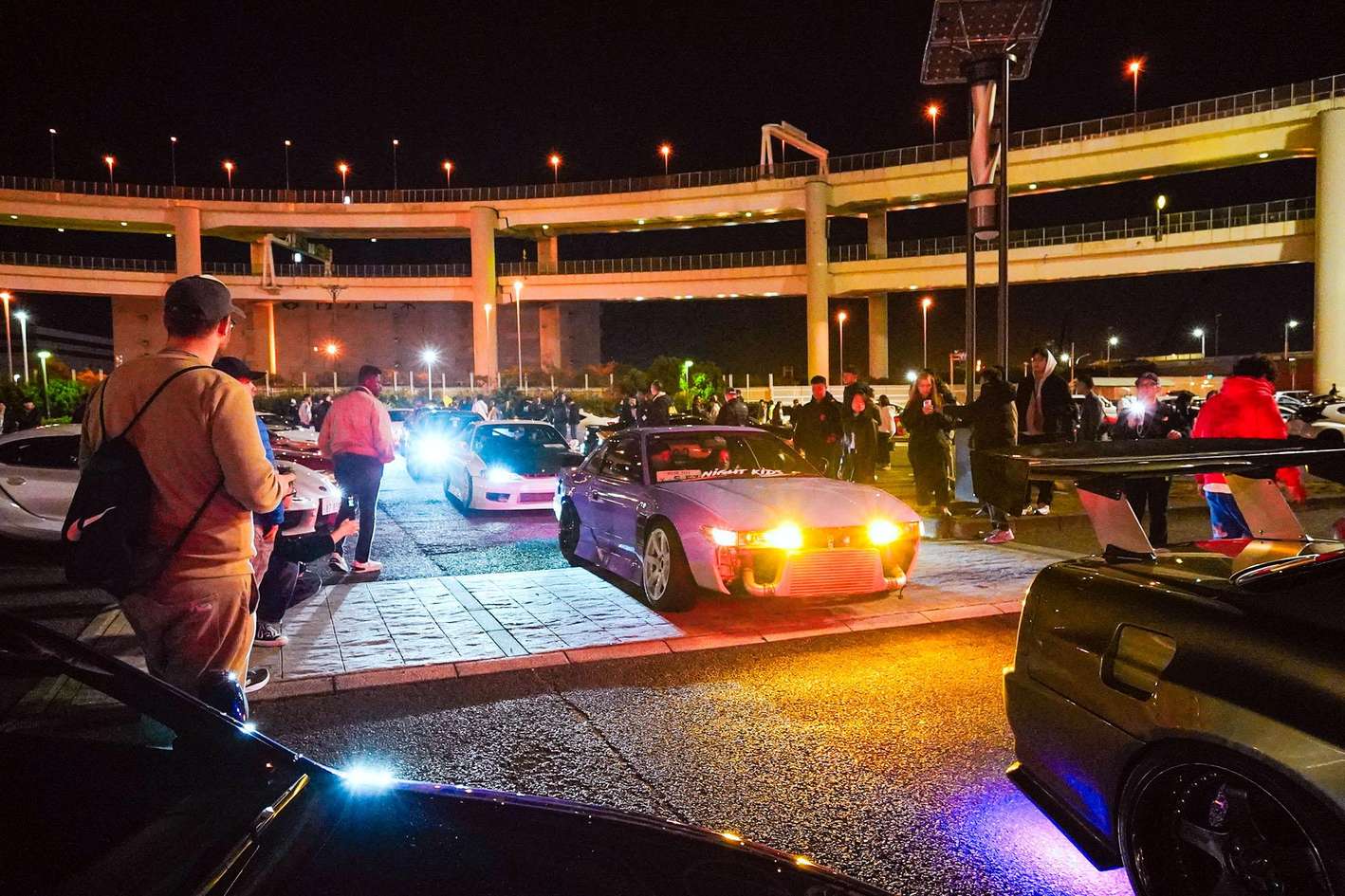
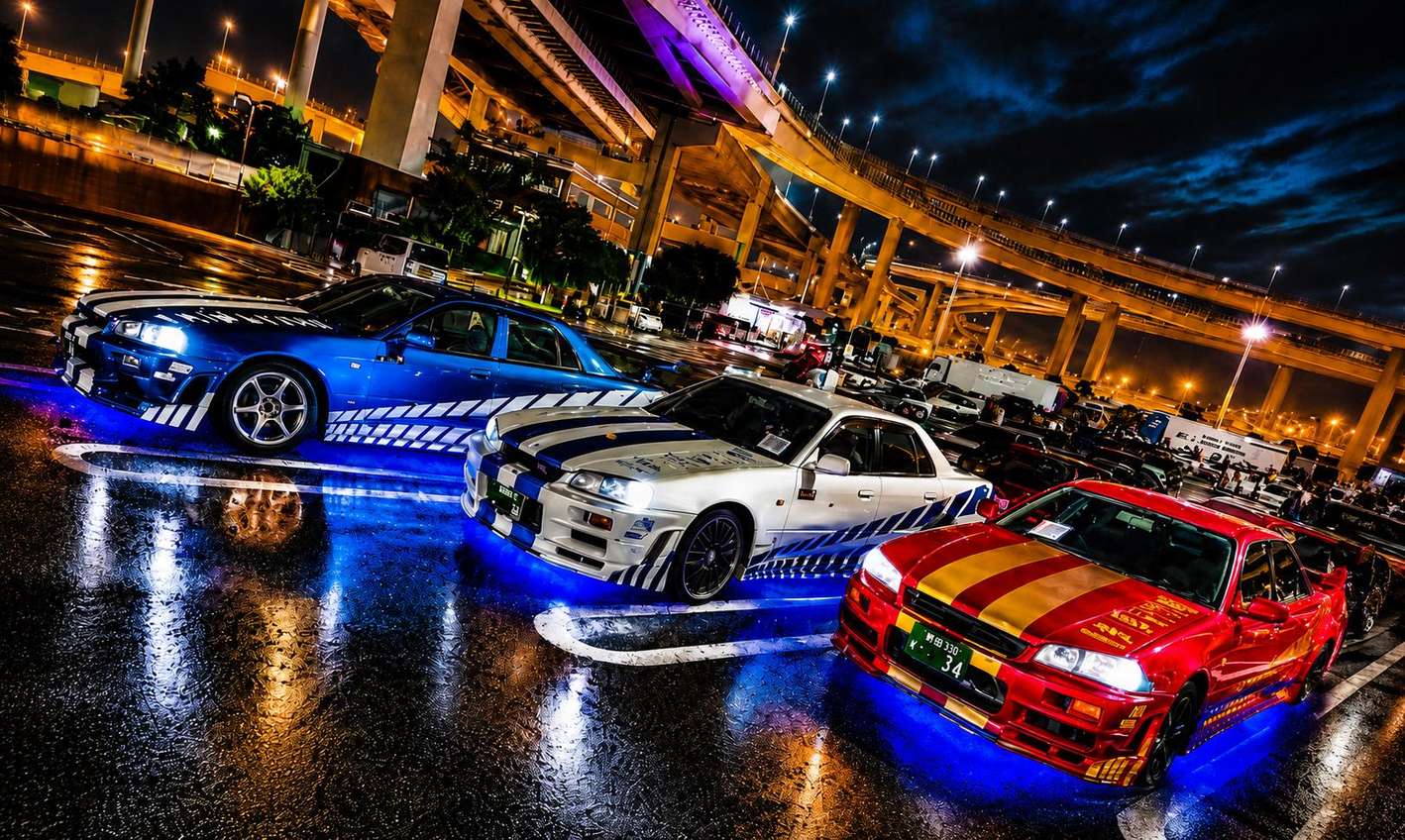
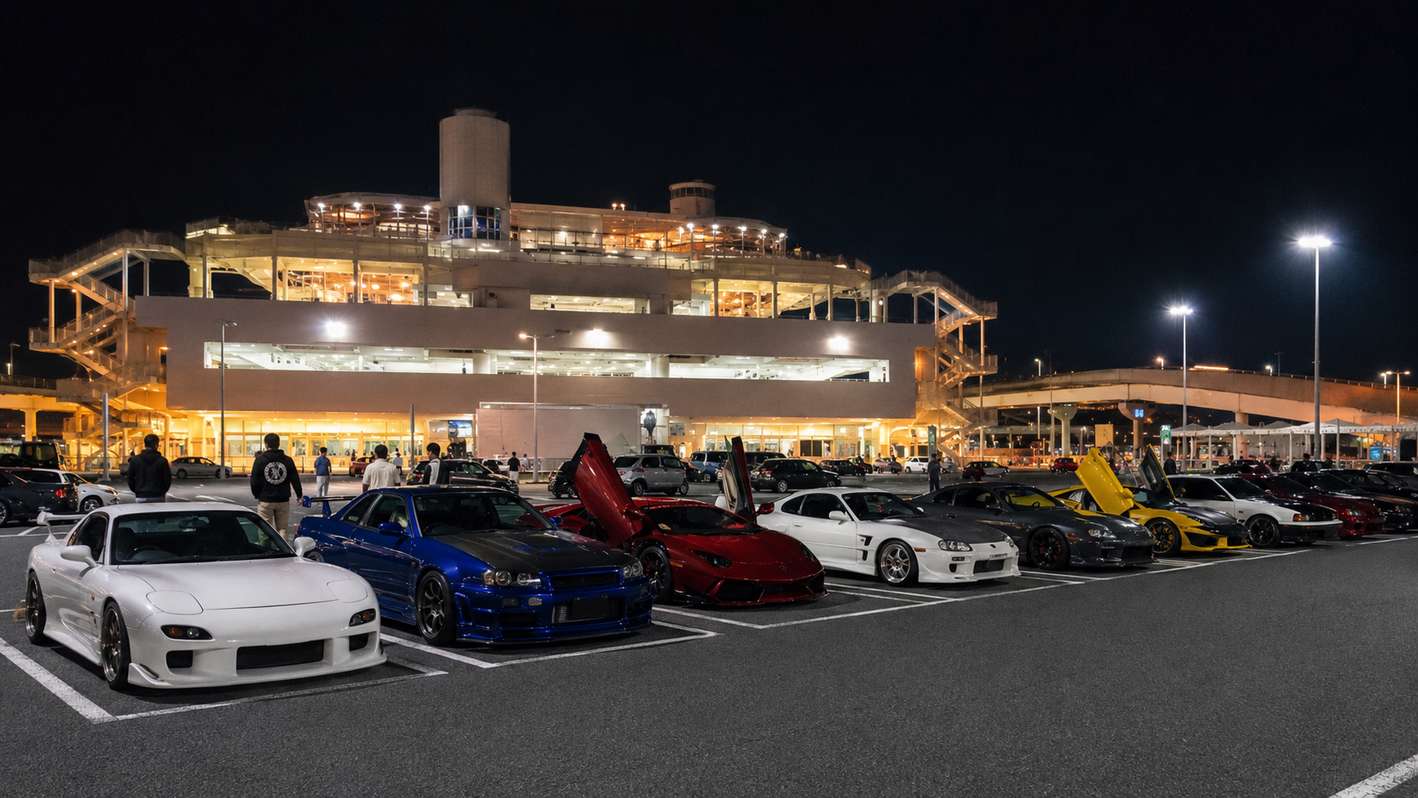
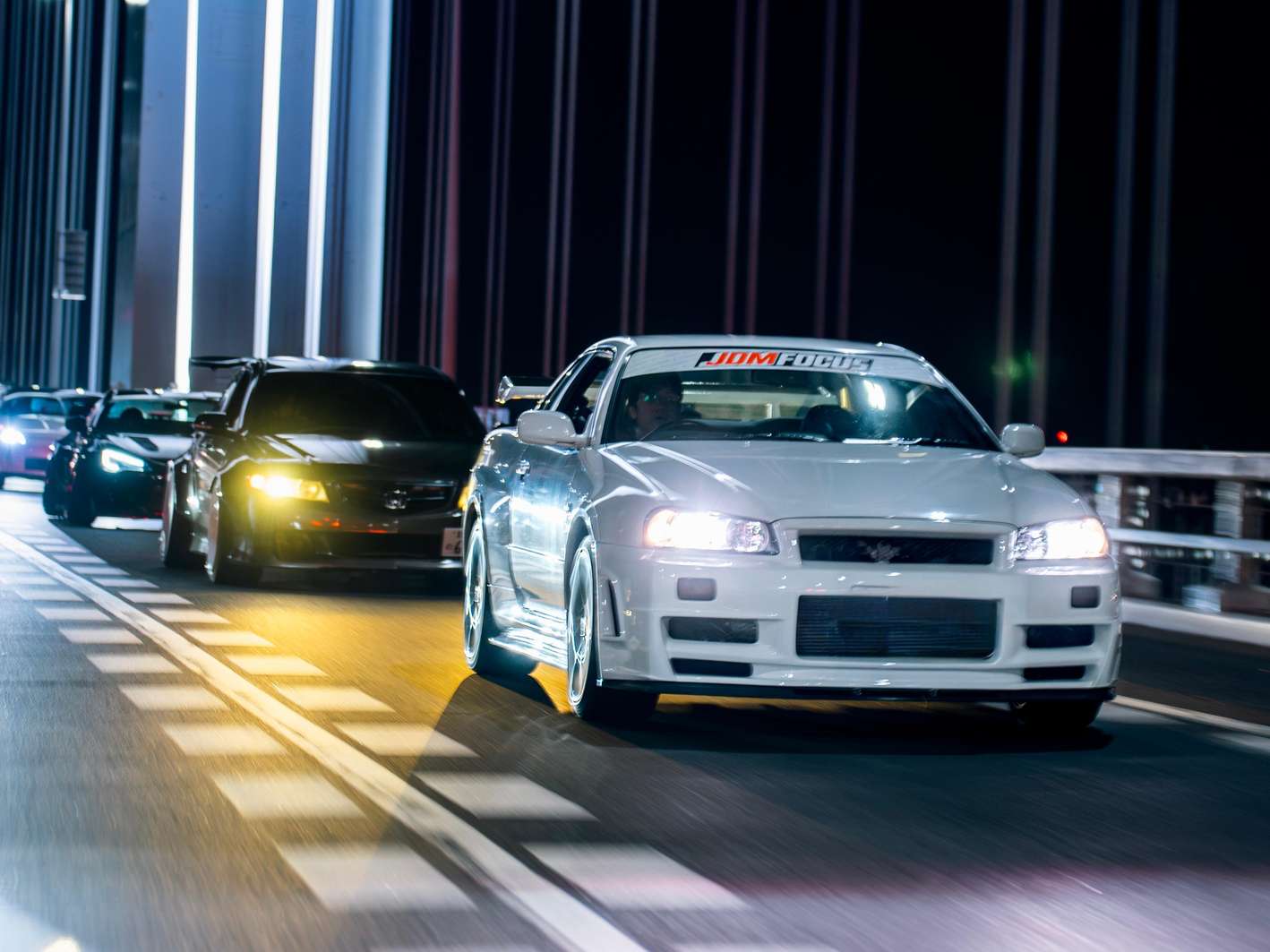
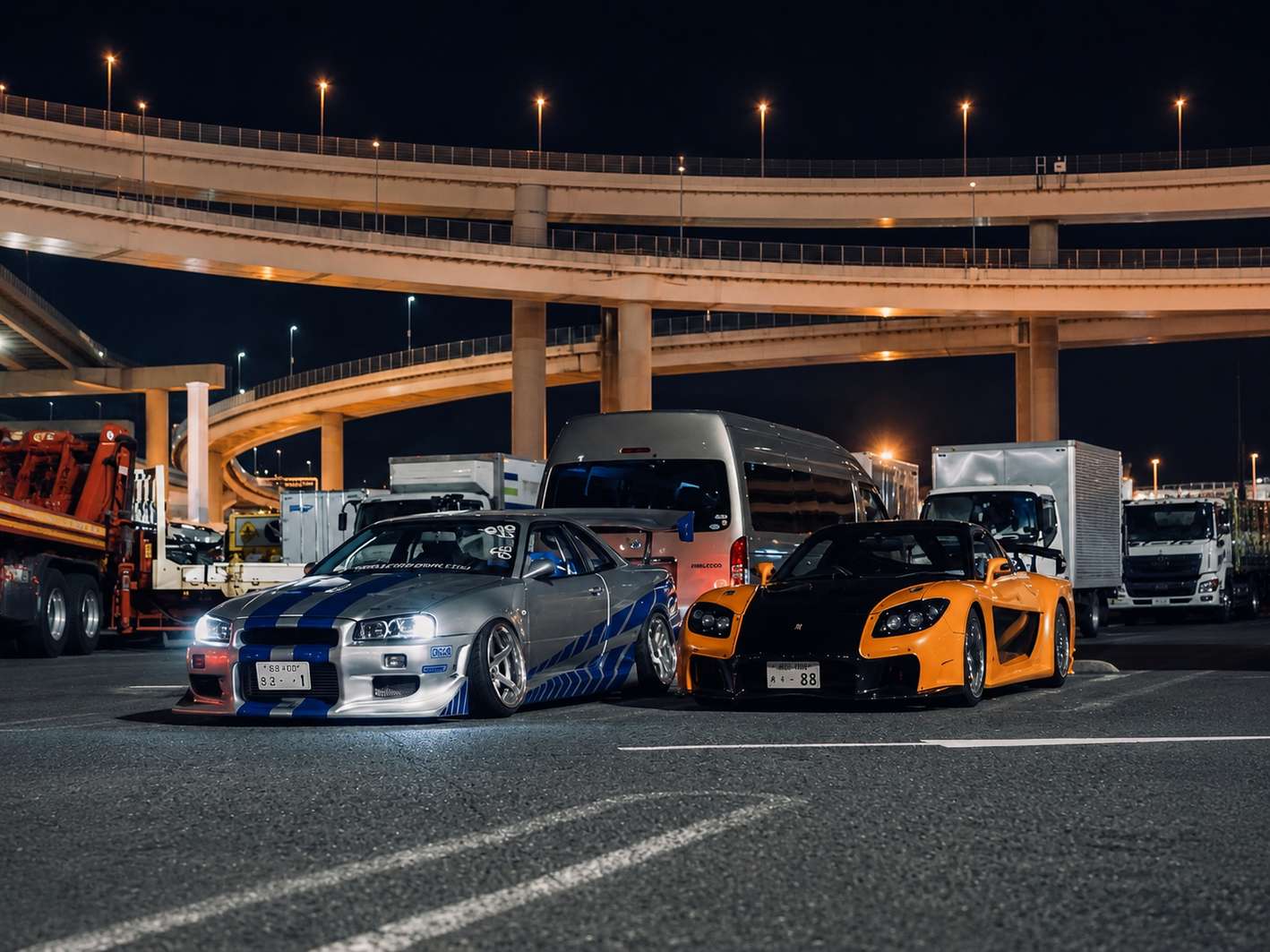
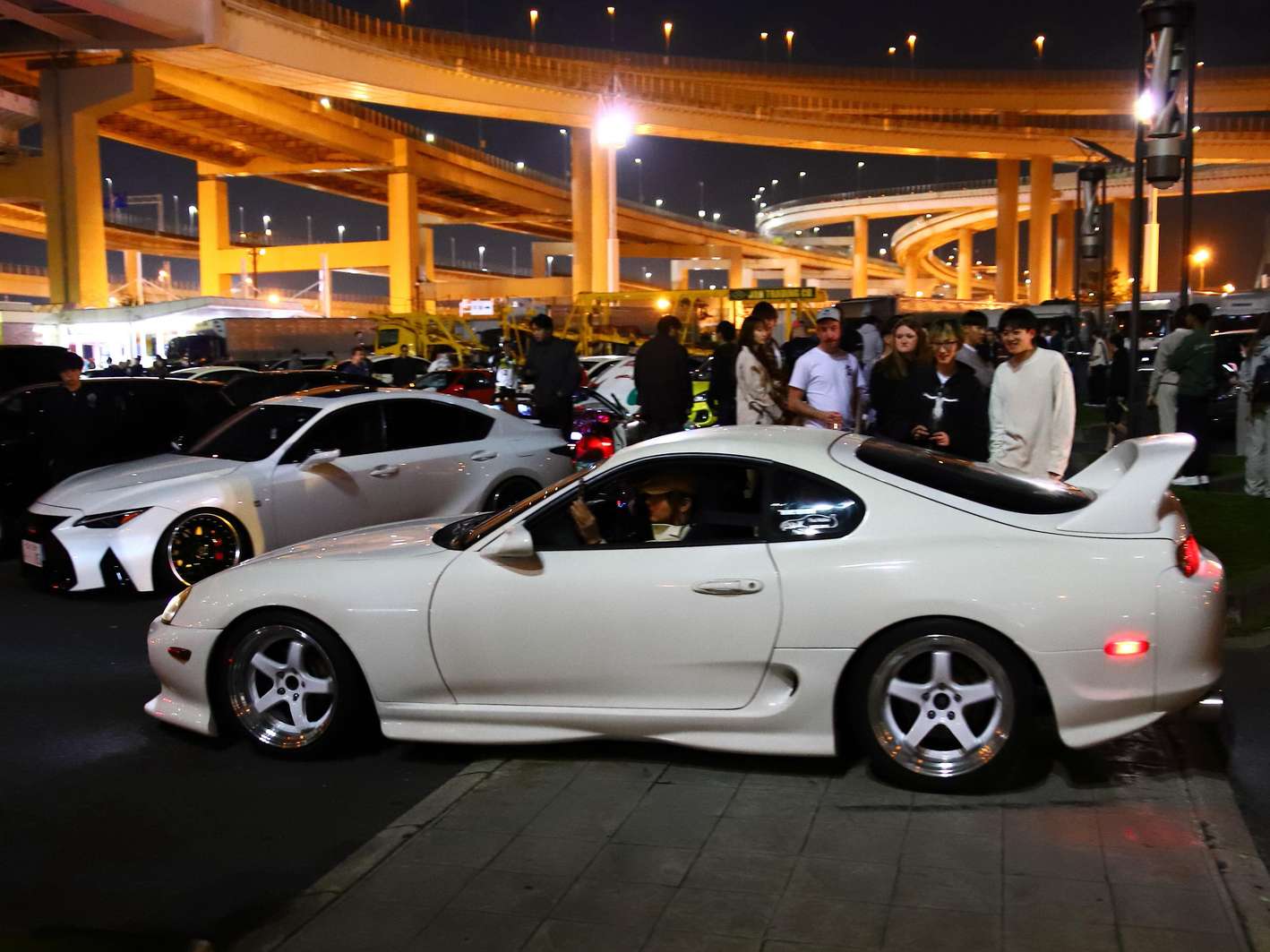
The route crosses Rainbow Bridge, runs the Bayshore Route out into Tokyo Bay and pulls into Daikoku Parking Area, where Skylines, Supras, RX-7s and kei cars park side by side with no hierarchy.
You get about an hour on the ground at Daikoku to walk the rows and take photos, then a short stop at Tokyo Tower for night shots before the drive back. Most versions run three to four hours, and drop-off lands you back in central Tokyo.
Tokyo Sta. Marunouchi-Minamiguchi - Marunouchi South ExitGoogle Maps
Tokyo Sta. Marunouchi-Minamiguchi - Marunouchi South ExitGoogle Maps
Pickup4 places, depending on your optionThe final drop-off back at Tokyo Station's Marunouchi south exit, where the night began.Street ViewMeeting point2 places, depending on your optionA meeting point a short walk from Tokyo Station in the Marunouchi business district. Check in with your driver here before the night drive begins.Street View3Rainbow Bridge, TokyoThe white suspension bridge across Tokyo Bay, lit up at night. You cross it on the expressway with the skyline and the water on both sides.Street View4Daikoku Parking Area· 60 minA motorway rest stop on an artificial island in Tokyo Bay where enthusiasts have gathered for over 30 years. You get about an hour to walk the rows, from hypercars to kei cars, and take photos. Ask before touching or entering any car.5Tokyo Tower· 15 minA 15-minute photo stop under the lit orange lattice tower. Guides often help with pictures and suggest the best angles.Drop-off3 places, depending on your optionDrop-off at Tokyo Station at the end of the night, convenient for the train network and hotels in the Marunouchi area.Street View
Included
Ride in a Japanese sports car driven by a local JDM enthusiastVisit to Daikoku Parking Area (or alternative location if closed)Tokyo night highway drive experienceOpportunity to see and photograph JDM cars and car meet atmosphere
Not included
Food and drinksGT-R upgrade option (available for an additional fee)Personal expenses
Comparing Tokyo JDM Passenger tours - which ride fits your night
Green marks the lowest price. Each price says whether it is per person or per group.
Tour
Price
Duration
Pickup
Languages
Best for
Our pick
Tokyo: Daikoku Meet & Night Drive on a Tokyo Drift JDM Tour
5.0★ (137)
from $83lowest price
3 hours
yes
English, Chinese, Japanese
budget night riders who want hotel pickup and a surprise car lineup
Choose a date knowing the car mix changes with the clock. Friday and Saturday nights bring the biggest turnouts, while Monday to Thursday from about 8 pm are calmer with fewer cars. Sunday mornings from 8 to 10 am show exotics and classics in daylight.
Pro tipOn weekends, operators pick up around 4 to 5 pm to get inside Daikoku before crowds and closures build, so an early slot is the safer bet.
RecommendedBook at least a few days ahead. Tours sell out, and turning up in Tokyo hoping for a seat is a gamble.
02
Choose your car option
Read the option descriptions before booking, because the vehicle changes with each one. Standard options put you in modified JDM cars like Skylines, Silvias, Supras or GT86s, while guaranteed options lock in a specific car such as an R34 GT-R or R35.
Common mistakeBooking the cheapest option and expecting a GT-R. The base price usually means a shared ride in whatever JDM car is running that night.
RecommendedIf a particular car matters to you, pick the option that names it, since availability varies within standard options.
03
Book and watch your inbox
Pay through the marketplace and the operator sends you an email within 48 hours. Reply to it, and add a contact method such as WhatsApp or Instagram so updates reach you fast.
Pro tipTurn on WhatsApp notifications after booking. If Daikoku closes or plans shift, the operator sends a message before start time.
ImportantMost tours let you cancel up to 24 hours in advance for a full refund, so book early and adjust later if needed.
04
Sort pickup and documents
Many tours include hotel pickup and drop-off in central Tokyo, so confirm your hotel when booking. Others start at a fixed meeting point such as Shibuya Station. Bring your passport or ID card on the night.
ImportantYou ride as a passenger, so no international driving permit is needed. The ID check is for the operator's records, so carry your passport.
RecommendedTravelling with a child under six? Japanese law requires an approved child seat, and private tours can arrange one if you ask in advance.
05
On the day
Show your voucher QR code on your phone when you arrive, no printing needed. Wear comfortable clothes and shoes for standing around outdoors at night, and bring a camera. Expect a late return on night drives.
RecommendedTokyo nights at Daikoku run from about 1°C in winter to over 25°C in midsummer, so pack a light jacket even in warmer months.
Common mistakeWearing dress shoes or assuming the meet happens indoors. Daikoku is an open-air parking area, and rain rarely kills the meet.
What to know before you ride as a JDM passenger
Can stop the dayGood to knowGood news
01
ChoosingWhat it is, who it suits, when to go
5
The car
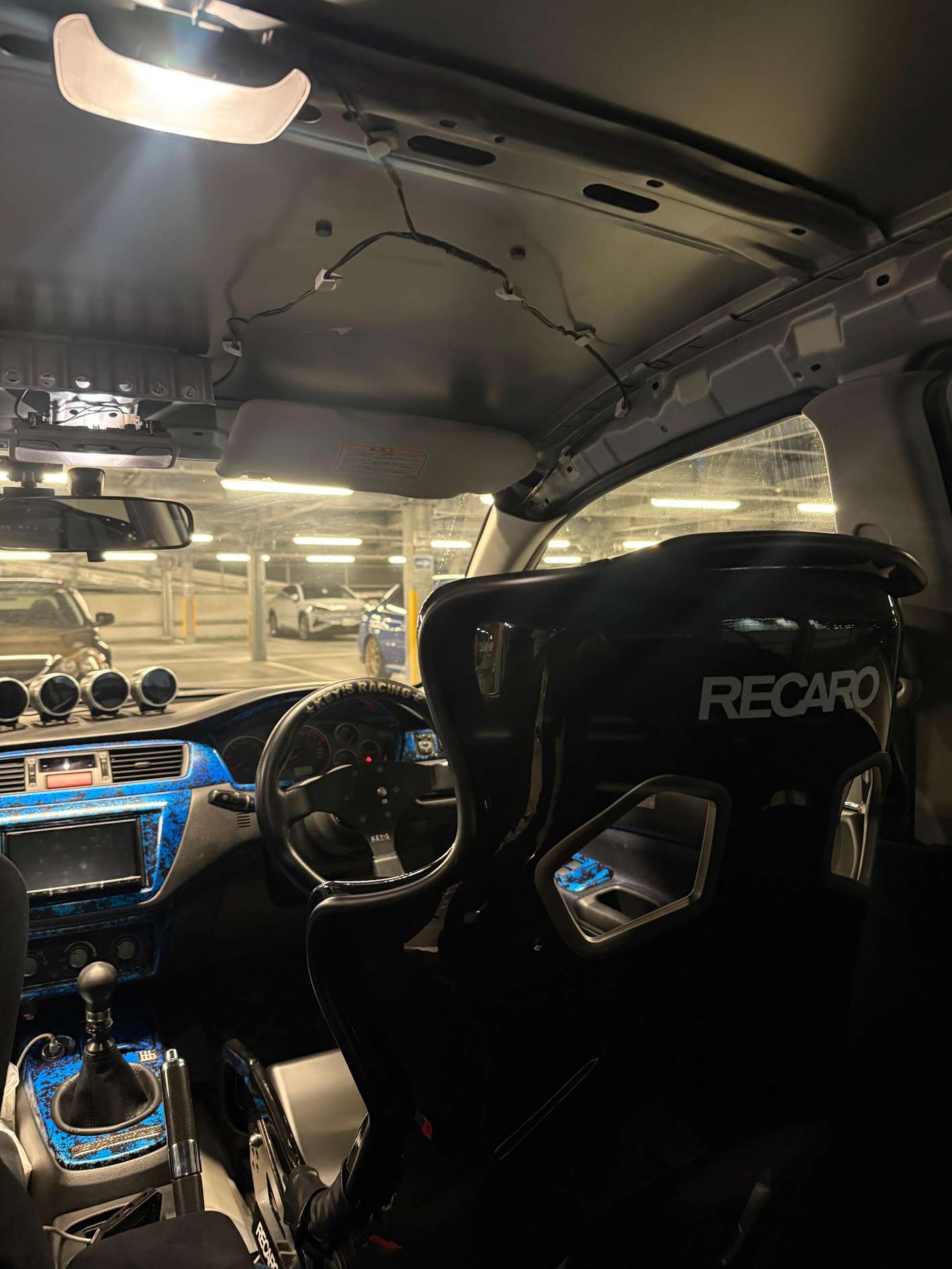
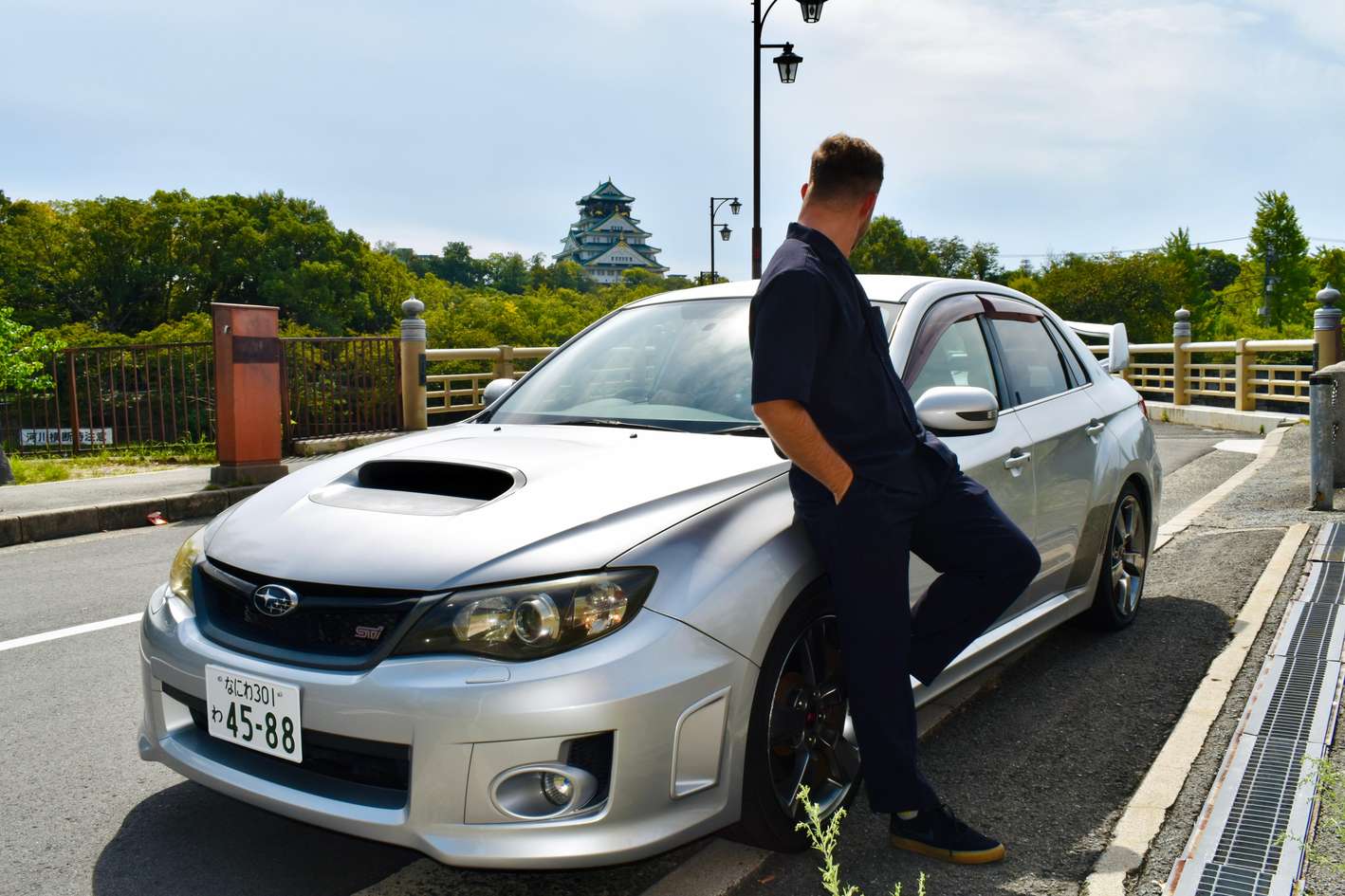
You ride as a passenger with a local driver, so no licence is needed. Cars range from Evos and WRX STIs to Skylines, Supras and GT-Rs, and some tours let you switch between several during the night. If one particular car matters to you, pick the option that guarantees it, because standard plans assign whatever is available.
Group size
Most rides are shared, so you may sit with other travelers, and groups of two can be split across different cars on some tours. Private options exist if you want the car to yourselves, and they suit families because timing and stops stay flexible.
Included
The usual package covers the guided drive, fuel, expressway tolls and parking, plus photo stops at places like Tokyo Tower and Rainbow Bridge. Extras such as food, souvenirs and tips sit outside that. Some tours add a stop at a large tuning-parts store, which is worth the time.
Booking aheadCan stop the day
Sort out your ride before you arrive in Tokyo. Tours sell out, and turning up hoping for a spare seat is a gamble that leaves you asking strangers. Book a few days early, especially for weekend nights and Sunday mornings when demand peaks.
Timing
Friday and Saturday nights bring the biggest turnouts, with cars filling the lot from about 9 pm, but that is also when police sometimes clear or close the area, occasionally as early as 7:30 pm. That is why operators pick up around 4 to 5 pm on weekends. Weeknights from about 8 pm are calmer, with fewer cars and far less chance of closure.
02
BookingHow far ahead, and what happens if plans change
1
Cancellation
Most tours let you cancel up to 24 hours in advance for a full refund, so a change of plans costs nothing if you act a day ahead. If Daikoku PA closes on the night, some operators offer a refund instead of the alternative location, or continue to Umihotaru PA out in the bay.
03
Before you goPapers, health, what to bring
1
What to bring
You will be standing around outdoors at night, so wear comfortable shoes and a light jacket even in warmer months; Tokyo nights at the meet run from about 1°C in winter to over 25°C in midsummer. Bring a camera or phone, and your passport or ID, which some tours ask you to carry. Rain rarely kills the meet, so a wet forecast alone is no reason to cancel.
04
On the dayWhere to be, when, and how you get there
1
Pickup
Many of these tours collect you from your hotel in central Tokyo and drop you back afterwards, which matters on a night run that ends late. Others meet at a fixed spot such as Shibuya Station. Check the tour card before you book so you know which kind you are getting.
05
During the tourWhat is expected of you
1
EtiquetteCan stop the day
At the meet, never touch, sit on or lean against someone's car without asking the owner first. Stay out of the roadways. Police watch the area and act on complaints, and careless visitor behavior is part of why some locals stopped bringing their cars.
JDM passenger tours - getting there, meet rules and the drift question
Daikoku PA has no gate, no bus stop and no taxi rank, so getting in is the first puzzle of the night. The way in, the dress code, the lot's unwritten rules and the drift question all decide how the night turns out.
Yokohama· 35.68° N, 139.77° E
If you only remember three things
1
Daikoku PA sits inside the Shuto Expressway with no pedestrian gate, bus stop or taxi rank, so the only way in is in a vehicle already on the expressway.
2
Ask before touching or photographing any car, and stay out of the driving lanes; owners watch how visitors behave and police act on complaints.
3
Nothing drifts at Daikoku and street drifting is illegal in Japan, so for real drifting book an Ebisu circuit ride or time your trip to a D1 Grand Prix round.
Getting to Daikoku - why a JDM passenger ride is the only way in
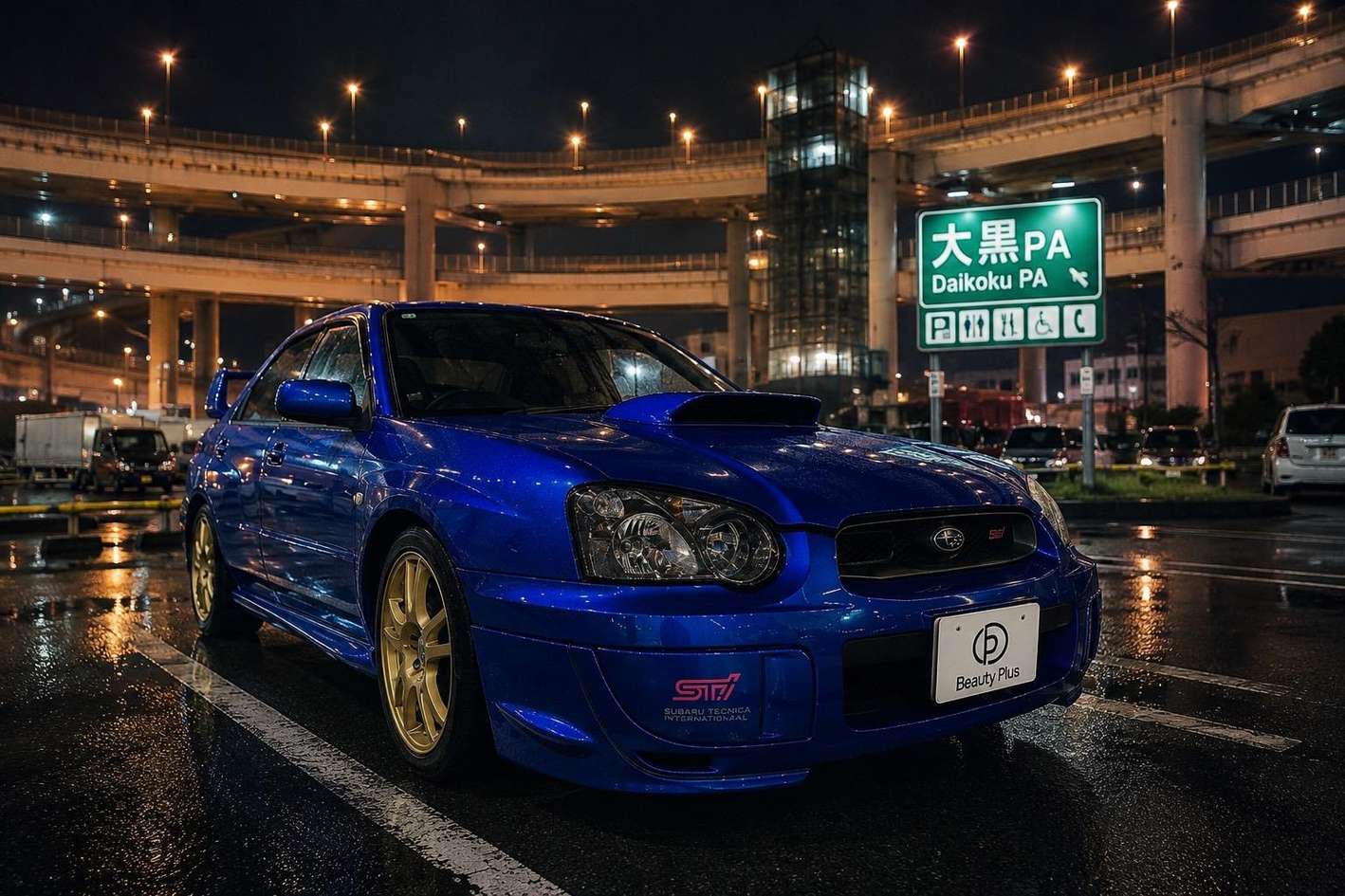
Daikoku PA sits on the artificial Daikoku-futo island in Tsurumi Ward, Yokohama, inside Daikoku Junction where the Shuto Expressway's Bayshore Route meets the K5 Daikoku Line. That location is the whole story: there is no pedestrian entrance, no bus stop and no taxi rank, so a visitor without a car cannot reach it at all.
The parking area itself is free and large, with 335 standard spaces, 58 for large vehicles and 5 accessible spaces.
Getting there without traffic takes about 19 minutes from Haneda Airport, 38 minutes from Tokyo Station and 42 minutes from Shibuya. The tours solve the access problem by starting in central Tokyo and driving in as part of the night.
The table below shows the three ways visitors reach the meeting points, with the drive time from each starting point. Look at the distance column and the note on traffic before choosing where to start.
Ways to get to the Daikoku PA tour meeting points in Tokyo
What this means for your choice: the closer you start to the bay, the shorter the run, but every option ends with you in a car on the expressway, which is the only way across the water.
Tour for this
Tokyo Drift Ⅲ: Fast·Furious Daikoku PA Modified JDM Car Ride4.7★ (1,358) · 3 - 4 hours · Hotel pickup · Free cancellation
Meeting points and pickup for your JDM passenger night
Since you cannot walk into Daikoku, your real journey is the one to the meeting point. The tours gather in central Tokyo, in Shibuya or Akihabara, or pick you up at your hotel anywhere in the city.
From Haneda Airport that run takes about 47 minutes by car without traffic, from Tokyo Station about 69 minutes and from Shinjuku about 80 minutes.
Pick a meeting point you can reach easily on the night, and remember Tokyo's last trains run from around 5 pm to midnight, so a late return can mean a taxi.
If your hotel sits outside the pickup zone, the Shibuya and Akihabara meeting points are both on main train lines, which keeps the start of the night simple.
Timing also changes what the lot looks like when you arrive. The widget below lines up the car scene by time of day, so you can see what a weekday night, a Sunday morning and a wet night each deliver.
What cars you see at Daikoku PA by time of day
Sunday morning8 am to 10 am
Exotics and classics gather in daylight before Sunday drives; a quiet, photo-friendly slot with a different crowd than the night meets.
Late afternoon4 pm to 7 pm
Friday and Saturday lots start filling from around 5 pm and build toward the widest spread of the week; Saturday late afternoons already buz…
Evening Peak7 pm to 10 pm
Peak hours on open Friday and Saturday nights: Skylines and GT-Rs, Supras, RX-7s, NSXs, Silvias, Evos, WRX STIs and VIP sedans fill the lot,…
Late night10 pm to midnight
Weeknights come together from about 8 pm with daily-driven builds and regulars; even tours starting at 10:30 pm still find plenty of JDM car…
QuietBusyThe busiest
Read it this way: a weekend night or a Sunday morning gives you the fullest lot, while any night still delivers the core JDM lineup the tours are built around.
Tour for this
Tokyo: Daikoku Meet & Night Drive on a Tokyo Drift JDM Tour5.0★ (137) · 3 hours · Hotel pickup · Free cancellation
Renting a car instead of riding as the JDM passenger
Driving to Daikoku yourself is possible, and people who go often say it is worth considering if the meet is the main reason for your trip. The paperwork comes first.
You need an International Driving Permit under the 1949 Convention only, plus your passport. Licenses from Switzerland, Germany, France, Belgium, Monaco or Taiwan work differently: those need a certified Japanese translation, which you arrange online through JAF before you go.
Two practical points shape the decision. Parking near central Tokyo hotels can be expensive or non-existent, so check your hotel's parking before renting. And the drive out to the bay island is straightforward but you will be behind the wheel on the night instead of watching the lot, which is a different kind of evening.
Tour for this
Tokyo: R34 & GT-R at Daikoku PA After Dark, Tokyo Drift Meet4.5★ (16) · 2 - 3 hours · Free cancellation
Shared ride, private charter or a fixed JDM passenger car
Once you know you are going as a passenger, the choice left is what kind of seat you book. Three formats cover most of the tours, and they differ on the things that decide the night.
The comparison below puts the three formats side by side. Check the car column and the pickup column first, since those two decide most of the night.
compare: Shared ride, private charter and car-specific upgrade side by side
Car assigned on the night
Small mixed group, usually 3 or 4 seats per car
Meeting point in central Tokyo
Private charter
One car held for your group
Just your group, flexible stops
Hotel pickup and drop-off in the Tokyo area
Car-specific upgrade
A named car such as an R34 Skyline or GT-R guaranteed for your ride
Usually private, one or two seats
Pickup or meeting point as booked
Car assigned on the night
Private charter
One car held for your group
Car-specific upgrade
A named car such as an R34 Skyline or GT-R guaranteed for your ride
Small mixed group, usually 3 or 4 seats per car
Private charter
Just your group, flexible stops
Car-specific upgrade
Usually private, one or two seats
Meeting point in central Tokyo
Private charter
Hotel pickup and drop-off in the Tokyo area
Car-specific upgrade
Pickup or meeting point as booked
The takeaway for your booking: a shared ride is the simplest entry, a private charter buys flexibility for families, and a car-specific upgrade is for the reader who came for one particular machine.
Tour for this
【R34】Daikoku PA Private Tour, Tokyo JDM Night Experience4.9★ (181) · 3 hours · Hotel pickup · Free cancellation
What to wear on your JDM passenger night at Daikoku
The meet happens in the open, after dark, and you spend a good part of the night standing in a parking area by the bay.
Dress for the season and for standing still. Tokyo nights run from about 1°C on winter nights to over 25°C in midsummer, so the same outfit does not work all year.
The checklist below gathers what to wear and what to pack, season by season. Scan the row for your travel month first, then the last two rows, which apply all year.
What to wear and bring for a JDM passenger tour in Tokyo
Comfortable shoes and clothesEvery tour operator asks for comfortable clothing and shoes, since some stops involve walking around the parking area.
Light jacket (Apr, May, Sep, Oct)Evenings around 14 to 22°C and much of the meet happens outdoors after dark.
Warm layers and winter jacket (Dec to Feb)Nights drop to around 0 to 2.5°C with occasional snow days, and you stand outside at the meet.
Breathable clothes and rain layer (Jun to Aug)Days reach 27 to 33°C with high humidity and rain on about 14 days a month.
Compact umbrella or rain jacket (Mar to May)Spring is Tokyo's wettest stretch, with 150 to 190 mm of rain on 12 to 15 days a month; tours run rain or shine.
Camera or charged smartphoneOperators ask you to bring a camera for night photos of the cars; keep luggage small, as sports car space is limited.
Water and dinner beforehandOne operator notes no food or drinks are included, so eat and bring water before joining the night tour.
WhatsApp notifications onOne tour operator messages guests at least an hour before departure if anything changes with the weather or the meet.
For your packing, the season decides the jacket and the rain layer, while the camera, the water and the notifications on your phone matter on every night of the year.
Tour for this
Daikoku:Experience Tokyo's Car Culture in Iconic JDM Cars4.9★ (872) · 3.5 hours · Hotel pickup · Free cancellation
What to bring on the night you ride as a JDM passenger
Beyond clothing, three things make the night run smoothly. Bring a camera or a charged phone, because the cars photograph best at night and the stops are built around it.
Keep luggage small, since a sports car has limited space behind the seats. And eat before you go: one tour operator includes no food or drinks, so dinner and a bottle of water come from you.
Stay reachable. After booking, give the operator a contact such as WhatsApp or Instagram, and turn notifications on. One operator messages guests at least an hour before departure if anything changes with the weather or the meet, and the booking confirmation arrives by email within 48 hours, so check your mailbox and reply.
Driving yourself
Rent a car in YokohamaCompare cars from the rental companies in one search, then pick yours.
Meet etiquette for your JDM passenger stop at Daikoku
Daikoku works because owners bring their cars to show them, and the lot has rules that keep it that way. Never touch, lean on or sit on a car without asking the owner first.
Ask before photographing a car or posting the photos online; shooting without permission is a real irritation for the people who built these machines.
Move through the lot the way the lot works. Stay on the pedestrian walkways, never stand in driving lanes or between parked cars, and give way at once when cars roll out.
Do not rev engines or attempt burnouts, since that is what triggers police closures of the meet. Keep your voice down; these are not loud parties. If police arrive and clear the lot, follow their instructions and leave promptly.
Disrespectful behavior from visitors is why some local owners stopped bringing their cars to Daikoku, and police watch how visitors act and will close the meet over complaints.
That is why the rules above are worth more than good manners: the way you move through the lot decides whether the cars keep coming back, on this night and for the travelers after you.
Tour for this
Tokyo Drift Daikoku Car Meet GT-R35-34,R33,Silvia,GT86,Supra4.9★ (65) · 3.5 hours · Free cancellation
If your JDM passenger ride leaves you wanting drifting
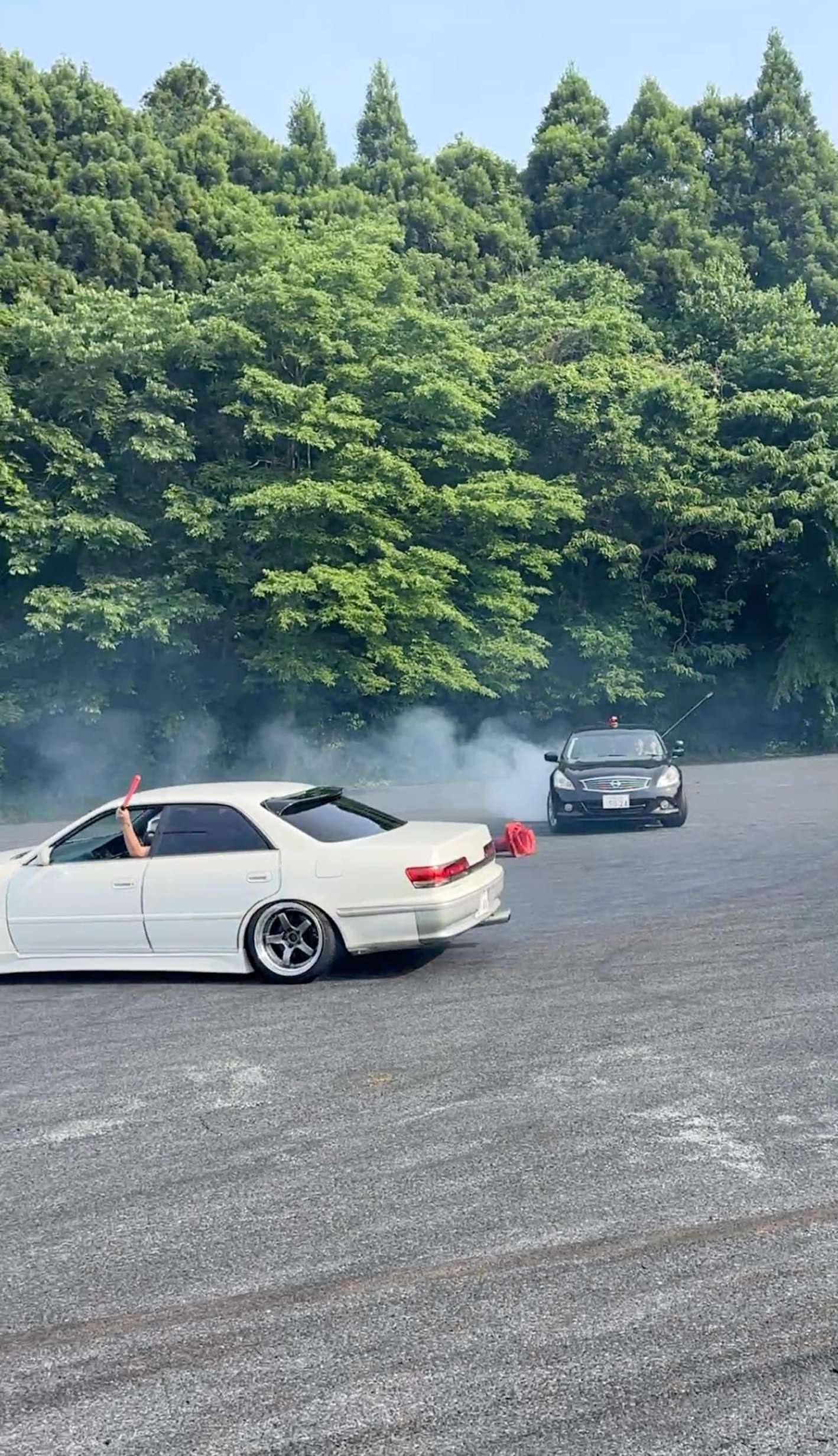
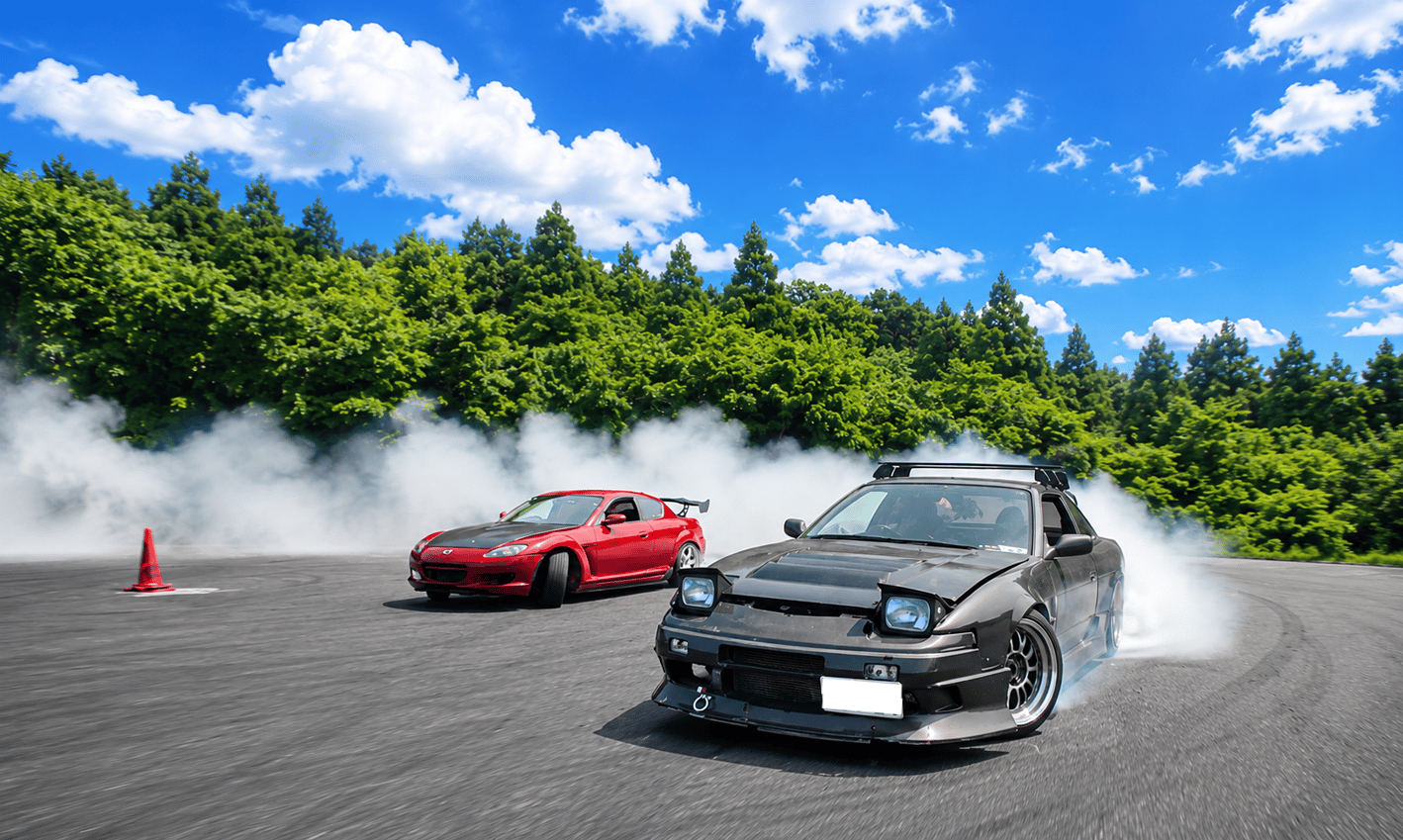
Set expectations honestly: today Daikoku PA is a car meet, and actual drifting there is rare. Drifting on public roads is illegal in Japan, so there are no advertised public-road drift events open to tourists, and the street spots that exist are kept secret from outsiders.
Making friends with a local is realistically the only way to get invited to watch one.
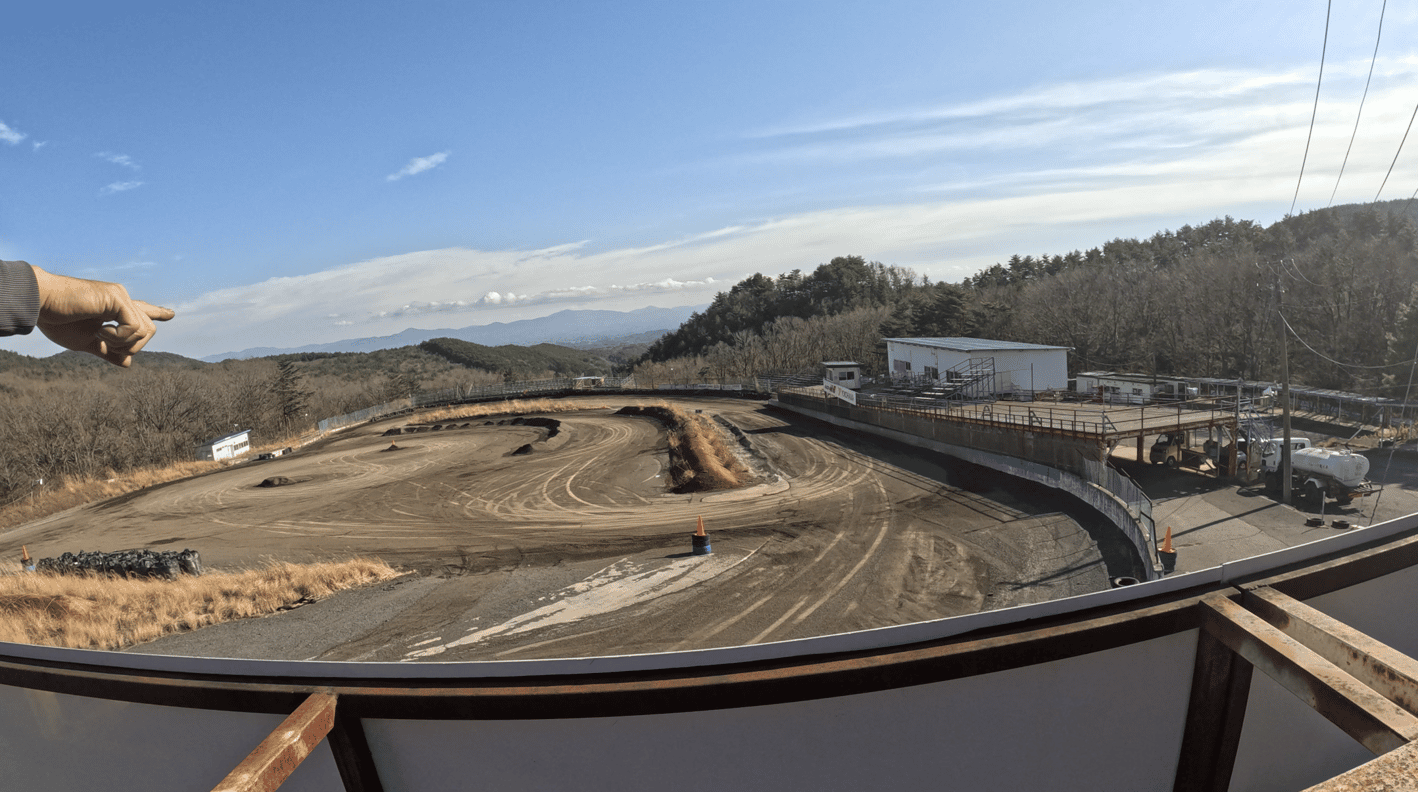
The legal answer is a circuit. Ebisu, north of Tokyo, is the place people mean when they talk about real Japanese drifting, with ride-alongs and beginner lessons on closed tracks.
As a spectator sport, D1 Grand Prix holds rounds in Osaka in September and Tokyo in October, with the final round usually in Odaiba in November. Near Tokyo, Mobara Circuit and Nikko Circuit host a lot of drift events through the year.
Tour for this
Tokyo Drift with GTR35-R 700HP Fast & Furious Experience4.8★ (184) · 3 - 3.5 hours · Free cancellation
Drift ride-along and lesson rules that follow your JDM passenger run
Drift experiences have firm limits, and they are worth knowing before you book. The Ebisu drift ride is not suitable for children under 5, people over 95 or over 70, and the drift taxi requires riders over 140 cm tall.
The ride-along experience near Tokyo is not suitable for children under 16, pregnant women, people with heart problems, people with high blood pressure, or people over 60. Children under 12 can join the Daikoku drift tours instead.
For the self-drive lesson the minimum age is 18, and anyone under 18 must be accompanied by a parent or guardian. Lessons require long sleeves, long pants and sneakers, with no sandals.
Helmets, face masks and gloves are supplied, the cars carry roll cages and safety harnesses, and the day starts with a safety briefing. Anyone with a heart condition or other health affliction should ask their doctor first.
Tour for this
Tokyo: JDM Night Run in EVO, WRX & Skyline to Daikoku4.9★ (996) · 3 - 4 hours · Hotel pickup · Free cancellation
Families do this, and for a young car fan the night can be the trip's highlight. Children can generally join a Daikoku tour as a passenger when proper safety arrangements are made.
One tour welcomes underage children as long as a guardian books a reservation too, and another runs an age band from 11 and under alongside ages 12 to 99.
Book private if you can. Private Daikoku tours suit families because the timing is flexible and the experience more comfortable, and a child seat can be arranged on request.
In Japan, children under six are generally required by law to use an approved child seat, so ask for it in advance. One thing to avoid: the late-night Tatsumi PA tours do not suit young children, so families should choose the Daikoku option.
Rain and the best months for a JDM passenger night
Rain does not cancel the night. Operators run as scheduled in ordinary rain and only reschedule for severe storms or road closures, and guides hand out umbrellas when the sky opens.
What rain changes is the meet itself: on wet nights the parking area is usually thinner but rarely empty, and visitors report plenty of cars even in a downpour.
The honest caveat is the heavy-rain evening, when fewer cars show up and there is less to film, and one operator takes no responsibility and gives no refund when weather shrinks the car meeting.
Heavy rain or police activity can close the PA entirely, in which case operators move to Umihotaru PA out in the bay.
The month-by-month view below shows how busy the meet gets and how many dry days each month offers. Use it to pick a travel month with good odds before you lock in dates.
Daikoku car meet nights through the year: how busy the tours are and how often i…
April: 5 out of 5 for how busy it gets.
HighestMar to Apr, Sep to Oct
In betweenJan, May, Aug, Nov
LowestFeb, Jun to Jul, Dec
Darker: a higher how busy it gets score, out of 5
Tap a month to read it.
January: 26 dry days.
HighestNov to Feb22.6 to 26 days
LowestMar to Oct15.8 to 19 days
Darker months: higher, from 15.8 to 26 days
Tap a month to read it.
How busy it gets (out of 5): Jan 3, Feb 2, Mar 4, Apr 5, May 3, Jun 2, Jul 2, Aug 3, Sep 4, Oct 4, Nov 3, Dec 2 Dry days (days): Jan 26, Feb 22.6, Mar 17.8, Apr 17.6, May 16.6, Jun 15.8, Jul 18.4, Aug 17.8, Sep 16.8, Oct 19, Nov 23.2, Dec 25.6
For your planning, April, September and October combine the busiest meets with a fair share of dry nights, while the deep winter and midsummer months trade turnout for fewer crowds.
Filling the rest of your trip around a JDM passenger night
Nothing sits within a 20-minute walk of Daikoku itself, so plan everything around it as part of a drive.
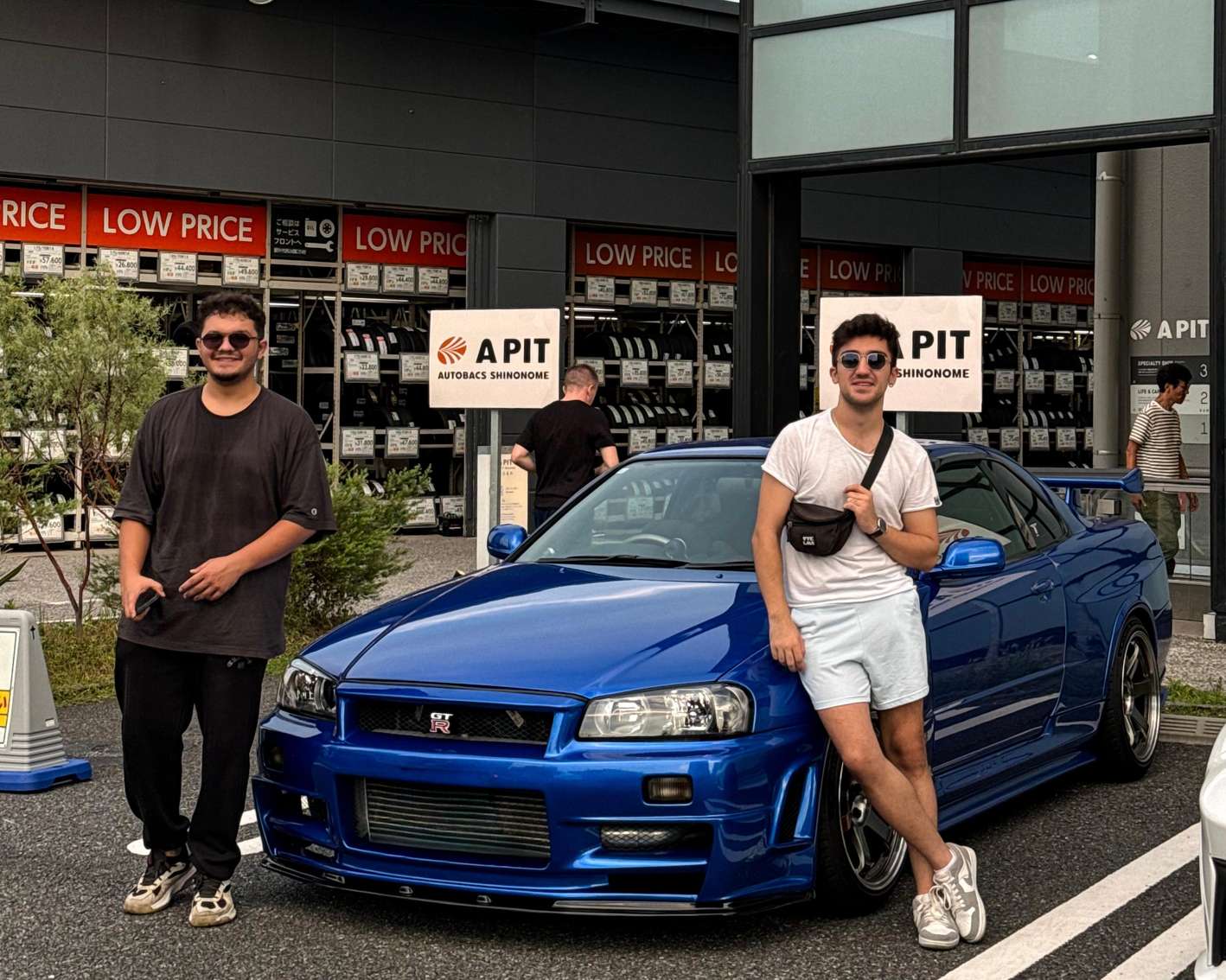
Guides take travelers on to A PIT Autobacs, a large tuning-parts store, to Tatsumi PA on the Tokyo side of the Bayshore Route, and to Umihotaru PA out in the bay, which is where tours go when Daikoku closes early.
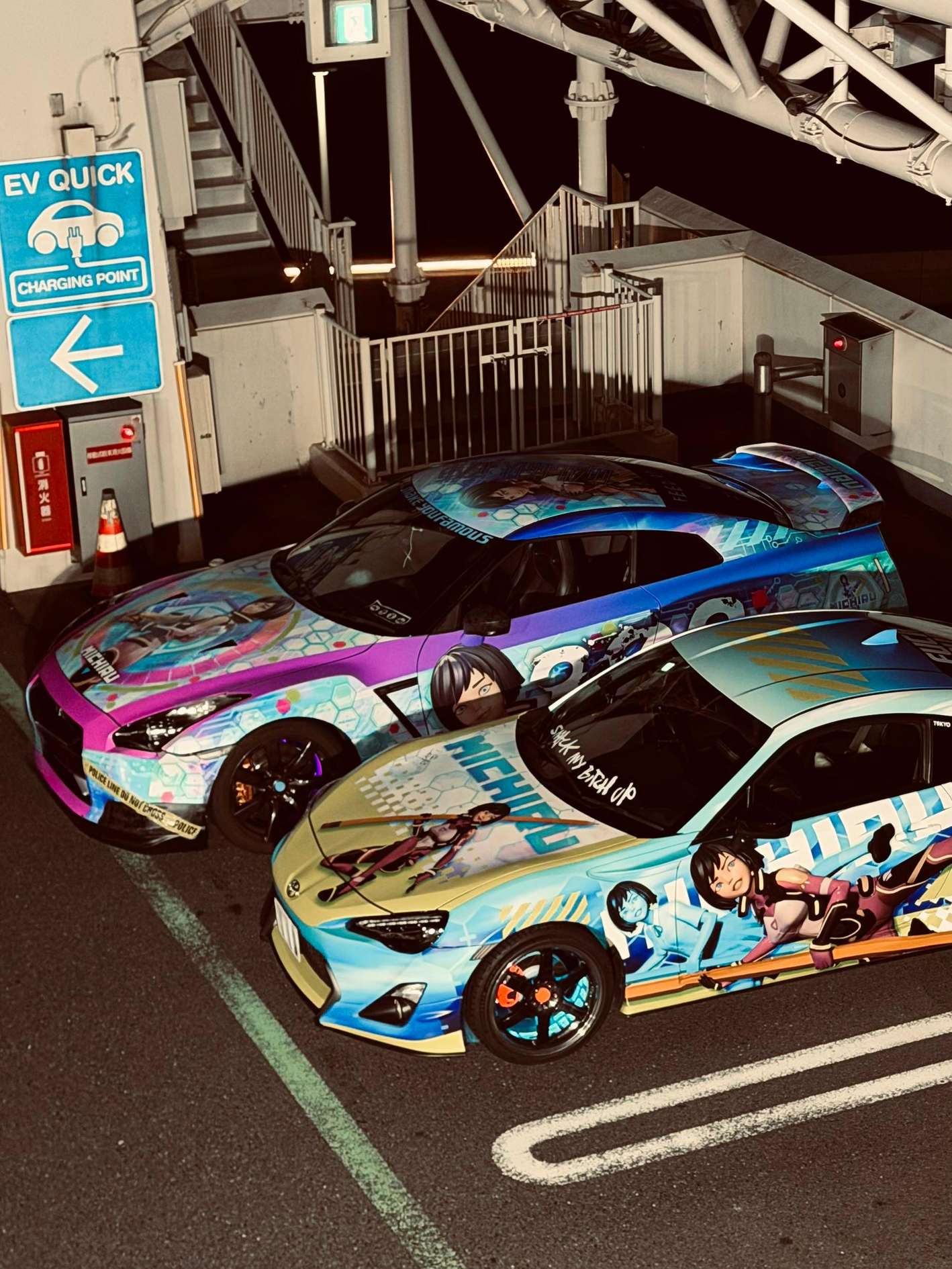
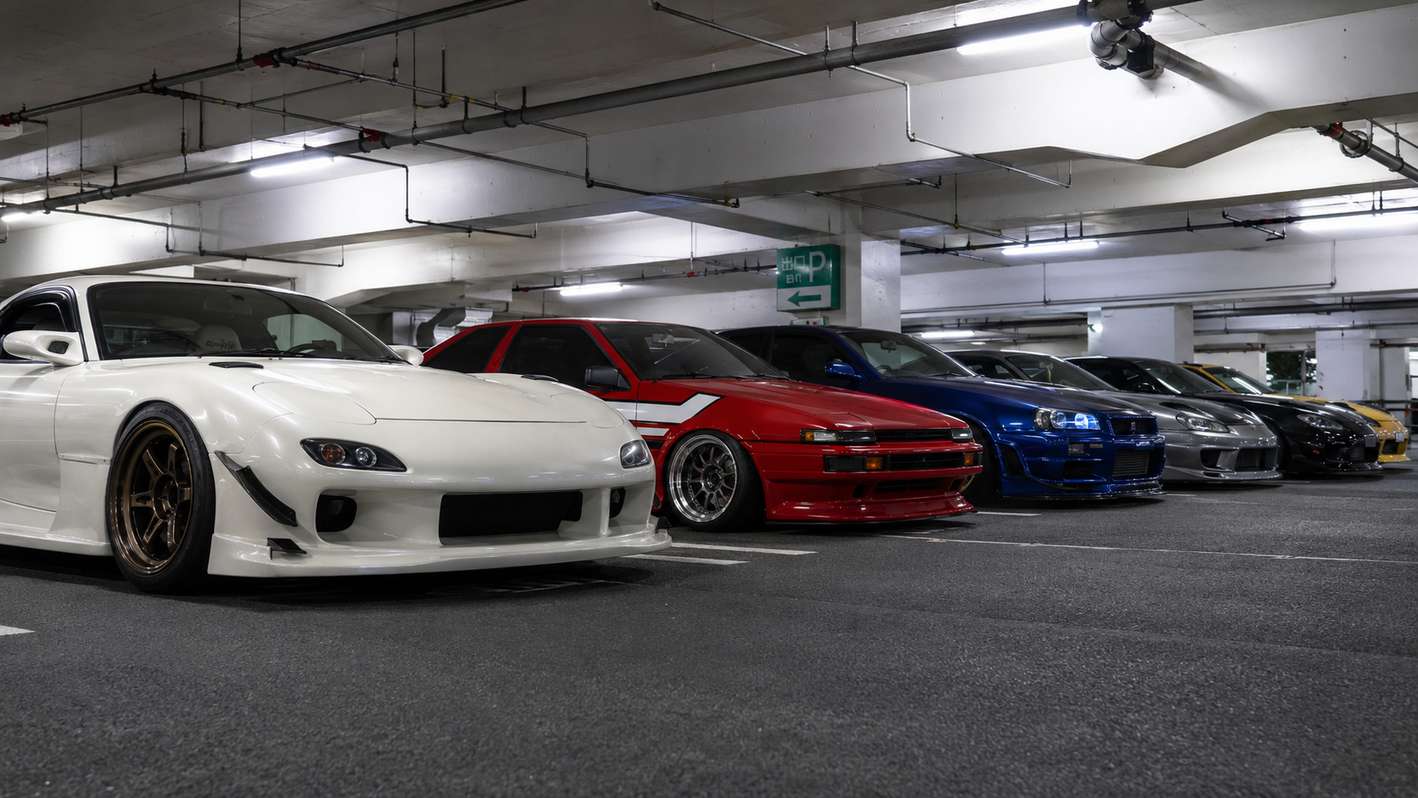
Back in the city, some spotting is walkable. Shibuya near the crossing works in the evening, and the Akihabara UDX underground garage is free and busy on Friday and Saturday nights, with wrapped and anime-decorated cars on the B2F level.
The Autobacs Shinonome parking lot hosts car events and draws spotters. For a quieter day, the Nissan Engine Museum is a 14-minute drive from Daikoku and the Mitsubishi Minatomirai Industrial Museum 18 minutes.
The list below collects the sights worth a drive from Daikoku, with how long each takes to reach. Match them to a daytime slot, since the museums keep daytime hours.
Daikoku rewards a little planning. Book a seat before you land, dress for standing outside after dark, and treat the lot as someone else's garage.
Do that and the night delivers: a bay-side parking area full of cars you would otherwise only see on a screen, with the drive in and out as part of the show.
Go ifGo if you want to stand among the cars at Japan's most famous night meet without worrying about the drive back.Go if you are traveling with children and can book private, with a child seat requested in advance.Go if you can pick a dry, busy month such as April, September or October.
Skip ifSkip it if drifting itself is the point; book an Ebisu circuit ride or time your trip to a D1 Grand Prix round instead.Skip the late-night Tatsumi PA options if you have young children with you.Skip a self-drive plan if you cannot sort an International Driving Permit or a JAF translation before you go.
Our pick to book
Tokyo: Daikoku Meet & Night Drive on a Tokyo Drift JDM Tour5.0★ (137) · 3 hours · Hotel pickup · Free cancellation
Questions about your JDM passenger night, answered
Quick answers to the questions people ask before booking a JDM passenger tour in Tokyo.
What is a JDM passenger tour, exactly?
You ride as a passenger in a modified Japanese performance car, driven by a local enthusiast, usually at night. The route runs through Tokyo's expressways and ends at a car meet like Daikoku PA. No driving licence is needed.
Where is Daikoku PA and can I get there on my own?
It sits on an artificial island in Tokyo Bay, inside a junction of the Shuto Expressway. There is no pedestrian entrance, bus stop or taxi rank, so you can only reach it by car. Visitors without a car join a tour with pickup.
When is the Daikoku car meet at its best?
Friday and Saturday nights draw the biggest crowds, with cars filling the lot from around 5 pm and the deepest turnout between 9 pm and 1 am. Sunday mornings from about 8 to 10 am are the classic window for exotics and classics. Weeknights are quieter but rarely empty.
Is the Daikoku car meet guaranteed to happen on my night?
There is no schedule to check. Cars show up on any night of the week, so the real question is how big the turnout will be. What can cancel a night is a police closure once the lot overflows, which happens most often on busy weekend evenings.
What happens if Daikoku PA is closed on the night of my tour?
Good tours say in advance what they do. Many switch to Umihotaru PA out in the bay or another car-viewing spot, and one operator lets travelers choose a full refund instead of the alternative. Read the closure clause before you pay and ask in writing if it says nothing.
Which cars will I see at Daikoku PA?
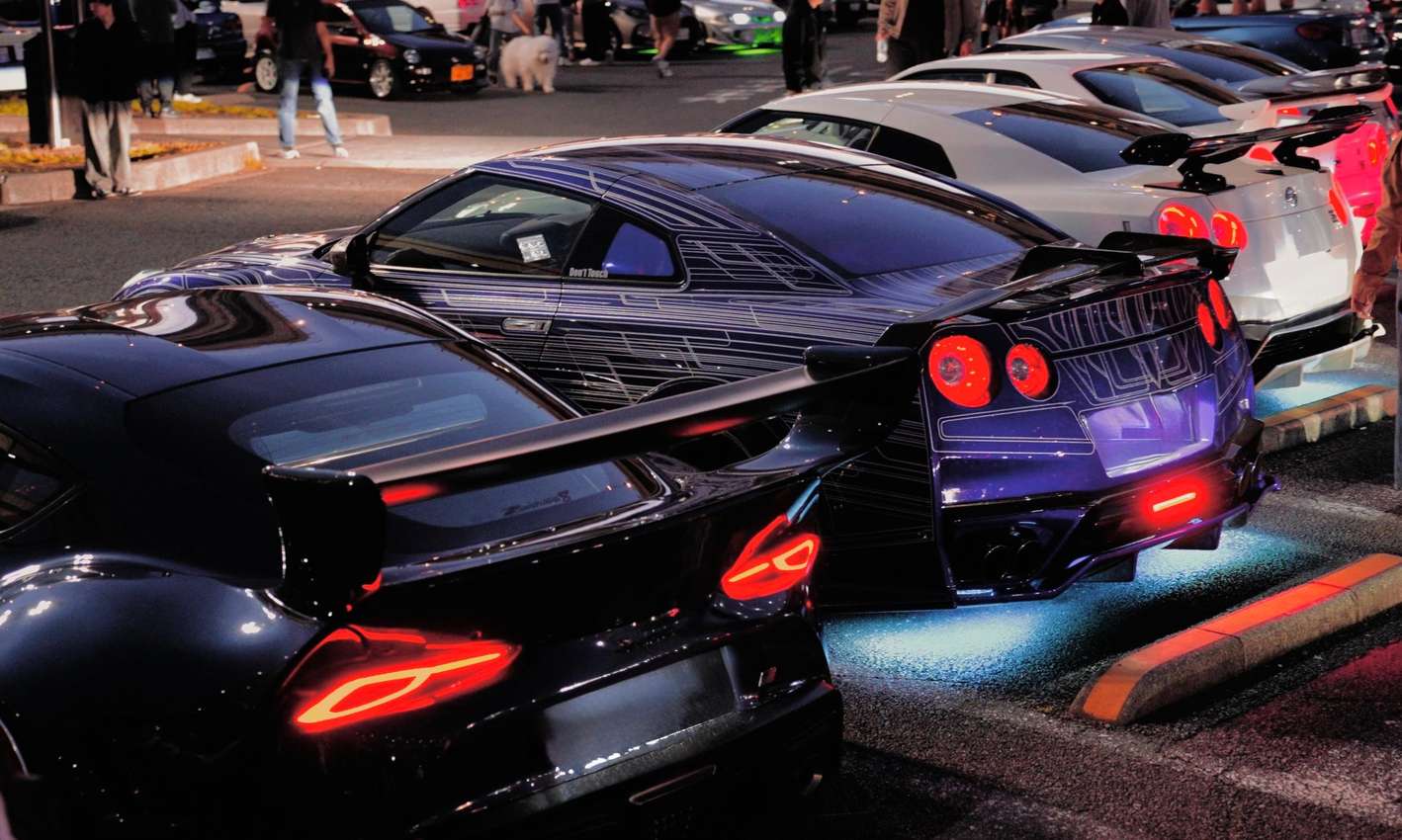
The mix changes with the clock. Friday evenings build toward the widest spread of the week: Skylines and GT-Rs from R32 to R35, Supras, RX-7s, NSXs, Silvias, Evos, WRX STIs, VIP sedans and a scatter of Ferraris and Lamborghinis. Sunday mornings lean toward exotics and classics.
Does drifting happen at Daikoku PA?
Drifting on public roads is illegal in Japan, and Daikoku is a car meet where drifting does not happen. Legal drifting takes place on closed circuits, and the Ebisu Circuit north of Tokyo runs ride-along drift experiences with professional drivers.
Can I drive the car myself on a passenger tour?
On a passenger tour you sit in the seat and a professional driver handles the roads. If you want to drive, look at self-drive and drift lesson options separately, since they have their own licence and insurance requirements.
Is a JDM passenger tour suitable for children?
Families with young car fans report the ride and car meet can be a memorable shared outing. Some tours welcome minors with a guardian who also books, and child seats can be arranged on request. In Japan, children under six are generally required by law to use an approved child seat.
How do I avoid booking an unlicensed or fake JDM tour?
Carrying paying passengers in Japan requires a transport permit and a green license plate, so check that the operator is registered and insured. A listing should name the actual cars you ride in, since a van means you only walk around the lot. Never accept offers from strangers to take you to a car meet.