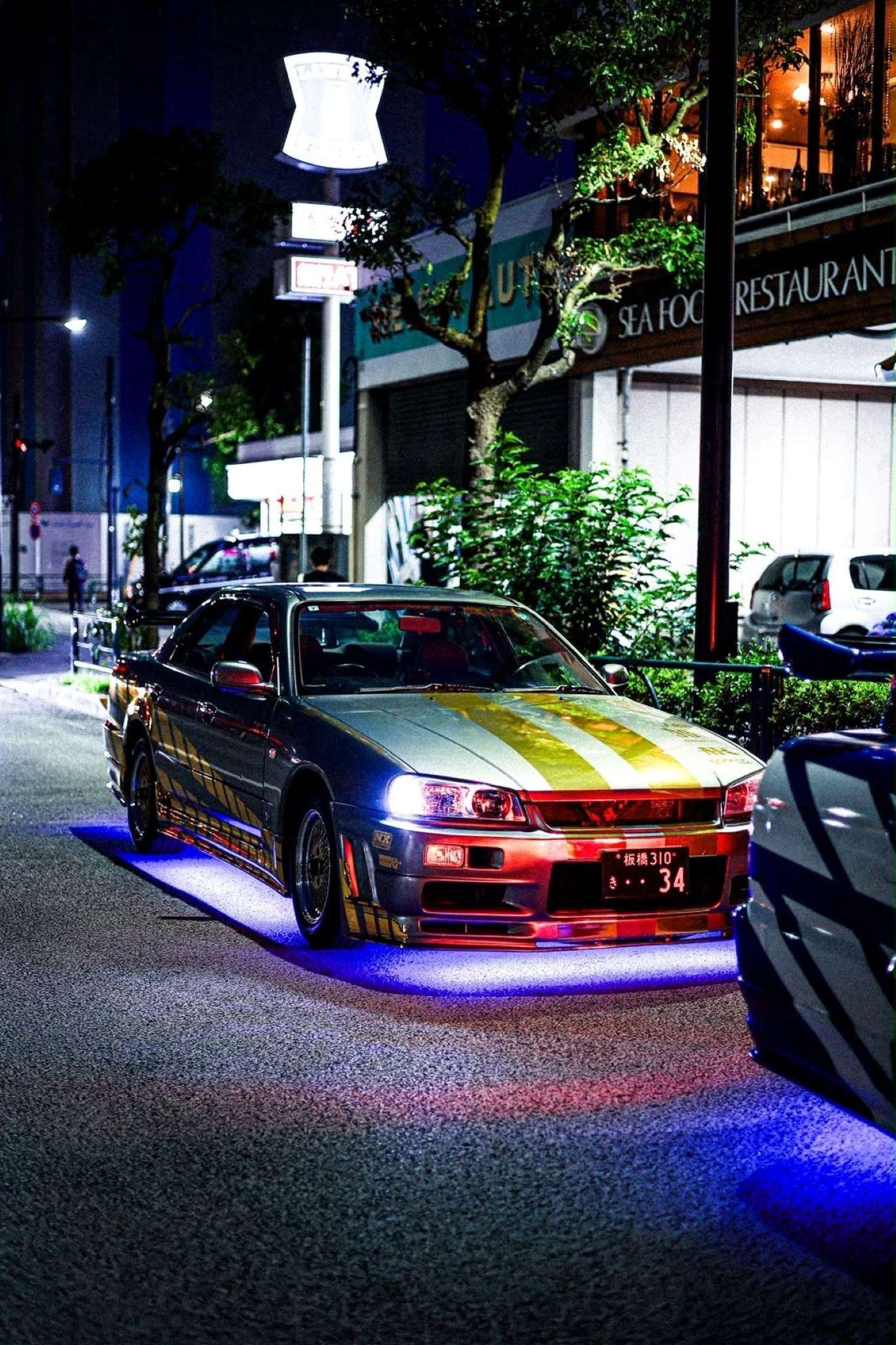
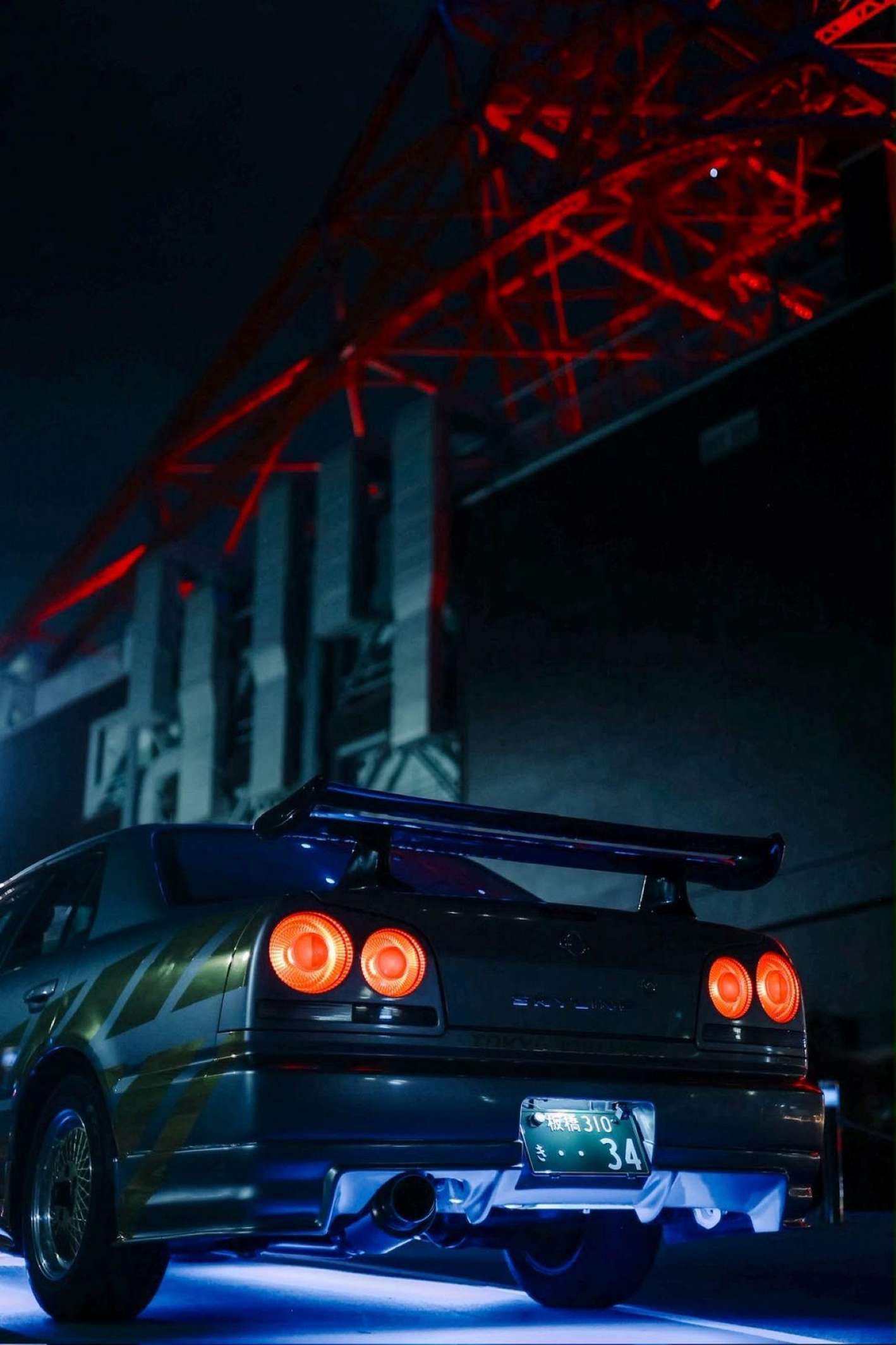
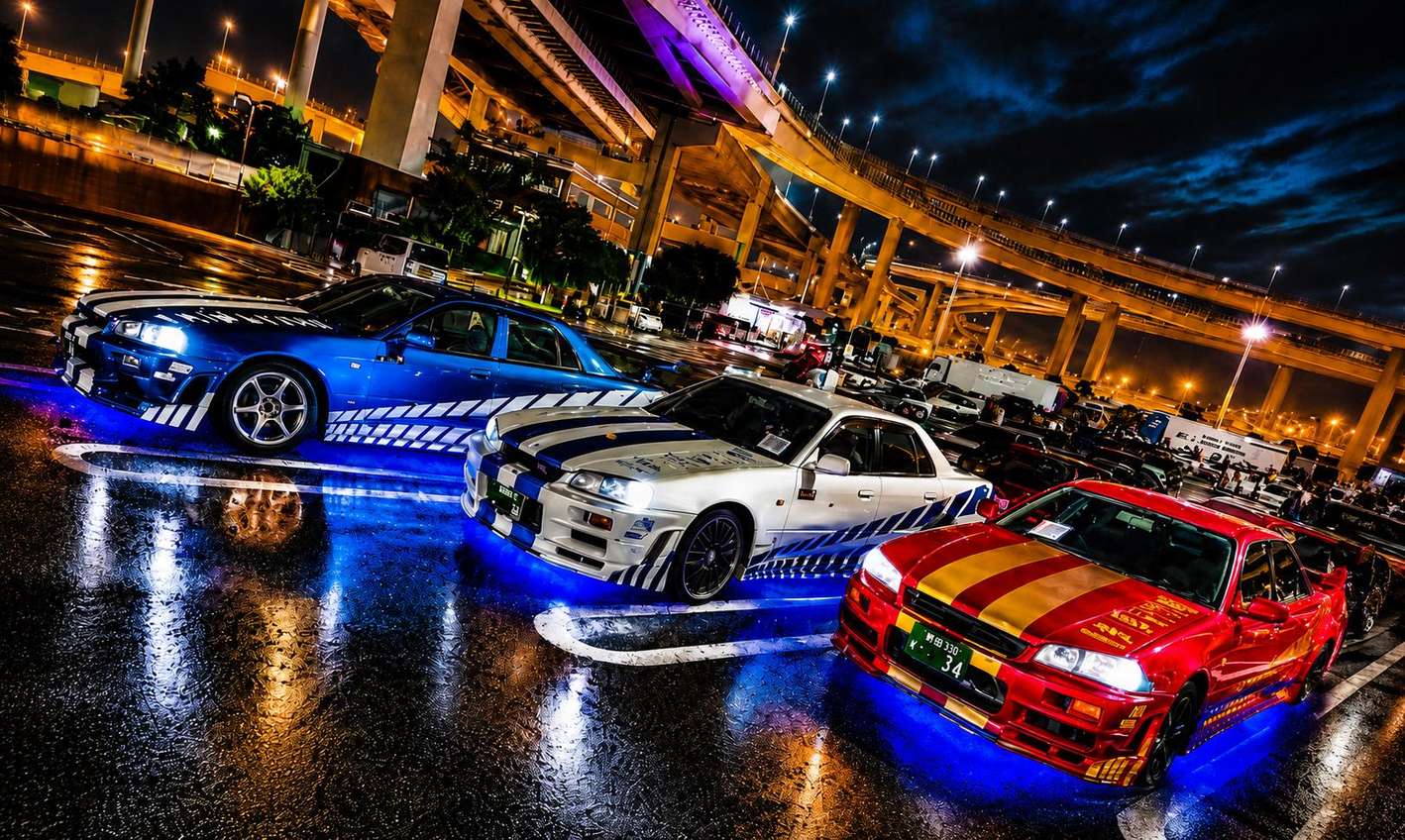
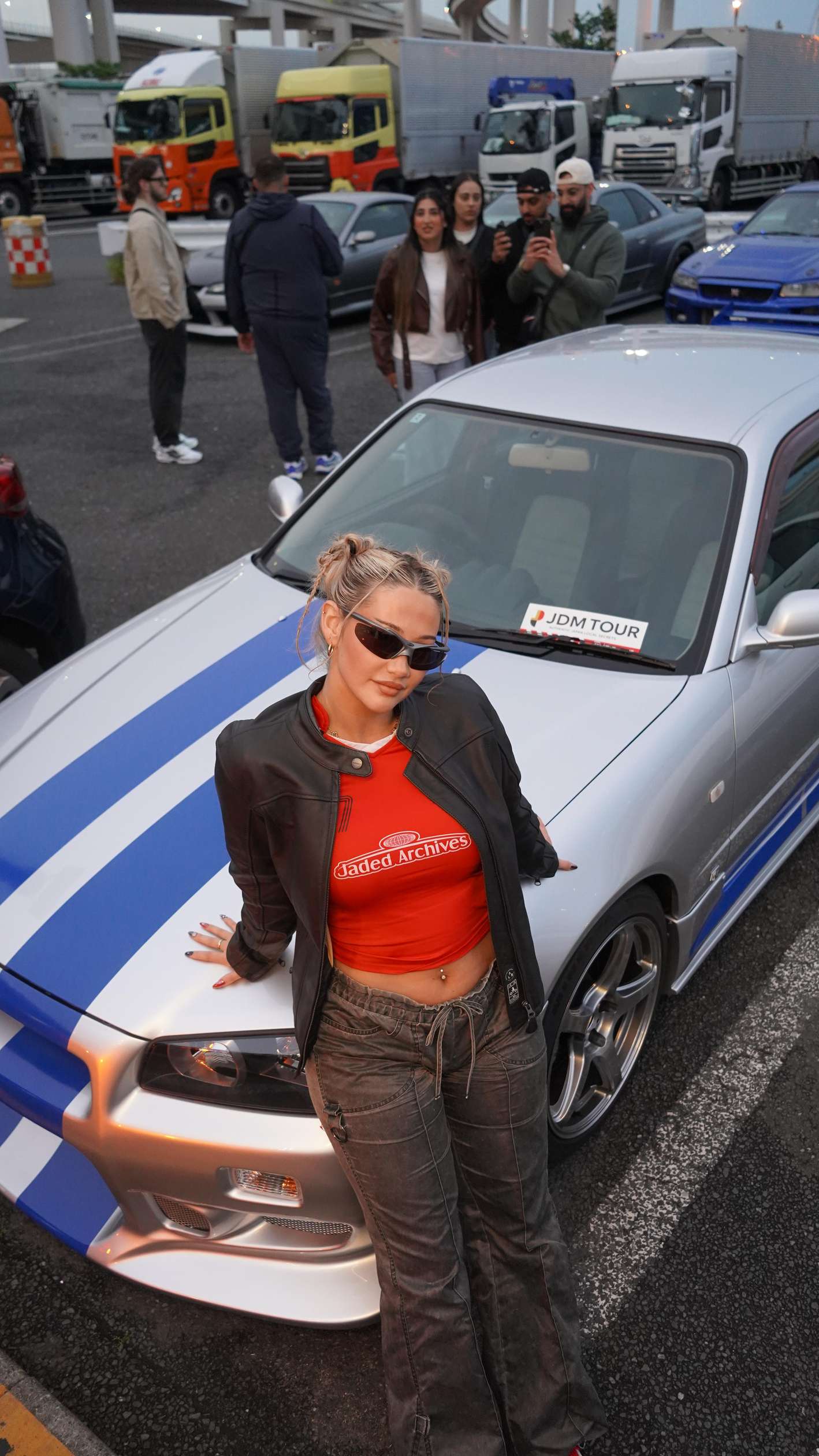
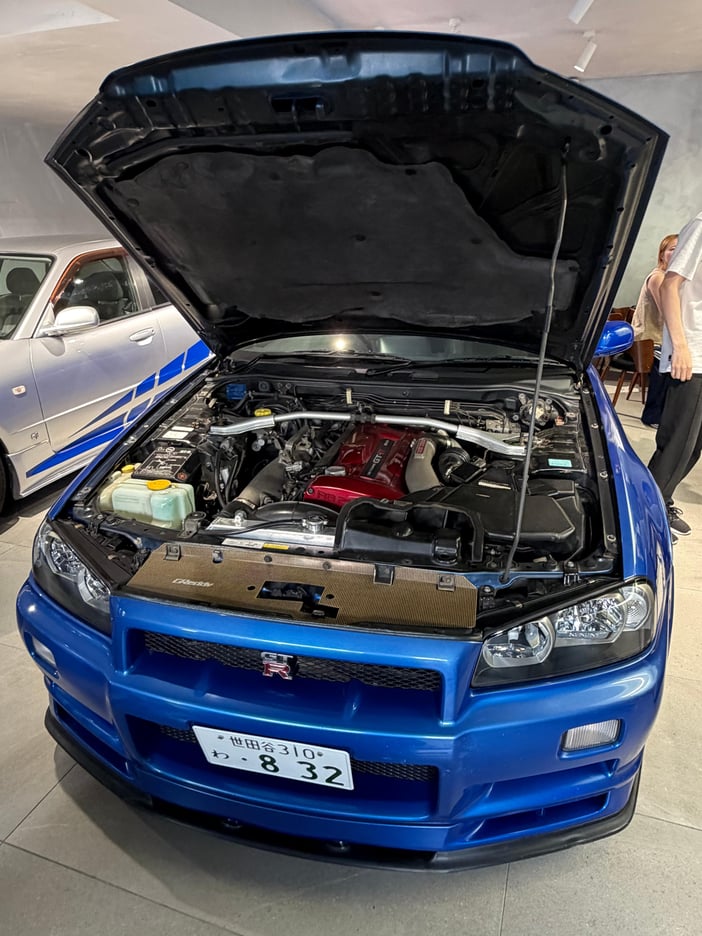
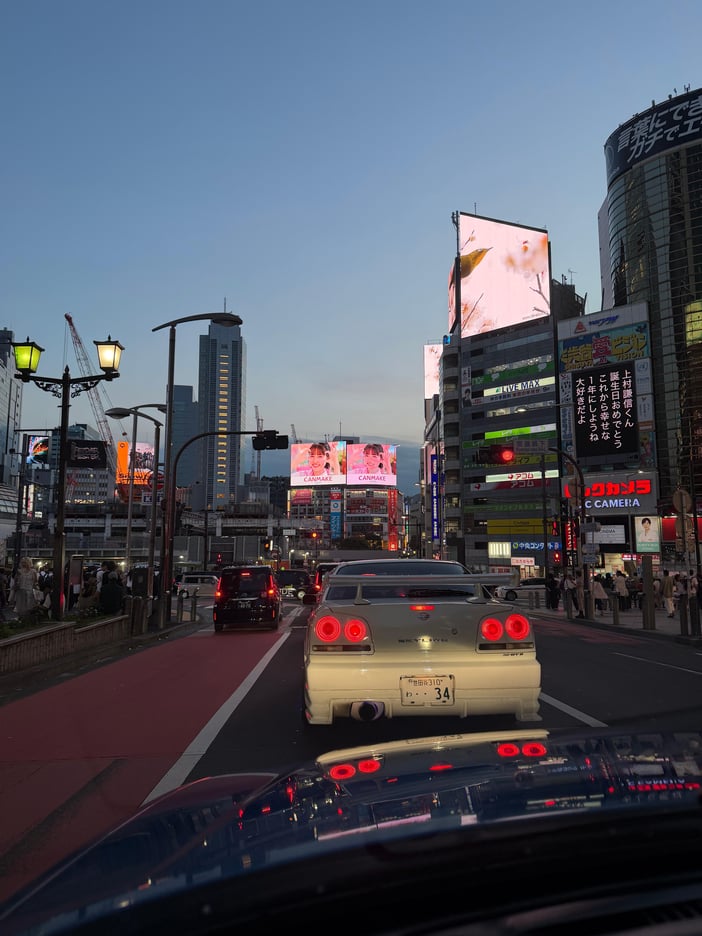
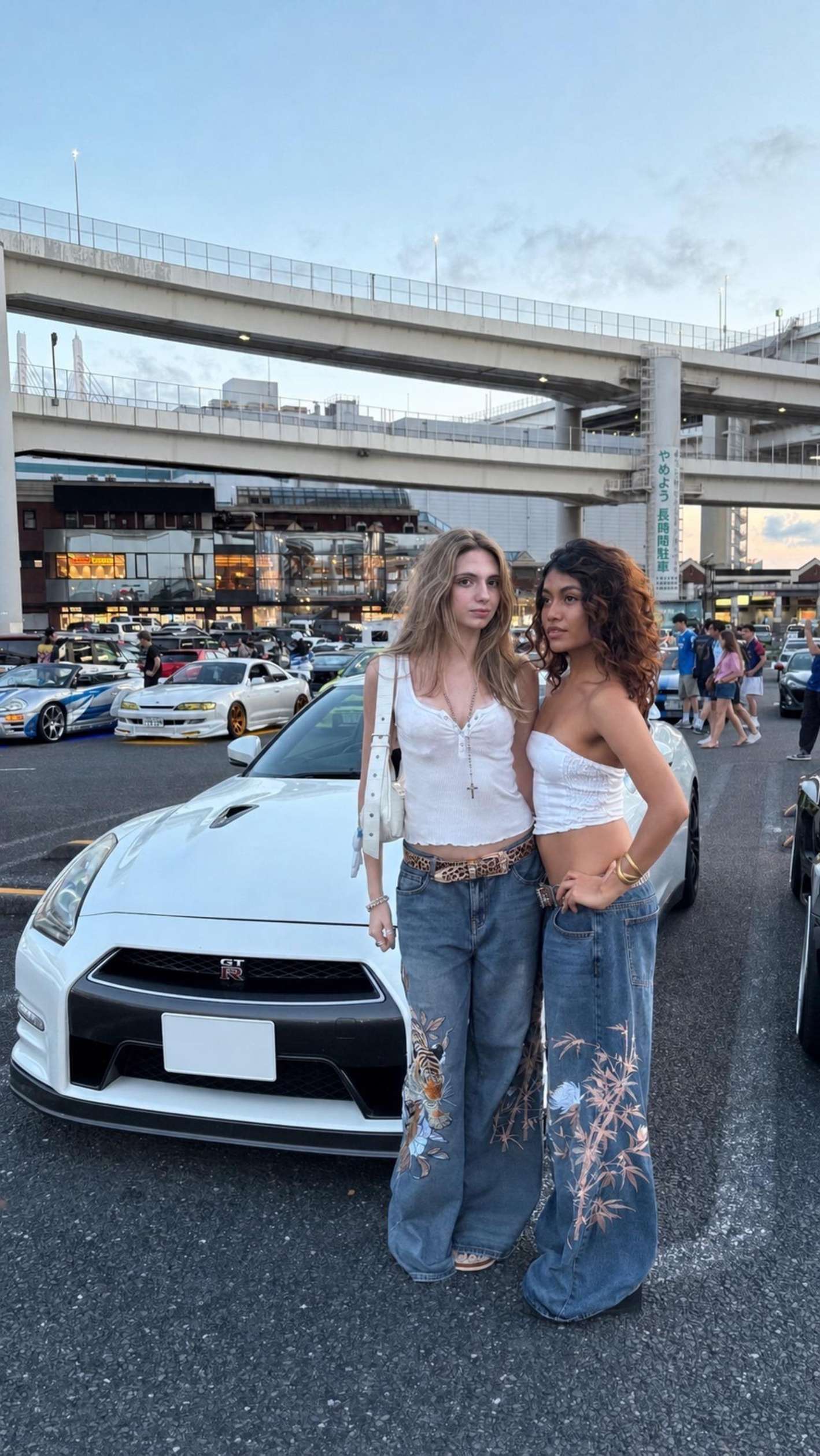
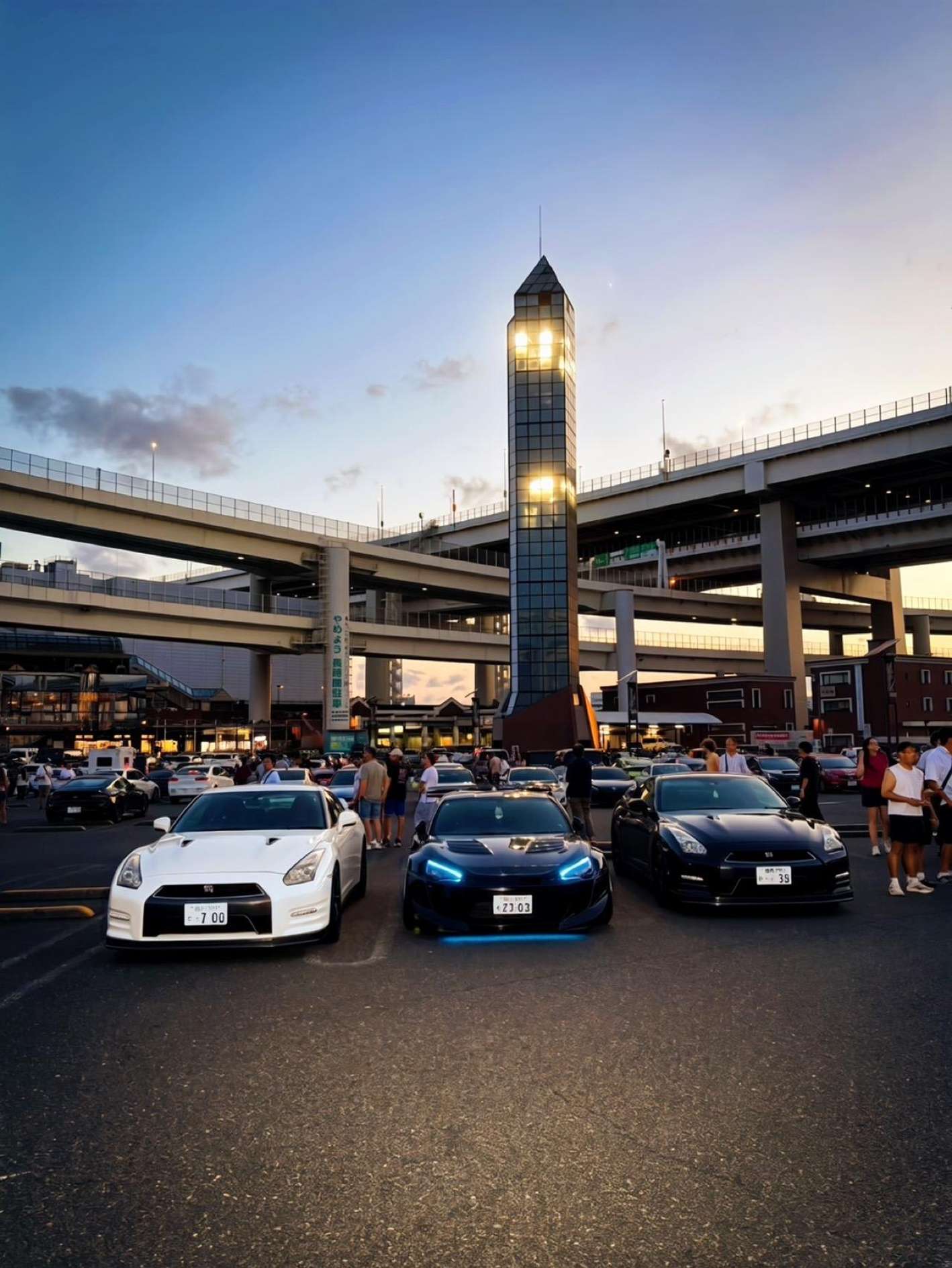
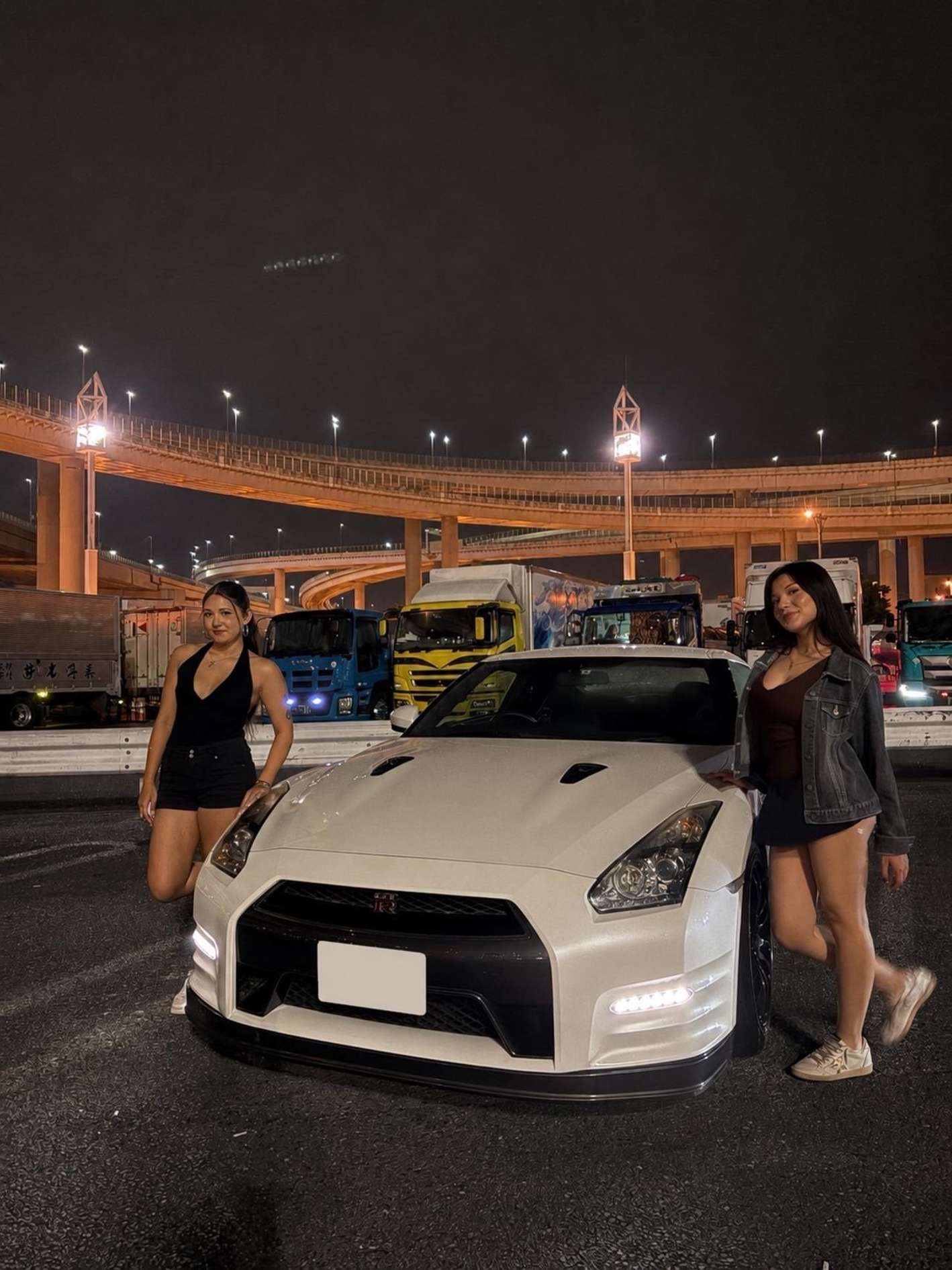
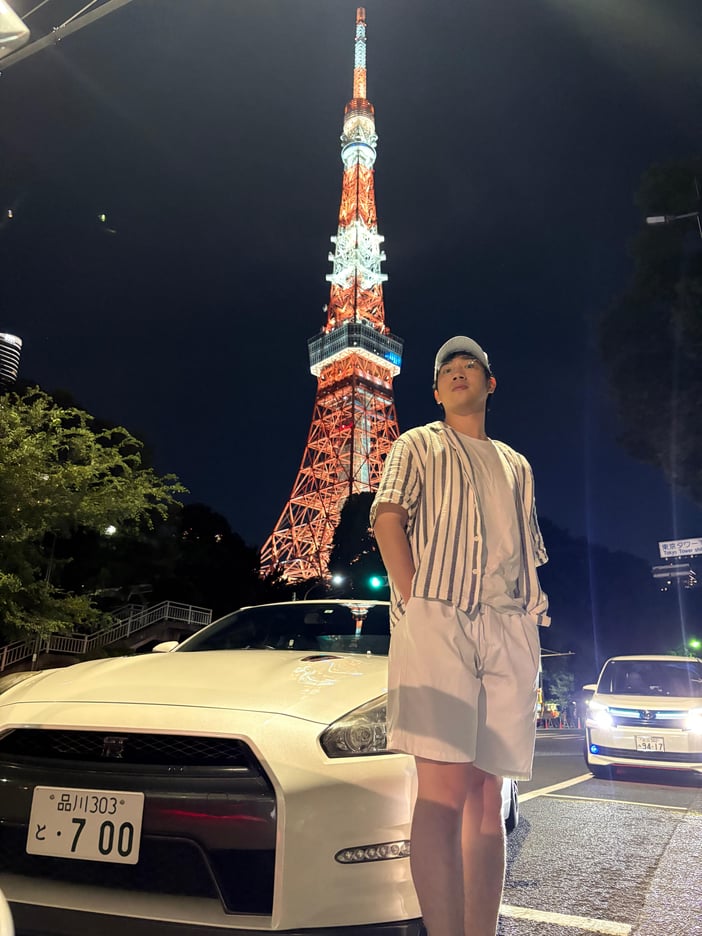
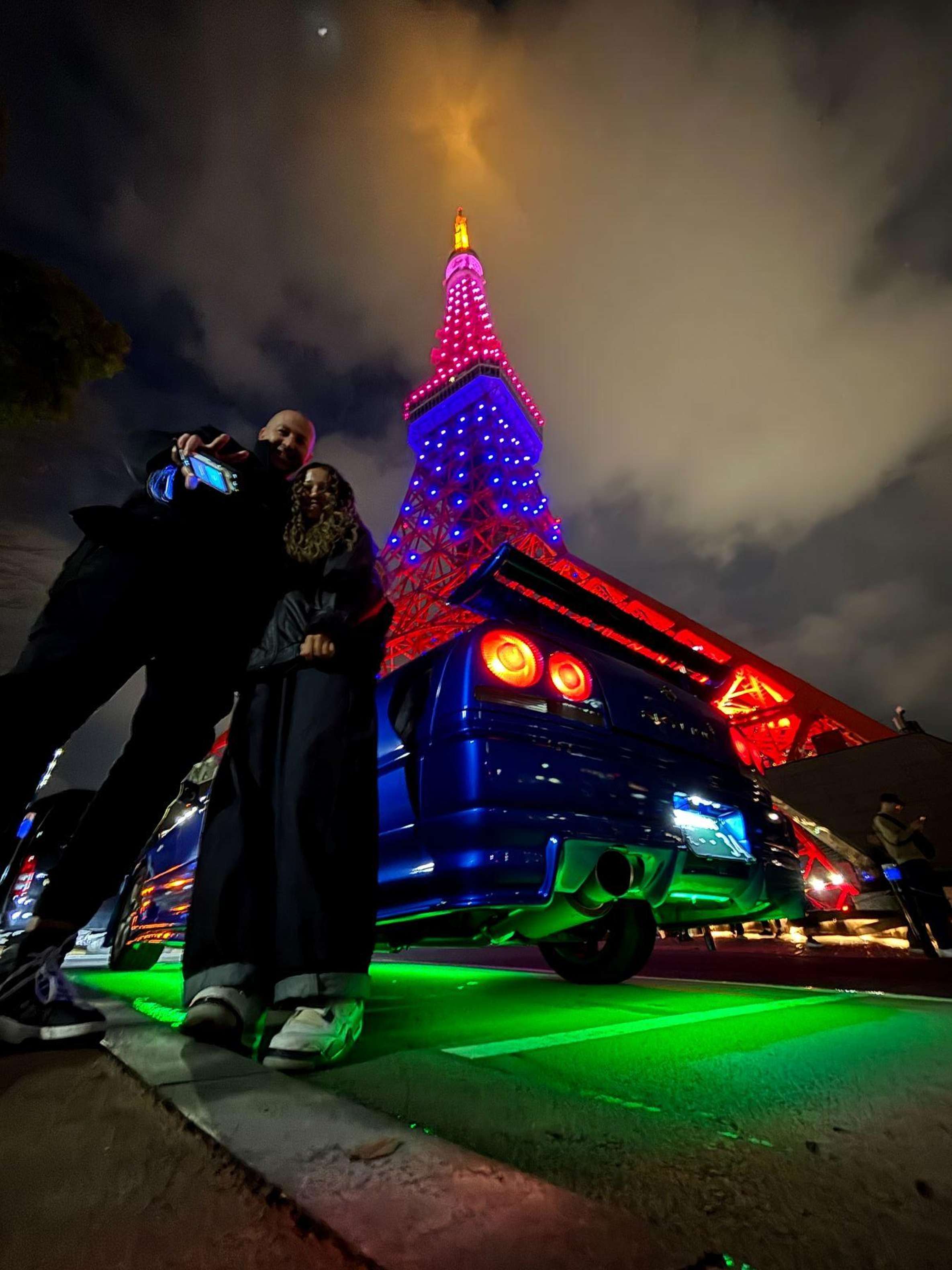
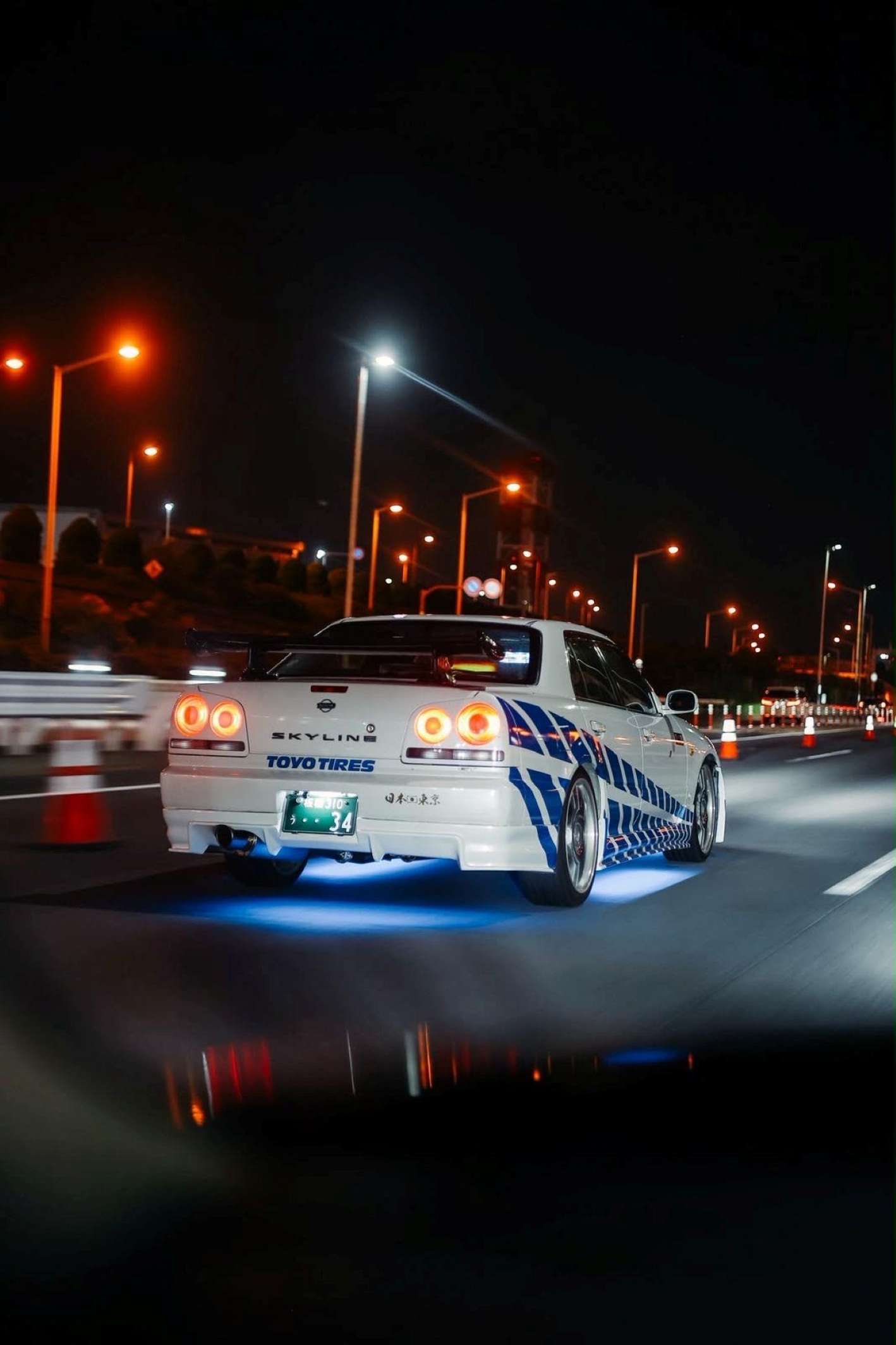
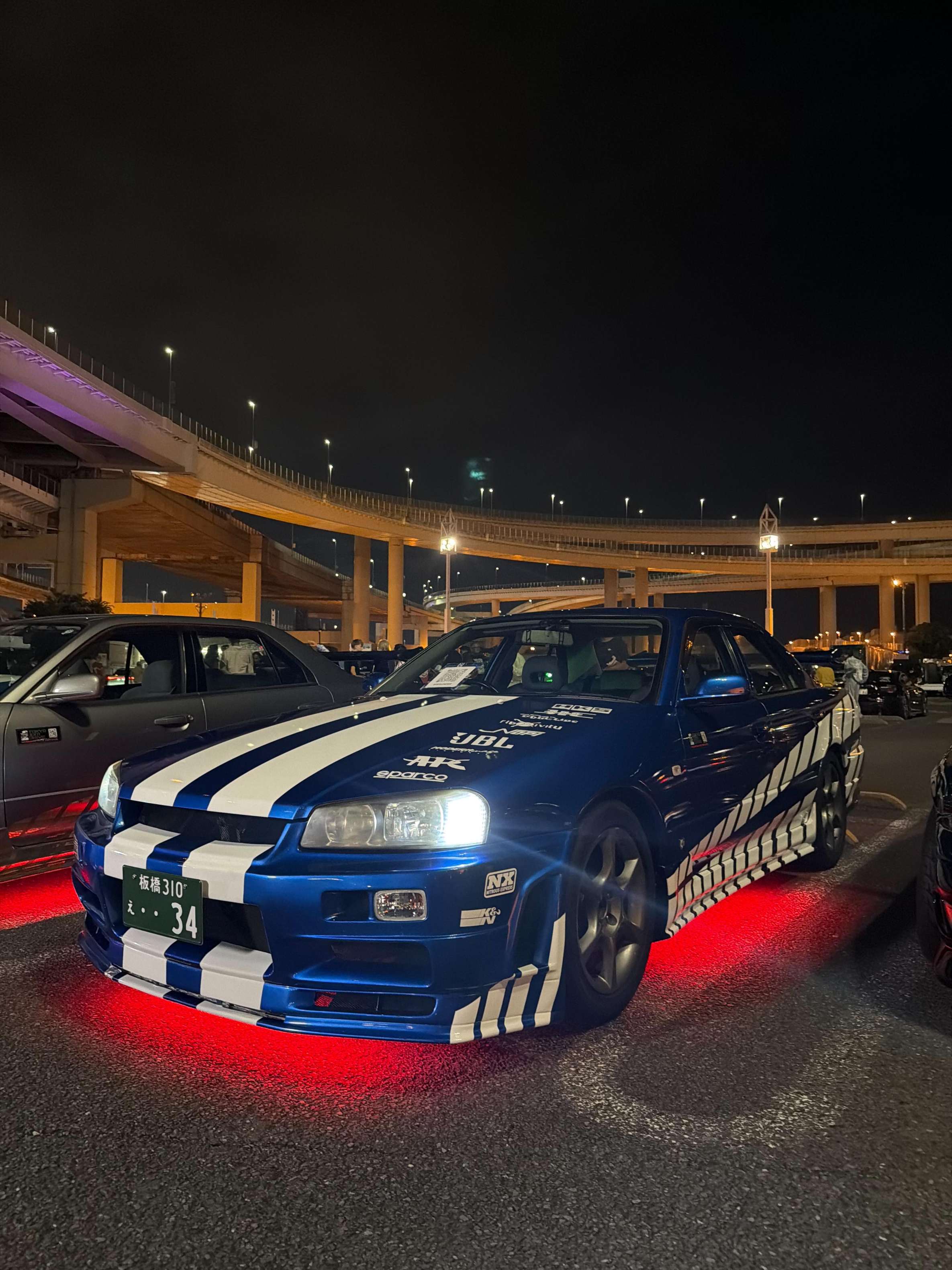
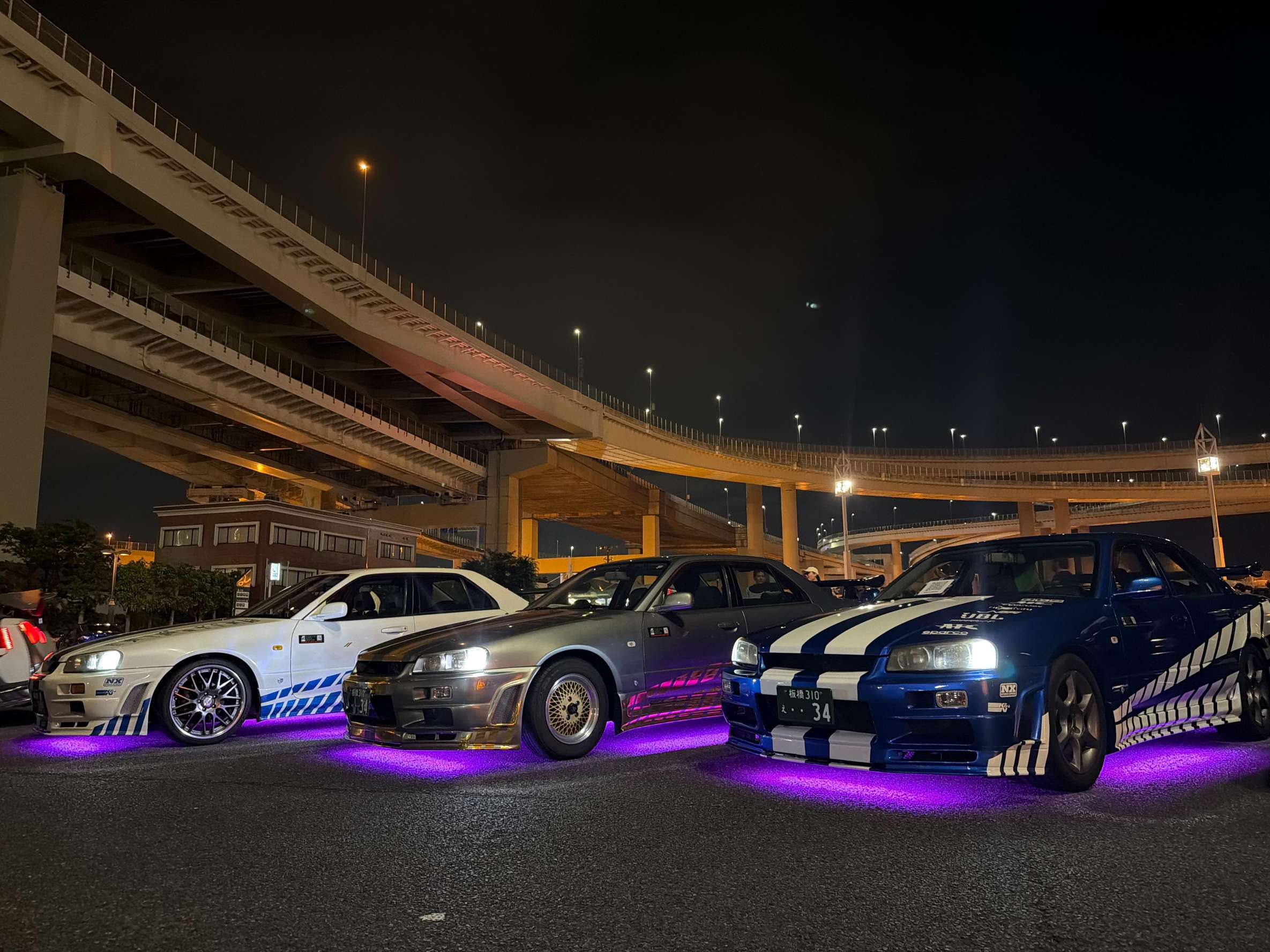
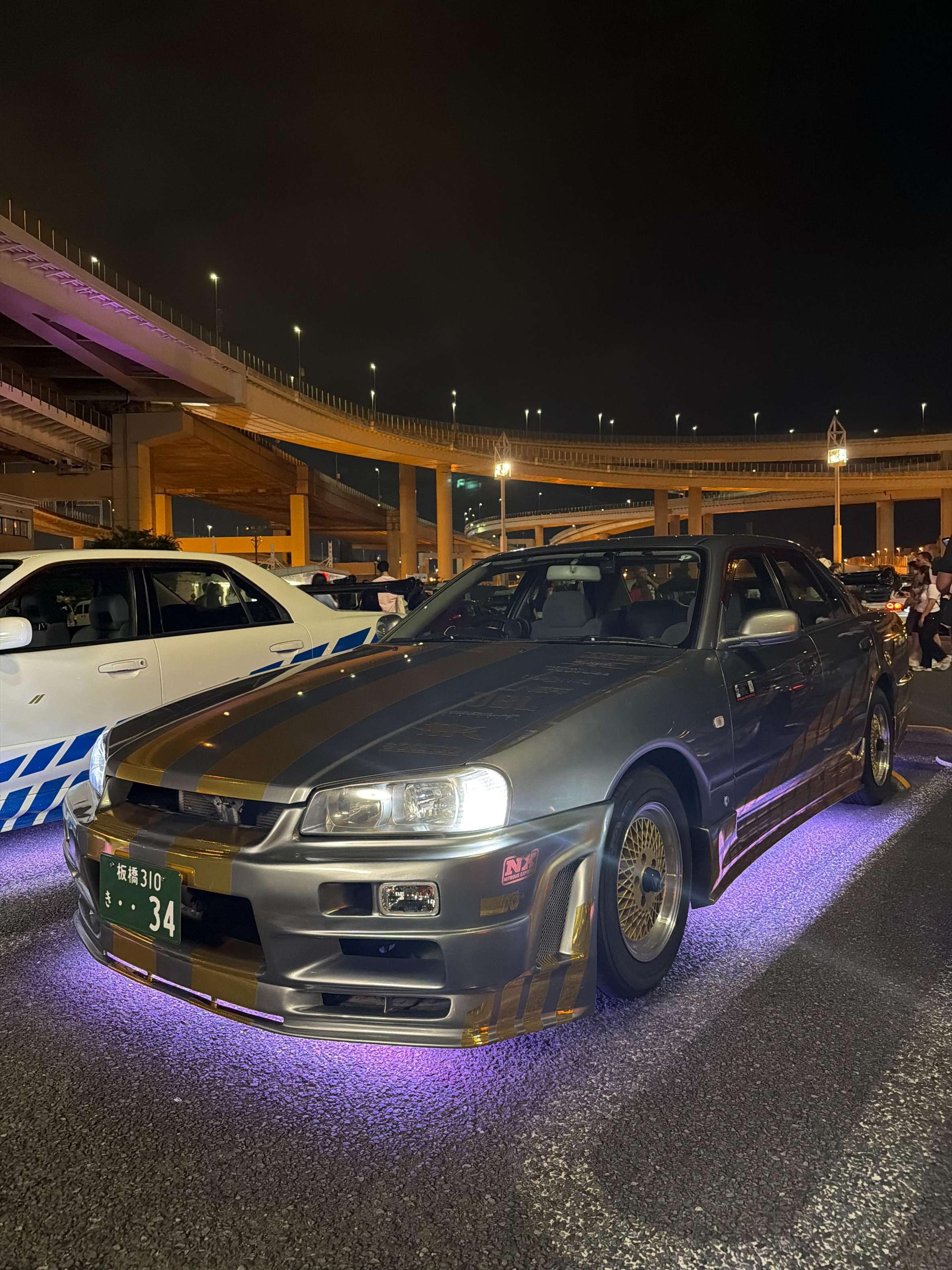
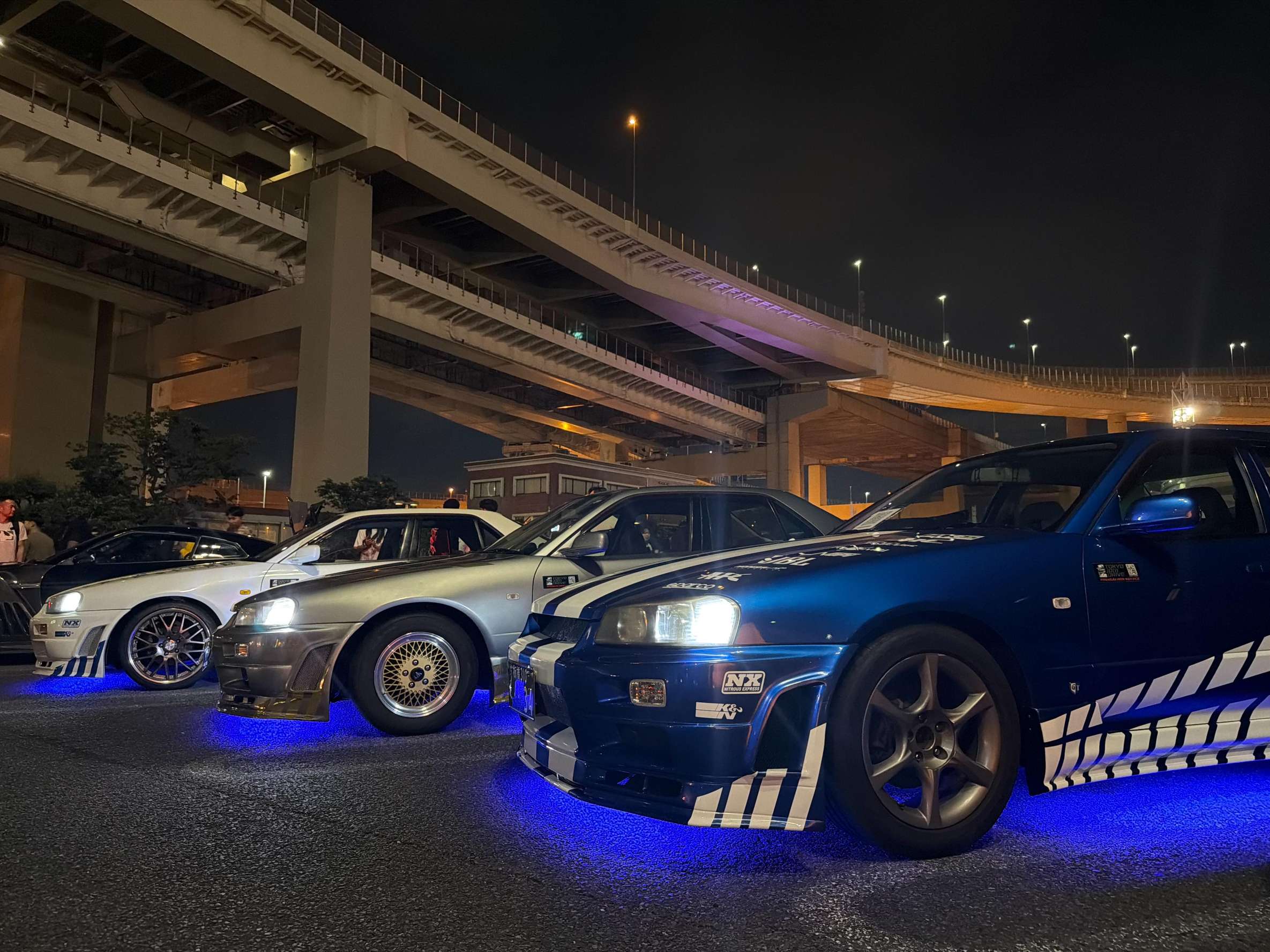
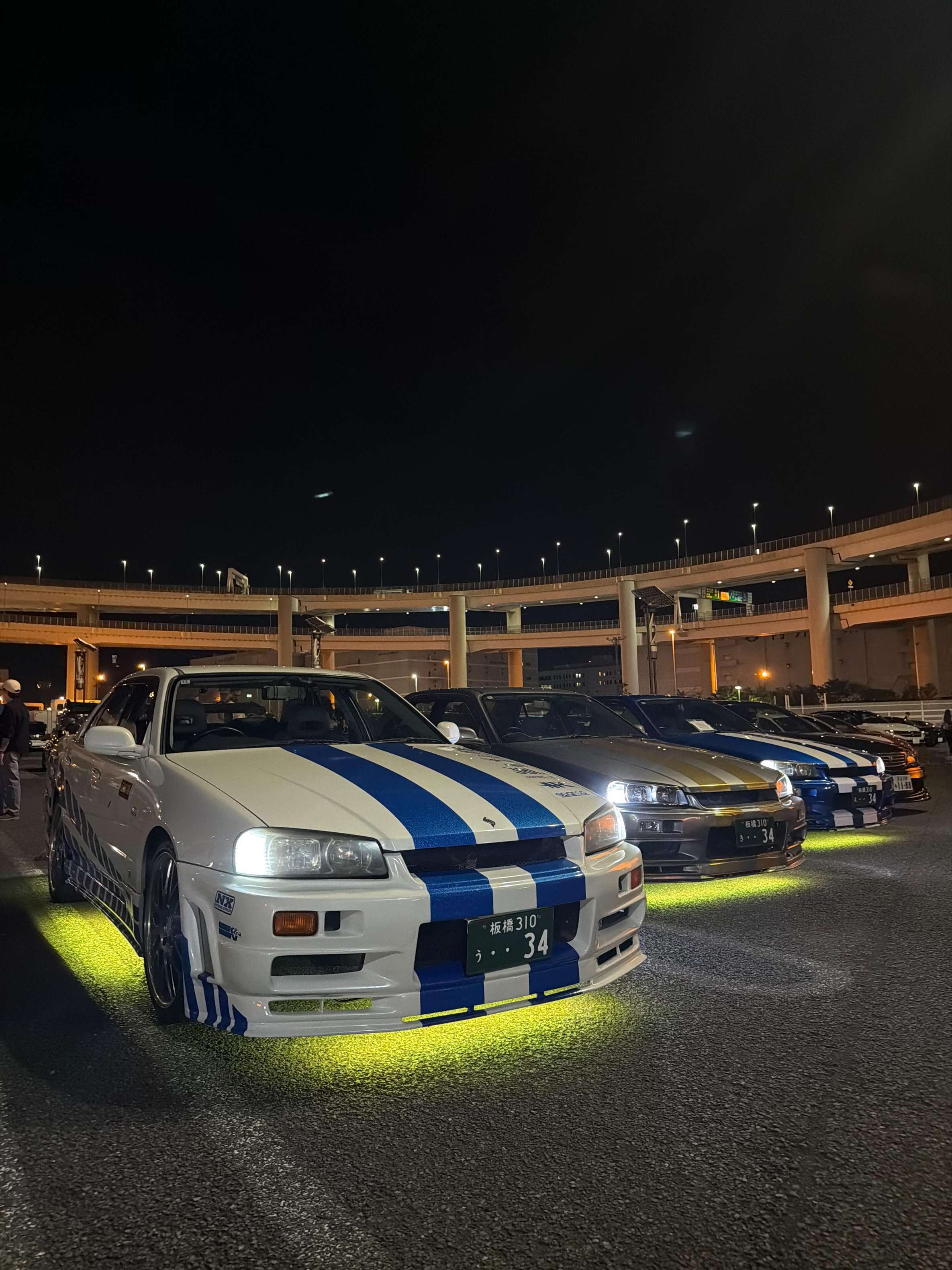
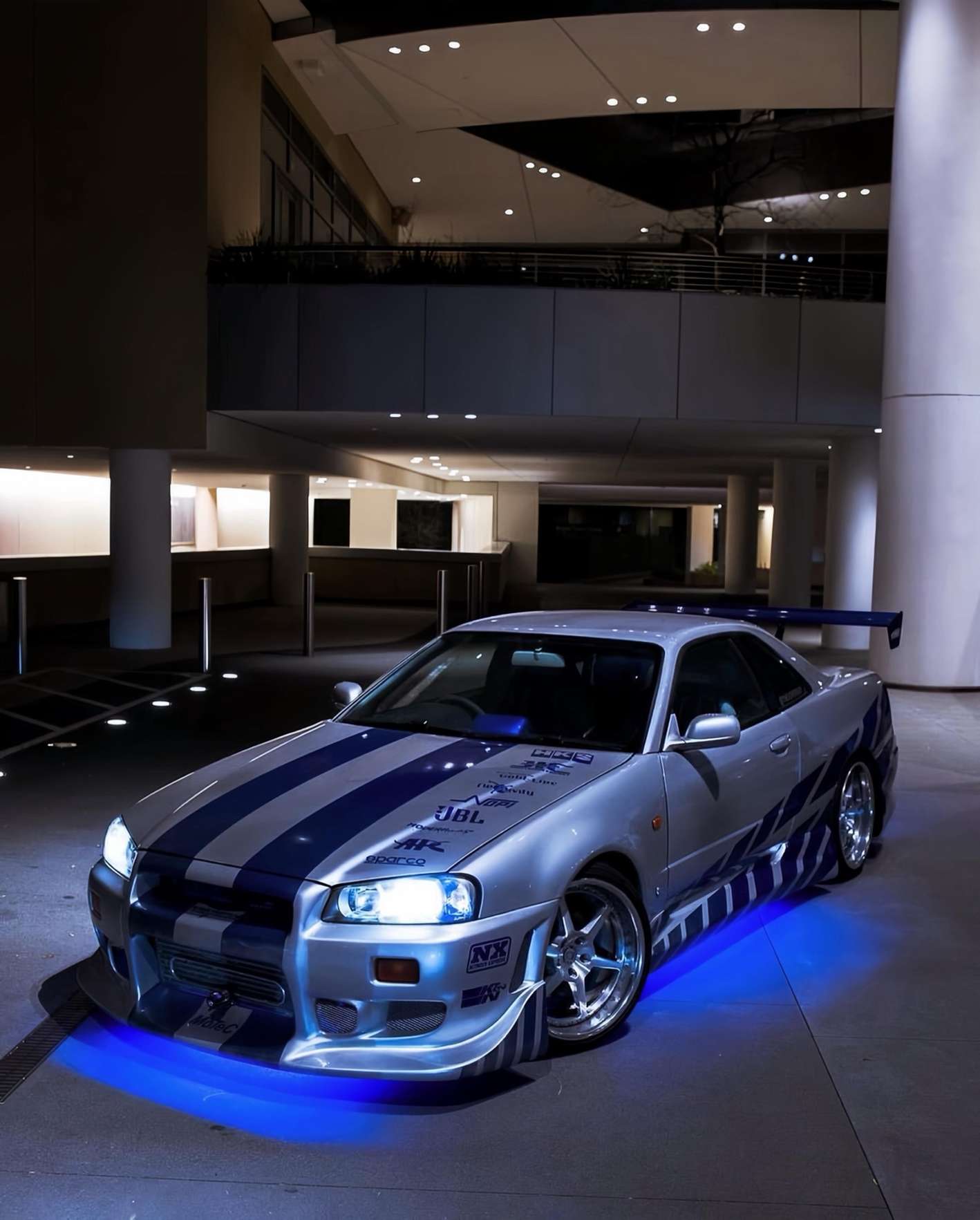
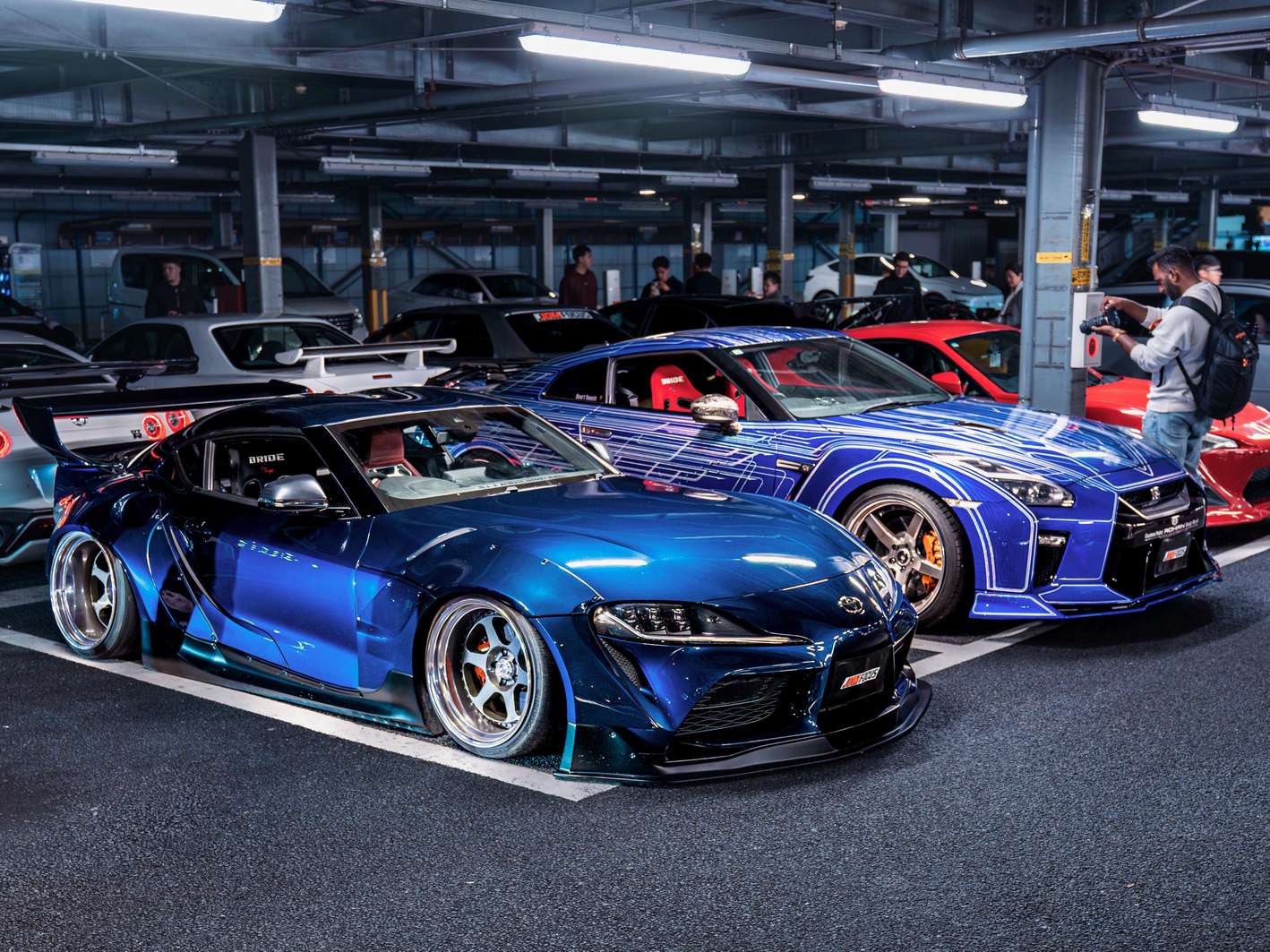
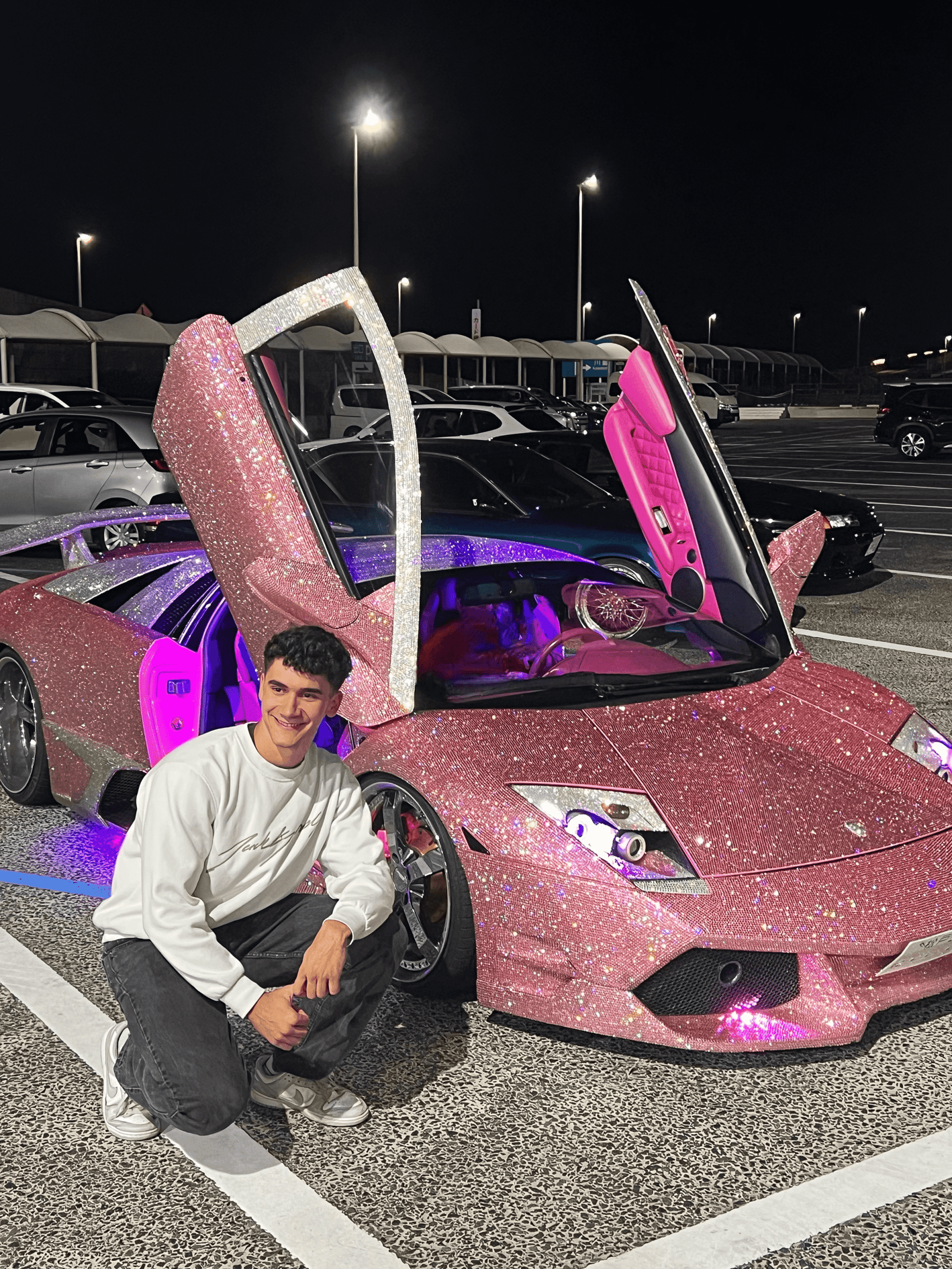
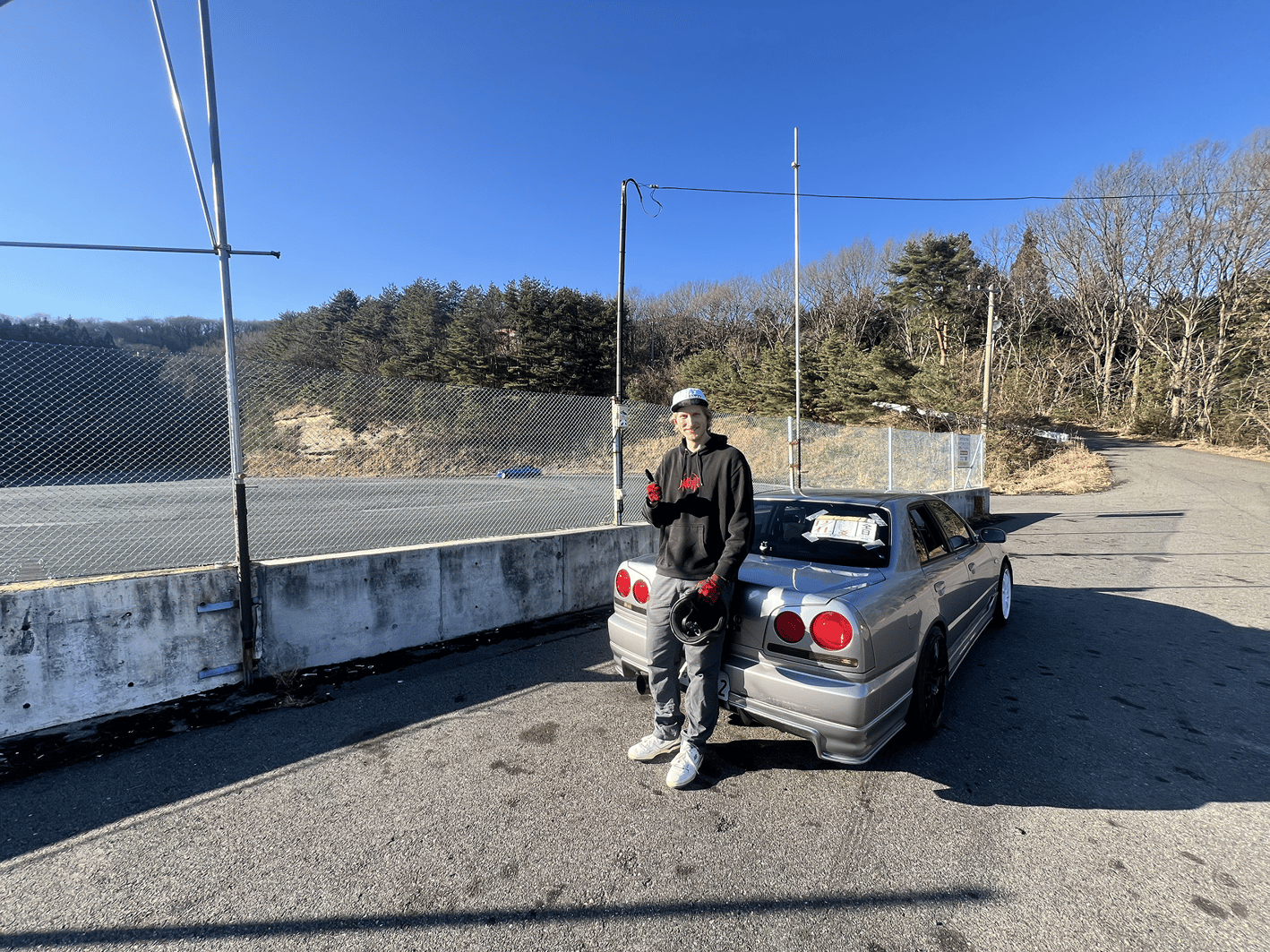
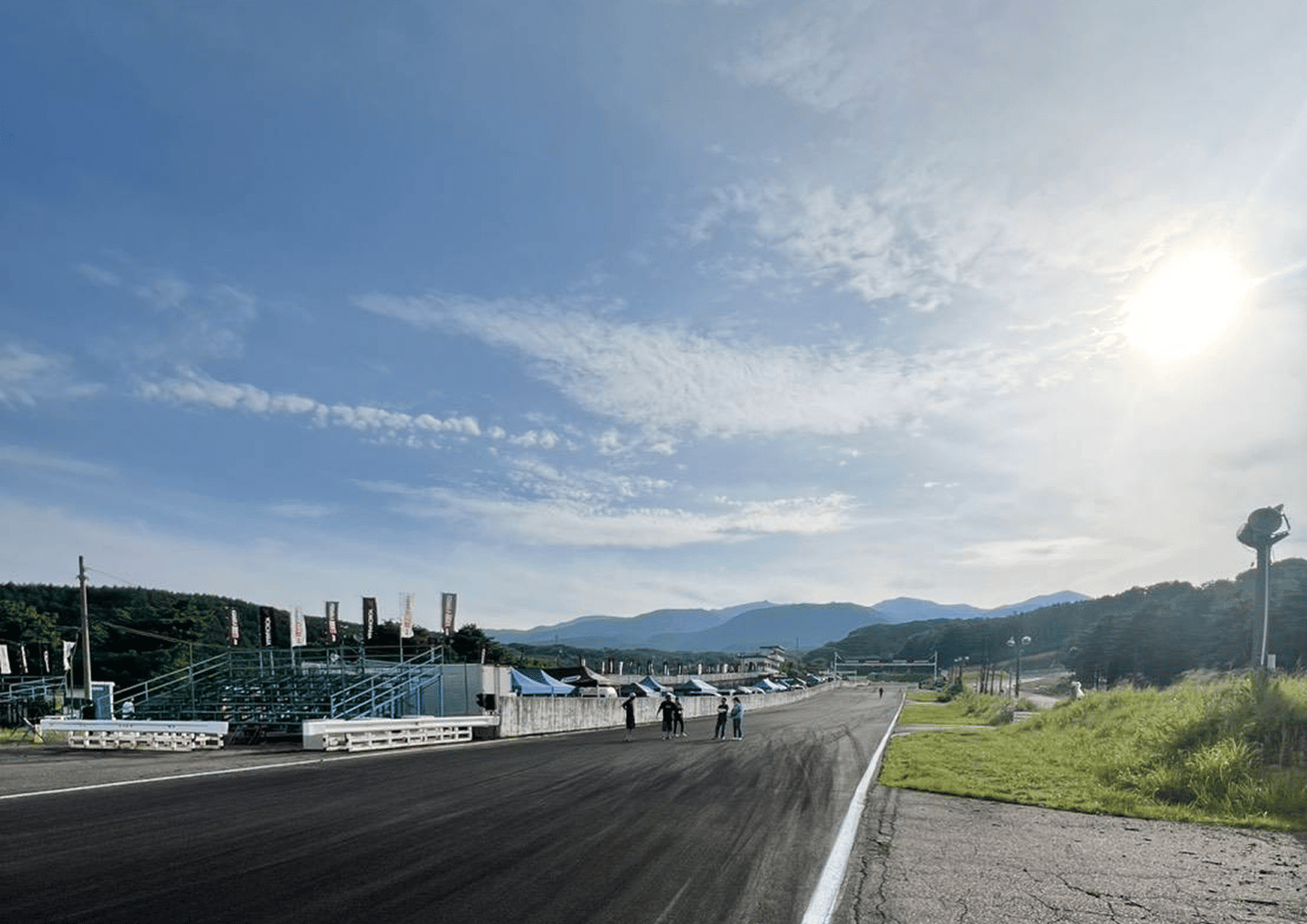
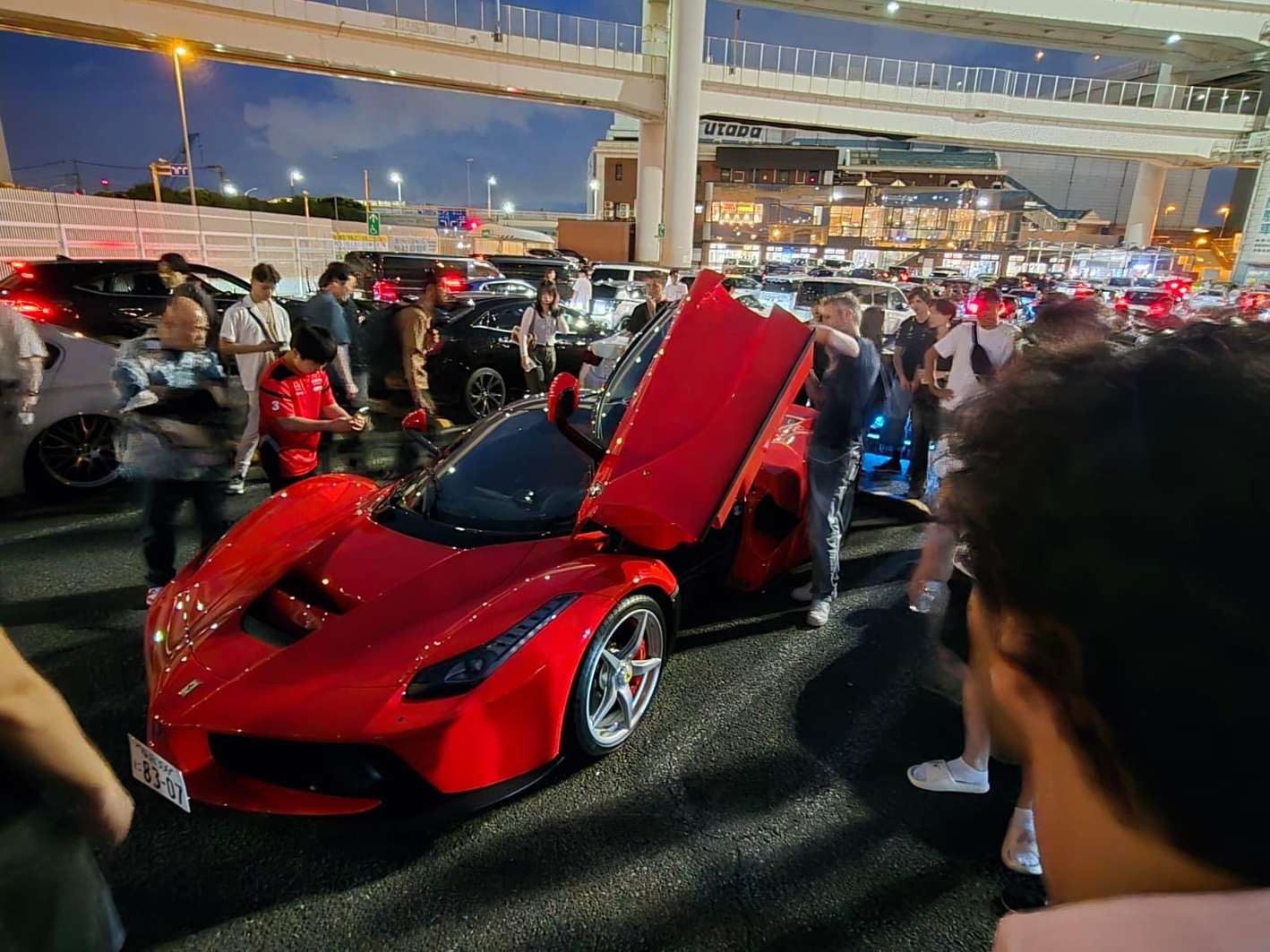
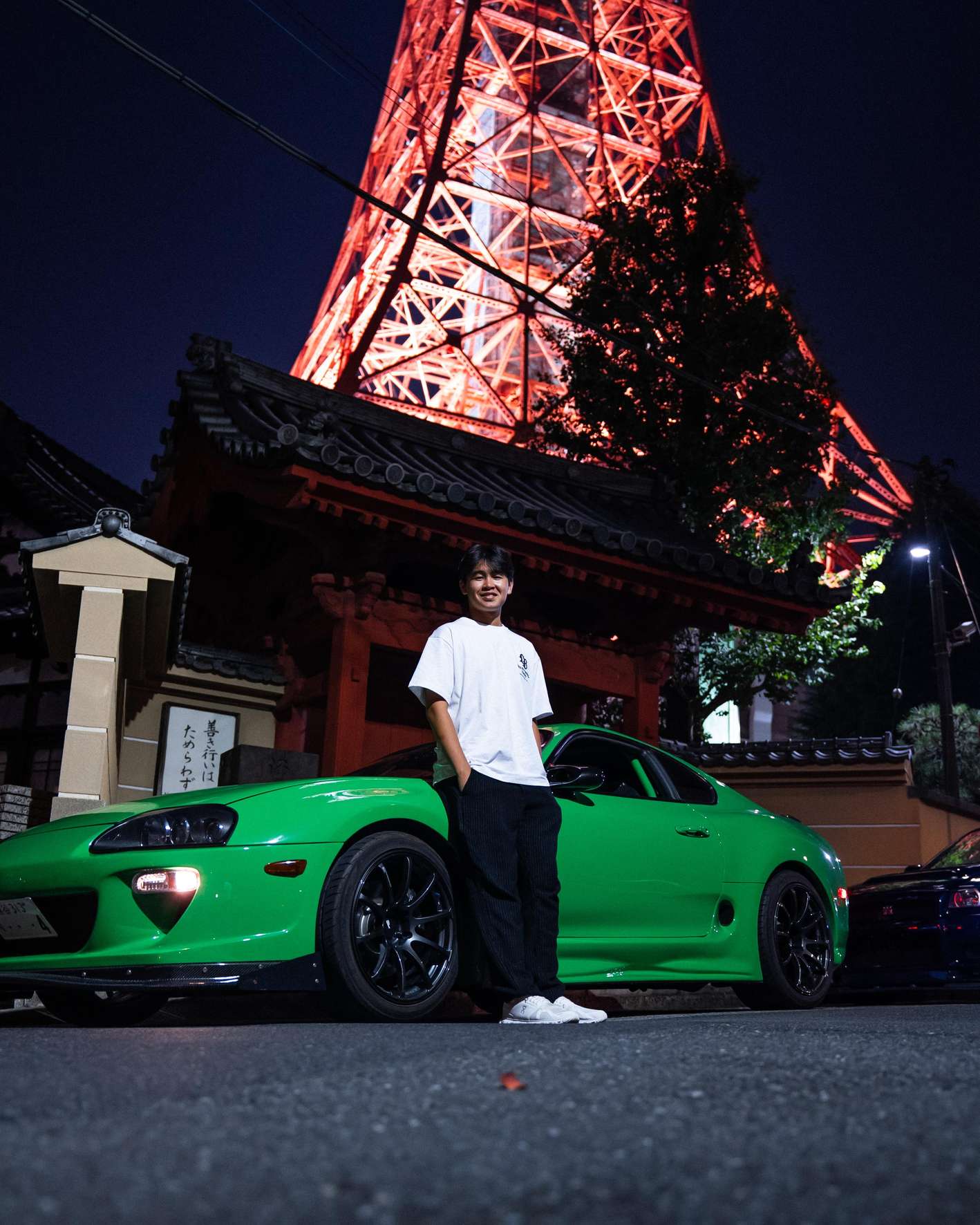
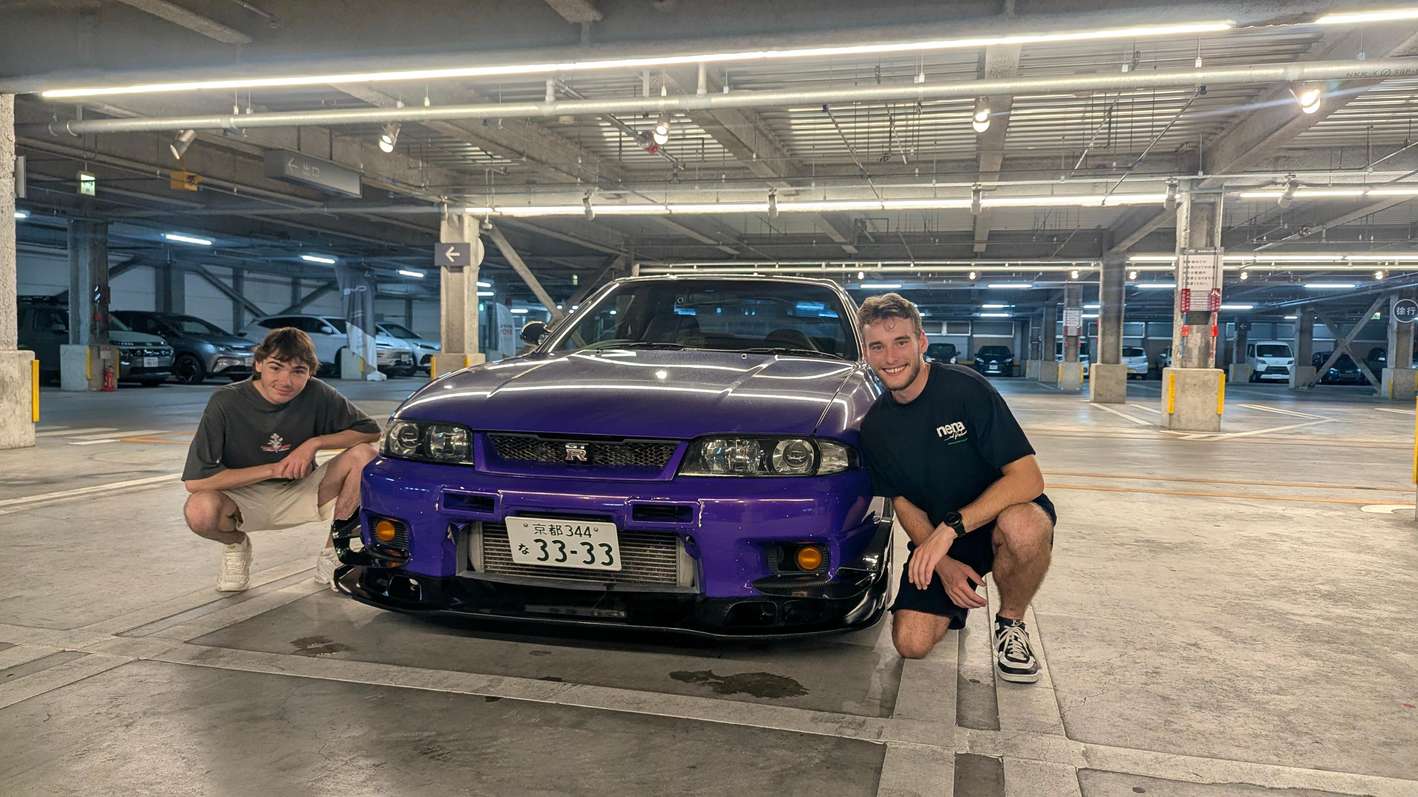
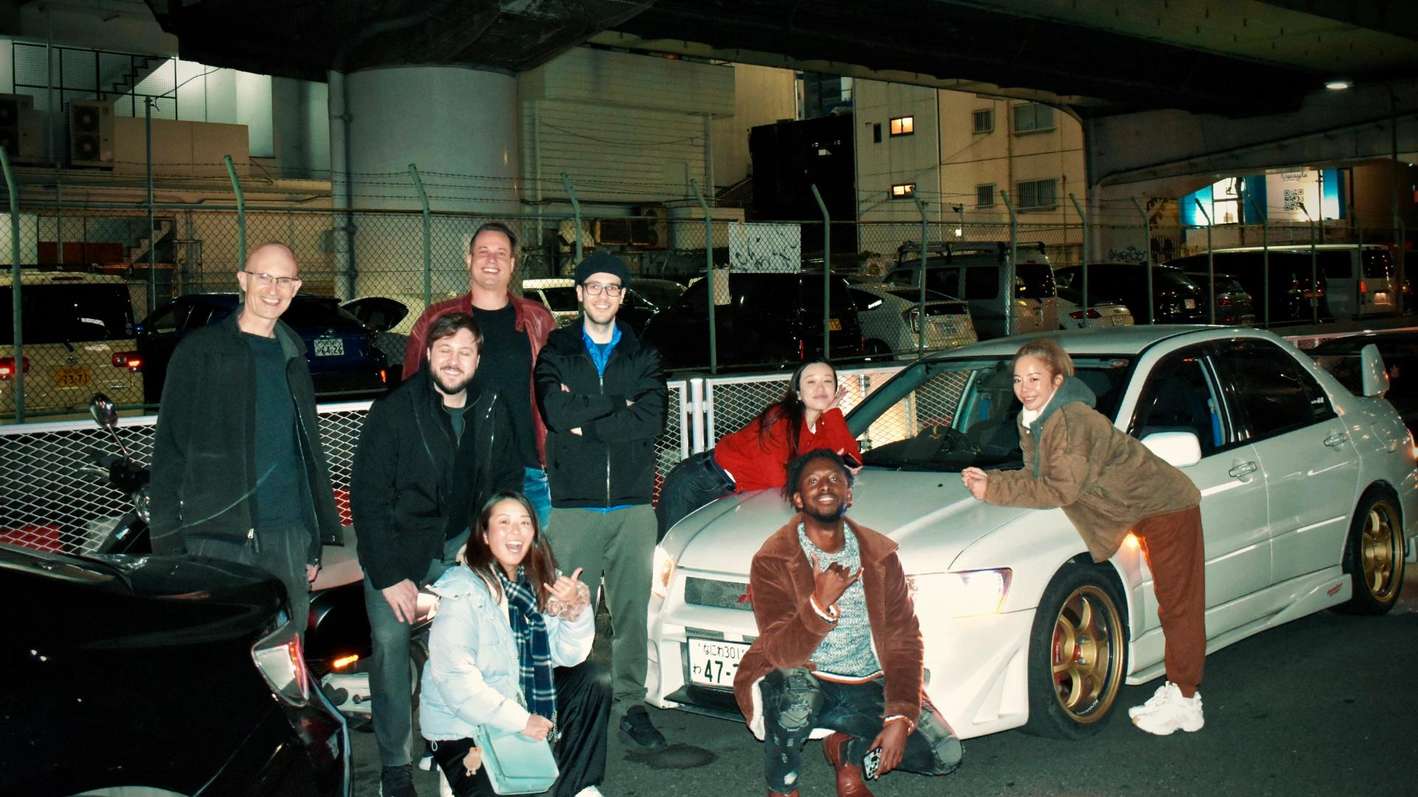
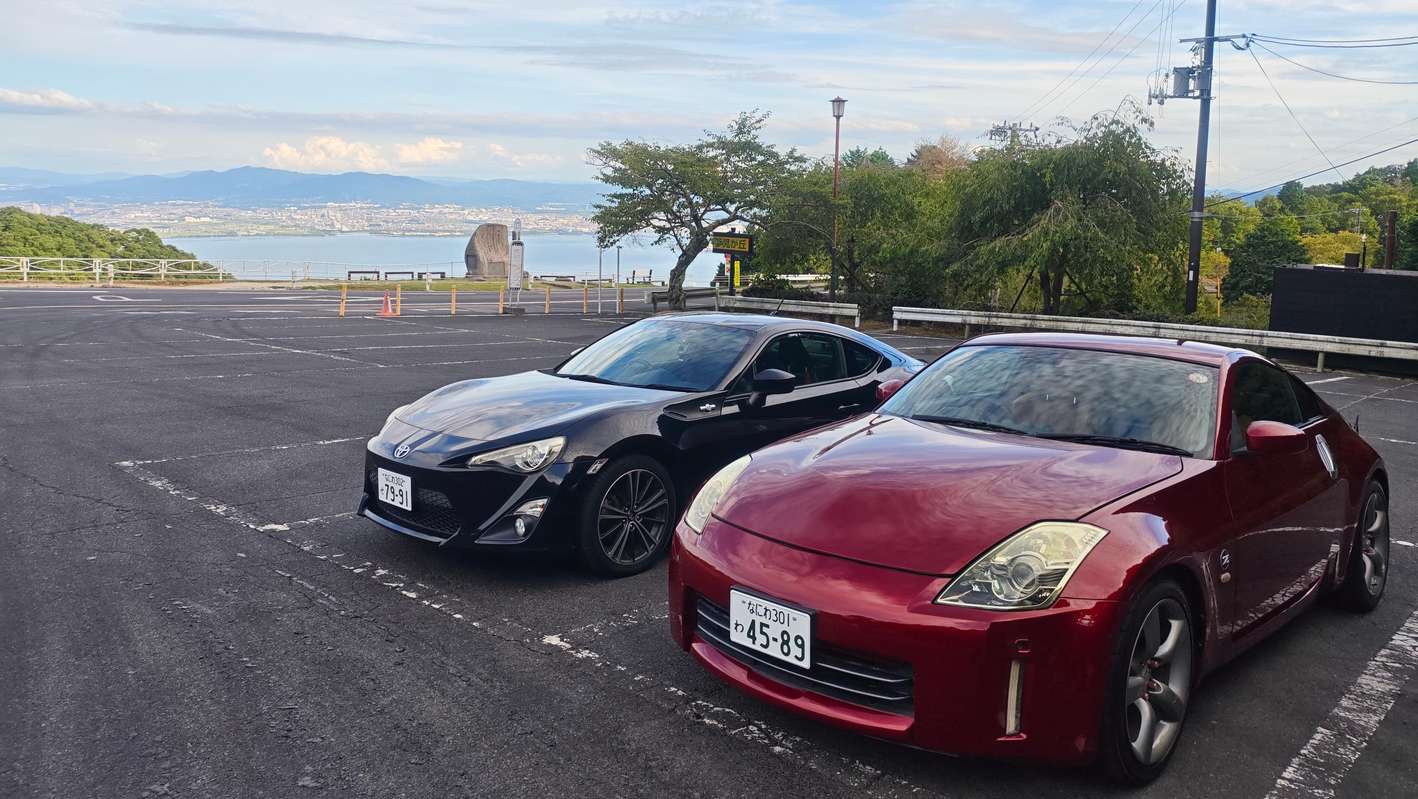
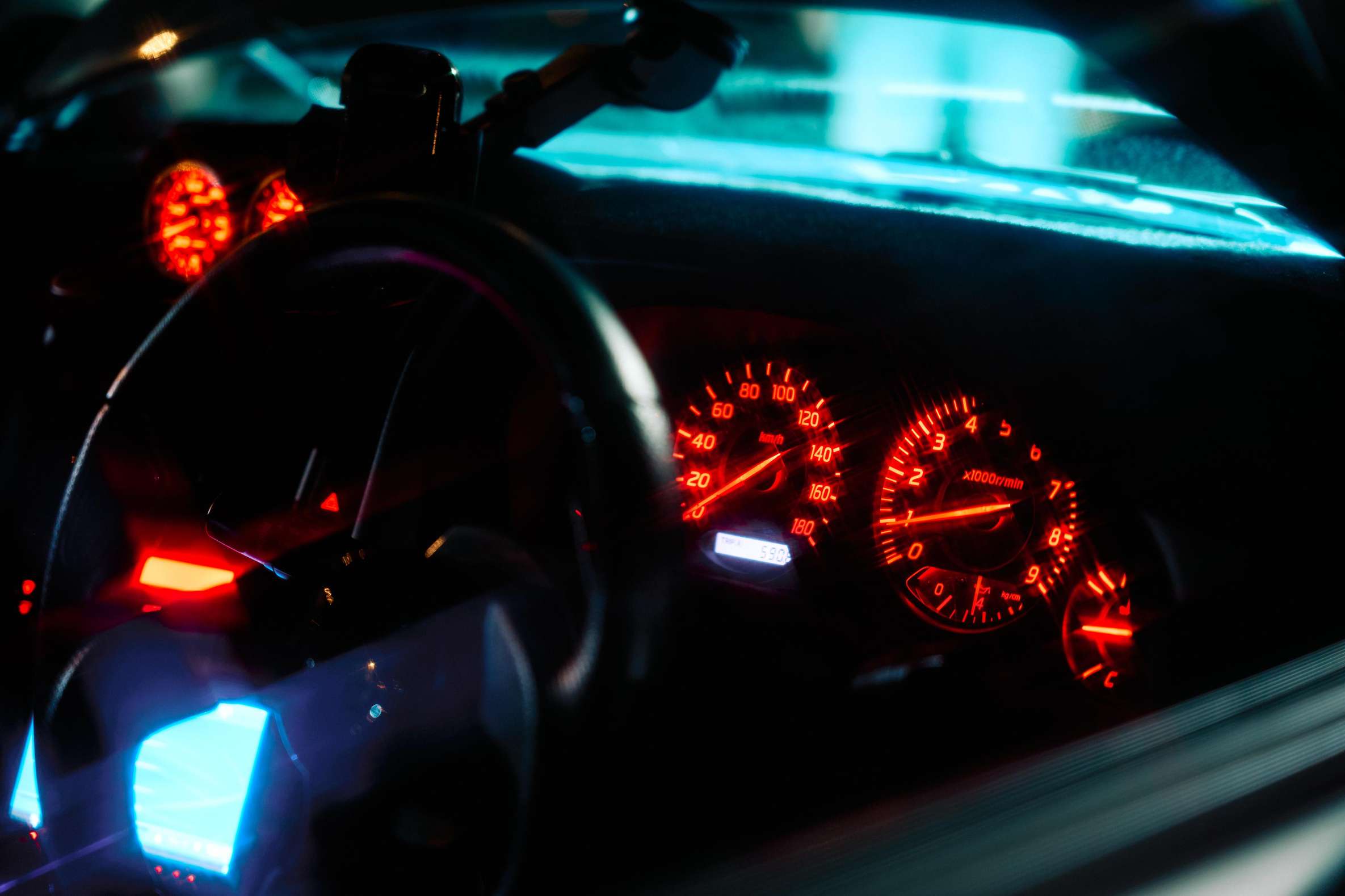
Nissan GT-R Tokyo Experience Daikoku GTR Tour and Skyline Routes
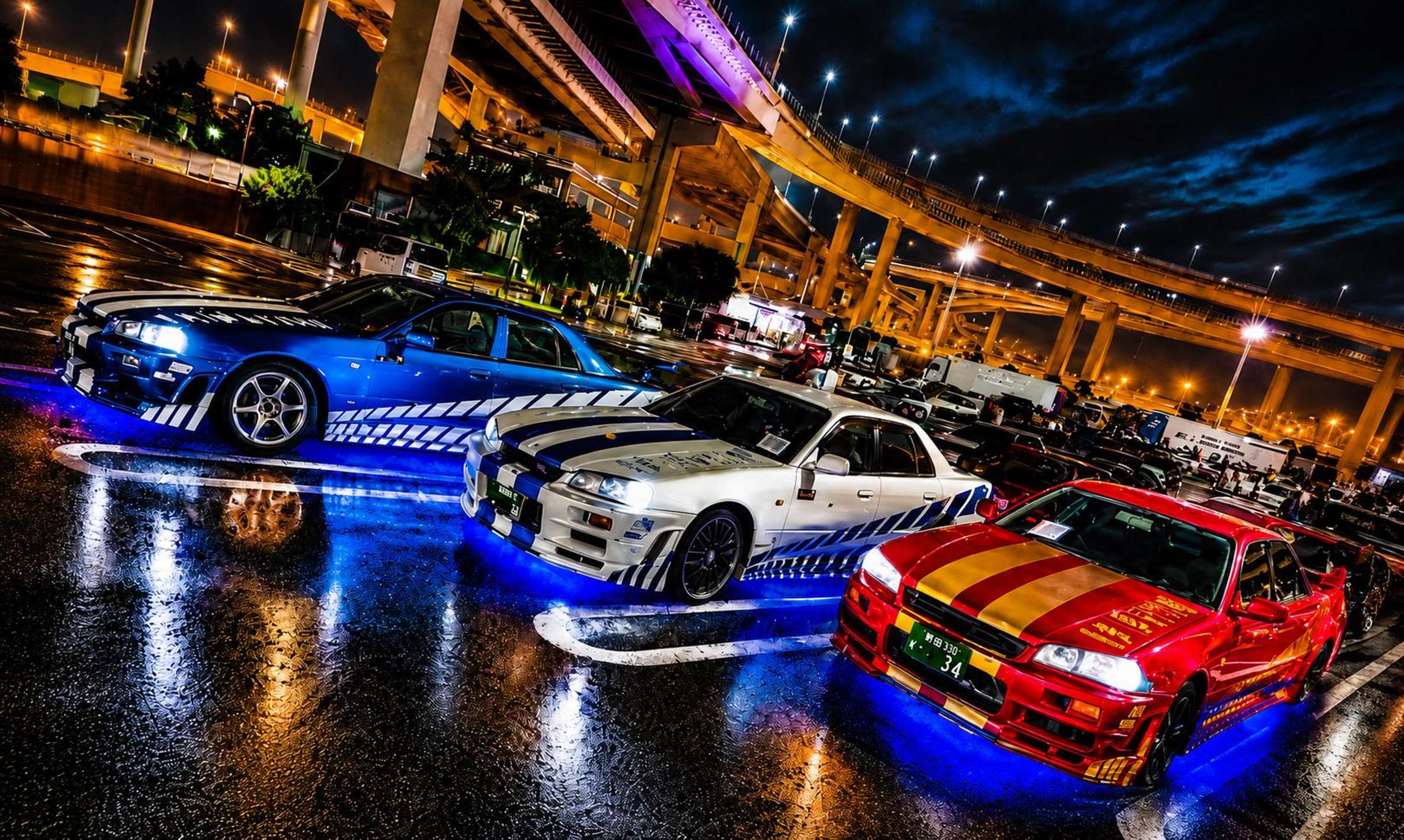
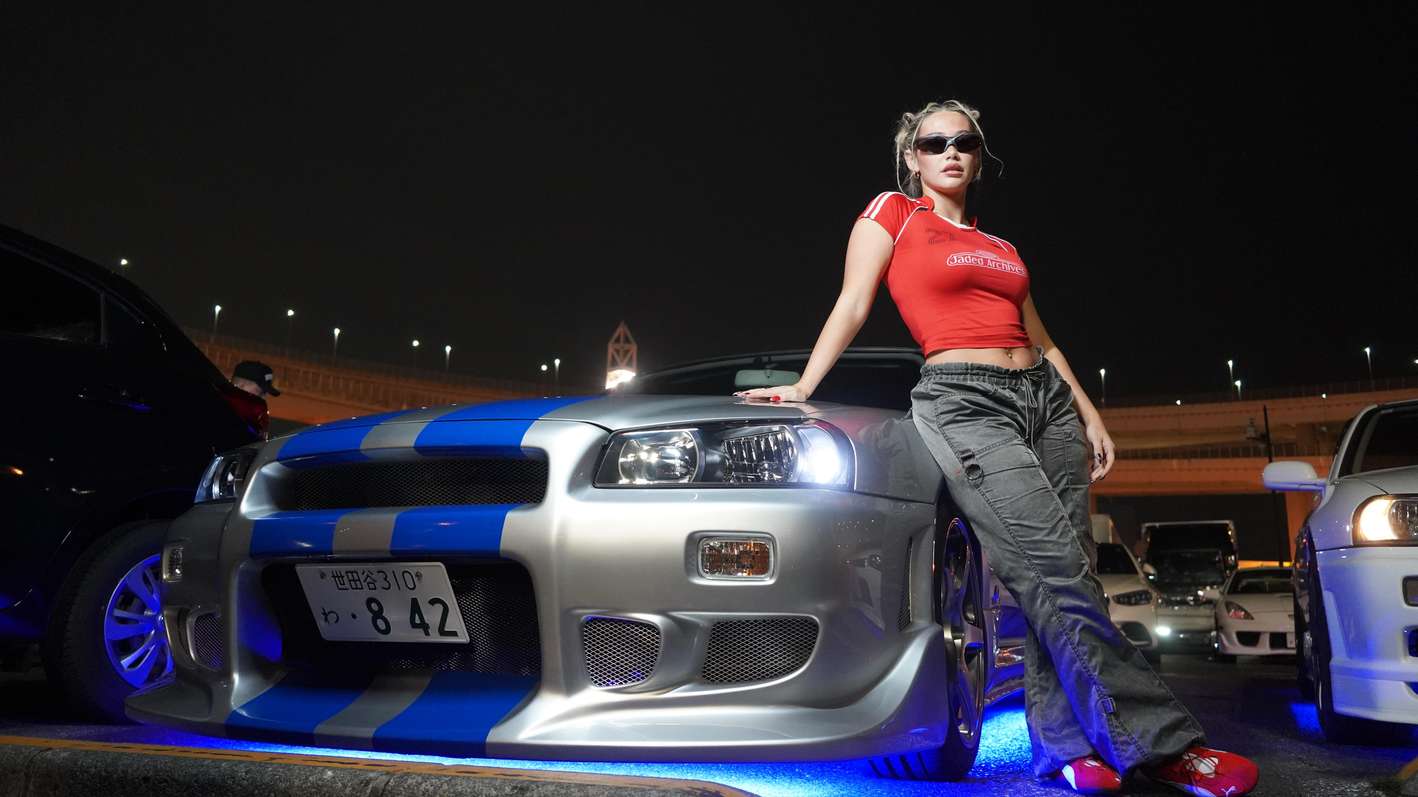
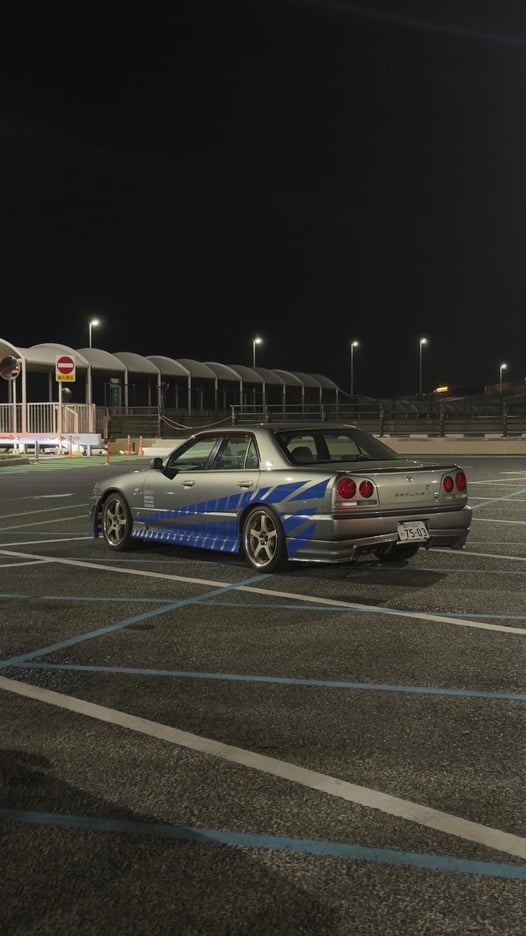
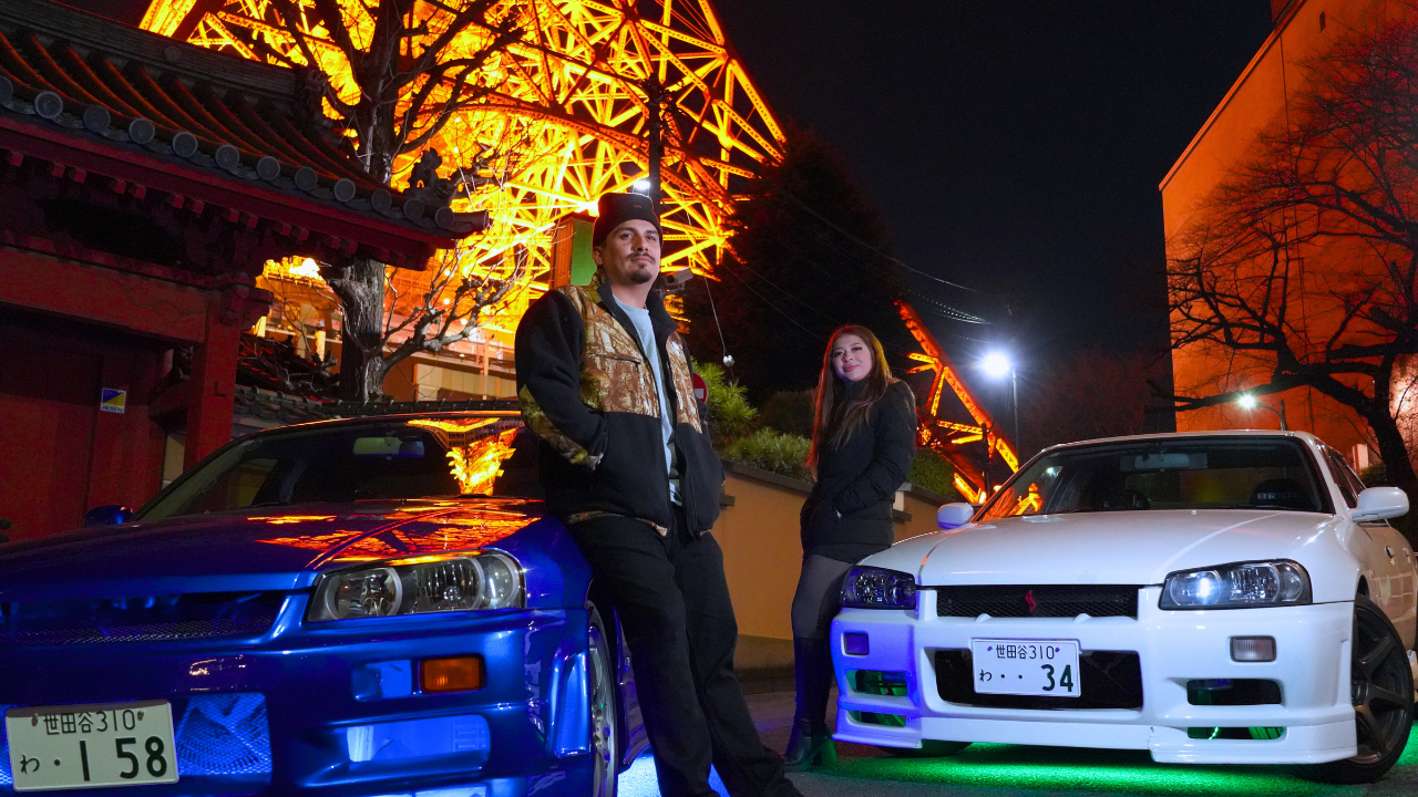
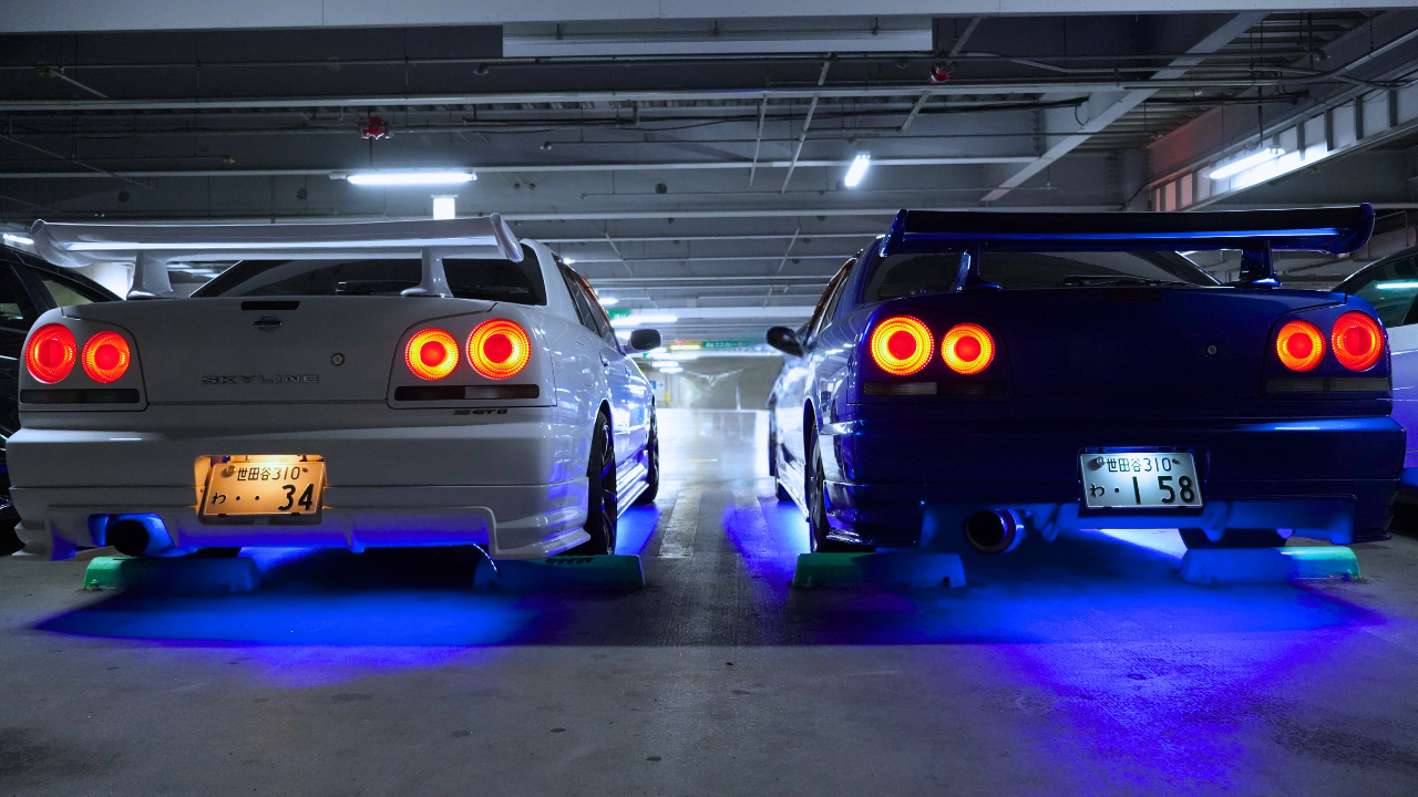
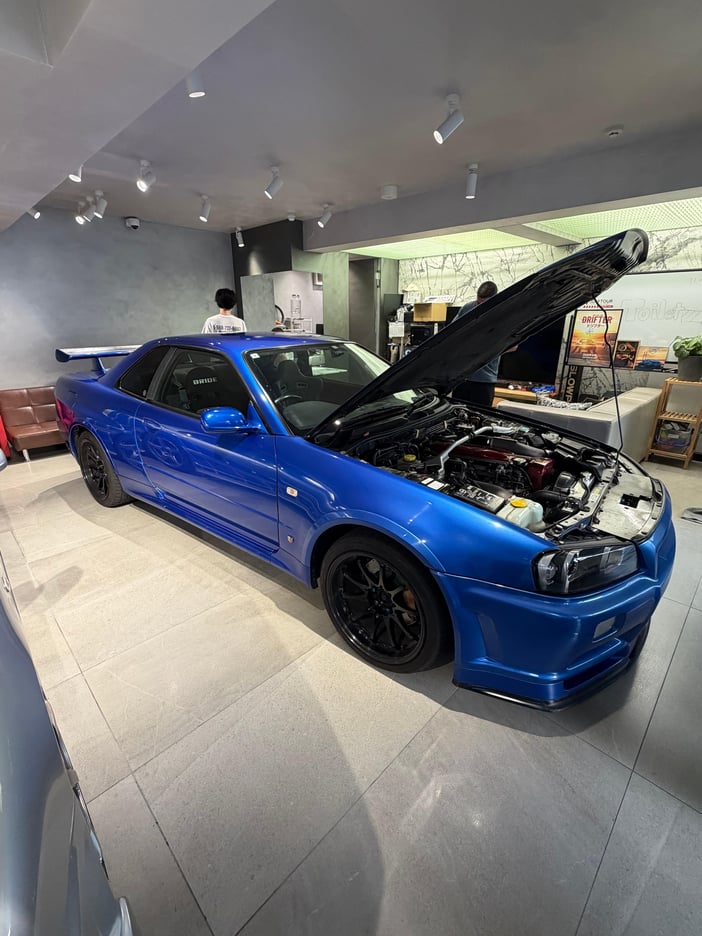
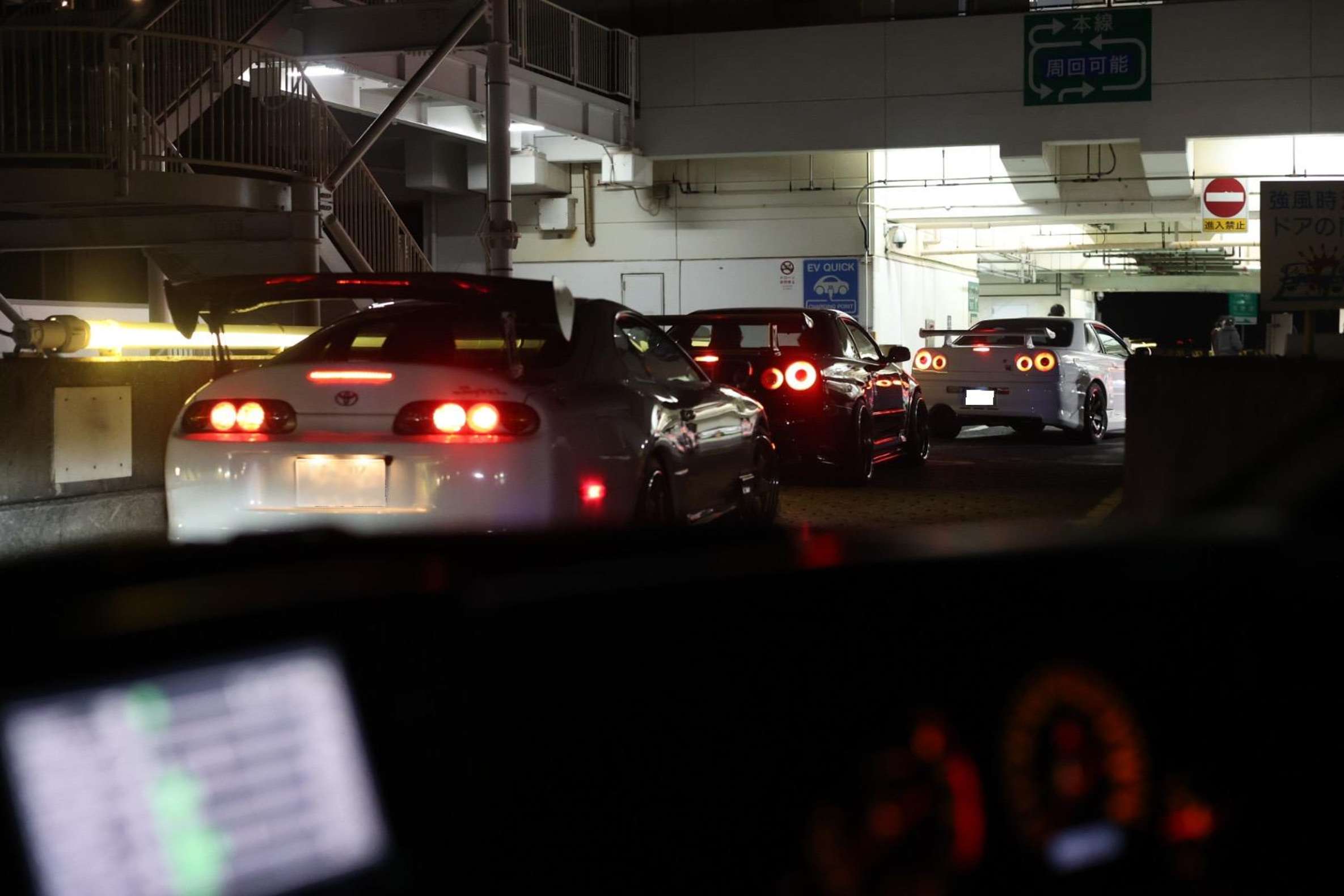
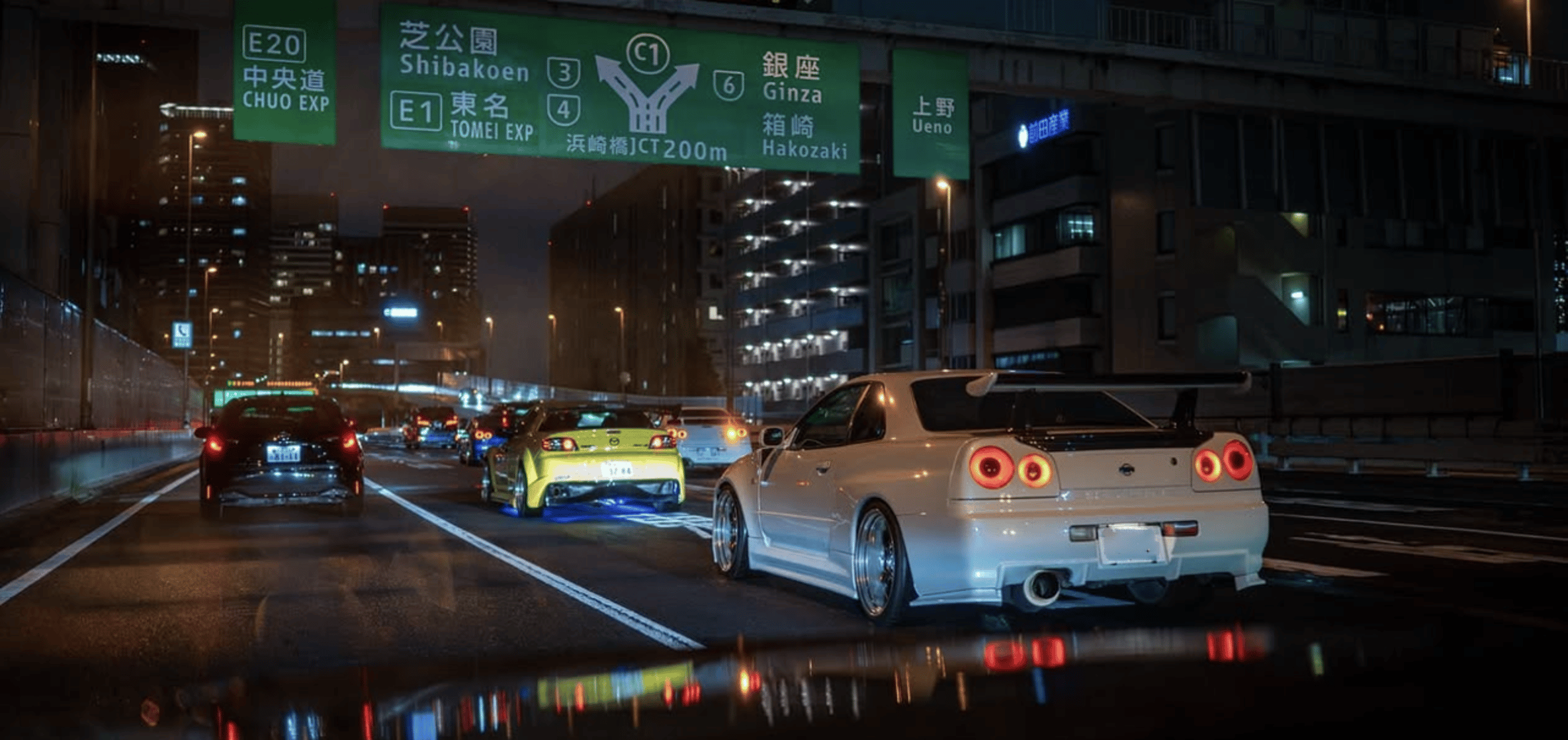
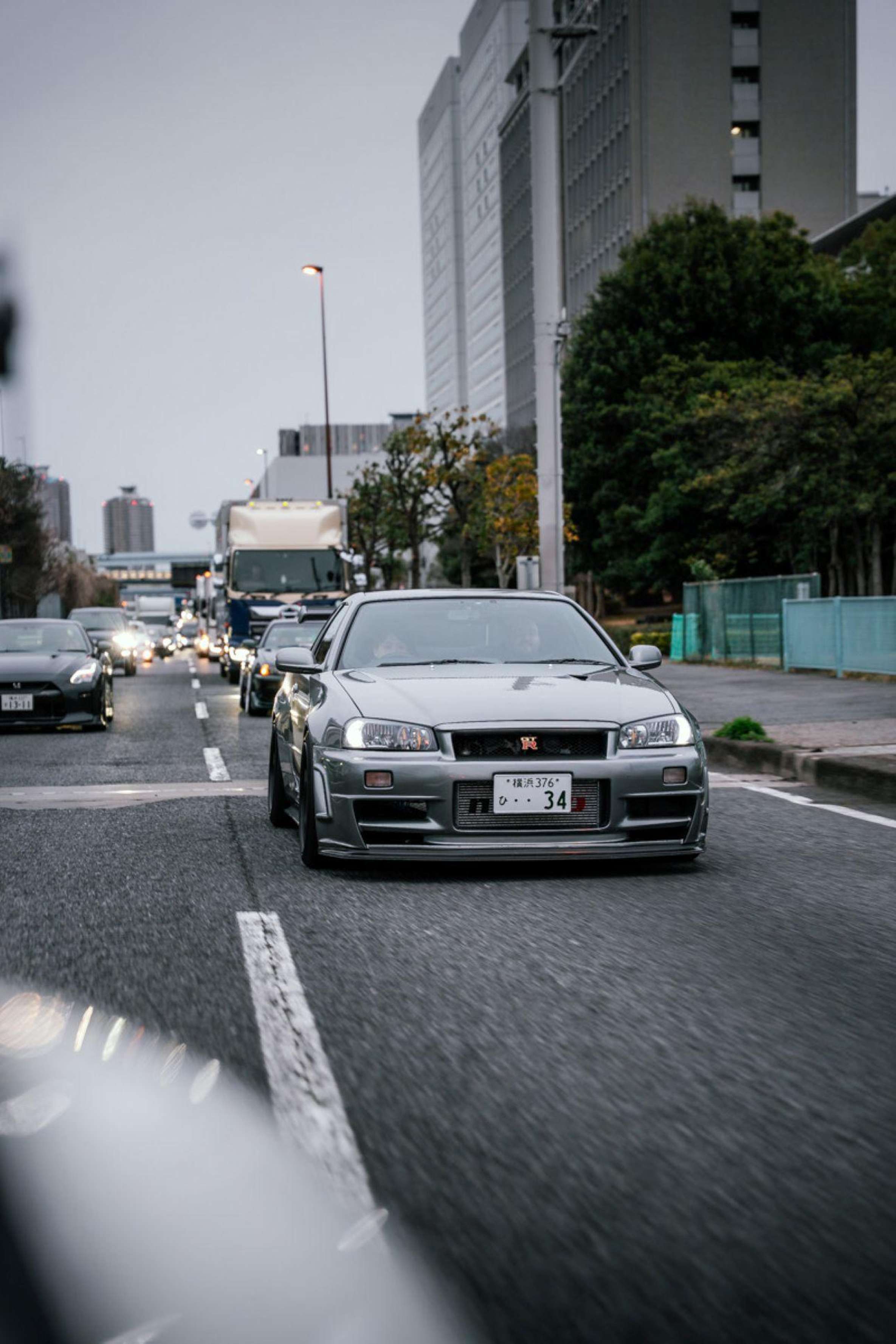
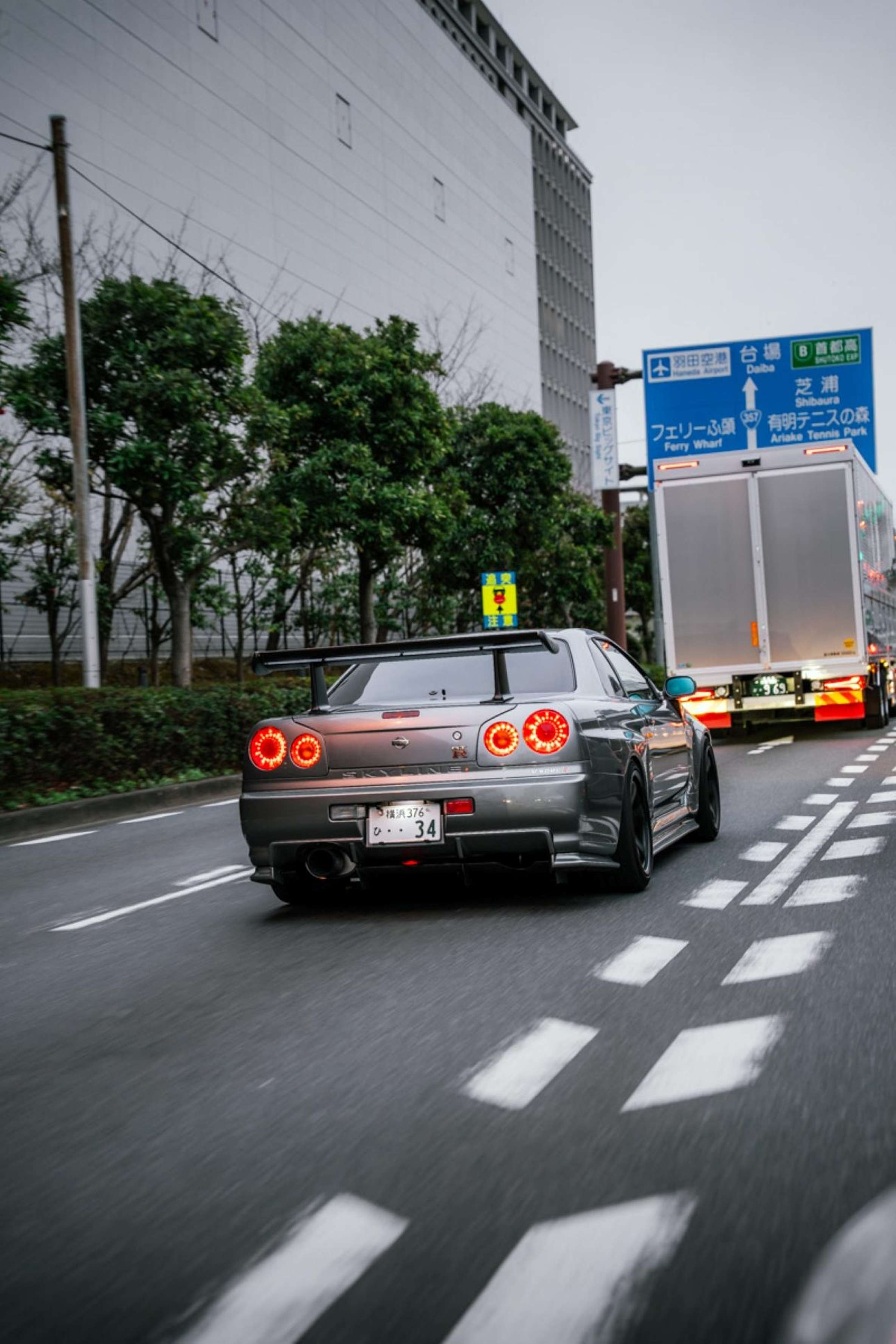
Ride a real GT-R or R34 Skyline to Daikoku PA, the meet every JDM fan wants to see. Local drivers, English-speaking guides, and photo stops at Rainbow Bridge and Tokyo Tower. Book your seat before the night tours sell out.
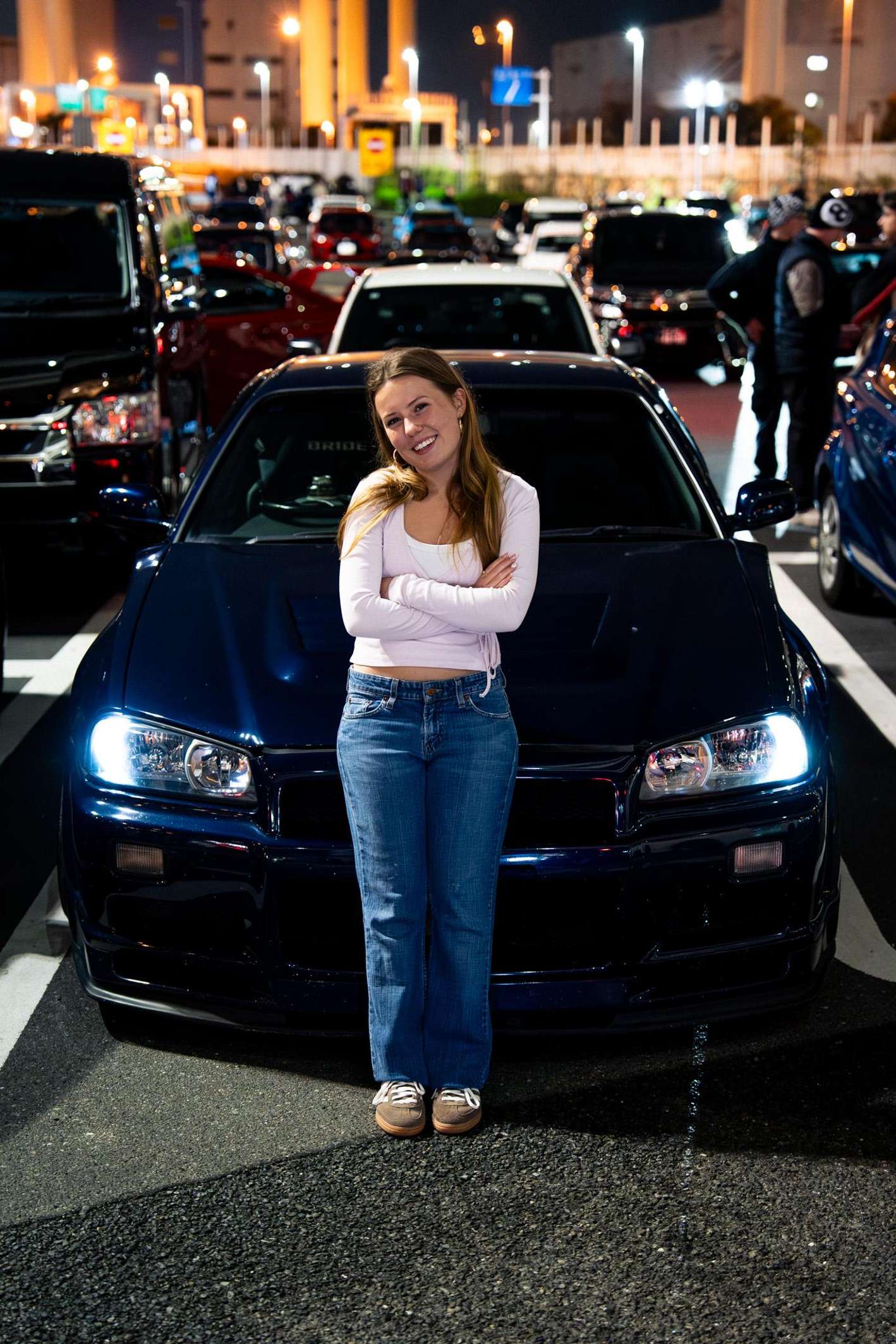
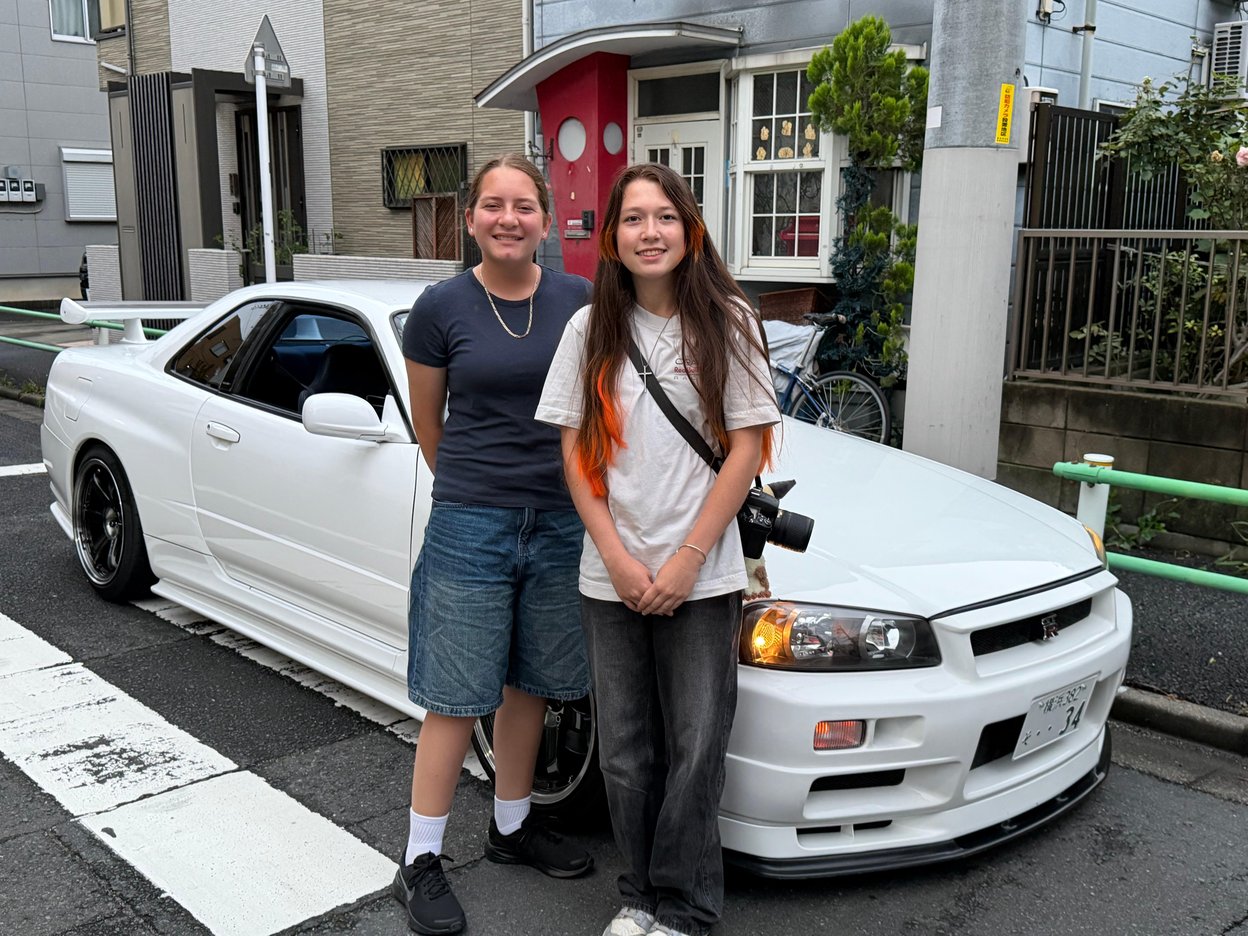
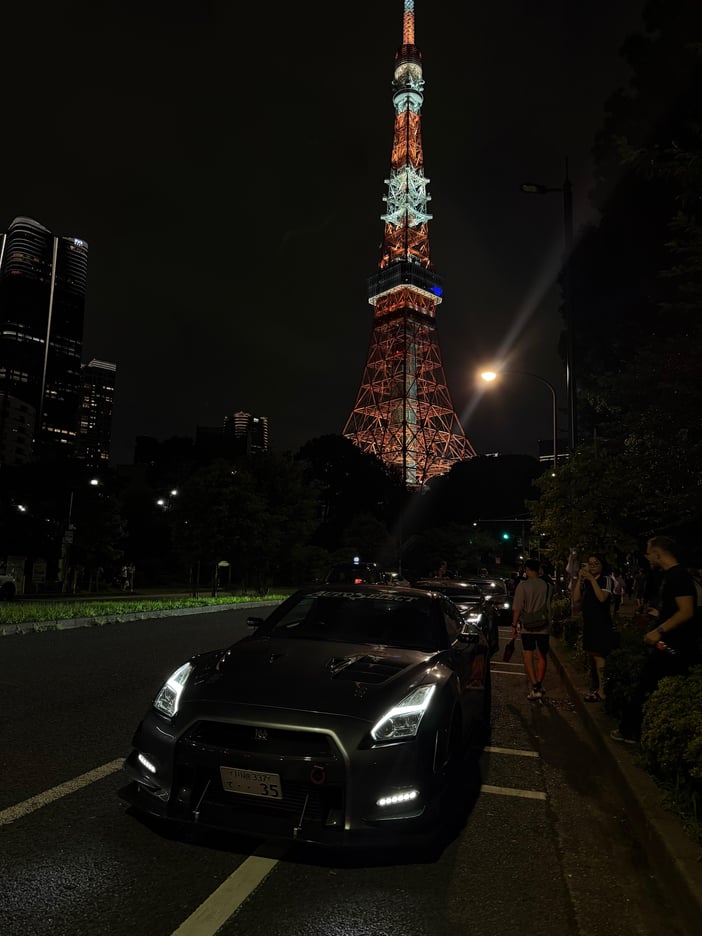
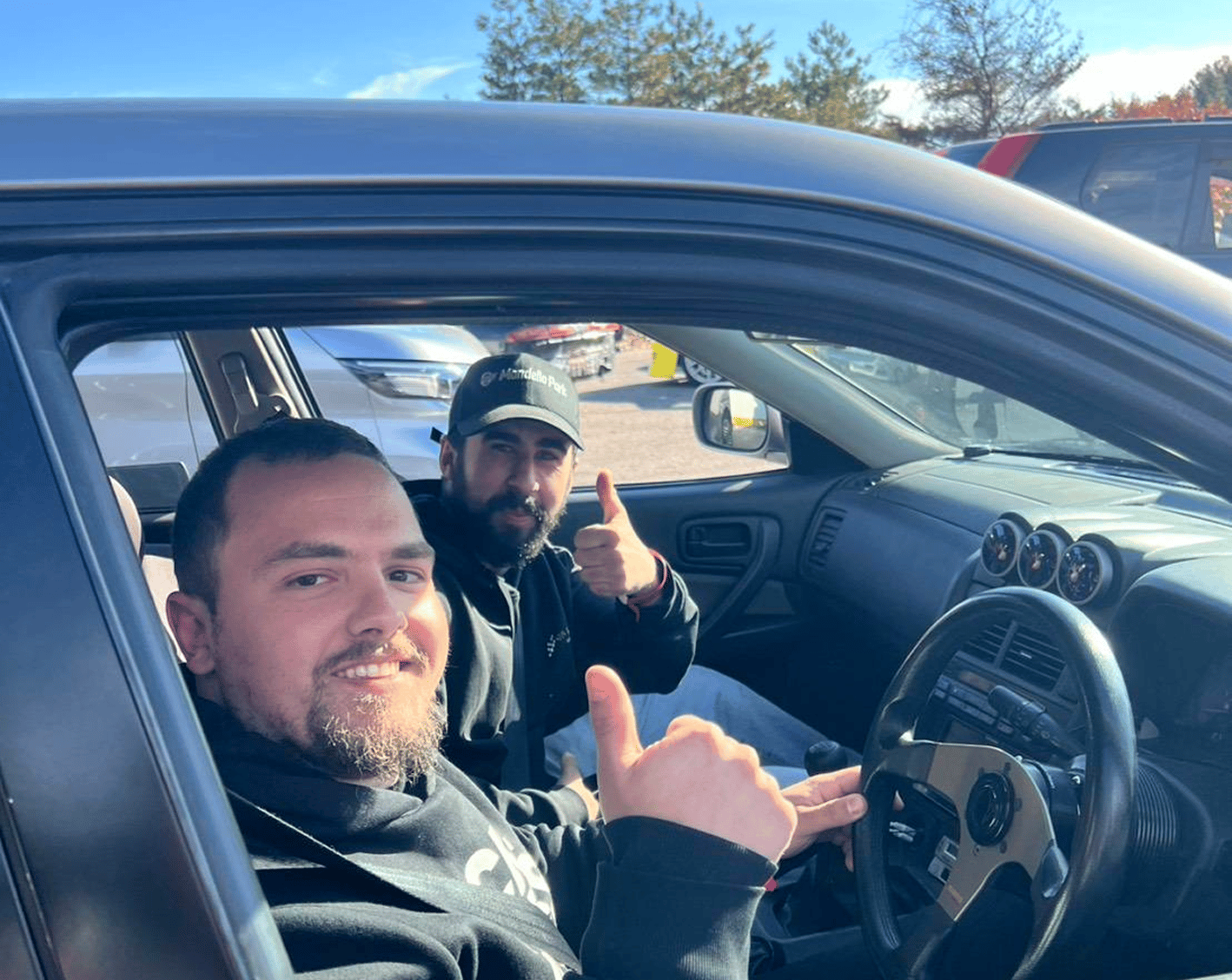
"Best night of my life! Rode with Yuya's convoy to Daikoku PA, met other drivers, saw Tokyo Tower and Rainbow Bridge from the best angles. Tons of photos. Highly recommend!"
4.9★average rating1,112traveler reviews100%free cancellation53countries travelers came from
Nissan GTR Tokyo experience - picking your night ride
Every tour here ends at the same place, Daikoku PA, but the ride differs. Some put you in the passenger seat of a guided car, one hands you the keys to an R34 or R35 GT-R. Decide that first, then pick how private you want the night to be.
DocumentsTo drive yourself you need your original passport, your original home licence and an International Driving Permit from the 1949 Convention; photocopies are not accepted.
Licence exceptionsIf your licence is from Switzerland, Germany, France, Belgium, Monaco or Taiwan, a certified Japanese translation works in place of the permit.
Age and cardThe self-drive GT-R tour requires drivers to be 23 or older, and R34 drivers must also bring a credit card in the driver's name, debit cards do not count.
Daikoku closuresPolice can shut the Daikoku meet on the night, most often on Thursday to Saturday evenings around 8:30 pm; tours then move to Umihotaru PA or another spot, or you reschedule or get a refund.
BookingTours sell out, so sort your ride before you land in Tokyo; turning up on the night hoping for a seat is a gamble.
ContactOne tour operator emails you within 48 hours of booking and asks you to reply, and another asks for a WhatsApp or Instagram contact so it can reach you before start time.
On boardOn the self-drive GT-R tour you must not overtake the lead car, exceed the limit or drift, and eating in the cars is off limits, water only.
EtiquetteAt Daikoku PA, ask an owner before touching, sitting in or photographing their car; owners notice visitors who respect this.
WeatherCheck the forecast and wear comfortable shoes and clothes, since the meet happens outdoors at night and rain rarely stops it, though heavy rain or police activity can close the PA.
DriftingDrifting on public roads is illegal in Japan, so no tour here includes it; legal drifting happens at circuits such as Ebisu.
closurePolice close the Daikoku PA car park entrance without notice on Friday and Saturday nights, usually from about 8:30 pm, and once it shuts it rarely reopens that night.
Book a tour with an early pickup, since most operators pull Friday and Saturday starts forward to 4 or 5 pm to get inside before closures, and pick one that diverts to Umihotaru or Tatsumi PA when Daikoku is closed.
Nissan GT-R Tokyo experience - which ride to pick
Cheapest way in
2 - 3 hours·English, Japanese
4.5(16)
Tokyo: R34 & GT-R at Daikoku PA After Dark, Tokyo Drift Meet
Option: R35 GT-R
Entry starts lower than every other GT-R night option here, and you still get Daikoku PA and a Tokyo Tower photo stop.
Free cancellationPhoto stop at Tokyo TowerHosting in English and Japanese
What a Nissan GTR Tokyo experience looks like on the road
6 stopsabout 2 h12 places
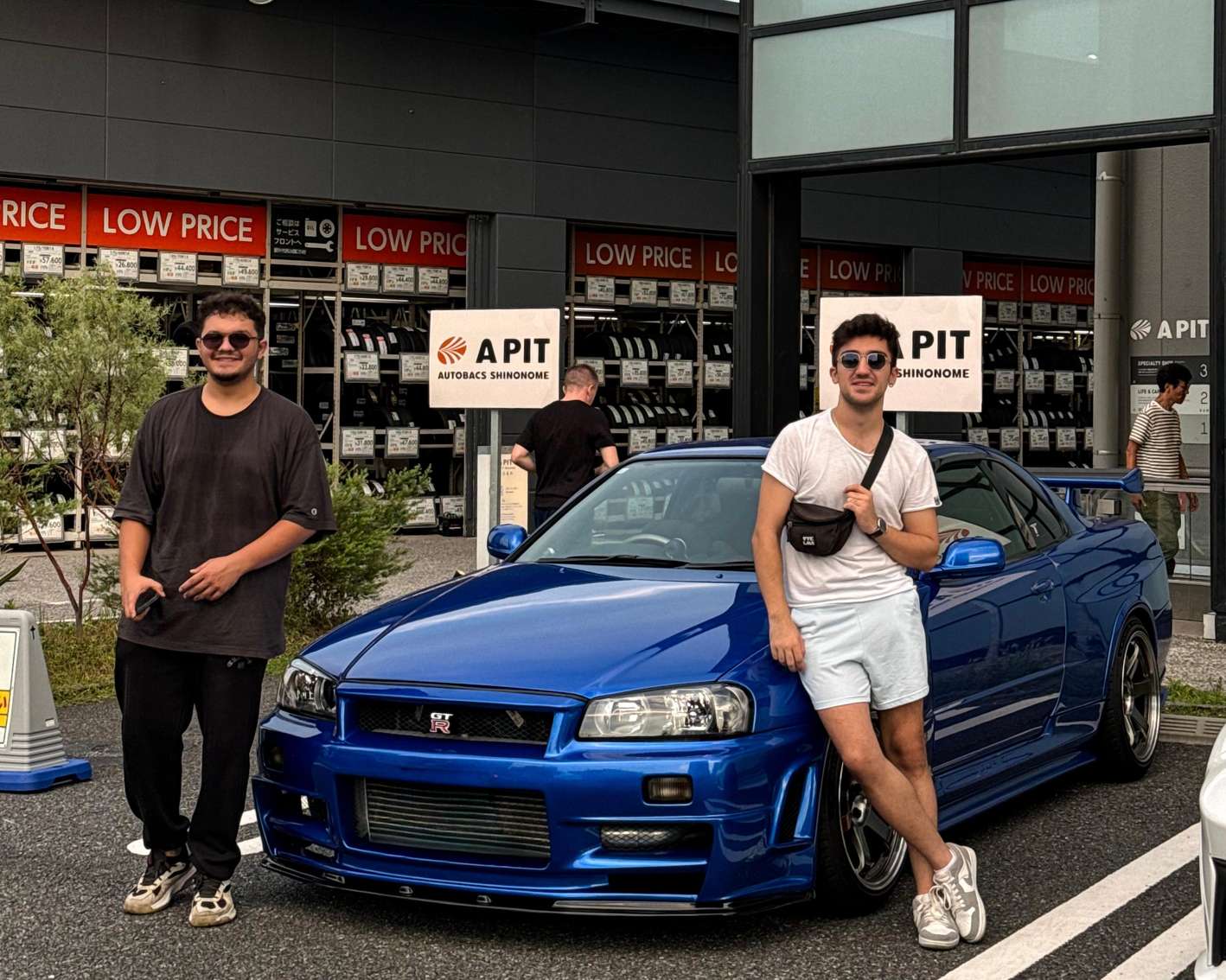
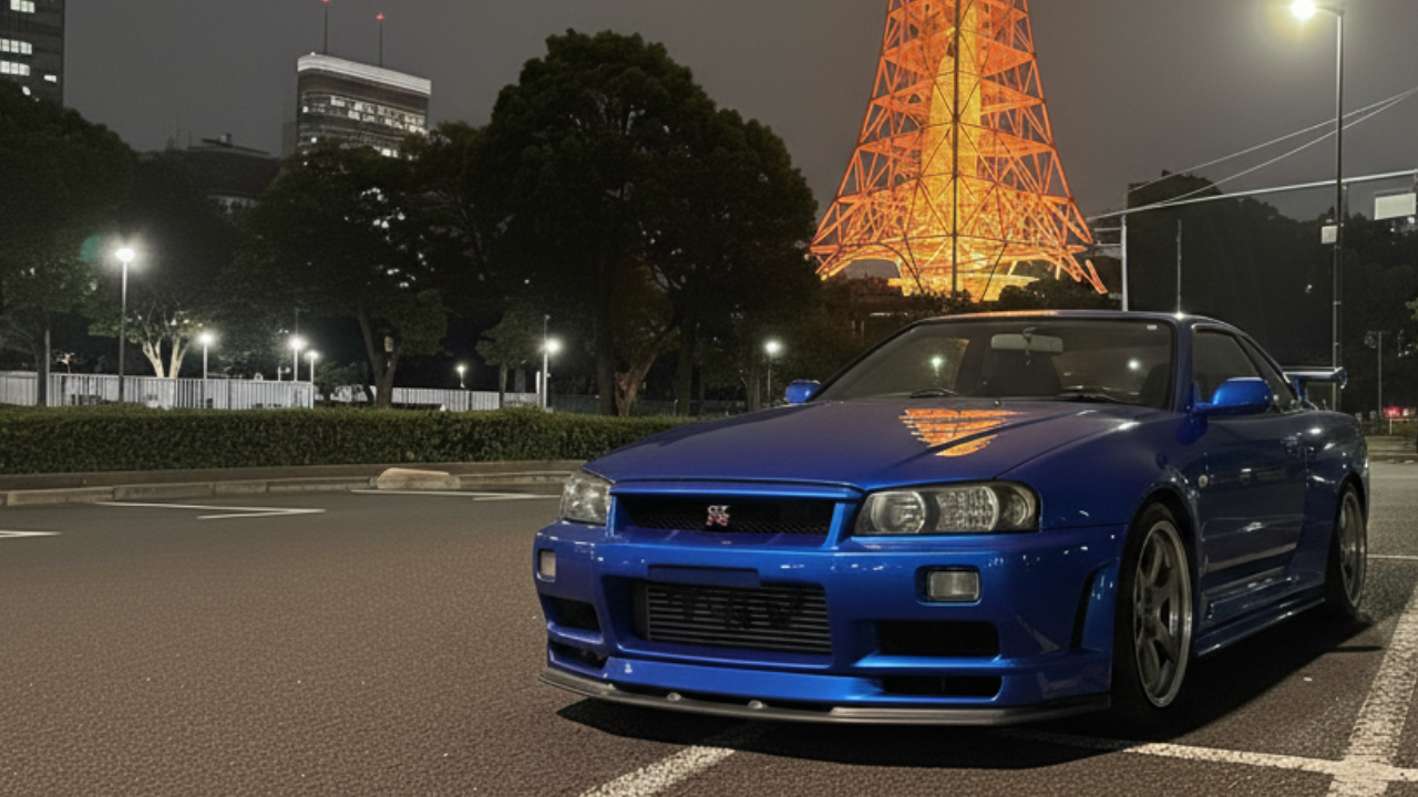
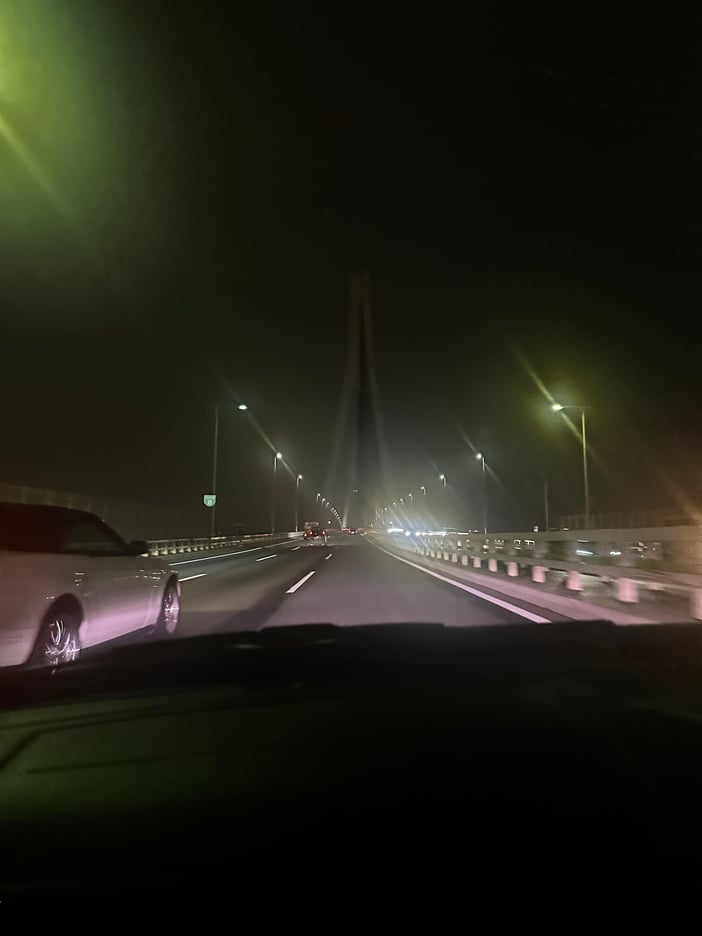
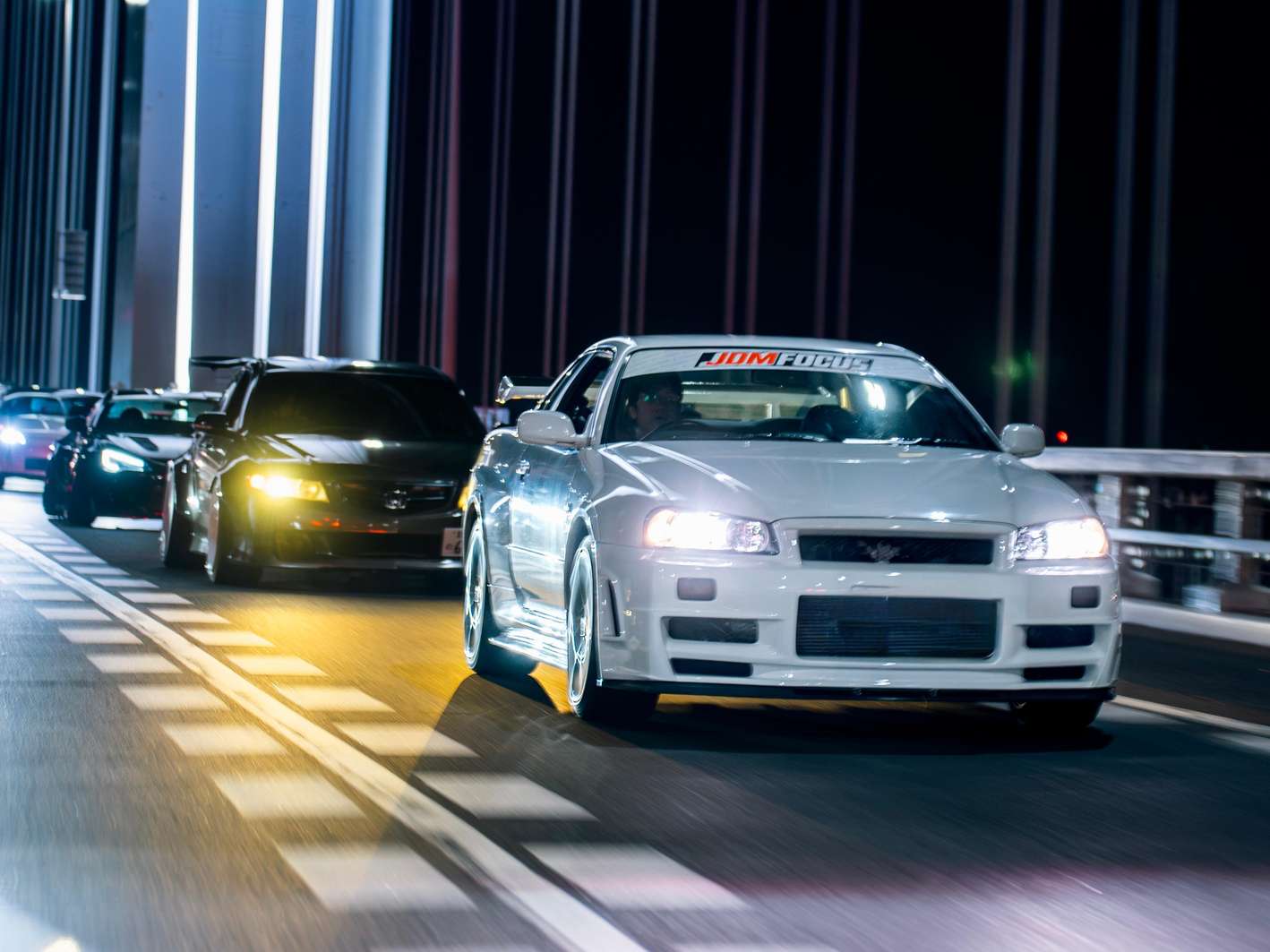
The night starts at Autobacs Shinonome, a huge car-supply store where you get half an hour to browse tuning parts and pick up anything you forgot. Then the R34 Skyline rolls out across Rainbow Bridge, with Tokyo Bay lit up on both sides.
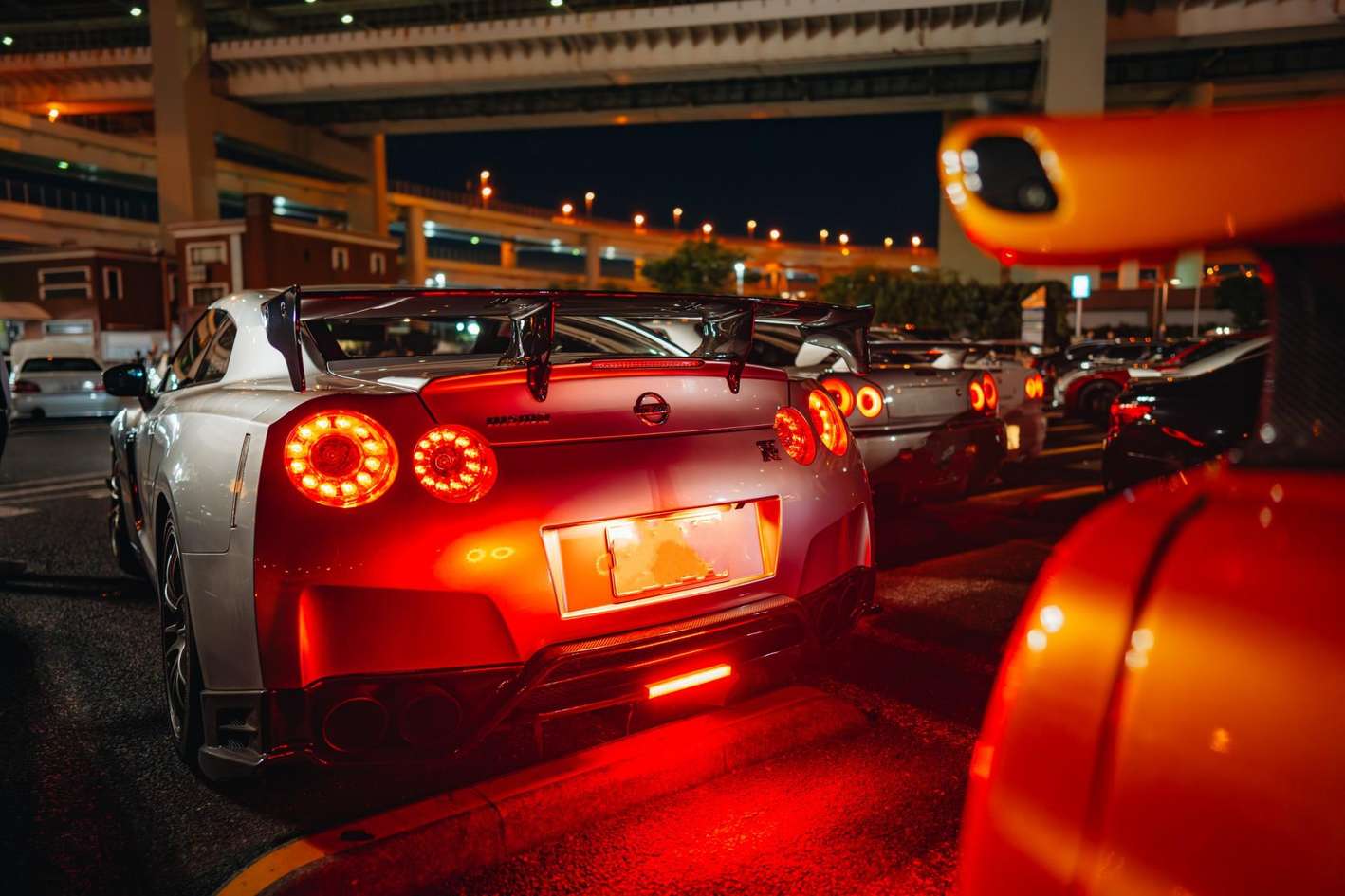
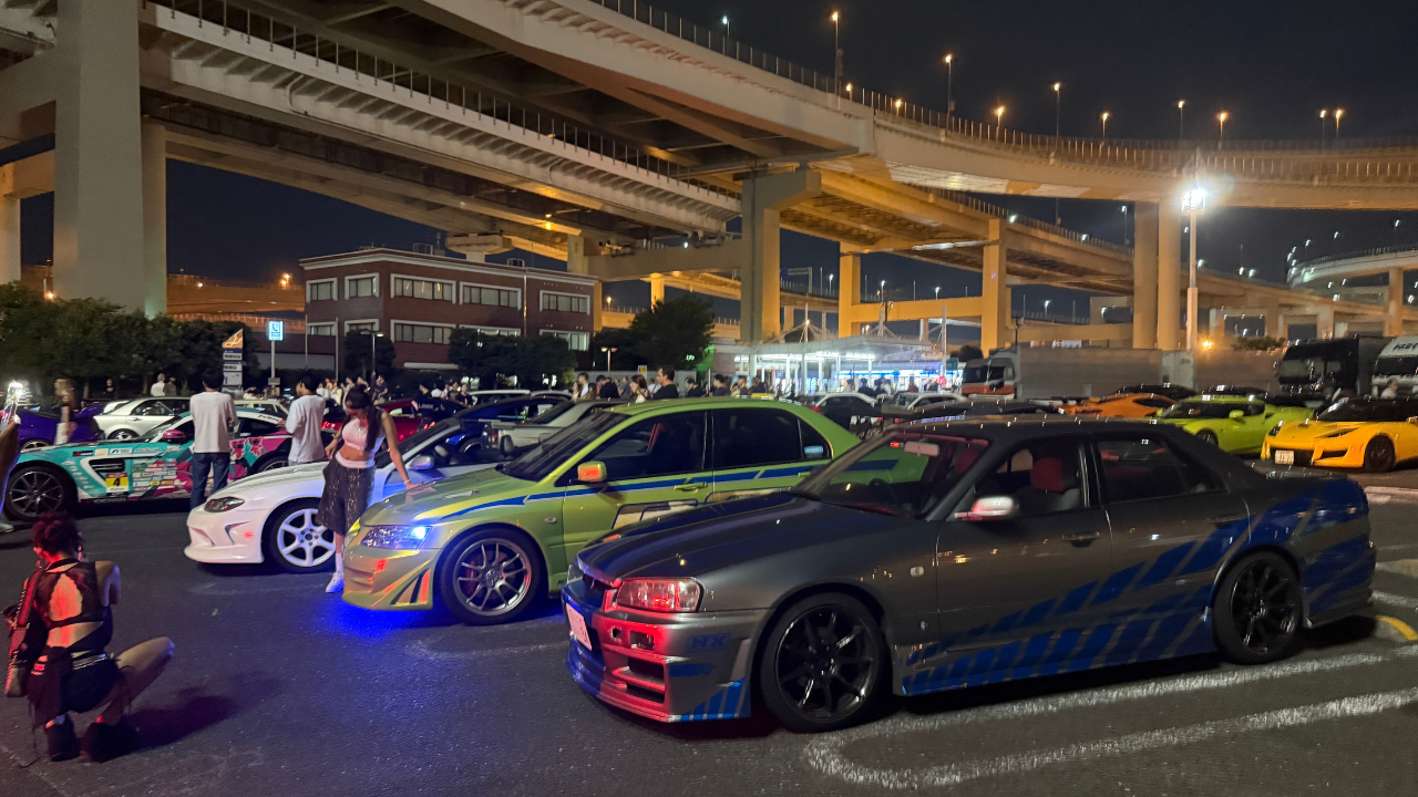
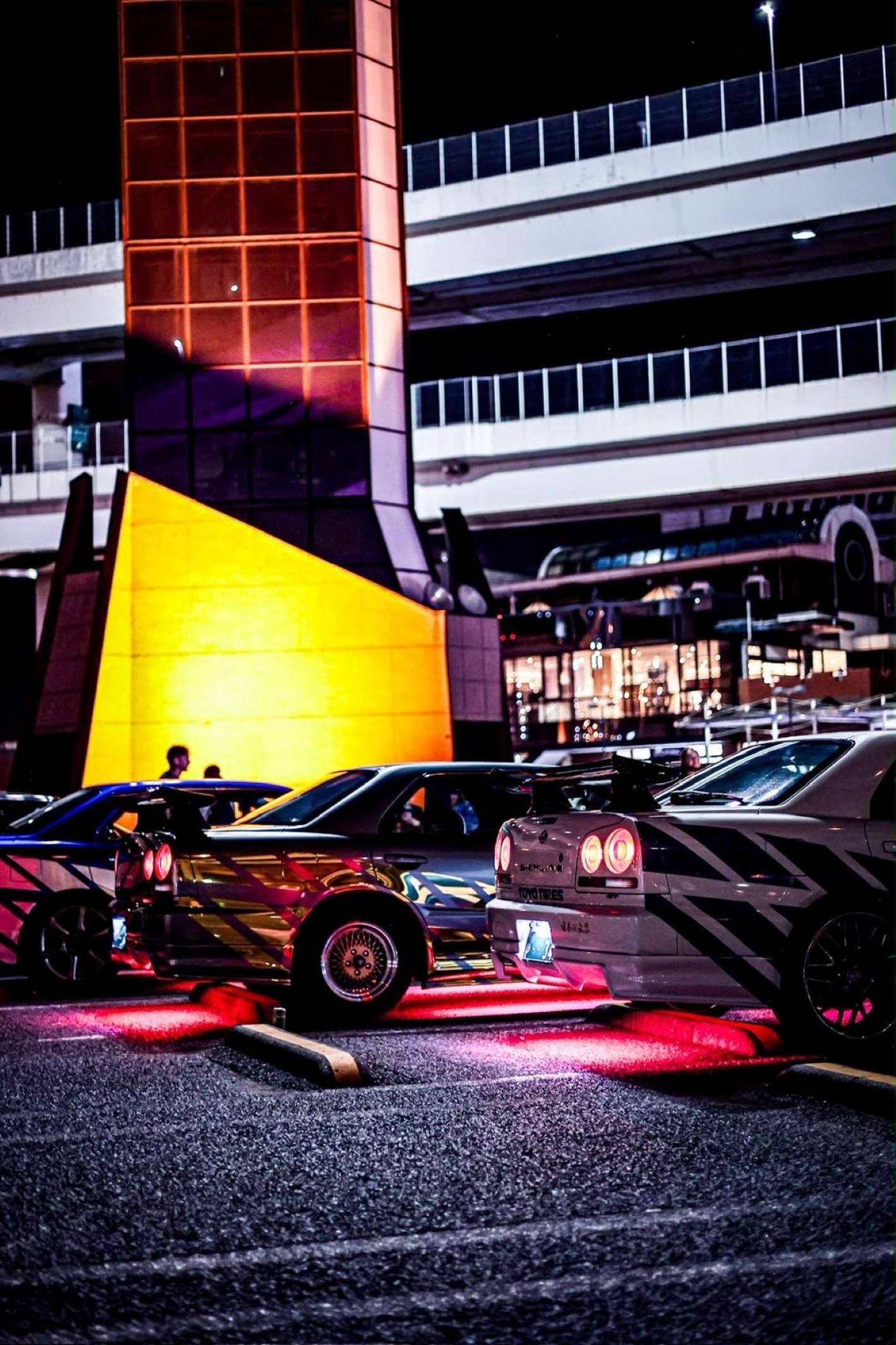
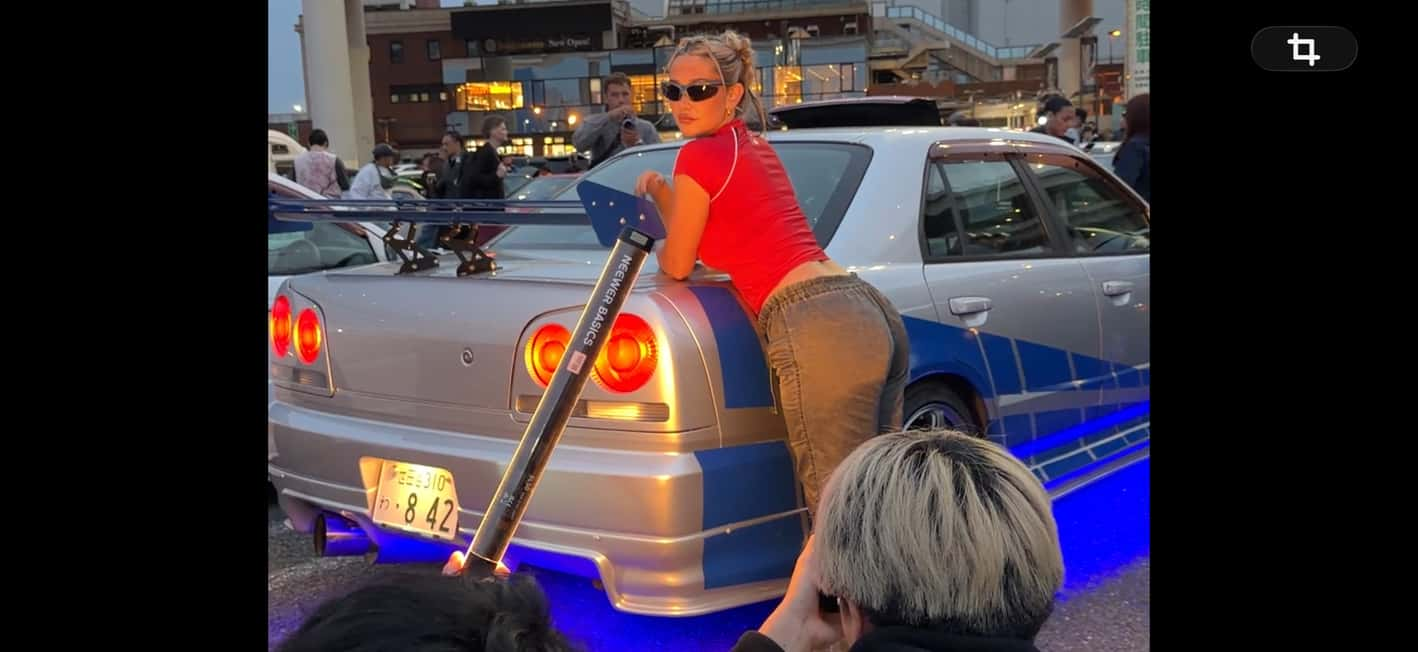
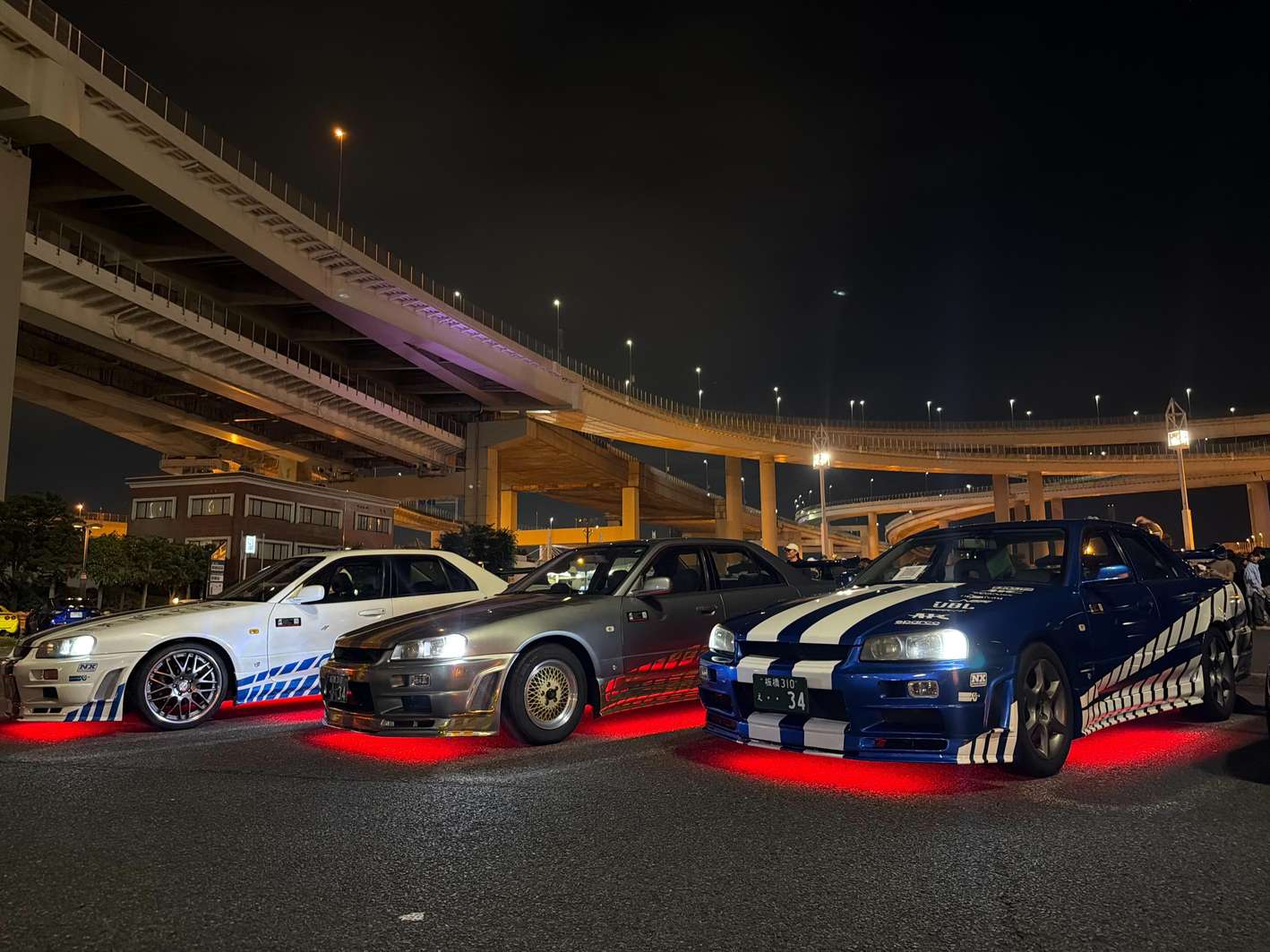
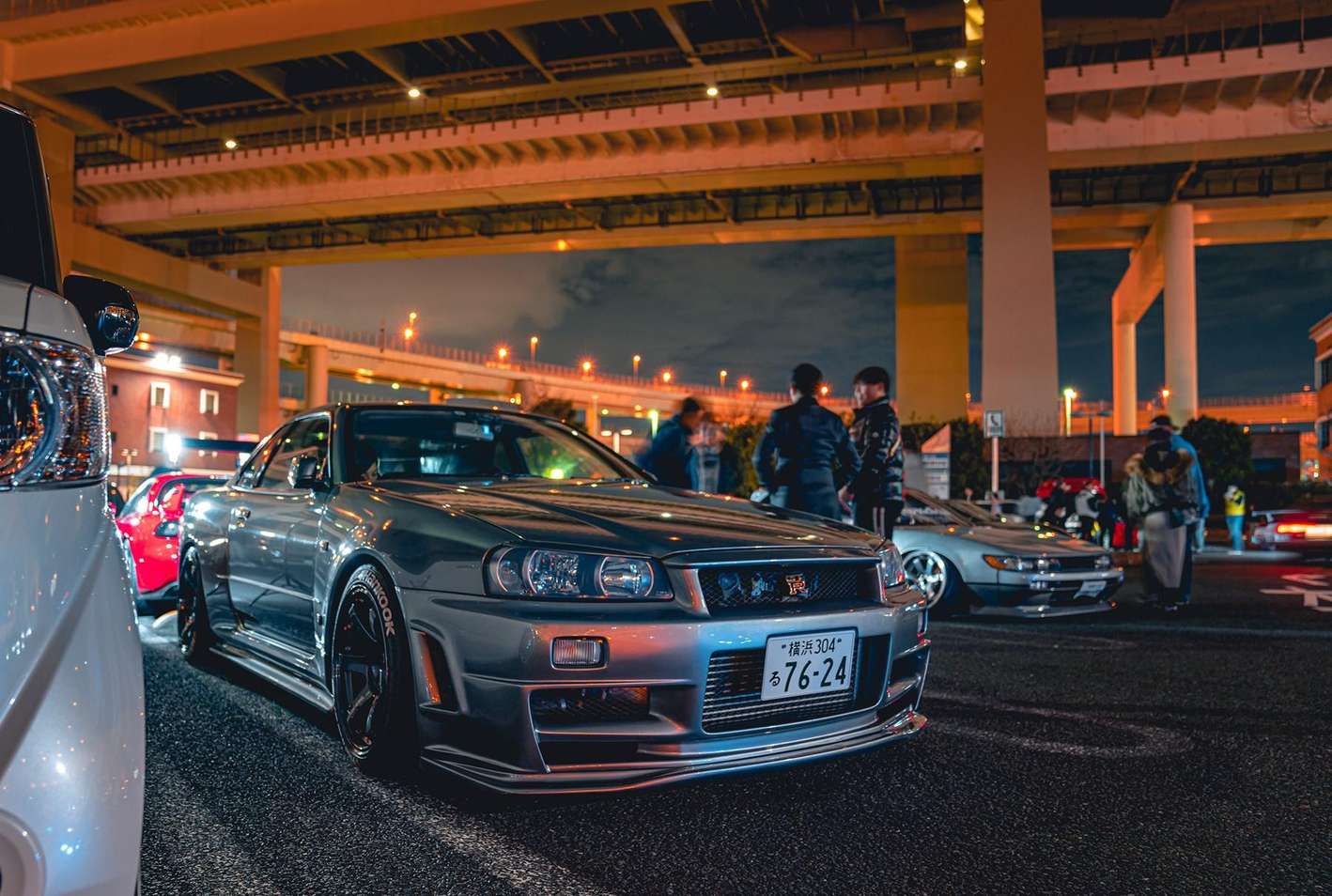
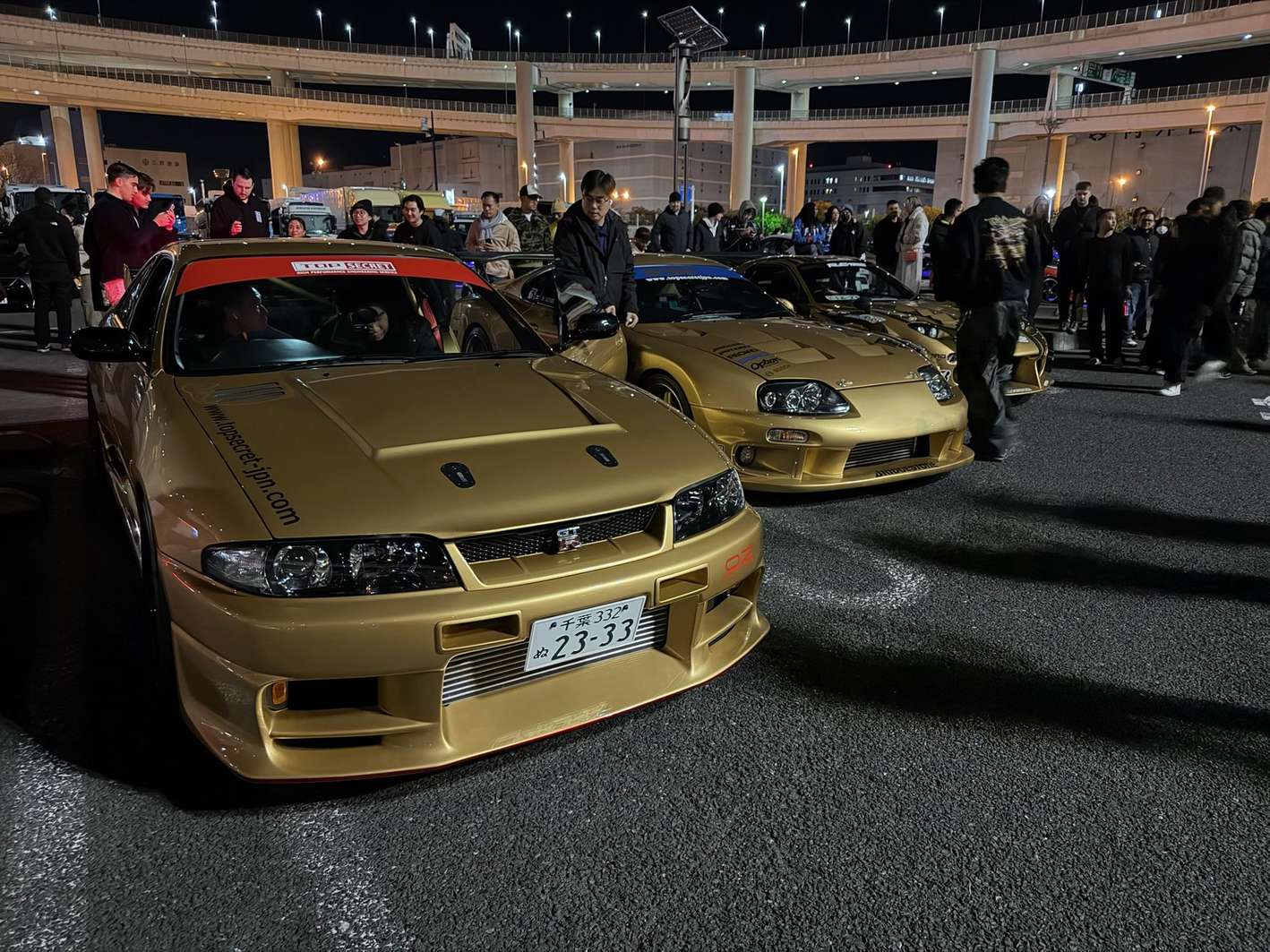
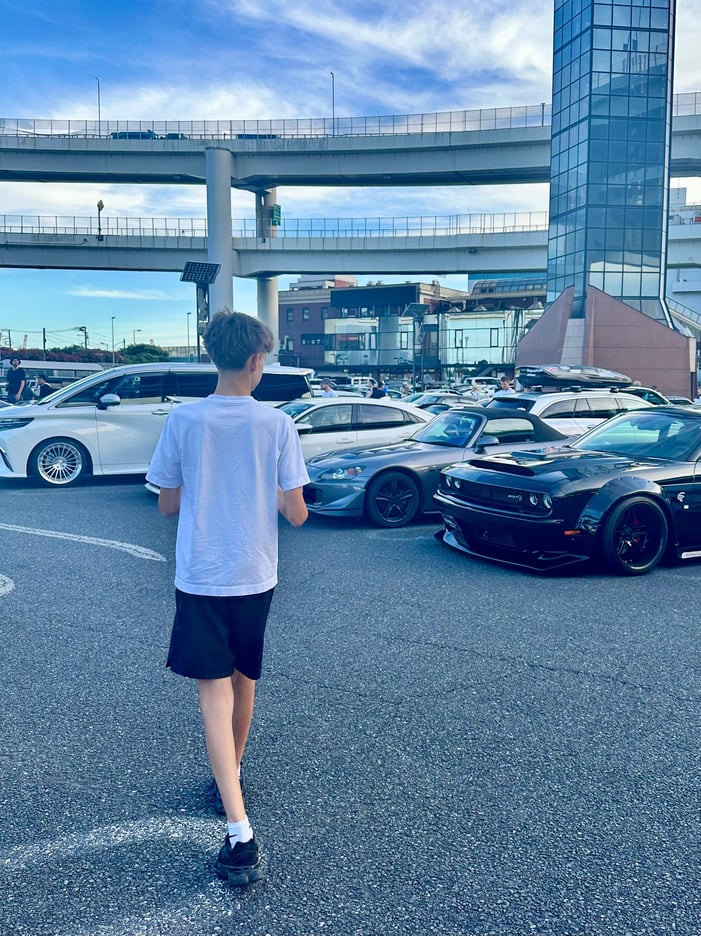
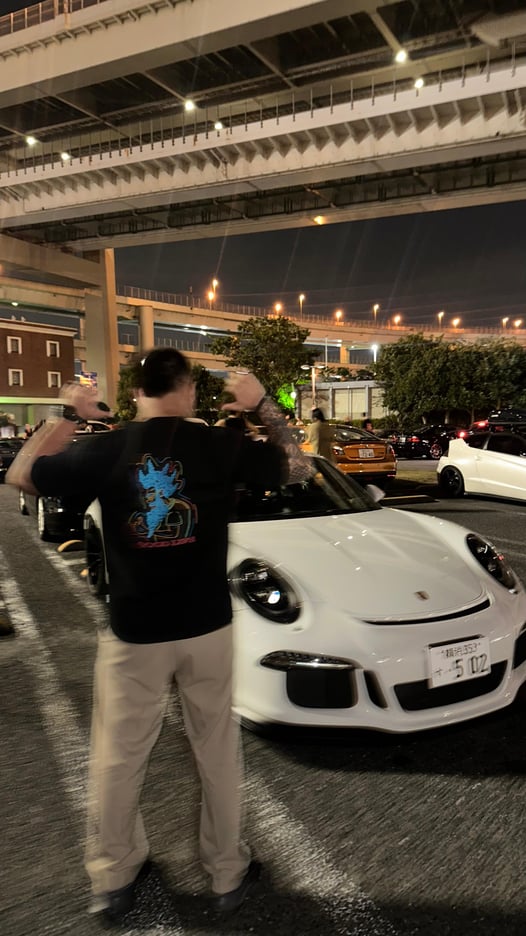
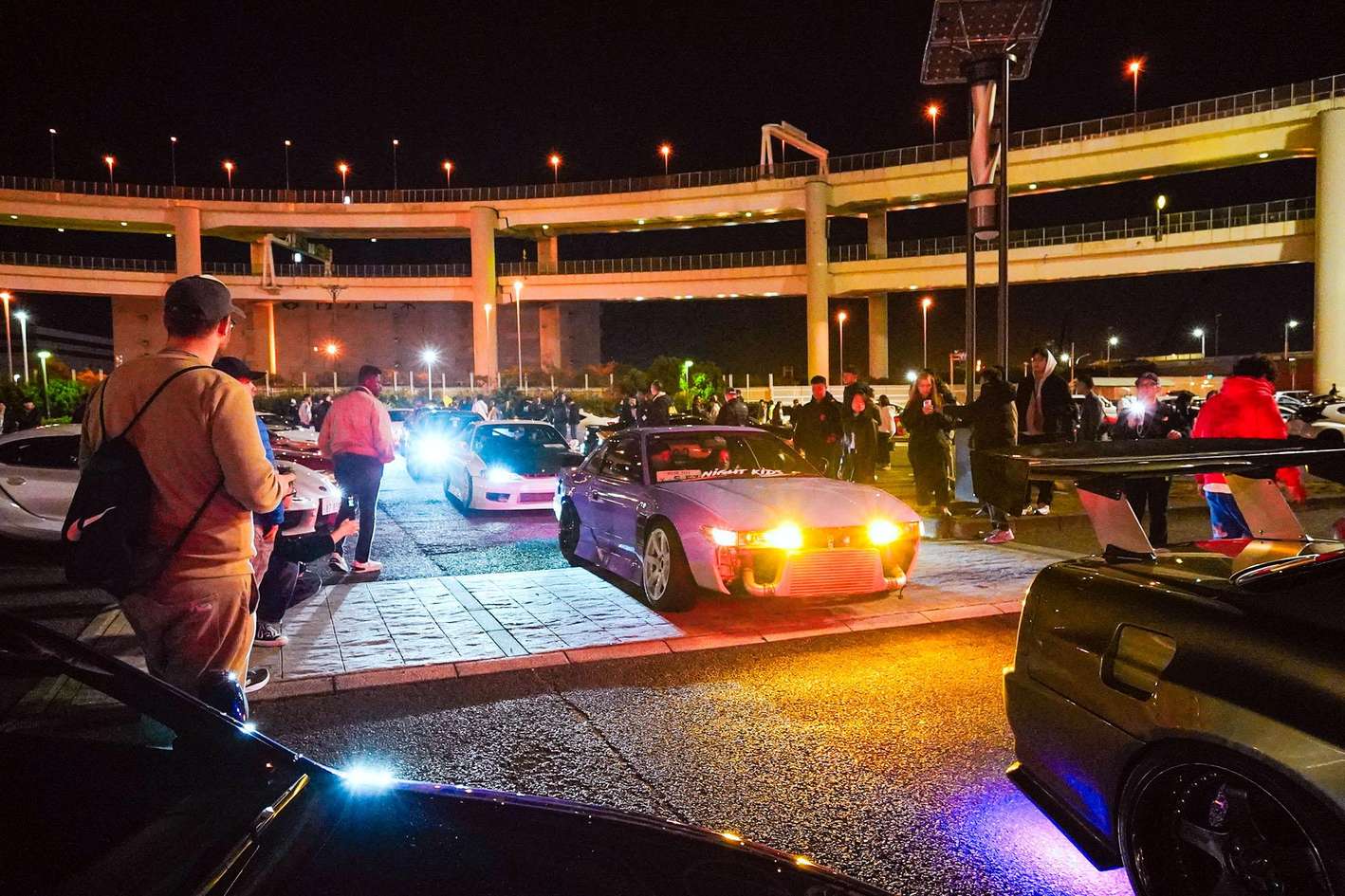
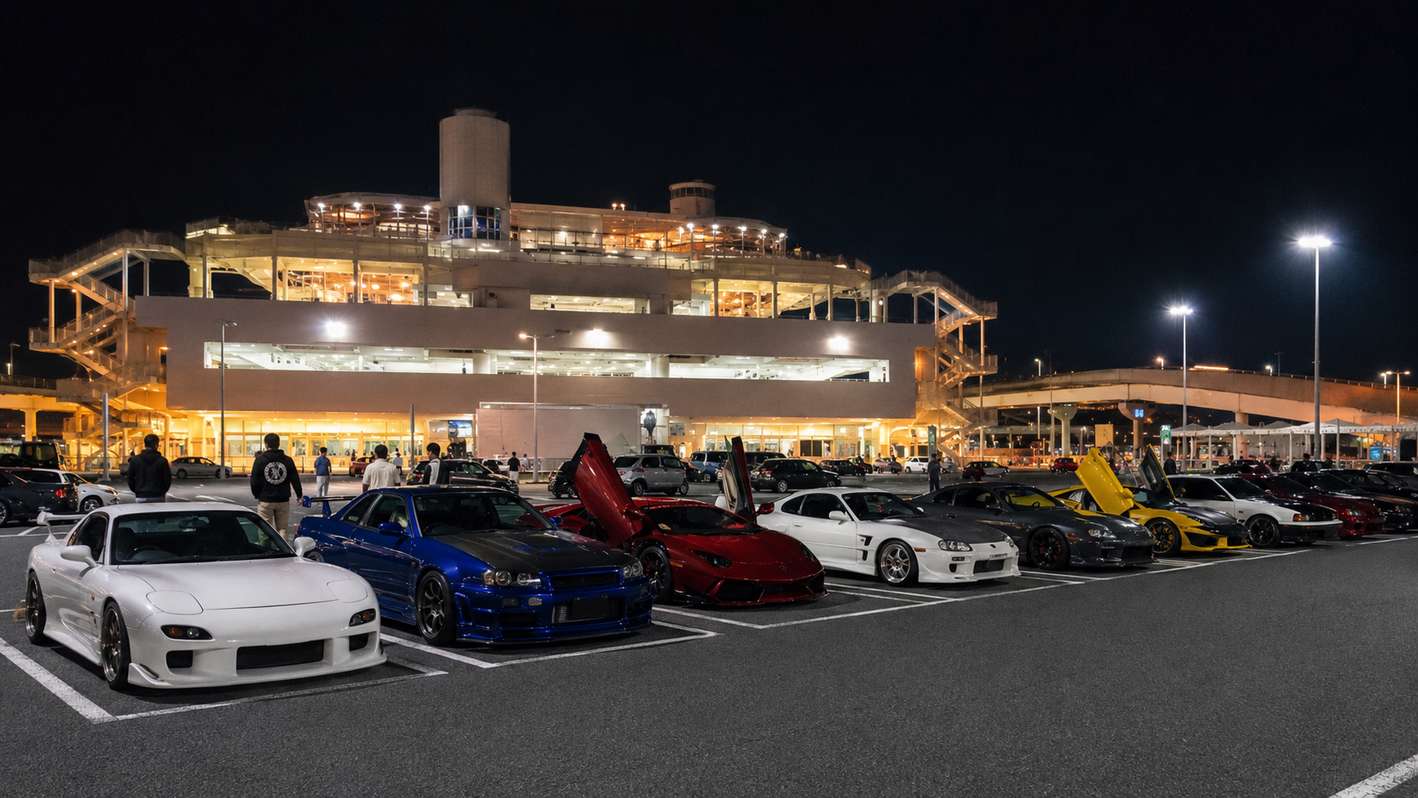
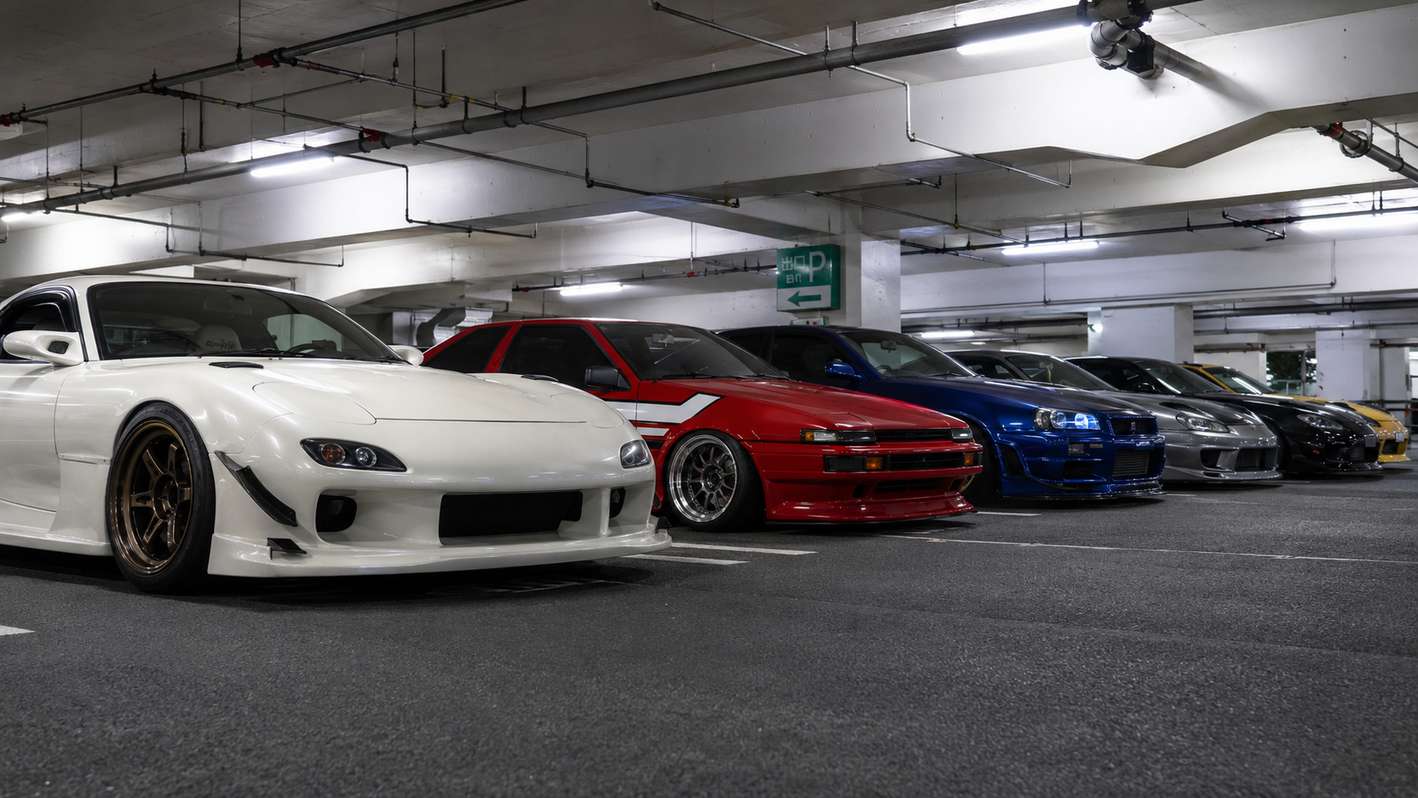
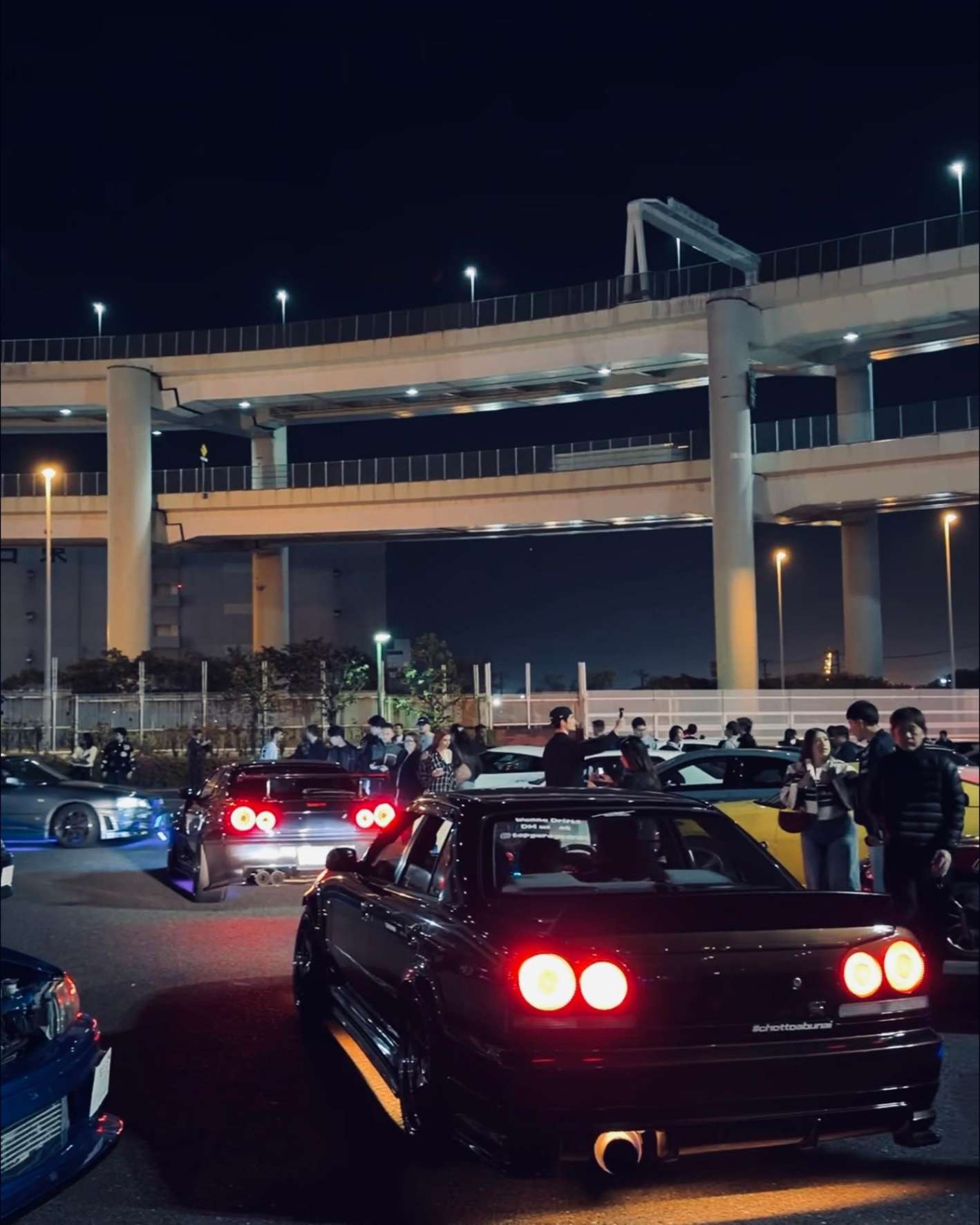
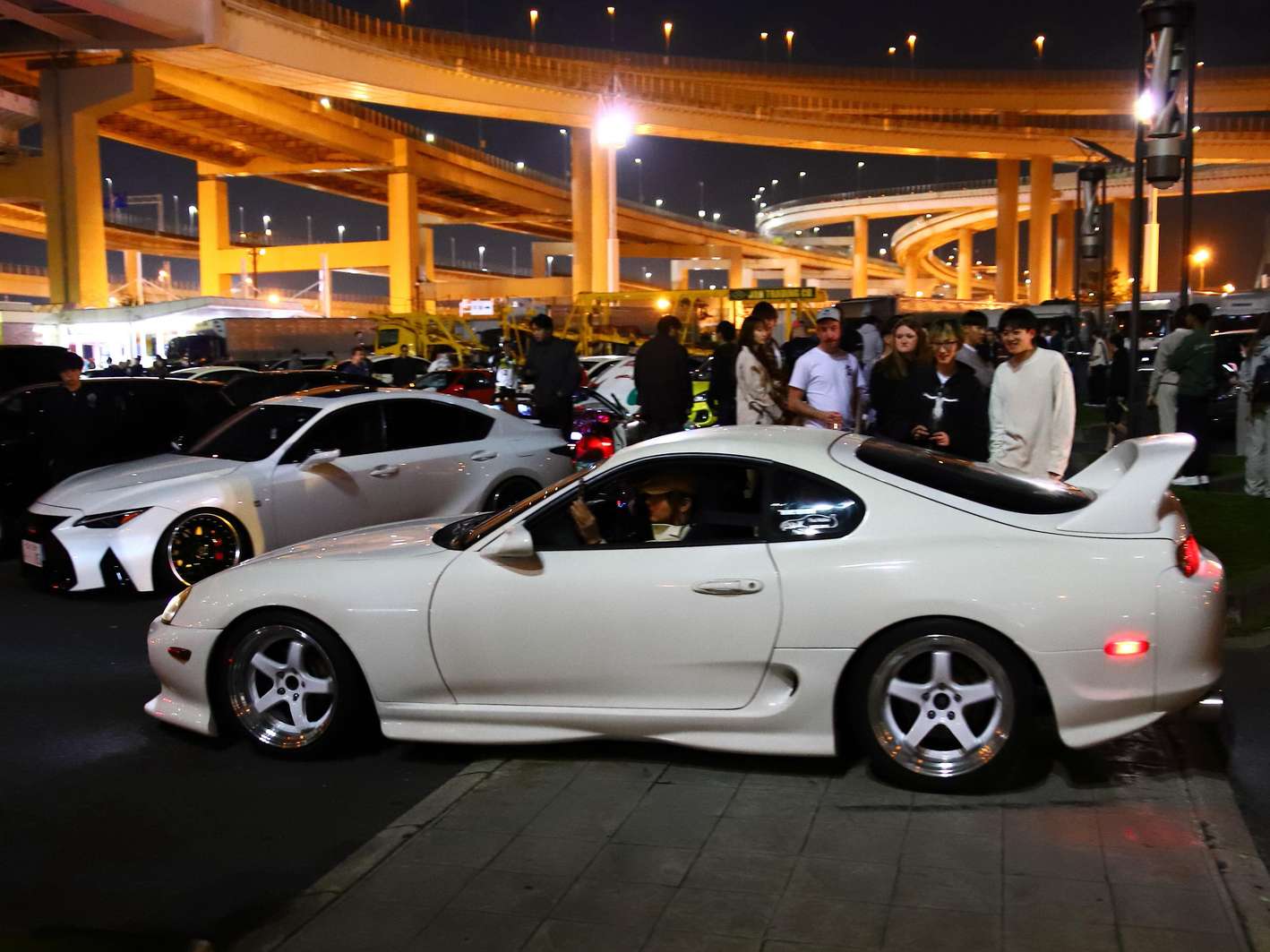
The main stop is Daikoku Parking Area, the most famous informal car meet in the Tokyo area.
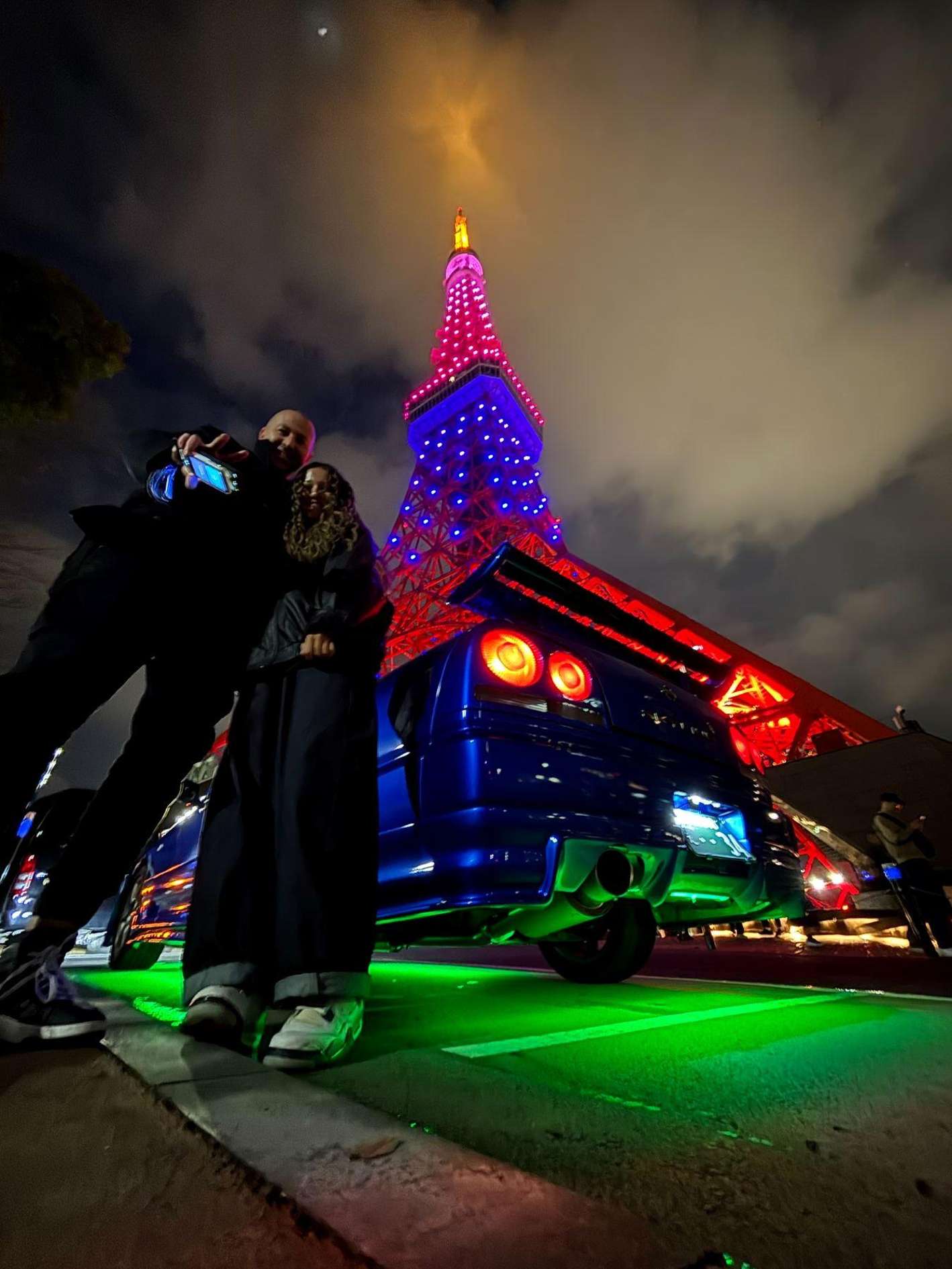
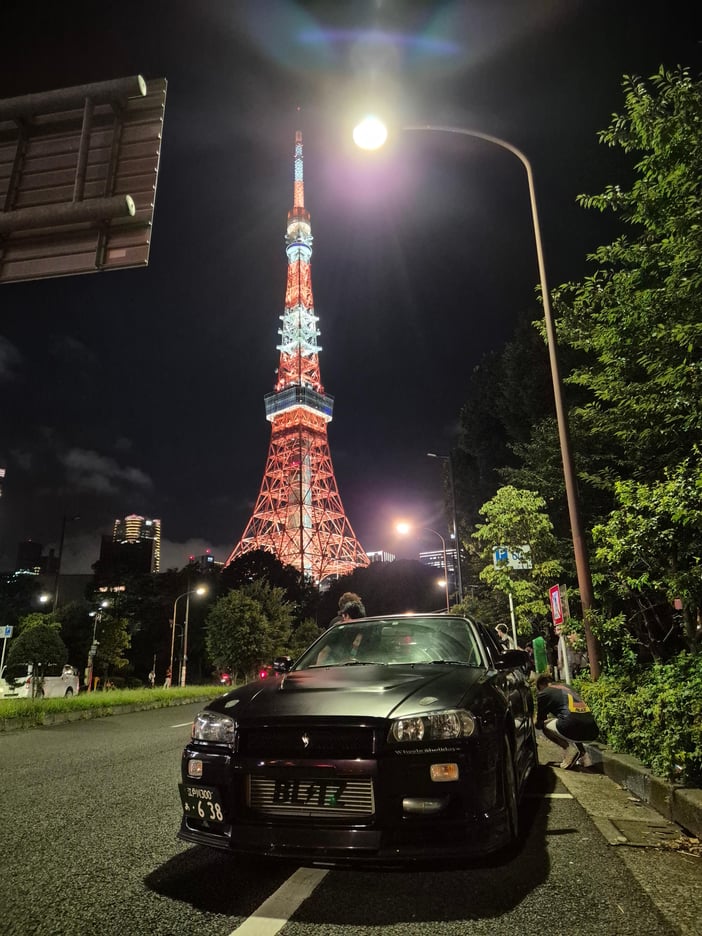
You get a full hour on the ground to walk among Skylines, Supras and heavily modified street builds, and your driver doubles as a photographer for rolling shots and photos at the cars. A 15-minute photo stop at Tokyo Tower closes the loop before drop-off back in the city.
Pickup5 places, depending on your optionStreet View2Autobacs Shinonome· 30 minA large car-supply and tuning store near the bay. You get 30 minutes of free time to shop for parts, model cars and gear before the drive starts.Street View3Rainbow Bridge, TokyoThe drive crosses this suspension bridge over Tokyo Bay, with the city skyline and the water lit up at night. Sightseeing from the car, no stop.Street View4Daikoku Parking Area· 60 minA tollway rest stop at the north end of Yokohama and the center of Japanese car culture. You get an hour to walk among the cars; ask owners before touching or entering any vehicle.5Tokyo Tower· 15 minA 15-minute photo stop at the lit-up tower, one of the most recognizable landmarks on the route.Drop-off5 places, depending on your optionStreet View
Included
Professional DriverFuel cost and expressway tollsInsurance and taxThe total price includes the transportation fare and service feeAn unforgettable private ride in a high-performance vehicle.Destinations and routes are arranged based on guest requests
Not included
Meals and drinksPersonal expenses
Comparing Nissan GTR Tokyo tours - which night ride fits you
Green marks the lowest price. Each price says whether it is per person or per group.
Tour
Price
Duration
Pickup
Languages
Best for
Our pick
Tokyo: JDM R34 Skyline drive & Daikoku PA car meet
5.0★ (234)
from $266per group
3 - 6 hours
yes
English, Japanese, Chinese
photo-first travelers who want a private R34 and a pro photographer
Choose a weekday night first if your schedule allows: Monday to Thursday from about 8 pm to 10 pm is calmer at Daikoku PA, with a much lower chance of the entrance being closed. On Friday and Saturday nights the lot fills from about 9 pm, so operators pick up around 4 to 5 pm to be inside before the crowds build.
Pro tipApril and October have the fullest car meets and mild nights, around 10 to 14°C, so those months book out first.
RecommendedWeekend closures have been reported as early as 7:30 pm, so an early-evening start is the safer pick on Fridays and Saturdays.
02
Choose the right option
Decide between riding as a passenger with a professional driver, which needs no licence at all, and a self-drive tour where you take the wheel. Self-drive options require drivers to be 23 or older with an International Driving Permit (1949 Convention), and the R34 also needs a credit card in the driver's name.
ImportantPhotocopies are not accepted. Bring your original physical licence, original permit and original passport on the day.
Common mistakeFirst-timers leave the ride question until they land in Tokyo, by which point tours are sold out and they end up begging strangers for seats.
03
Watch for the operator's messages
After payment you get a confirmation, then the operator sends an email within 48 hours asking you to check your mailbox and reply. Give a contact method such as WhatsApp or Instagram when you do, because if plans change you get a message before the start time.
Pro tipTurn on WhatsApp notifications right after booking. A last-minute venue change reaches you in time instead of leaving you at the wrong meeting point.
RecommendedMost tours offer free cancellation up to 24 hours in advance, so you can lock in a date early and adjust later.
04
Prepare for the day itself
Check your meeting point or pickup time the night before, and bring your passport since operators check it. Wear comfortable clothes and walking shoes, and add a jacket: you spend up to an hour and a half standing around the car meet after dark, and winter nights at Daikoku drop to about 1°C.
RecommendedBring a charged phone and a camera. Guides often help with photos and know the viewpoints worth stopping at.
Common mistakeTourists touch or sit on cars for photos without asking. Owners expect you to ask first, and police act on complaints.
What to know before you book a Nissan GT-R Tokyo experience
Can stop the dayGood to knowGood news
01
ChoosingWhat it is, who it suits, when to go
2
Age limitsCan stop the day
Self-drive tours require drivers to be 23 or older, and one operator asks for a credit card in the driver's name for the R34. On ride-along tours you can join from 18, or younger with a legal guardian. A private GT-R tour is not suitable for children under 6.
Timing
Daikoku PA fills from about 9 pm and peaks after 10 pm on Friday and Saturday nights, which is also when police sometimes close it, sometimes as early as 7:30 pm. That is why operators pick up around 4 to 5 pm on weekends. Weekday nights from 8 to 10 pm are calmer, and expressway traffic thins after 10 pm.
02
BookingHow far ahead, and what happens if plans change
3
Booking
Book before you arrive in Tokyo. Tours sell out, and turning up hoping for a spare seat is a gamble. After booking, reply to the operator's confirmation email within 48 hours and switch on WhatsApp notifications, because that is how they reach you if anything changes before start time.
Cancellation
Most tours let you cancel up to 24 hours in advance for a full refund, so you can lock in a car and still change your mind. One operator also refunds in full if the car you booked is unavailable and a different one is used.
On board
No food, drinks or smoking in the cars, and no alcohol before or during the tour, even for passengers. Racing, drifting and speed contests are banned on public roads, and guides may end the tour without refund if anyone ignores instructions. Water is usually fine.
03
Before you goPapers, health, what to bring
2
DocumentsCan stop the day
Riding as a passenger needs no licence at all. To drive yourself you need your original passport, an International Driving Permit from the 1949 Convention, and your home licence; drivers from Switzerland, Germany, France, Belgium, Monaco or Taiwan use a certified Japanese translation instead. Photocopies are not accepted.
What to wear
You will stand around outdoors at night for an hour or more, so dress for the season: a real warm coat in winter when nights drop near 1°C, a warm jacket in spring and autumn, and a light layer in summer. Comfortable shoes matter too, and one operator runs the tour in rain, so pack a light rain layer.
04
On the dayWhere to be, when, and how you get there
1
Pickup
Many of these tours collect you from your hotel, and some drop you back afterwards. One operator runs free return drop-off anywhere within the city when you book the pickup option, and a few tours meet at a fixed spot near Shibuya instead. Check the tour card before you choose.
05
During the tourWhat is expected of you
1
Photos
Guides stop at photo spots like Tokyo Tower and Rainbow Bridge, and many will take pictures for you or suggest viewpoints. Some tours include a professional photographer, and one self-drive option offers a cinematic video the next day. At the car meet, ask an owner before touching or sitting on any car.
Nissan GT-R Tokyo - what to pack, how to behave, and where to drift
A night in a Nissan GT-R around Tokyo Bay asks a little preparation: the right layers, the right manners at Daikoku PA, and a plan if you want to drive or drift yourself. Get those three right and the night runs itself.
Yokohama· 35.67° N, 139.76° E
If you only remember three things
1
You will stand outside for up to an hour and a half after dark, so match your jacket to the month: winter nights drop to about 1°C, summer nights stay near 25°C.
2
At the car meet, never touch, lean on or enter a car without the owner's permission, and ask before photographing close-ups.
3
Drifting on public roads is illegal in Japan; real drifting happens at circuits like Ebisu or at D1 Grand Prix events.
Packing for a Nissan GT-R night ride in Tokyo
The night has two settings: the car and the parking lot. In the car you are fine in anything, but at Daikoku PA you will spend up to an hour and a half on your feet in the open air, and evenings run cooler than the day by a wide margin.
Match the jacket to your month. Summer nights from June to August stay warm at 19 to 25°C, so a light layer is enough.
In spring and autumn, March to May and September to November, evenings drop to 6 to 15°C and a warm jacket earns its place in your bag. Winter nights fall to 1 to 4°C with occasional snow, which means a proper winter coat, gloves and warm layers.
GT-R drift tours in Tokyo: how busy each month is and what the weather does
April: 5 out of 5 for how busy it gets. The busiest month of the year with about 12 rainy days and comfortable 19.6°C days, so book well ahead and accept that a rainy night may thin out the car meet.
HighestMar to Apr, Sep to Oct
In betweenJan, May, Aug, Nov
LowestFeb, Jun to Jul, Dec
Darker: a higher how busy it gets score, out of 5
Tap a month to read it.
January: 26.4 dry days. Tours run year-round and January is fairly quiet with about 26 dry days and only around 3 windy days, so weather rarely spoils a booking, though nights are cold…
HighestNov to Jan22.8 to 26.4 days
In betweenFeb22.2 days
LowestMar to Oct15.6 to 19 days
Darker months: higher, from 15.6 to 26.4 days
Tap a month to read it.
May: rain on 14.8 days. About 15 wet days make it one of the wetter months, yet crowds stay near normal; guides run in the rain and provide umbrellas.
HighestMar to Oct12 to 14.8 days
LowestNov to Feb4.6 to 7.2 days
Darker months: higher, from 4.6 to 14.8 days
Tap a month to read it.
March: 5.6 windy days. Rain picks up to about 12 wet days and bookings climb; tours still run, but a wet evening can mean fewer cars at the meet.
HighestFeb to May4 to 5.6 days
In betweenJan, Aug, Nov2.4 to 3.6 days
LowestJun to Jul, Sep to Oct, Dec0.6 to 1.8 days
Darker months: higher, from 0.6 to 5.6 days
Tap a month to read it.
August: highs around 32.6°C. Peak summer heat around 32.6°C with about 14 wet days; evenings are warm and lively, and typhoon-season storms are the main thing that can force a reschedule.
HighestJun to Sep27 to 32.6 °C
In betweenApr to May, Oct to Nov17.3 to 22.9 °C
LowestDec to Mar9.4 to 15.3 °C
Darker months: higher, from 9.4 to 32.6 °C
Tap a month to read it.
Rain rarely kills the meet. Visitors in April 2025 found plenty of cool cars despite a wet evening, and one tour operator runs the tour in rain anyway, so a light rain shell is worth the small space it takes.
Wear comfortable shoes you can stand and walk in for a couple of hours. Bring a camera, and check the weather before you head out. Night drives run late, so plan the evening after the tour accordingly.
Tour for this
Tokyo: R34 & GT-R at Daikoku PA After Dark, Tokyo Drift Meet4.5★ (16) · 2 - 3 hours · Free cancellation
Nissan GT-R tour prep - phone, voucher and messages
The paperwork is all digital. Bring your voucher as a QR code on your phone, and make sure your phone has battery for the whole evening.
Switch on WhatsApp notifications after booking. If something changes before the start, the tour operator sends a message there instead of calling, so a silenced phone can leave you standing in the wrong place.
Give the operator a contact method such as WhatsApp or Instagram when you book, and expect an email within 48 hours of booking. Check your mailbox and reply to it, because that is how the operator confirms your pickup details and start time.
Ways to get to the Daikoku PA tour meeting points in Tokyo
Night tours often include hotel pickup, so the message thread matters twice: once to confirm where the car meets you, and once if the plan shifts.
Daikoku PA can close at short notice, and operators move the run to Umihotaru PA out in the bay when it does. A traveler who answers messages finds out before the pickup window.
Tour for this
【R34】Daikoku PA Private Tour, Tokyo JDM Night Experience4.9★ (181) · 3 hours · Hotel pickup · Free cancellation
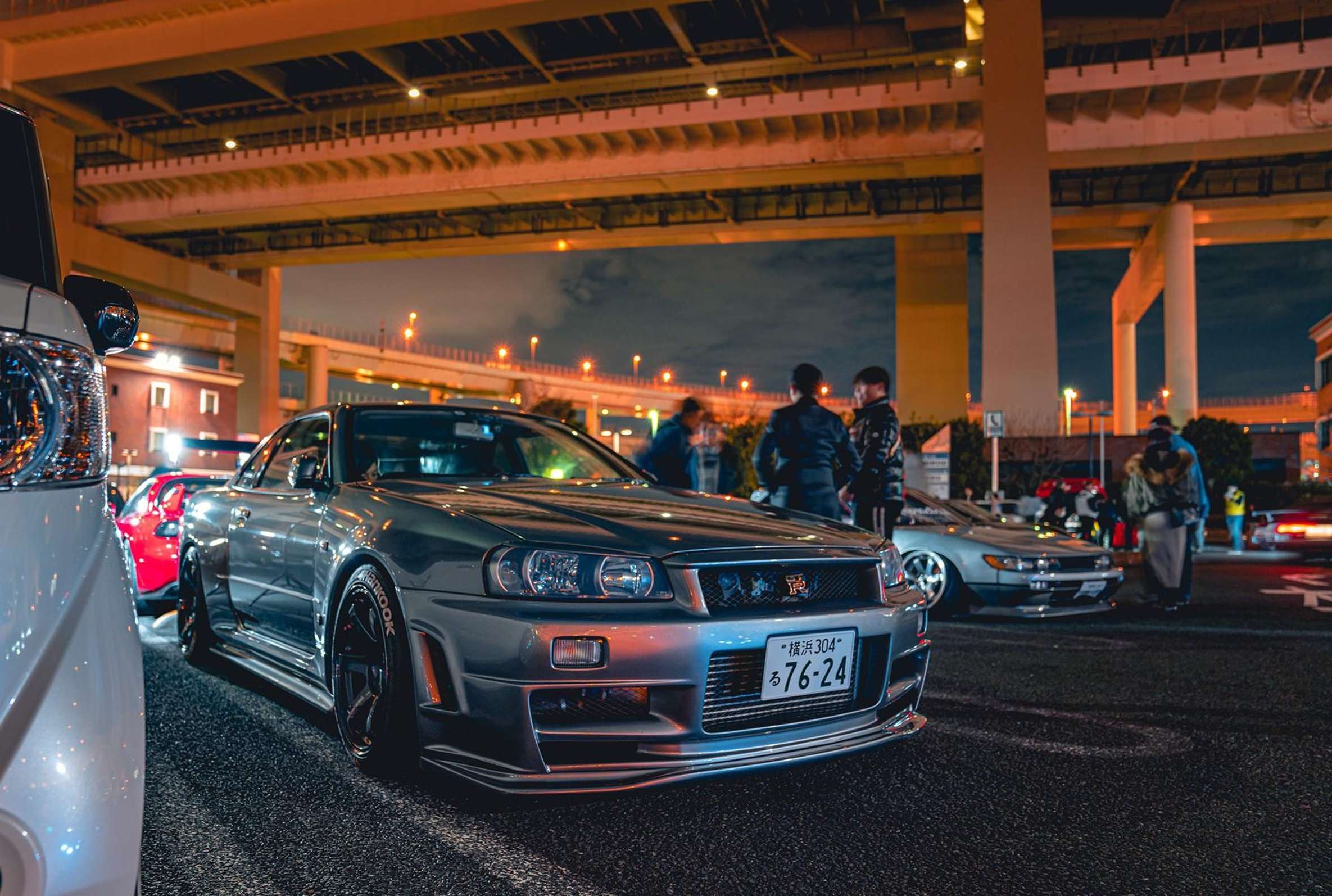
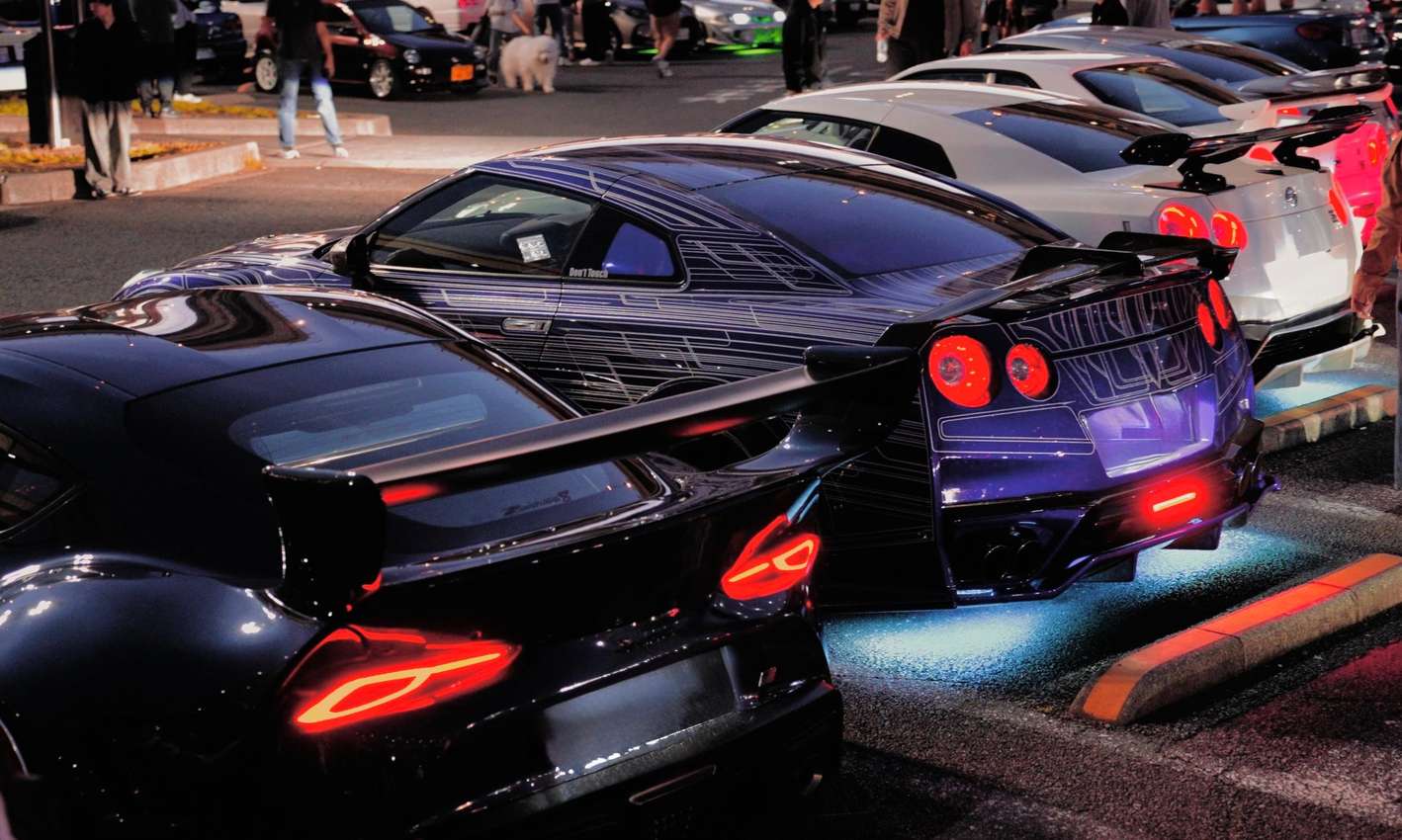
Daikoku PA is a tollway rest stop where enthusiasts gather, something like a cars-and-coffee night. The cars belong to owners who built them, and how you behave decides whether they keep coming back.
The rules are simple. Never touch, lean on or sit on a car, and never enter one, without the owner's permission. Ask before photographing individual cars, especially close-ups, and ask again before posting online.
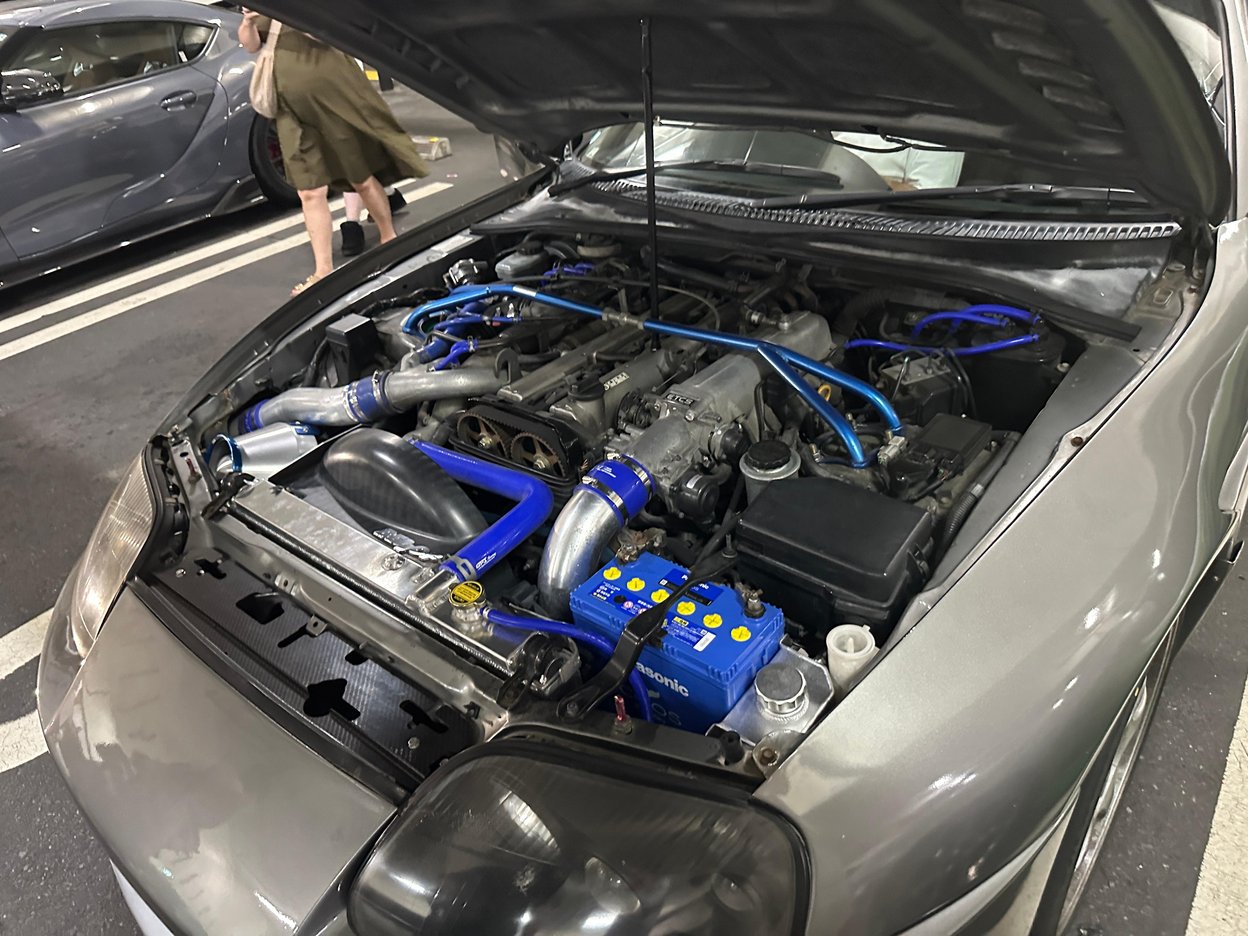
Exterior shots are generally fine; interiors and engine bays need a yes first. Do not use flash into cabins or faces at night.
Stay out of the roadways and do not block driving lanes or parking bays. Keep your voice down, use the designated smoking area, and carry your trash out, since the lots often have no bins.
Do not ask owners about prices or whether a car is for sale; compliment the build instead. If an owner is busy or not making eye contact, walk away and look at the next car.
Behavior is watched by police who act on complaints. Disrespectful tourists are part of why some locals stopped bringing their cars to Daikoku, so the etiquette keeps the meet alive for the next visitor.
Tour for this
Tokyo Drift: Self-Drive R34/35 GT-R JDM Car Tour Daikoku PA4.9★ (18) · 4 hours · Free cancellation
Police in Japan have increased crackdowns on car gatherings, and closures of Daikoku PA have become more frequent. Shibaura Parking Area has been added to their enforcement list, and patrols have dispersed informal spots like Gaienmae.
Police also run vehicle inspections at Daikoku, where many stopped cars receive fines for illegal modifications; tour cars that would not pass simply drive past that stop.
What triggers it, from the visitor side, is mostly noise and obstruction. Do not rev engines or attempt burnouts, which is what gets meets shut down. Keep volume down and stay off the roadways. Entering Daikoku PA on foot is illegal, and tourists doing so have drawn media and police attention.
Closures are handled for you. Daikoku PA may be closed by police without notice, and tours move to another popular location such as Umihotaru PA out in the bay.
Even a photo stop can be cut short: at Tokyo Tower, one tour was told to leave after about 30 seconds because the car was parked where parking was not allowed.
Take the shot fast and get back in the car. A night that changes venue is still a good night; the cars gather wherever the operators take you.
Tour for this
Tokyo: JDM R34 Skyline drive & Daikoku PA car meet5.0★ (234) · 3 - 6 hours · Hotel pickup · Free cancellation
To rent and drive a car in Japan you need an International Driving Permit under the 1949 Convention, plus your passport. Licenses from Switzerland, Germany, France, Belgium, Monaco and Taiwan work differently: those need a certified Japanese translation arranged before you go.
US visitors must get their IDP from AAA or AATA before arriving in Japan; one issued after landing is no use.
You may drive in Japan for up to one year from your date of arrival, or until your permit expires, whichever comes sooner. Carry your license whenever you drive.
If you would rather not handle the wheel, none of this applies. Ride-along tours need no driving permit at all, which is why most visitors choose them.
The permit question only matters for self-drive GT-R tours and rentals, and it is the one rule that can stop a booking, so sort the document before you fly.
Tour for this
Daikoku & Tokyo Private JDM Tour in 700HP R34 GT-R4.9★ (183) · 3 - 4 hours · Hotel pickup · Free cancellation
JDM rentals sit across the city, and the distance matters more than the name. One specialist rents from two Tokyo stores, one in Ota near Haneda Airport and one in Adachi City in the north.
Another rents Japanese performance cars from four stores in Chiyoda, Koto, Meguro and Shibuya-Higashi, but keeps its R34 GT-R at a head office in Chiba, well outside Tokyo.
A third hands over cars near Shibuya Station, and one operator runs pickup points in Shibuya including a car park in the district. Others operate from Matsudo in Chiba, Asakusabashi, Toranomon, Denenchofu, Nihonbashi, Akasaka and Okusawa.
Check how far the rental base is from your hotel before booking. Travelers report companies with great lineups where the specific car they wanted was parked two hours away, which turns a four-hour plan into a full day.
If you only want a Skyline for photos and easy driving, regulars say hiring a cheaper GTT with a bodykit is more than enough. Reserve the full GT-R money for the car you actually want to drive.
Tour for this
Tokyo Drift with GTR35-R 700HP Fast & Furious Experience4.8★ (184) · 3 - 3.5 hours · Free cancellation
Japan drives on the left, and the first day or so of turning is the tricky part. Consciously get into the correct lane at every junction. Long-term foreign residents say the opposite-side driving is less confusing than expected, and that crowded narrow streets are the hardest part of Tokyo driving.
The rules that catch visitors: everyone wears seat belts, children use child seats, pedestrians on crosswalks have the right of way, and you must stop at red and yellow lights. Never cross solid yellow lines, never use your phone while driving, and come to a complete stop at stop signs.
With no signs, the default limit is 60 km/h on ordinary roads and 100 km/h on expressways. On expressways, use the passing lane only to overtake. Parking is where visitors lose money. Violations are dealt with severely, so always use a parking lot.
Street parking in central Tokyo is scarce and heavily regulated. Reversing into pay-lot spots is the polite norm. The Metropolitan Expressway is a toll road, so plan for tolls on any bay route.
Tour for this
Tokyo: GTR VIP Guided Daikoku Car meet Experience at Night5.0★ (15) · 3 hours · Hotel pickup · Free cancellation
The C1 loop is the Inner Circular Route of the Shuto Expressway, a roughly 14.8 km closed loop around central Tokyo. It is legal to circle repeatedly, and no one will stop you.
It is known for night driving: tight tunnels and sweeping curves past Ginza, the Imperial Palace, Shimbashi, Kasumigaseki and Edobashi with no traffic lights. To drive it yourself you need a valid International Driving Permit or a JAF-translated licence, and an ETC-equipped rental car.
Bayside sections are often the better choice for a first night drive, because the skyline sits in the windshield the whole way. The Bayside Route from Toyosu to Ariake and Wakasu Seaside Park is wide and open, and crossing the Tokyo Gate Bridge, nicknamed the Dinosaur Bridge, feels like flying over the ocean.
Keep the pace realistic. On the Metropolitan Expressway the maximum is generally 60 km/h, with some stretches at 80. Tokyo driving is slow and orderly, with few horns and courteous drivers.
Regulars say you do not need to attack the twisty roads hard; even a light cruise in a GT-R is amazing. For roads that actually let a car breathe, head toward Kanagawa or Hakone.
Tour for this
Tokyo: Private GT-R R35, R34 or R32 Daikoku Night Tour5.0★ (6) · 3 - 4 hours · Hotel pickup · Free cancellation
Daikoku PA sits on an artificial island in Tokyo Bay, and nothing is walkable from it. Within a 20-minute walk there are no named sights, parks or museums at all. Plan everything around Daikoku as part of a drive, which is exactly how the tours do it.
The car-culture spots visitors pair with it are reached by car: A PIT Autobacs, a large tuning-parts store where several tours stop to shop; Tatsumi PA on the Tokyo side of the Bayshore Route; and Umihotaru PA out in the bay, where tours go when Daikoku closes early.
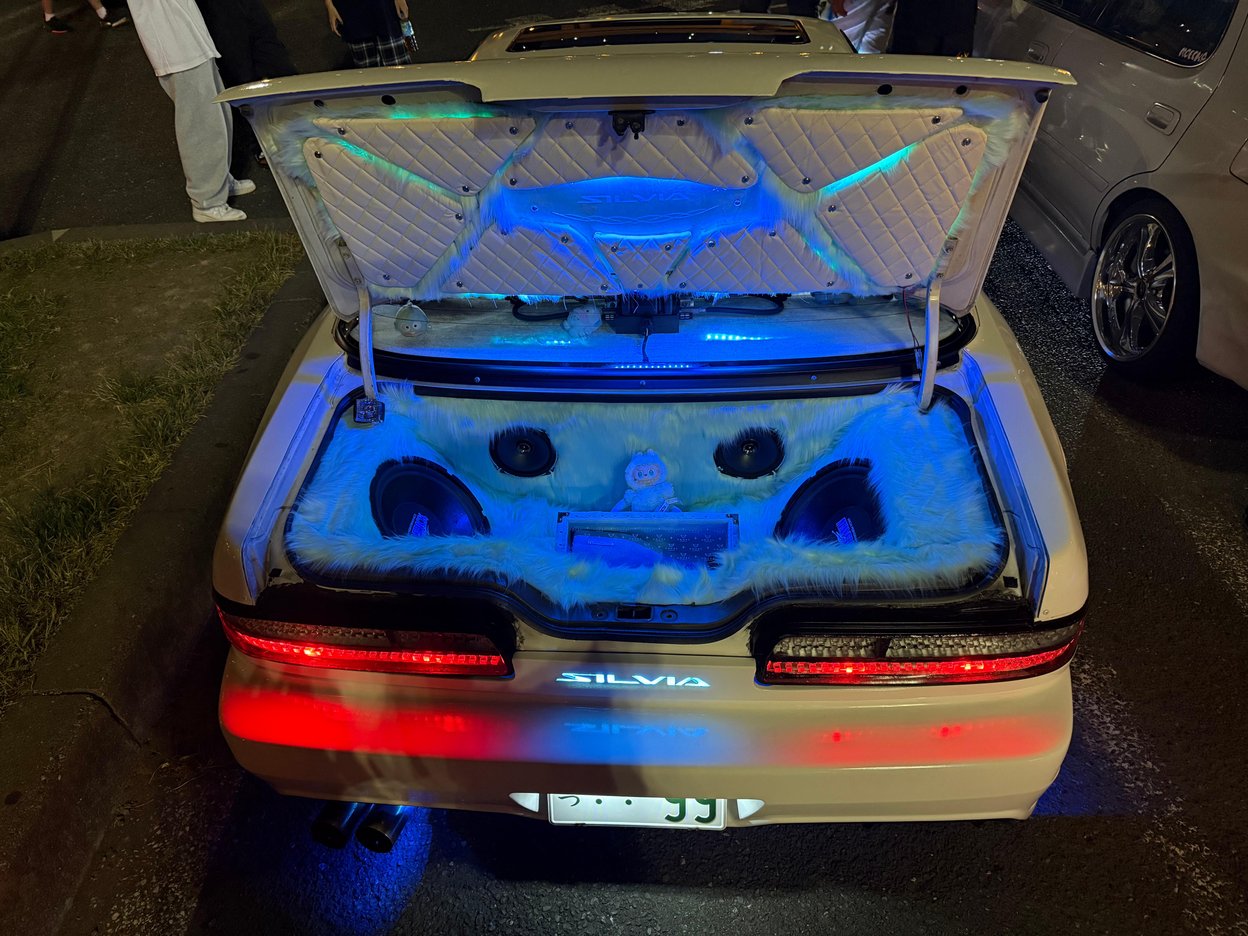
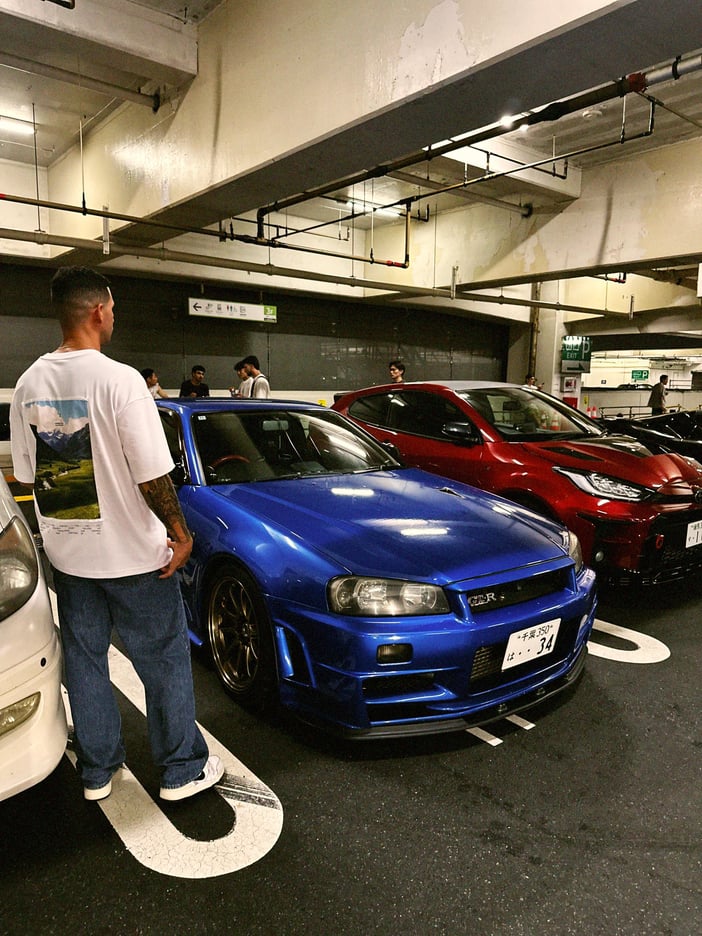
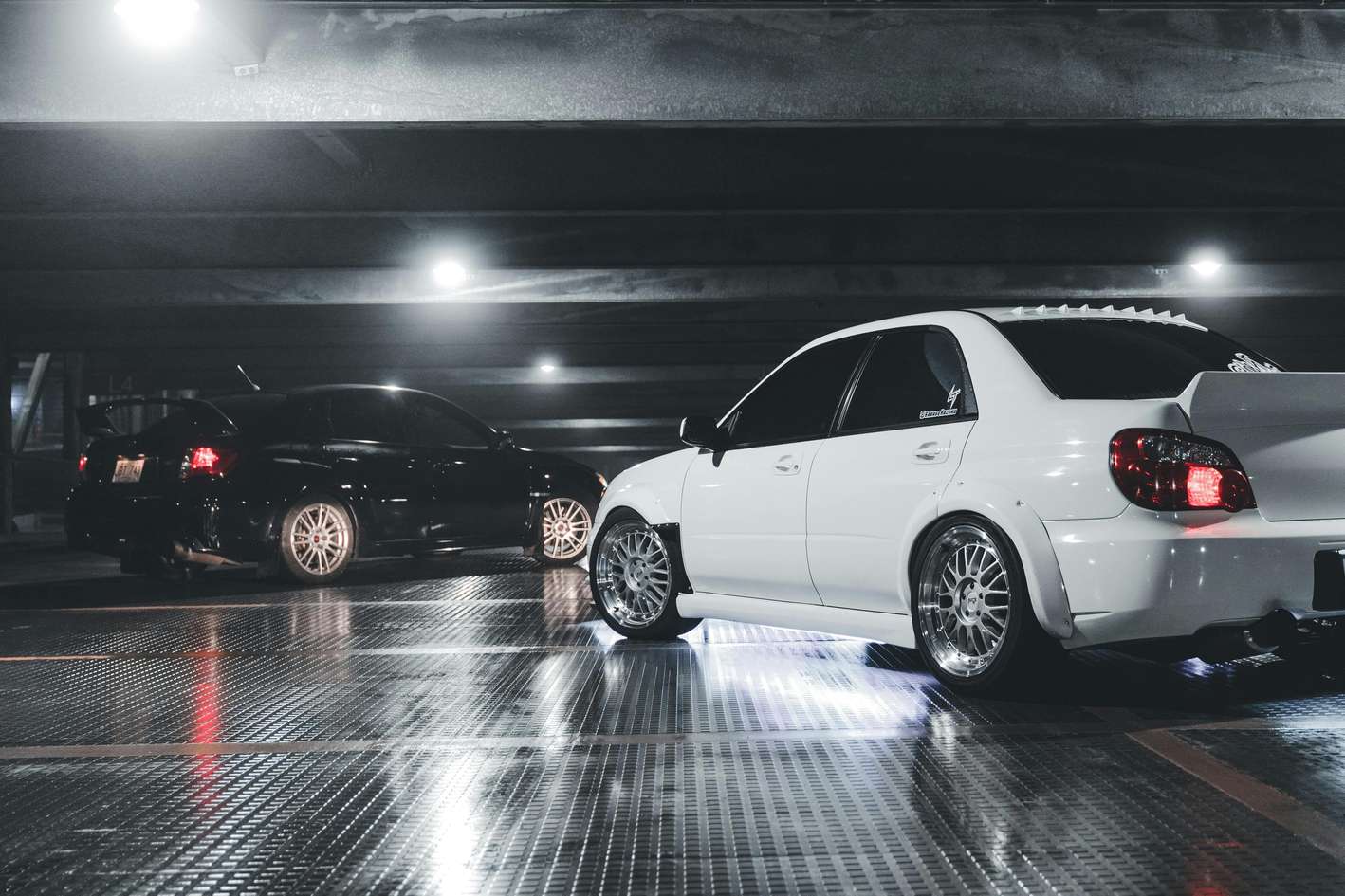
Back in the city, two spots are free and walkable: the Shibuya underground garage and the Akihabara UDX underground garage on Friday and Saturday nights, where wrapped and anime-decaled ita cars park on the B2F level.
The Autobacs Shinonome parking lot is another popular spotting area, and the store hosts car events.
Across the bay in Yokohama, the Nissan Engine Museum and the Mitsubishi Minatomirai Industrial Museum both sit within a short drive, and both make a good daytime pairing with a night meet.
Nissan GT-R spotting without a tour - Shibuya and Akihabara
If you want car spotting on your own schedule, two underground garages cost nothing and sit near train stations.
The Shibuya underground garage and the Akihabara UDX underground garage both fill up on Friday and Saturday nights, and Akihabara is a short walk from the station. The cars at UDX are often ita cars, heavily customized with anime decals.
The etiquette differs from Daikoku, and it is stricter. Stopping to photograph cars at UDX gets you moved on by security, and repeat visits can bring police and a fine. Security has increased there, and staff may ask visitors to leave. Take a photo while walking past.
What you get in return is conversation. At Akihabara you can chat with owners, and one traveler struck up a talk with an AE86 owner who then revved his 4-AGE for him.
Ask before photographing interiors or engine bays, blur or crop license plates before posting, and never set anything on a car. Evening Shibuya near the crossing is another walkable spot for exotic cars, and Meiji Jingu Gaien draws exotics as a backup.
Driving yourself
Rent a car in YokohamaCompare cars from the rental companies in one search, then pick yours.
Nissan GT-R and drifting - where it happens legally
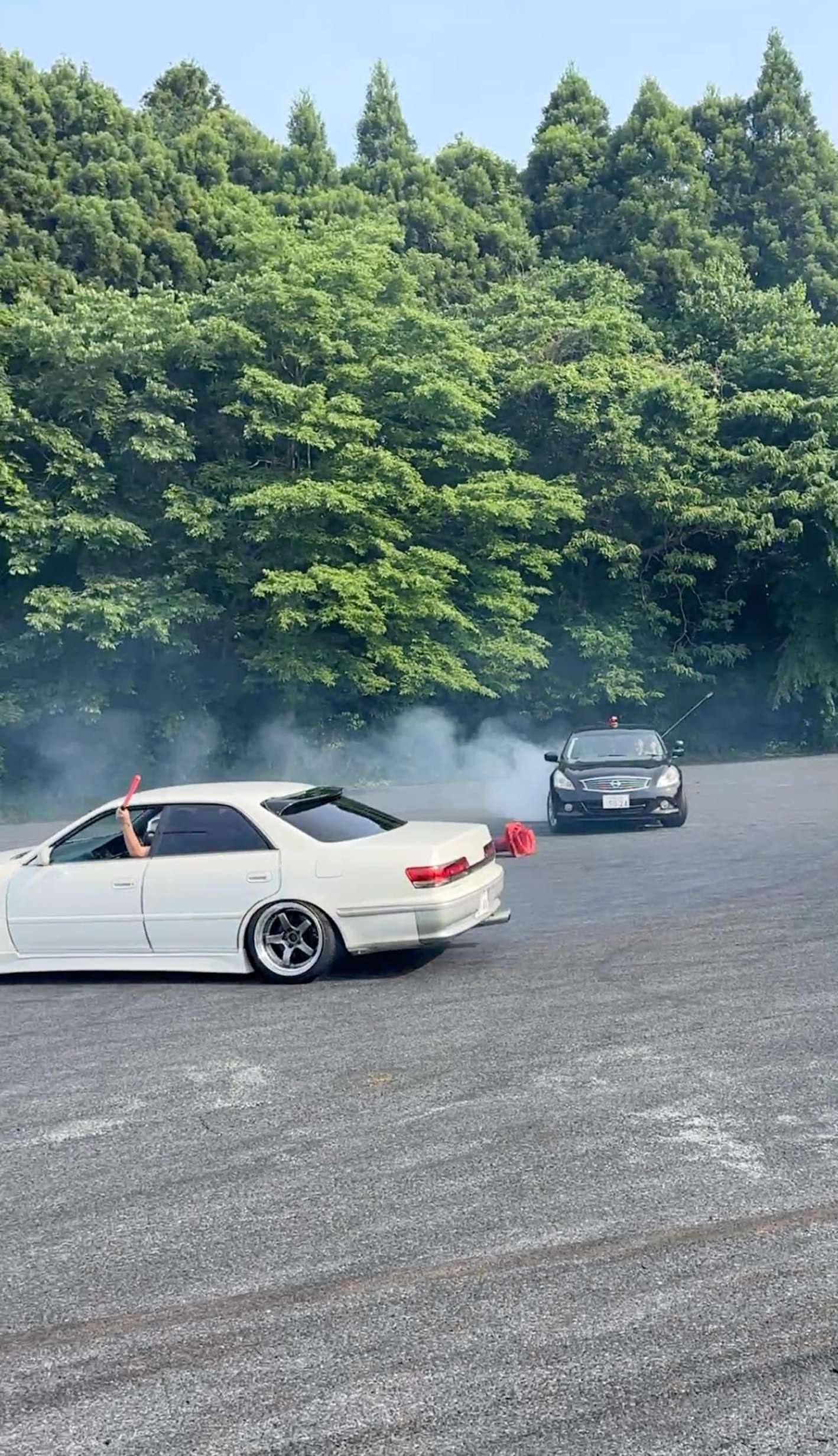
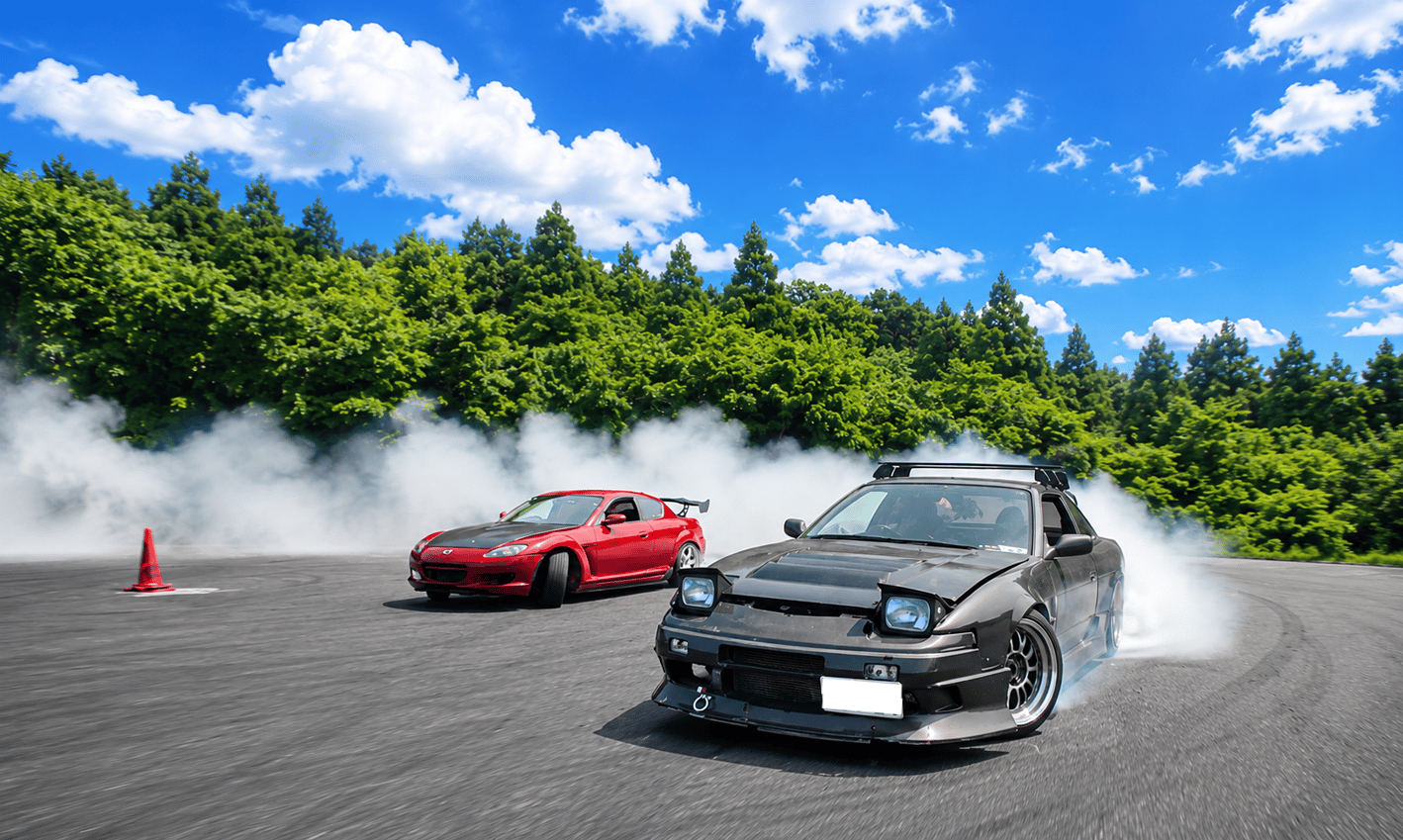
Drifting on public roads is illegal in Japan, and there are no advertised public-road drift events open to tourists. Street drifting spots are kept secret from outsiders, so making friends with a local is realistically the only way anyone gets invited to watch one. The legal answer is circuits and organized events.
For watching, time your trip around D1 Grand Prix, the top competition series. It holds rounds in Osaka in September and Tokyo in October, and the final round is usually held in Odaiba in November.
Near Tokyo, Mobara Circuit and Nikko Circuit host a lot of drift events. Many Japanese events publish details only about a month in advance, so check close to your trip dates, and keep a backup since permission can be withdrawn at short notice.
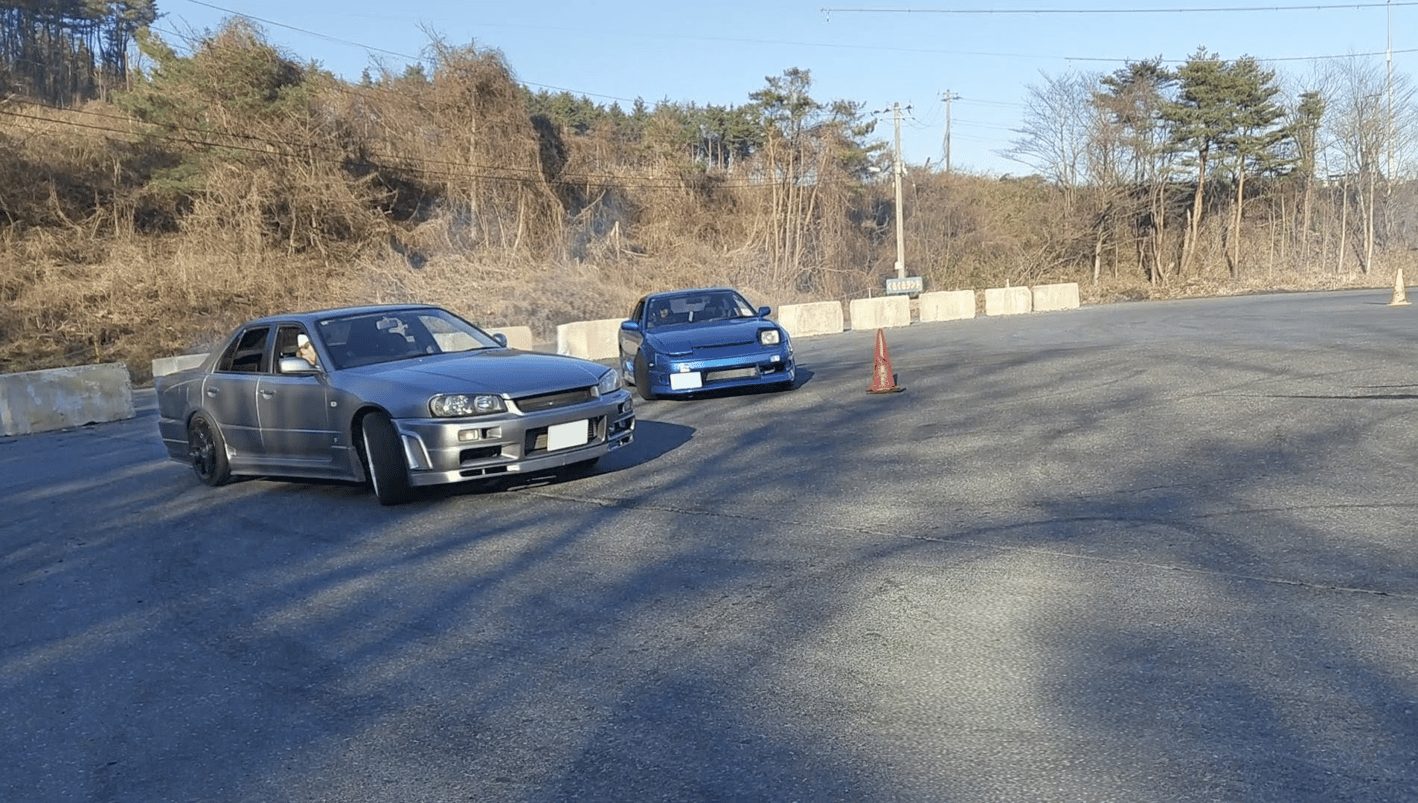
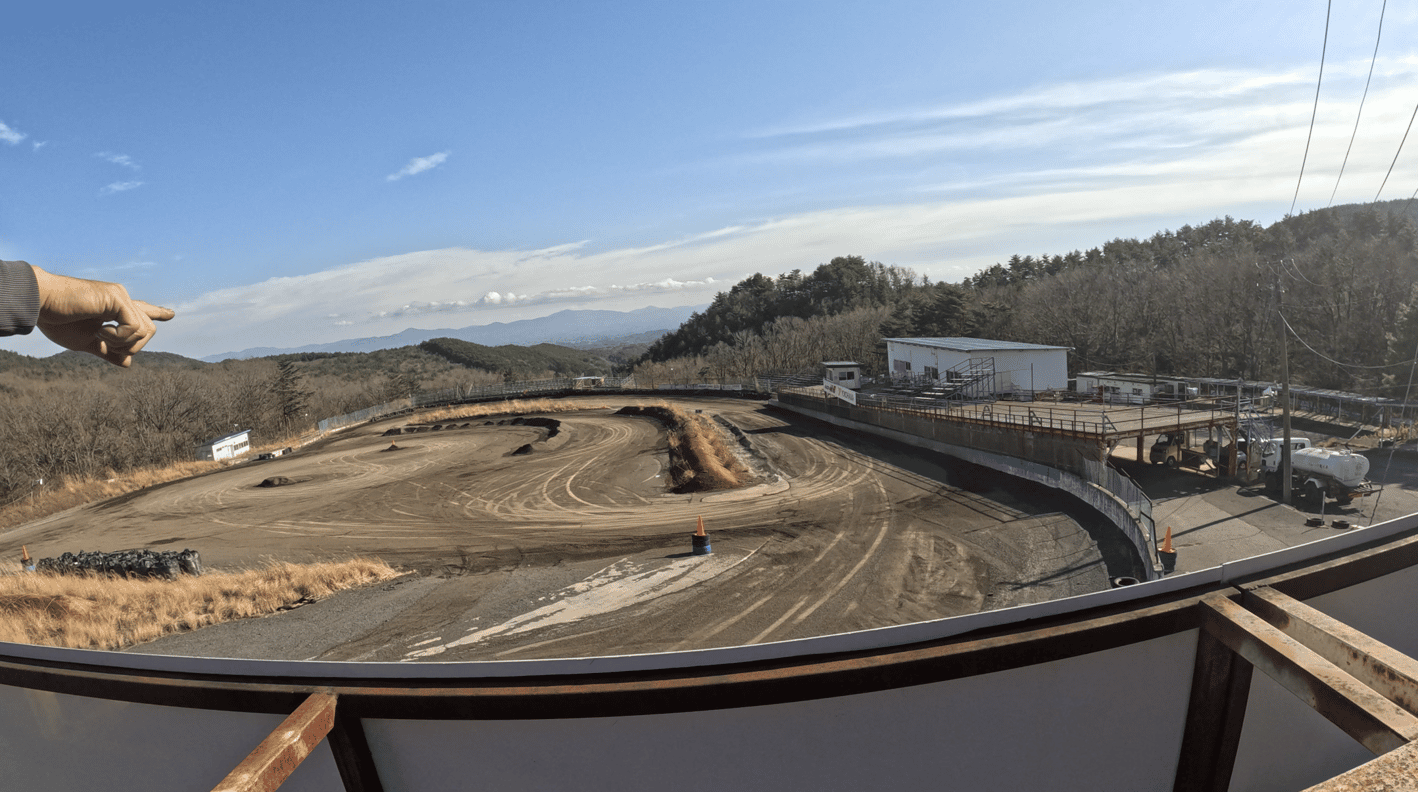
For doing it yourself, Ebisu Circuit north of Tokyo is the established answer. It has dedicated beginner practice courses called Kurukuru Land and Kurukuru Land 2, and the second one has a wet surface that is easier for beginners.
Complete newcomers start with basic circle turning around cones and can learn the basics in about an hour. A full day there with instruction, track time and a pro ride-along is widely described as one of the best experiences people have had in Japan.
Nissan GT-R drift lesson - what a day at Ebisu demands
A drift lesson is a full-day commitment, and the tours from Tokyo run about 12 hours door to door, meeting at Shinagawa Station and traveling together to Ebisu Circuit by car. Plans exist for solo travelers, private groups of three or more, and a basic plan without insurance alongside a premium plan that includes it.
Dress for the circuit: long sleeves, long pants and closed-toe sneakers, no sandals. Helmets, gloves and face masks are supplied by the organizers, and cars used in lessons carry roll cages and safety harnesses. The minimum age is 18, and participants must have no medical restrictions affecting safe driving.
The day starts with a safety briefing and helmet and suit fitting, then instructors ride alongside students or supervise from trackside on closed courses. Beginners learn donuts and figure eights before moving on, with patient instructors throughout.
For context on what you are learning: solo drifting is judged on angle, line, style and speed, and a mechanical limited-slip differential is considered essential for the technique. Even a first hour of circle turning around cones teaches you what the pros at D1 are doing at speed.
Fantastic evening at the Tokyo Drift Experience. Riding with Kuroda in his GTR35 was unforgettable, the sound, the speed, his control. He was super nice, we laughed the whole time. Highly recommend.
A night GT-R ride to Daikoku PA needs almost no preparation beyond a jacket matched to your month and a phone with WhatsApp switched on.
The meet rewards visitors who ask before touching or photographing, and the tour handles closures by moving to Umihotaru. If you want to drive or drift yourself, sort your permit before flying and check how far the rental base sits from your hotel.
Go ifYou are happy standing outside for up to an hour and a half after dark in the right clothesYou want to see real drifting, and can time your trip to a D1 Grand Prix round or an Ebisu lessonYou hold an International Driving Permit and want wheel time on the C1 loop
Skip ifYou want a guaranteed show at a fixed time, since Daikoku is an informal gathering that can close without noticeYou plan to self-drive but have no IDP or JAF translation arranged before arrivalYou want to drift on public roads, which is illegal in Japan
Our pick to book
Tokyo: JDM R34 Skyline drive & Daikoku PA car meet5.0★ (234) · 3 - 6 hours · Hotel pickup · Free cancellation
Nissan GT-R Tokyo experience - your questions answered
Short answers to what visitors ask most before booking a GT-R night run to Daikoku PA.
Is Daikoku PA actually in Tokyo?
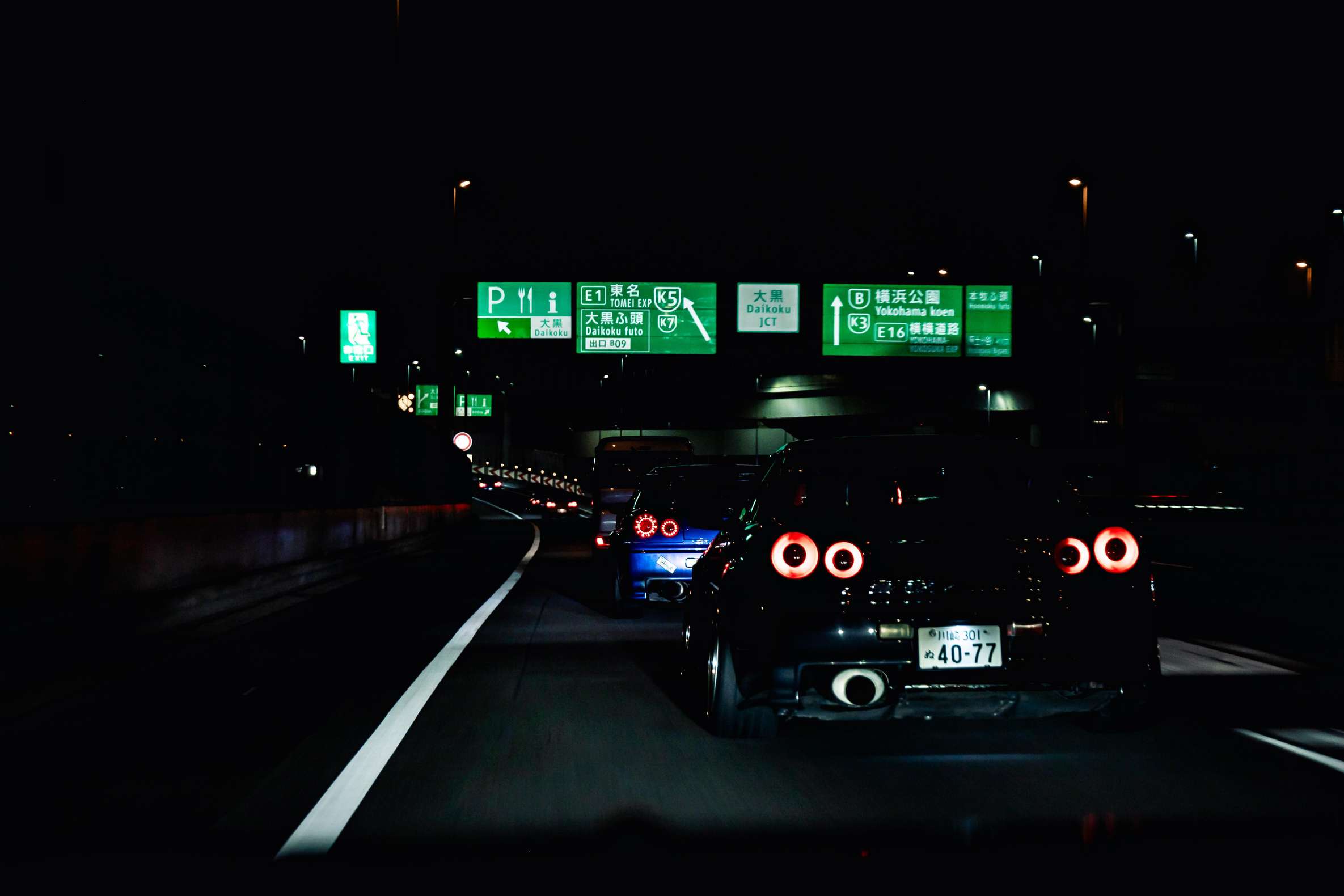
It sits at the north end of Yokohama, on an artificial island in Tokyo Bay. Tours from Tokyo reach it over the Bayshore Route, and the drive across the water is part of the appeal.
When is the best night for the Daikoku PA car meet?
Friday and Saturday nights draw the biggest crowds, with cars filling the lot from around 5 pm and the deepest crowd between 9 pm and 1 am. Sunday mornings are the classic window for classics and exotics, and weeknights run quieter but are rarely empty.
Can the Daikoku meet be cancelled on the night?
There is no schedule to check, and the lot can be shut with no notice once it overflows, especially on busy weekend evenings. Tour operators plan for this: if Daikoku closes, most move the visit to Umihotaru PA out in the bay, another well-known gathering spot.
Do I need a driving licence to ride in a GT-R in Tokyo?
No. On a ride-along tour a professional driver is behind the wheel all night, so no licence, international driving permit or deposit is needed. You ride as a passenger with a guide handling the route.
What do I need to self-drive a GT-R in Tokyo?
You need to be at least 23, bring your original passport, your home licence and an International Driving Permit from the 1949 Convention, and for some cars a credit card in your name. Photocopies are not accepted, and if you do not meet the document rules you cannot take the wheel.
What is the difference between a guided ride and a self-drive GT-R tour?
On a guided ride you sit passenger while a local driver handles the expressways, navigation and the meet. Self-drive puts you behind the wheel in a convoy, which needs the documents above and experience with right-hand-drive cars. Most first-time visitors take the guided format.
What should I wear for a night at Daikoku PA?
Comfortable clothes and walking shoes, plus a jacket matched to the season. You spend up to an hour or more standing outdoors after dark, and nights range from about 1°C in winter to over 25°C in midsummer.
Will my guide speak English?
English is the default on most of these tours, and guides are knowledgeable about Japanese car culture and happy to answer questions. Some operators can arrange German, Italian, Polish or other languages on request, though they cannot always guarantee fluency.
Can I drift on the streets of Tokyo?
Drifting on public roads is illegal in Japan, and tours prohibit it along with racing and burnouts. Legal drifting happens at circuits such as Ebisu, north of Tokyo, and competition drifting can be seen at D1 Grand Prix rounds, including one in Odaiba in November.
What is the etiquette at a Japanese car meet?
Ask before entering, sitting on or touching anyone's car, even for a photo. Stay out of the roadways, since disrespectful behavior is part of why some locals stopped bringing their cars to Daikoku, and police do act on complaints.
Where to go next after your Nissan GTR night in Tokyo
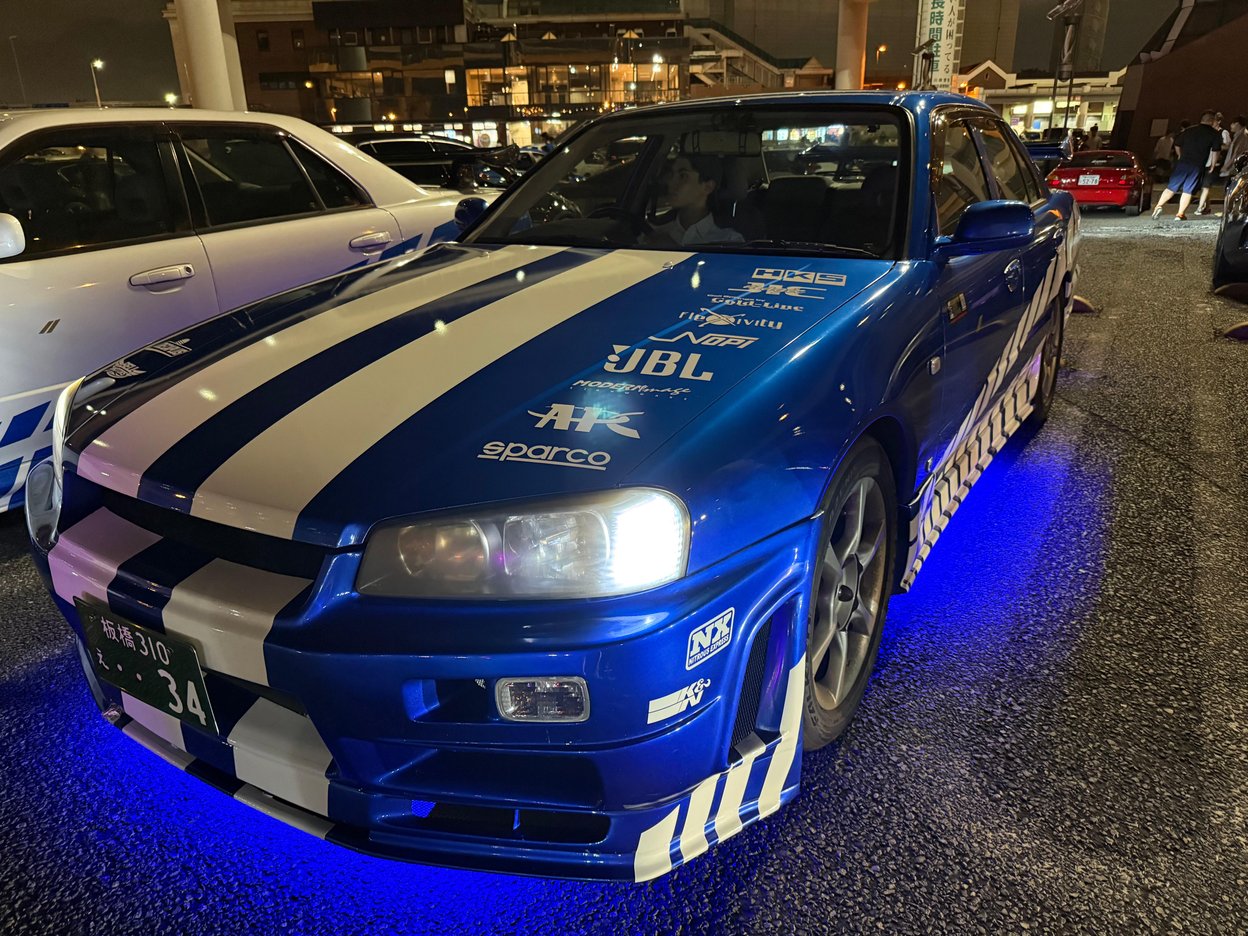
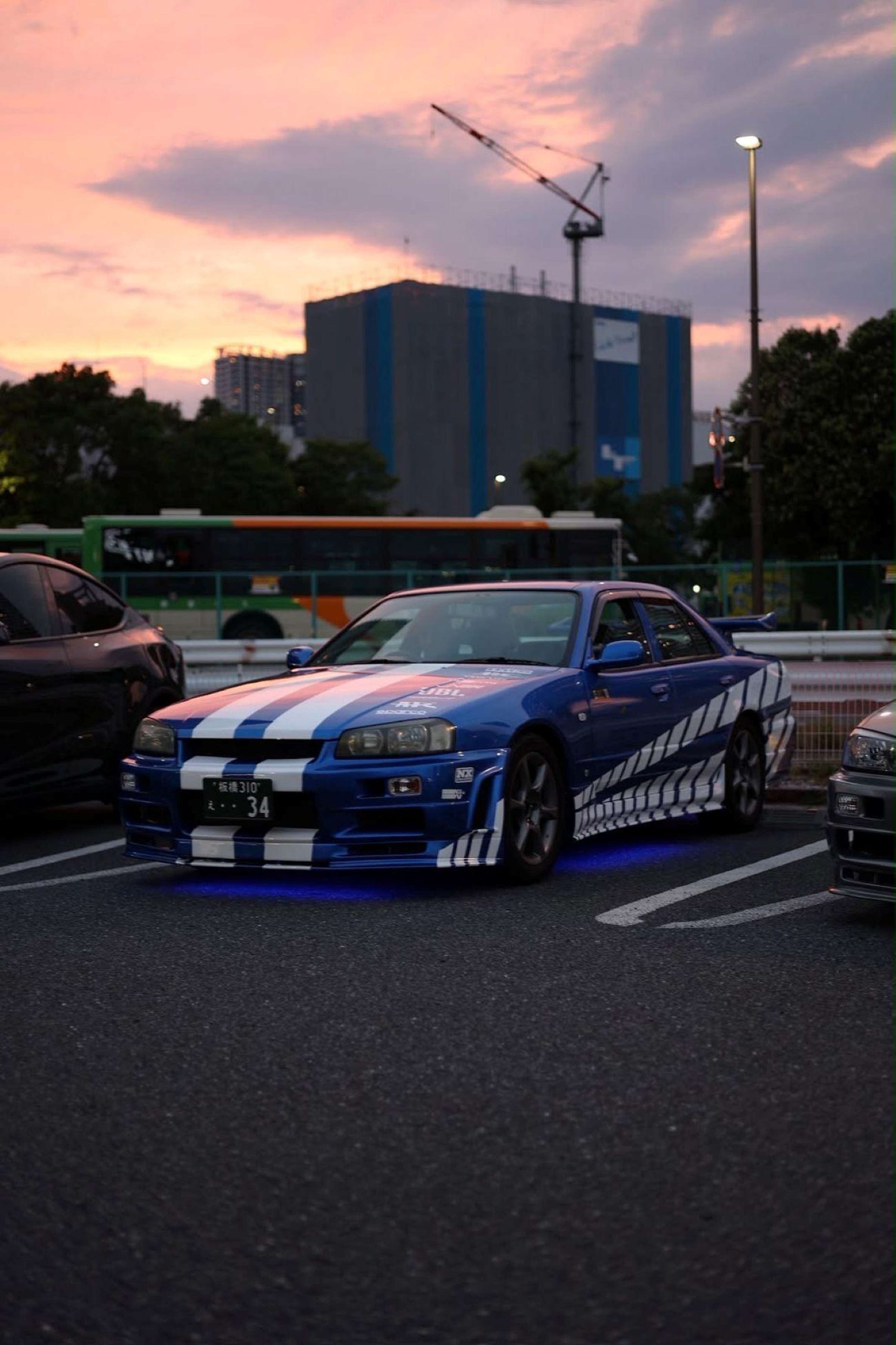
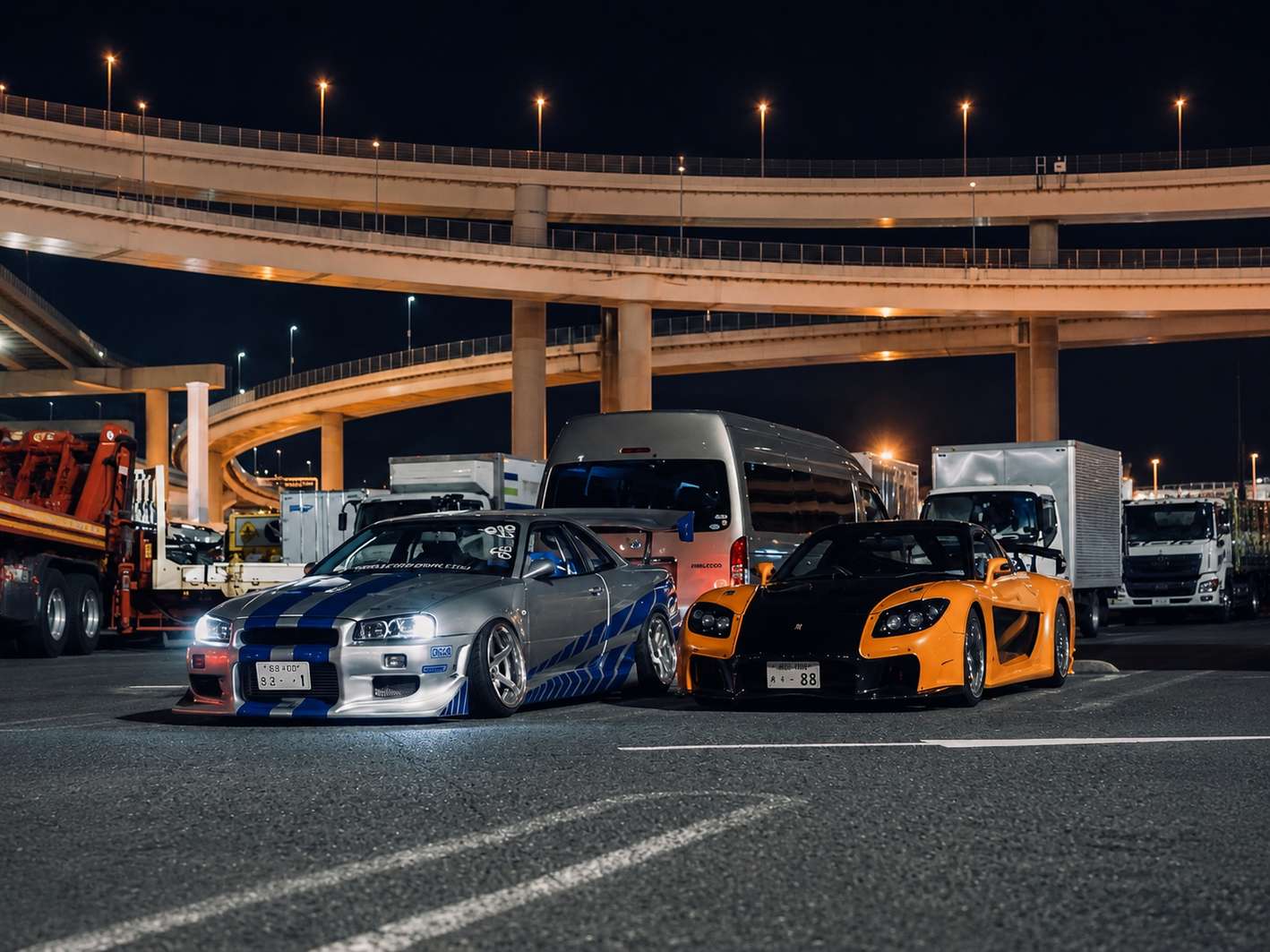
Ride a private R34 Skyline in the Brian O'Conner livery to the Daikoku PA car meet, with a photographer driver and free cancellation up to 24 hours before.