Likely to sell out
12 hours·English, Japanese
4.9(72)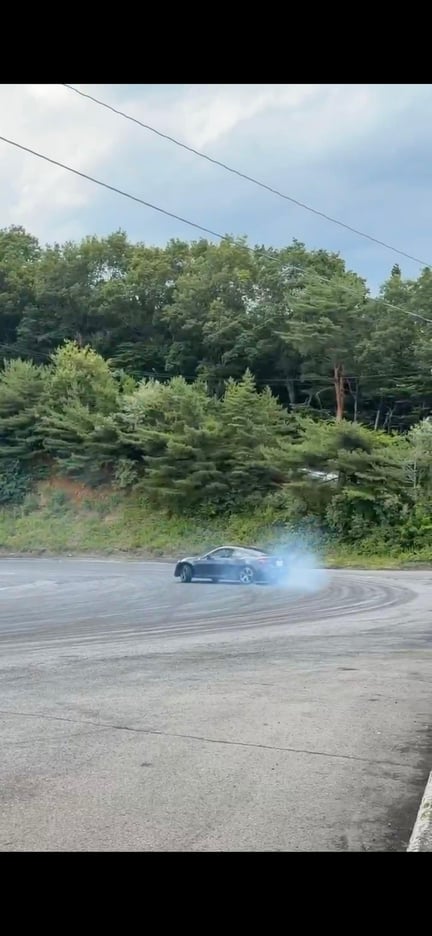
Ebisu Circuit: Guided JDM Drift Practice & Ride-Along
Free cancellationHotel pickup includedDrift experience at Ebisu Circuit
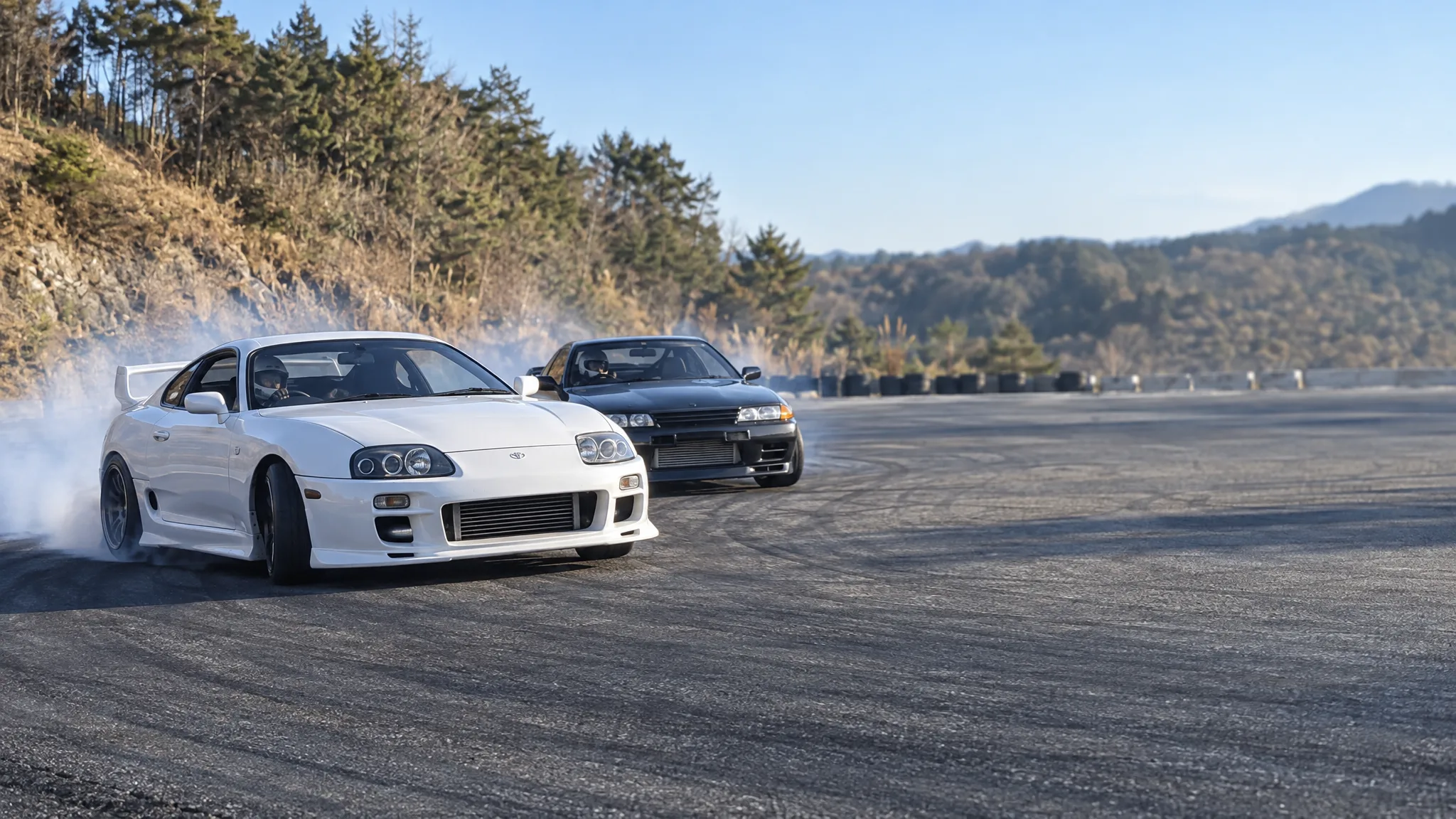
See real drifting near Tokyo, or get in the seat yourself. Ride with pro drift drivers, learn a donut in three hours, or spend a full day at Ebisu Circuit, the drift mecca, with transport from Tokyo included. Pick the experience that fits how close you want to get.
"Can't rate this highly enough. Professional drift instructor and expert mechanic who let me fully enjoy the car. Went from never drifting to figure 8s, unreal. The team's enthusiasm for sharing JDM is genuine."
Where real drifting happens near Tokyo, and how to time a visit so the tires are actually smoking.
Read the guide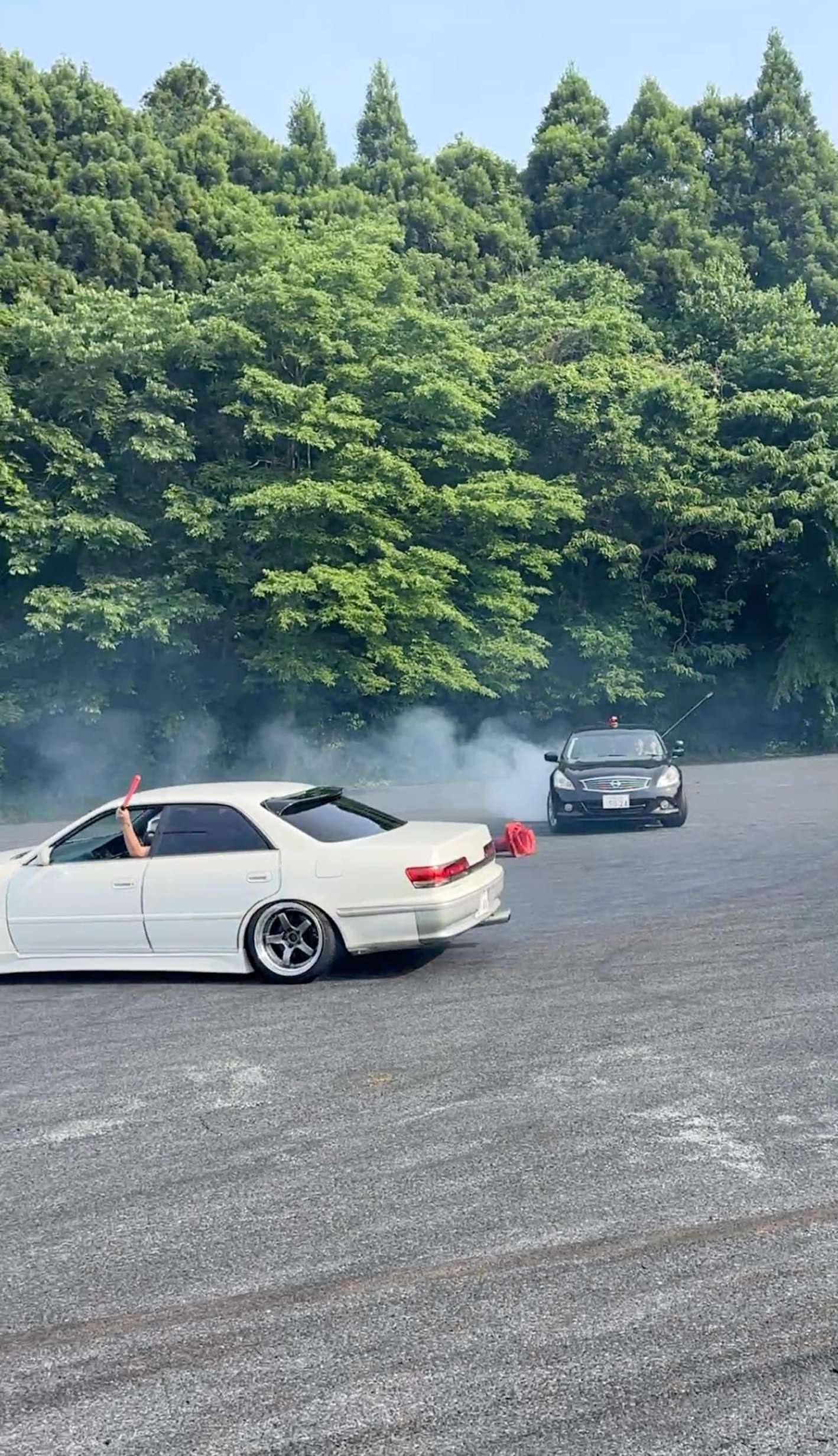
Coached sessions on closed circuits, from a first donut to e-brake skills, with no licence needed.
Read the guide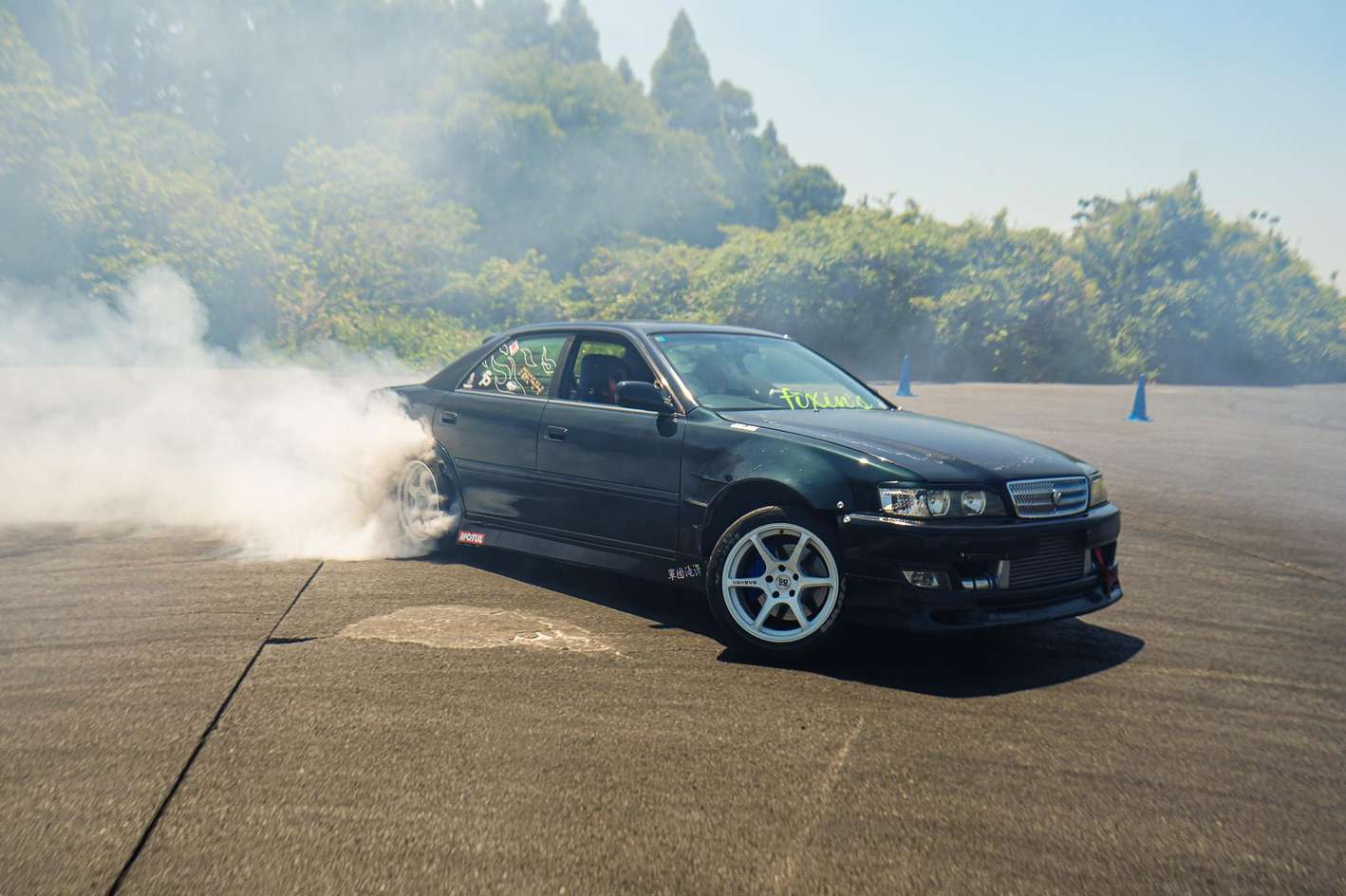
Shuttle from Tokyo, a Toyota Altezza under you, and coaching until you hold a steady slide.
Read the guide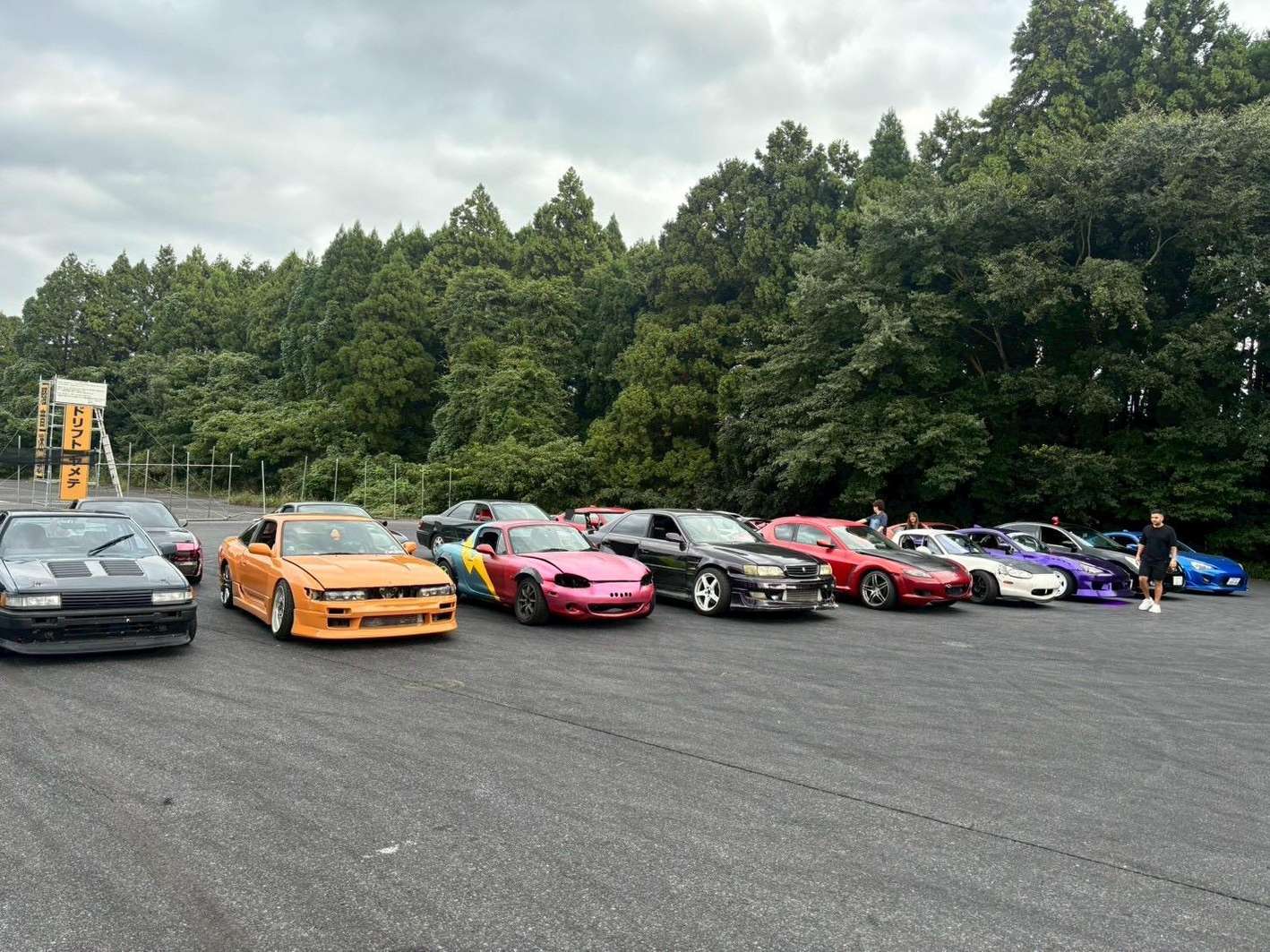
Ride with OG drift drivers through donuts, figure 8s and a movie-style chase, pickup at Tokyo Station.
Read the guideA full-day guided trip to Ebisu Circuit with drift practice, a passenger thrill ride and a pro instructor.
Read the guideEvery way of getting near a drift car, from the fence line to the driver's seat, has its own page.
The clearest answer for seeing skilled drivers slide, from the D1 finale to circuit days
The first thing to know is that Tokyo streets hold no drift show. Legal drifting lives on circuits, and the one spectacle inside the city is the D1 Grand Prix finale on a temporary course at Odaiba, usually in November. Outside the city, Mobara and Nikko in Chiba host plenty of drift events.
This page sorts the viewing options and tells you what each night or event actually delivers. If you mainly want to stand close to the smoke and hear the engines, start here before you book anything.
Private lessons where complete beginners learn a donut in about three hours
A steady circle of tire smoke, drawn around cones by your own right foot, is the first thing a beginner chases here.
The private lesson run by an OG drift team near Tokyo starts you in a Miata, and most guests hold a donut within three hours of practice. No drifting experience is needed, and because it all happens on a closed circuit, no driving licence is required either.
The practical side decides the day: the lesson itself is three hours inside a roughly six-hour outing, since transport from Tokyo takes about an hour and a half each way. Sessions run Monday to Friday, mornings or early afternoons, and you wear long sleeves, long pants and sneakers.
Rent a JDM drift car on track with an instructor, no licence required
The shuttle picks you up in Tokyo and drops you at a Chiba circuit where a Toyota Altezza waits with your name on the keys. An advanced drifter sits beside you, helmets and gloves are provided, and even guests who have never driven a car are welcome, since the whole thing runs on private tarmac.
Most people leave able to hold steady circles, and the day includes riding next to advanced drifters for a close-up look at tandem runs. A photographer shoots the session, so you go home with proof. Sessions run three to five hours depending on the option, and long pants are the only dress code that matters.
Three rounds in the passenger seat, ending with a replica police chase
The passenger seat of a drift car is where the sensation lives: sideways pull, tire squeal, and a driver who has done this for years.
This experience builds in three rounds, starting with donuts and figure 8s and finishing with a chase, either in a drift car pursued by a replica undercover police car or in the police car doing the chasing.
The drivers are OG street racers and drift team members from Tokyo and Chiba, which is why the runs feel so far past what a rental could do. It runs about four hours with free pickup and drop-off at Tokyo Station, helmets and gloves included, and no licence asked of you.
4 hours · ★ 5.0 (11)Ride-Along Drifting Experience & Replica Police Chase near TokyoFrom $347 3 - 5 hours · ★ 5.0 (3)Tokyo Drift Self-Drive Experience with Pro InstructorFrom $539 6 hours · ★ 5.0 (48)Self Drive Drifting Lesson with Pro Tokyo Drift ExperienceFrom $696 12 hours · ★ 4.9 (72)Ebisu Circuit: Guided JDM Drift Practice & Ride-AlongFrom $697 /group The drift mecca: your own seat time plus a pro ride, transport from Tokyo included
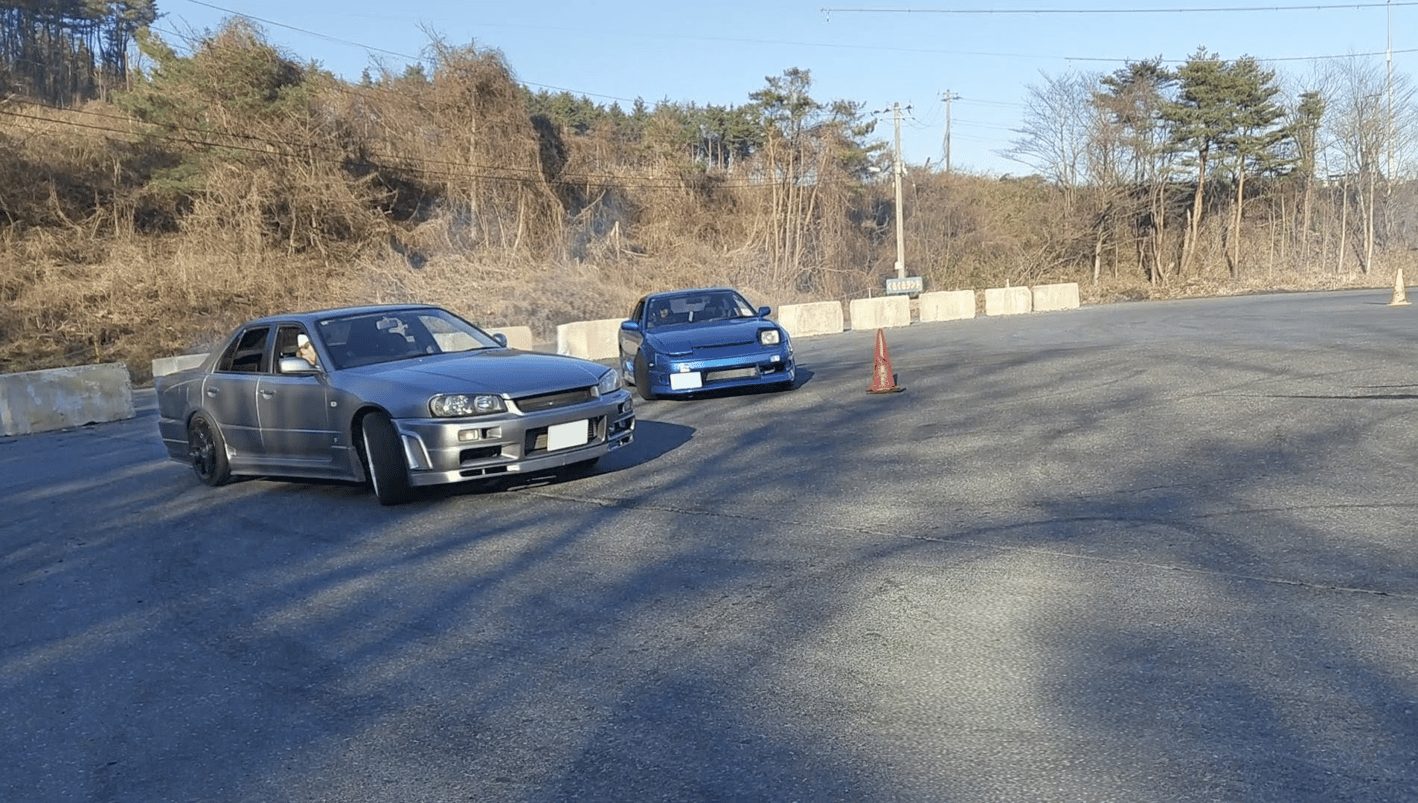
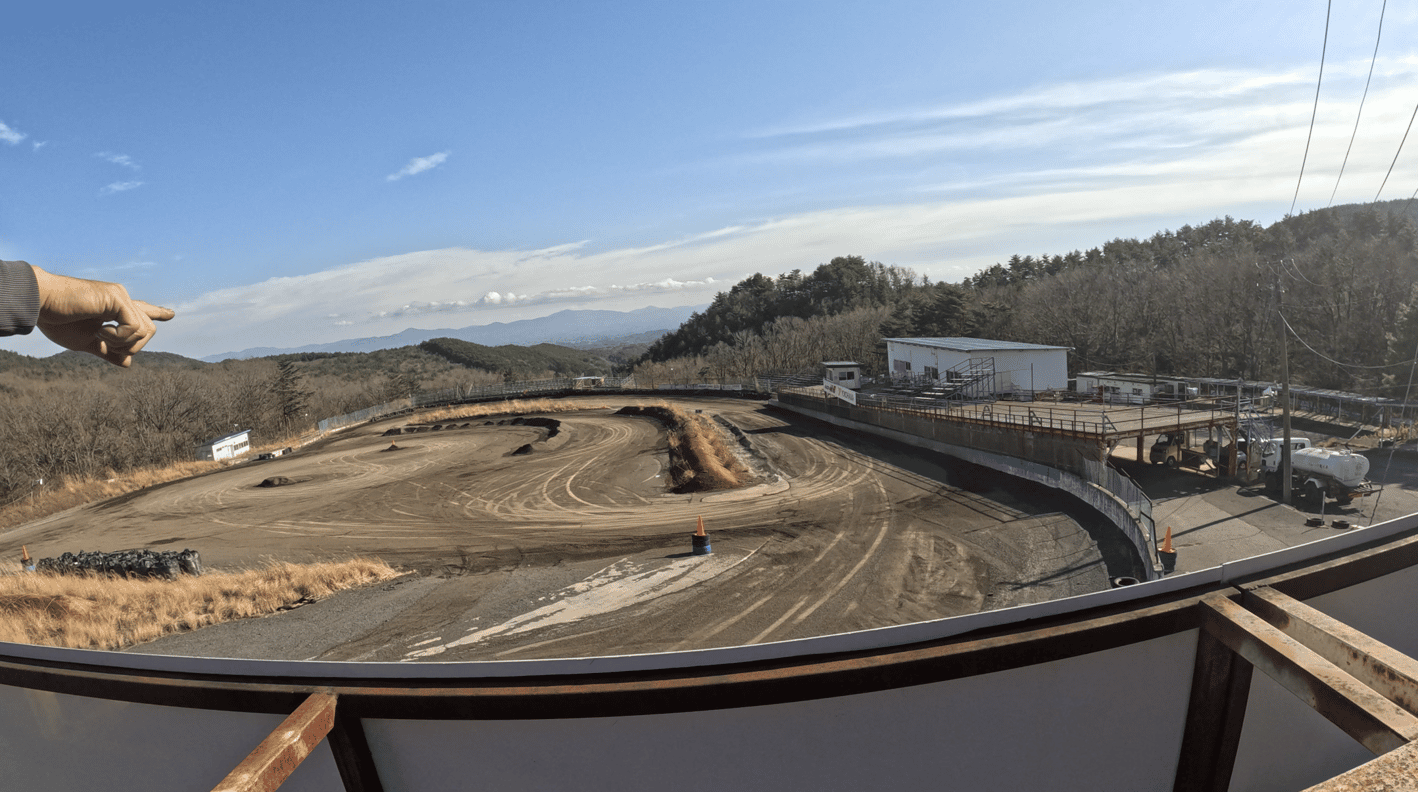
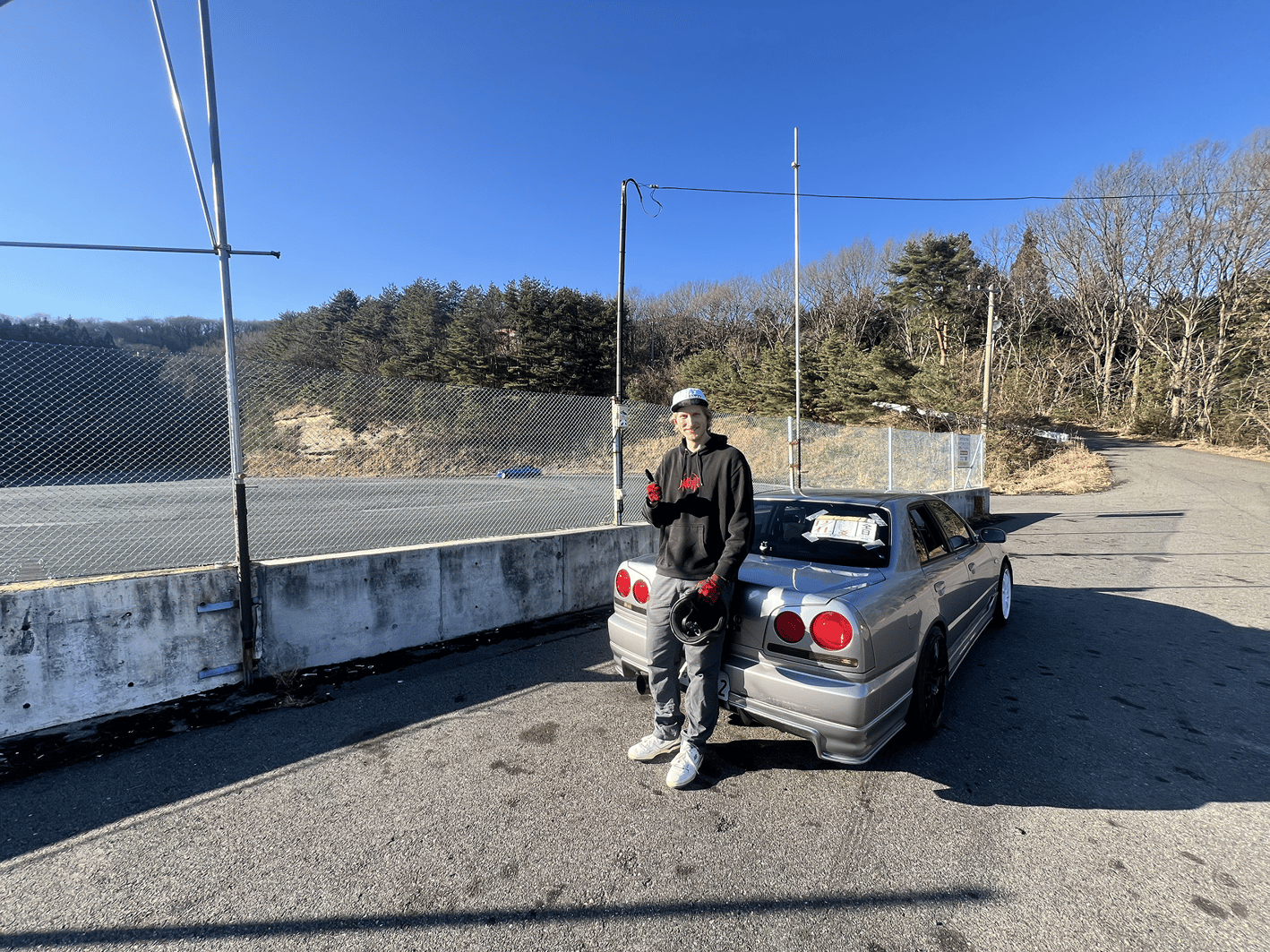
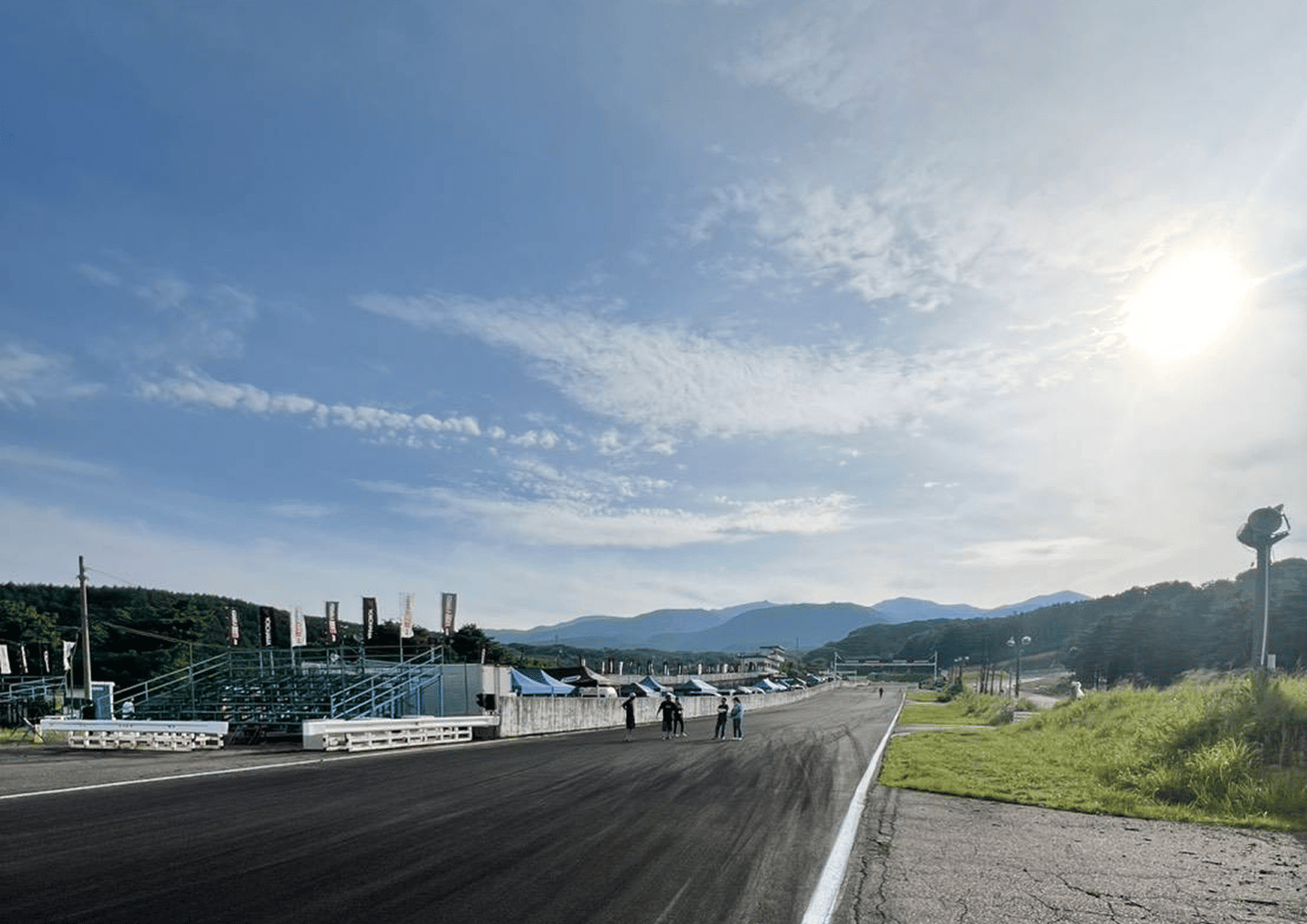
Ebisu Circuit sits in the mountains of Fukushima, and people who go call it the drift mecca for a reason.
The guided day from Tokyo hands you about 30 minutes of seat time on a real drift course, then puts you back in the passenger seat for hot laps with a pro. Engine noise, screeching tires and billowing smoke come standard.
The catch is the distance: count on the whole day, roughly twelve hours door to door, with pickup and drop-off inside Tokyo's 23 wards. Late spring and autumn are the comfortable months, and from December to March snow can close some or all of the tracks. Wear long sleeves, long pants and closed-toe shoes.
Real drifting never happens on Tokyo streets: it lives on circuits, at one big Odaiba weekend, and in the passenger seat of cars driven by people who have done it for decades. The choice comes down to which seat you take: grandstand, passenger bucket, or driver's seat.
Drifting on public roads is illegal in Japan, so every real option starts with a drive out of the city.
The one spectacle inside Tokyo is the D1 Grand Prix finale, built on a temporary course at Odaiba in mid-November.
A private lesson teaches most beginners a proper donut within 3 hours, on a closed circuit with no licence needed.
The self-drive track day in Chiba needs no licence either, and a photographer shoots your session.
Ebisu Circuit, the drift mecca in Fukushima, runs April to November; snow closes its tracks from December to March.
Keep every drift experience on a closed circuit, where lessons and ride-alongs run legally with instructors and safety gear, and never ask a street tour to slide the car.
The movie version is the first thing to let go of. Drifting on public roads is illegal in Japan, and the police enforce it hard: sliding the tires on a street can now be charged as dangerous driving, and street racing as a group carries prison time.
There is no advertised public-road drift event open to tourists, and no operator sells an underground racing tour, because no such product could exist legally.
Some visitors go looking anyway. They turn up at a rumored street spot on a weeknight and find an empty lot, or worse, they treat a rest-area gathering like a show and get pushback from the people who built the scene.
Yokohama's docks and Oi wharf are the best bet for a chance sighting, and even that is luck.
Public-road drifting is illegal and policed; the real scene runs on closed circuits
It is a parking lot where cars gather; drifting there would bring the police
No legal operator can sell one; everything real happens on a track
The table above is worth a slow read, because each line is a plan that fails on the night. What is left is better than the fantasy: circuits like Ebisu, event weekends, and teams who take passengers.
Every genuine option starts with a drive out of the city, and the nearest real drifting sits in Chiba, about an hour and a half away. The where to see drifting page sorts the viewing calendar in detail.
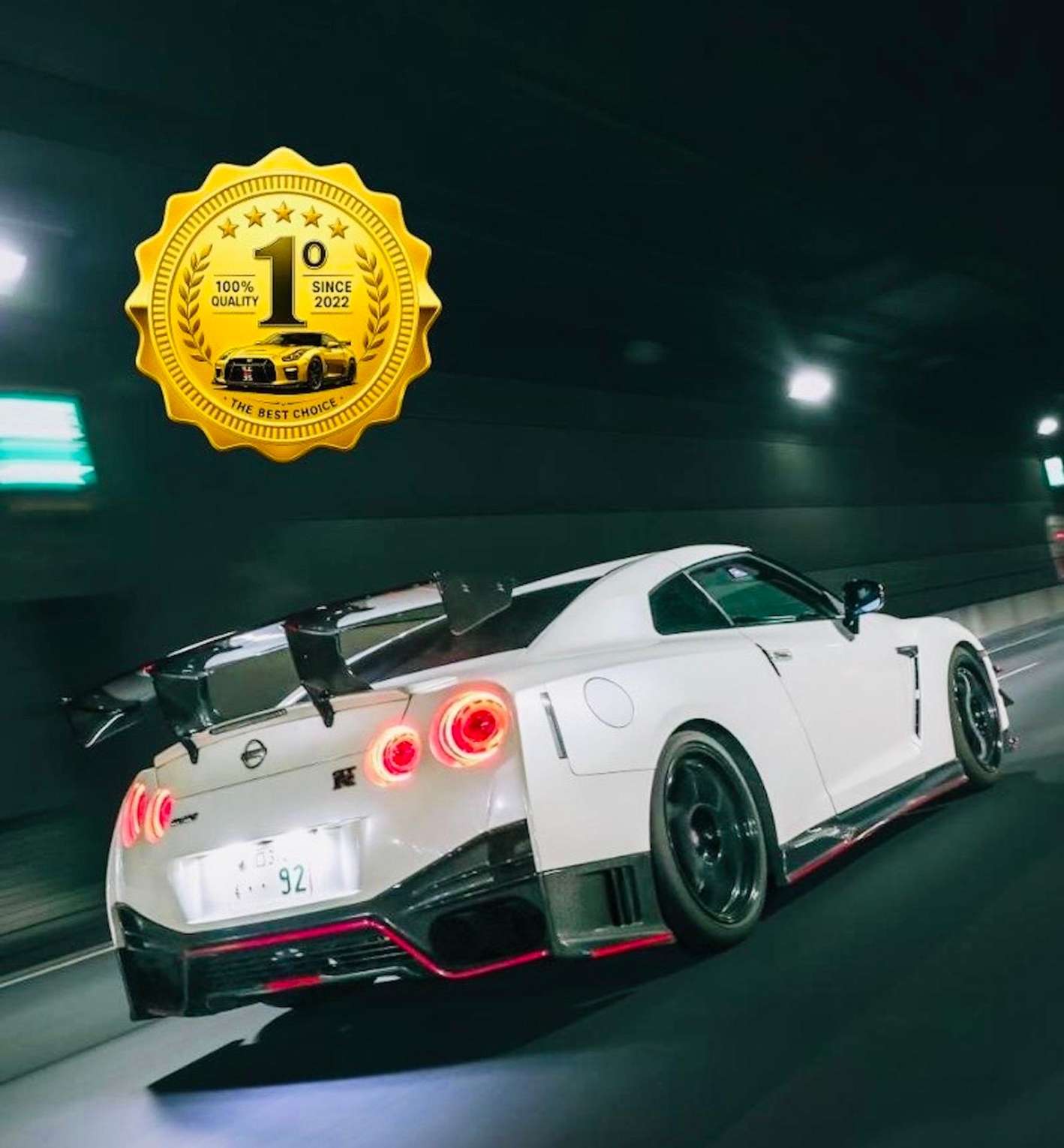
Five ways exist to get close to drifting, and they differ on one question: where do you sit? A spectator stands trackside at an event. A ride-along passenger hands the wheel to an expert and holds on.
A lesson student drives a drift car themselves with an instructor beside them. A self-drive renter gets a circuit car and a coach. And a night-tour rider gets Tokyo's highways in a JDM car, with no drifting at all, which is worth knowing before booking.
Licence rules split the field. Lessons and self-drive days run on closed circuits, so no International Driving Permit is needed, and the drift taxi at Ebisu asks only that you be over 140 cm tall.
Self-driving on public roads is the one format that demands a permit or a JAF translation, plus being 18 or older.
The matrix below lines the five formats up on the points that actually decide the choice: legality, who drives, how much wheel time you get, and which months suit each one.
| Legality | Authenticity | Driving time | Skill needed | Best months | |
|---|---|---|---|---|---|
| Watch Drift Racing | Illegal on public roads | D1 Grand Prix at Odaiba | Spectator only | None needed | Mid-November |
| Drift Lesson | Legal, closed circuit | OG drift team instructors | 3 hours driving | Beginners welcome | Mar to May, Sep to Nov |
| Self-Drive | Circuits only | Real circuit drifting | 3 hours practice | not known | Year-round |
| Drift Tour | No drifting on tour | Car culture sightseeing | Passenger night drive | No licence needed | April busiest |
| Ebisu Experience | Legal drift mecca | D1 pro drivers | 30 min seat time | Beginner courses exist | Apr to May, Sep to Nov |
Read the driving-time row hardest. A lesson gives you three hours at the wheel, Ebisu about thirty minutes of seat time, and the night tours none at all, since they are car-culture sightseeing with a passenger seat.
The map makes the other point plain: nothing happens in central Tokyo itself. The honest numbers on learning: about 80 percent of lesson guests hold a donut, 40 percent move on to figure 8s, and roughly 3 percent clear the graduation course. Pick your seat first, then read its chapter below.
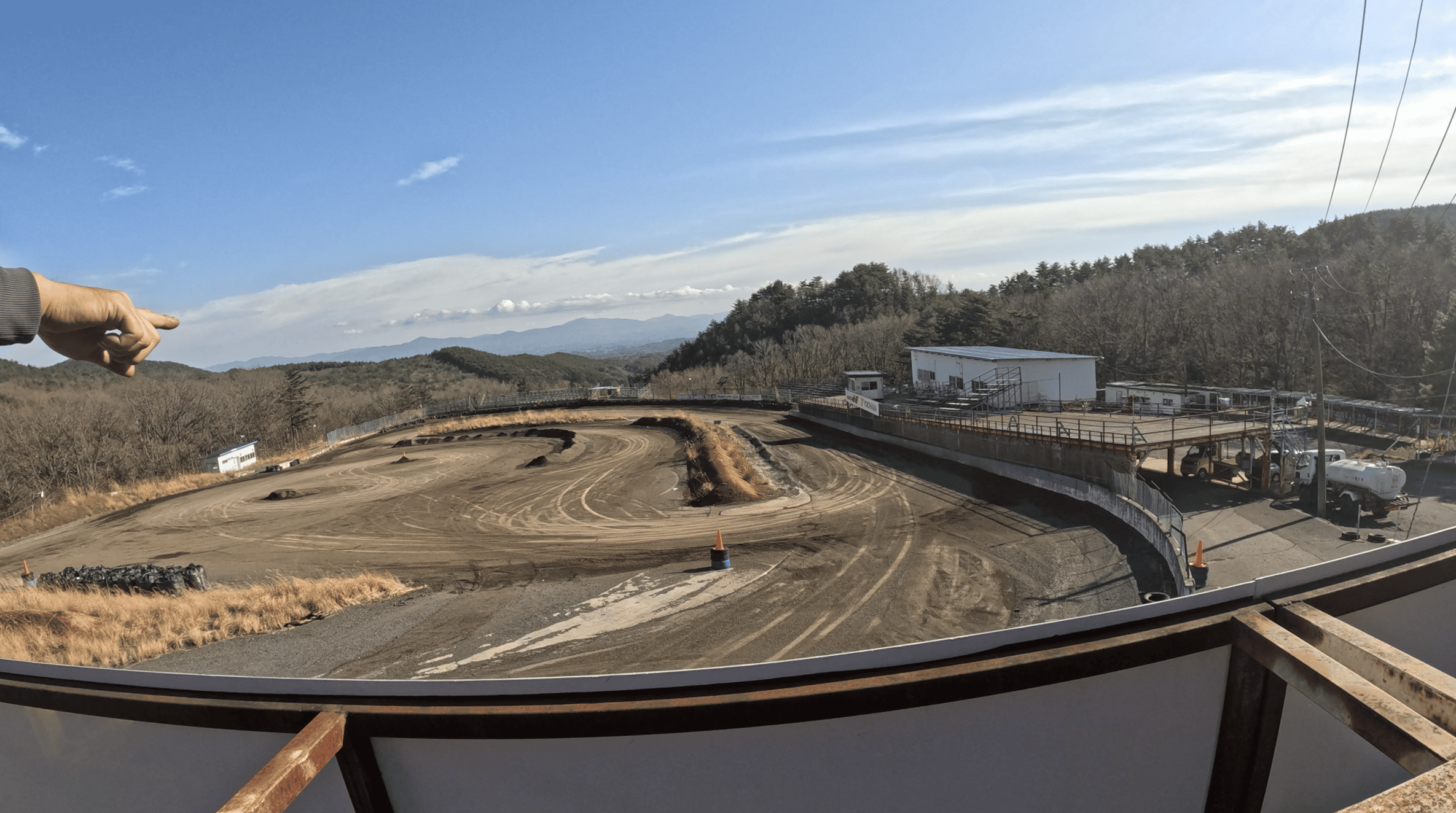
Once a year, professional drifting comes to Tokyo proper. The D1 Grand Prix finale builds a temporary course at Odaiba for a November weekend, and the grandstands fill with people watching the country's top drivers battle in pairs.
In 2026 the dates are Saturday 14 and Sunday 15 November. The rest of the championship tours Japan: rounds at Tsukuba in late June, Ebisu in late September, Autopolis in late October, and a January exhibition at Makuhari Messe, just east of the city.
The other eleven months belong to the circuits. Mobara and Nikko, both in Chiba, host a steady run of drift events, and Fuji Speedway, about 90 minutes from Tokyo, runs professional drift days on a dedicated course.
None of it lands in your lap: there is no single event listing, so you check each track's own calendar and follow the Japanese drift Instagram pages, and many meets only publish details about a month ahead.
One caution from people who go often: not everything on a circuit calendar is drifting. Four-wheel endurance racing shares the same venues and is a different sport entirely. If watching is your main aim, the drift racing viewing guide covers the events and what each one actually delivers.
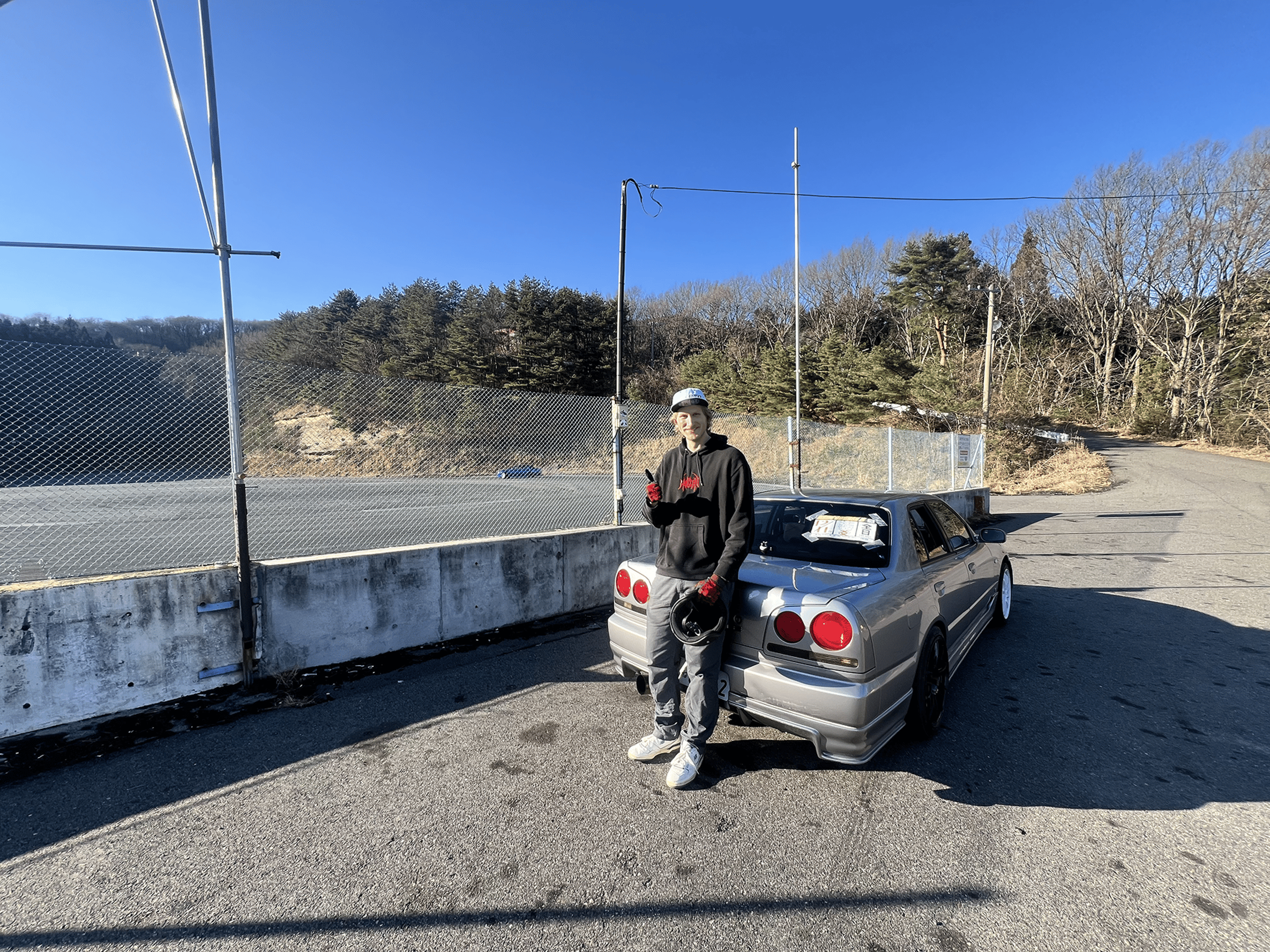
The passenger bucket is where the sensation lives. Sideways pull, tire squeal, a driver who has spent years on Tokyo and Chiba streets: the Ride-Along Drifting Experience & Replica Police Chase near Tokyo builds it into three rounds that escalate.
It starts with donuts and figure 8s, moves to high-speed e-braking turns, and ends with a chase, either in a drift car pursued by a replica undercover police car or in the police car chasing the drifter. You choose which seat for the finale.
The drivers are the reason it works. These are OG street racers and drift team members, and the runs go far past anything a rental could do. Helmets and gloves are included, pickup and drop-off at Tokyo Station is free, and the whole thing runs about four hours with no licence asked of anyone.
The quote above is the reassurance nervous first-timers look for: exciting yet controlled, with drivers who clearly know what they are doing. Worth knowing before you book: a passenger experience gives each person roughly 5 to 20 minutes of ride time.
For a JDM fan that is a bargain; for the mildly curious it is harder to justify. The guided rides and track experiences page has the full picture of this format.
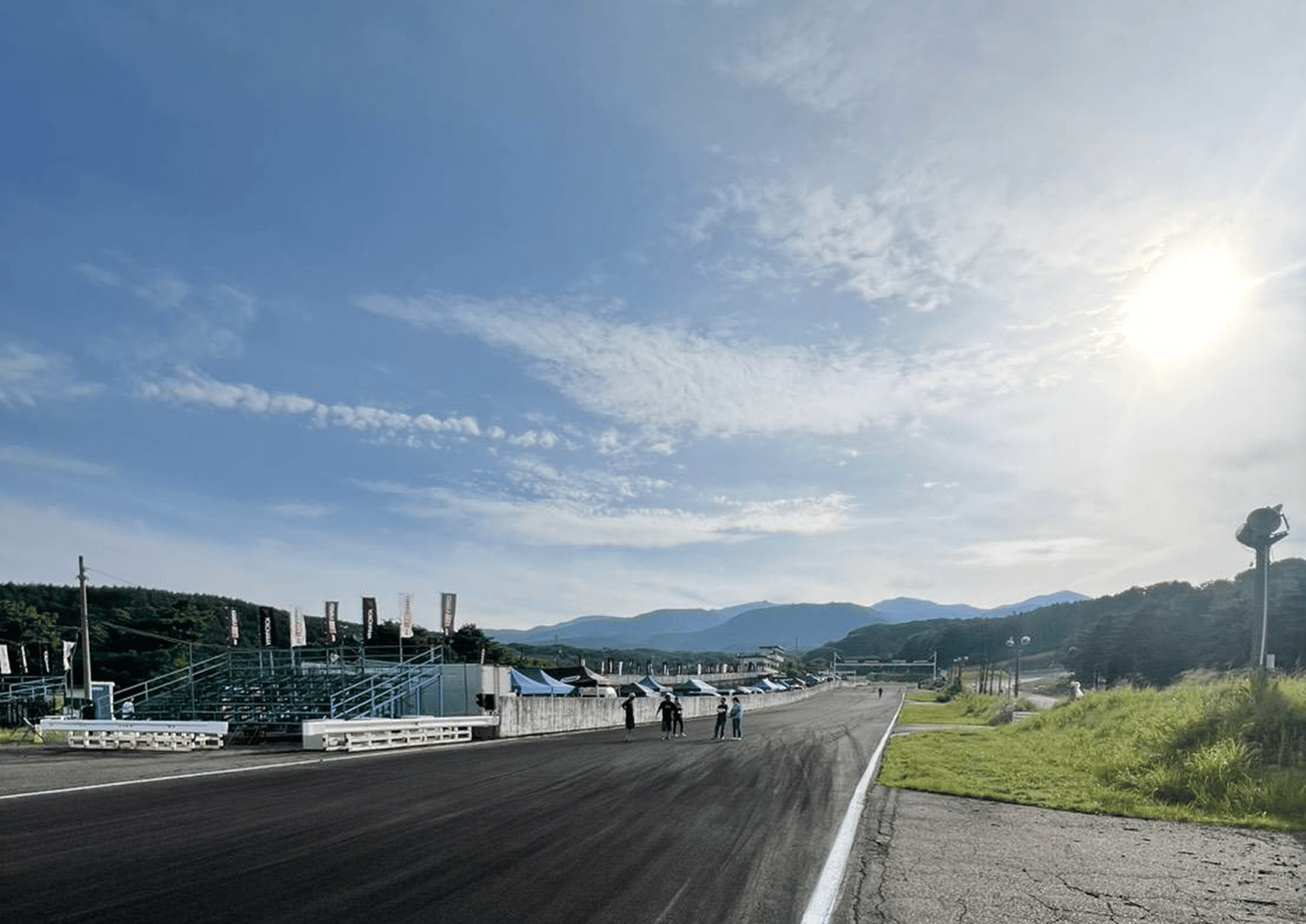
The first steady circle of tire smoke, drawn around cones by your own right foot, is what beginners chase here. The Self Drive Drifting Lesson with Pro Tokyo Drift Experience hands you a Miata NB and an OG instructor, and most guests hold a proper donut within three hours of practice.
Once the donut comes, figure 8s follow; intermediate drivers move to e-brake work in an RX-8 or 350Z, and advanced drivers can step up to a 180SX or JZX100 for an extra fee.
The arithmetic matters. The lesson is three hours inside a roughly six-hour day, because transport from Tokyo takes about an hour and a half each way.
Actual hands-on drifting runs about an hour and a half, with the rest going to instruction, demonstrations and ride-alongs. Sessions run Monday to Friday, starting at 9 am or 1 pm, with free pickup in Tokyo and drop-off at Tokyo Station.
The private lesson rents the whole circuit, so it must be booked at least one day in advance and runs weekdays only, mornings or early afternoons
That booking rule catches people every week, so build it into your itinerary before you fix your Tokyo dates. No licence and no International Driving Permit are needed, since it all happens on a closed circuit.
Helmets and gloves are supplied. The drift lesson guide compares this with the Minami Chiba option and the Ebisu schools.
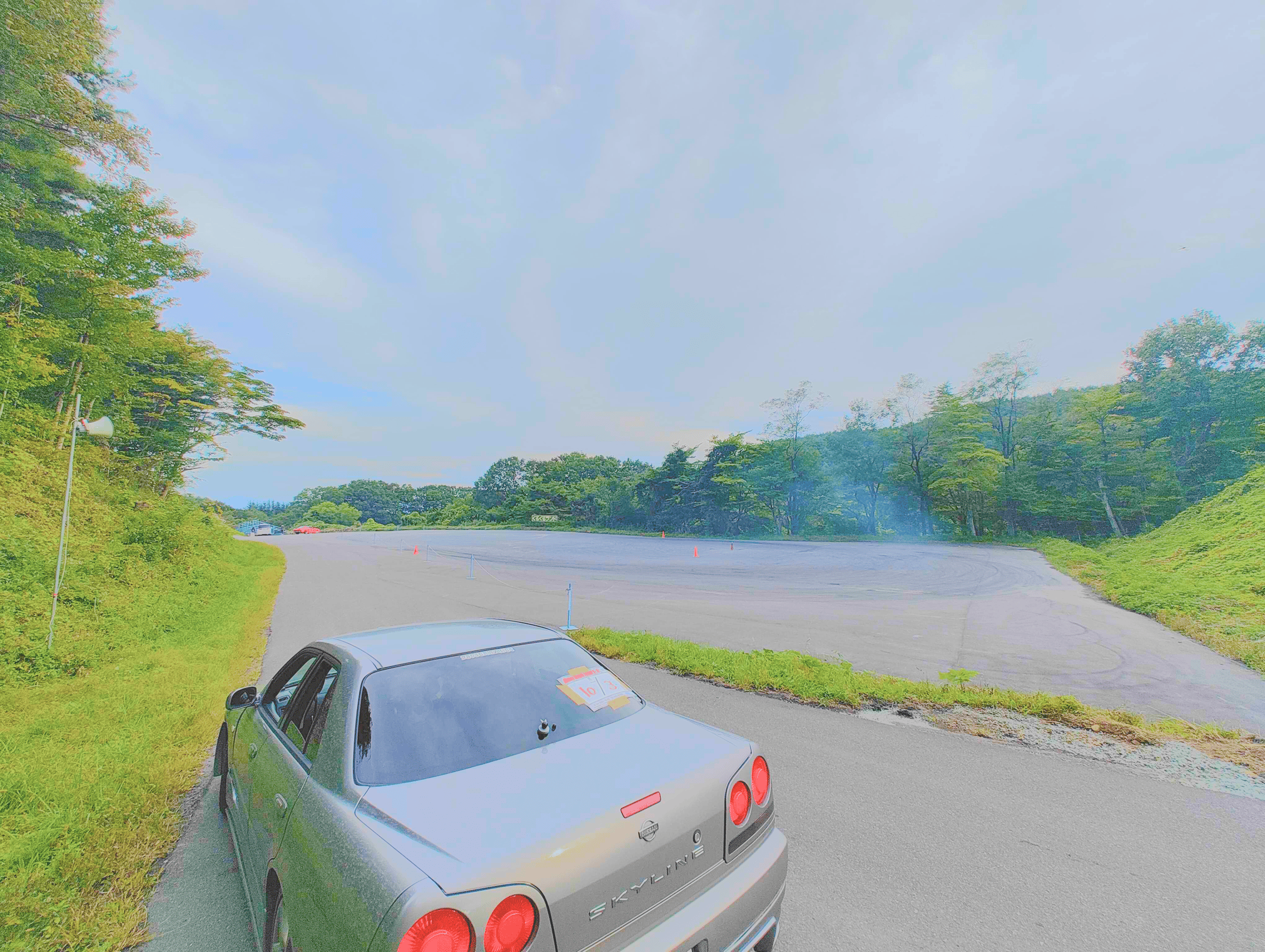
No International Driving Permit, or no licence at all? The self-drive day in Chiba still works. A shuttle collects you in Tokyo and delivers you to a circuit where a Toyota Altezza waits, an advanced drifter sits beside you, and helmets and gloves come with the car.
Because everything happens on private tarmac, guests who have never driven a road in Japan are welcome, and most people leave holding steady circles.
The day also puts you in the passenger seat next to advanced drifters for a close-up look at tandem runs, and a photographer shoots the session, so you go home with proof it happened. Options run three to five hours depending on whether you drive or ride.
Dress code is short: long pants, closed shoes, no sandals or flip flops. The one thing this format is not suitable for is children under 15. For the full comparison of circuits, cars and what each option includes, the self-drive drift experience page carries the detail.
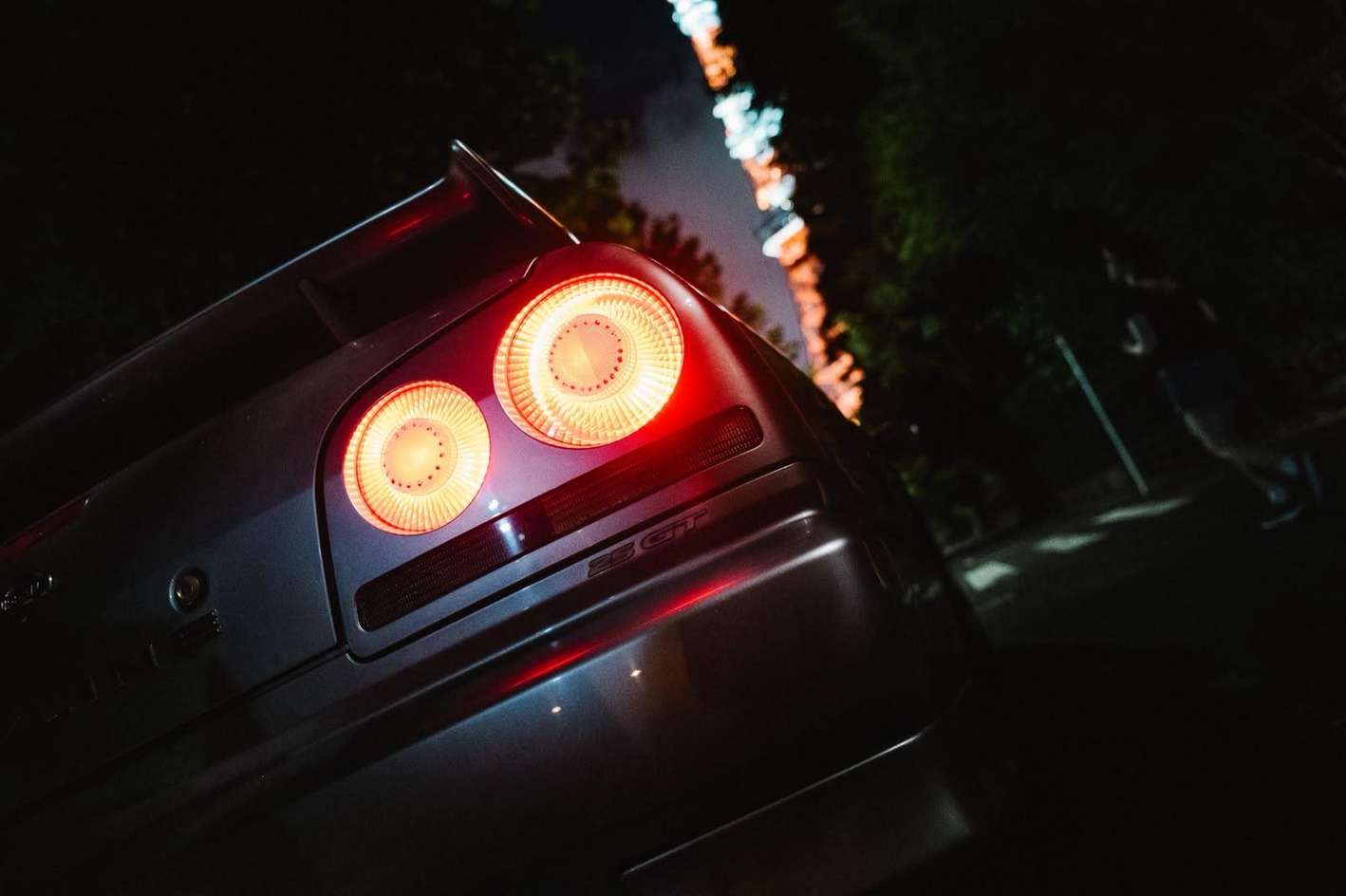
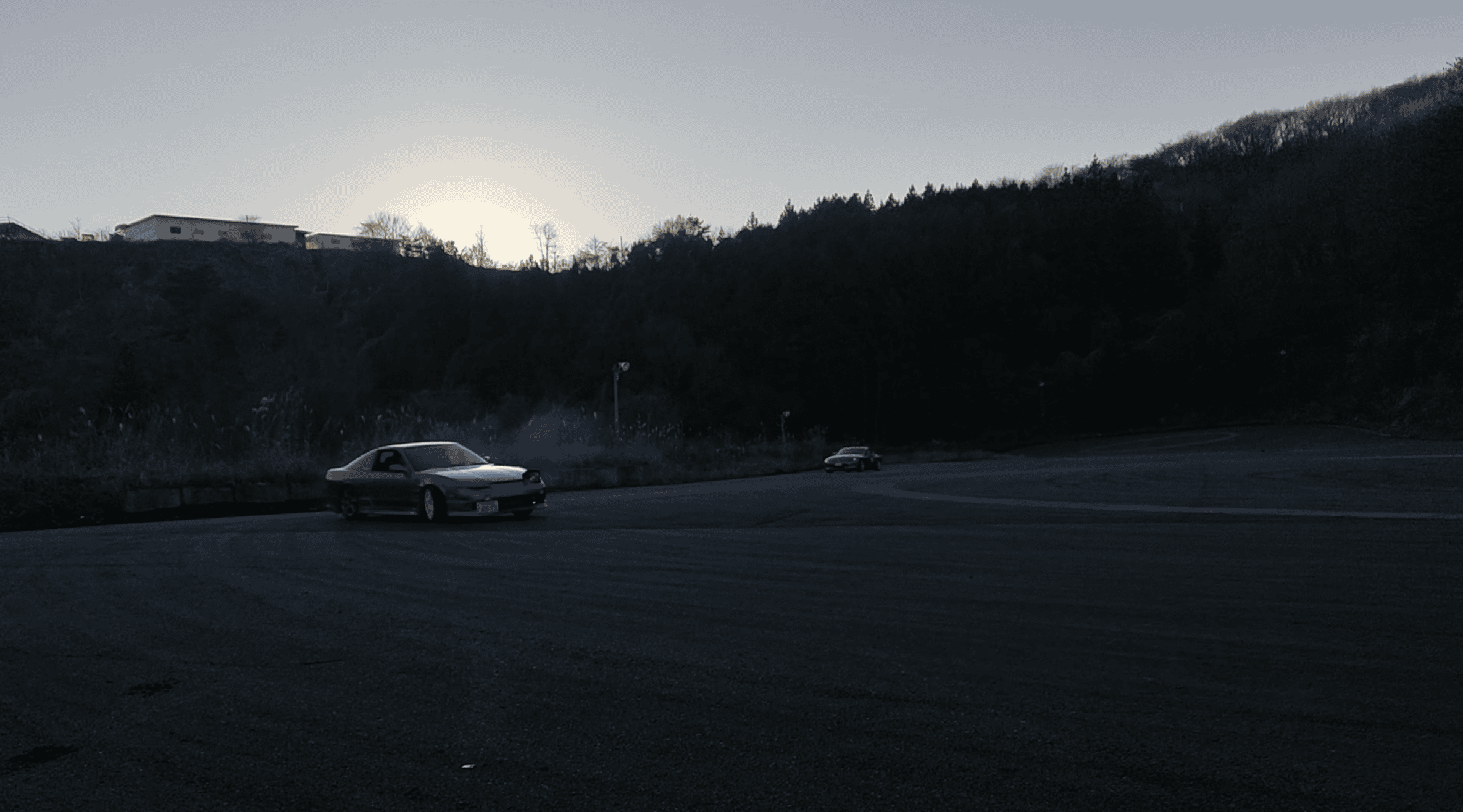
Ebisu Circuit sits in the mountains of Fukushima, and people who go call it the drift mecca without irony.
Around ten courses cover the hillside, D1 drivers train there, and the guided day from Tokyo hands you about 30 minutes of seat time on a real drift course, then puts you back in the passenger seat for hot laps with a pro.
Engine noise, screeching tires and billowing smoke come standard. Beginners have their own practice courses, including one with a wet surface that makes the first slides easier.
Distance and season both bite. Count on roughly twelve hours door to door, with pickup and drop-off inside Tokyo's 23 wards, and pick your month with care.
Late spring and autumn are the comfortable windows; from December to March it snows, and some or all tracks close under snow cover, with North and Touge typically shut in mid-winter.
The month chart below shows exactly where those windows sit and when the circuit goes dark.
Two bands stand out: April to May and September to November, when the tracks run and the weather holds. The circuit also runs Drift Matsuri three times a year, drawing drivers from around the world, and its dates are worth checking on the circuit's own site. The Ebisu Circuit guide covers the day in full.
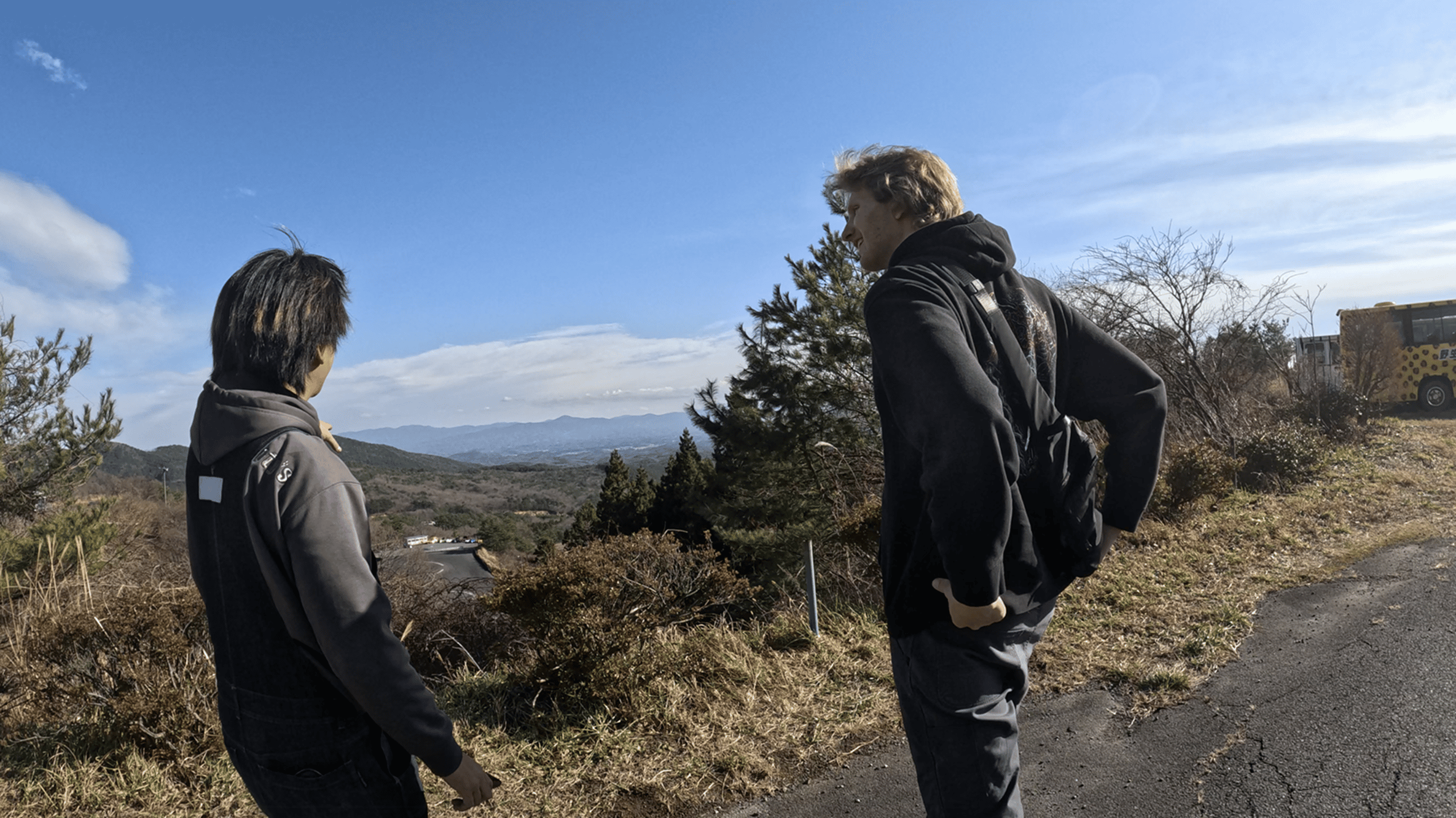
The honest arithmetic first: a three-hour lesson is a six-hour day, and Ebisu is a twelve-hour door-to-door trip. None of the drift circuits near Tokyo are train-accessible, so transport decides how the day feels before you ever touch a wheel.
The lesson and self-drive options solve it for you: free pickup in Tokyo, about an hour and a half each way to the Chiba circuit, drop-off at Tokyo Station or your hotel. Ebisu is the long one.
The Shinkansen route runs from Tokyo to Koriyama, then the Tohoku Line to Nihonmatsu and a bus toward the circuit, and even the guided tour's own drive can stretch to three and a half hours in traffic. That is why it takes the whole day.
The table below shows how each way of getting there actually feels, from handing the problem to an operator to driving yourself.
Sort the journey out before you book. A day that looks like three hours of drifting is really a full-day commitment, and the tours that include transport are the ones that keep it enjoyable.
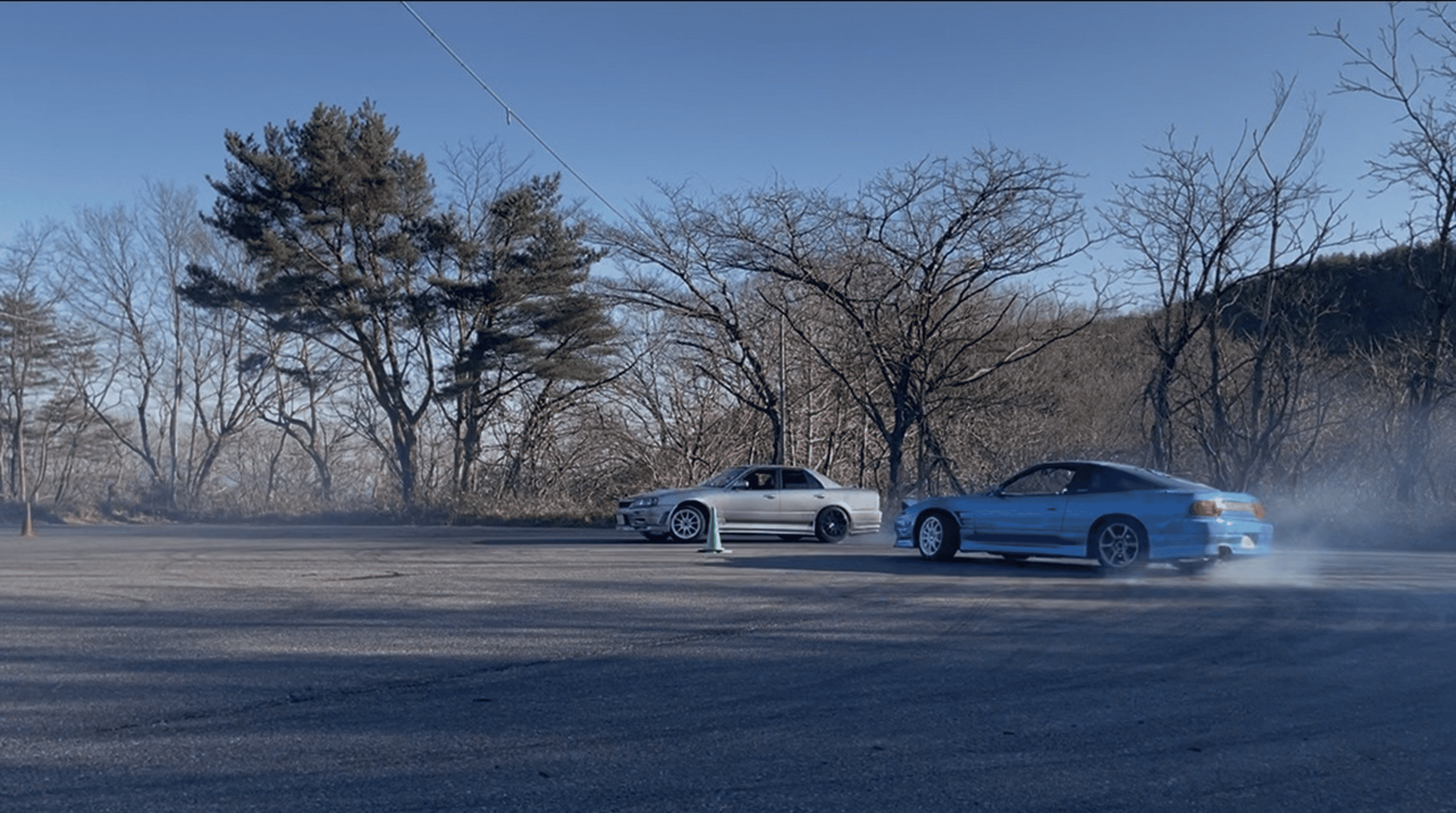
April and October are the months the whole scene moves to. Both are mild, both carry around 18 to 19 dry days, and both sit at the top of the booking index, April at 150 against an ordinary month's 100.
September and November run close behind. If your trip lands in one of those, reserve early.
June is the month to understand. It is the wettest stretch, rain on about one day in two, and rain rarely cancels anything: guides hand out umbrellas and the drives run.
What rain costs you is the crowd, since wet nights thin the car meets and one operator states plainly that weather shrinking the meeting is no grounds for a refund. February, June and December are the quiet months, and travelers often book those within days, sometimes the same day.
The chart below shows how that demand rises and falls across the year, so you can see at a glance when to lock things in.
April: 5 out of 5 for how busy it gets.
Tap a month to read it.
For lessons specifically, March to May and September to November are the sweet spots, and March has a strong record: total beginners describe learning donuts, figure 8s and handbrake entries in a single three-hour session. Winter belongs to Ebisu's snow closures, so keep the Chiba circuits for the cold months.
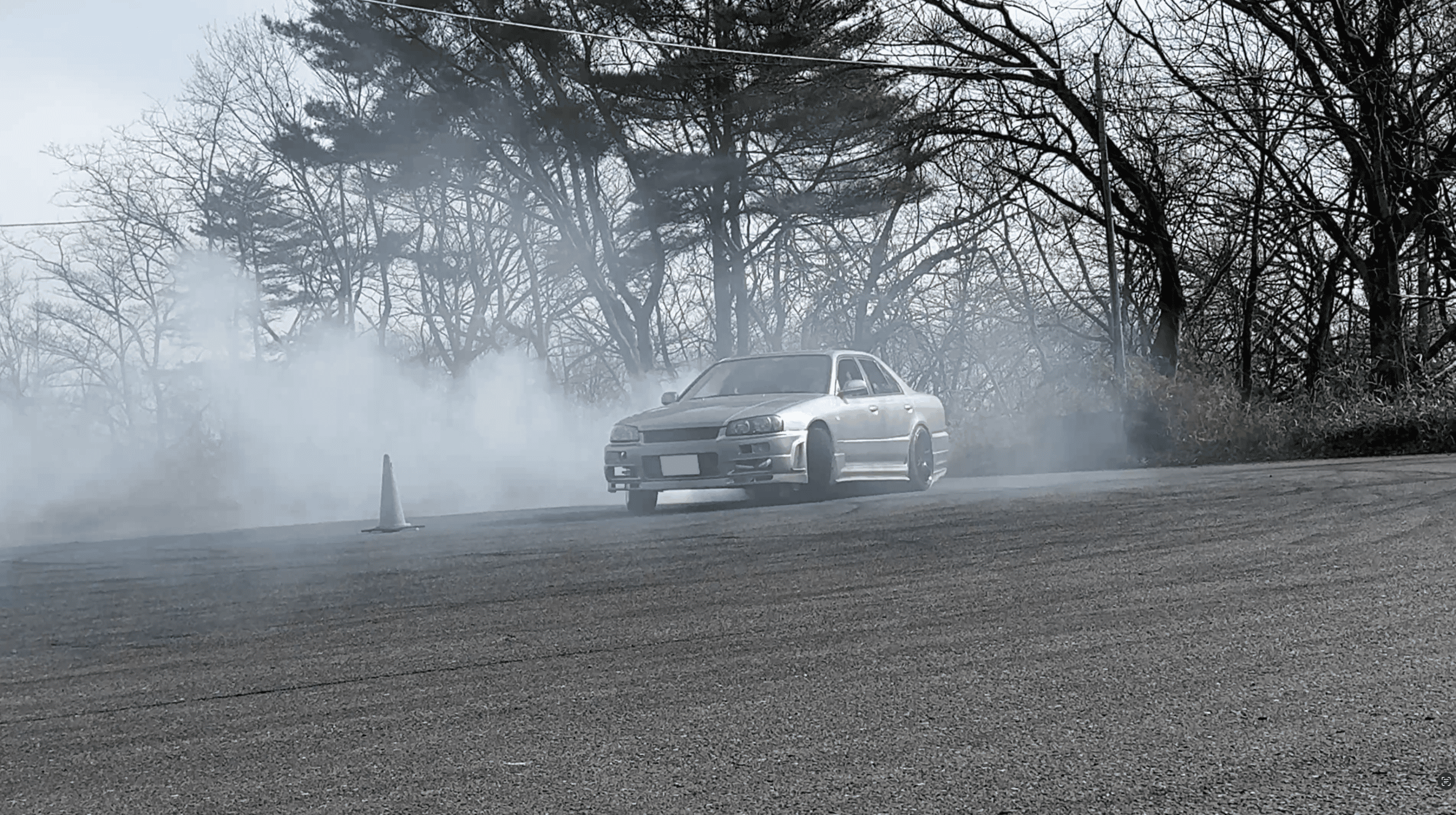
Before or after the track day, the meets are where the scene lives, and the rules there are unwritten but enforced. Never touch, lean on or sit in anyone's car without permission, and ask before photographing a car up close or posting it online.
Disrespectful visitors are part of why some locals stopped bringing their cars to Daikoku, and police act on complaints. Stay out of the driving lanes, keep your voice down, and carry your trash out; the lots often have no bins.
Daikoku PA itself is a tollway rest stop where an informal gathering happens, closer to Cars and Coffee at night than a show, and the Daikoku car meet guide covers it properly. You need a car to reach it, which is why most visitors take a guided JDM tour with hotel pickup.
You do not need a drift event to see cult cars, either. Skylines, Supras, GT-Rs, MX-5s and S2000s show up around Akihabara and Yokohama, with Skyline and Supra owners out almost every night in Akihabara.
One caution there: at the UDX underground parking, stopping to photograph cars gets you moved on by security, and repeat visits can bring police and a fine.
If your drift day starts near Shinagawa, the list below shows what sits within a short walk or drive, from temples to Tokyo Tower itself.
A quiet temple or a park makes a good hour between a morning meet and an evening drive, and Tokyo Tower is close enough to pair with a night photo stop.
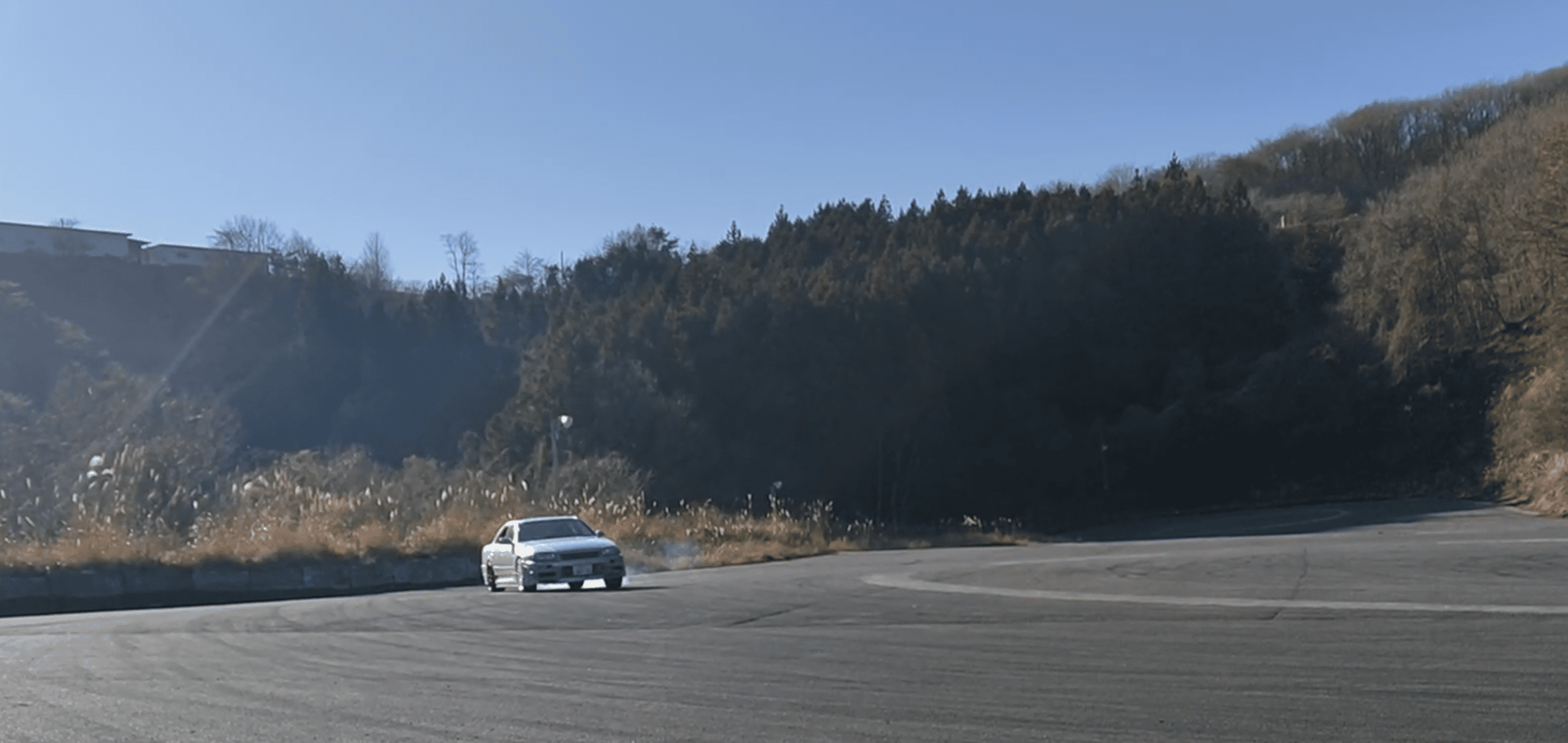
Drifting near Tokyo is real, legal and reachable once you accept that it lives on circuits. Watch it at the D1 finale in November, ride it with OG drivers near Tokyo, learn a donut in a three-hour lesson, or give a full day to Ebisu.
Any of the four delivers; the only wrong move is expecting a street scene from the movies.
Book around April or October for the best mix of weather and activity, and let the transport-inclusive options carry the logistics.
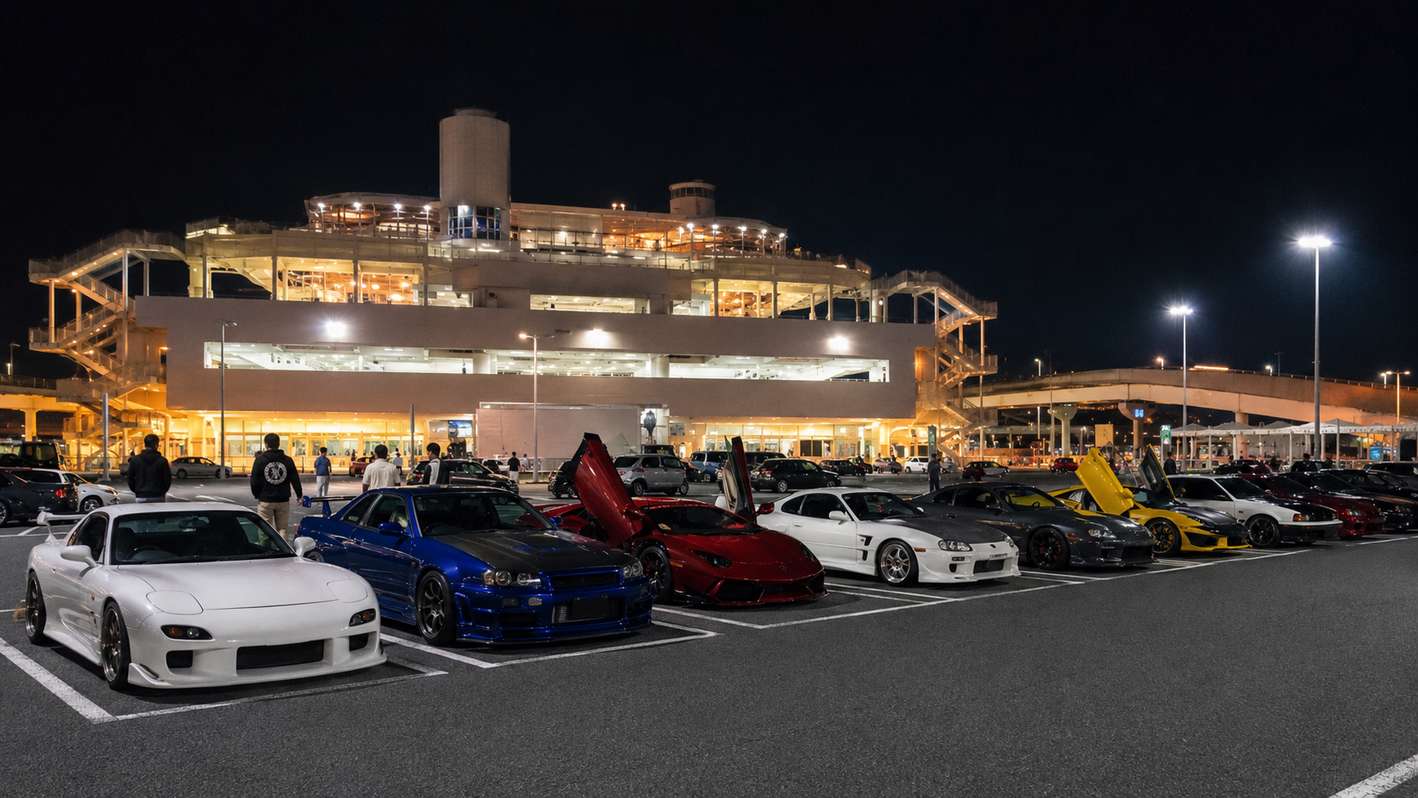
Compare Tokyo's popular car meet locations so you can pick the right spot for a night of car spotting.
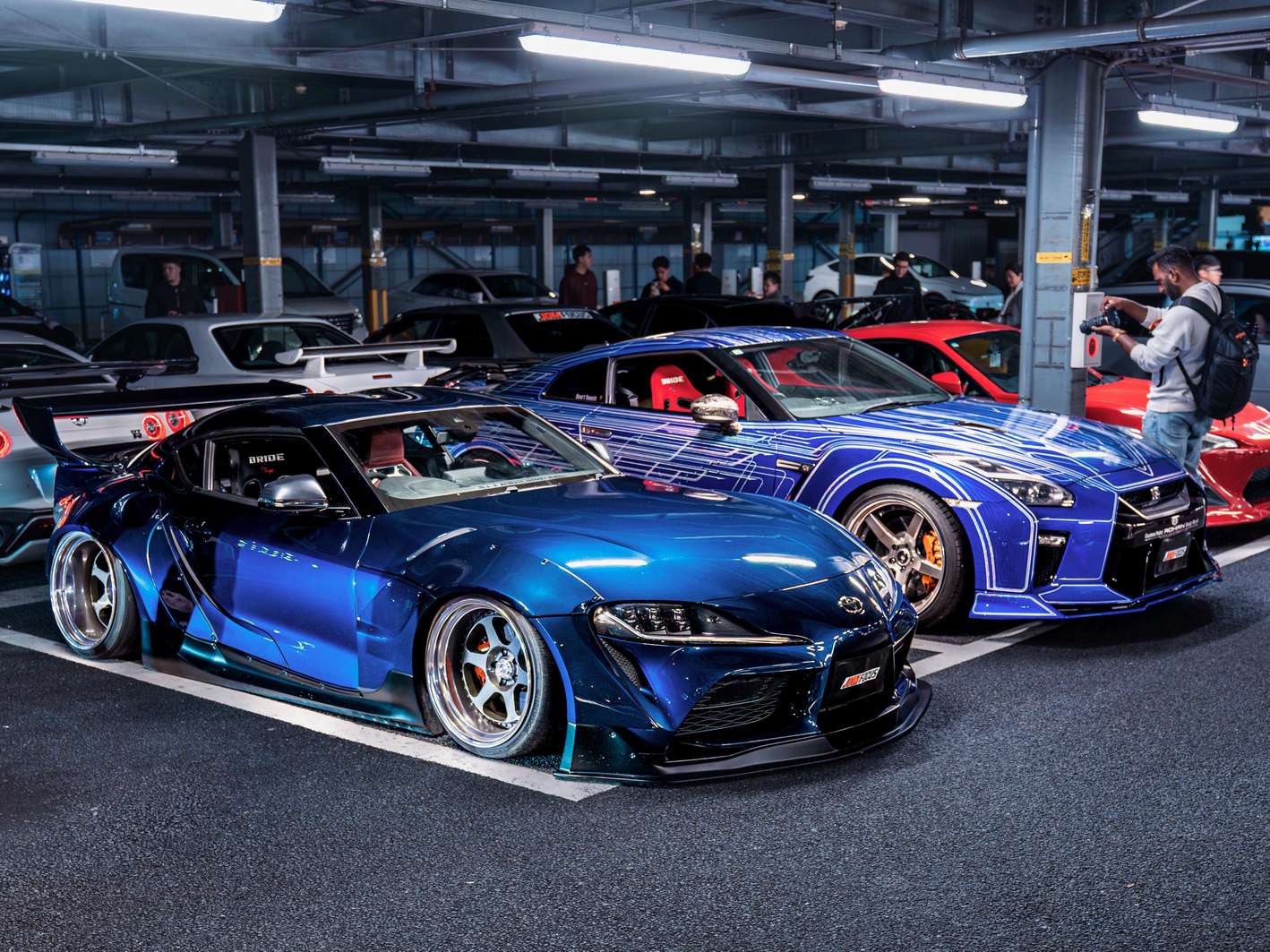
Get the layout, access and rules of Akihabara UDX's underground parking before you go hunting wrapped cars.
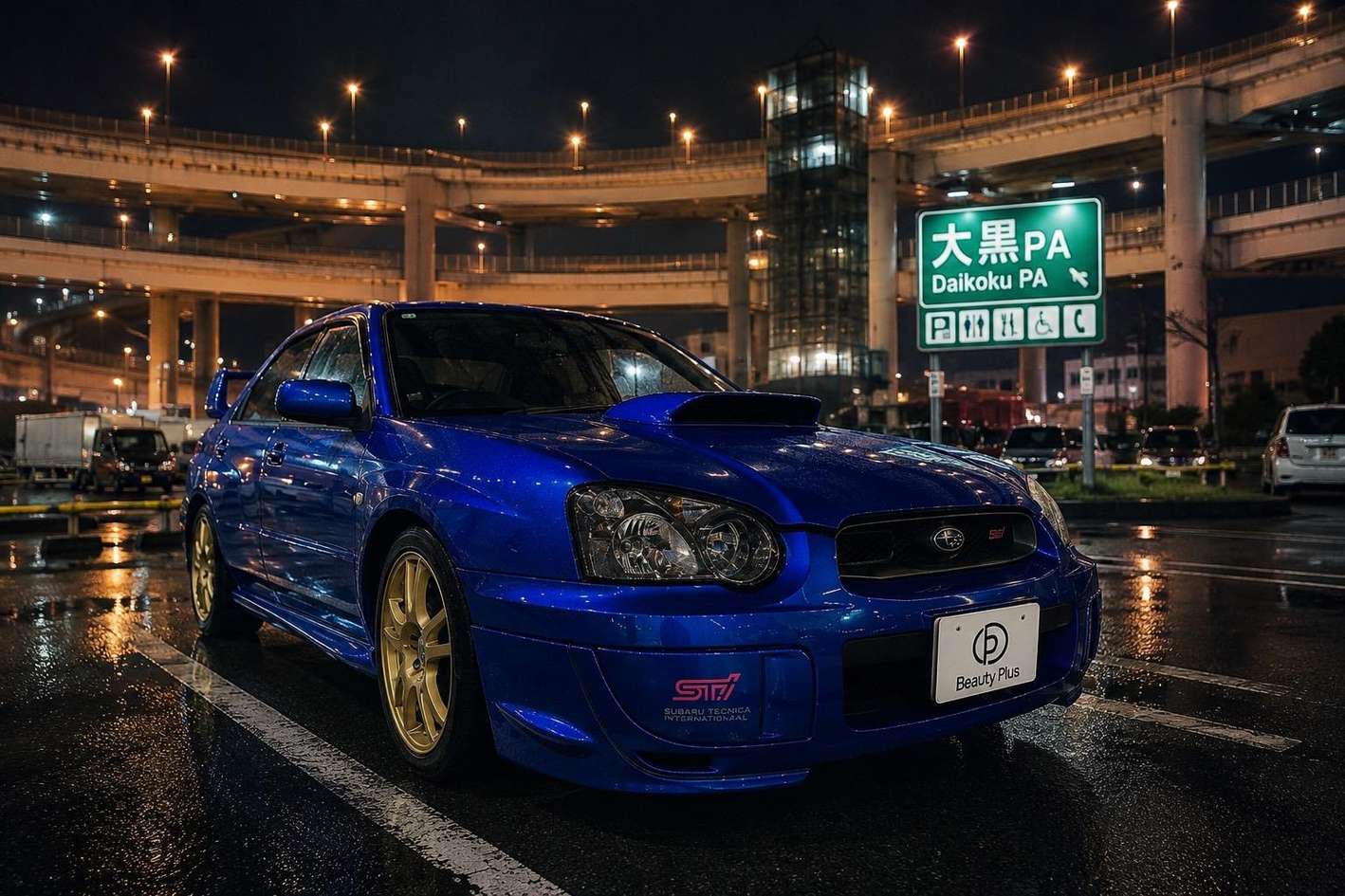
Plan a visit to Tatsumi PA, the old Midnight Club haunt near the C1 loop, with location and visitor details.
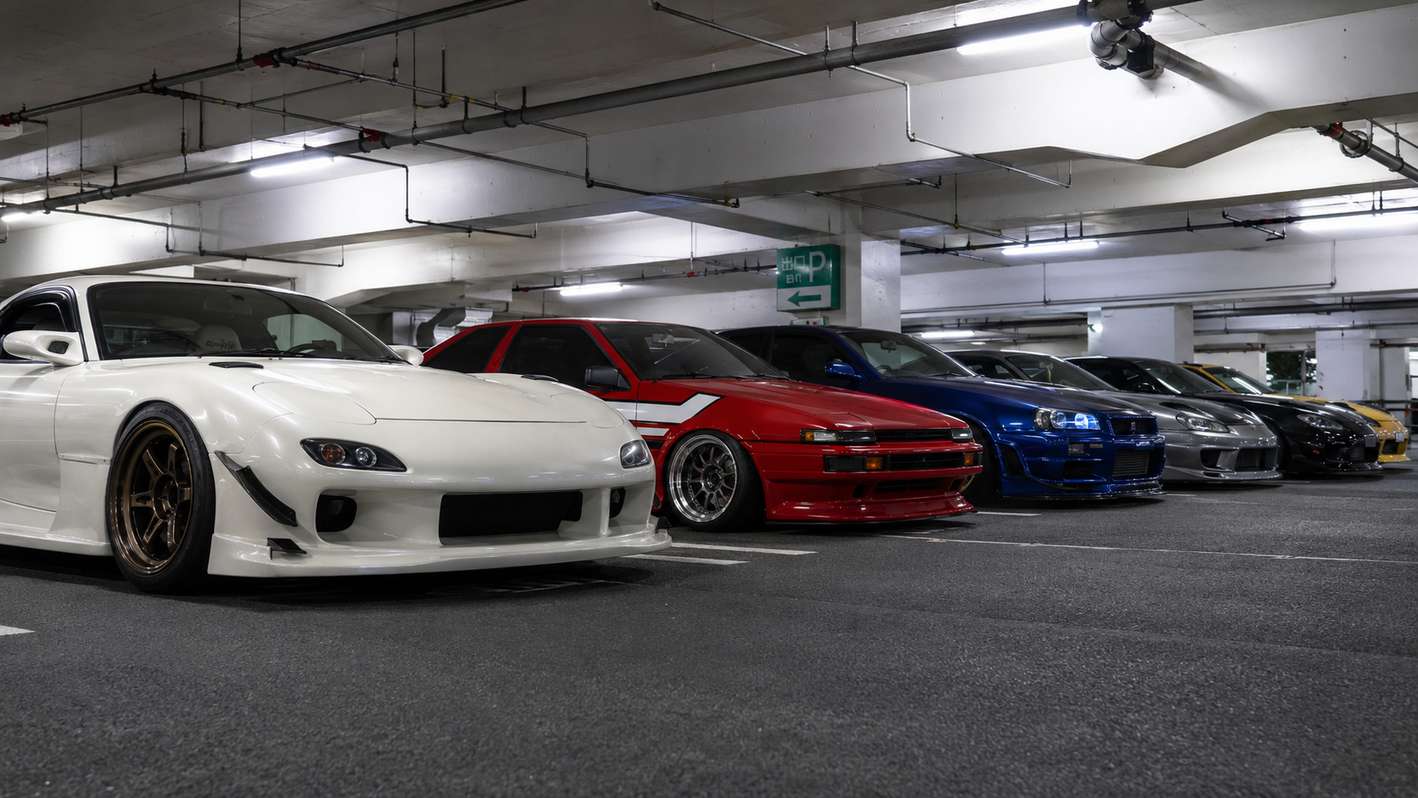
Learn how the Umihotaru PA meet works and why a scheduled tour is the reliable way to see it.
Check heights, rules and access for the City Circuit Tokyo Bay kart meet before you head to Daikoku.
Find out when the Higashi Osaka PA meet happens if your trip takes you to Kansai.
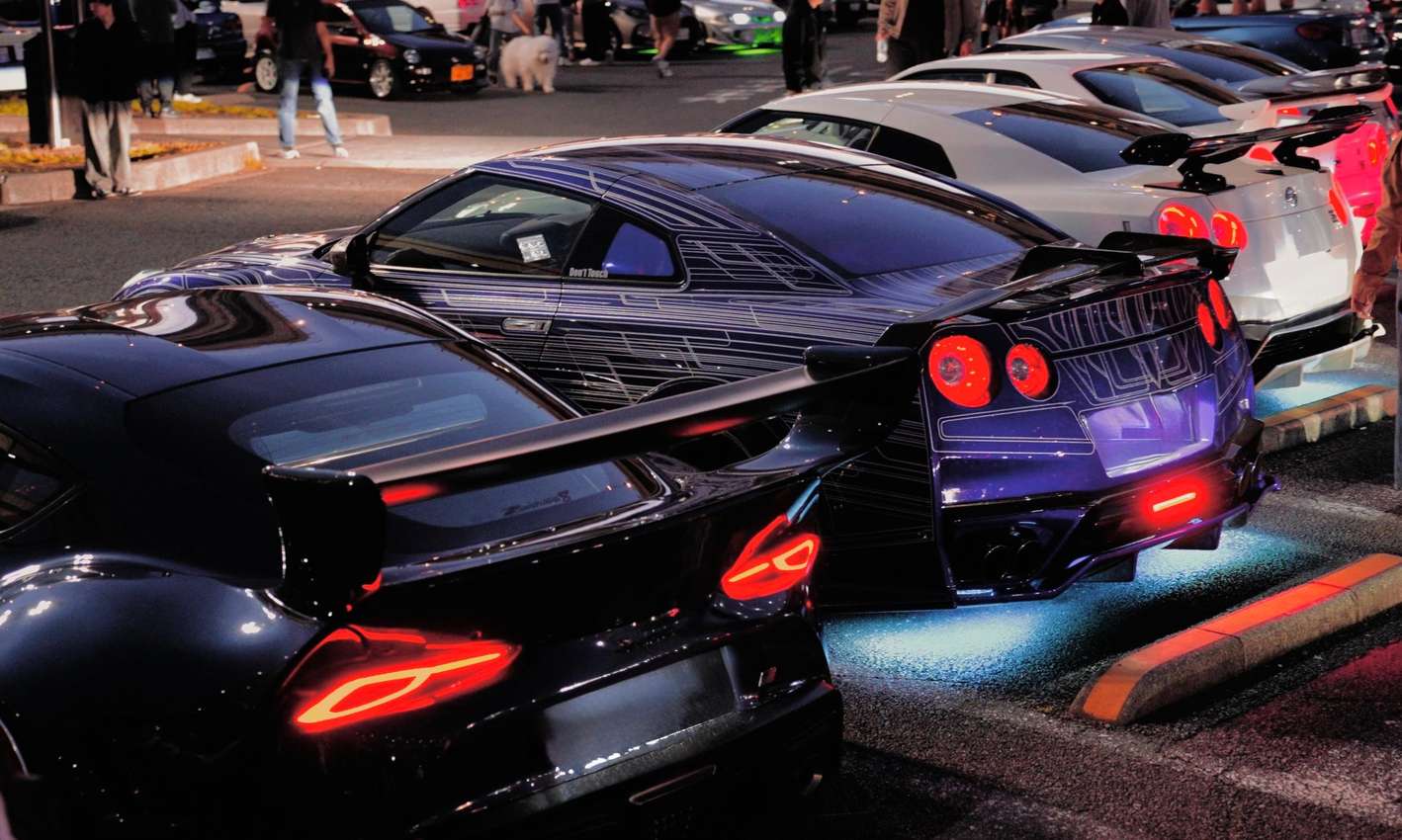
Get the full Daikoku visitor guide: access, etiquette and what to do if police close the lot.
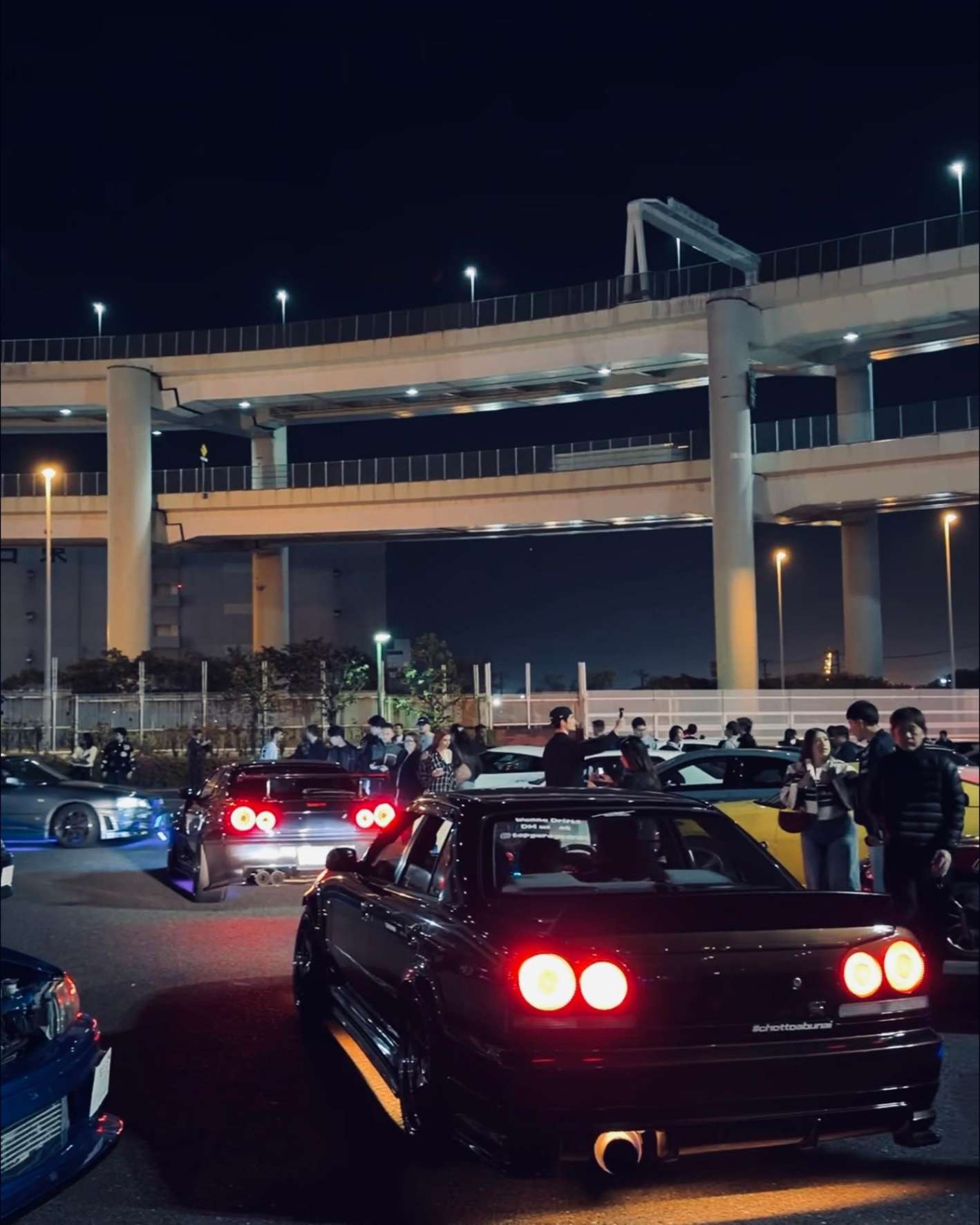
Pick the best day and hour for Daikoku, from weekend peaks to quiet weeknights.
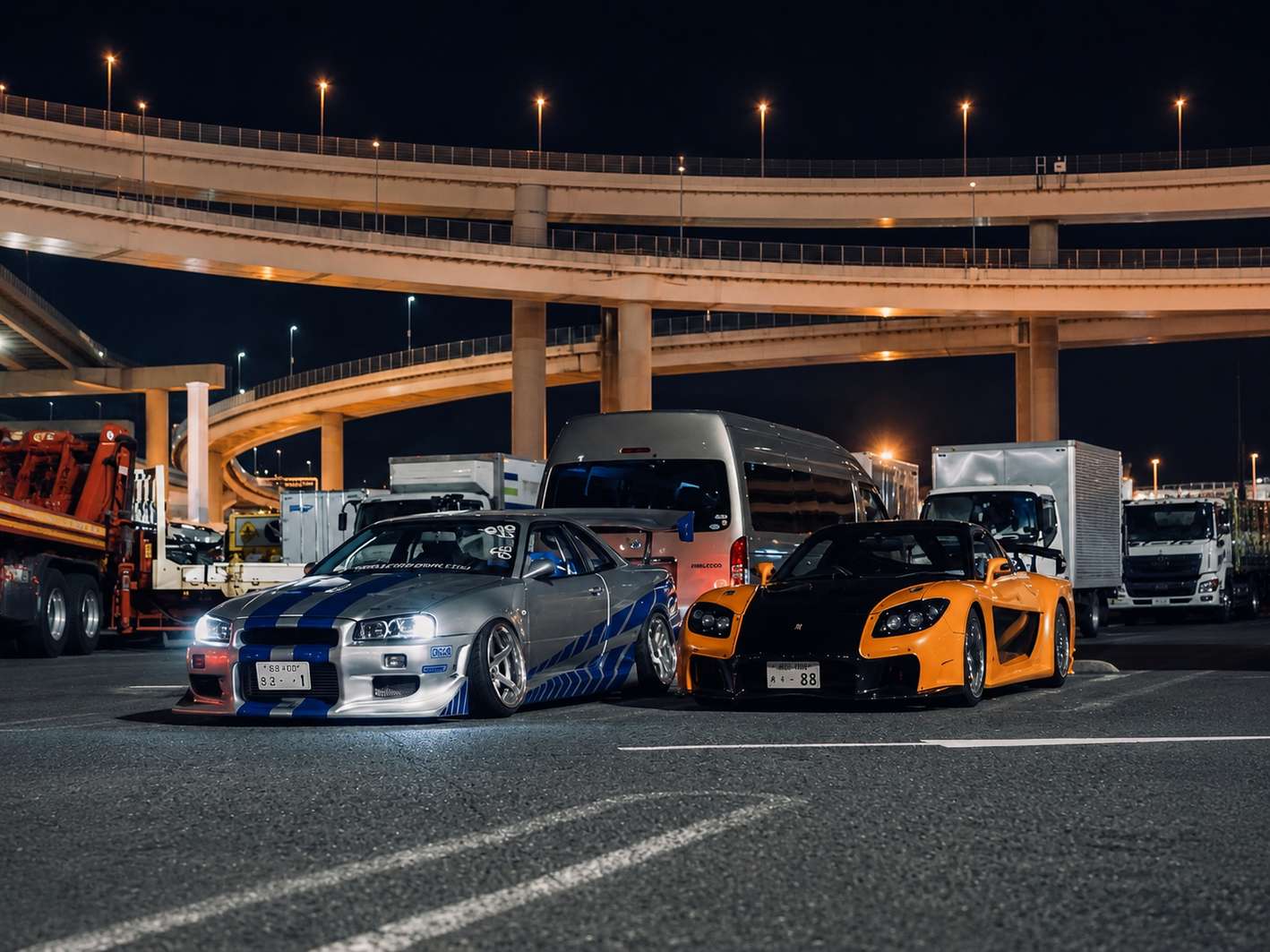
Work out how to reach Daikoku PA, which has no pedestrian entrance, with routes and transport options.
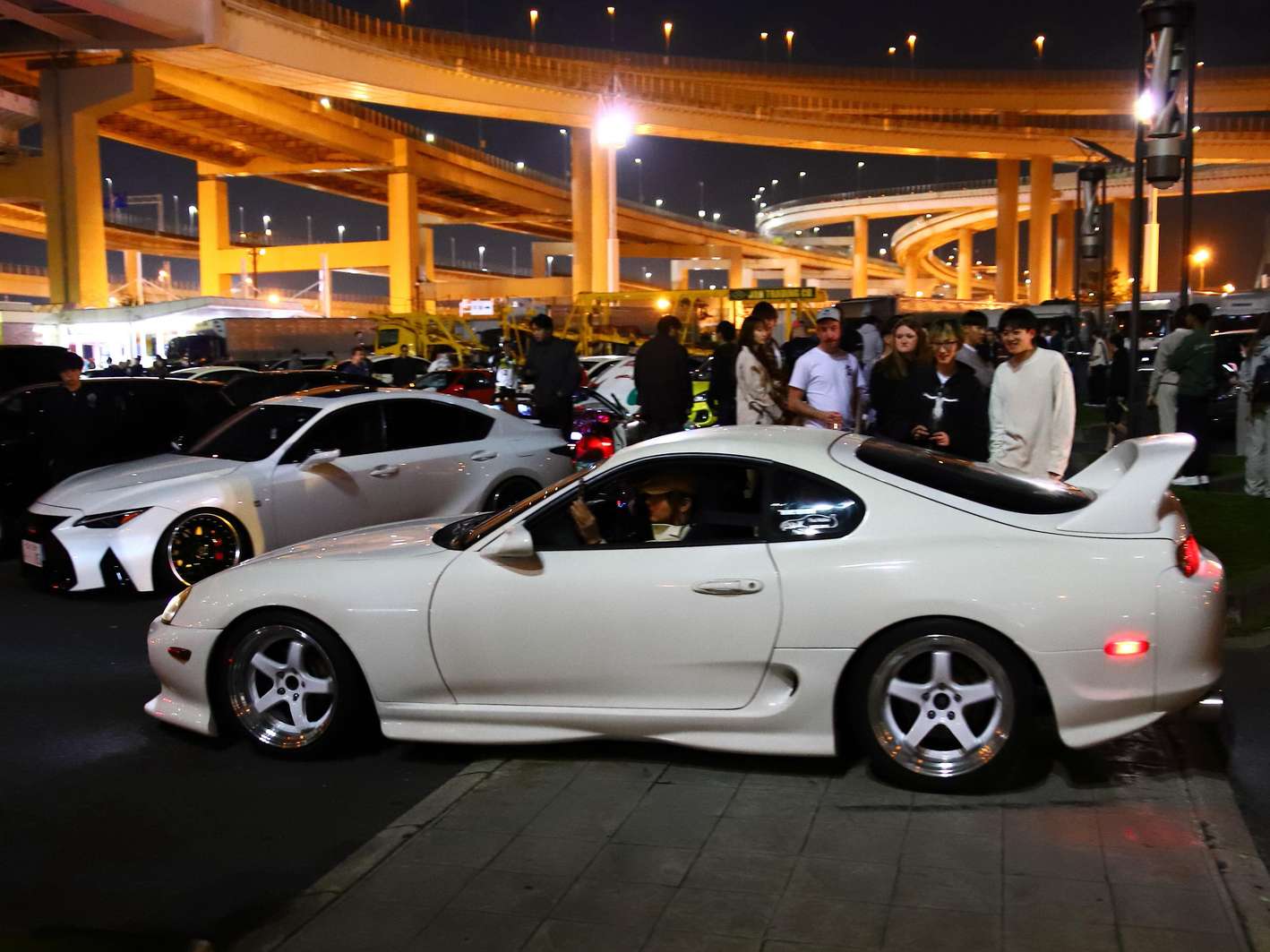
Read the visitor rules and safety picture for Daikoku so your first visit goes smoothly.
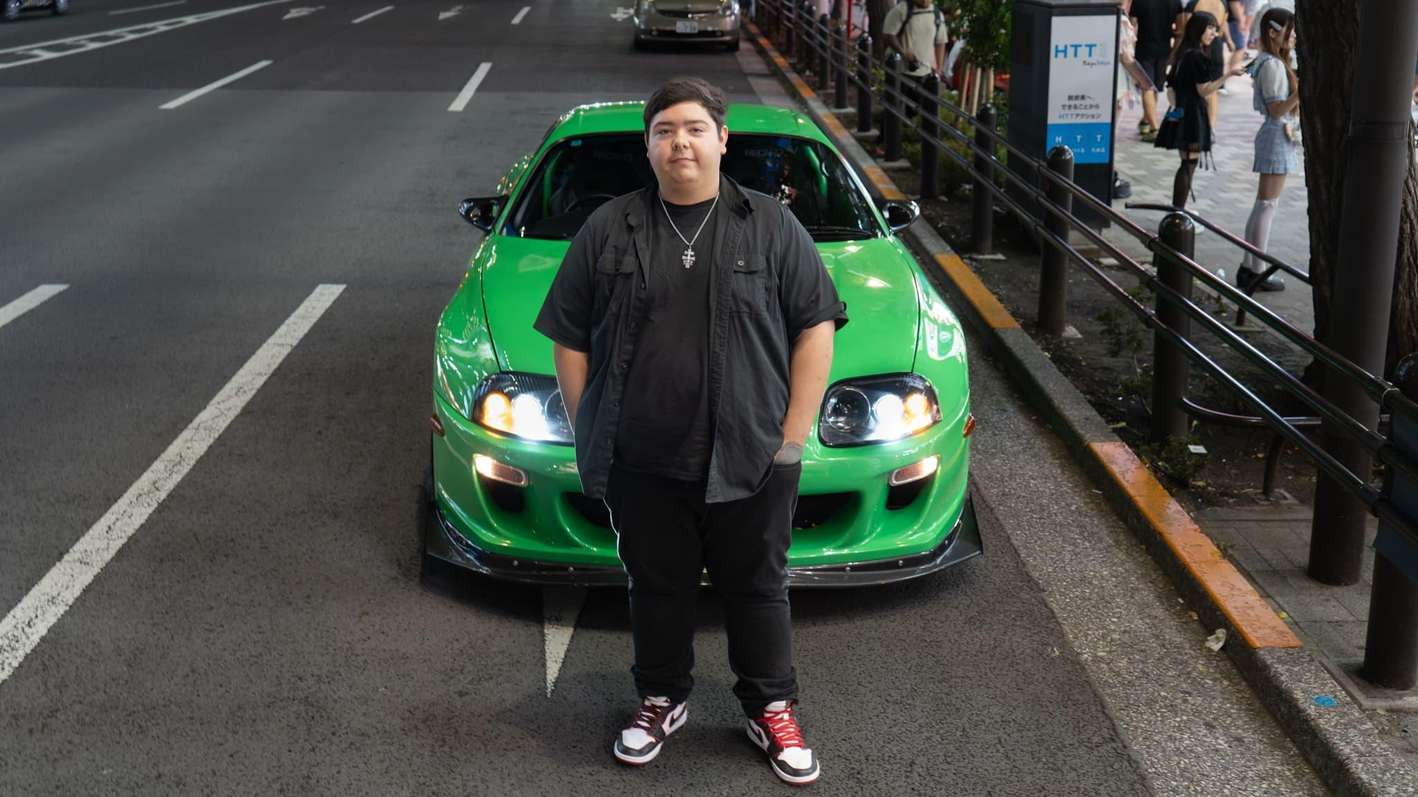
See what a night ride to Daikoku in a modified Supra includes and whether it fits your trip.
Look at the Daikoku tour run in a Porsche Macan if you want the meet without a JDM ride.
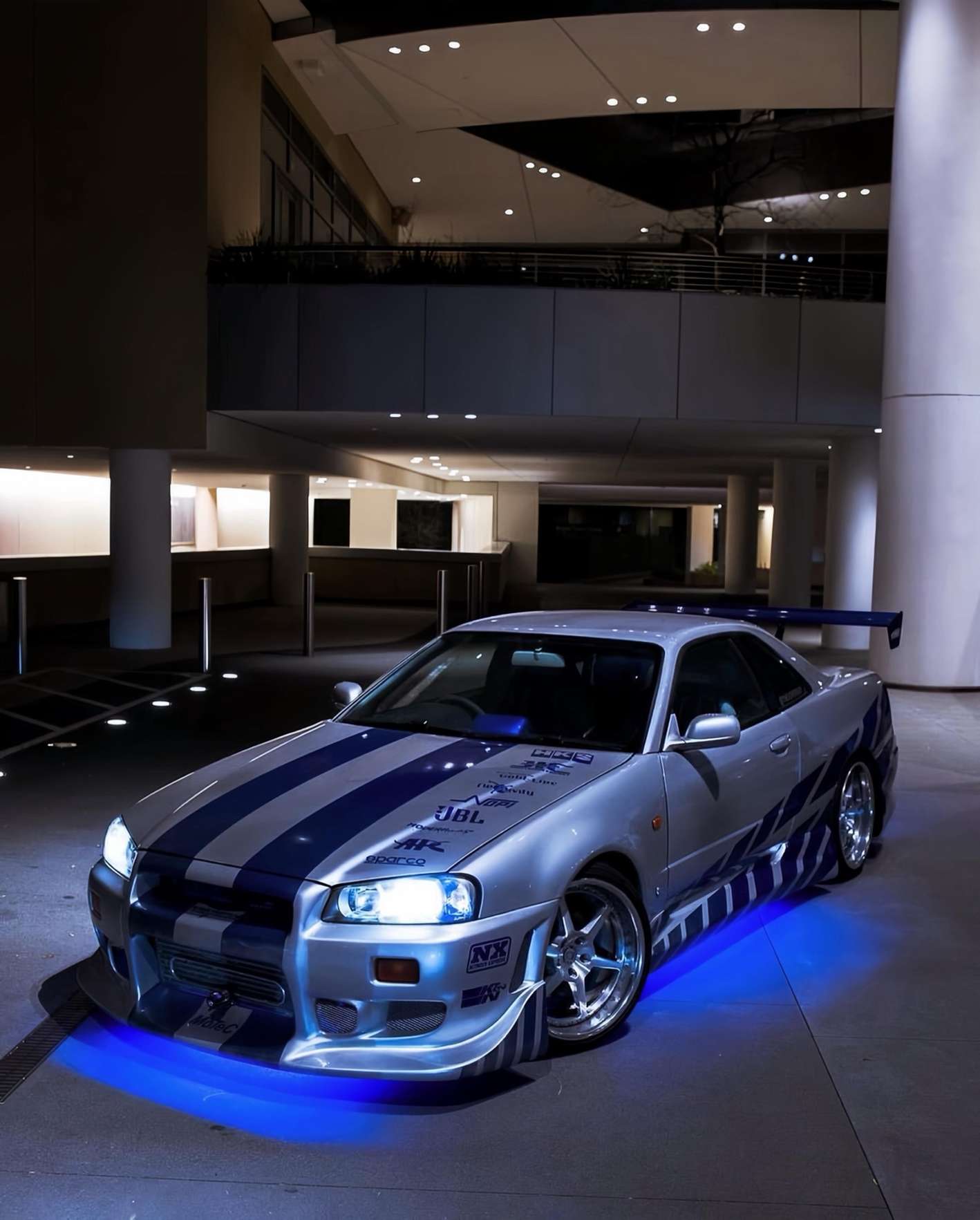
Compare the main kinds of JDM experience, from night rides to circuit days, in one place.
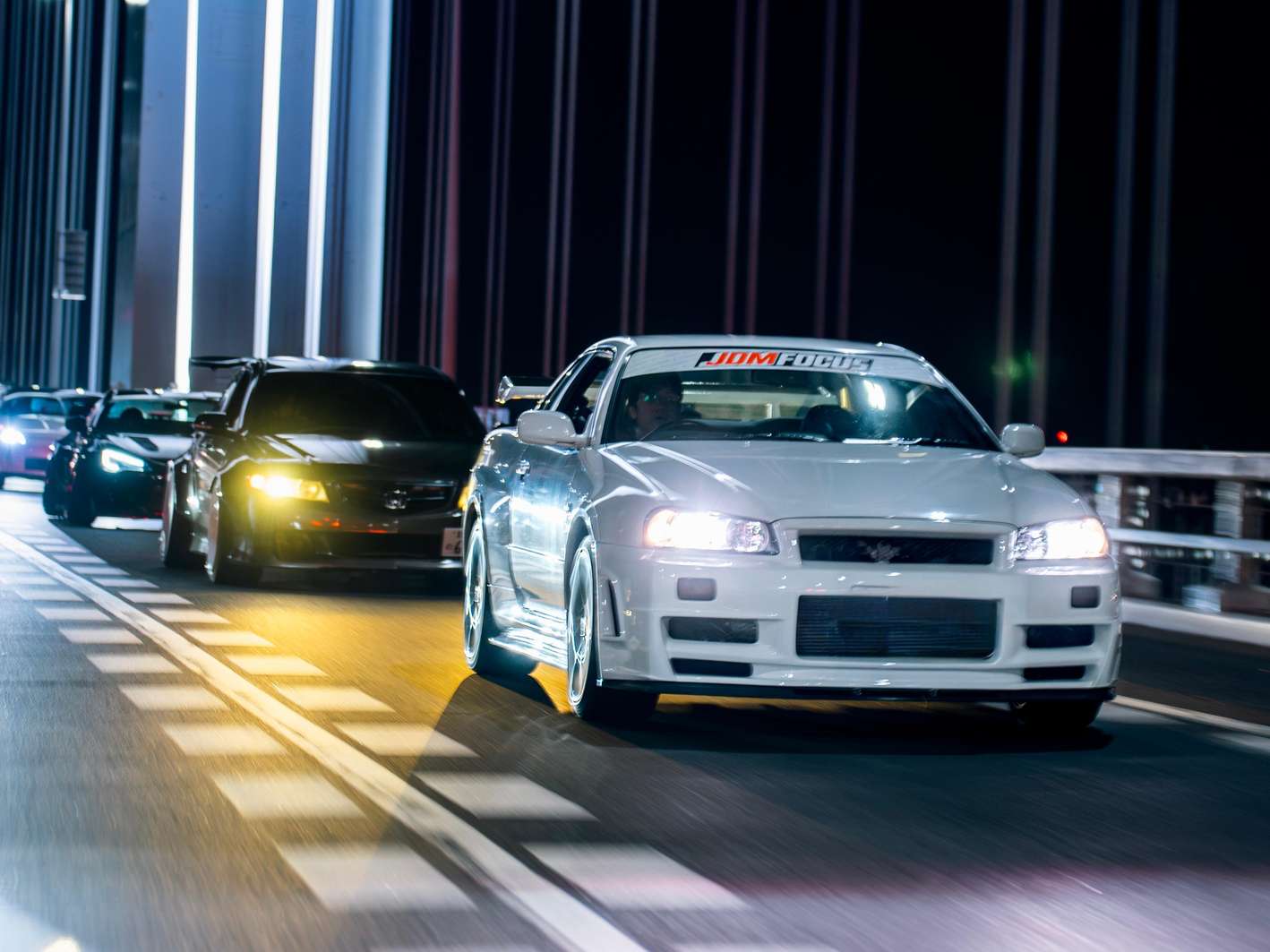
Find a guided night tour that puts you inside Tokyo's car meet scene without planning it yourself.
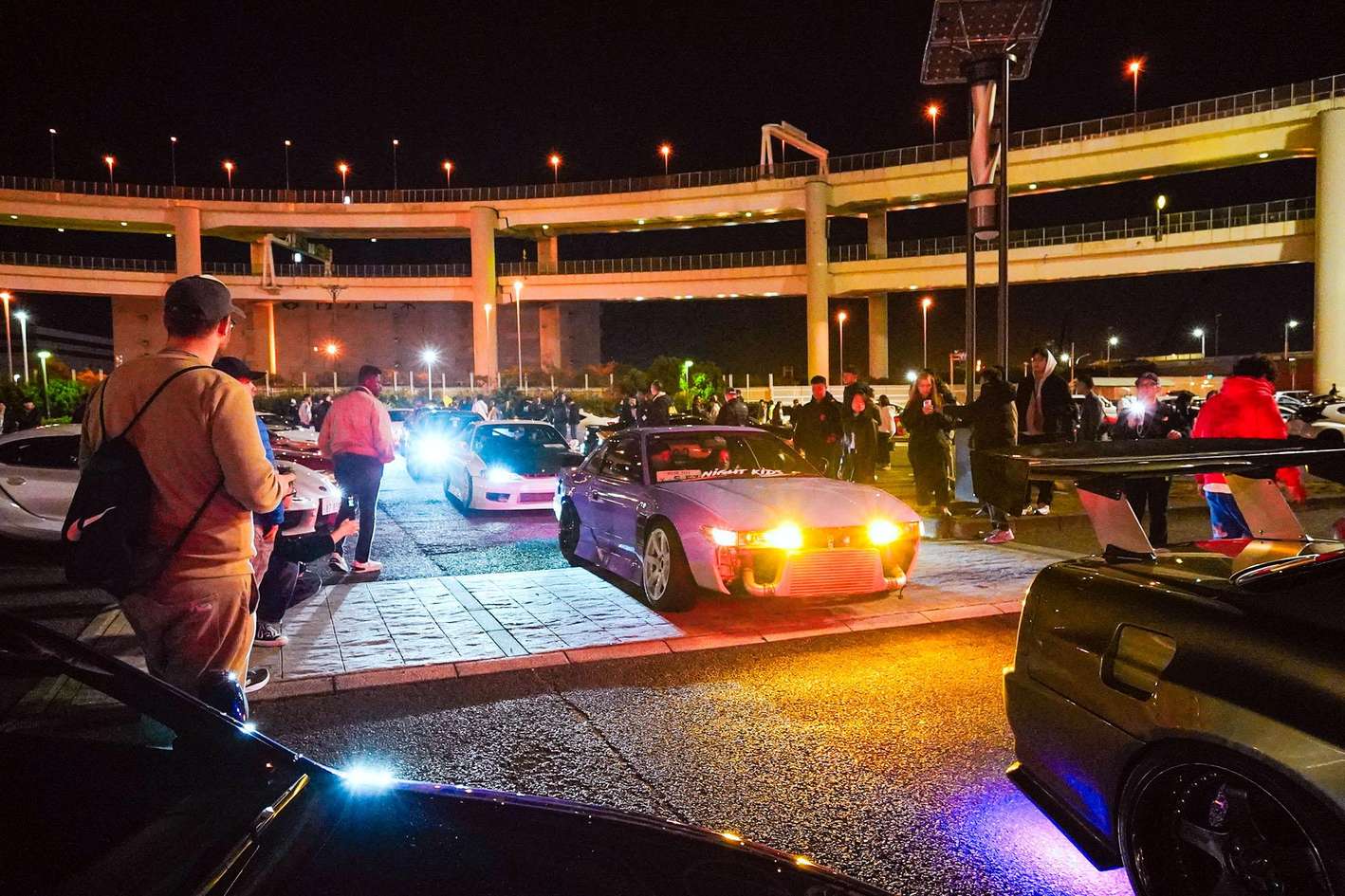
Browse the Daikoku night-drive tours and pick the car and route that suit you.
See which guided rides include the Wangan and Bayshore cruise made famous by Wangan Midnight.
Sort out the difference between tours you ride and tours you drive before booking.
Compare private trips to Daikoku PA if you would rather have the car and guide to yourself.
Find where to rent a JDM sports car in Tokyo and what paperwork and age rules apply.
Check whether you can book an AE86 in Tokyo and what the closest options are.
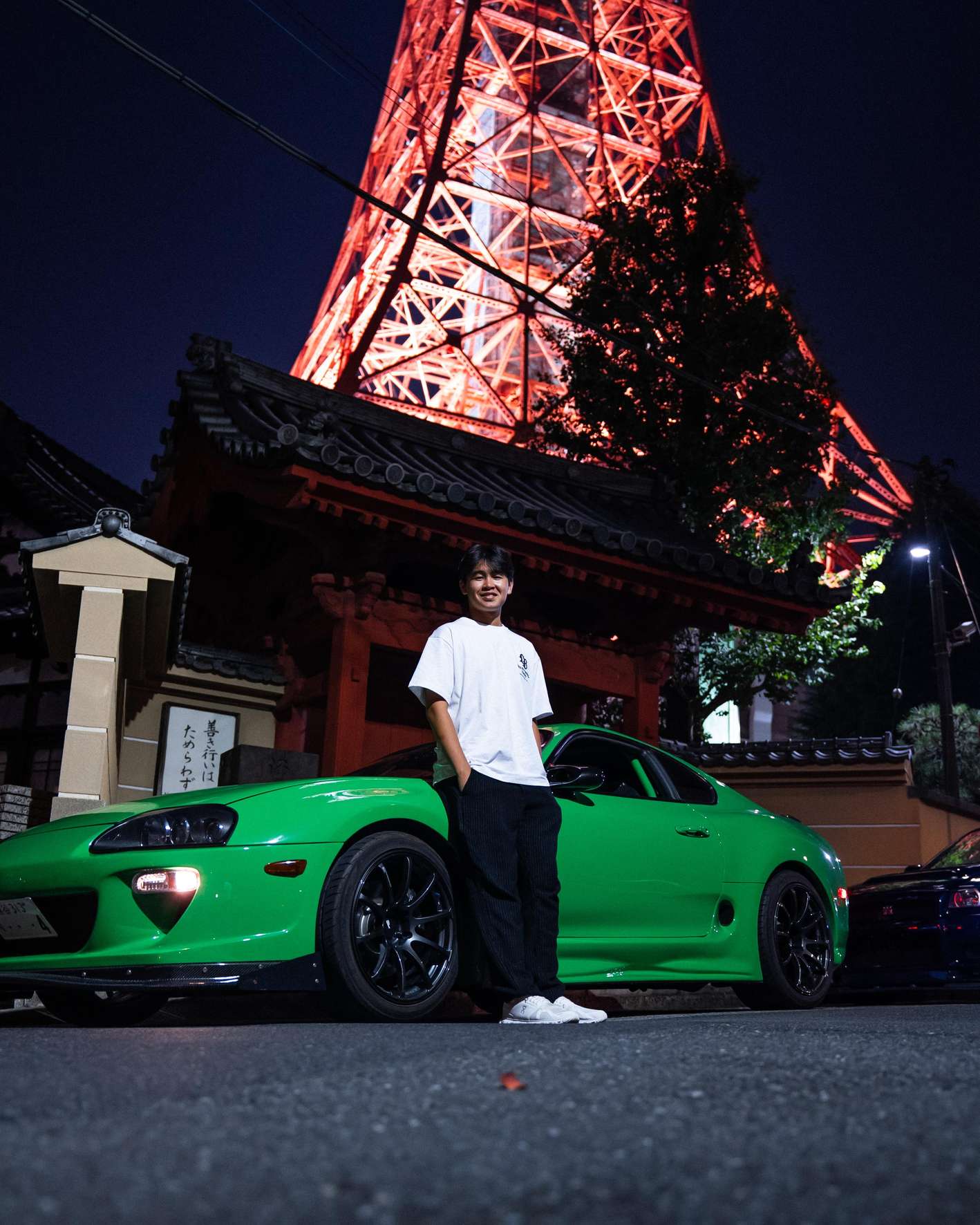
Get a direct answer on renting a Supra in Tokyo, plus the guided ride alternative.
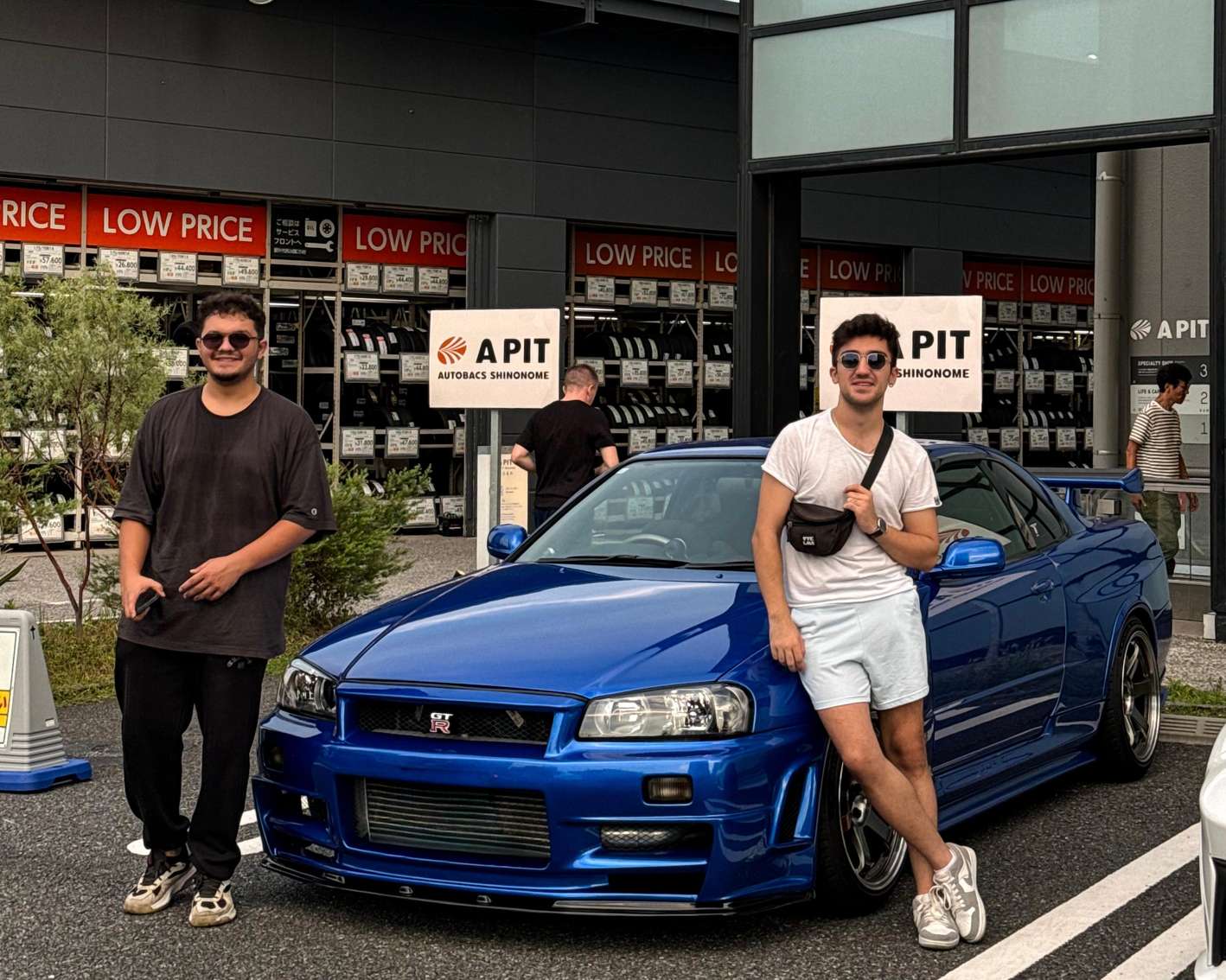
See how to experience an R32 GT-R, whether you drive it yourself or join a guided ride.
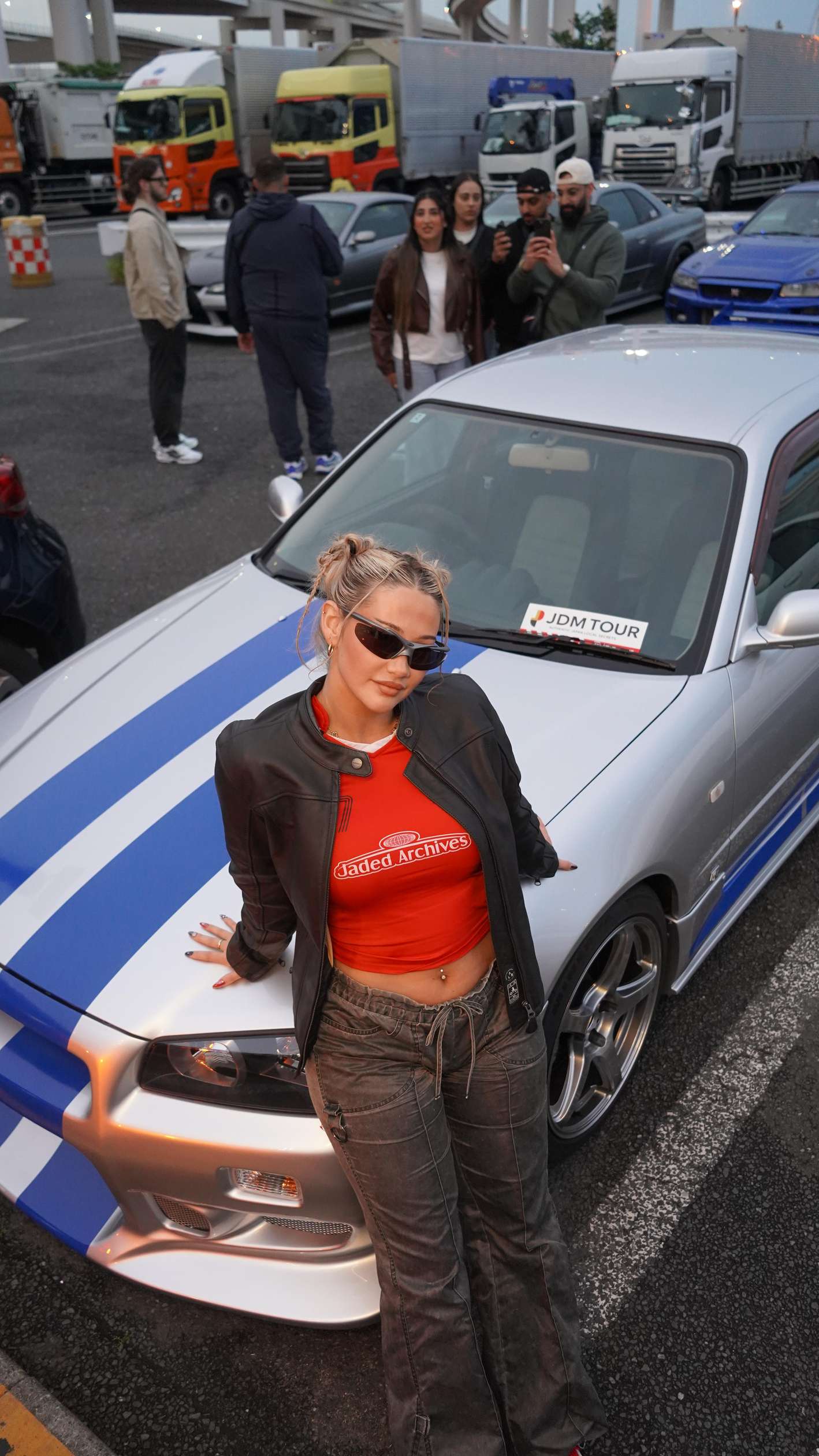
Compare R34 Skyline rentals and guided rides to choose the way you want to enjoy the car.
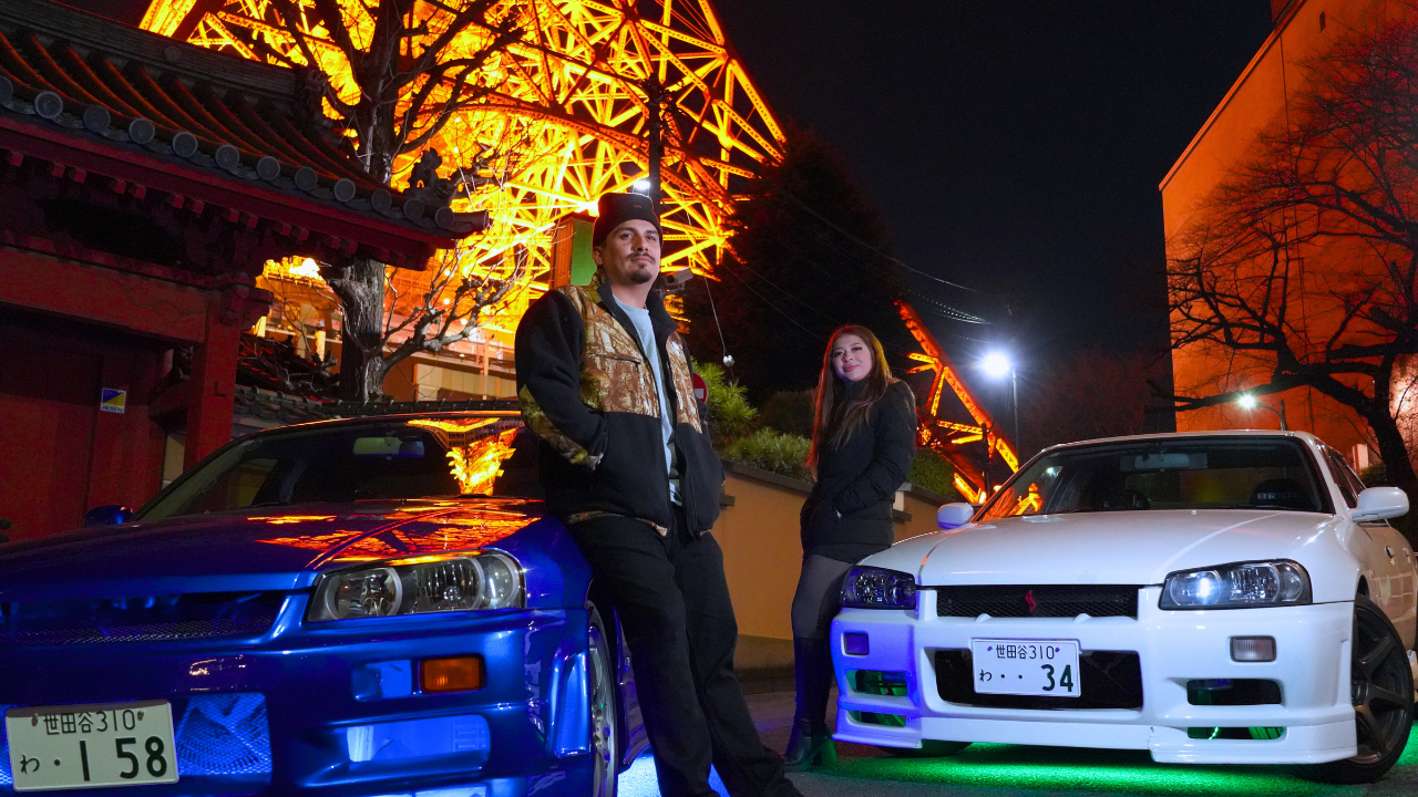
Find out how to experience the R35 GT-R in Tokyo, from self-drive hire to passenger runs.
Short answers to the questions visitors ask most about seeing and trying drifting near Tokyo.
Inside Tokyo itself, the main chance is the D1 Grand Prix finale on a temporary course at Odaiba, usually in November. For real circuit drifting, the nearest regular action is at Minami Chiba or Mobara in Chiba, about 1.5 hours away, with Ebisu Circuit in Fukushima as the big-name destination.
Drifting on public roads is illegal in Japan, and street drifting spots are kept secret from outsiders. Legal drifting happens on closed circuits, and that is where every bookable experience takes place.
Not on the streets, and there is no drift circuit in Tokyo or Kanagawa. You drift at a circuit reached from the city, usually in Chiba or Fukushima, with transport and instruction arranged as part of the experience.
Yes, when it runs on a closed circuit with a professional setup. Ride-along and lesson experiences near Tokyo and at Ebisu Circuit all take place on private tracks, so no public-road driving is involved.
For a ride-along, no licence is needed because a professional driver does the drifting. For a self-drive lesson, no licence is required either, since the circuit is closed and private. You only need a licence to drive a car on public roads in Japan.
Yes. Lessons start with basic circle work around cones, and patient instructors teach donuts and figure eights step by step. Beginners usually start in a Mazda MX-5 and may move up to an RX-8 or 350Z once the basics click.
A private lesson near Tokyo runs about 3 hours on the circuit, within a roughly 6-hour day once pickup and transport are counted. At Ebisu Circuit, the sideways ride-and-drive includes about 30 minutes of seat time plus passenger hot laps.
Long sleeves, long pants and sneakers are required; sandals are banned. Helmets and gloves are provided by the organizers, and cars carry roll cages and harnesses. Bring a camera and dress for the season, since parts of the day happen outdoors.
Severe storms or road closures are handled before you lose the day: one operator contacts you to reschedule, and another offers a full refund or an alternative location. Ordinary rain rarely stops a lesson or a car-spotting outing.
Drifting is one of the easier motorsports to enter: no competition licence is needed for practice days, and a full driving licence is enough. The right first step is a skid pan or an organized drift day with instructors, and beginner clinics exist so you never hold up the track.
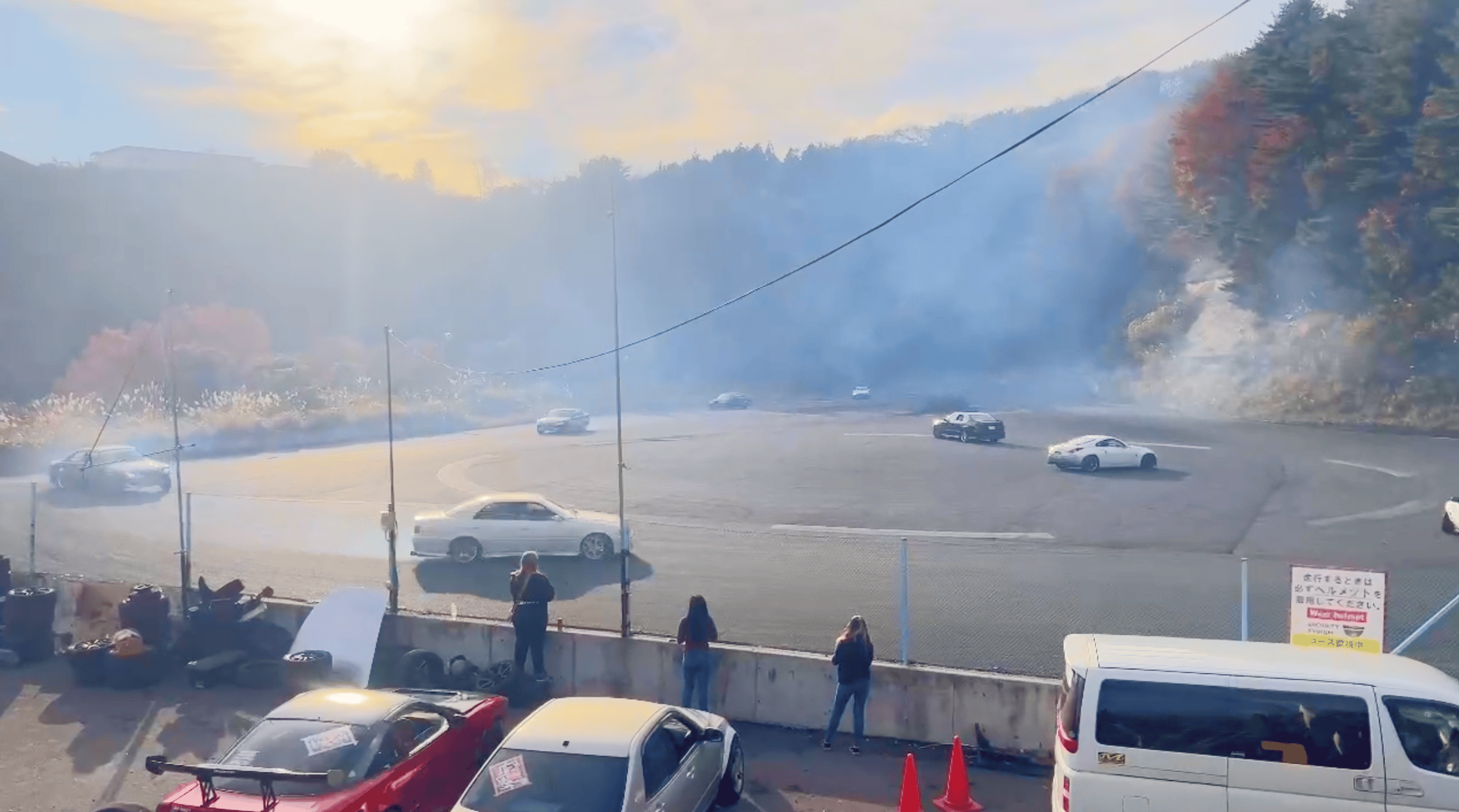
Ride with pro drift drivers at Japan's drift mecca, with transport from Tokyo and free cancellation up to 24 hours before.