3 hours
5.0(7)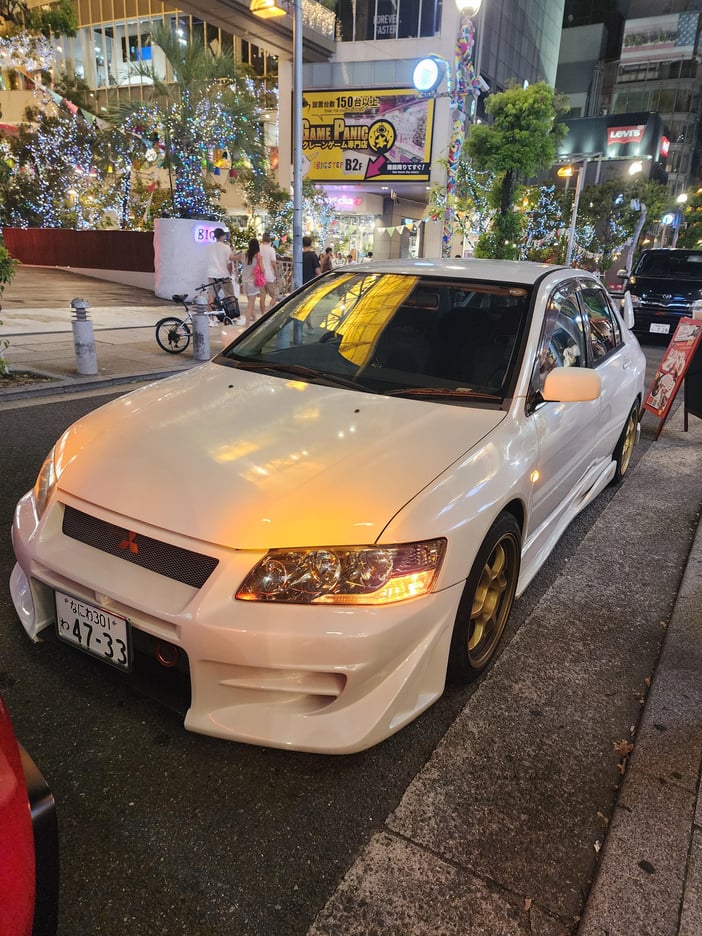
Osaka: JDM Culture Meetup & Self-Drive Sports Car Rental
Free cancellationRental sports carFuel
Drive a real JDM sports car to Osaka's most legendary meetup spot. Pick your car, cruise the Hanshin Loop with a lead car guiding the convoy, and pull into Higashiosaka PA where Skylines, Supras and tuned Civics line up for photos. Fuel, tolls and the route are handled. Book your seat behind the wheel.
"Loved it! Driving the GTO felt perfect with the retro signs and atmosphere. Great meeting fellow car fans in Japan too!"
Osaka's biggest night meet fills a tollway rest stop with more than 250 cars, and most first-timers arrive with no idea how to actually get in. From the first walk through the lot to the paperwork, the pickups and the plan B, here is how the night works.
The meet gathers most Friday and Saturday evenings on the downbound side toward Matsubara, with the deepest crowd between 10 pm and midnight.
Gathering at a public rest area is legal, but street racing, burnouts and blocking lanes are what bring police down on a meet.
The PA sits on a toll expressway with no station, bus stop or public parking within 1.5 km, so every visit starts with wheels.
No car means Amemura and Triangle Park from about 9 pm on weekend nights, or the Rinku Town gathering by the ferris wheel.
Even locals stumble onto meets by chance, so treat a packed lot as a bonus and keep a city backup in mind.
Plan your visit around a Friday or Saturday night and treat any sighting as a bonus. The parking area sits on a toll expressway and can only be reached by car, so arrange a rental, a tour or a willing taxi driver, and have a backup spot such as Amemura if the lot is quiet.
The lot on the downbound side, toward Matsubara, fills up through the evening on most Friday and Saturday nights.
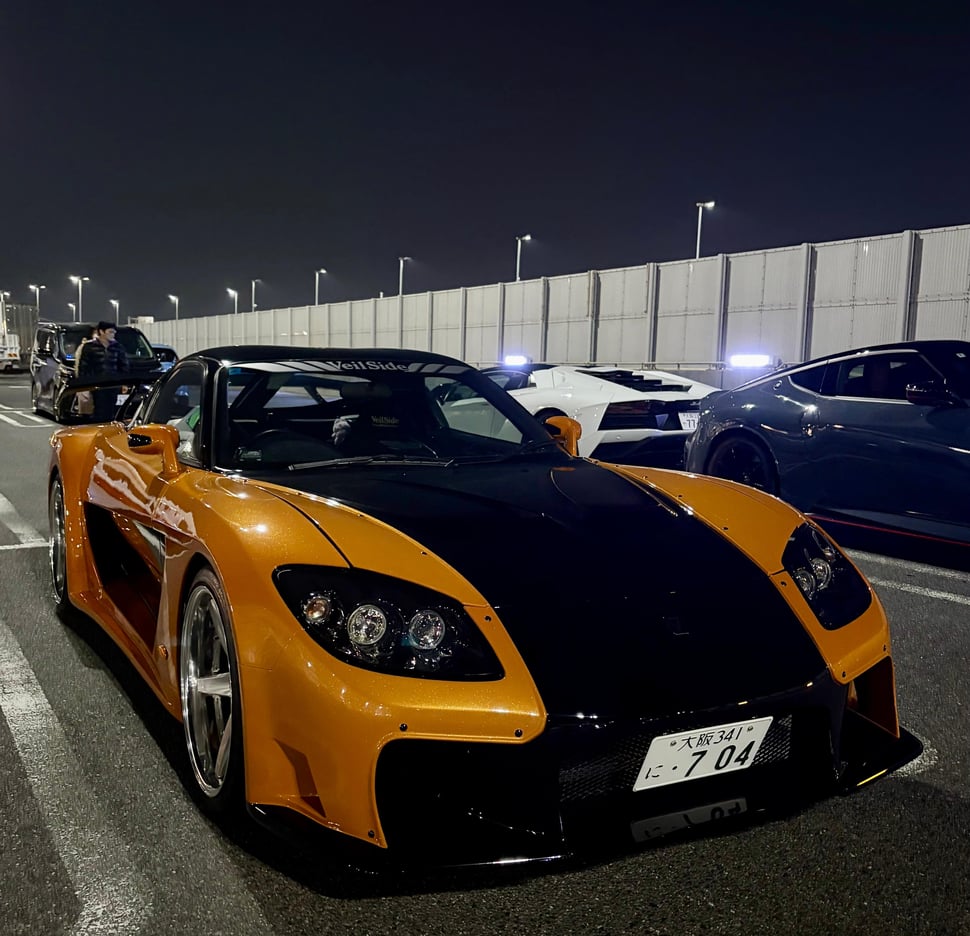
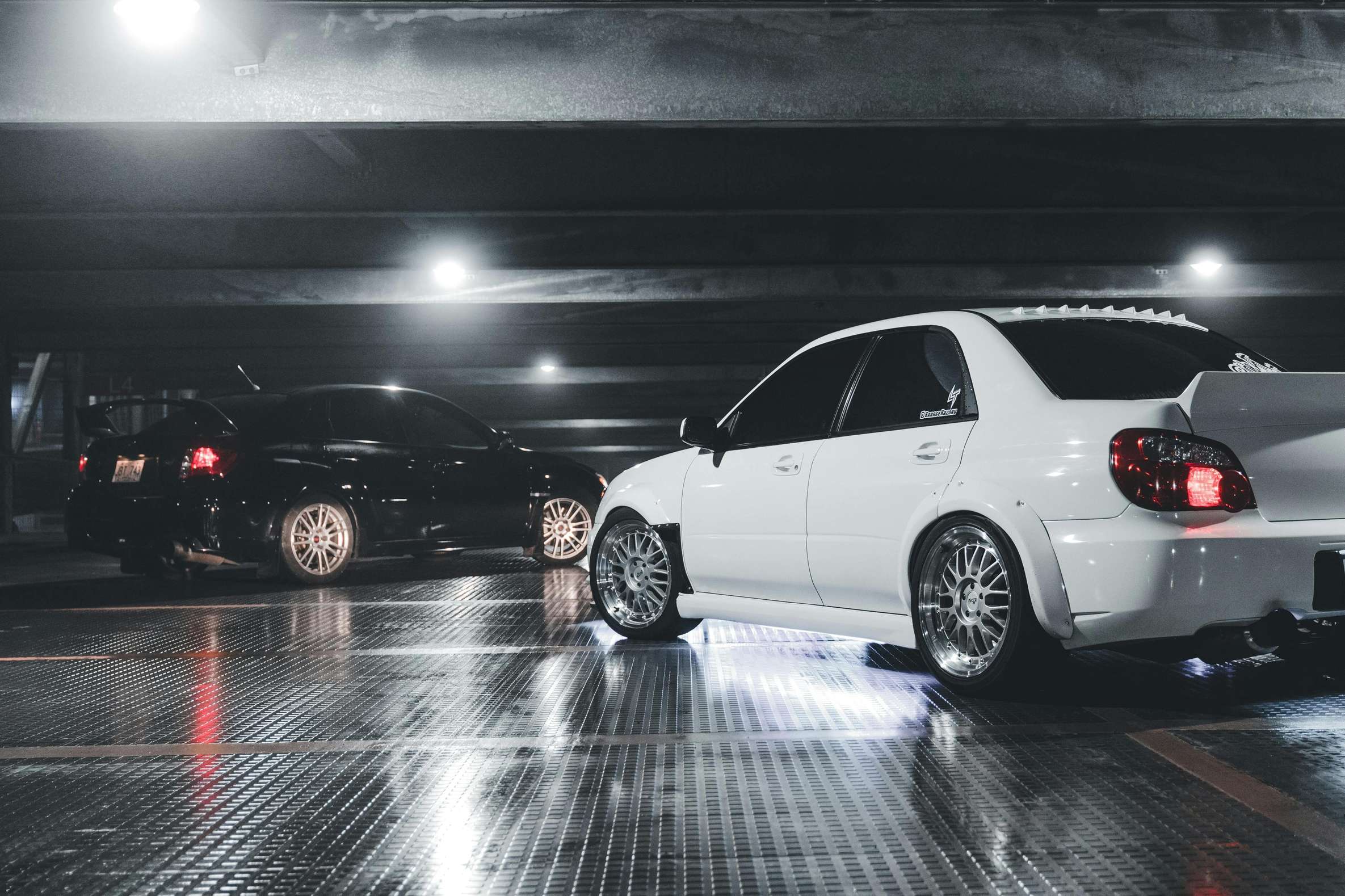
On a good one, more than 250 cars pack the parking area: Skyline GT-Rs beside tuned Supras, lightweight Civics next to Lamborghinis, Ferraris, slammed VIP sedans, lowriders, even modified Priuses. This is Osaka's version of Daikoku PA, and it earns the comparison.
Owners line their cars up for photos and stand around talking modifications. The mood is relaxed and social, and the crowds are welcoming to visitors. Police are somewhere on-site, keeping an eye on how the road is used.
The 24-hour 7-Eleven nearby is already doing a steady trade
GT-Rs, drift Nissans and lowriders line up for photos
Cars roll out together in a convoy roar down the expressway
The departure is the part people carry home. Several hundred engines start at once, and the whole lot empties in a rolling line of exhaust noise. Stay to the end for that alone.
One honest note before anything else: the meet is informal, with no organiser and no published line-up, so a packed lot is never certain.

Gathering in a public rest area is legal, and that is all a car meet is. What bends the rules is the PA's own usage policy, which prohibits unauthorised assemblies, so the operator can ask everyone to leave. Police close entrances to manage crowding and noise while the gathering stays lawful in itself.
Street racing, burnouts and blocking the lot are what get people in trouble, and Osaka punishes group reckless driving with imprisonment, fines and license revocation. A crackdown involving the transport ministry caught illegally modified cars at this very PA on the spot. Police closing a packed parking area has even made Japanese national news.
Police close the entrance or the operator clears the lot The meet is never guaranteed; arrive early, keep the evening flexible, and have a city backup spot in mind
For a visitor, the practical version is simple. Walk around quietly, keep out of the driving lanes, and never rev or peel out. The calm crowds are the ones the police let stay, and the calm visitors are the ones the owners talk to.
Group drifting on public roads is a separate crime entirely, so leave any fantasy of a street drift session out of the plan.
Friday and Saturday evenings are the nights the meet actually forms, so build your Osaka stay around them. Within the night, the deep crowd runs from 10 pm to midnight, after the dinner-hour lull and before the lot empties out.
Here is the part nobody wants to hear: attendance swings hard week to week. Even locals who spend their nights driving around Osaka only stumble onto meets by chance, with no pattern to when or where they appear. A Friday does not promise 250 cars, and a Thursday does not promise an empty lot.
There is no schedule to look up. Word travels through Instagram, LINE and Telegram groups, so search the Osaka subreddits and event pages before your trip.
The broader picture of Osaka's night spots, parking areas and street hangouts sits in our Osaka car meet guide, which pairs well with this one if you have several evenings to spend.
Go in with two plans: the PA as the prize, and a city hangout as the consolation. That way a quiet night at the lot still ends with cars somewhere.
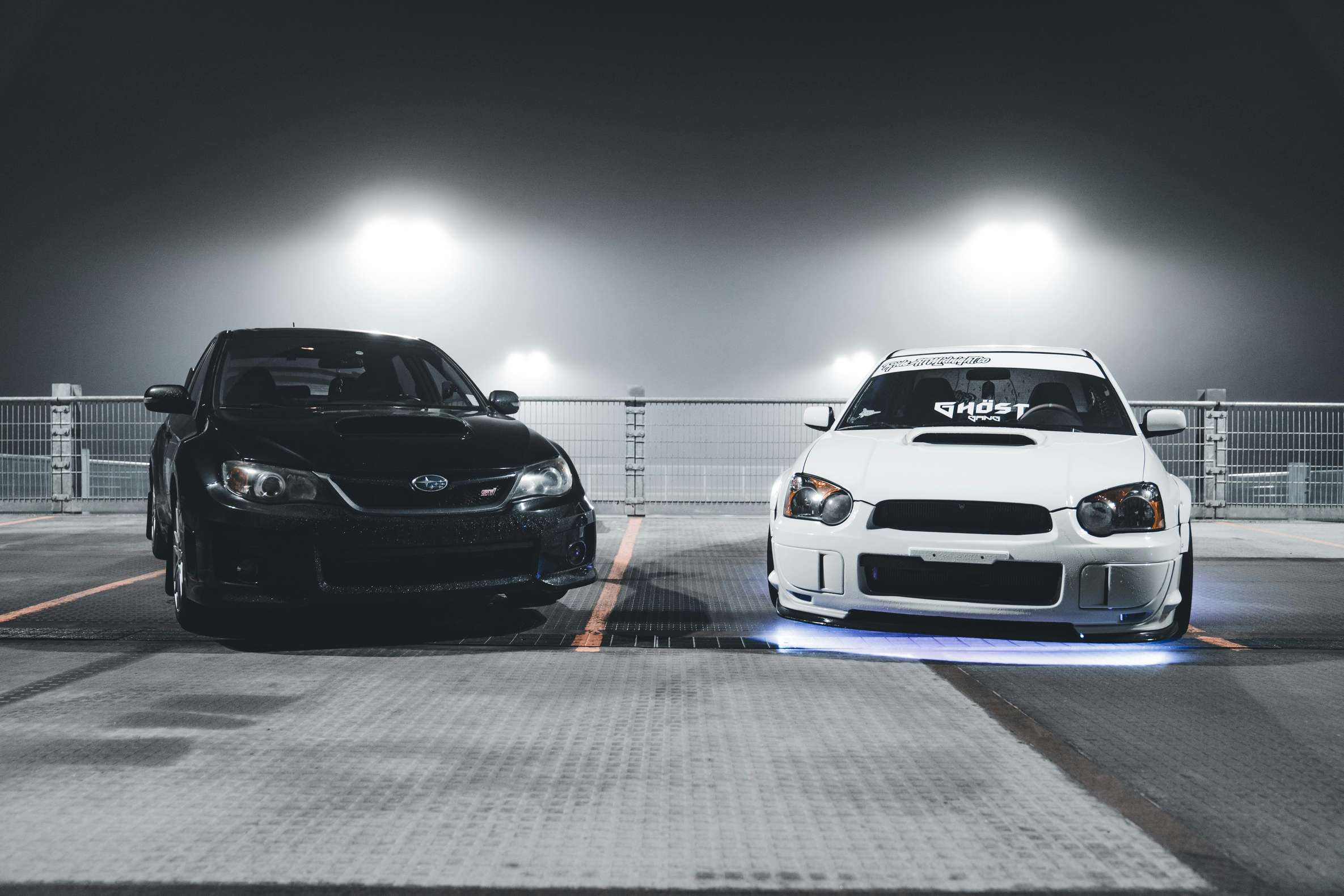
Higashi Osaka PA sits on a toll expressway with no pedestrian access at all. A search of the surrounding area finds no station, no bus stop and no public parking within 1.5 km.
This is the single fact travelers wish they had checked first, and one visitor did an hour on foot to learn it the hard way.
That leaves three ways in. A rental car puts you in control, and the PA is publicly accessible, so you can visit on your own without paying for any tour.
A guided pickup tour hands the route and the hunt to someone local. A taxi can technically take you inside, but the real problem is finding a ride back out of Higashiosaka late at night, so arrange for the driver to wait while you look around.
Drivers who do wait an hour are a lucky find, and buying them snacks is the appreciated thank-you.
One more detail worth knowing: the meet gathers on the downbound side toward Matsubara, which has a 24-hour 7-Eleven, and the surface road from the Osaka Chuo Kanjo Route rest area reaches it without paying the expressway toll.
Travelers without wheels should aim for Rinku Town or Amemura instead, and save the PA for a night with a car.
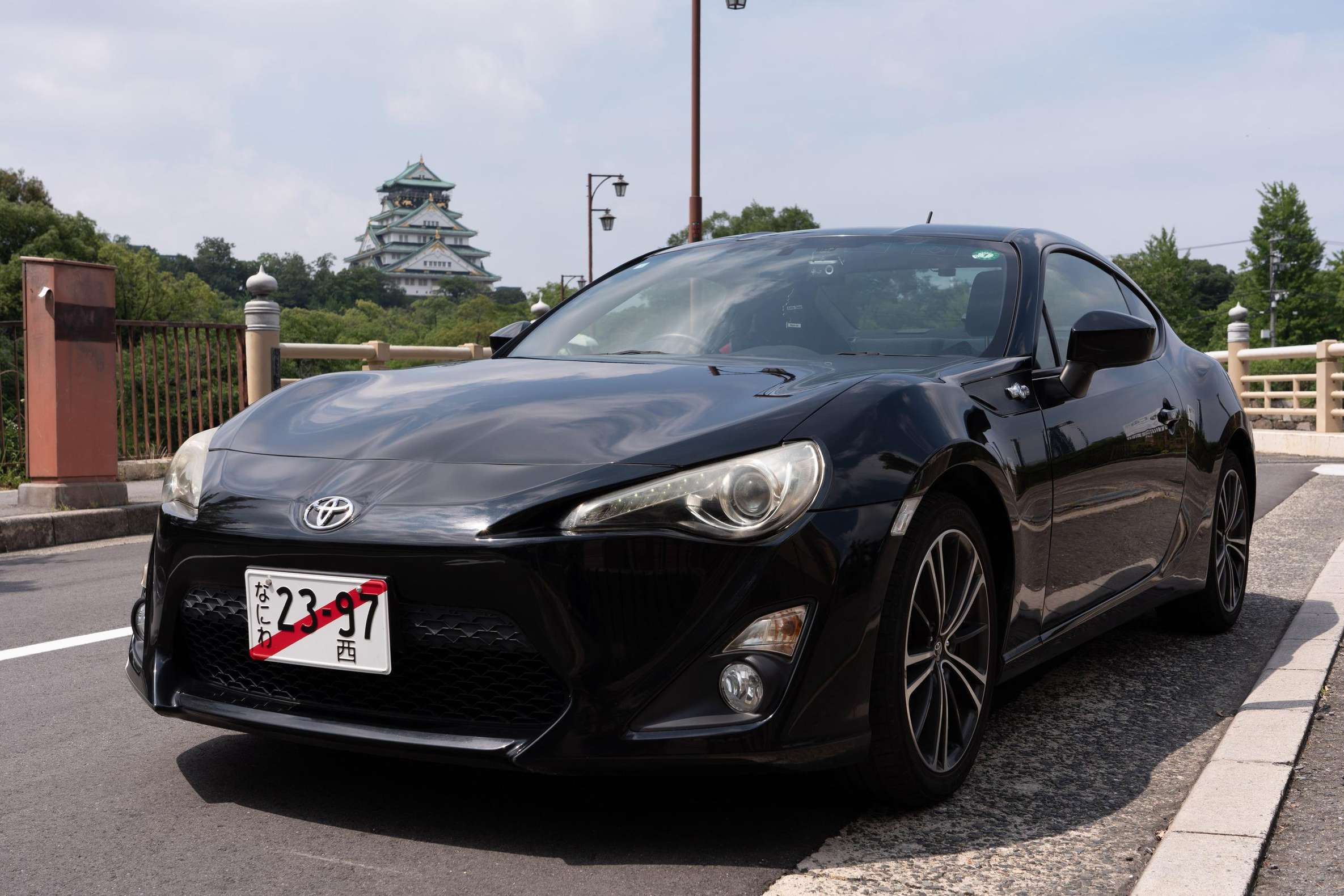
Three doors into the same scene, and the right one depends on your licence and your nerve. Spectating costs nothing and needs no car or licence at all, just a way to reach the lot. Driving yourself means paperwork and age rules, but puts you behind the wheel on the same expressways the locals run.
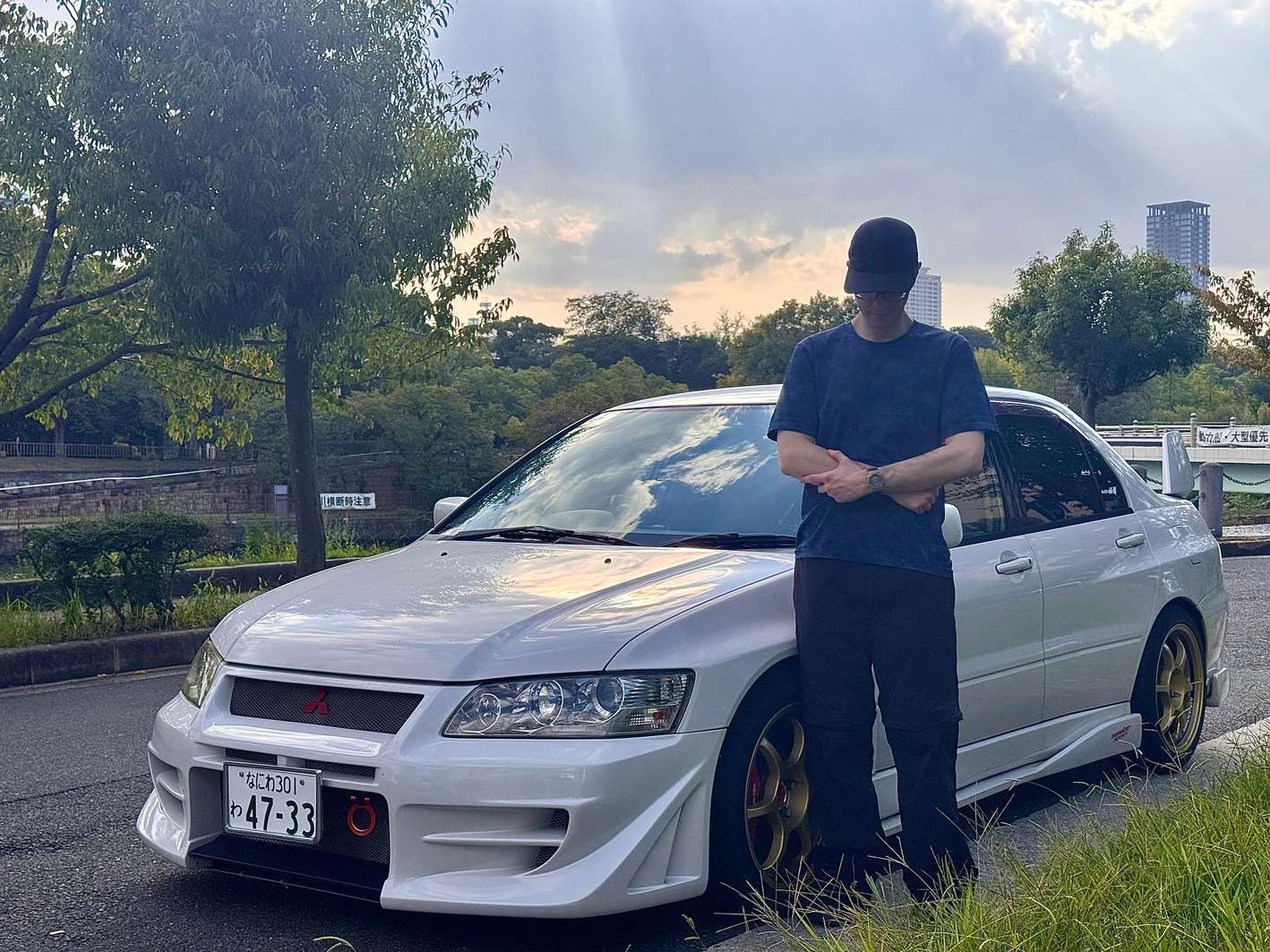
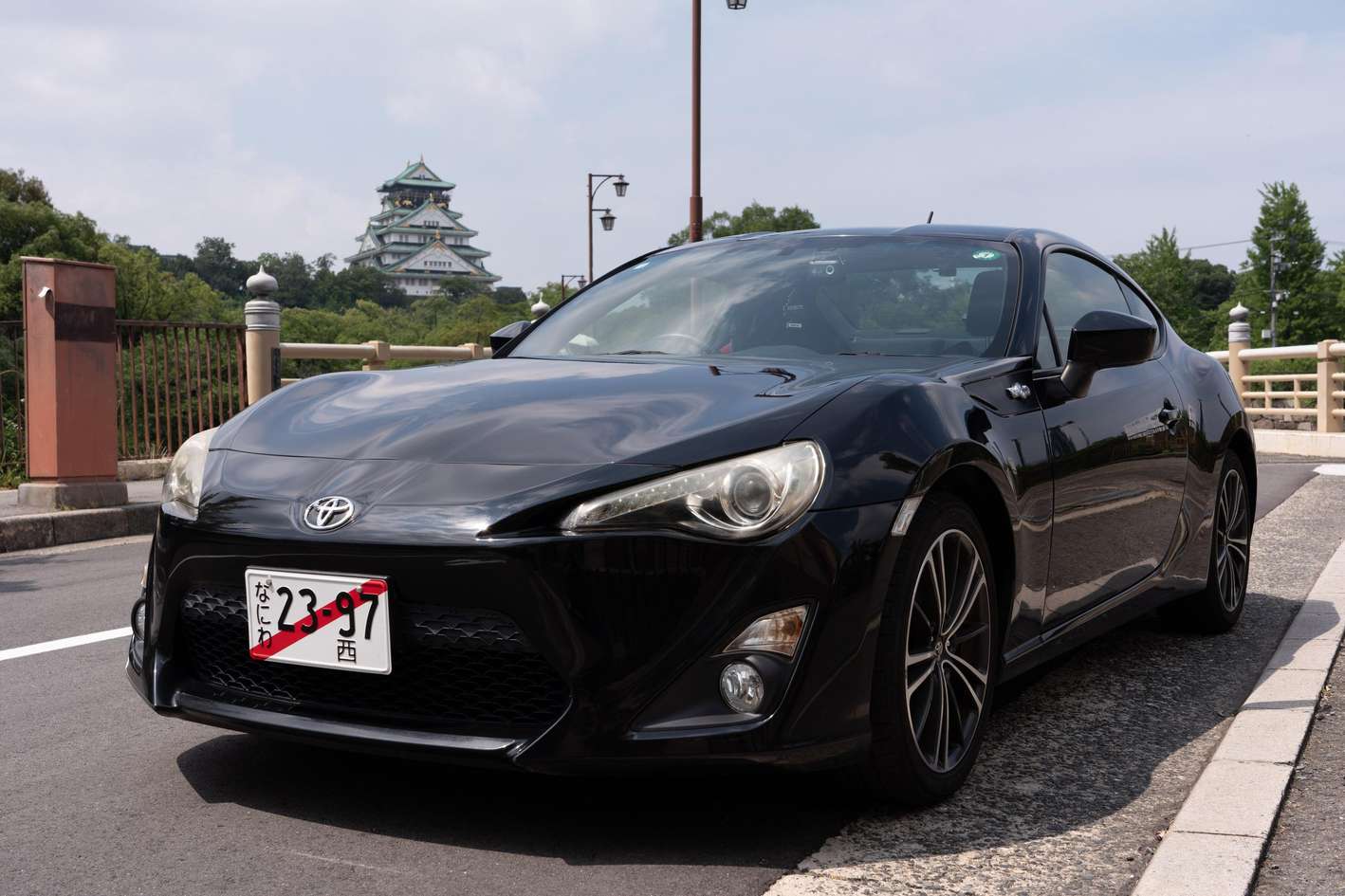
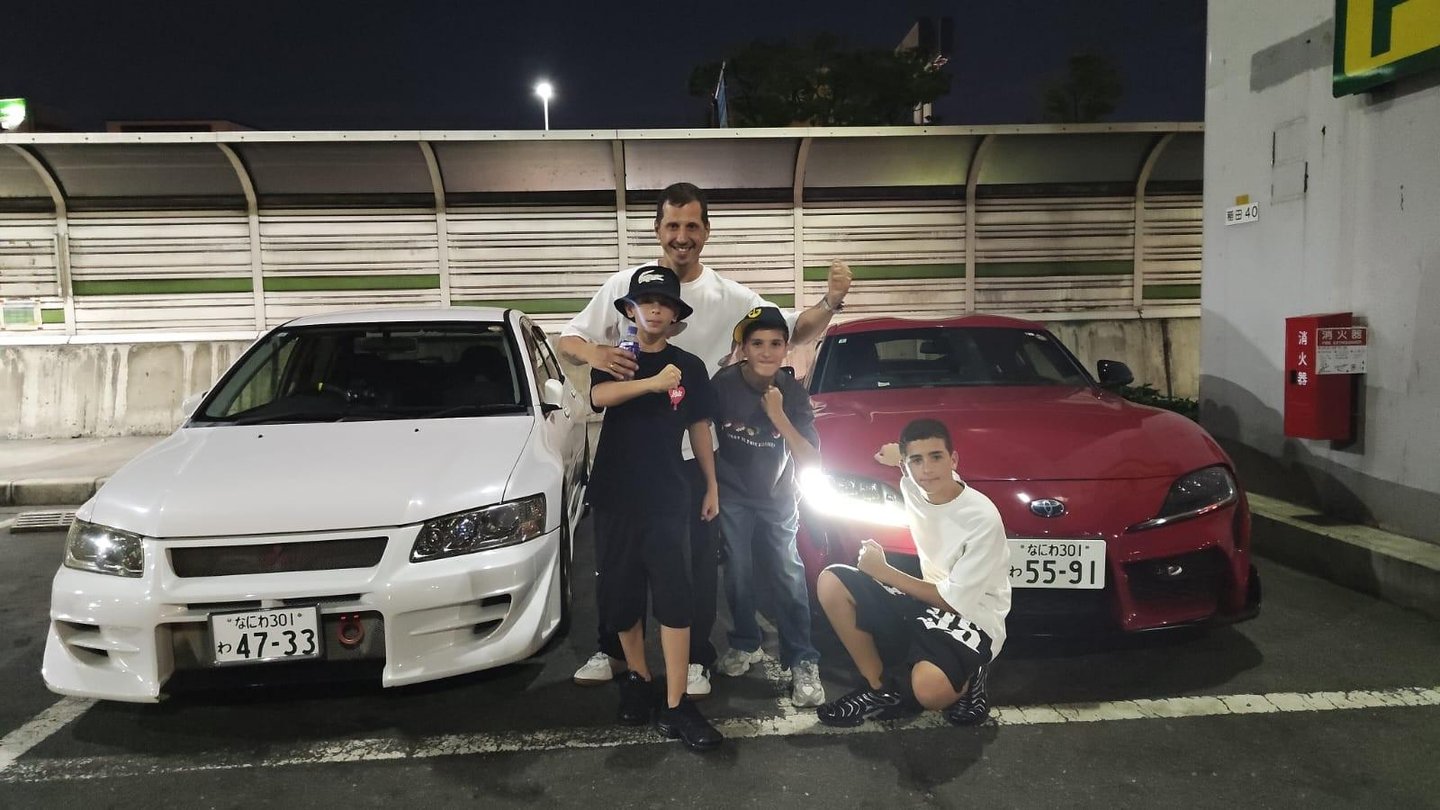
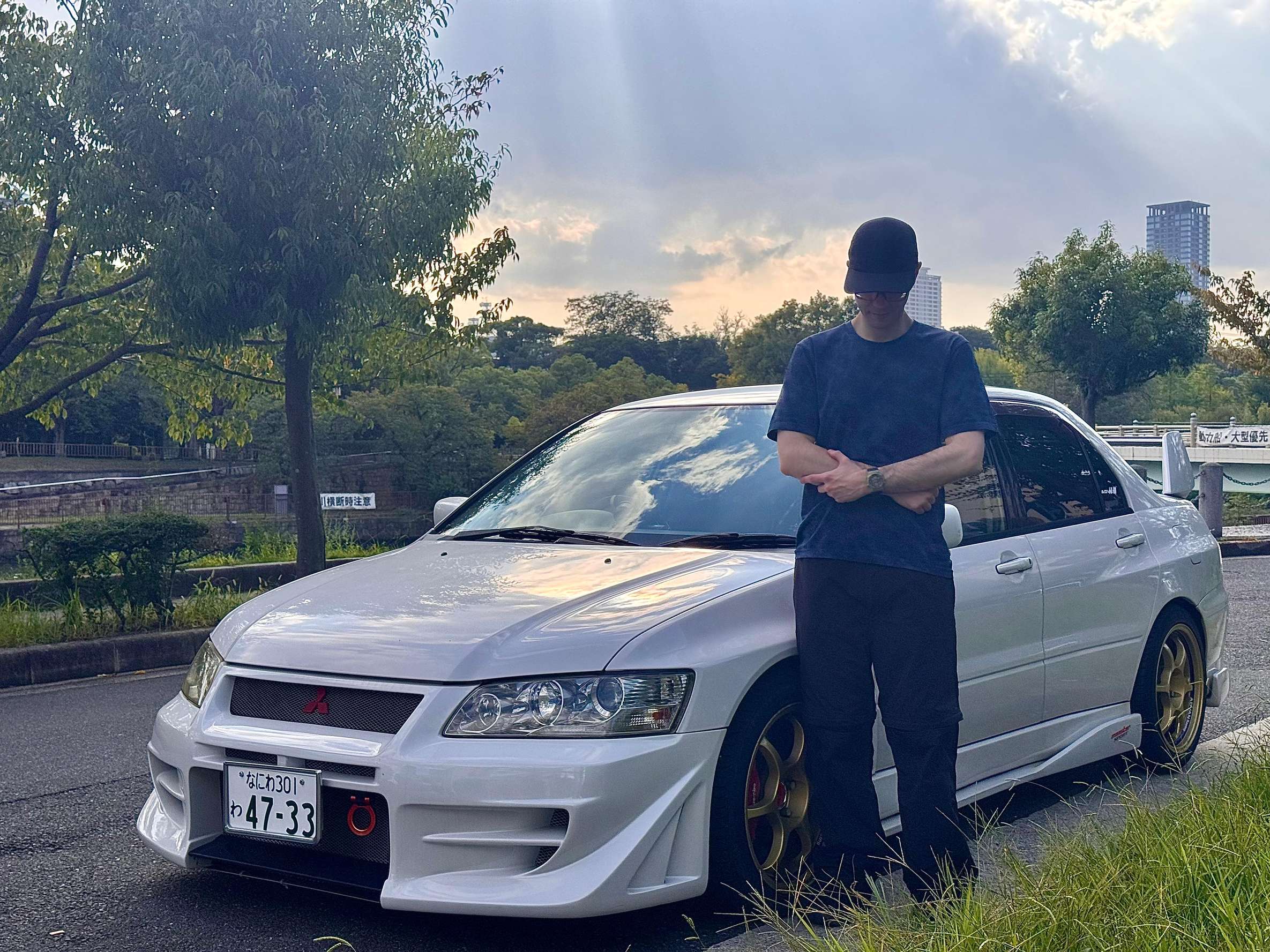
Between those two sits the self-drive convoy. The Osaka: JDM Culture Meetup & Self-Drive Sports Car Rental puts you in a rented GT86, Fairlady Z or Lancer Evolution, with fuel and tolls covered and a separate safety car leading the convoy from Shinsaibashi out to Higashiosaka PA and back toward Amemura.
A lead car calling the route in real time fixes what a solo renter struggles with, which is navigating Osaka at night with nobody to ask.
However you go, the meet itself asks nothing of you. Osaka meets are social gatherings built around community, and the Drive Legends club even welcomes people with no JDM car and no licence.
Pick by what you want to remember: the sound of a lot full of cars, your own hands on a manual gearbox, or the passenger seat of somebody else's legend.
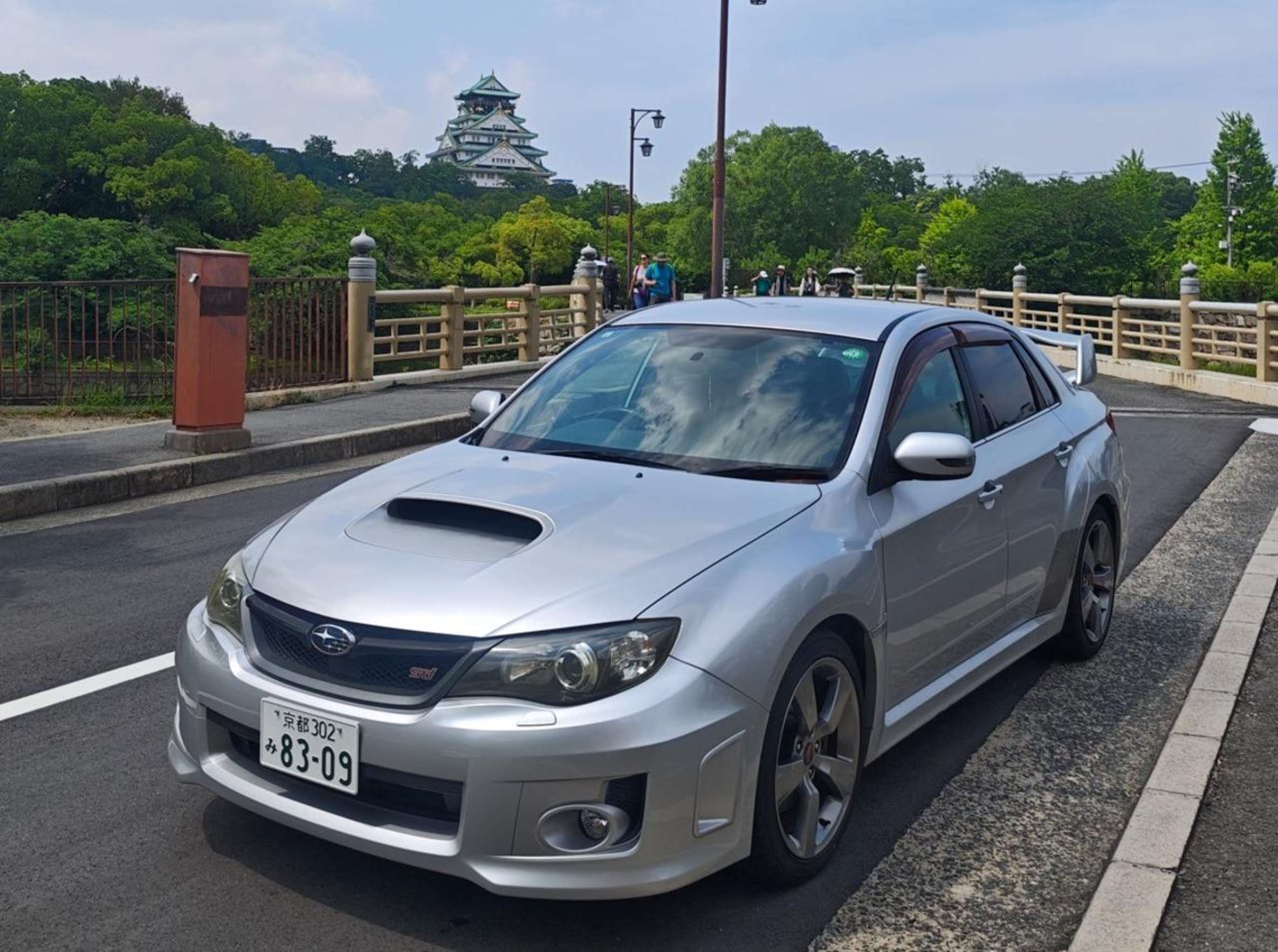
Plenty of visitors see the scene without ever touching an expressway. Amemura, the America-mura district, draws the car crowd to Triangle Park on Friday and Saturday nights from around 9 pm, walkable from Namba. It is a smaller hangout than the big lots: dozens of cars, owners leaning on fenders, skateboards weaving between them.
When too many cars gather at Triangle Park, police ask them to move, and the crowd simply shifts to the conbini on Yotsubashi-suji close by. On the last Saturday of the month the lowriders come out, which is a night of its own.
The sleeper pick is Rinku Town near Kansai Airport, right by the ferris wheel, the easiest meet to reach by train and the one most visitors miss entirely.
Even on a night with no meet at all, the city gives you something: sit under the Osaka Loop Line after dark and listen. Lambos run early in the evening, Civics later. Set your expectations at hangout size, keep the PA for a night when wheels appear, and a hotel-based plan still beats staying in.
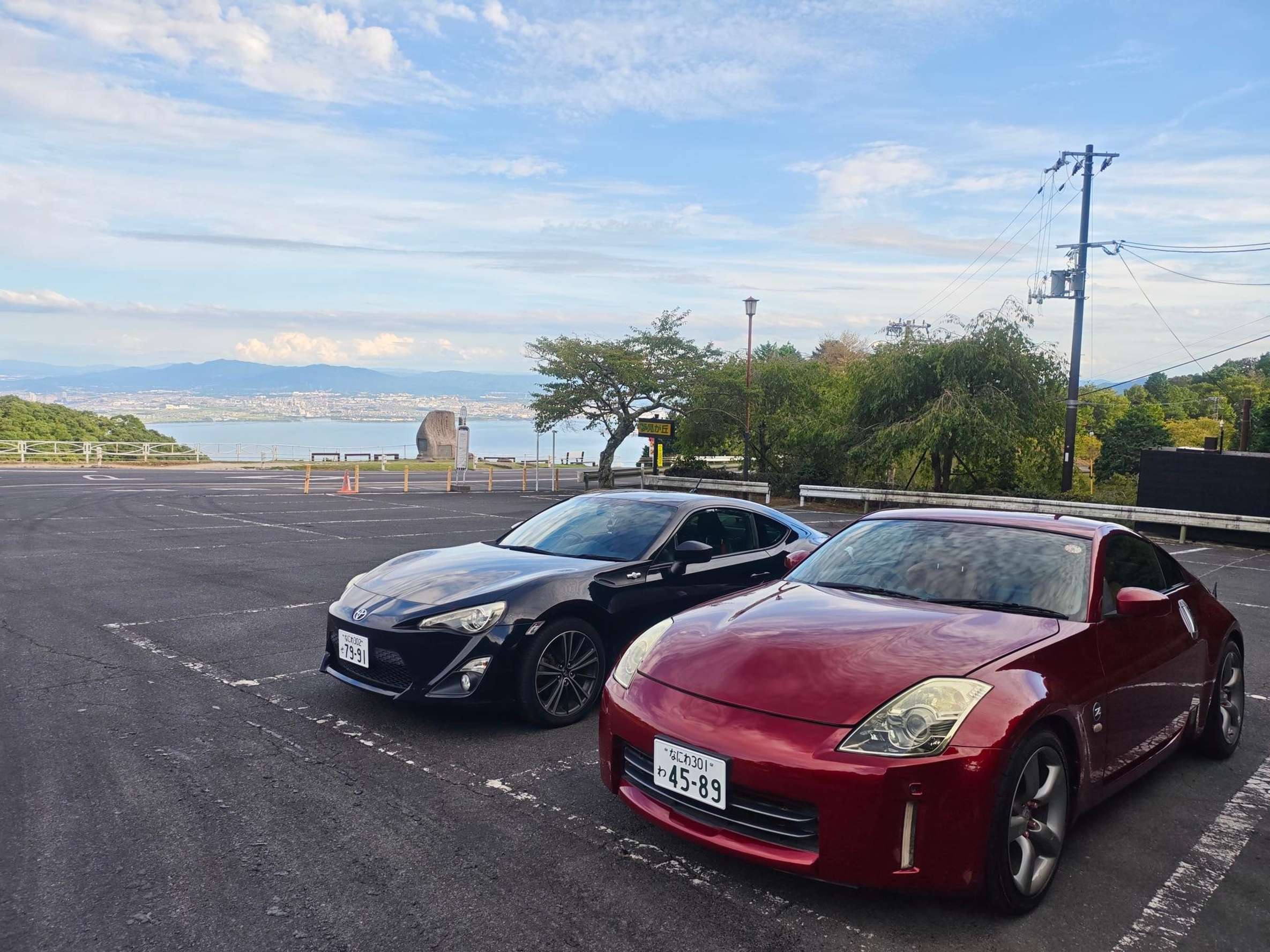
The rules at every meet in Japan come down to one idea: the cars belong to someone. Never touch, lean on or sit in a car without being explicitly invited, and that goes double for photos with a hood open or a door swung wide.
Photography is generally fine, but make eye contact and show enthusiasm before pointing a camera, and ask before close-ups, especially of interiors and engine bays.
Conversation opens easier than you think. Start with a genuine compliment and an open question about the build.
Most owners speak little English, but speaking slowly, using a translation app, or naming the JDM car you drive at home works remarkably well. Do not ask about prices or whether a car is for sale; compliment instead.
Behavior at the lot is watched by police who act on complaints, so the small things matter. Arrive slowly with the music down, park out of the modified lineup if you brought a rental, shut your engine off rather than idle, take your rubbish with you, and leave quietly at the end.
If police move the crowd on, comply calmly and drive off at normal speed. The visitors who follow all that are the ones who get invited back.
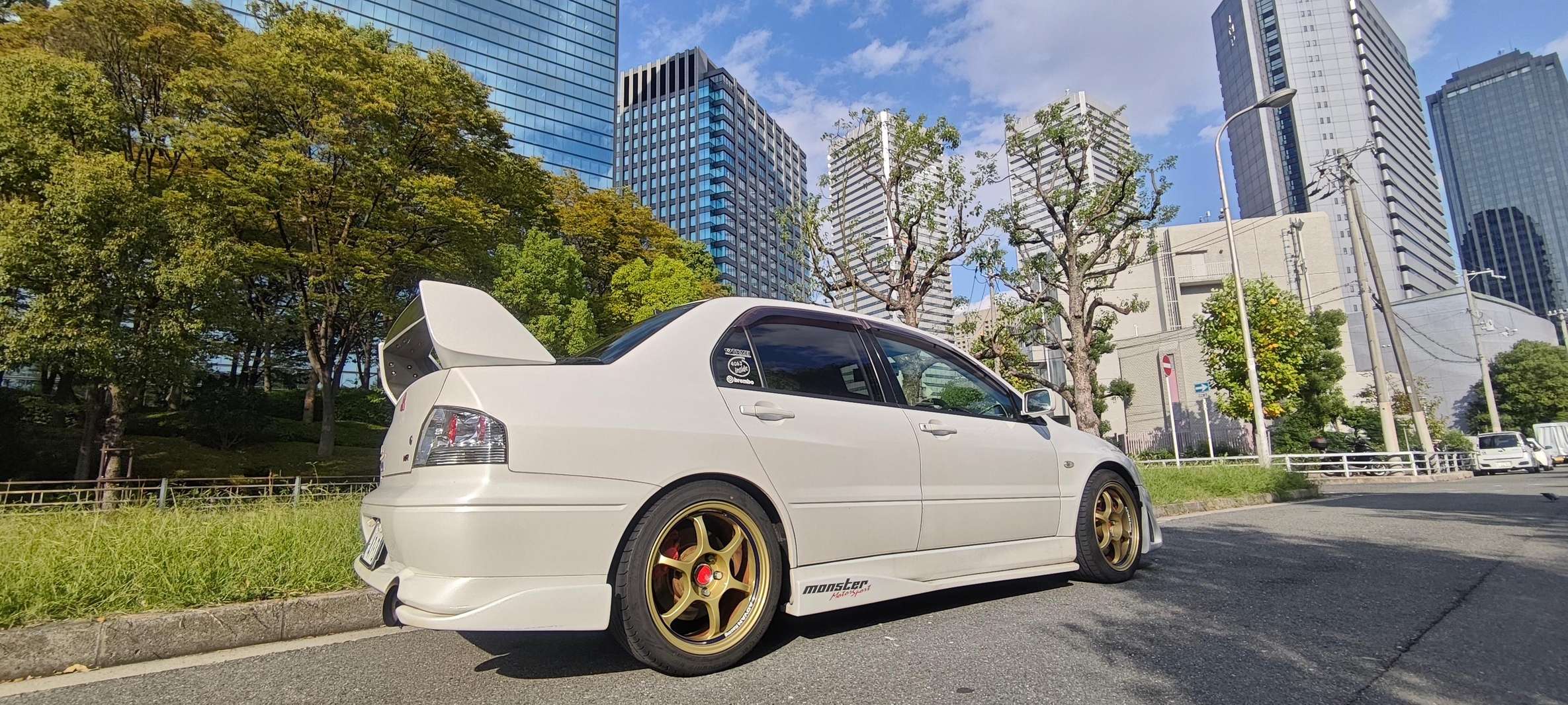
For anyone who cannot or does not want to drive, there is a third door, and it is a good one.
The Osaka: Private JDM Night Ride in a 630HP R34 GT-R & Photos is a 1.5-hour passenger experience through Osaka at night, with hotel pickup, stops at car spots including East Osaka PA and the Nakajima Parking Area, souvenir photos, and room for up to three guests in one car.
No driving licence involved; you ride the whole way.
The car is the point. The R34 GT-R carries more cultural weight at meets than even the newer R35, and the RB26 engine's sound is the thing no video recreates. This one is built to 630 horsepower, well beyond the original 280, so the acceleration arrives as a surprise even when you expect it.
The operator's own notes give weekends a potential GT-R group meet-up along the route; general meet sightings around Osaka stay looser than that, so hear the promise as what this one tour can arrange.
The guides, Koki and Masa among them, speak strong English and talk actual car culture, Kanjo history included, instead of reciting a script. Small groups of up to four mean you get real conversation.
Unlike Tokyo, where meets can feel commercialized, Osaka's street scene runs rawer. From the passenger seat, that is exactly what you see.
Behind the wheel starts with paperwork arranged before you fly. Japan only accepts an International Driving Permit issued under the 1949 Geneva Convention, the paper booklet, not a card or a phone version.
Licences from Switzerland, Germany, France, Belgium, Monaco or Taiwan work differently: those drivers bring their original licence plus an official Japanese translation from JAF, arranged online before departure. Everyone brings the original passport and the original physical licence; digital copies and photos are refused.
The specialist sports-car rentals ask for drivers aged 21 or over with three years of experience, and some go to 25.
Once you are in the car, the rules are ordinary Japanese road rules: keep left, seatbelts on all round, no phone at the wheel, and no alcohol anywhere near the driver's seat. Where no signs post a limit, it is 60 km/h on ordinary roads and 100 km/h on expressways.
A rental is a legal road drive, with no drifting and no stunts, ever. Street drifting is a crime in Japan, group racing carries prison time, and Osaka fines unnecessary revving and noise outright.
And renting can be cheaper than people fear; one traveler had a Skyline GT-R for 24 hours with unlimited miles and ranked the day among the top five of their whole Japan trip.
Nothing about these nights is guaranteed, and good plans account for that. A police closure is the most common disruption on weekend evenings, when packed lots get shut down without notice.
Guides rarely cancel outright; they reroute to another parking area or a city spot, and the tour continues. JDM experiences generally run in rain, with the straightforward advice to bring a layer and dress for standing outdoors.
If you are driving yourself, know the alternatives before you need them. Izumi-otsu PA is the other Osaka parking area with regular car action, mentioned in the same breath as Higashi Osaka. The city hangouts at Triangle Park run on the same weekend nights regardless of what happens on the expressway.
| If this happens | What happens then |
|---|---|
| The parking area closes without notice | The guide moves the convoy to another meet spot and the night carries on |
| Rain sets in | The drive and the meet typically go ahead; dress for standing outside |
| A meet is simply quiet | The route shifts to whichever car spots have action that night |
A changed plan is a rerouted night, and some of the best stories from these trips start with a closure, because the fallback lot turned out to be where the interesting cars had gone.
Tours start from the Shinsaibashi side of town, which turns out to be a fine place to spend the daylight hours before a night meet.
Hōzen-ji temple sits seven minutes away on foot, a narrow lantern-lit lane around a tiny statue of Fudo Myoo, and Ikasuri Shrine is twelve minutes further. Utsubo Park, twenty minutes out, is where the district breathes.
A short drive widens the list: the Naniwa Nagara-Toyosaki Palace site at nine minutes, Sankō Shrine and Kyoikuto at ten, the Osaka Contemporary Art Center and Tamatsukuri Inari Shrine at eleven, and Minami-Temma Park at twelve.
Fit two or three of these into the afternoon and the night drive becomes the second half of a full Osaka day.
A city that shows you temples by evening light and then hands you a parking area full of tuned GT-Rs at 10 pm is doing something few places manage. Walk the neighborhood early, eat properly before pickup, and let the night start from a place you already know.
The Higashi Osaka PA meet is the real thing: 250-plus cars, a friendly crowd and a departure you will hear in your sleep. It asks two things of you, a weekend night and actual wheels.
Meet both and it is one of the best car-culture evenings in Japan. Show up on a Tuesday on foot and you will learn what a hit-or-miss lottery means.
Higashi Osaka PA is one stop on a wider Osaka night scene, and this guide maps the rest of it.
Read the guide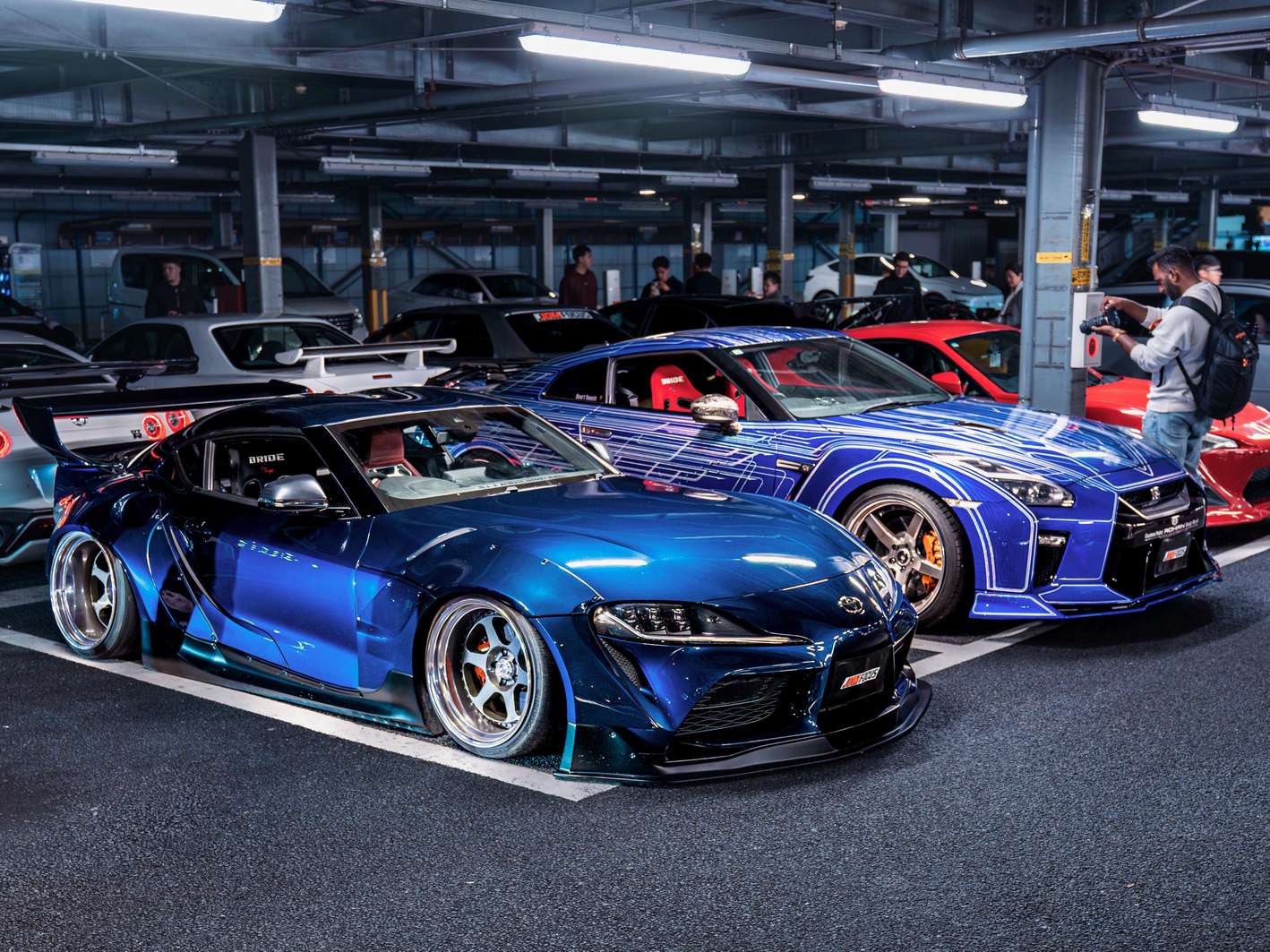
A working underground garage three minutes from the station, free to walk into and full of itasha.
Read the guide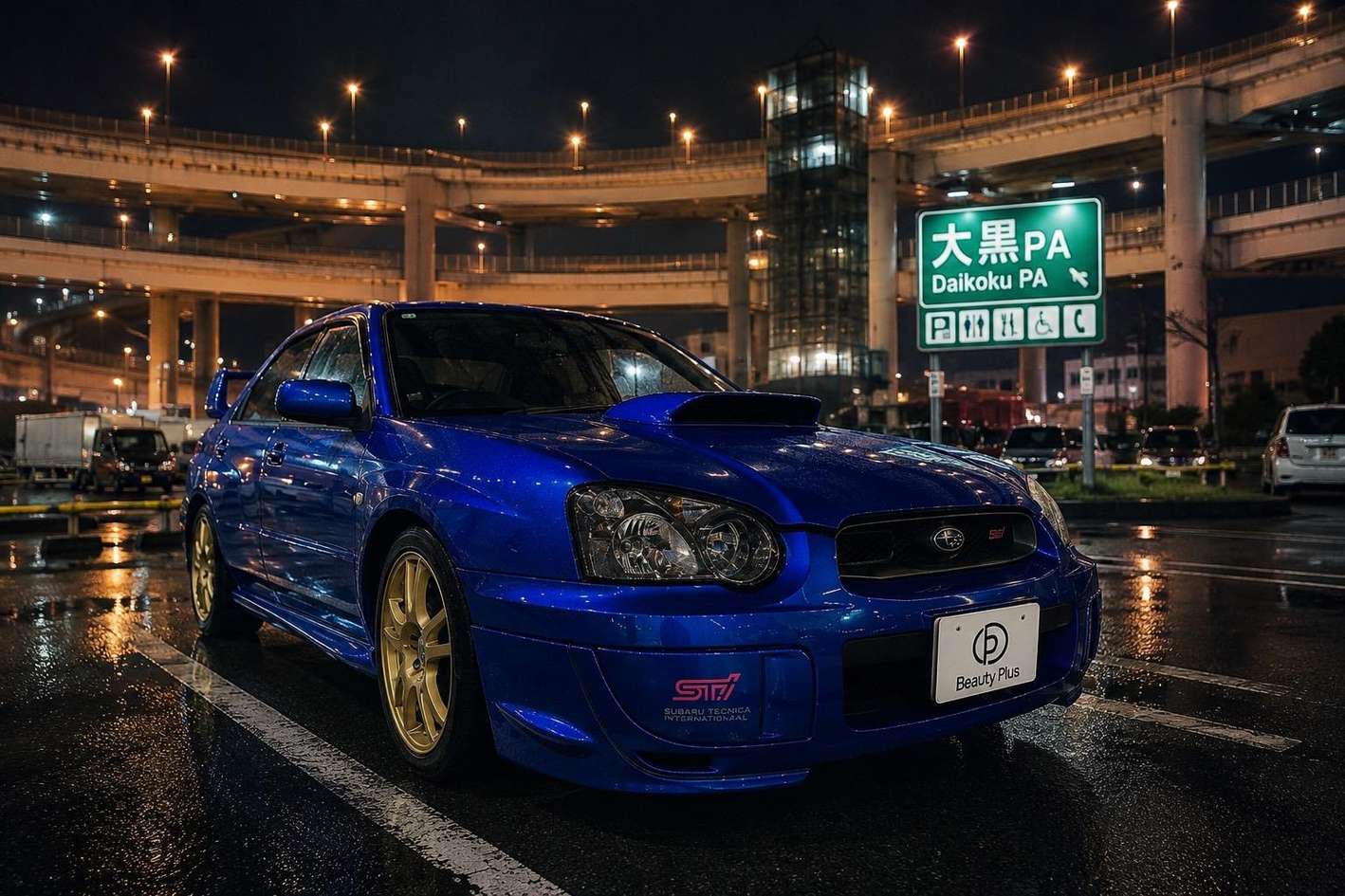
Tatsumi PA sits on the expressway itself, so the only way in is inside a vehicle already on the highway.
Read the guide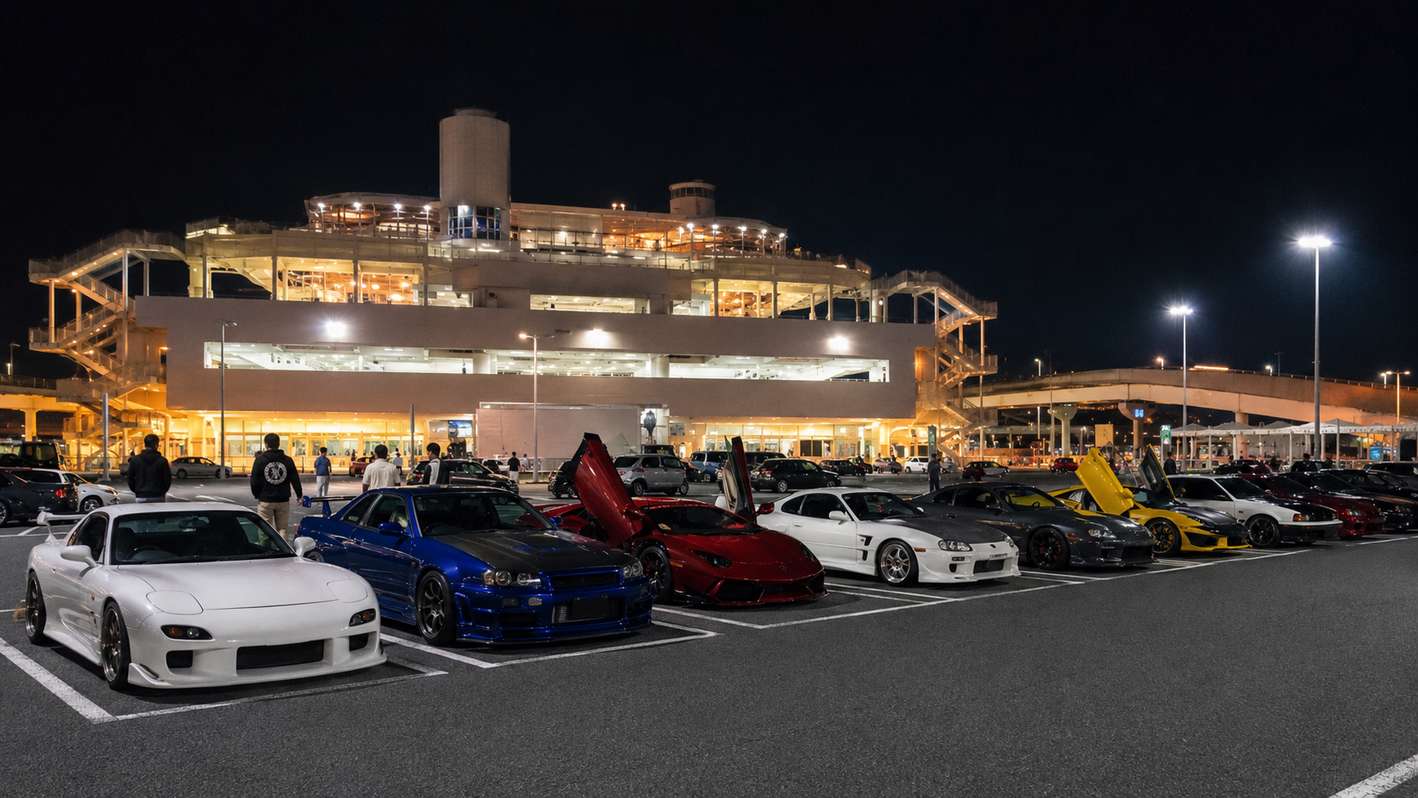
Cars gather on Umihotaru's covered decks most nights tours run, with bay views no other spot has.
Read the guide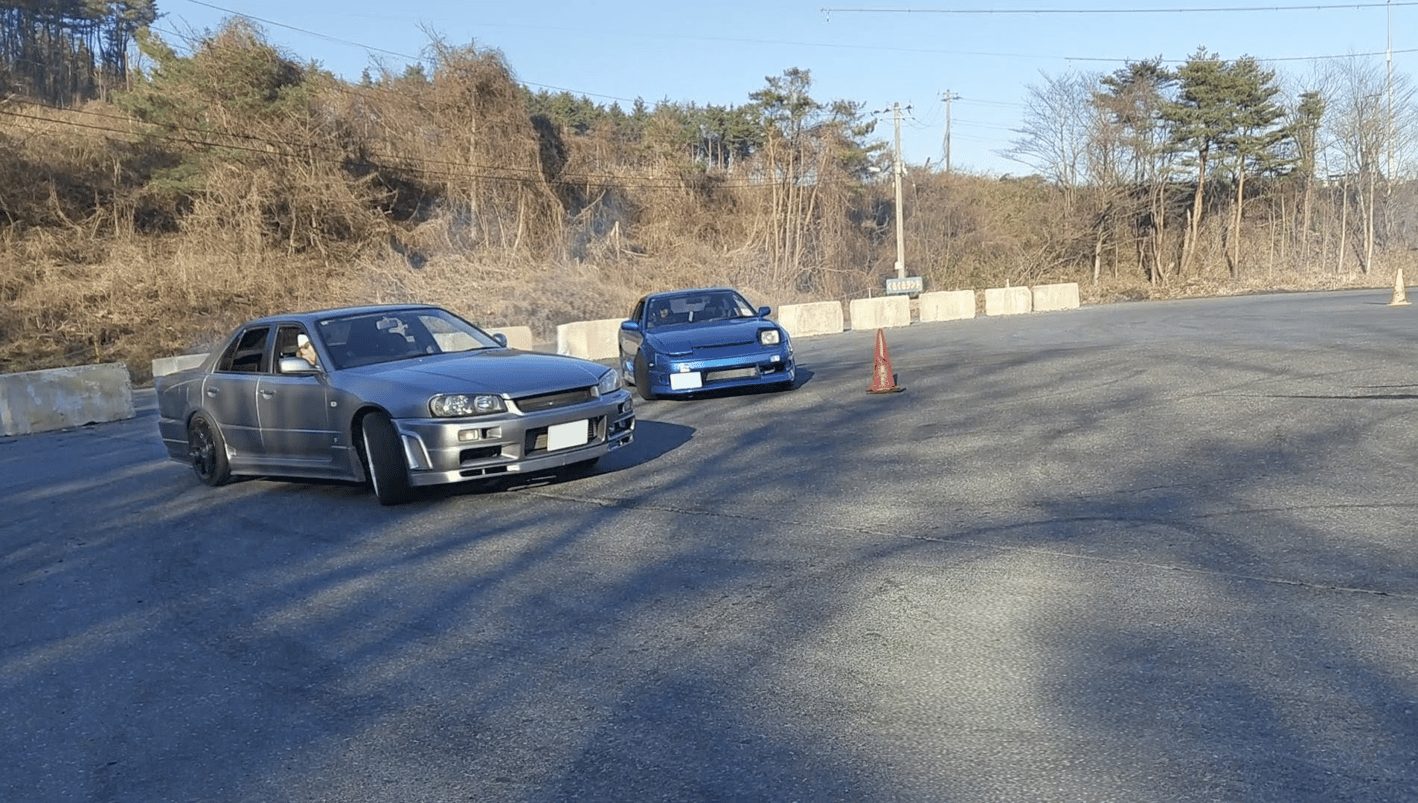
The one bay event with fixed hours, free spectator entry and karts that need no licence.
Read the guideEach of these places does car culture its own way, so it pays to know which one matches your night.
The full picture of Osaka's night meets, from parking areas to street hangouts
Osaka has no single fixed meet spot like Tokyo's Daikoku. The scene runs on word of mouth, announced through Instagram, LINE and Telegram groups, with Higashi Osaka PA drawing the big Friday and Saturday turnouts. On a good night more than 250 cars fill the lot, from GT-Rs to drift Nissans and lowriders, and the peak runs from 10 pm to midnight. A weekday stay, though, often catches nothing.
That split matters when you plan. If your trip includes a weekend night, aim the whole evening at the PA. If it is weekdays only, the guide steers you toward Amemura and Triangle Park, where cars gather from about 9 pm on Friday and Saturday nights anyway.
Free, walkable and dry: anime-wrapped itasha on the B2 floor
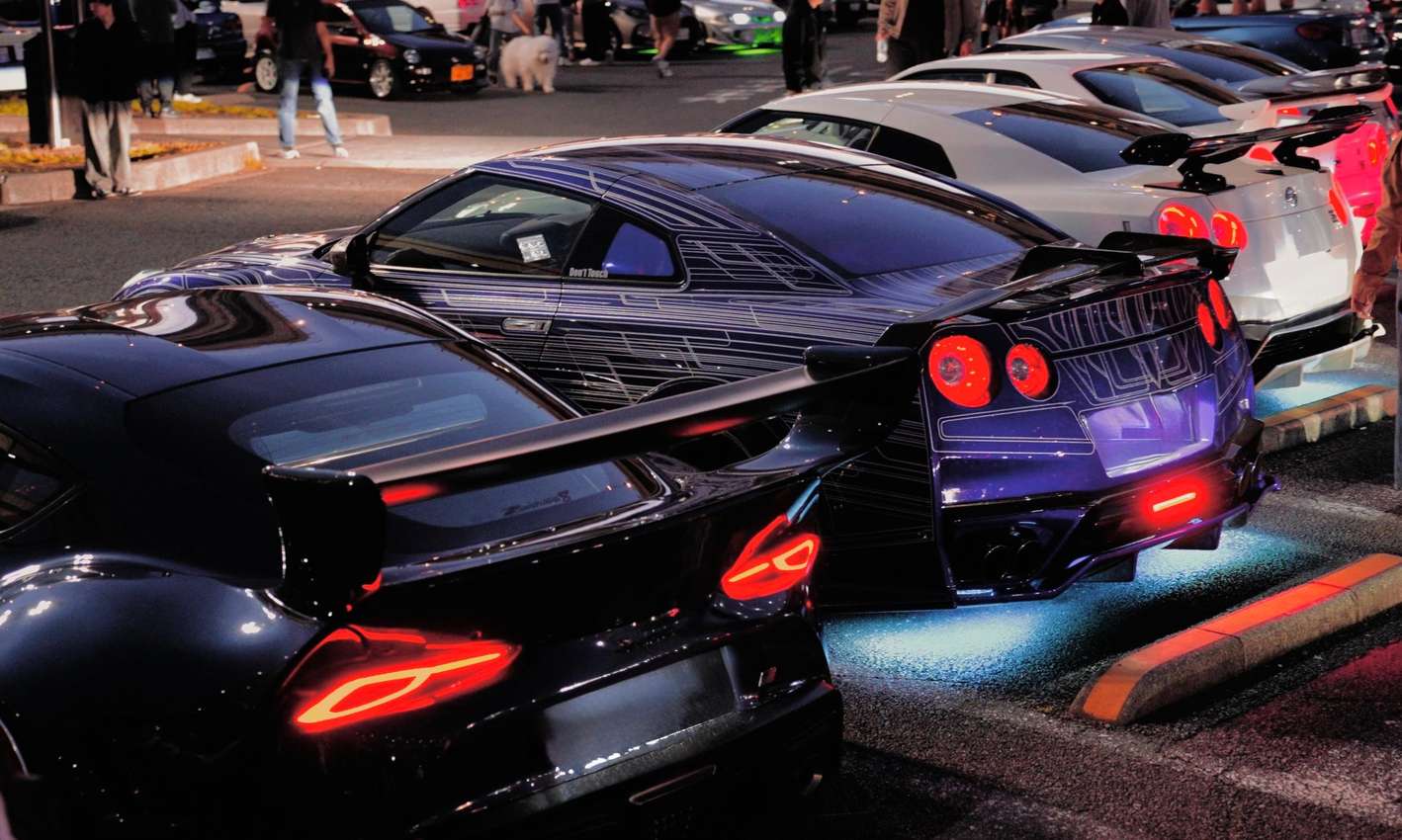
The UDX underground garage sits a few minutes' walk from Akihabara Station, costs nothing to enter and holds the city's densest collection of itasha, cars wrapped in anime decals, mostly on the B2F level. Because it is fully enclosed, rain never spoils the cars. Friday and Saturday nights are when the best ones park there.
The trade-off is that it is a working lot. Look quickly, keep moving, and never touch or lean on a car. Stopping to photograph them can get you moved on by security, and repeat visits have brought police and fines.
A quieter bay rest stop with no pedestrian entrance at all
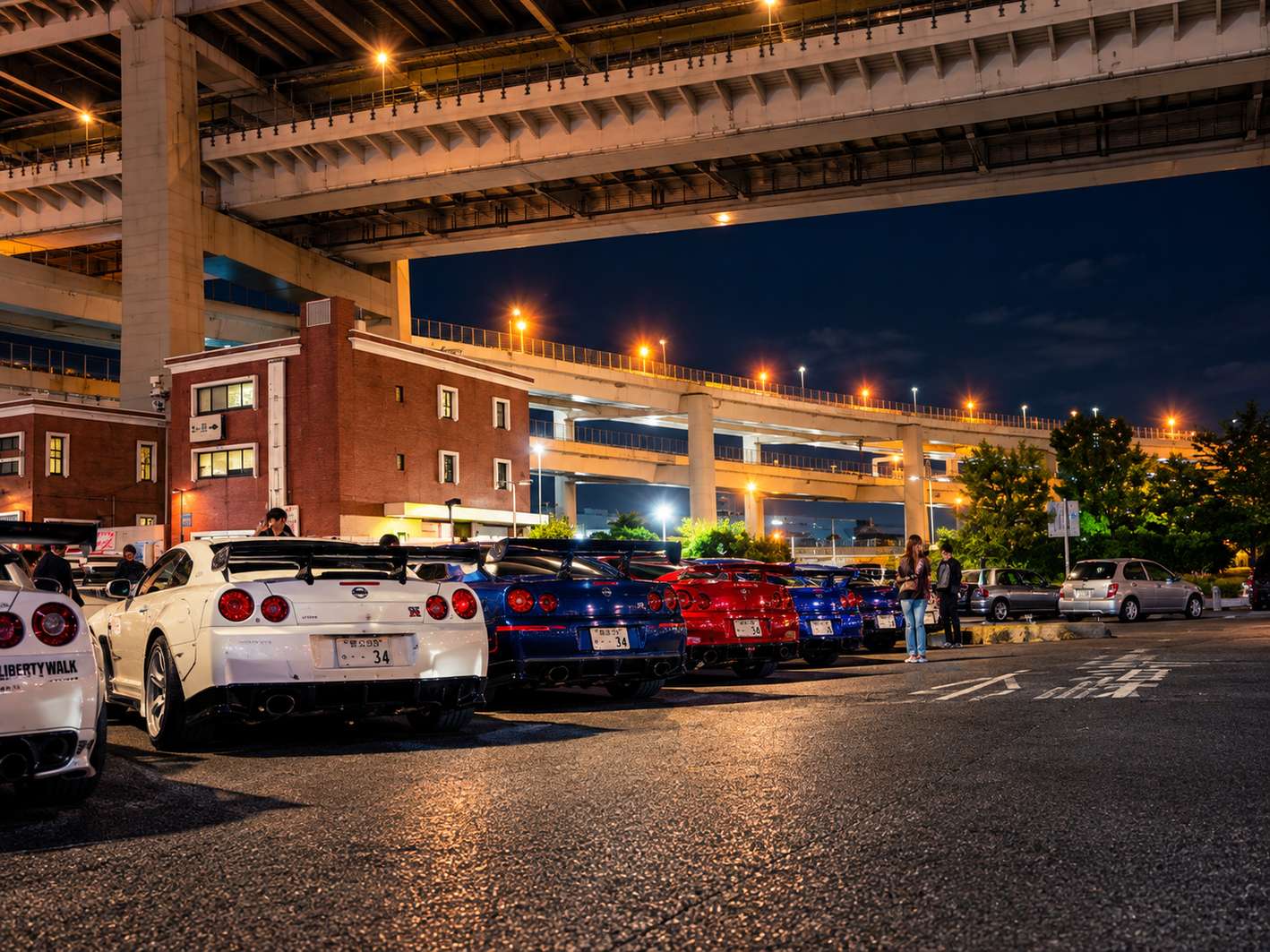
Tatsumi is a rest stop on Tokyo's expressway network, and like Daikoku it has no pedestrian entrance, no bus stop and no taxi rank. You arrive as part of the traffic, which is exactly what makes the lot interesting: the cars around you drove in on the same road.
Meets at parking areas like Tatsumi are legal when people respect the rules. No revving, no burnouts, no blocking lanes, and noise kept low and brief. Enforcement is strict when drivers misbehave, so the calm visitors are the ones who get to stay.
A ship-shaped rest stop with a roofed lot, so rain never ends the night
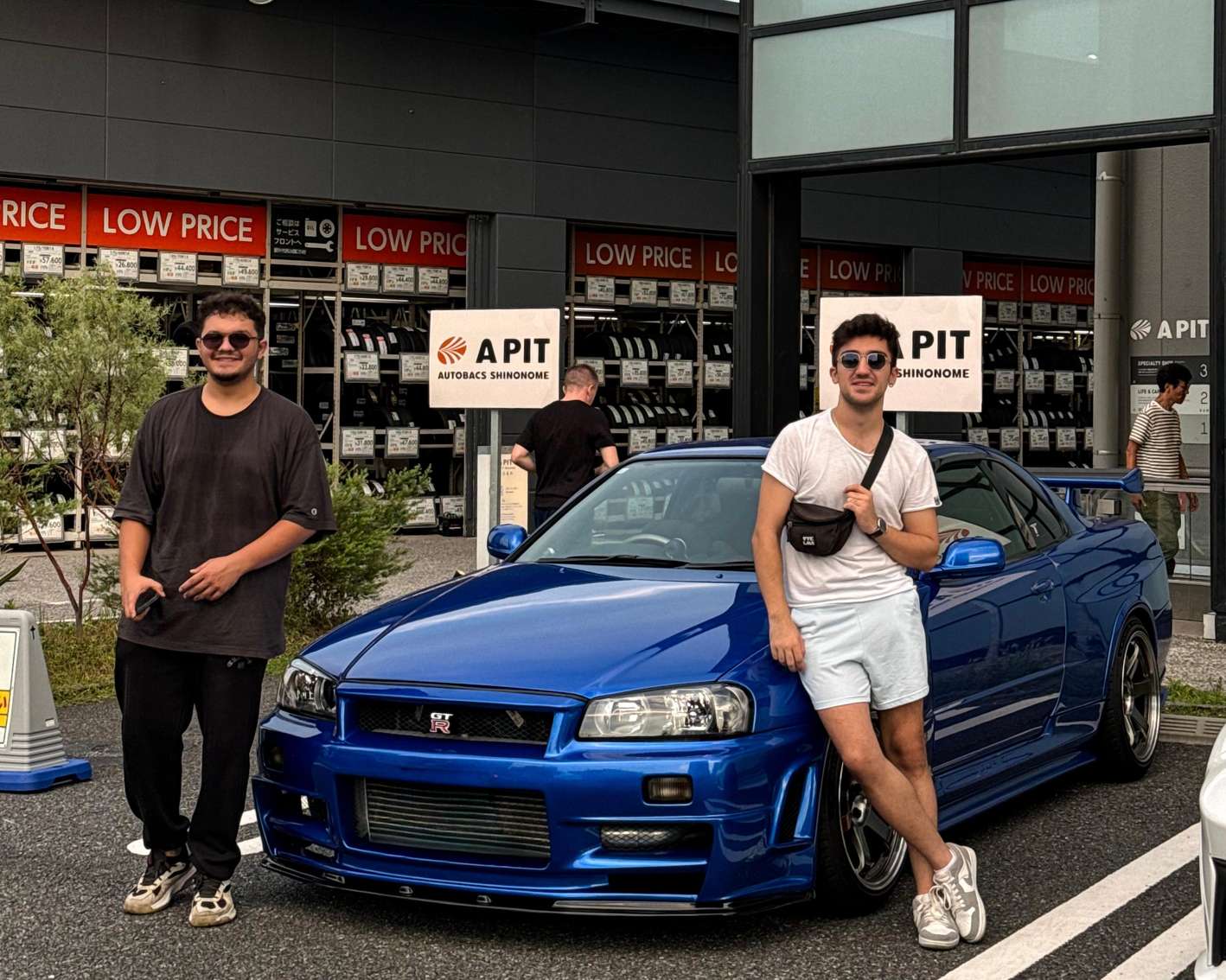
Umihotaru is a five-story parking area on an artificial island halfway across Tokyo Bay, reached only by the Aqua-Line toll road or a bus from Kawasaki. Its car decks sit under a roof, so the meet carries on through rain that would thin out the open lots elsewhere.
The gathering is informal, so no lineup is ever guaranteed, but cars show up on most nights the tours run. Even on a quiet night the island keeps restaurants, shops and observation decks, so the trip never comes back empty.
3 hours · ★ 4.9 (181)【R34】Daikoku PA Private Tour, Tokyo JDM Night ExperienceFrom $507 /group 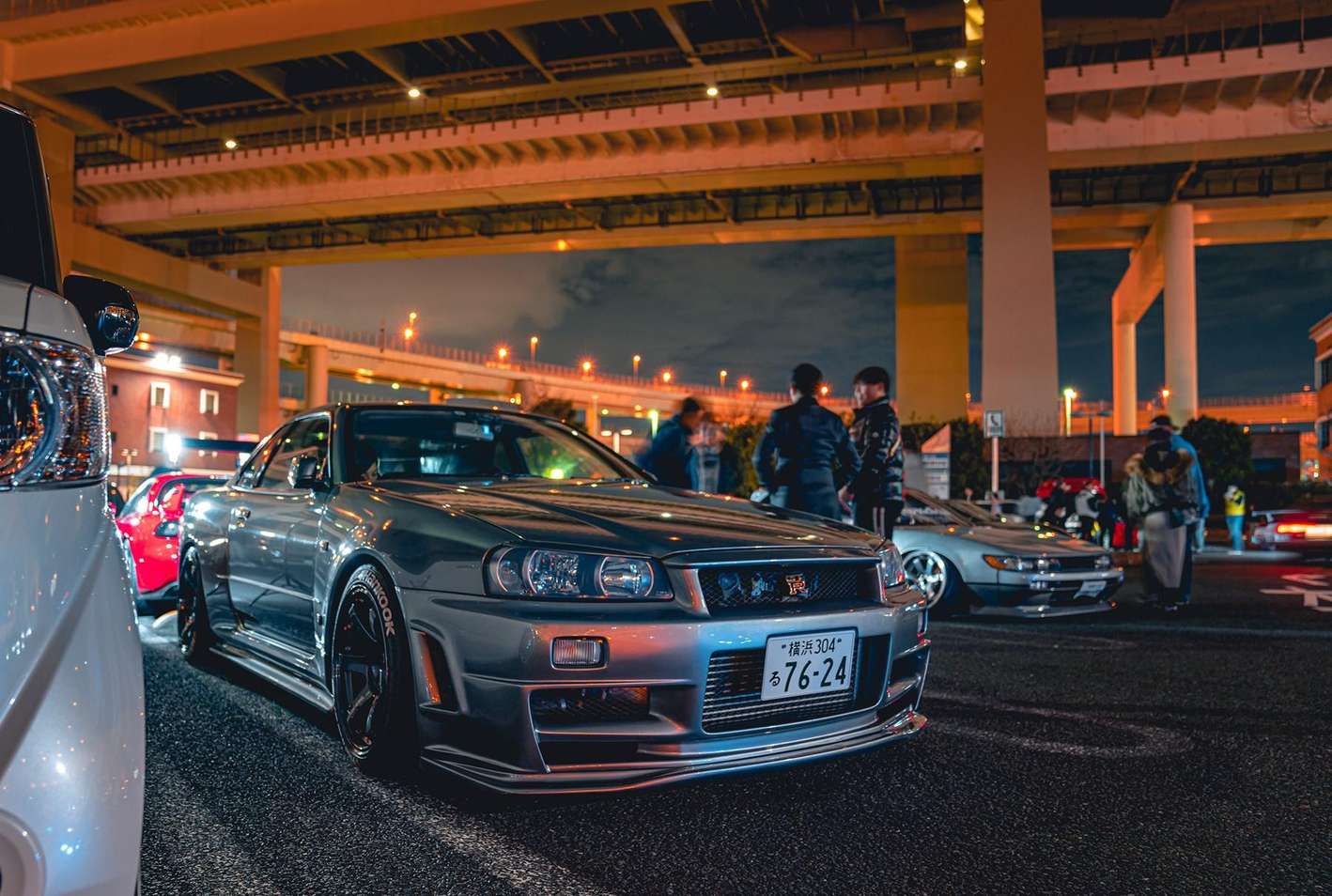 3 - 4 hours · ★ 4.9 (183)Daikoku & Tokyo Private JDM Tour in 700HP R34 GT-RFrom $596 /group
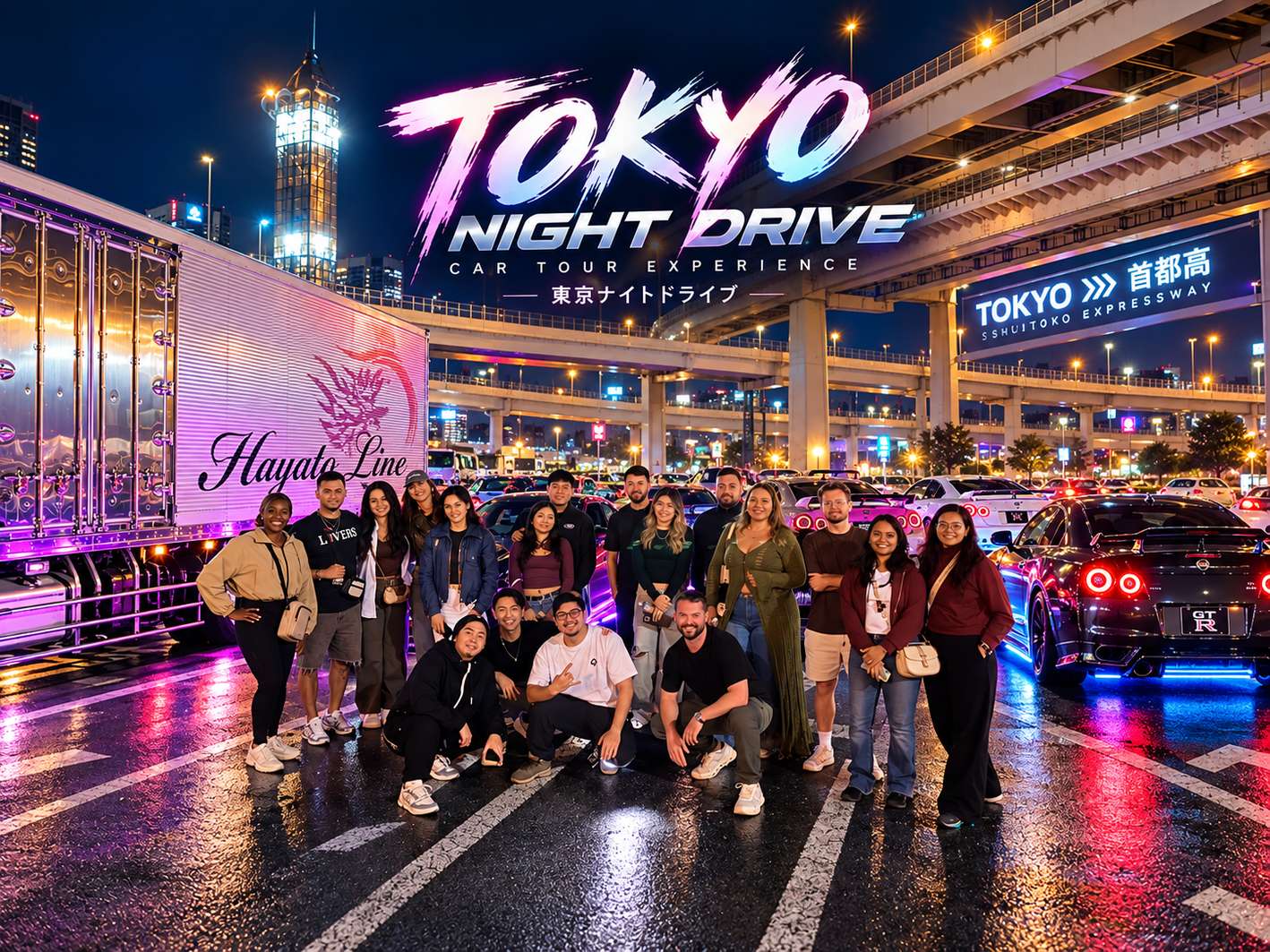 4 hours · ★ 4.8 (85)Tokyo JDM Legends: Daikoku PA & Modified Car ExperienceFrom $122 3.5 - 4 hours · ★ 4.7 (134)Tokyo: Silvia S15, GR86 or 370Z Tour to Daikoku or UmihotaruFrom $41
A scheduled evening event, 6 to 10 pm, where anyone tall enough can drive
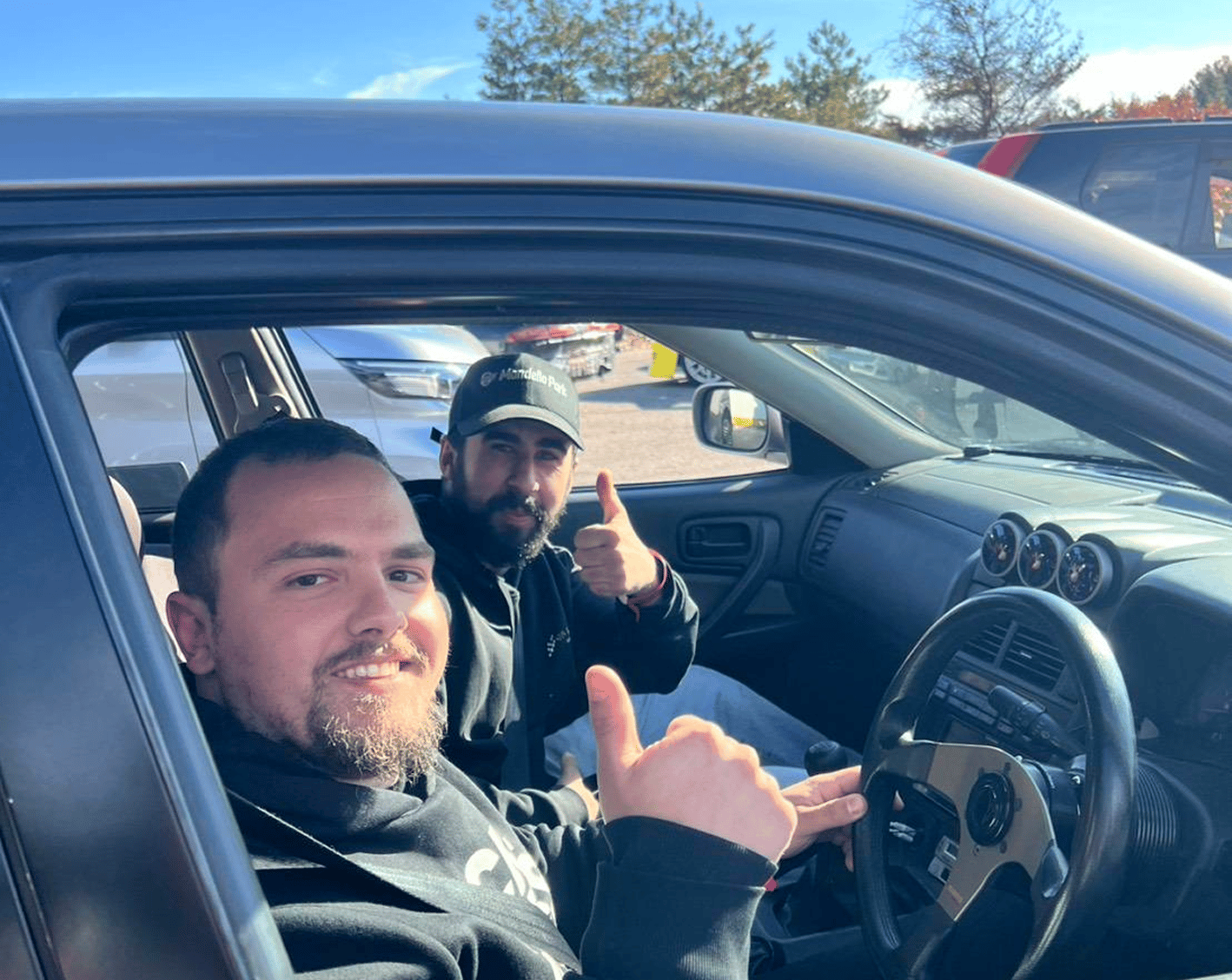
City Circuit Tokyo Bay runs its meet evenings on scheduled dates, from 6 pm to 10 pm, and most public events cost nothing to watch. Around the cars there is a kart track where anyone 150 cm or taller can take a driver's seat, with no licence needed, and staff can slow a kart remotely if someone spins.
It is the organized answer to the informal meets. Cash is not accepted, sandals get swapped for rental shoes, and rain cancels the weekly races. If you want certainty about when things happen, this is the night to plan around.
Compare the popular Tokyo meet locations side by side before you pick which night and which lot to visit.
Get the Akihabara UDX layout sorted: where the underground parking sits and what kind of cars turn up there.
Work out how Tatsumi PA works as a meet spot, from access to what a first visit there actually looks like.
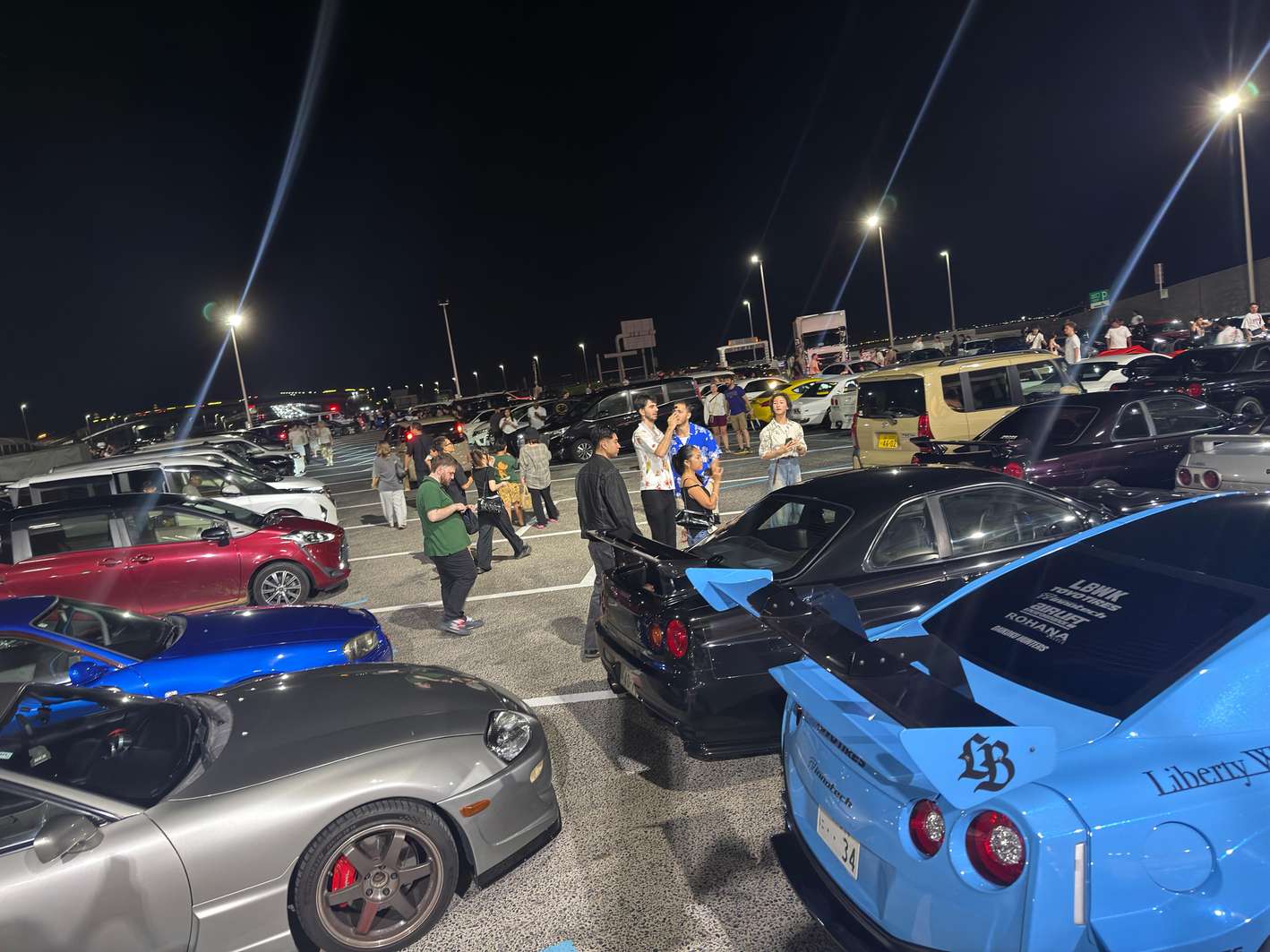
Find out how the Umihotaru car meet runs and the most practical way to reach a parking area mid-sea.
See what the City Circuit Tokyo Bay meet involves and judge whether a visit fits your Osaka or Tokyo plans.
Daikoku is the meet Higashi Osaka gets compared to, so read the full visitor guide before you plan a Tokyo night.
Pick the right day and hour for Daikoku, since the size of the crowd depends heavily on when you show up.
Get clear directions to Daikoku PA, which like Higashi Osaka sits on a toll expressway reachable only by car.
Learn the visitor rules at Daikoku first, so you know what police activity means for a first-time visit.
If a Supra is your car, see how a guided Daikoku trip in a modified Mk4 turns the meet into a full night out.
See how a Daikoku ride in a Porsche Macan works, including that no licence is needed to sit in the passenger seat.
Sort out where drifting actually happens near Tokyo, from watching at a meet to trying it on a closed circuit.
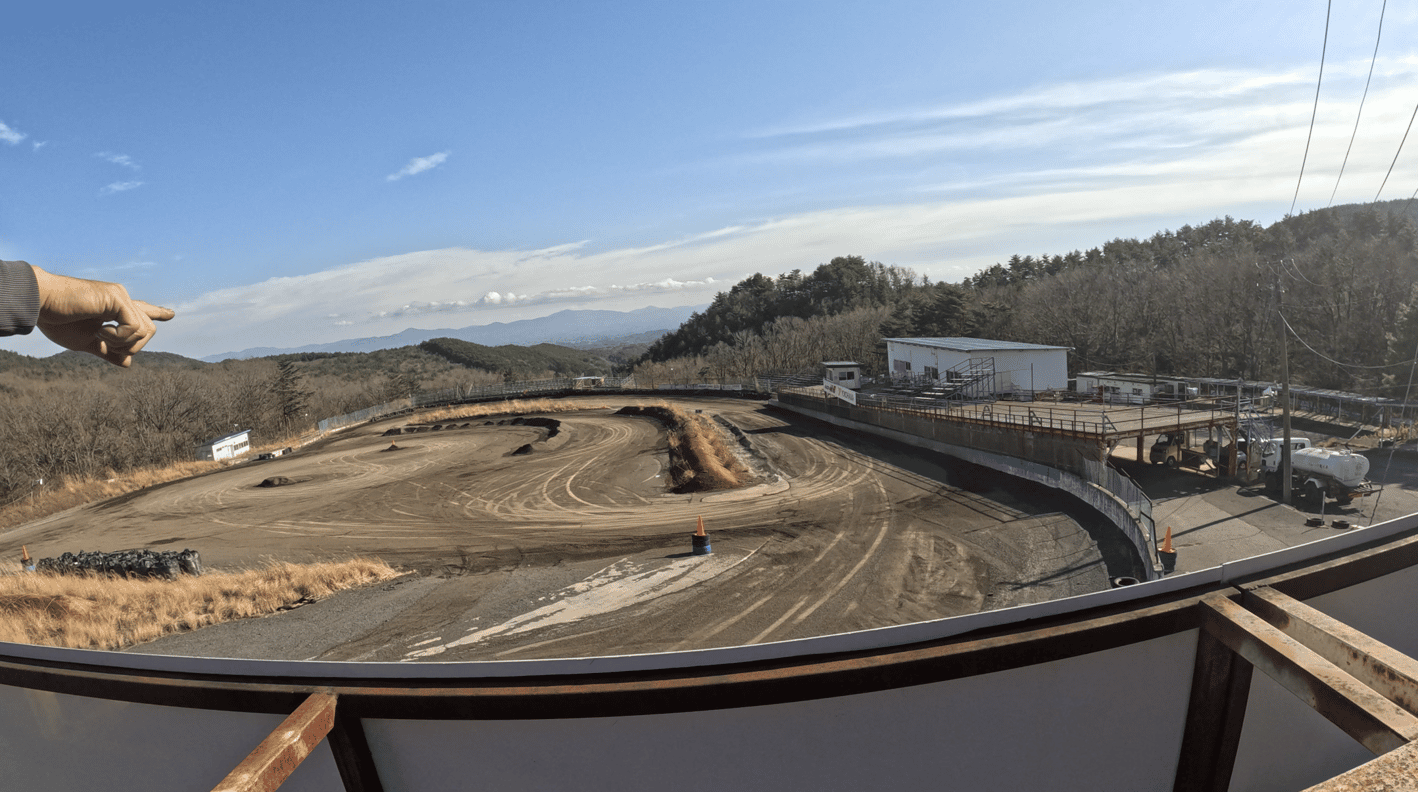
Find the events and circuits where real drift racing happens, and time a trip around a round you can watch.
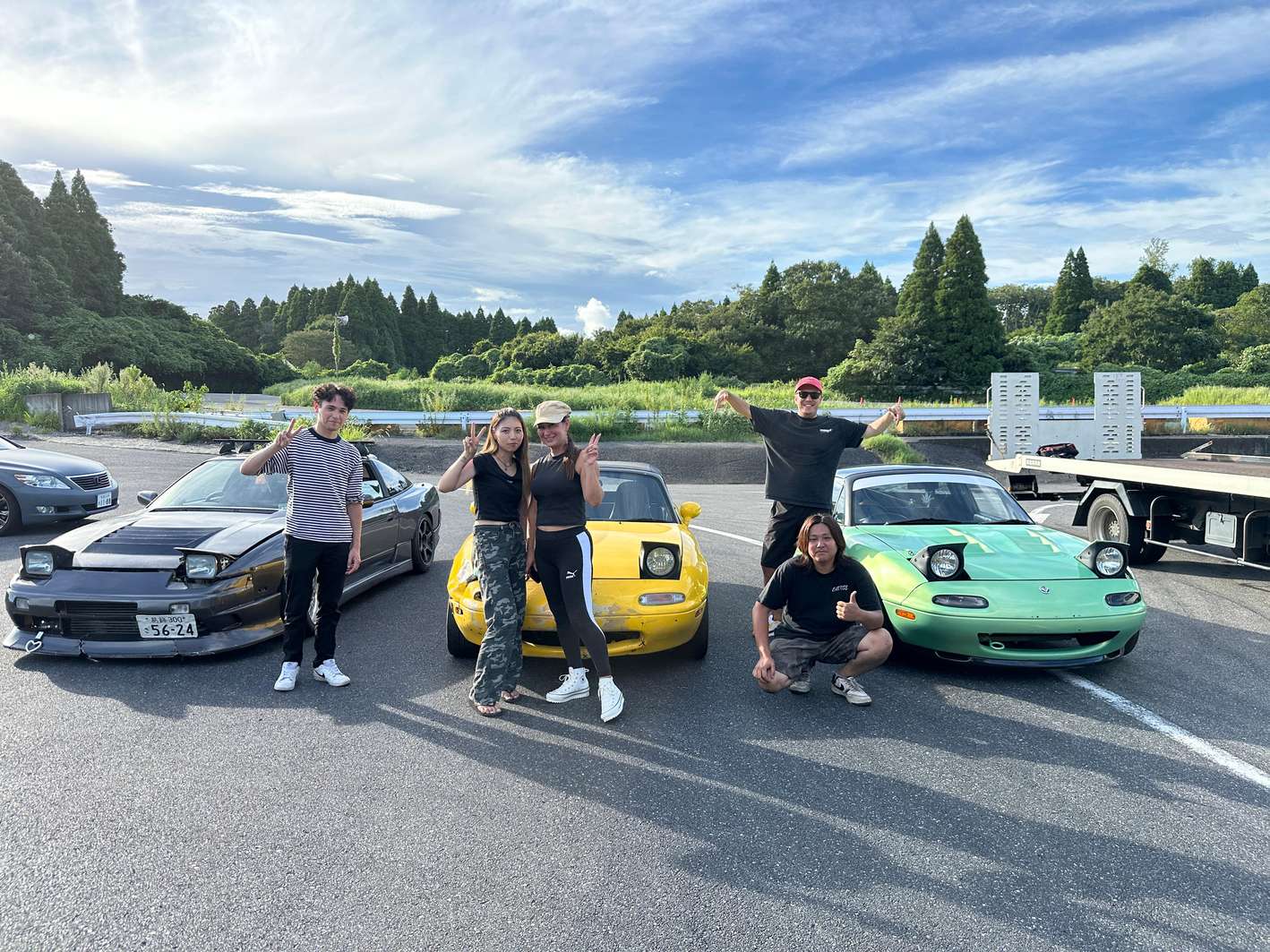
Look into proper drift instruction near Tokyo, where beginners learn donuts and figure eights on real track.
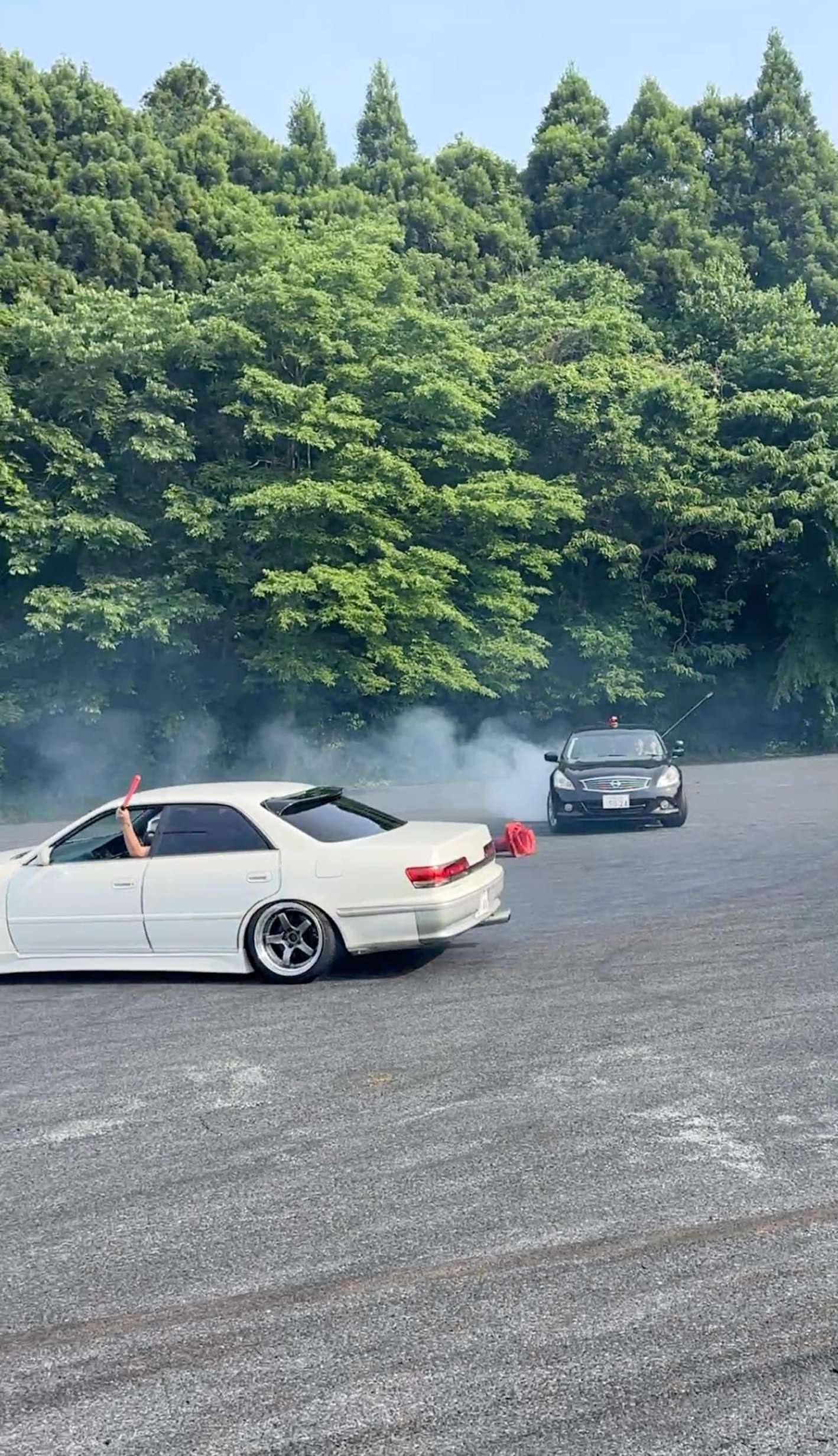
Move from wanting to drift to driving yourself on a track, with the booking steps laid out plainly.
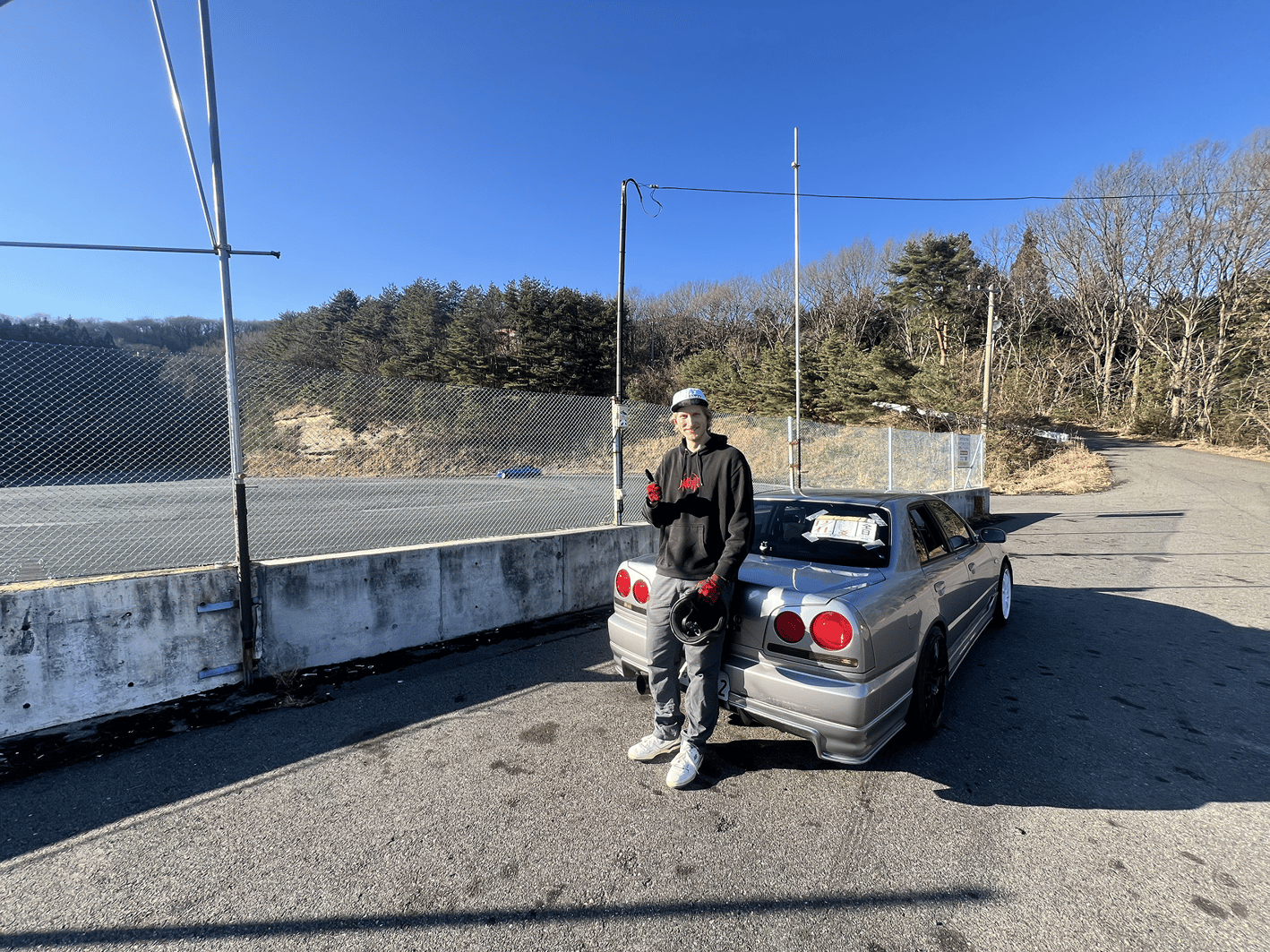
Compare guided drift rides and track days so you can turn an interest in drifting into something bookable.
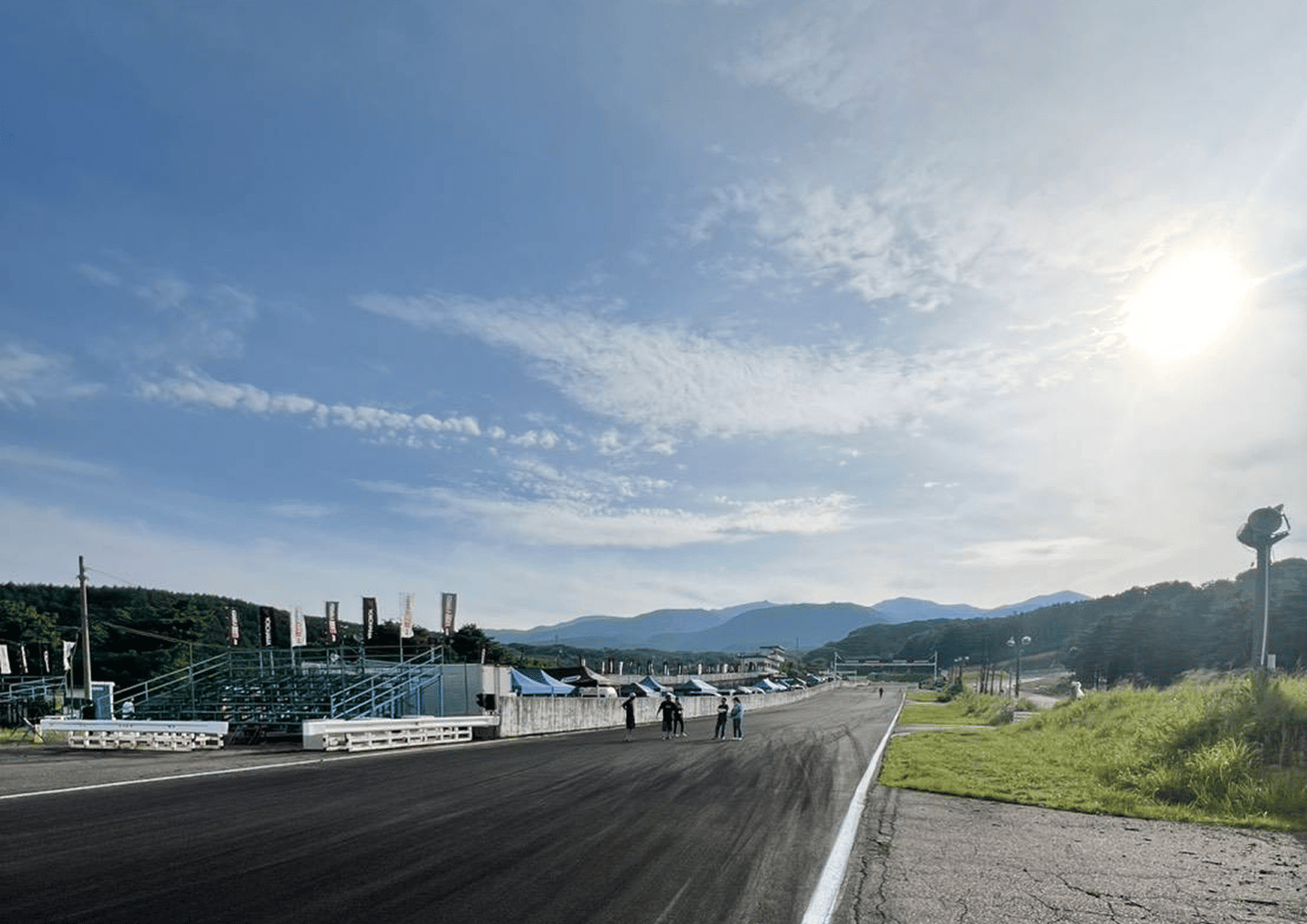
Plan the trip from Tokyo out to Ebisu Circuit and see what a full drift day there involves in practice.
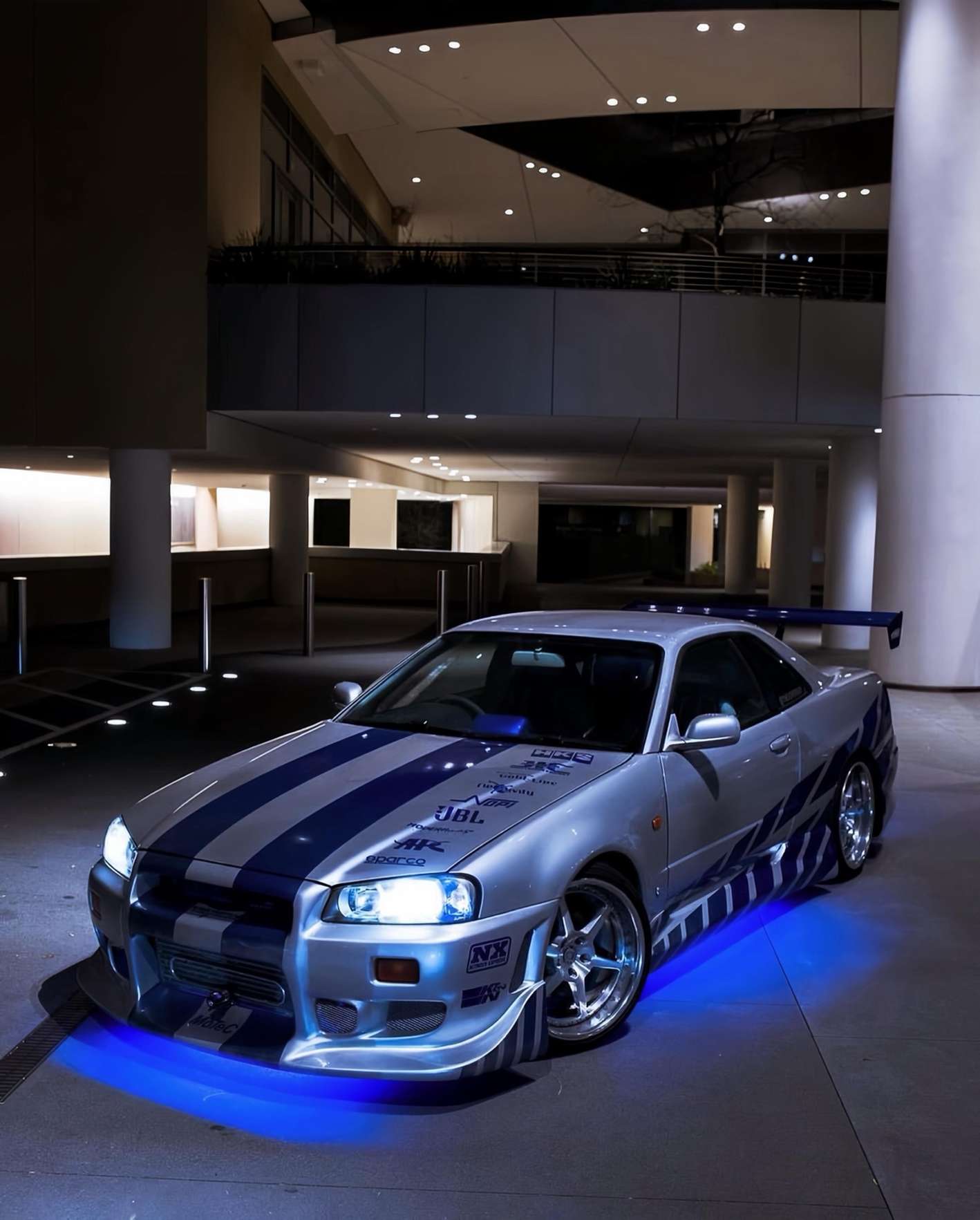
Weigh the kinds of JDM experiences available, from passenger rides to self-drive days, before you commit.
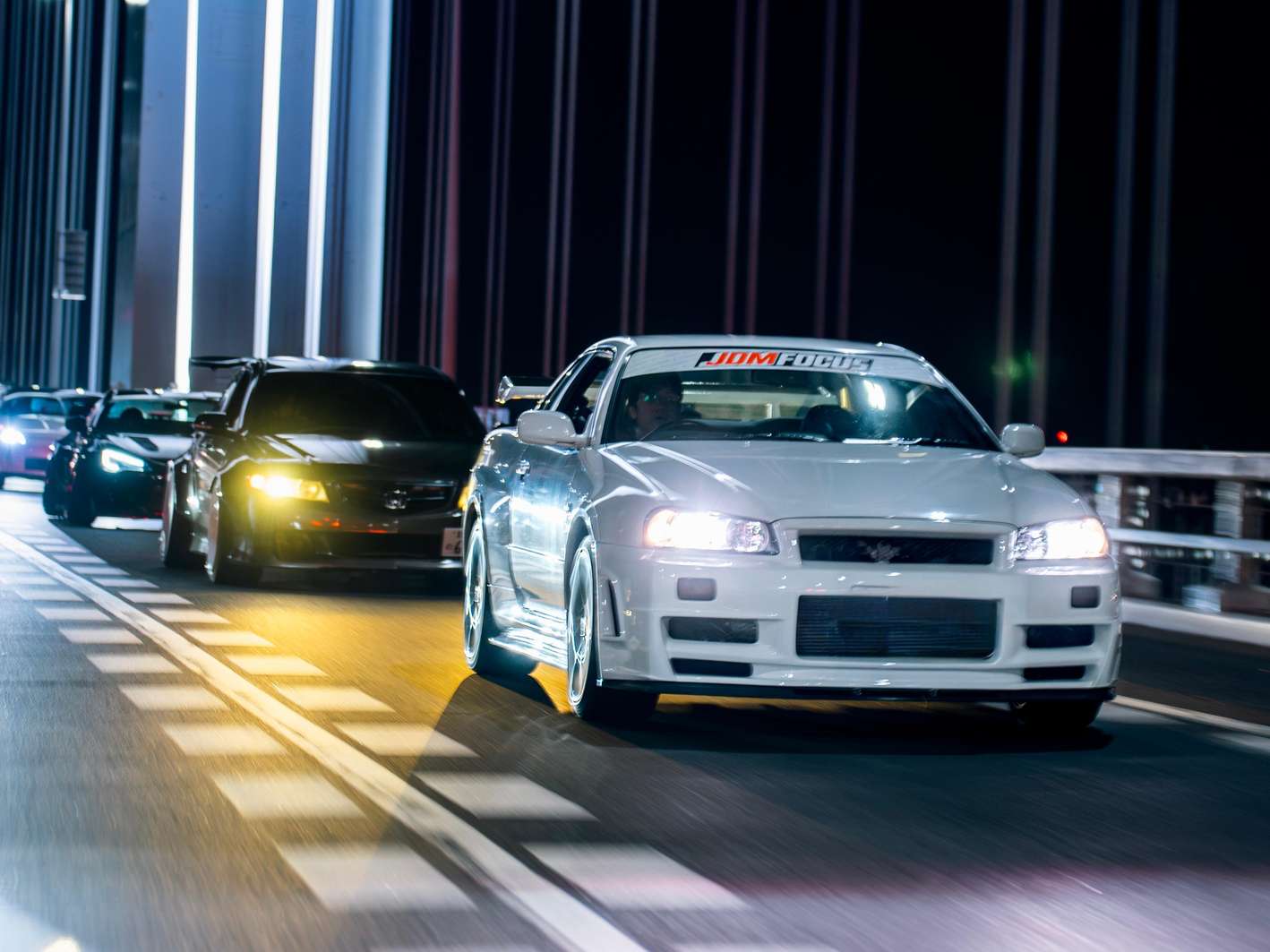
See how a guided car meet tour works in Tokyo and whether it beats hunting for the gathering yourself.
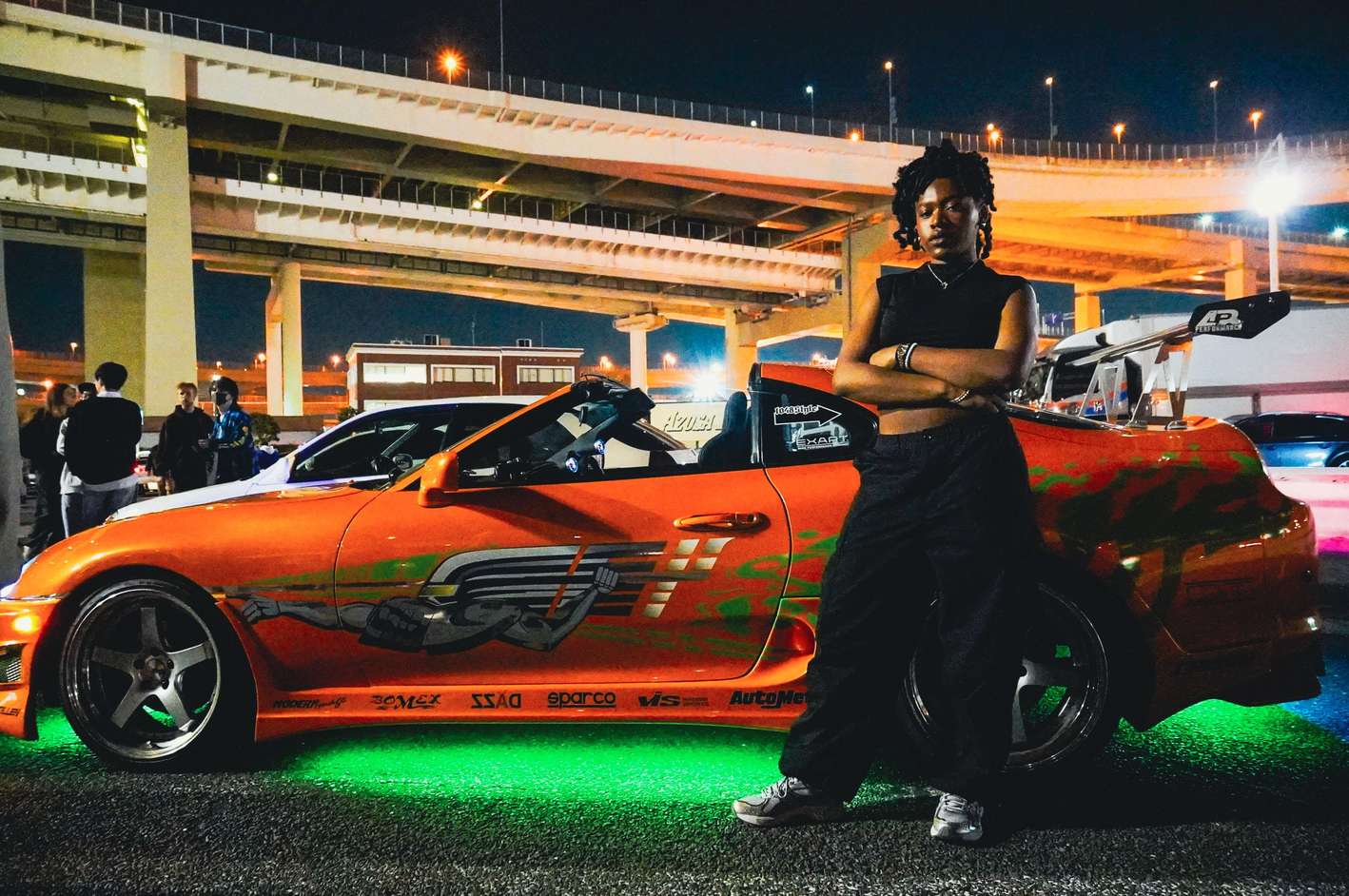
Browse the Daikoku night-drive tours and find one that matches the evening you have in mind.
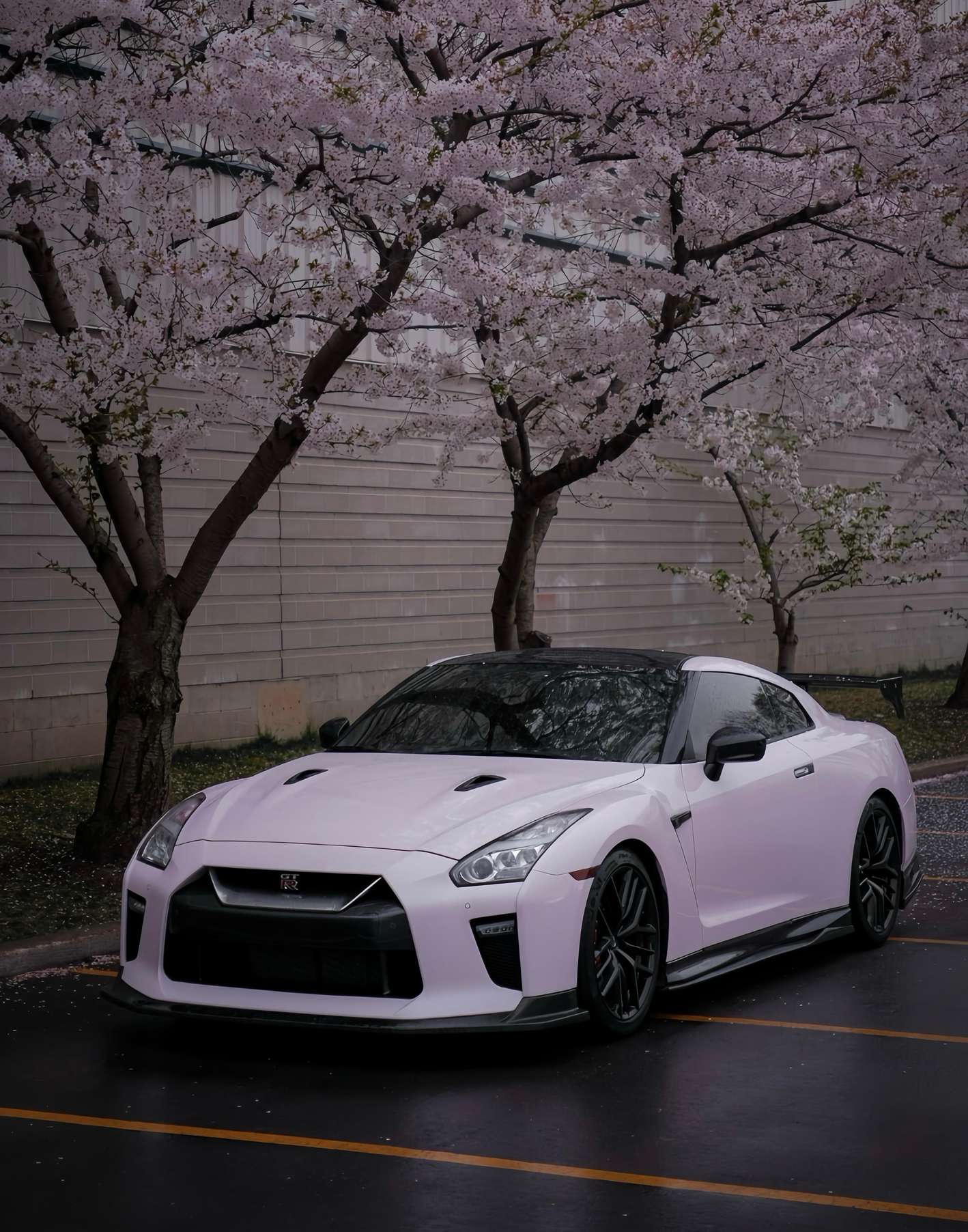
Find the guided rides that include Tokyo's Wangan route, the bayshore drive Osaka's loop road echoes.
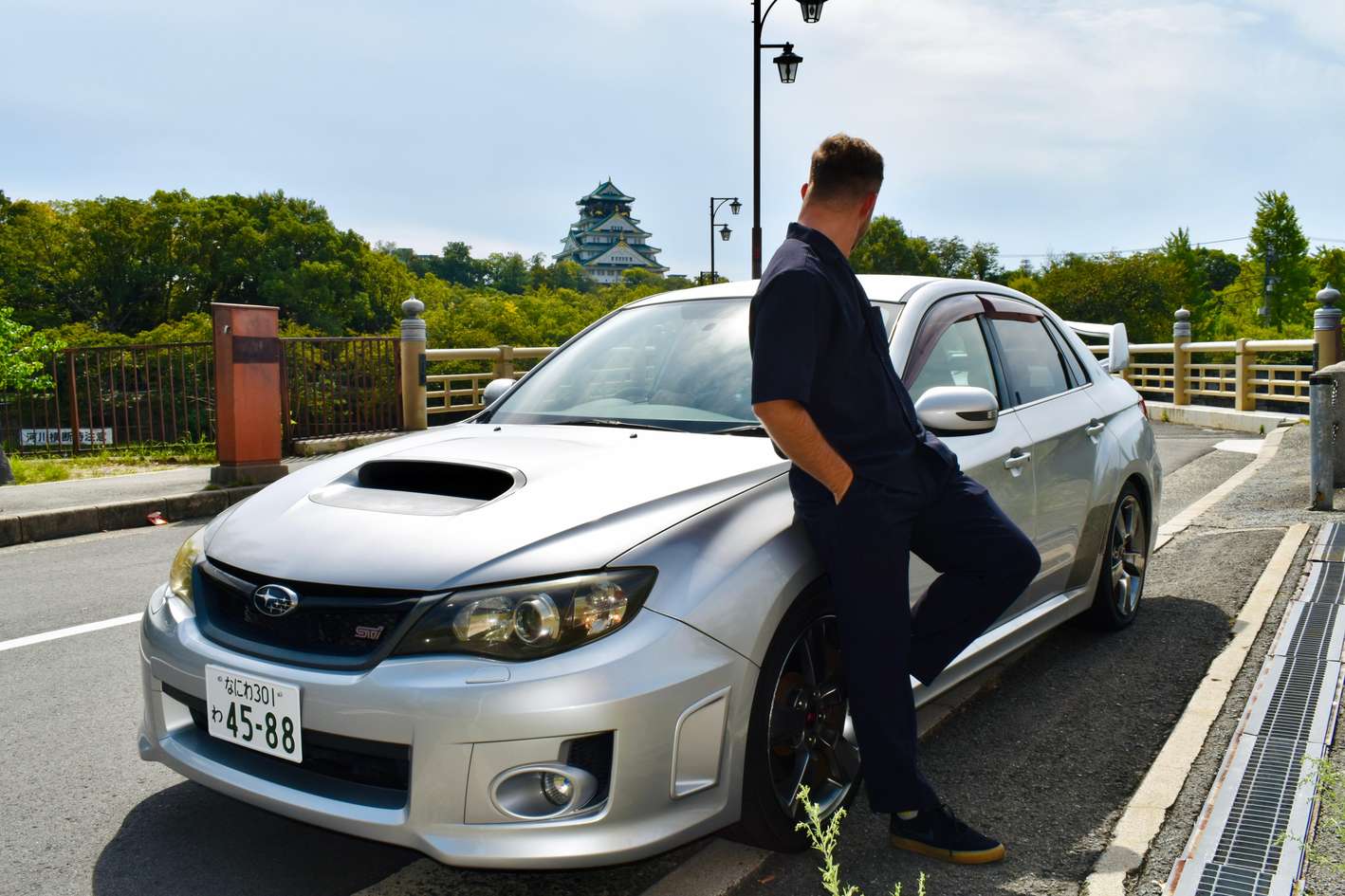
Compare rentals you drive yourself with guided JDM tours, the same choice you face for the Osaka meet.
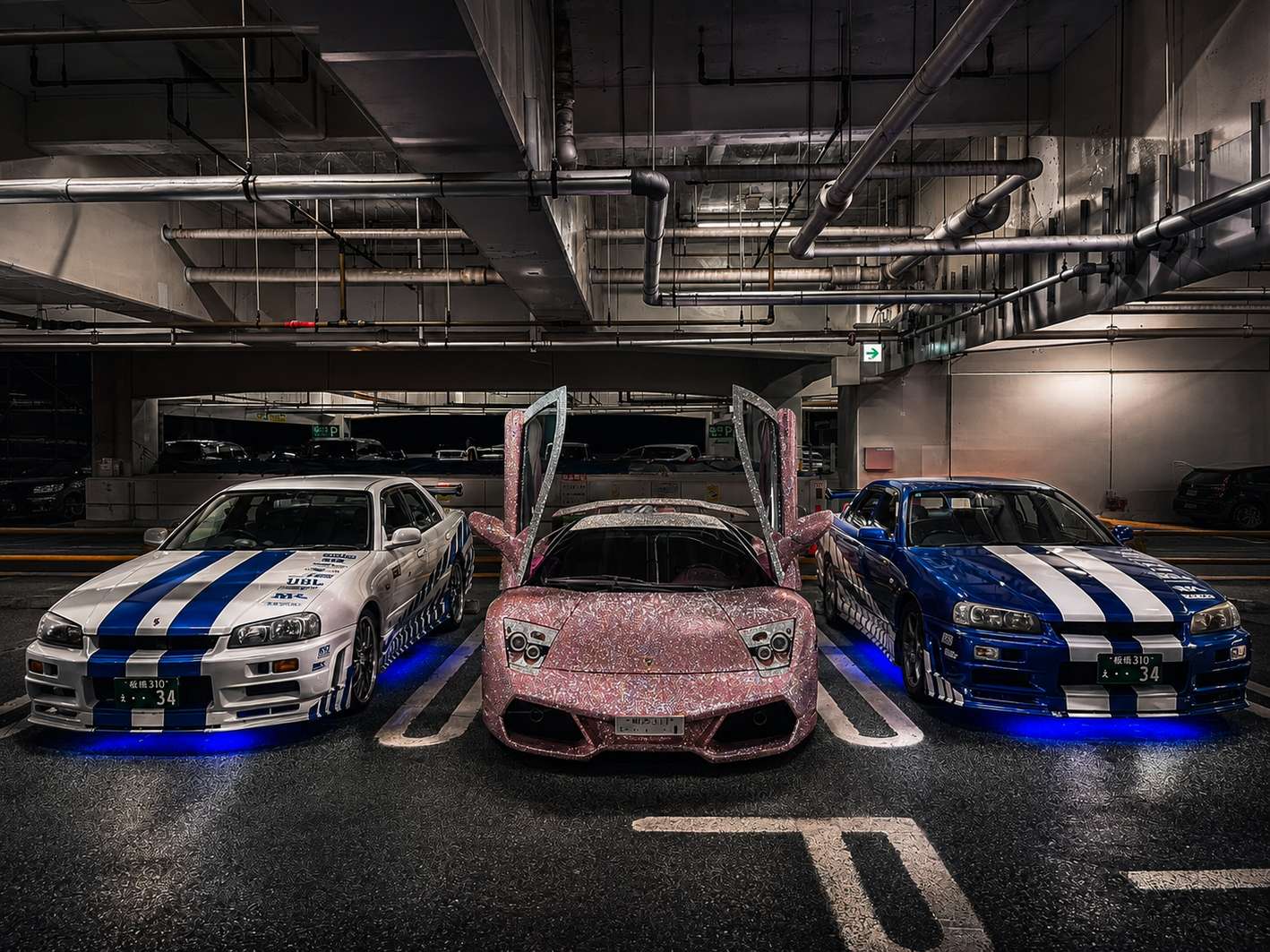
See why a private tour to Daikoku PA suits travelers who want the night arranged for them.
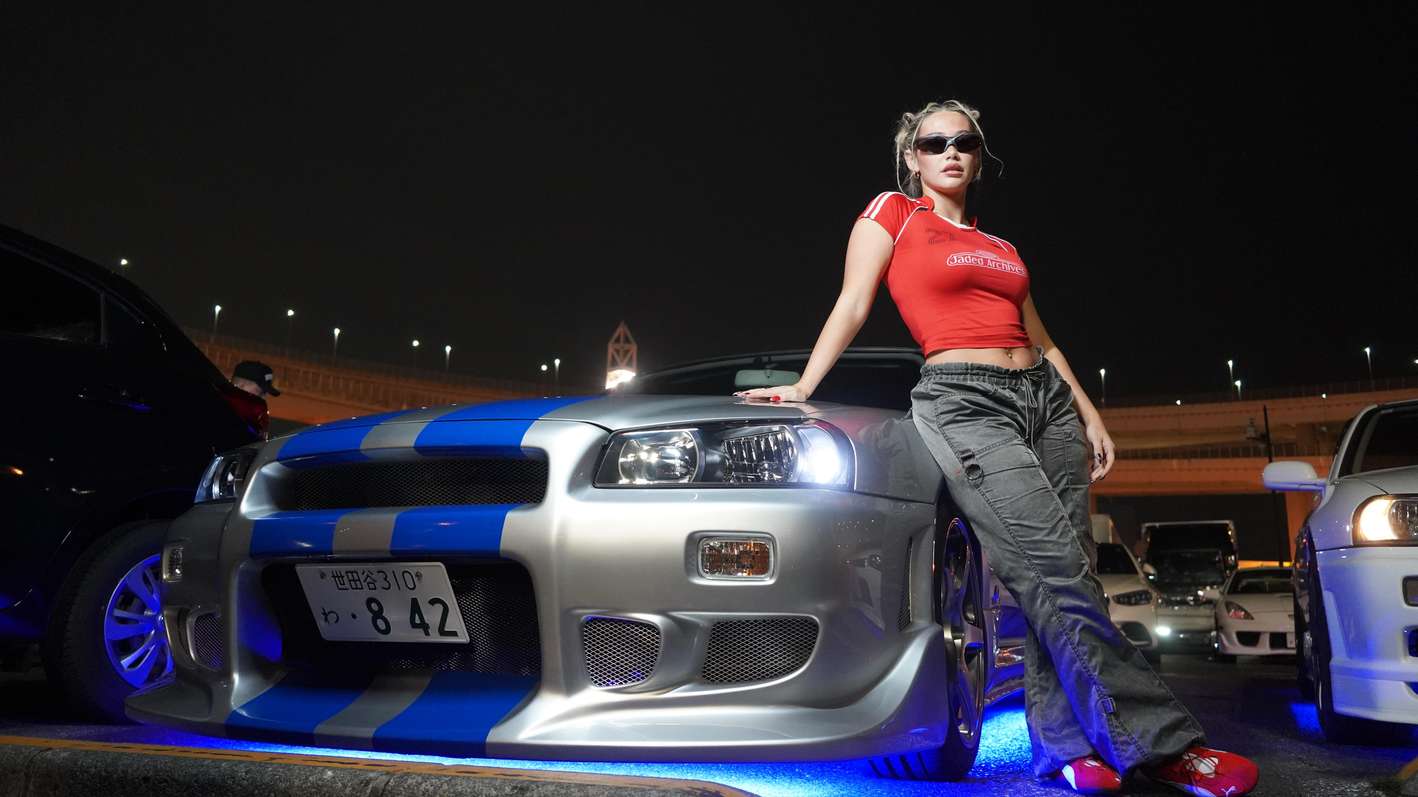
Work through the Tokyo JDM rental options if you would rather drive yourself than join a tour.
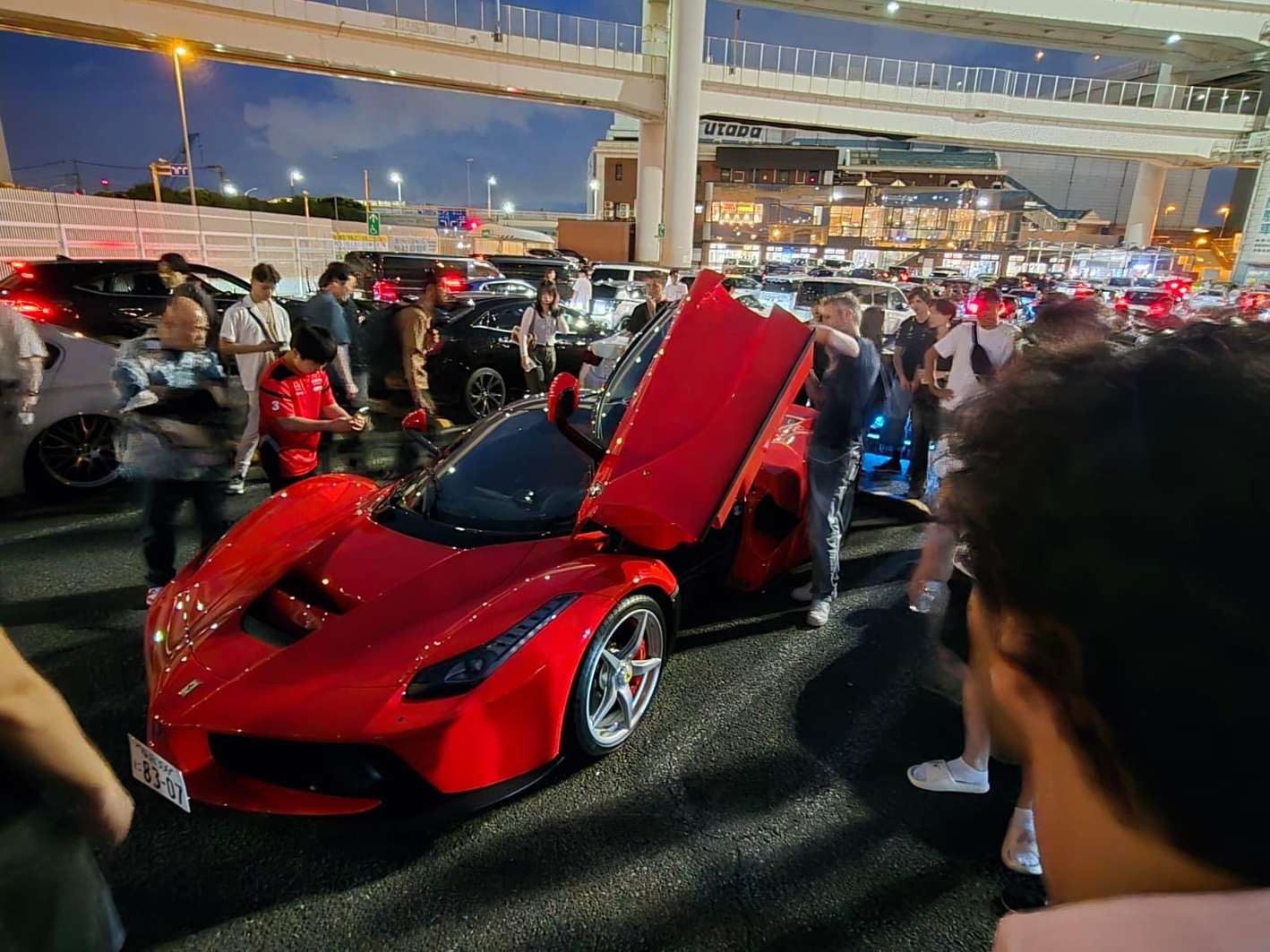
Check whether an AE86 rental in Tokyo is actually bookable and what the closest real options are.
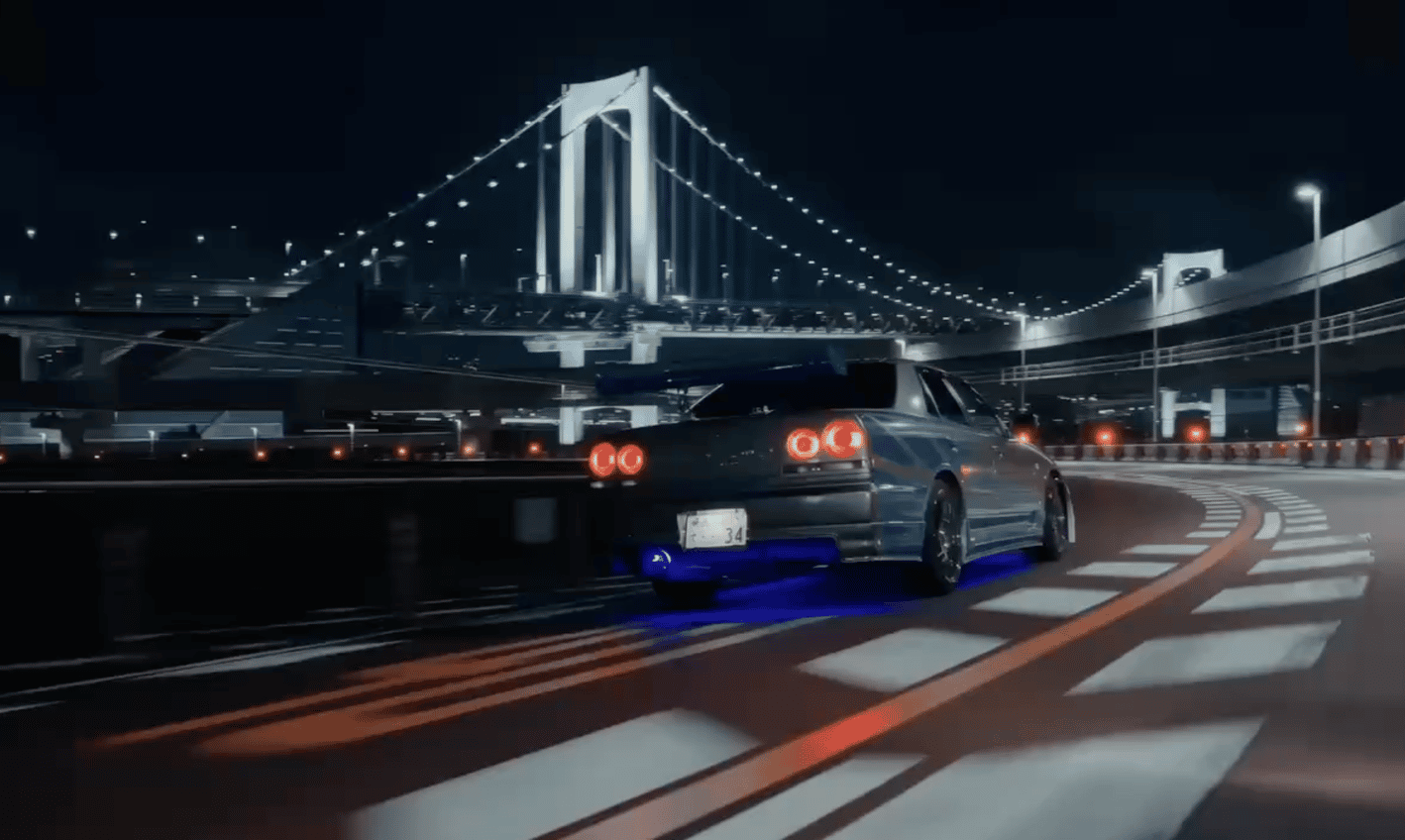
Get a direct answer on renting a Supra in Tokyo and the routes worth driving once you have it.
See the R32 GT-R details and decide between a self-drive rental and a guided ride in the car.
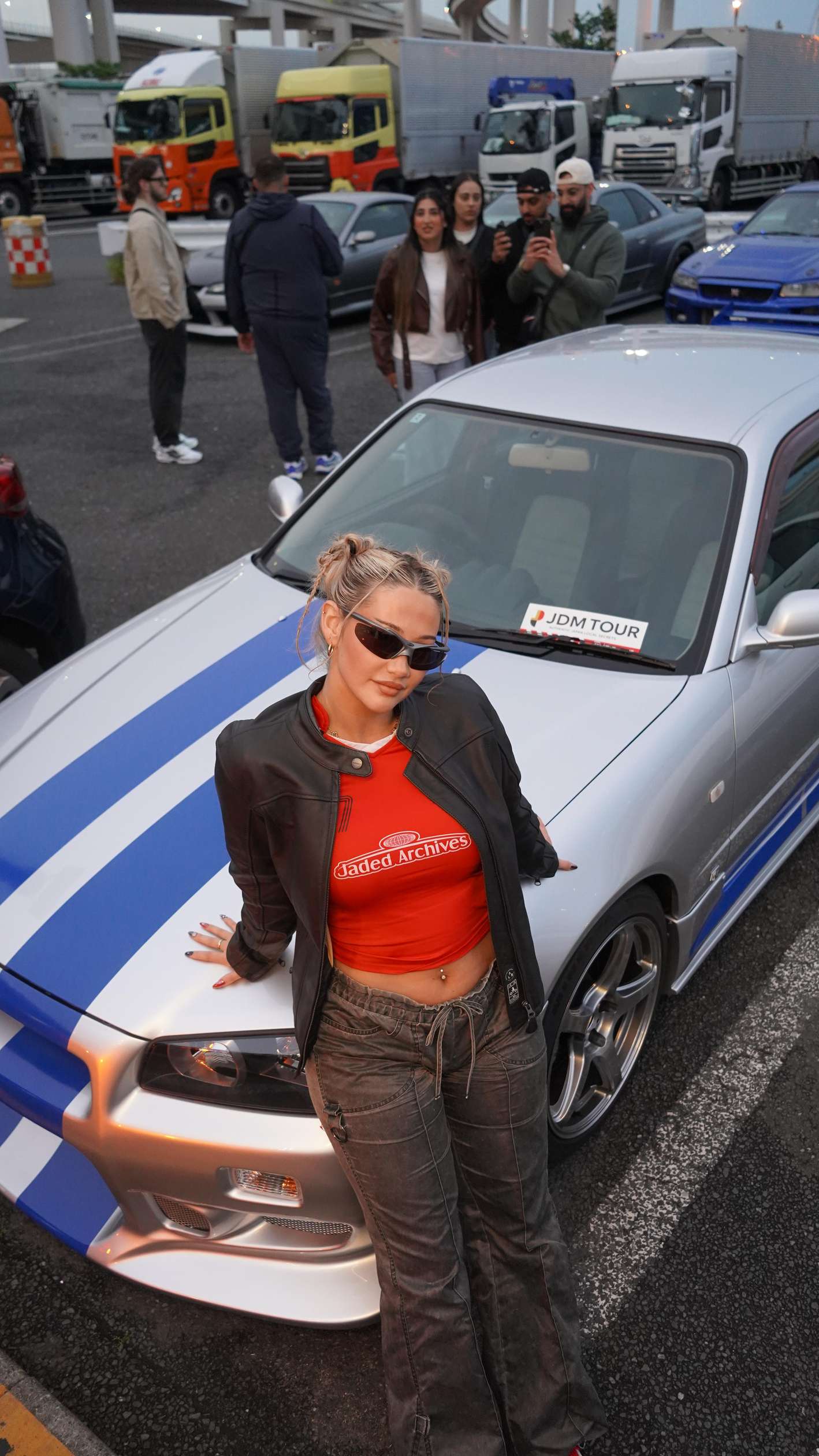
Compare driving an R34 yourself with joining a guided night run in one, before you book either.
Get the R35 GT-R booking guidance you need, including how far ahead to ask for a specific car.
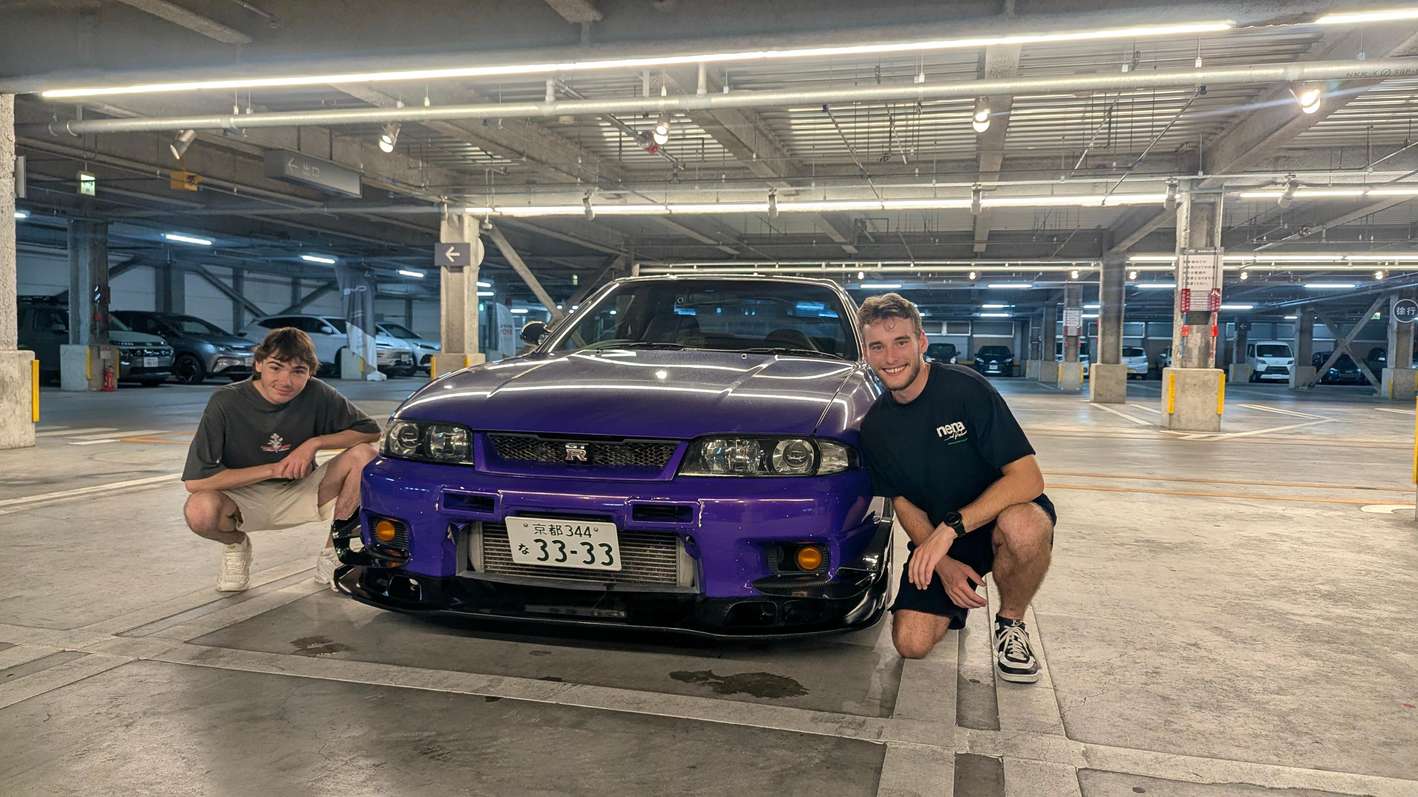
See what Kyoto's small meetup scene offers and whether it deserves a day of your car trip.
Read the wider Osaka meet picture, from Triangle Park nights to where cars gather after Higashi Osaka.
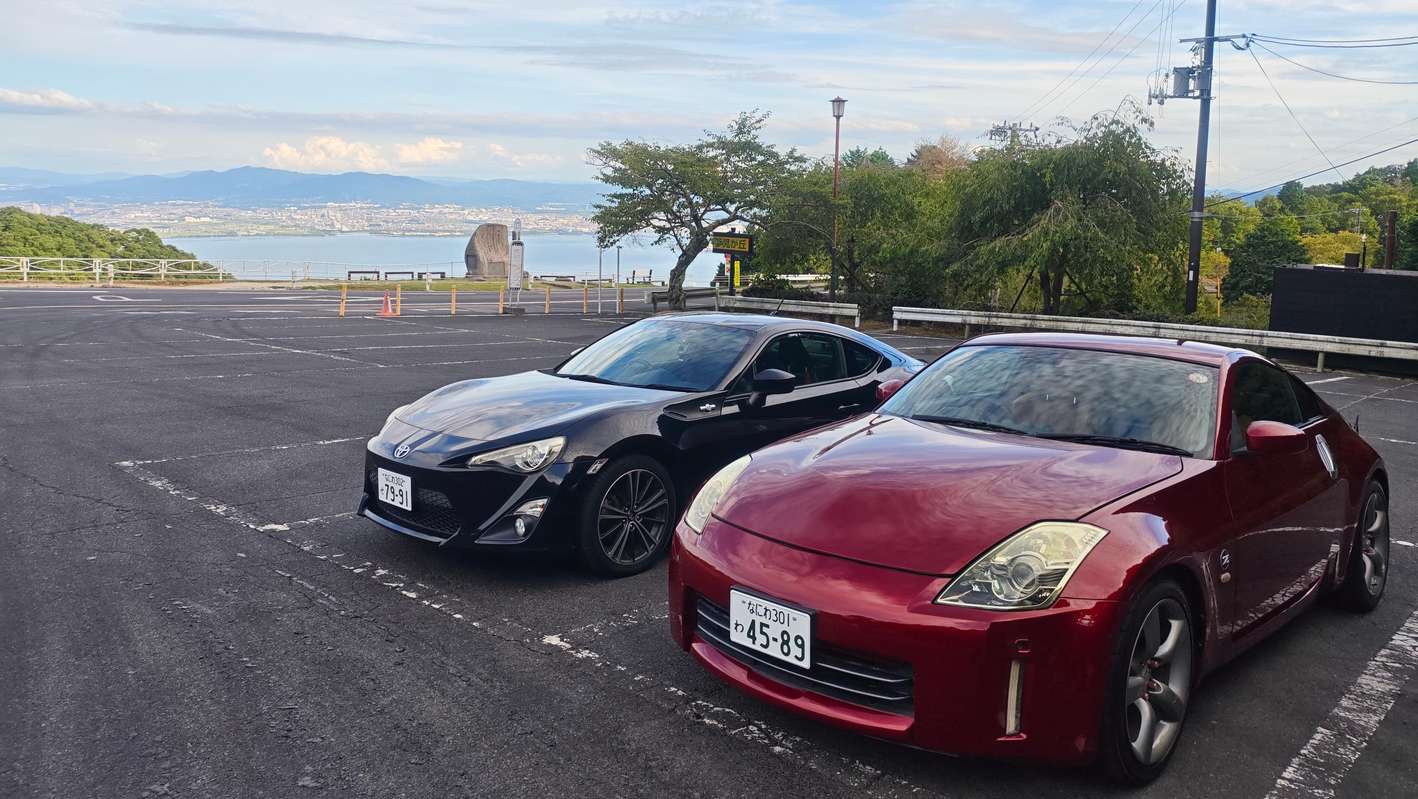
Find the Osaka self-drive sports car rental that pairs with a run to Higashi Osaka PA on a weekend night.
The practical answers before you plan a night on the Osaka Loop Line.
Osaka2026Car meets at Higashi Osaka PA happen most Friday and Saturday evenings. The busiest stretch runs from about 10 pm to midnight, so plan your night around those hours.
By car only. The meet sits inside a toll expressway, with no train, bus stop or public parking within 1.5 km. For most visitors that means a guided tour with pickup, or a rental car if you want to drive yourself.
No. It is an informal gathering with no organiser, so seeing cars is a hit-or-miss lottery. Even locals who cruise Osaka at night only stumble onto meets by chance. Treat any sighting as a bonus.
On lively nights the meet draws more than 250 cars. Friday and Saturday evenings are the strongest bet for a big turnout.
A wide mix: Skyline GT-Rs, tuned Supras, lightweight Civics, Lamborghinis, Ferraris, slammed VIP cars, lowriders, modified Priuses and drift-built Nissans and Toyotas all show up.
It is considered Osaka's version of Daikoku PA. Expect a relaxed, social lot where owners line up cars for photos and talk modifications, with a loud group departure at the end of the night.
Not really, since the parking area sits on a toll expressway. Travelers without wheels should aim for Rinku Town or Amemura's Triangle Park on Friday and Saturday nights instead.
Yes. A self-drive rental lets you pick a JDM sports car and reach the parking area on your own schedule. You will need your passport, your home licence, and either a 1949 Geneva Convention International Driving Permit or an official JAF translation, depending on your country.
Ask before touching, entering or photographing any car, and never lean or sit on one without permission. The lot is relaxed and enthusiasts are generally welcoming, but the owners set the rules for their cars.
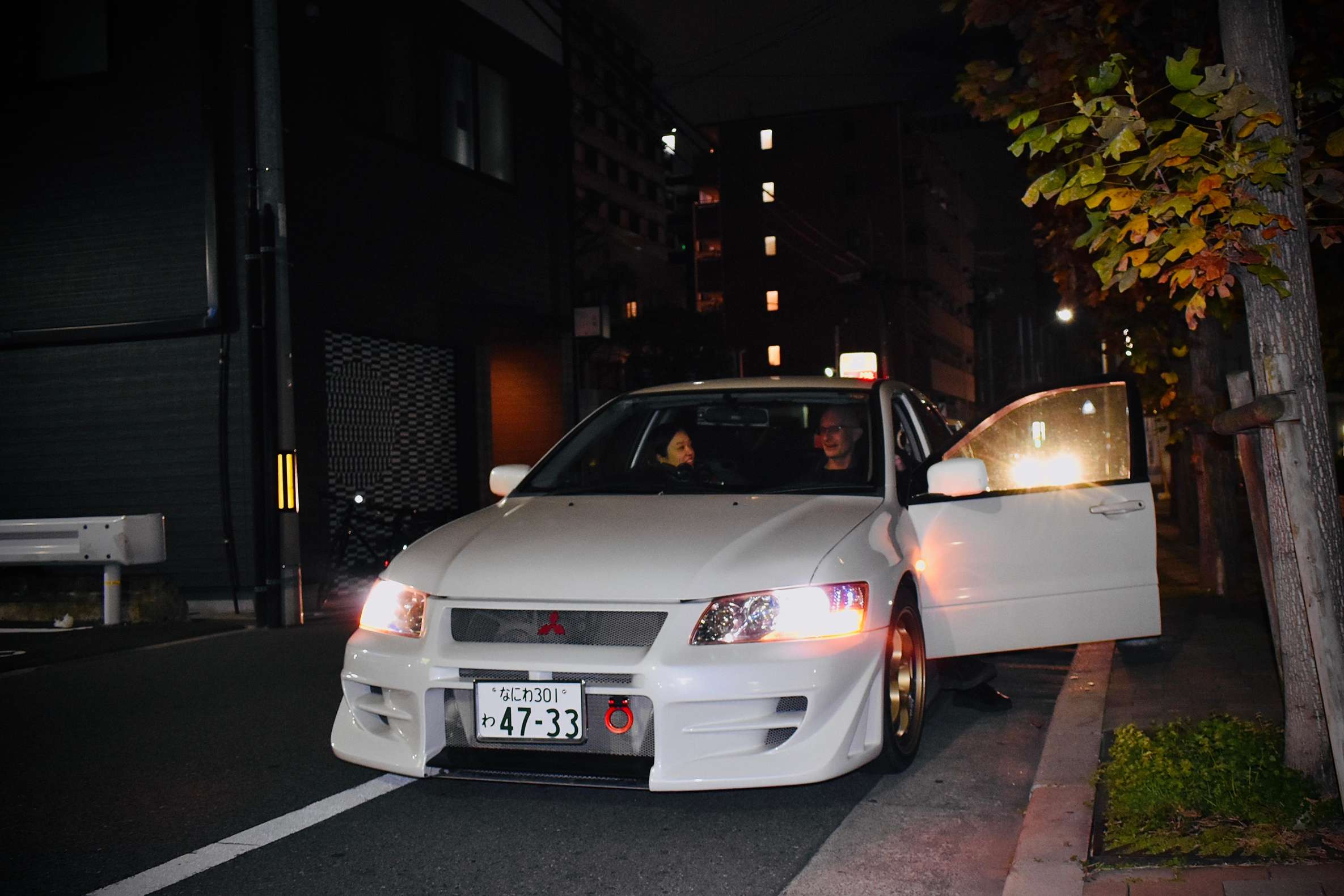
Rent a GT86, Fairlady Z or Lancer, follow the lead car to Higashiosaka PA, and cancel up to 24 hours ahead for a full refund if plans change.