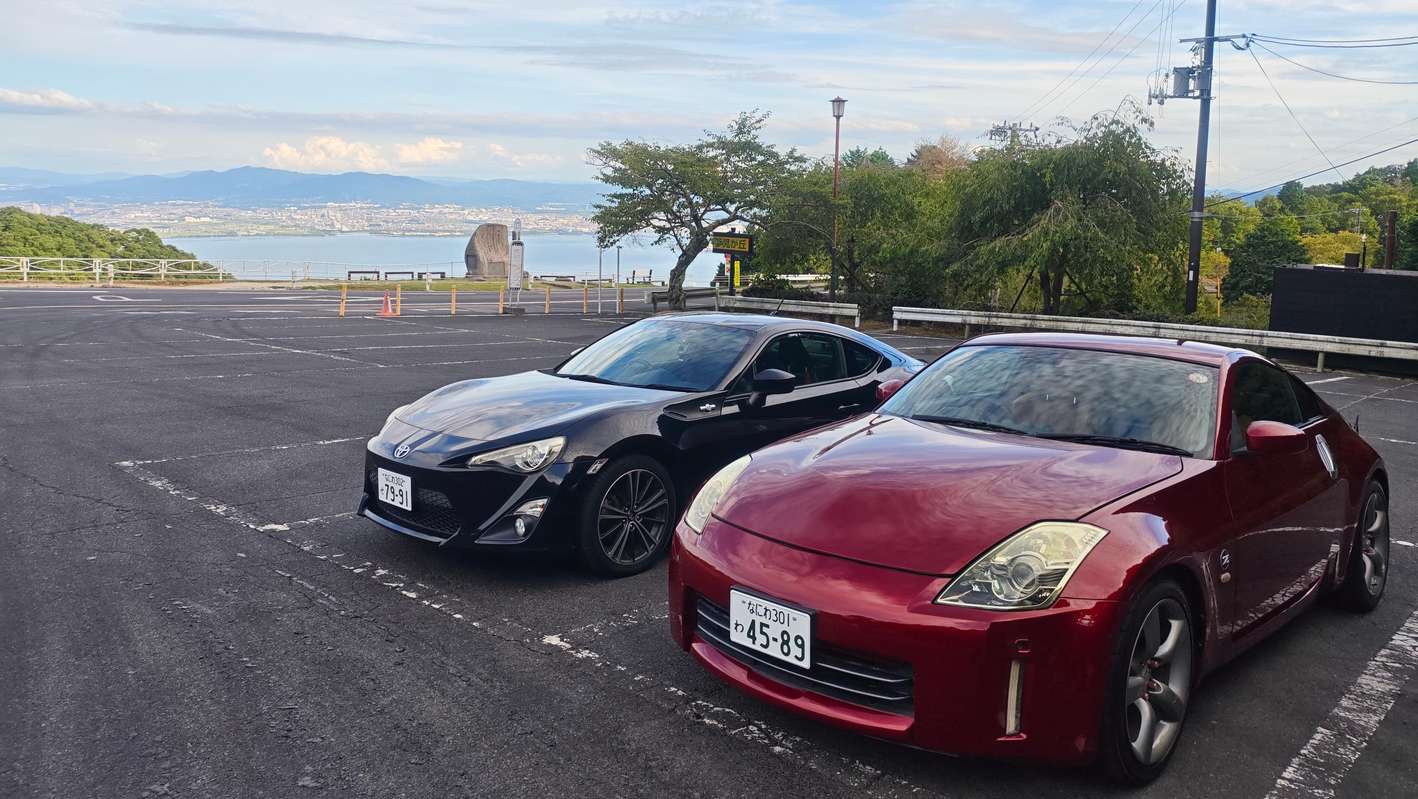
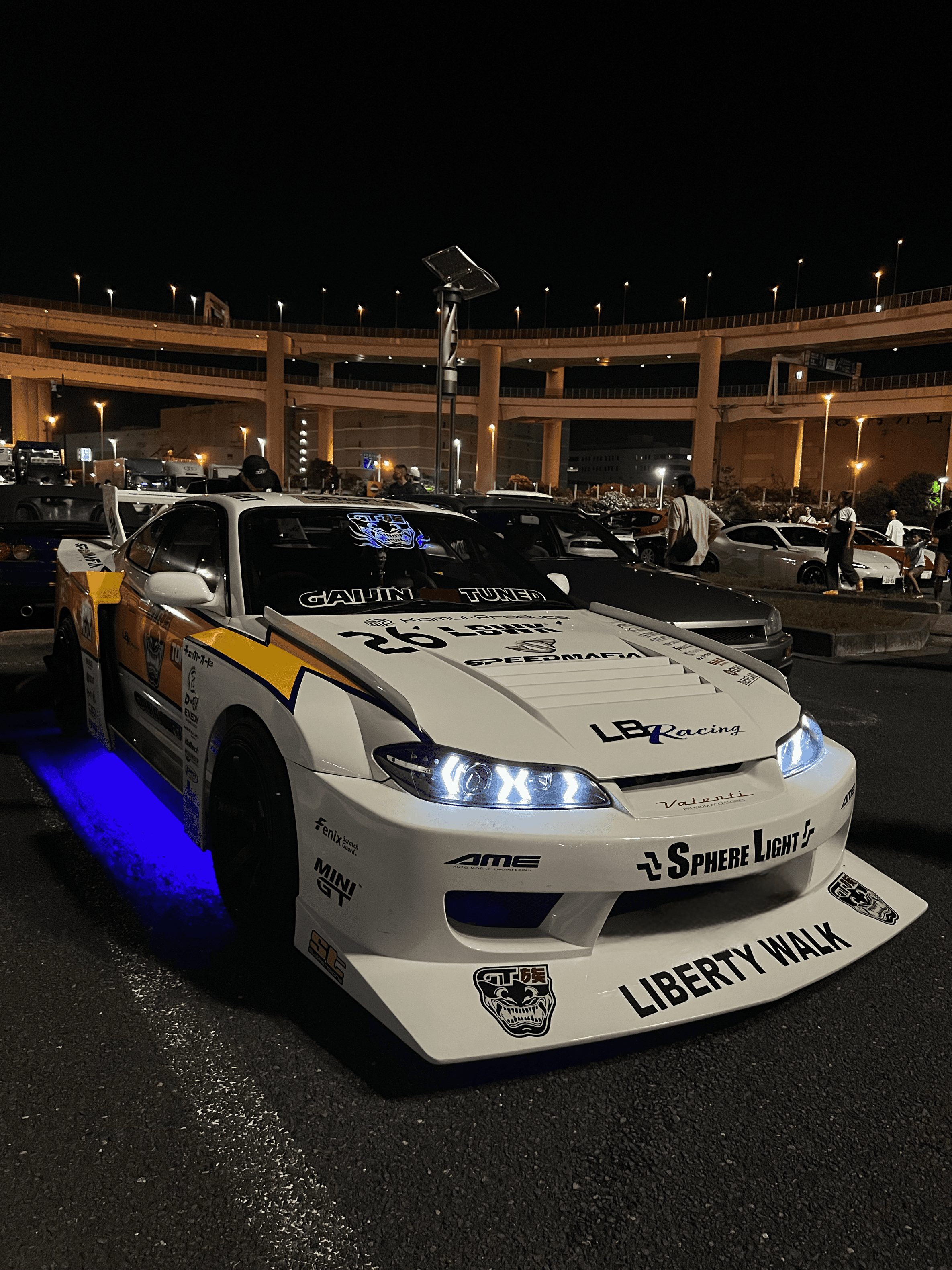
4.99,757 travelers rode the Bayshore Route at night
JDM Driving Tour Wangan Drive on Tokyo's Bayshore Route
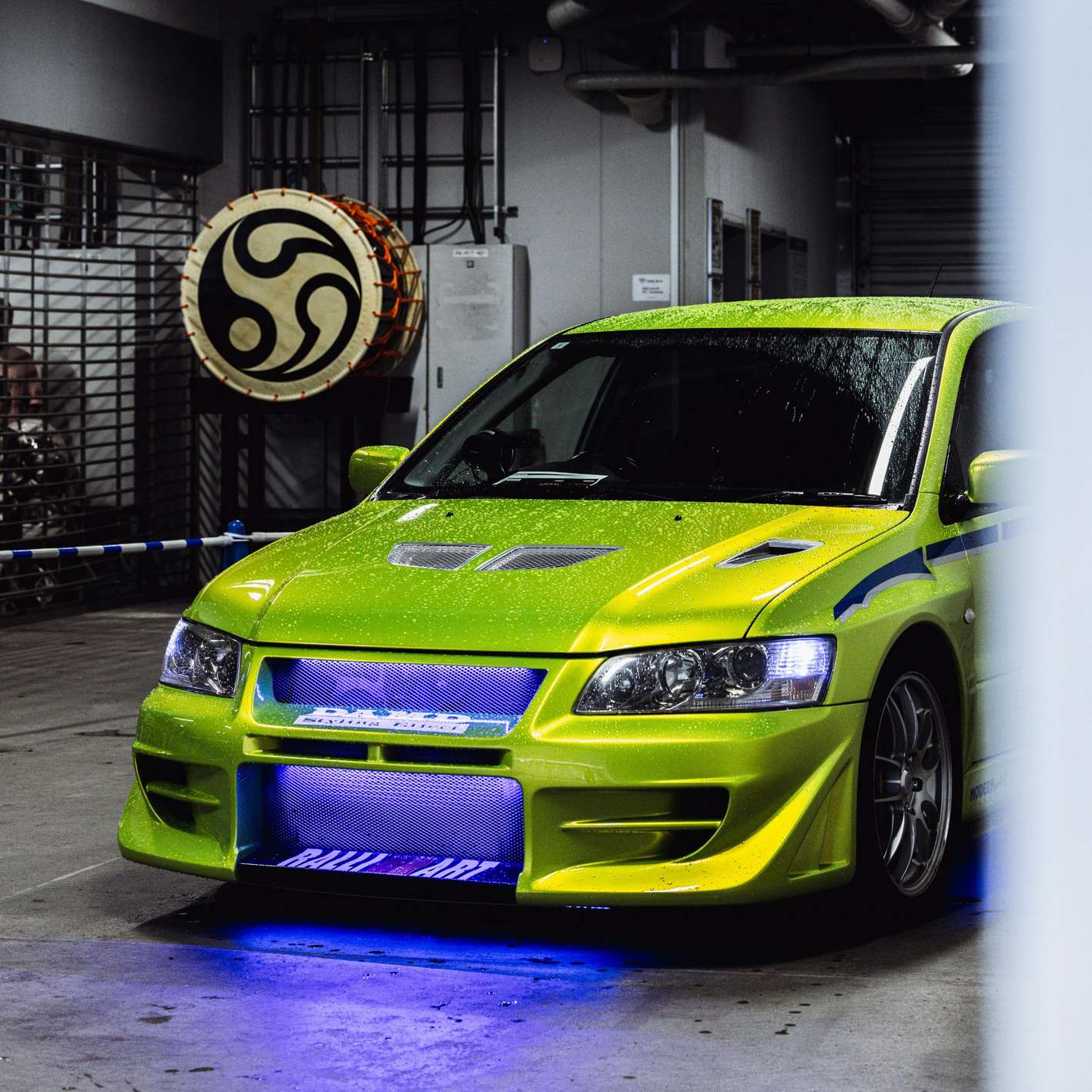
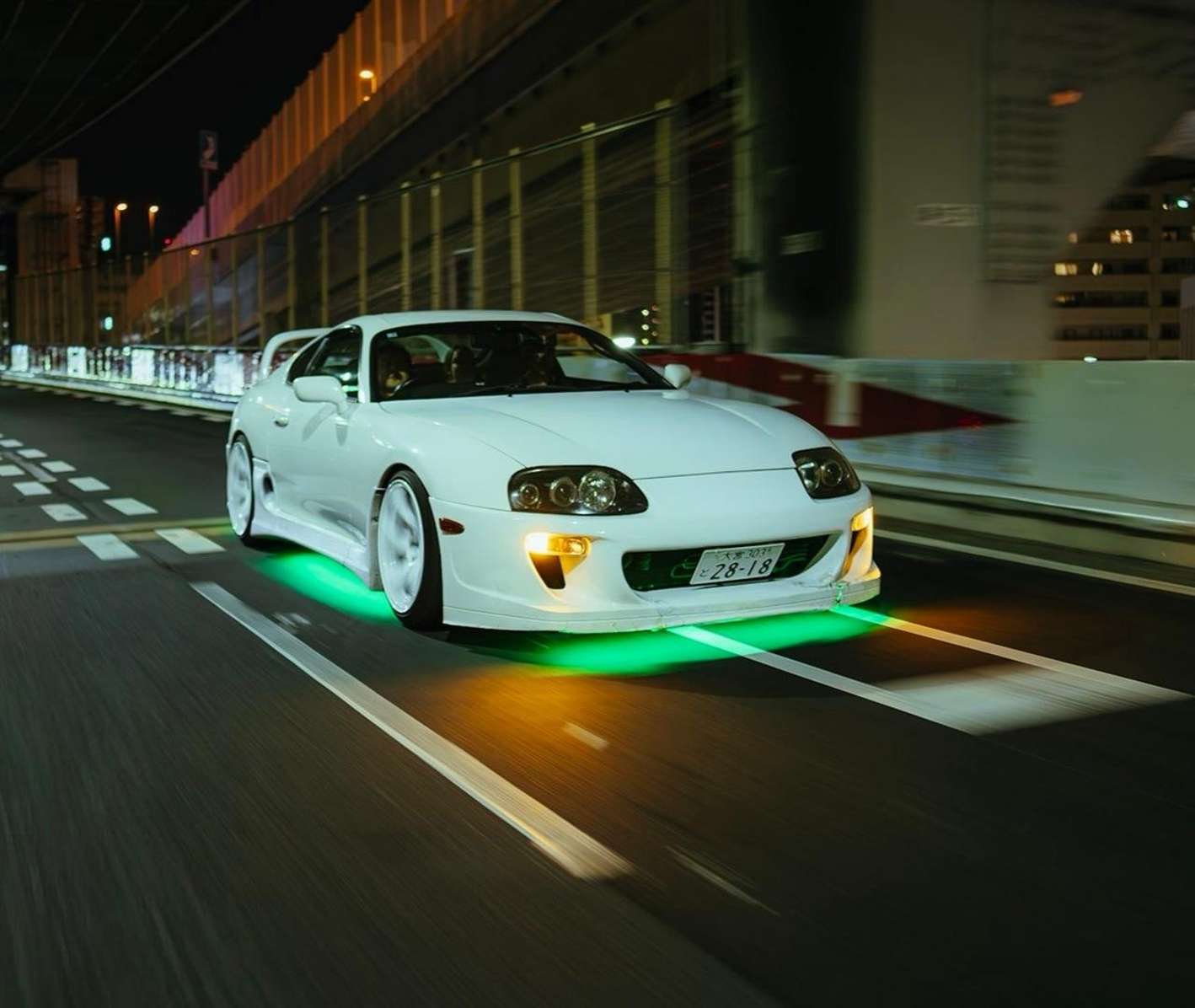
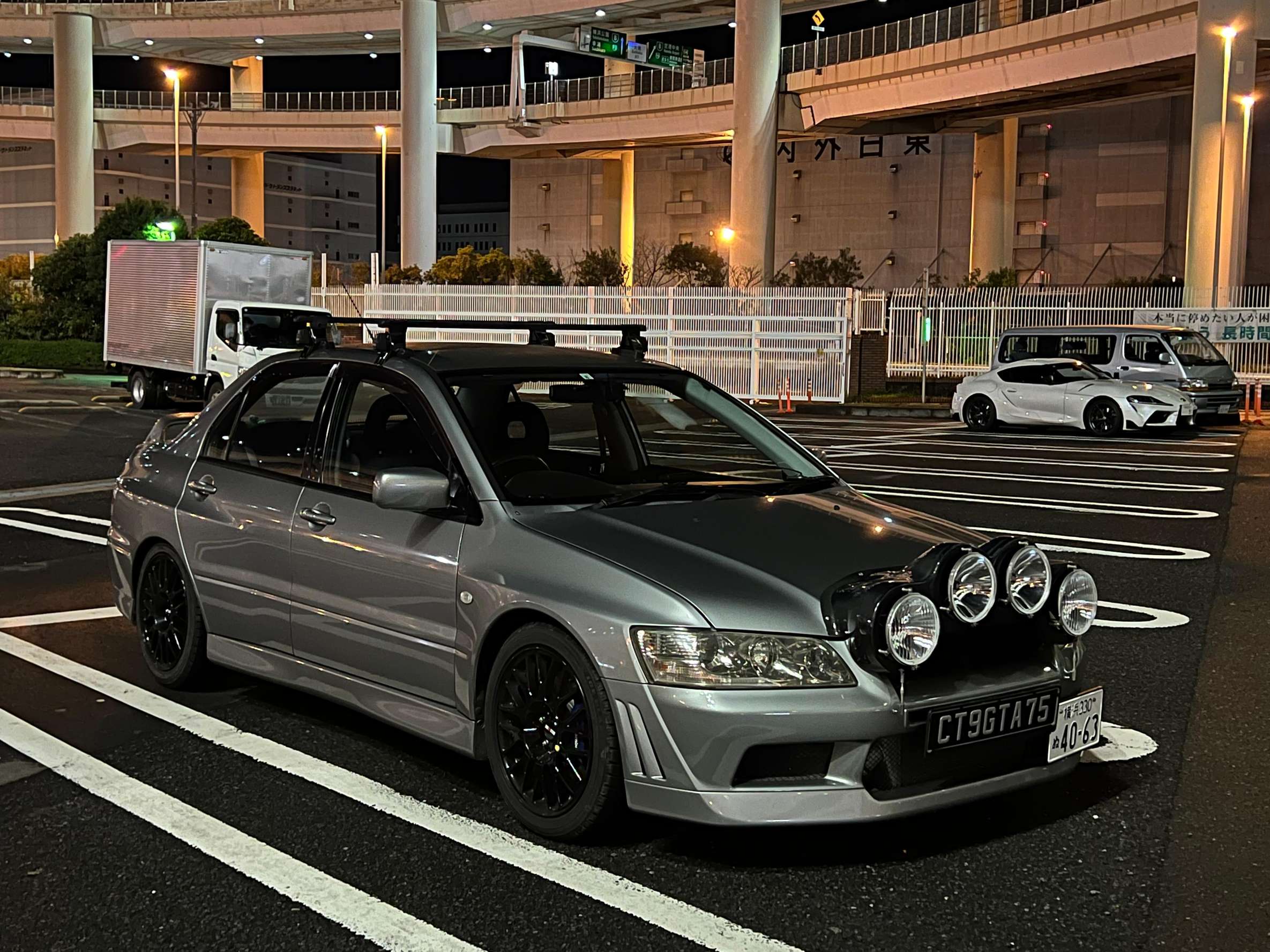
Book a night JDM driving tour ahead and cruise the Wangan Bayshore Route the way locals do. Ride Tokyo's bay highways in a modified Skyline, EVO or Supra with an enthusiast driver, then step out at Daikoku PA where the real car scene gathers. Choose a date, pick your car and lock in the night before it fills up.
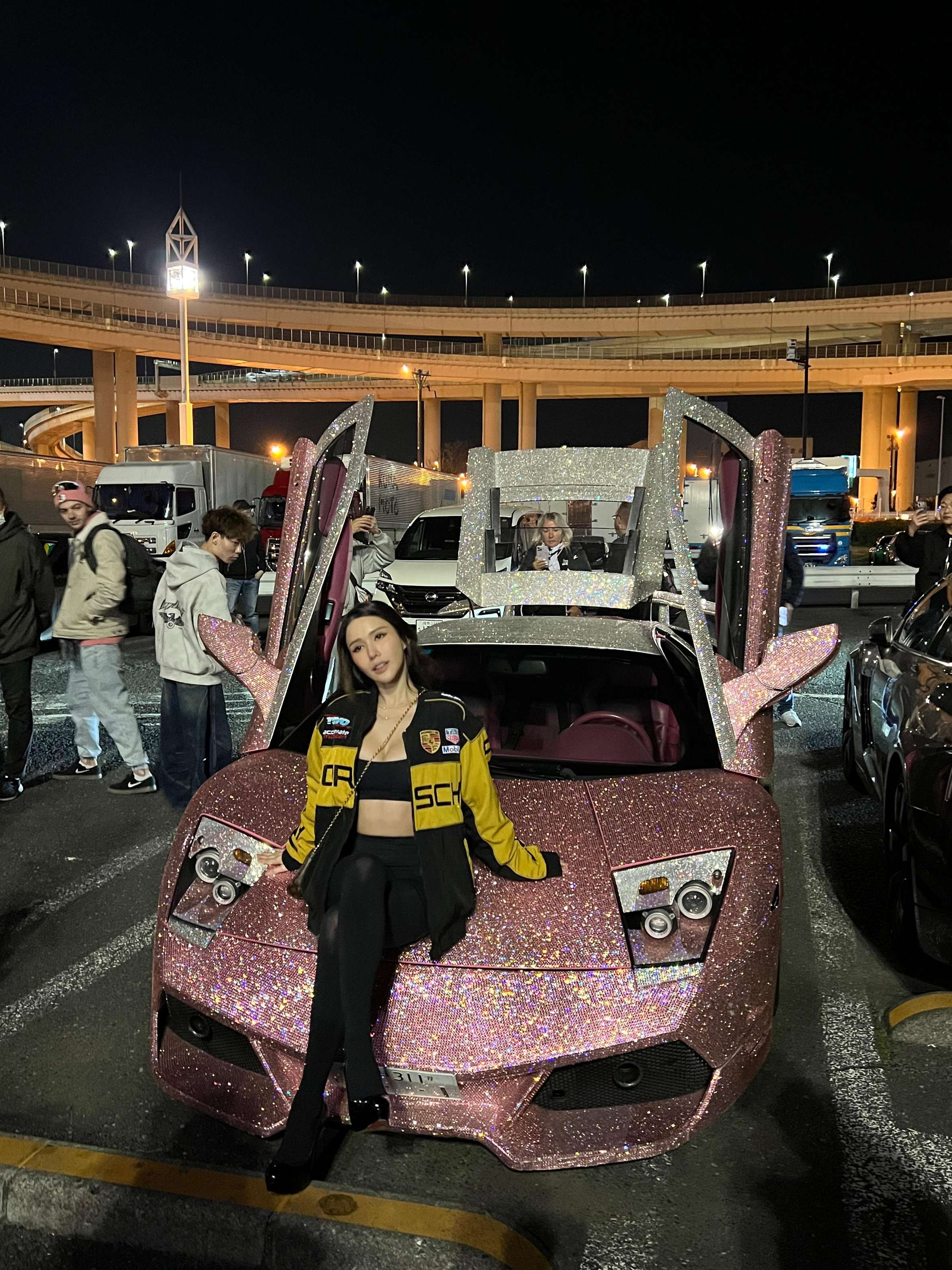
"Awesome evening on the Tokyo JDM Tour! Host was super friendly and flexible, an excellent driver and great photographer too. Relaxed vibe the whole time. I'd do it again back in Japan!"
4.9★average rating9,757traveler reviews100%free cancellation62countries travelers came from
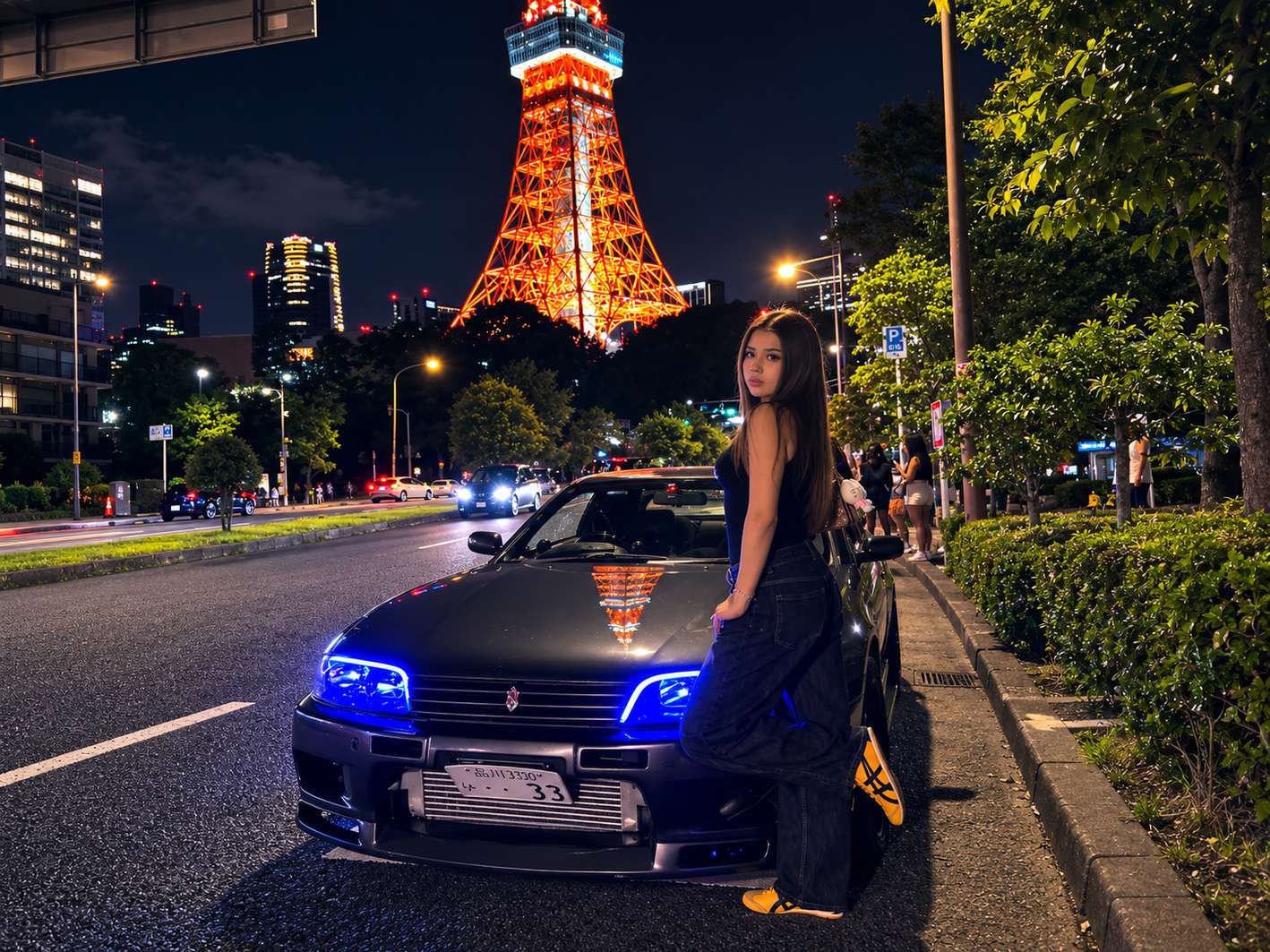
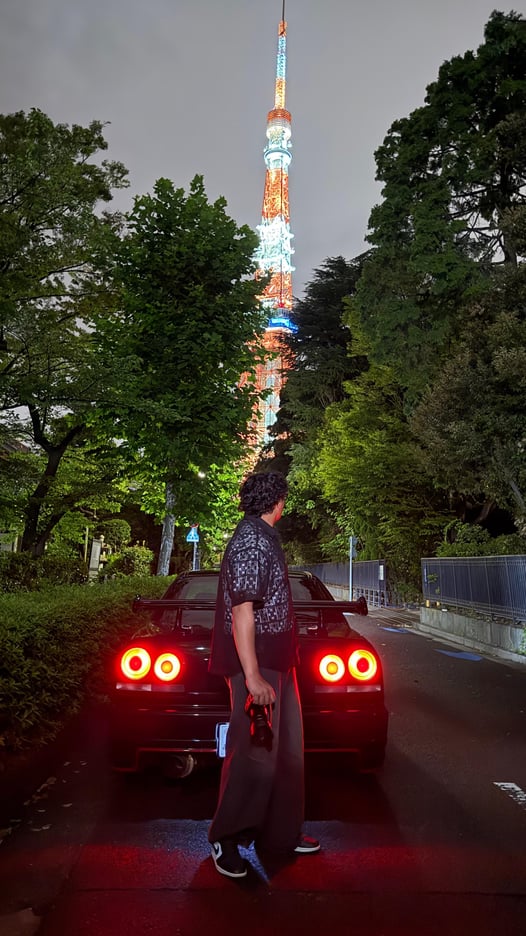
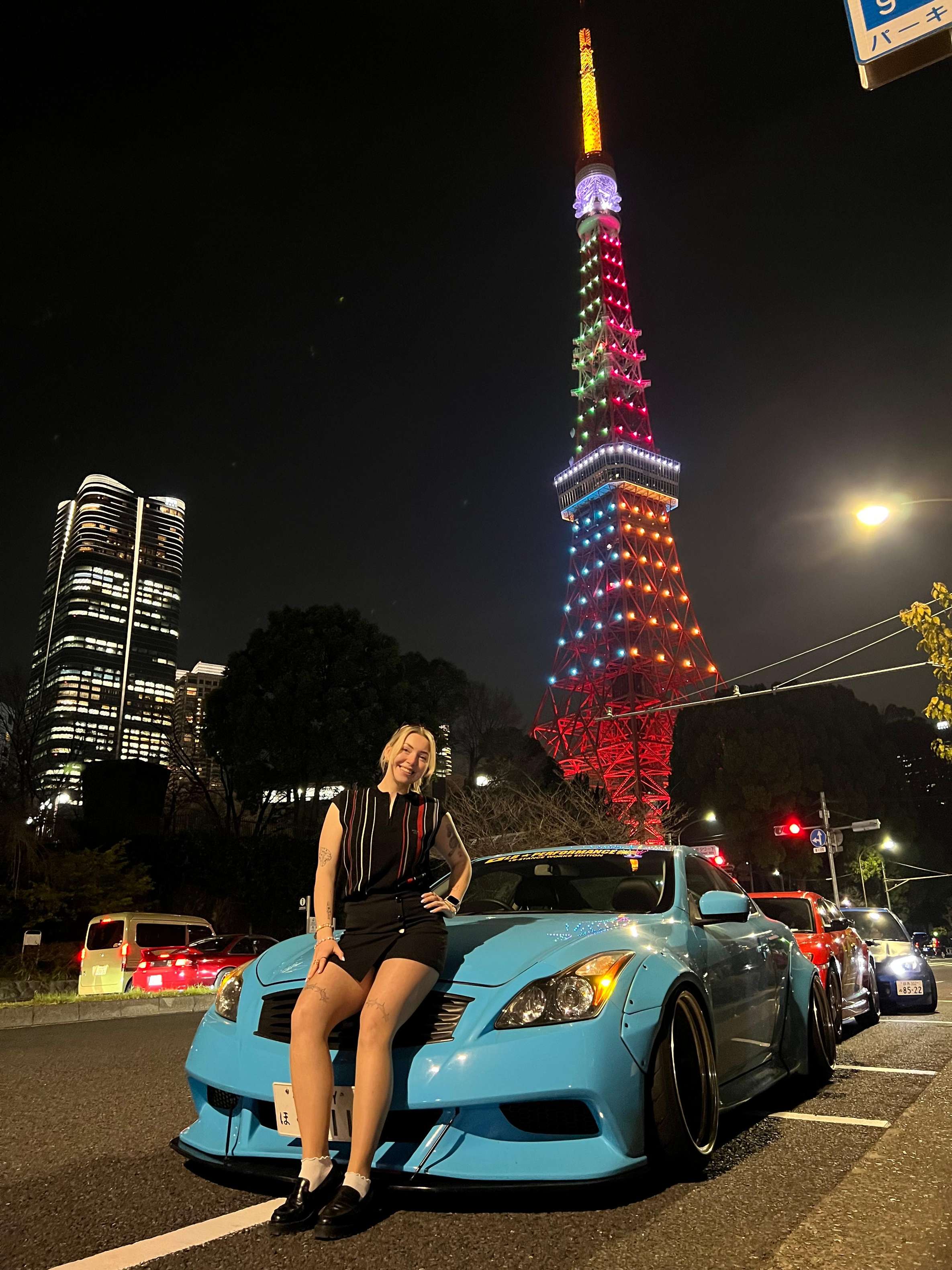
Picking your JDM driving tour
The rides on this site fall into a few kinds: a guided night cruise to the Daikoku PA car meet, a route-focused run along the Wangan Bayshore Route, and a movie-flavoured drive through Tokyo's expressways. The deciding factor is what you want the night to be: the route itself, the meet, or the film spots, and how long you want to sit in the car.
ClosuresPolice can close the Daikoku PA lot with no notice, most often on Friday and Saturday nights from about 8:30 pm, so tour operators pull those pickups forward to the late afternoon.
If Daikoku closesMost tours move on to another bay spot such as Umihotaru PA or Tatsumi PA, and several give a full refund if you would rather not continue.
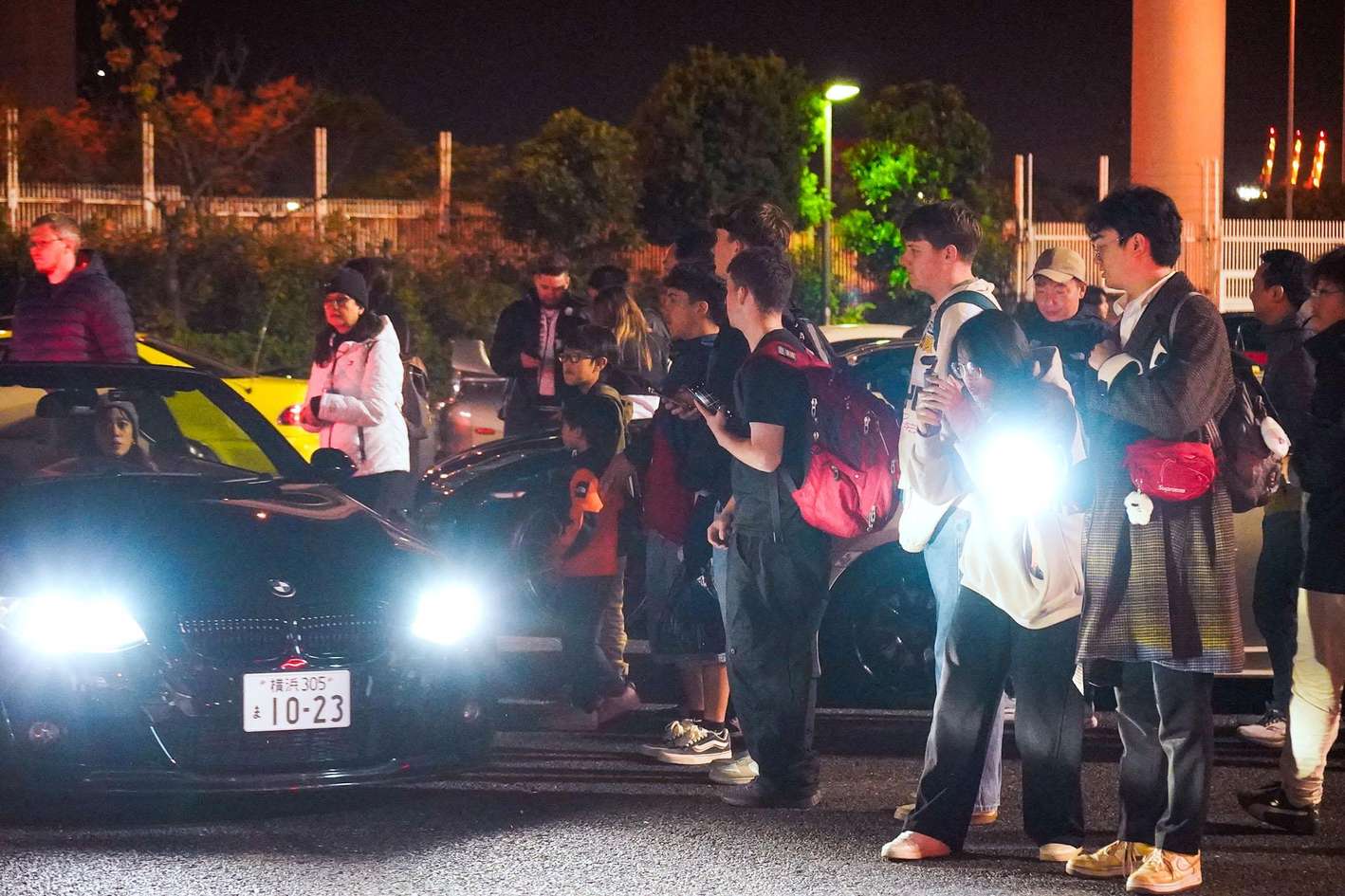
EtiquetteNever touch, lean on or enter a car at the meet without the owner's permission, and keep out of the driving lanes while you walk around.
BookingIn the busy months of April, October and September, book several days ahead, since tours sell out and turning up hoping for a seat is a gamble.
Getting thereDaikoku PA sits inside the Shuto Expressway with no pedestrian entrance, so you arrive on a tour or in a car, never on foot.
What to wearComfortable shoes and clothes for standing outdoors at night, plus a light jacket, because parts of the evening happen by the water.
MessagesLeave a WhatsApp or Instagram contact when you book and keep notifications on, since operators send updates before departure.
On boardAlcohol, smoking and vaping stay out of the cars, and some operators charge a cleaning fee for violations.
closurePolice can close the Daikoku PA meet without notice, and weekend-night closures are now common, so the lot you came for may be shut when your tour arrives.
Book a tour that has a fallback plan: most operators divert to another bay stop such as Umihotaru or Tatsumi, and several offer a full refund if you decline the alternative. If Daikoku matters most to you, pick a weeknight, since closures there are rare, and keep your phone notifications on for updates before departure.
Which JDM driving night ride fits your Wangan night
Cheapest way in
4 hours·English
4.9(534)
Tokyo: Fast & Furious Daikoku JDM Night Tour - EVO,WRX&More
The lowest starting price of the four, and the basic option still covers the Wangan cruise, Daikoku PA and Tokyo Tower in 4 hours.
Free cancellationHotel pickup includedRide in a JDM sports car (paid option)
What your JDM driving night on the Wangan includes
7 stopsabout 1.5 h12 places
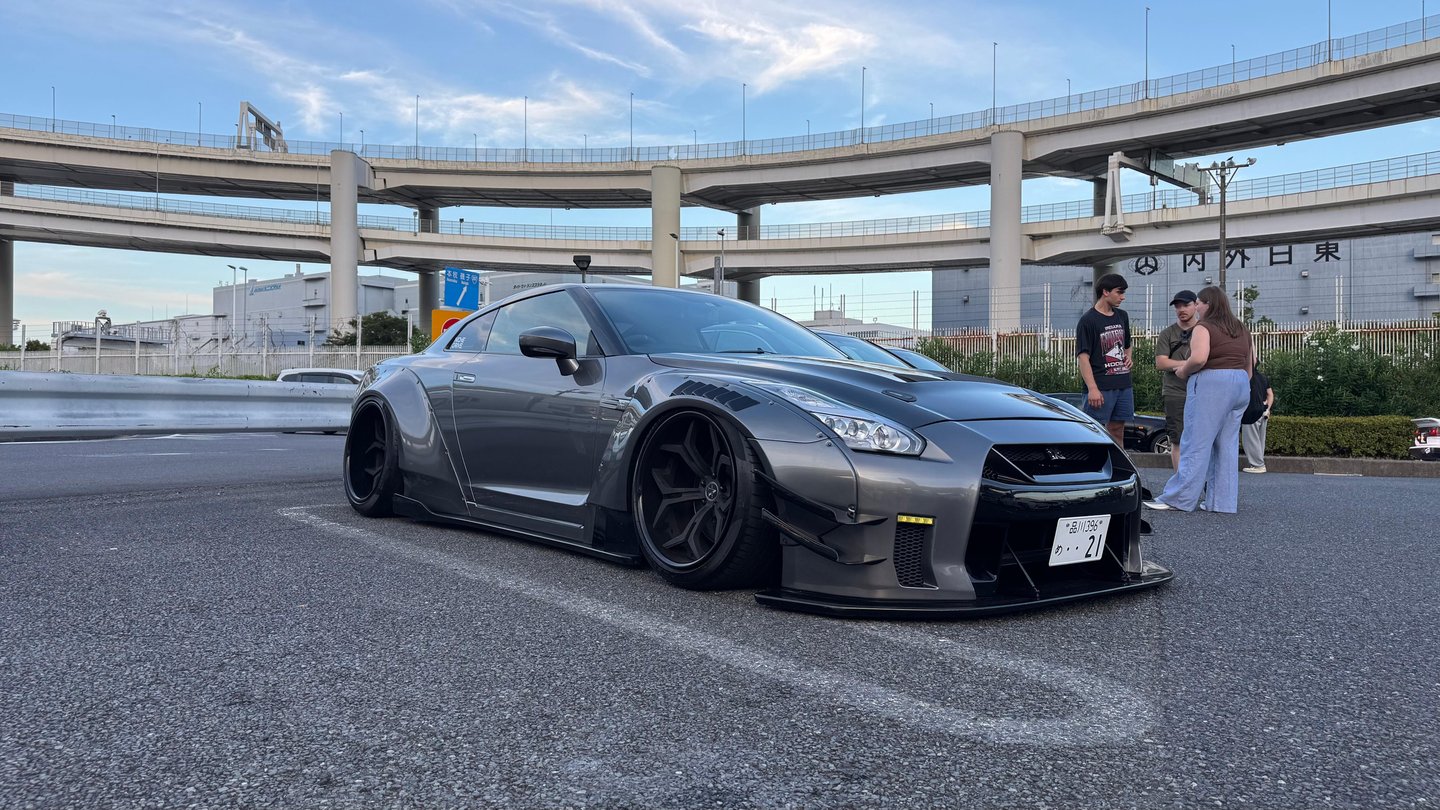
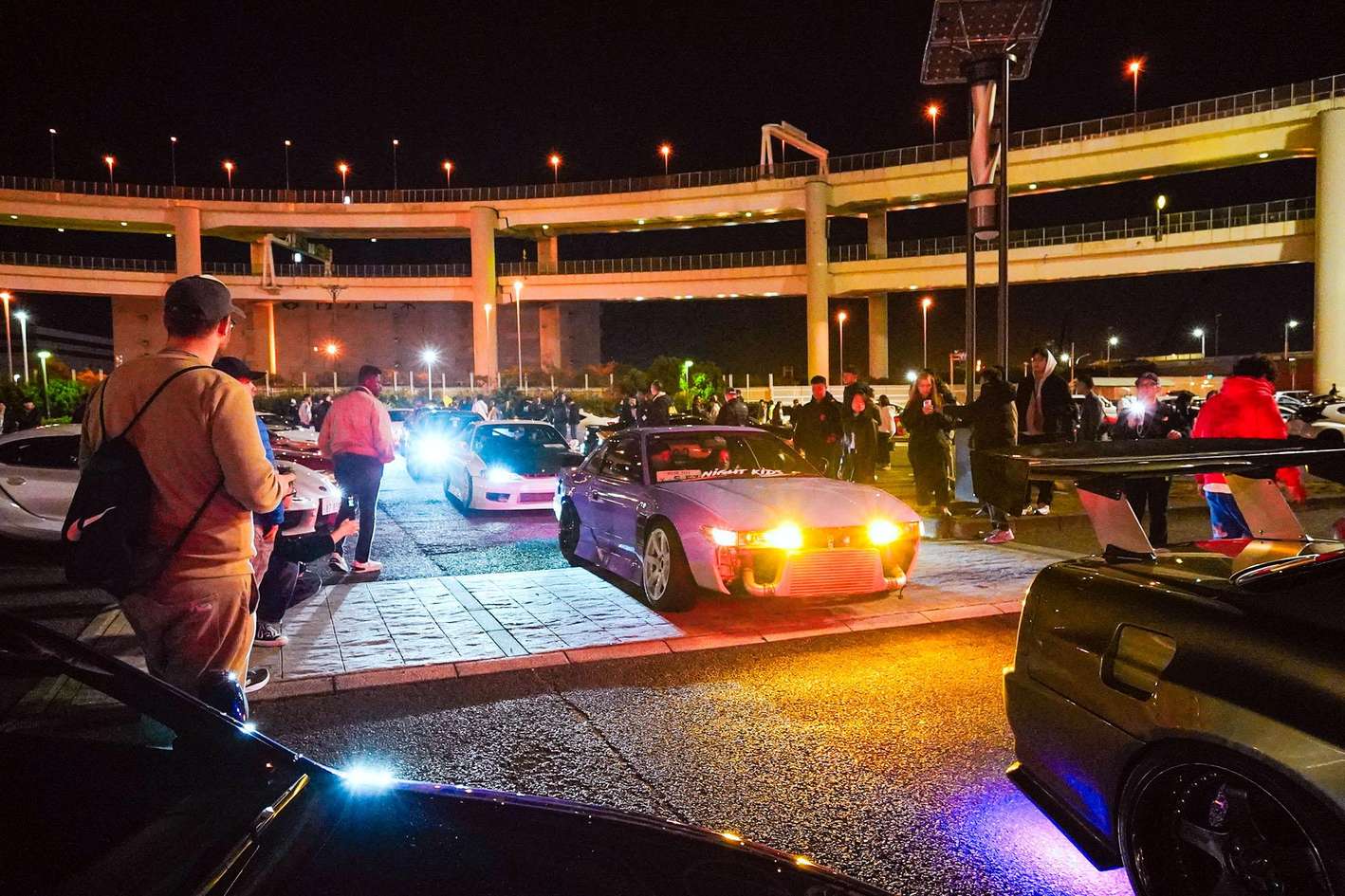
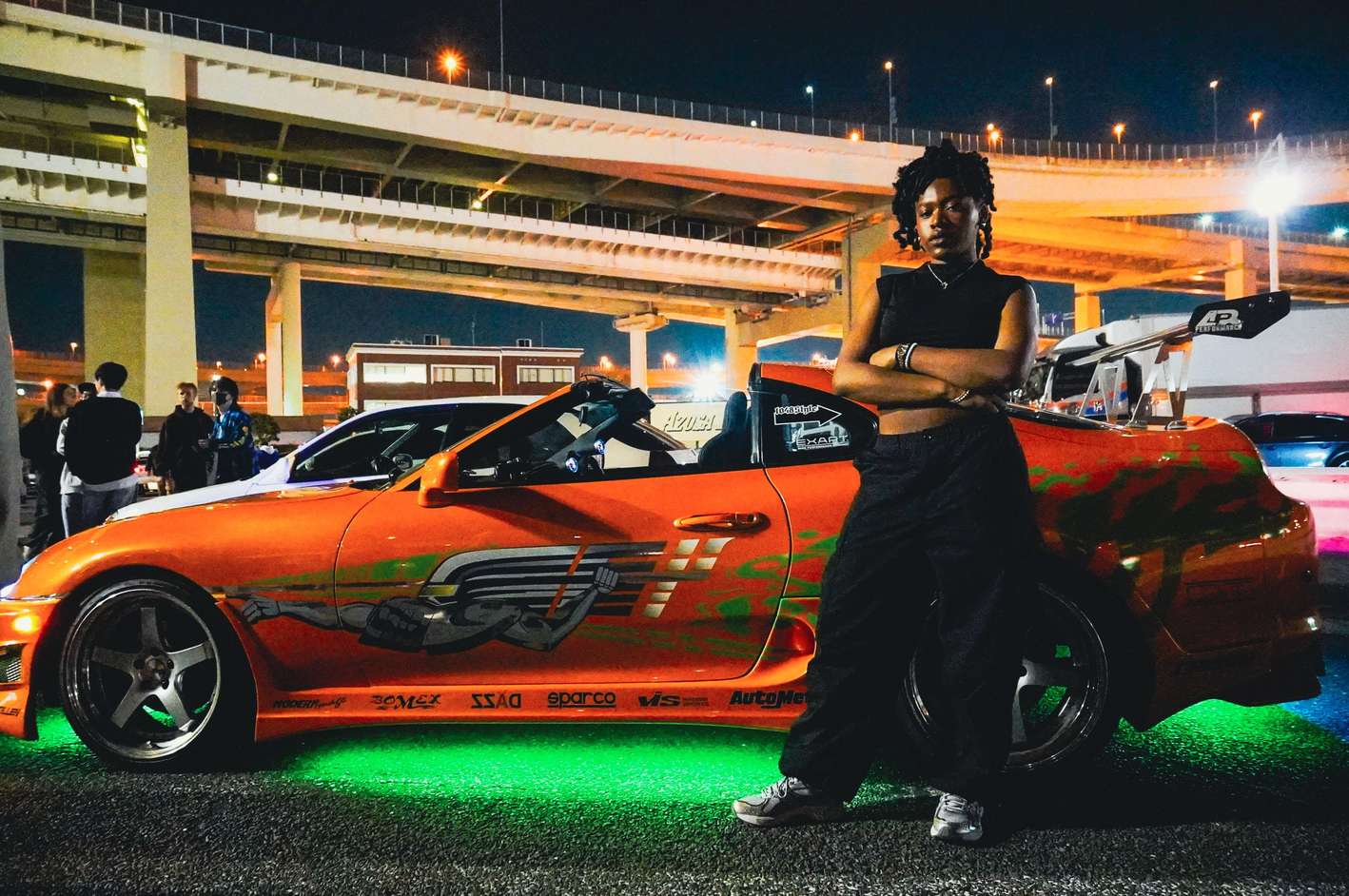
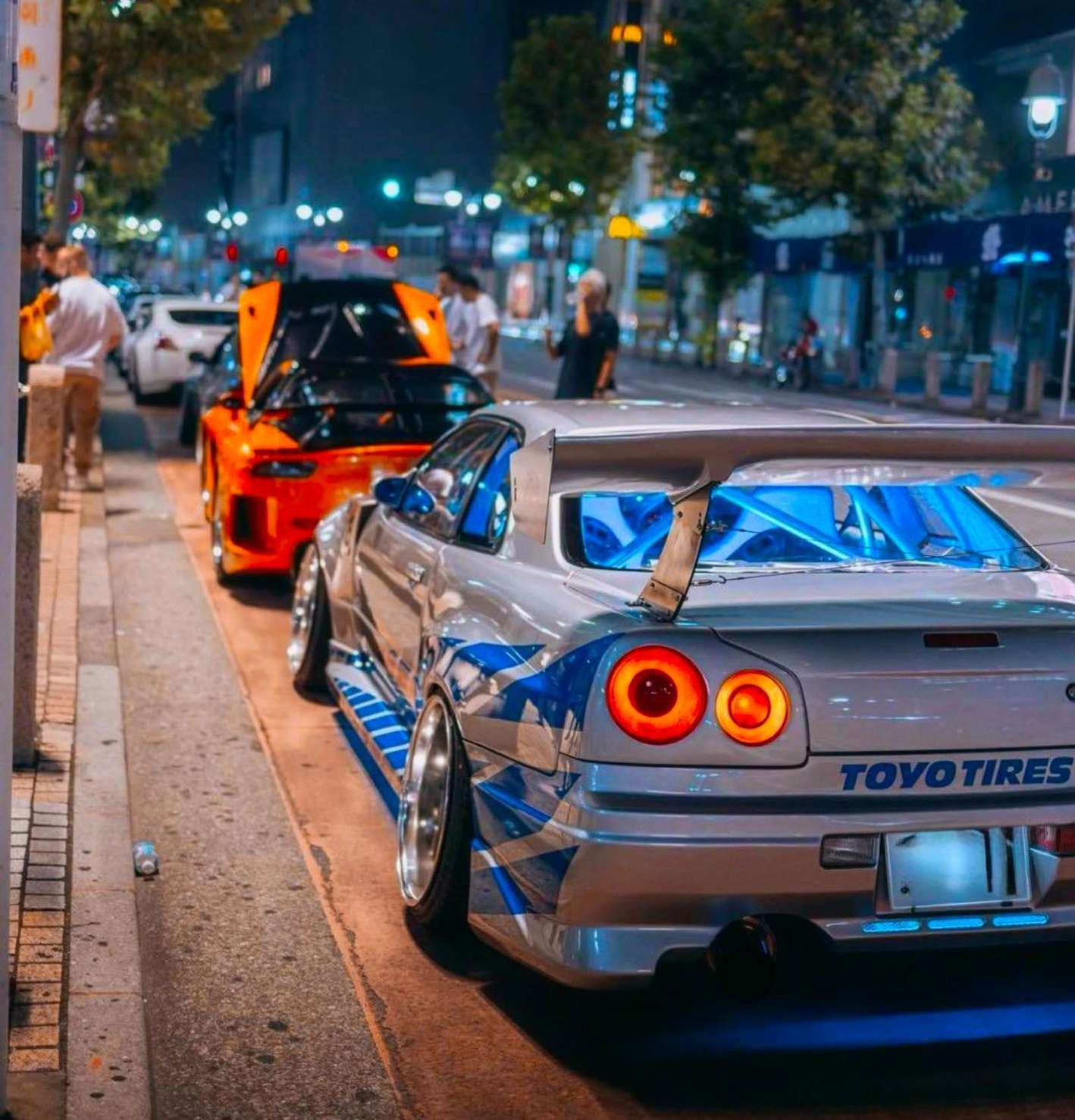
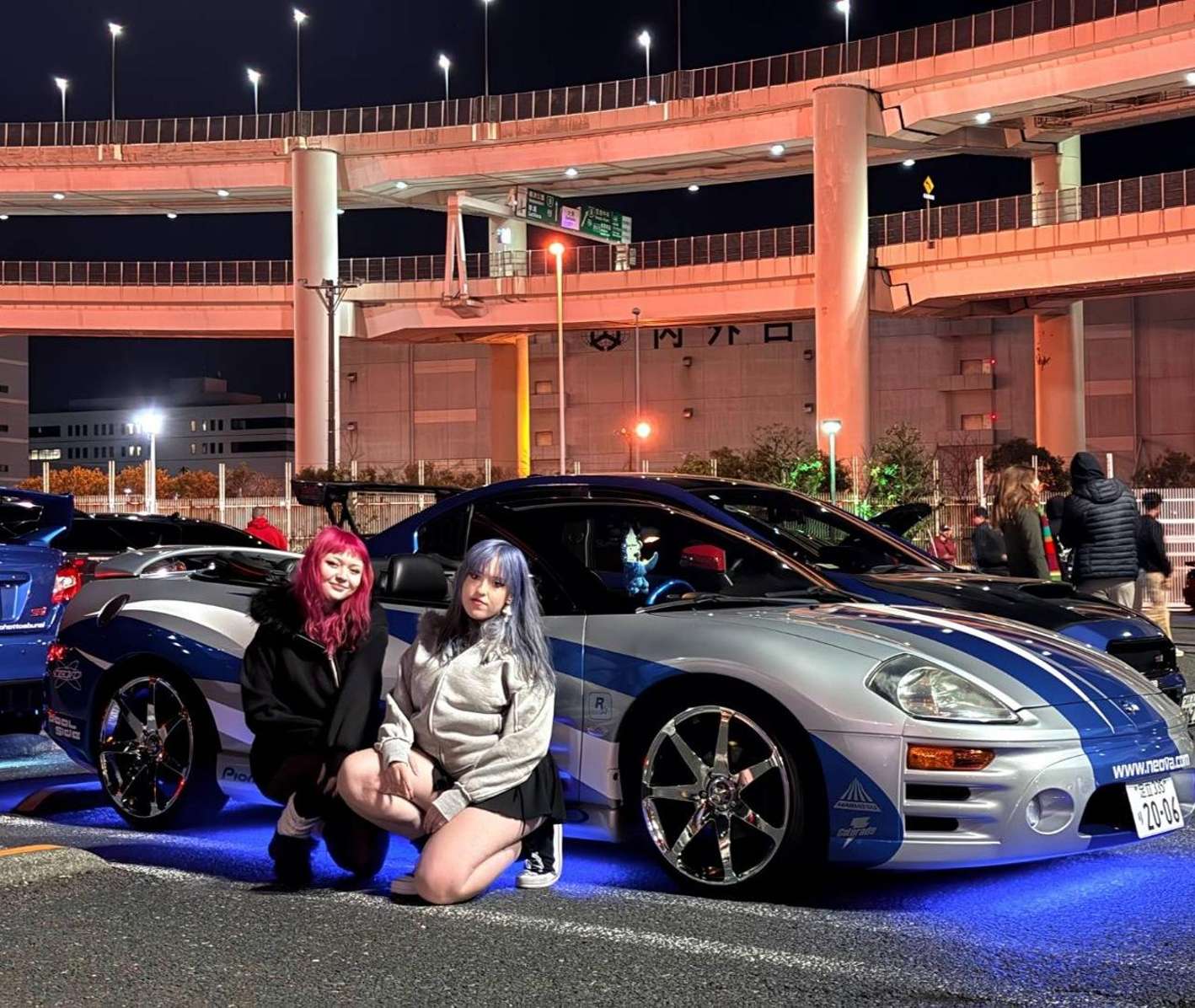
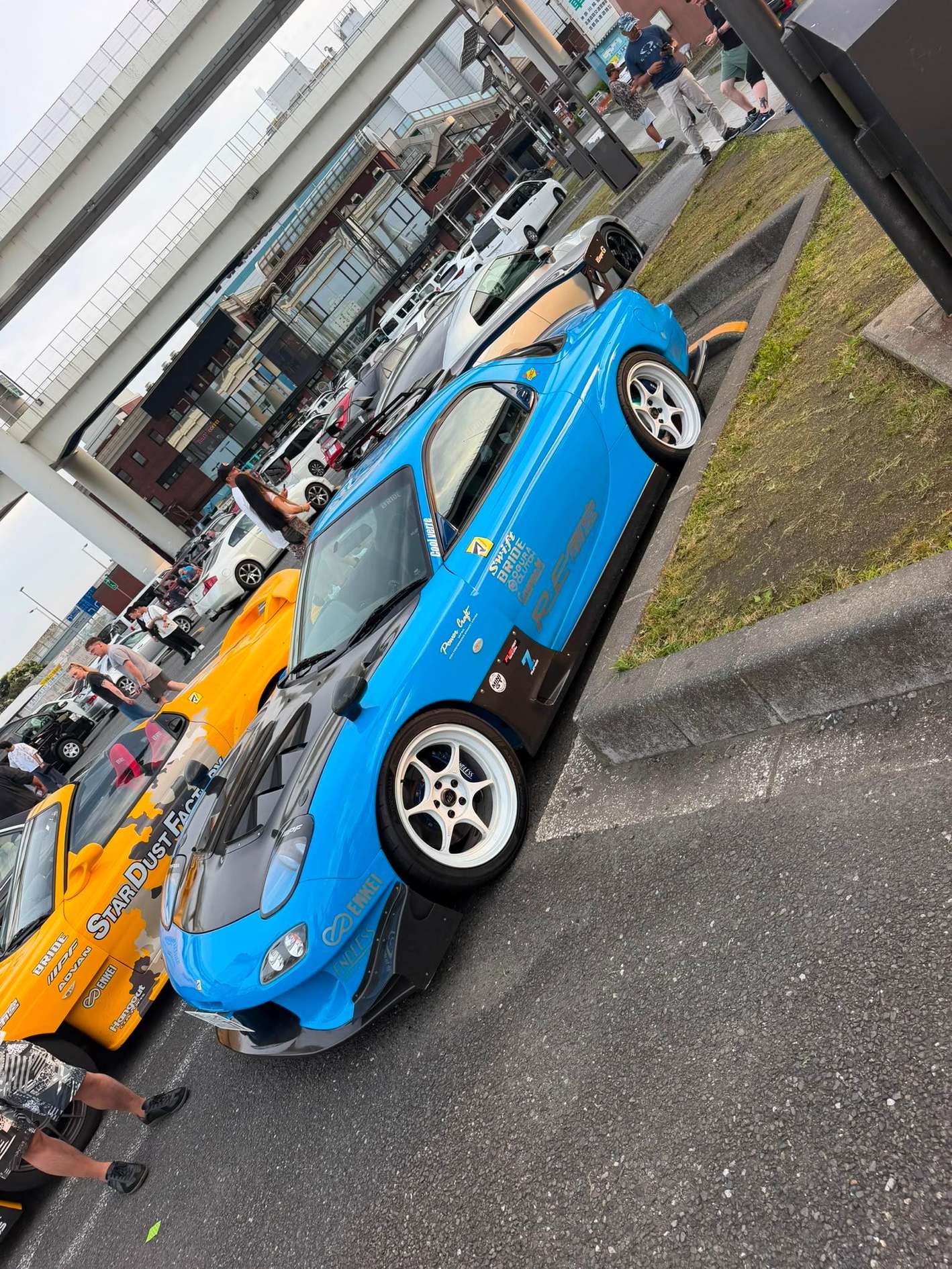
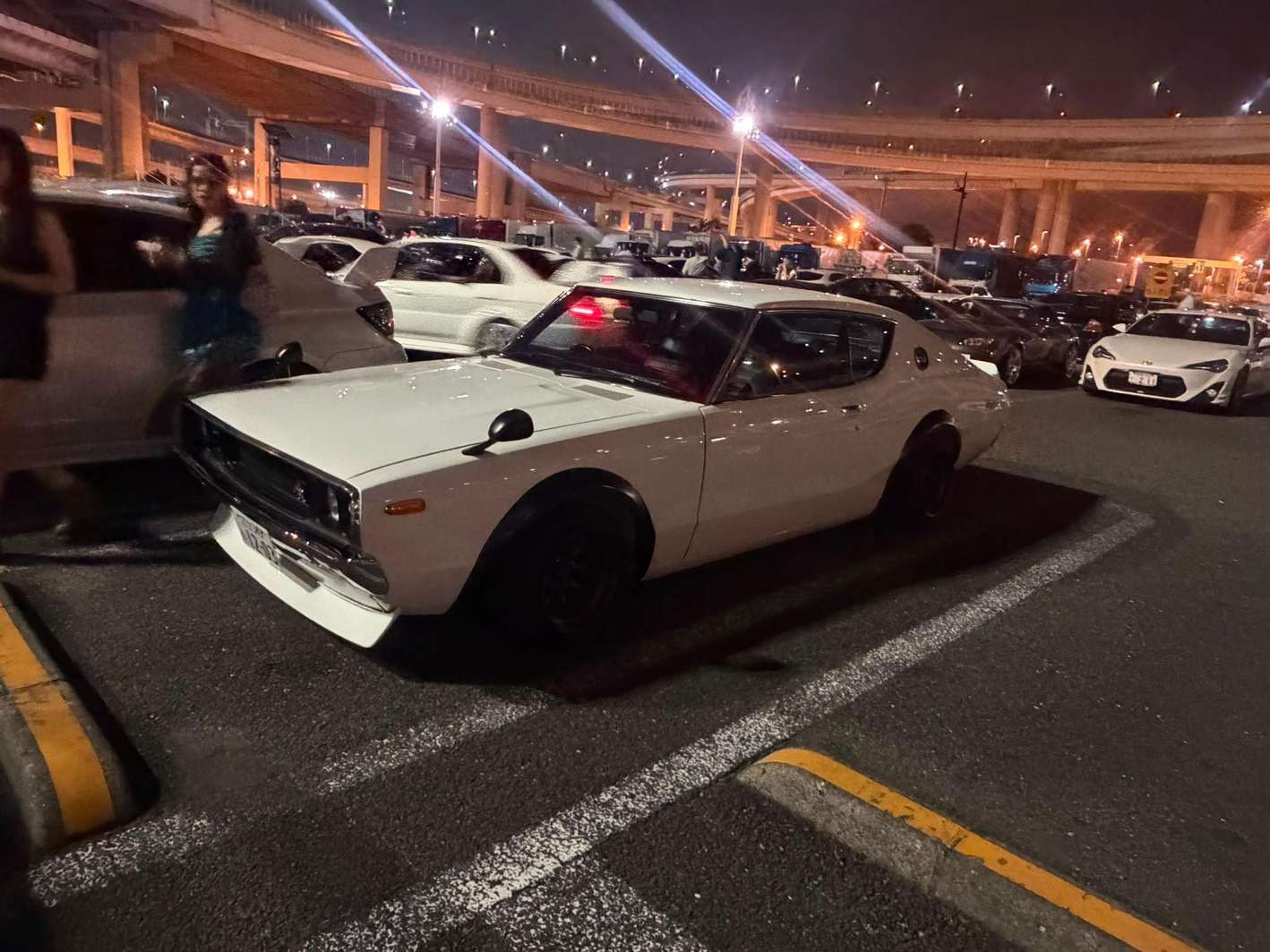
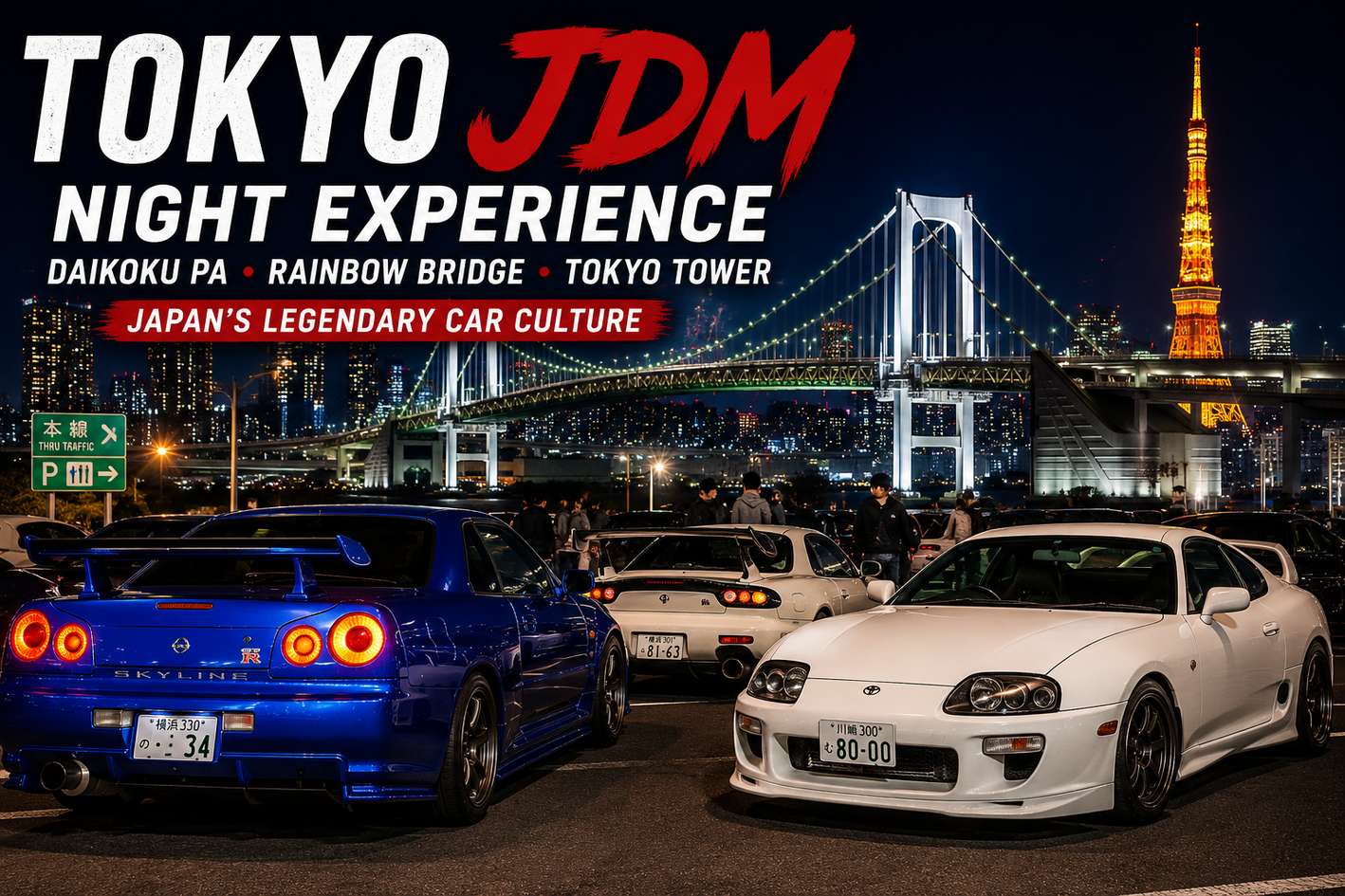
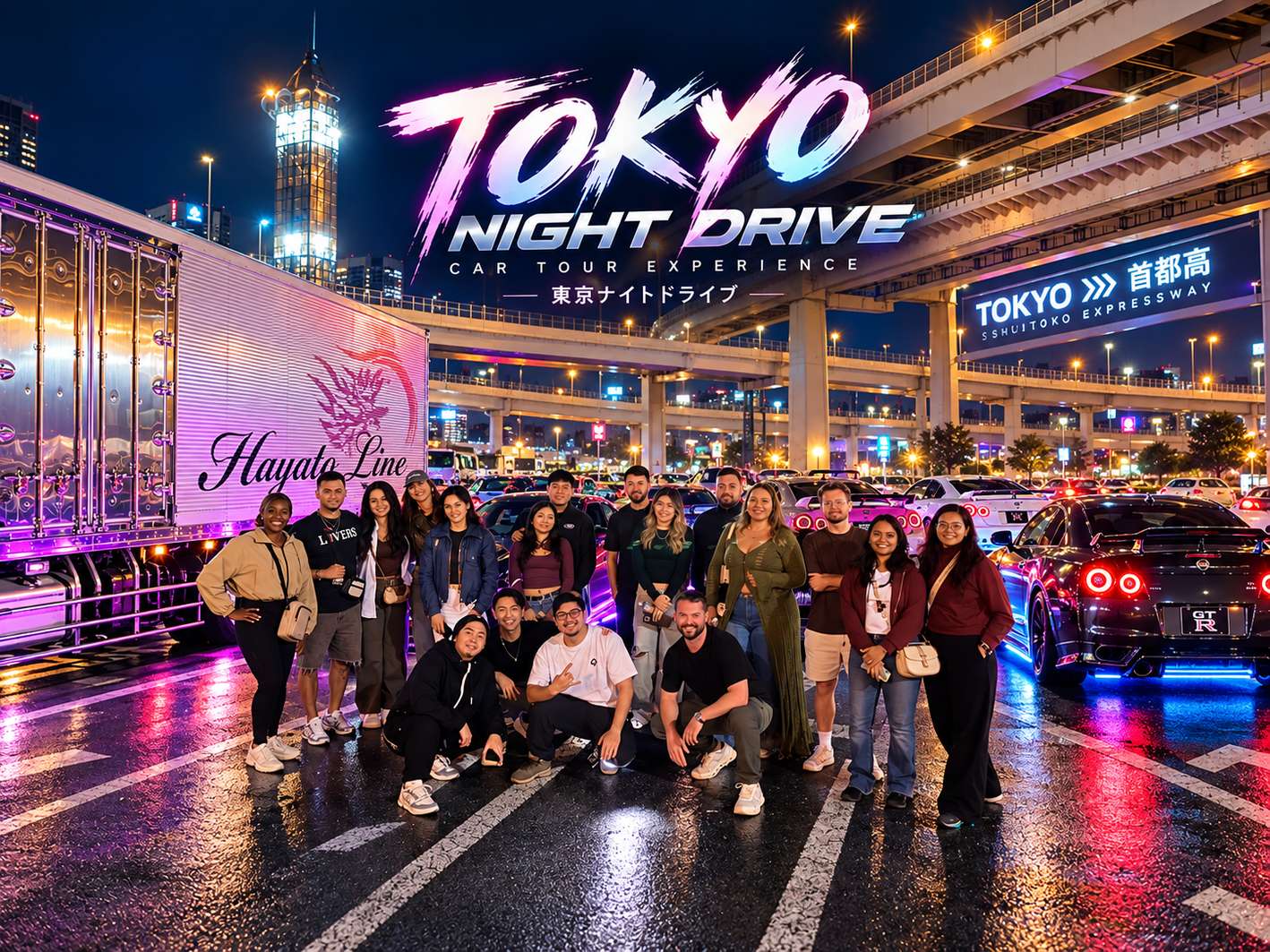
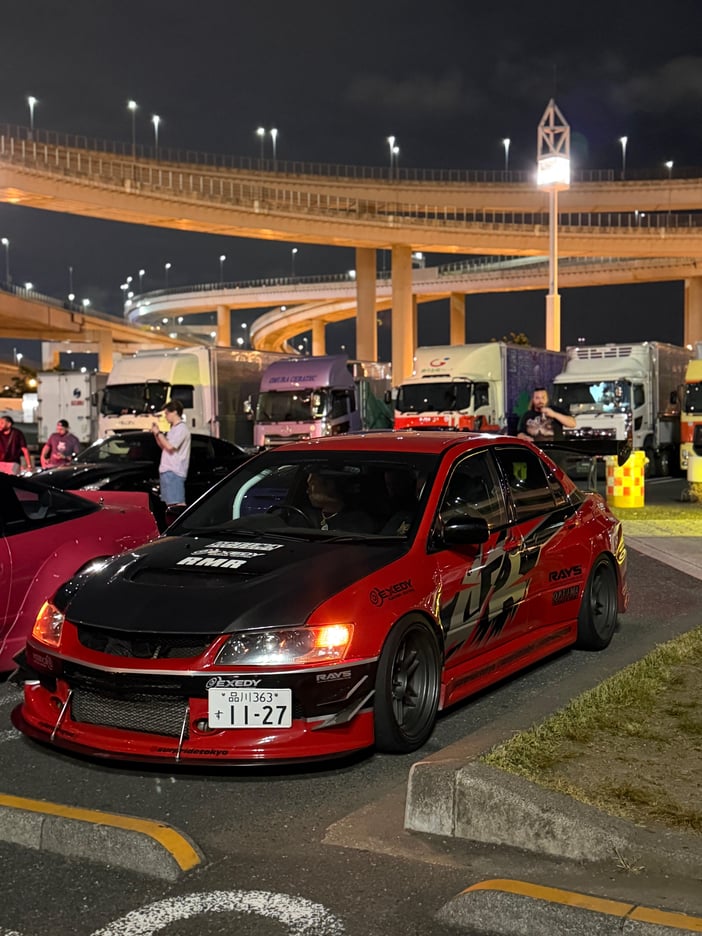
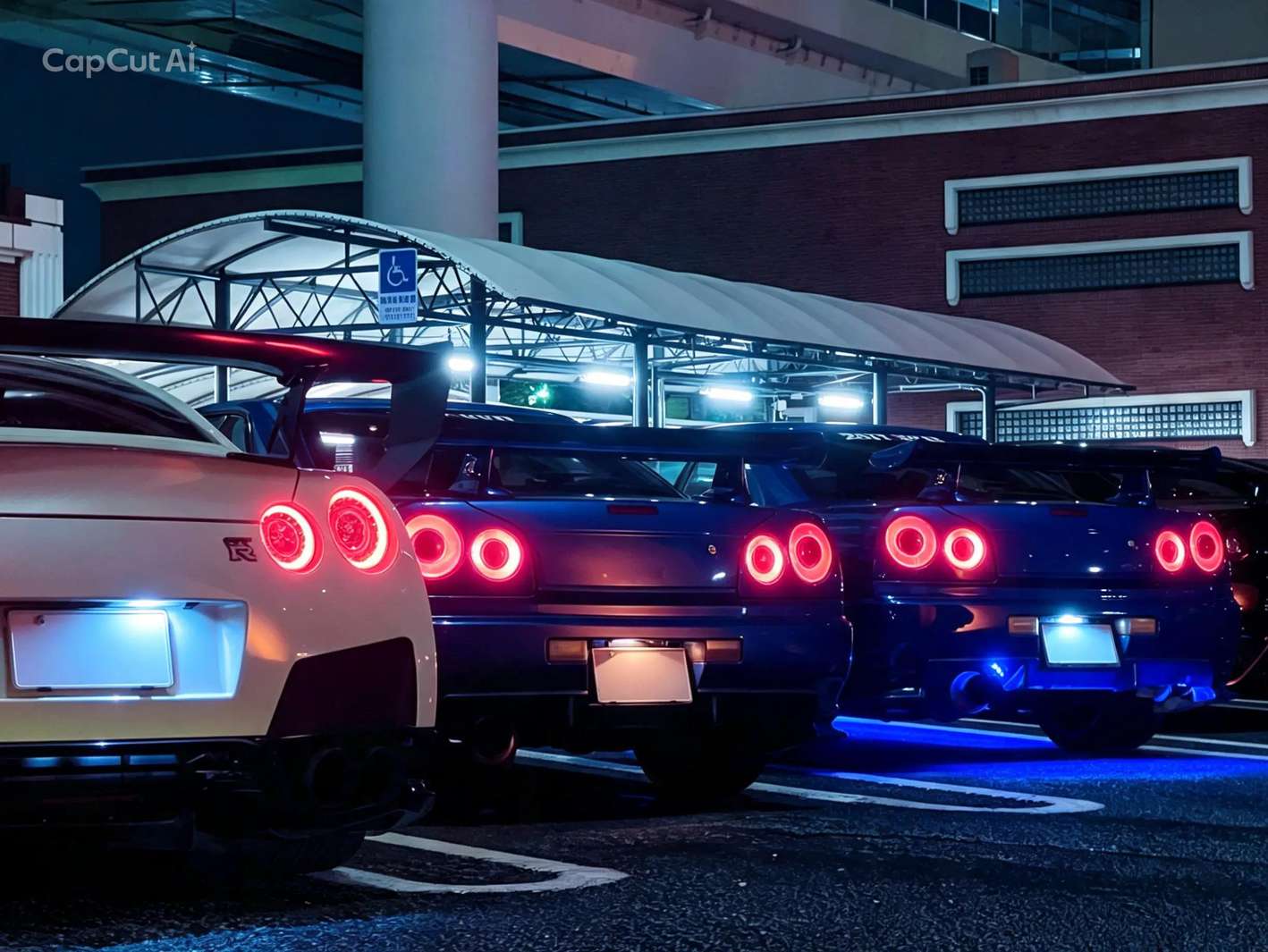
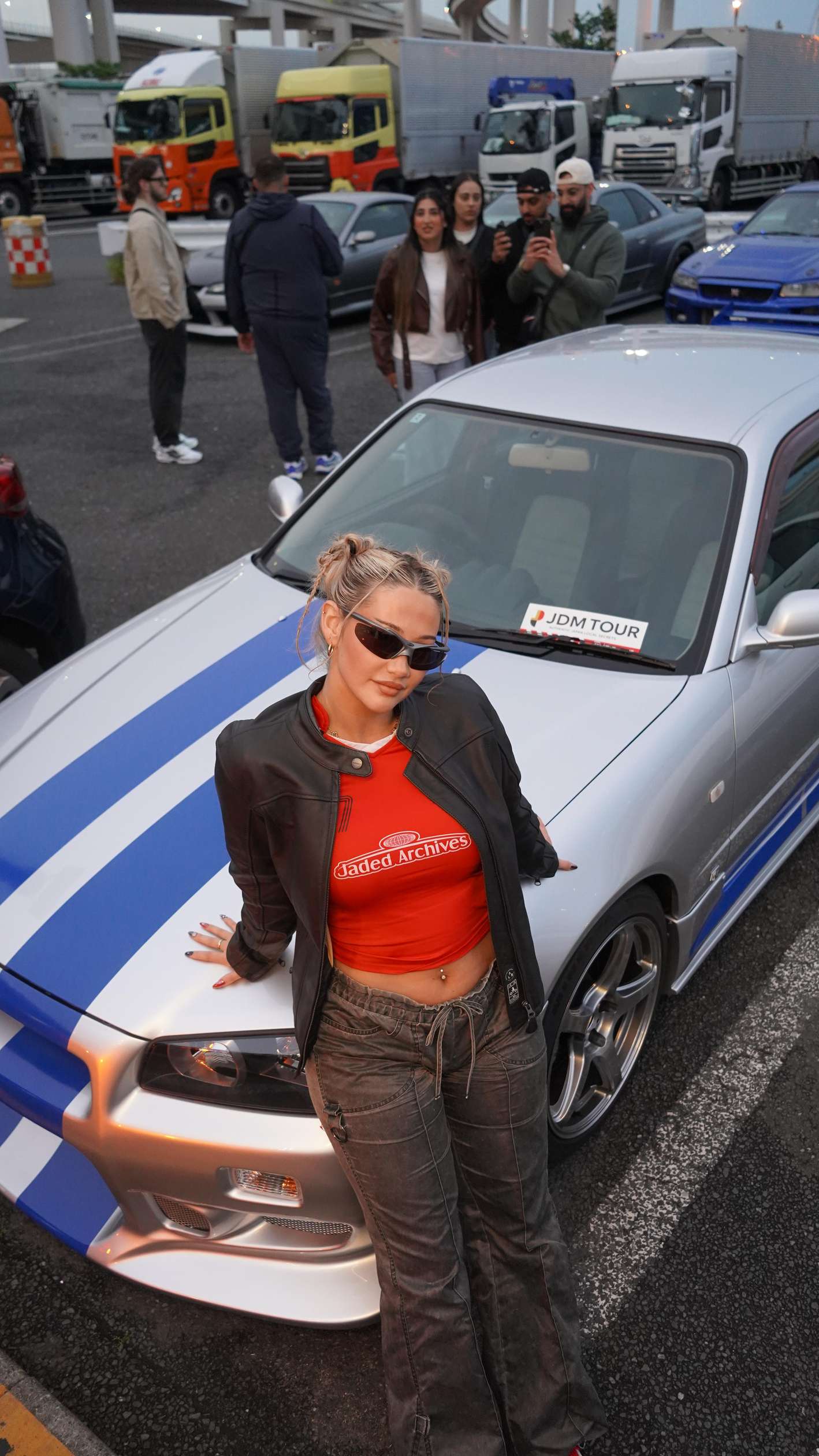
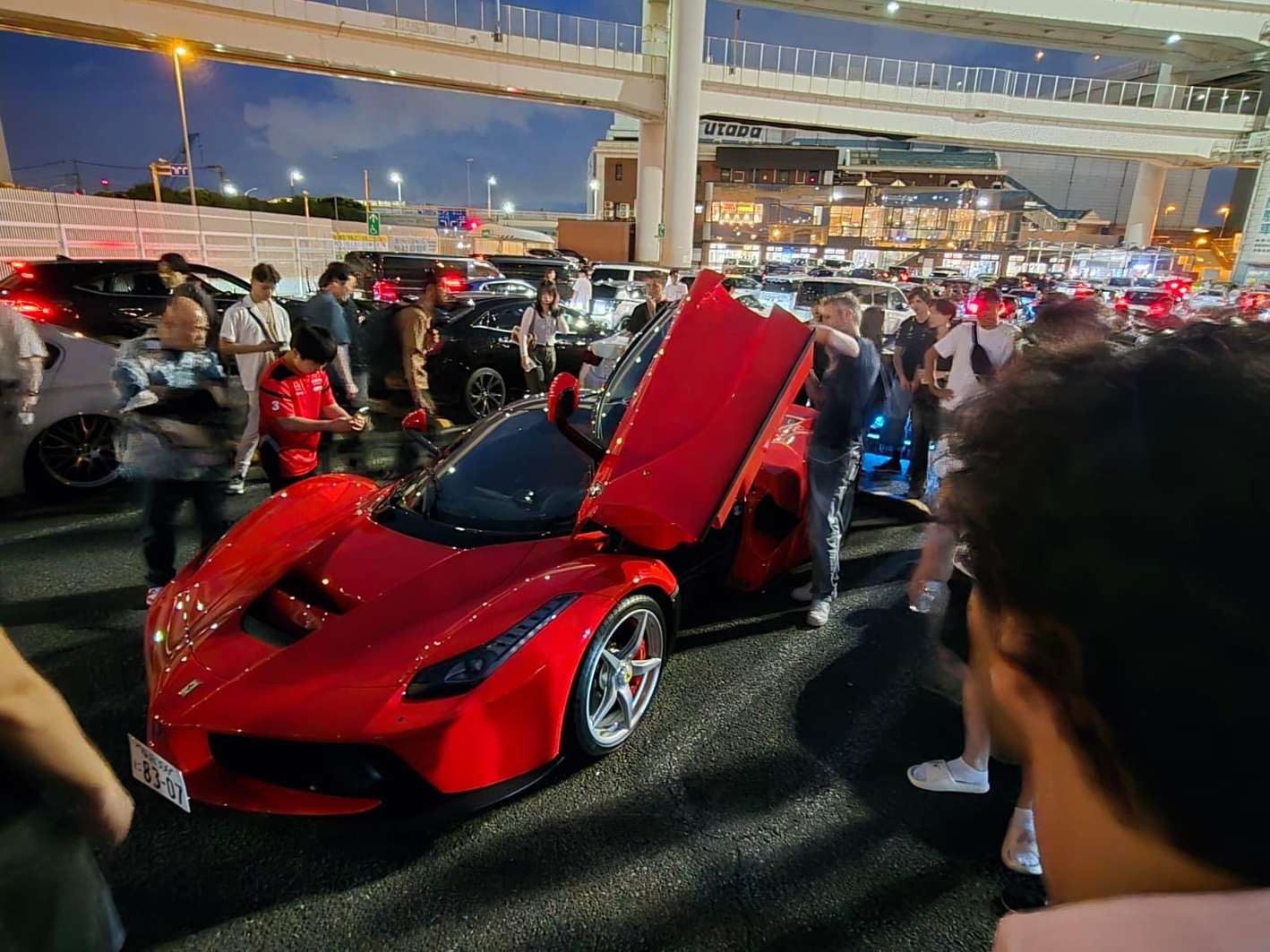
The night runs in one loop out of Odaiba: a modified JDM car picks you up, crosses Rainbow Bridge under the city lights, and settles into an hour on the ground at Daikoku Parking Area, the most photographed car meet in Japan.
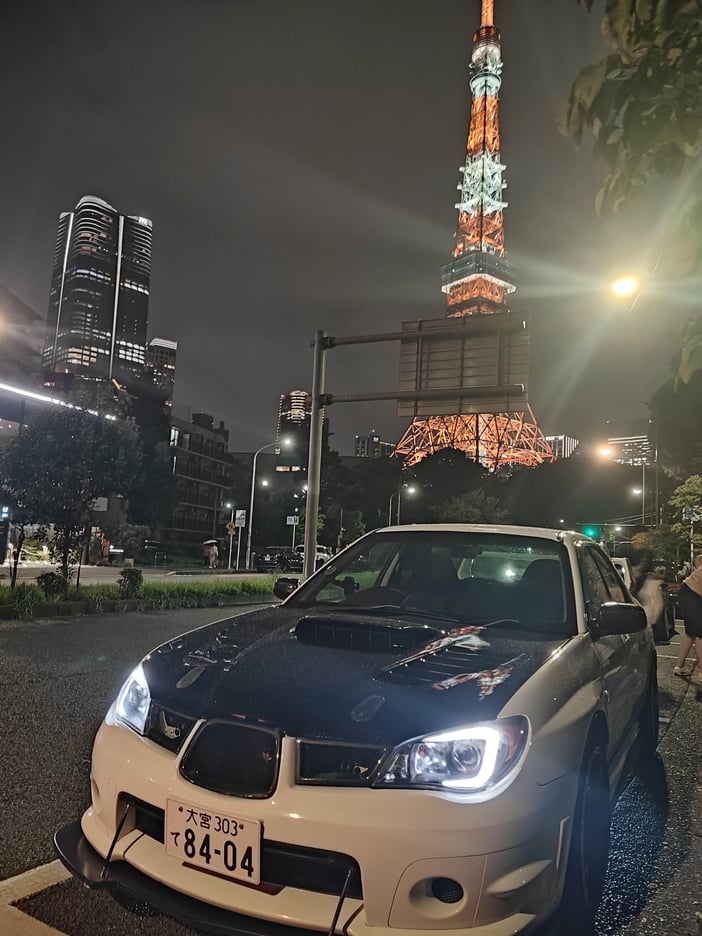
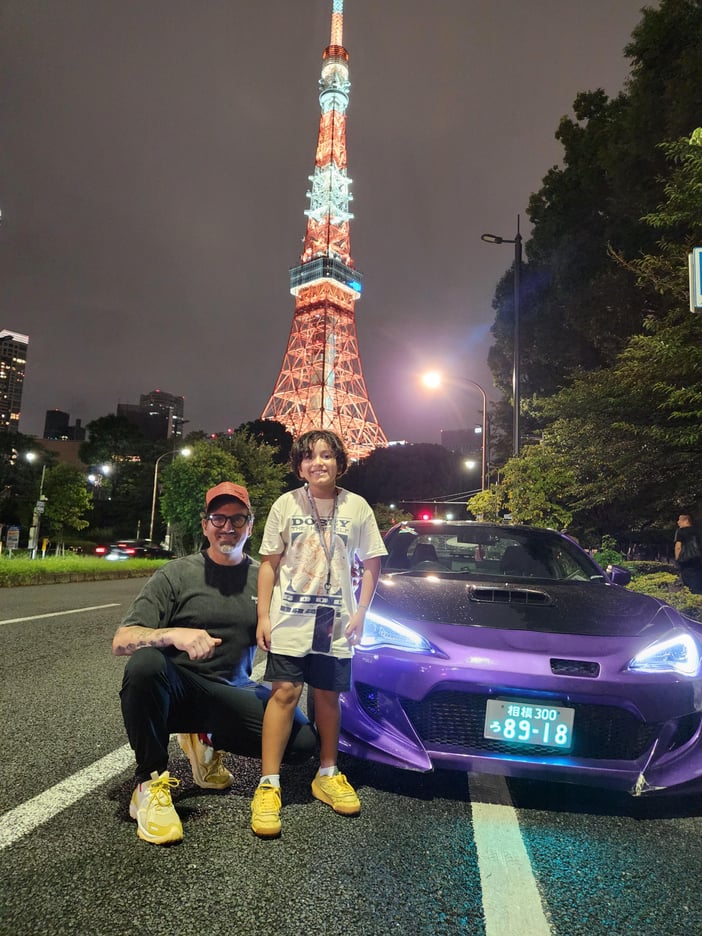
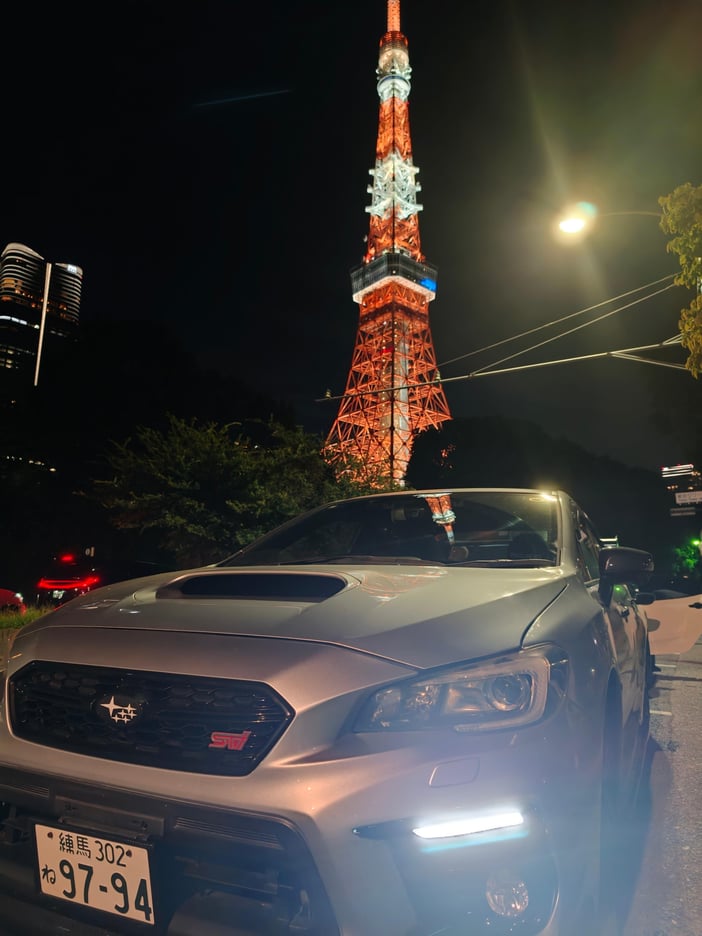
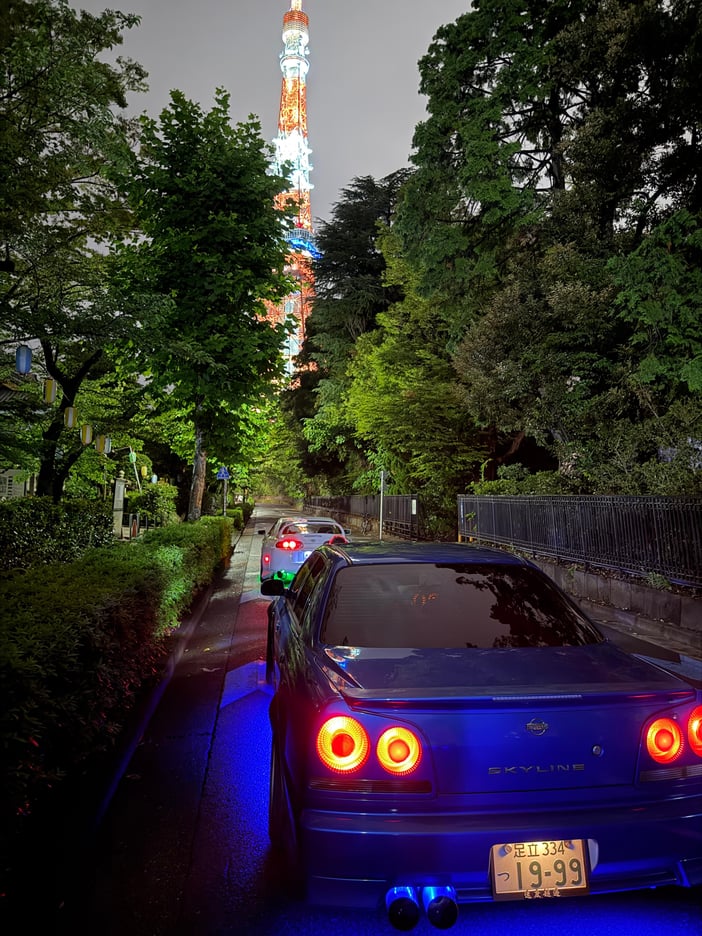
After that come A-PIT Autobacs in Shinonome, a photo stop under Tokyo Tower, and a roll through Shibuya Crossing before the car drops you back.
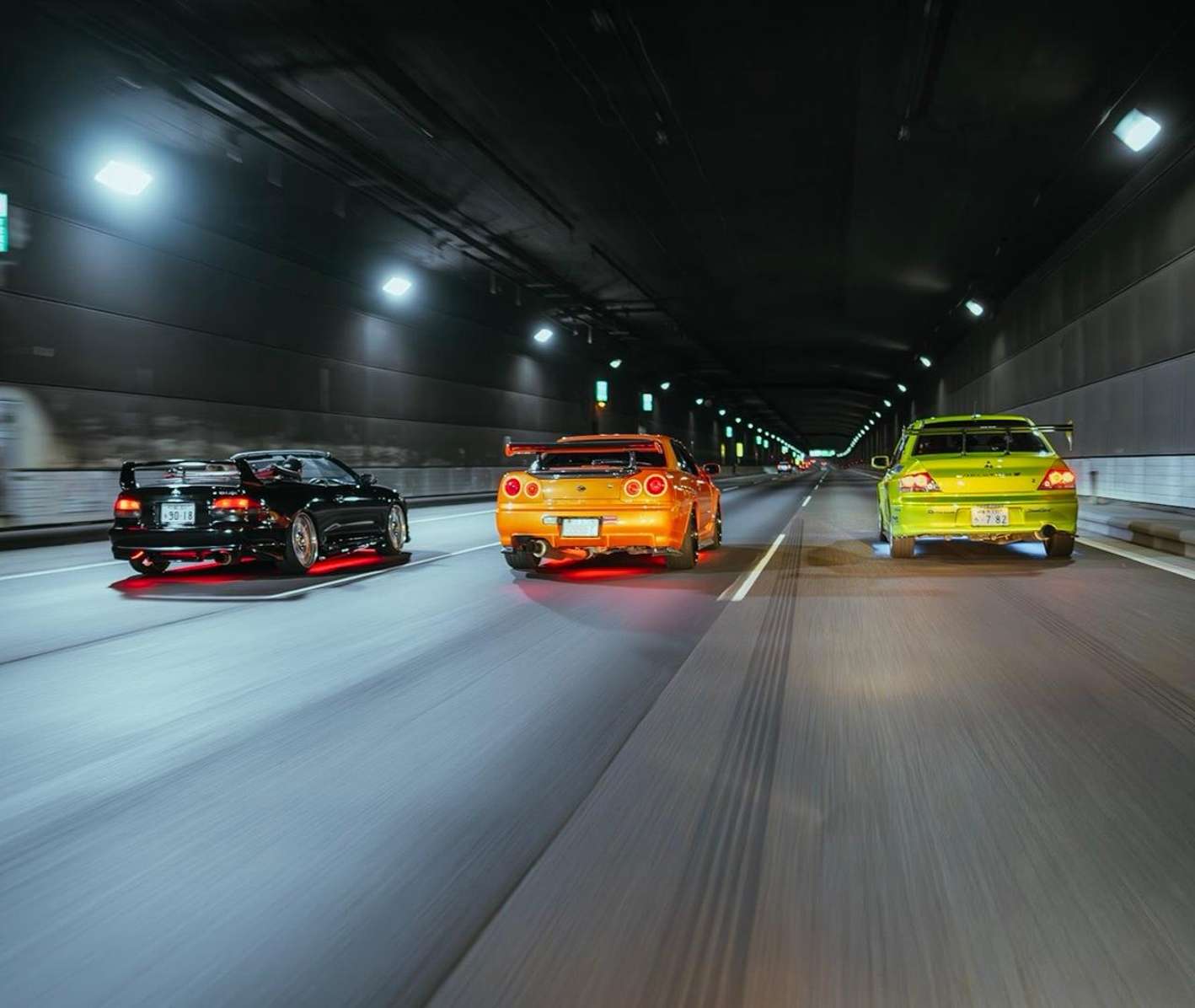
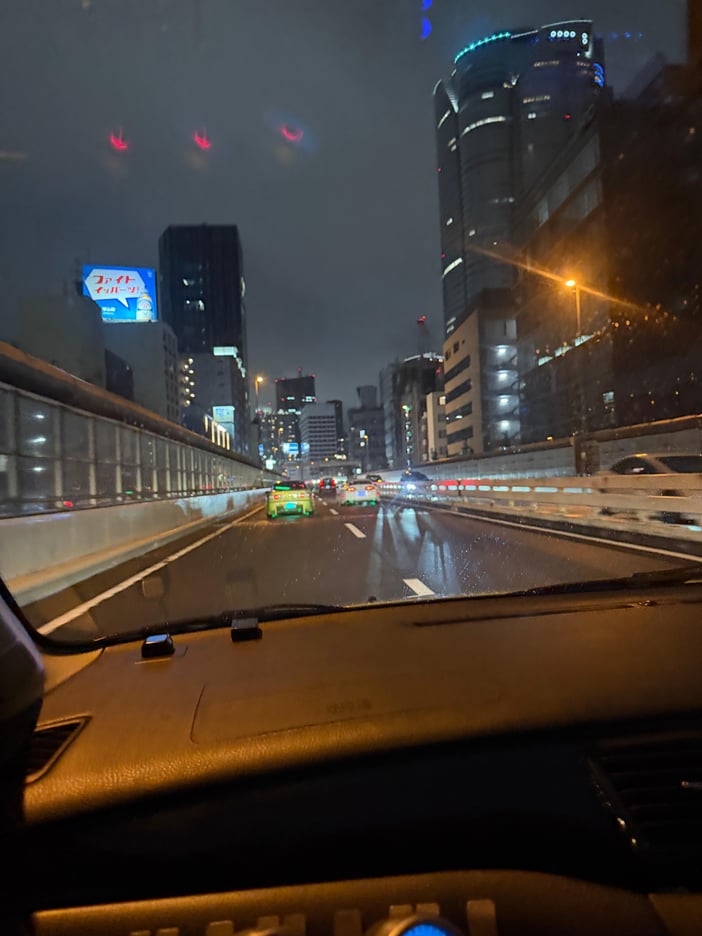
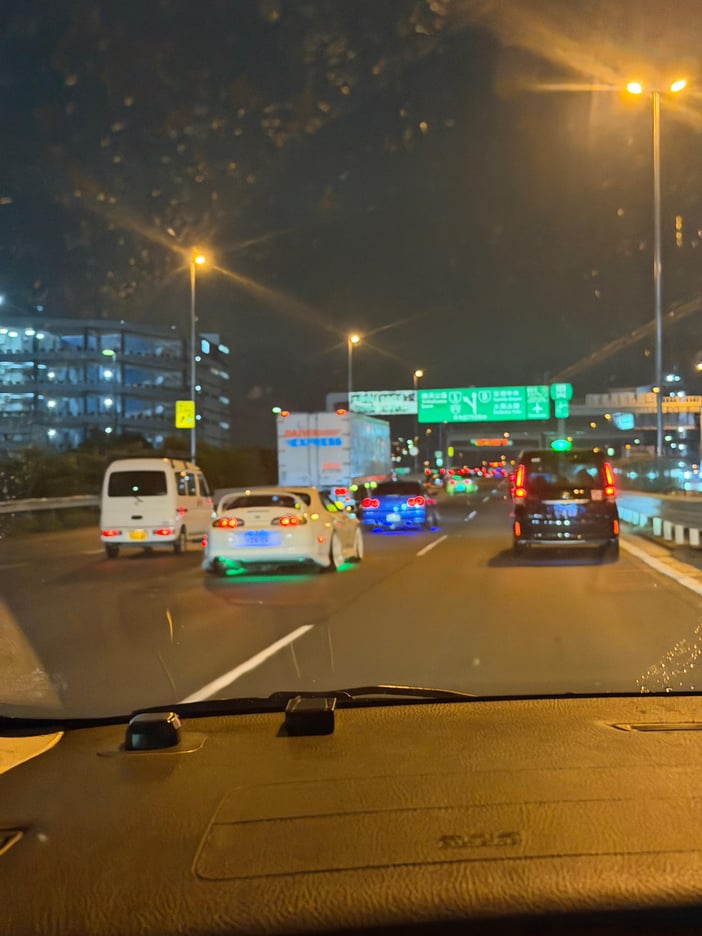
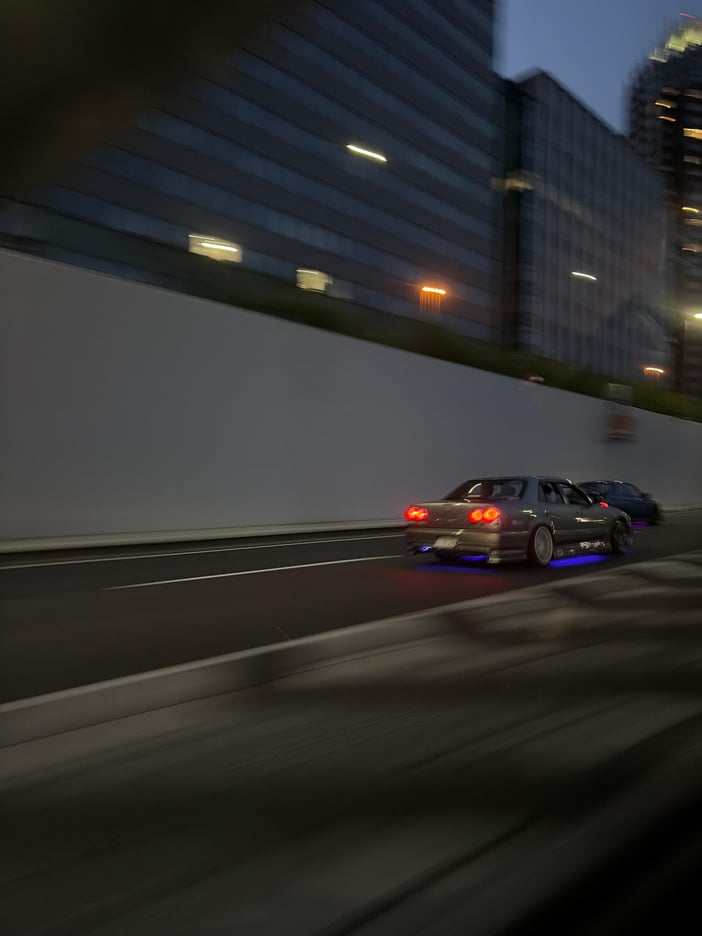
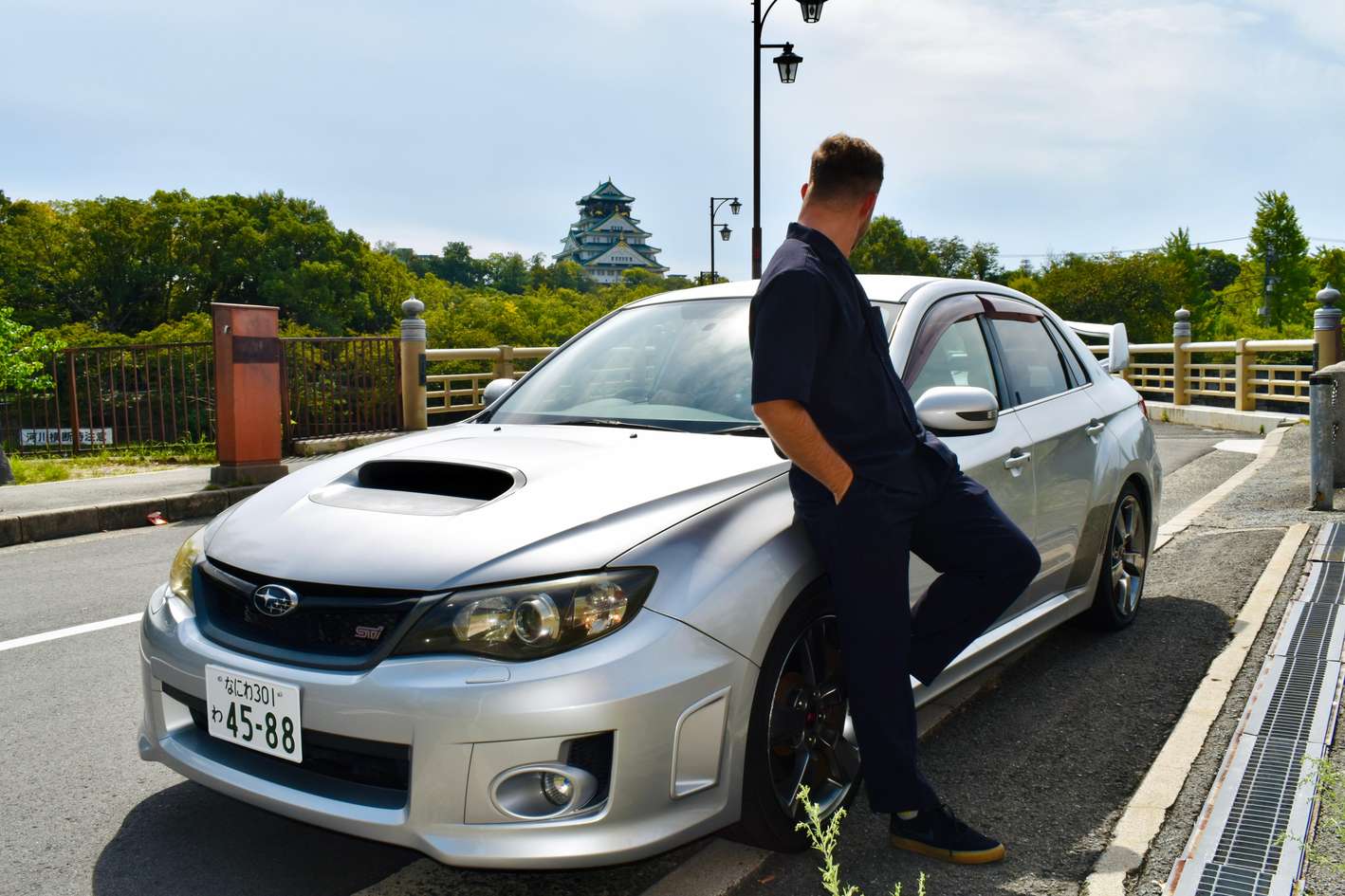
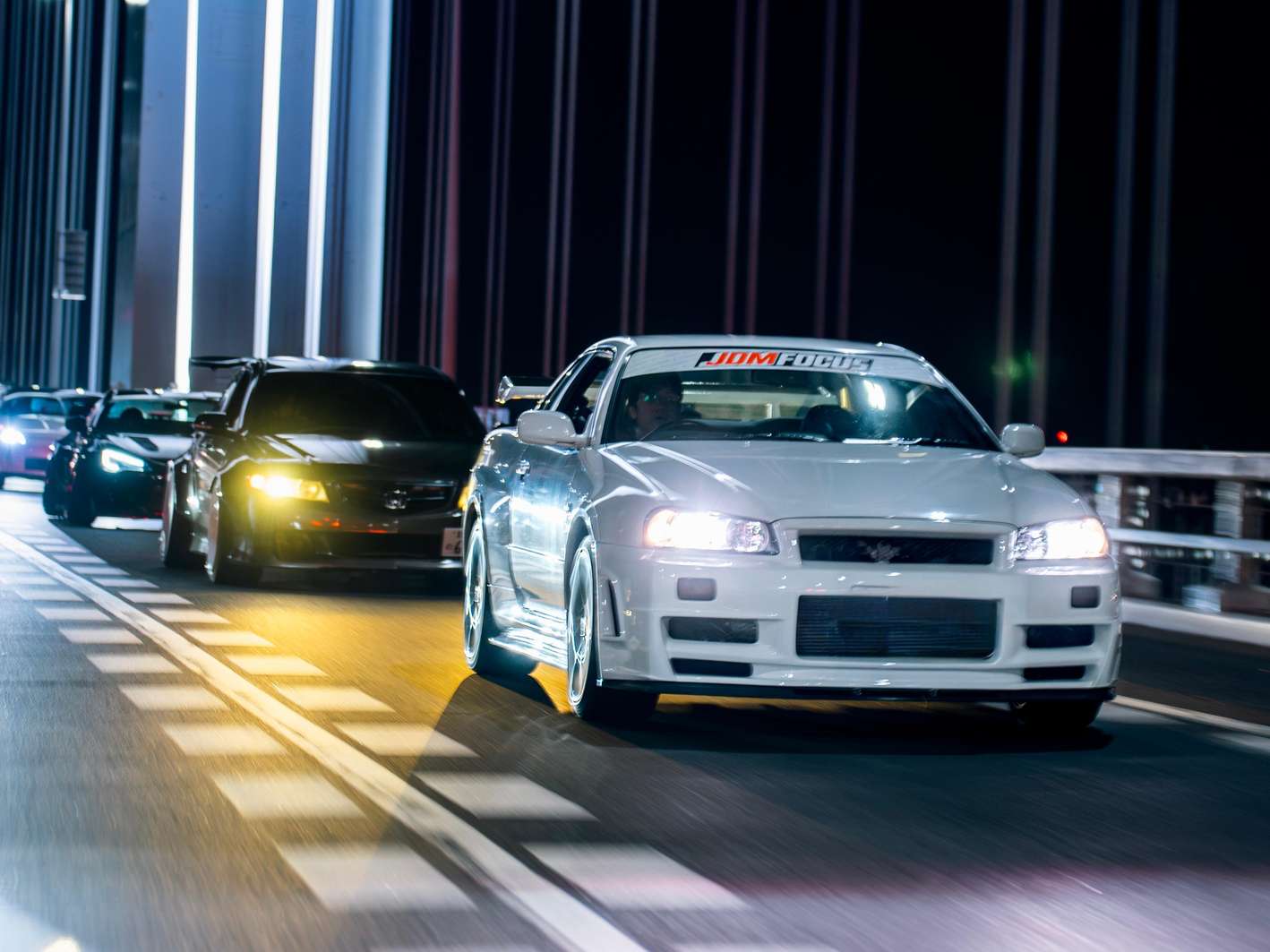
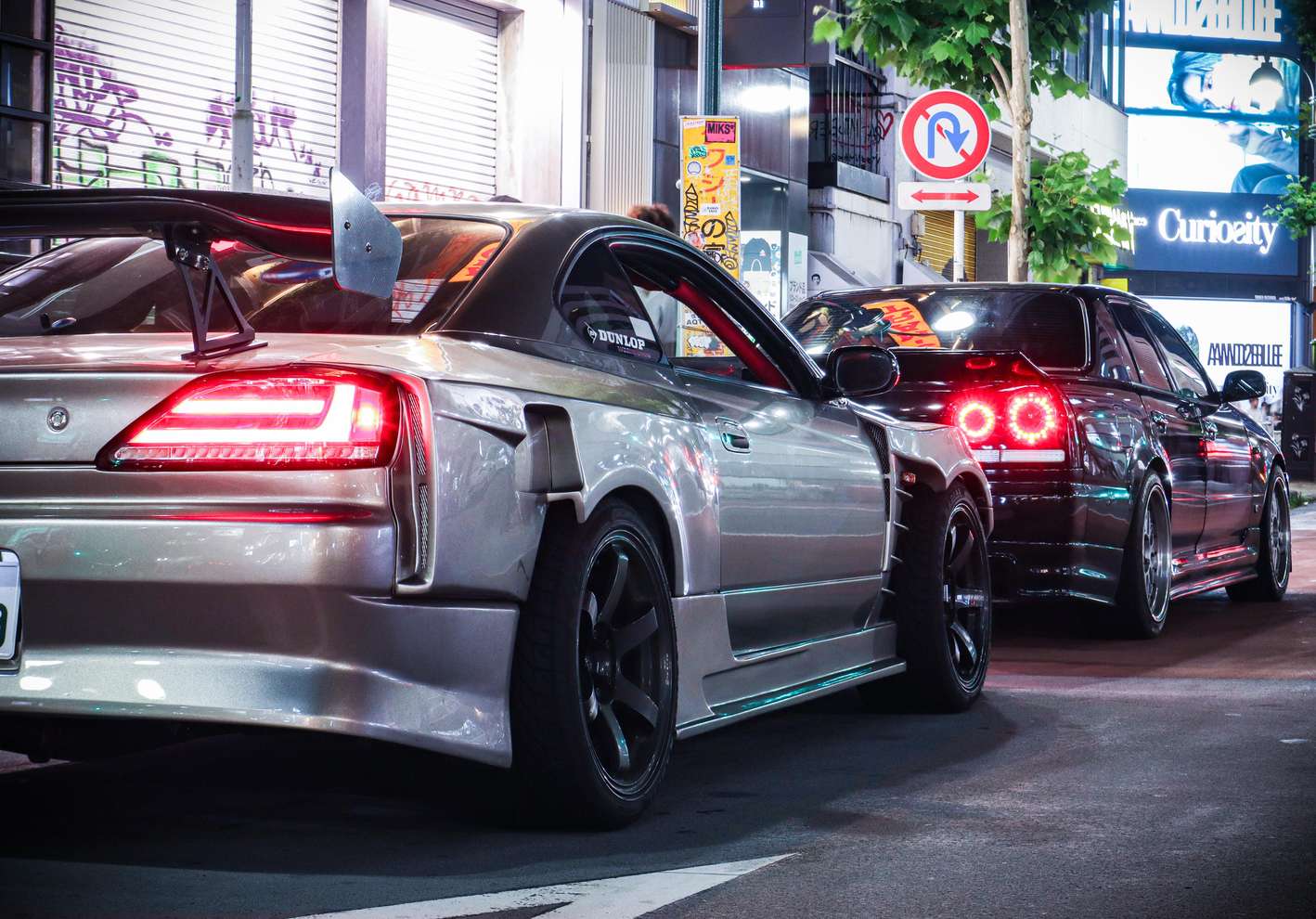
Between stops the route follows the Bayshore Route and the C1 Loop, wide open lanes along Tokyo Bay where convoys of tuned Skylines, Supras and supercars pass through the tunnels. Guides are enthusiasts who answer questions, take photos at the good spots, and cover the tolls and fuel in the price.
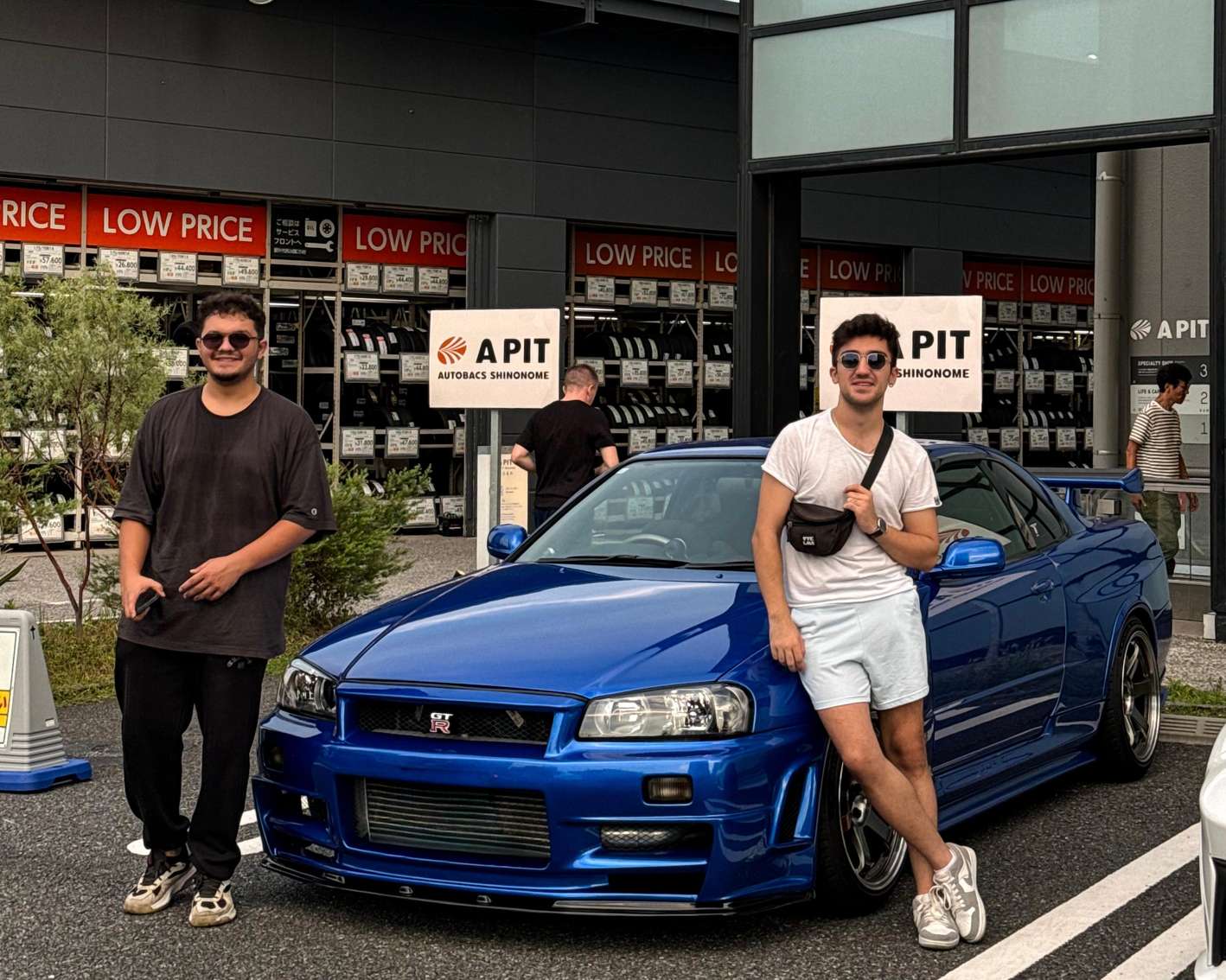
Pickup2 places, depending on your optionThe loop closes where it began, with drop-off back at the Ariake convenience store in Odaiba.Street View2Rainbow Bridge, Tokyo· 5 minThe white suspension bridge over Tokyo Bay, crossed with the skyline lit up beside you. A short pause here for photos of the night view.Street View3Daikoku Parking Area· 60 minThe main stop: an expressway rest area where enthusiasts gather nightly with bigger turnouts on weekends. Walk the rows of Skylines, Supras and heavily modified street builds, take photos, and have free time with your guide.Street View4ShinonomeHome to A-PIT Autobacs, Japan's largest tuning and car-supply store. Browse parts, models and merchandise during the stop.From this tour5Tokyo Tower· 20 minThe car parks up so you can shoot photos of your ride under the tower's orange glow, one of the most classic night shots of the scene.Street View6Shibuya CrossingThe world's busiest pedestrian crossing, and the corner where Han drifted his Veilside RX-7 in Tokyo Drift. Your guide points out the movie spot as you roll through.Street ViewDrop-off2 places, depending on your optionThe loop closes where it began, with drop-off back at the Ariake convenience store in Odaiba.Street View
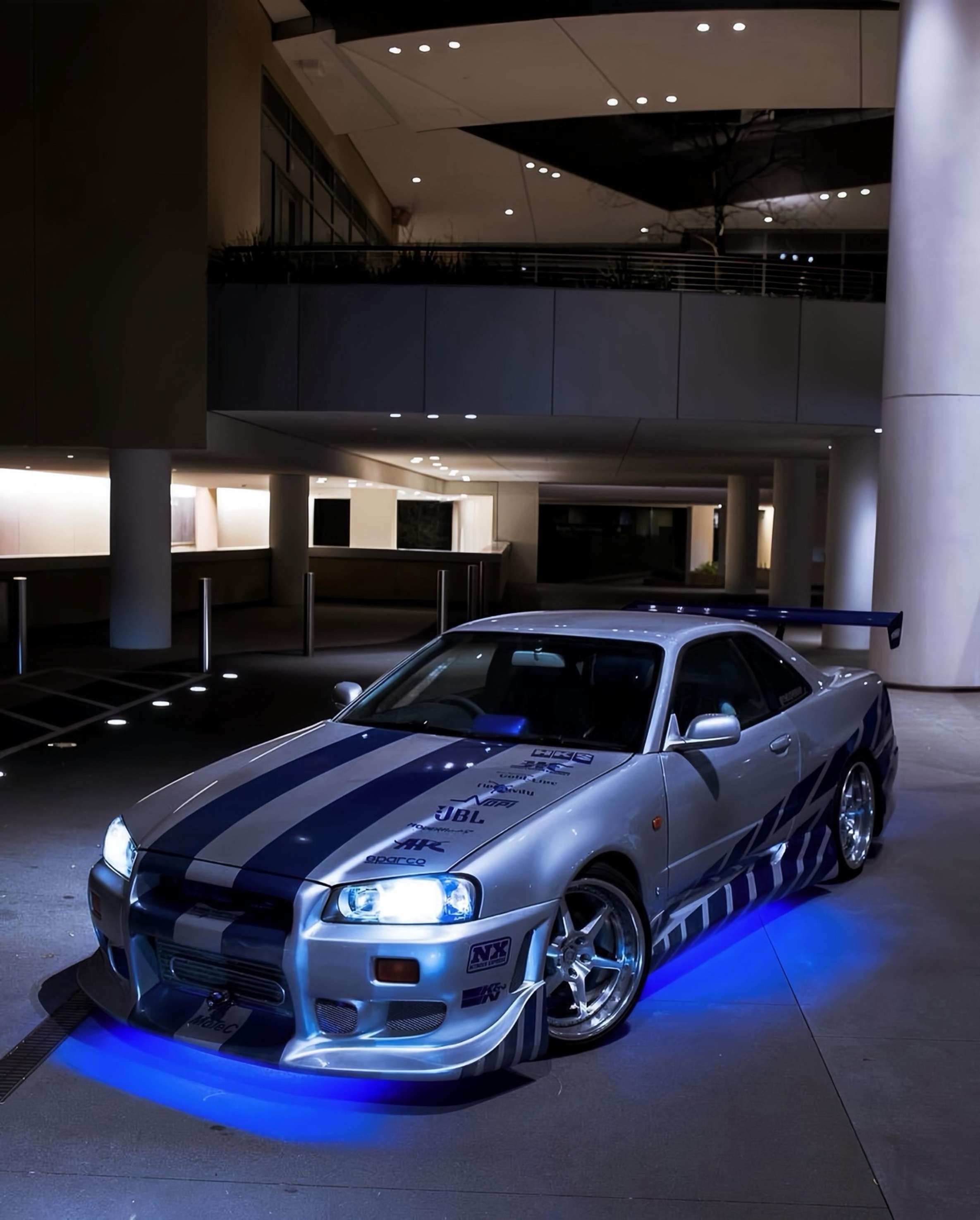
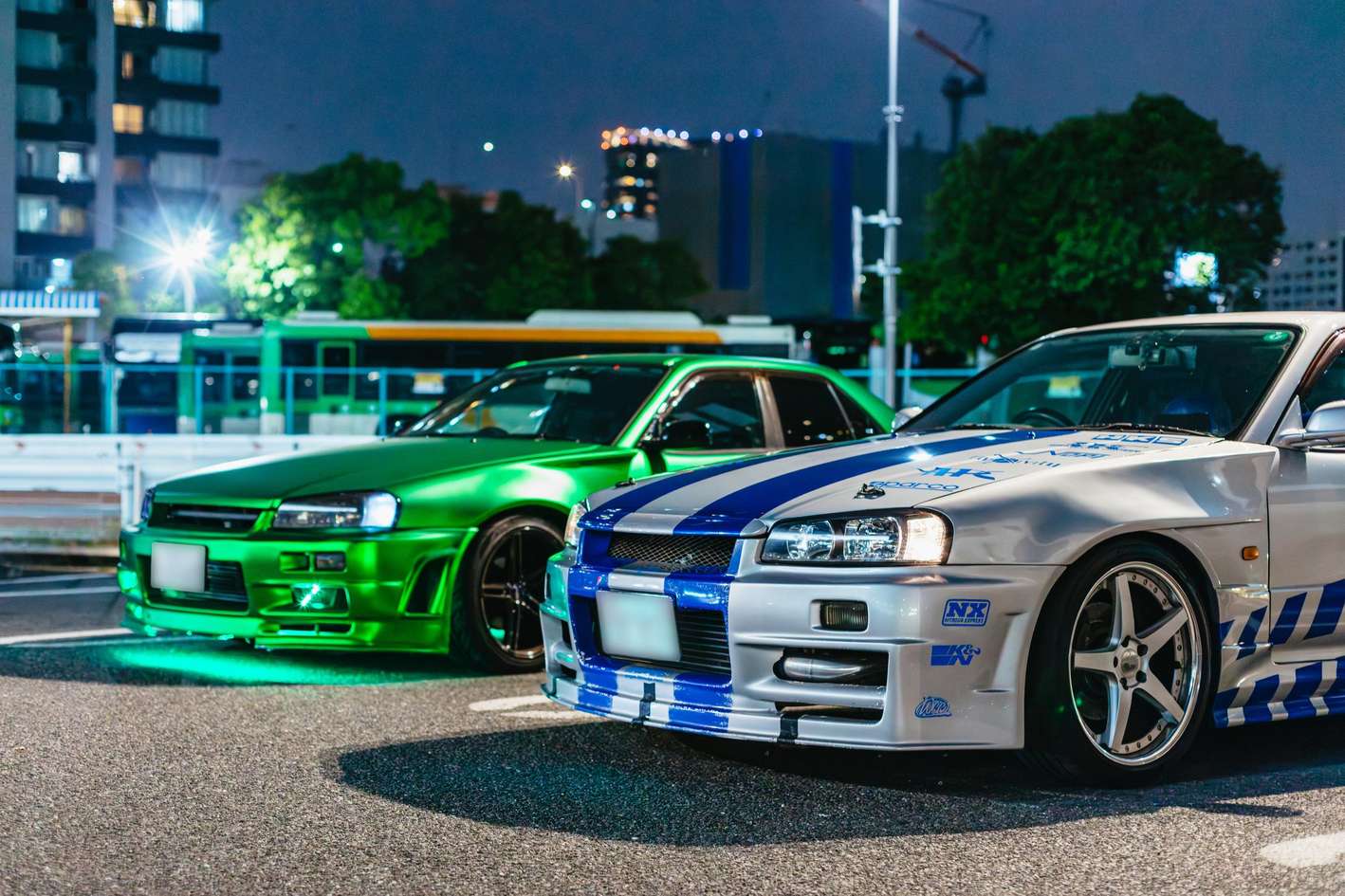
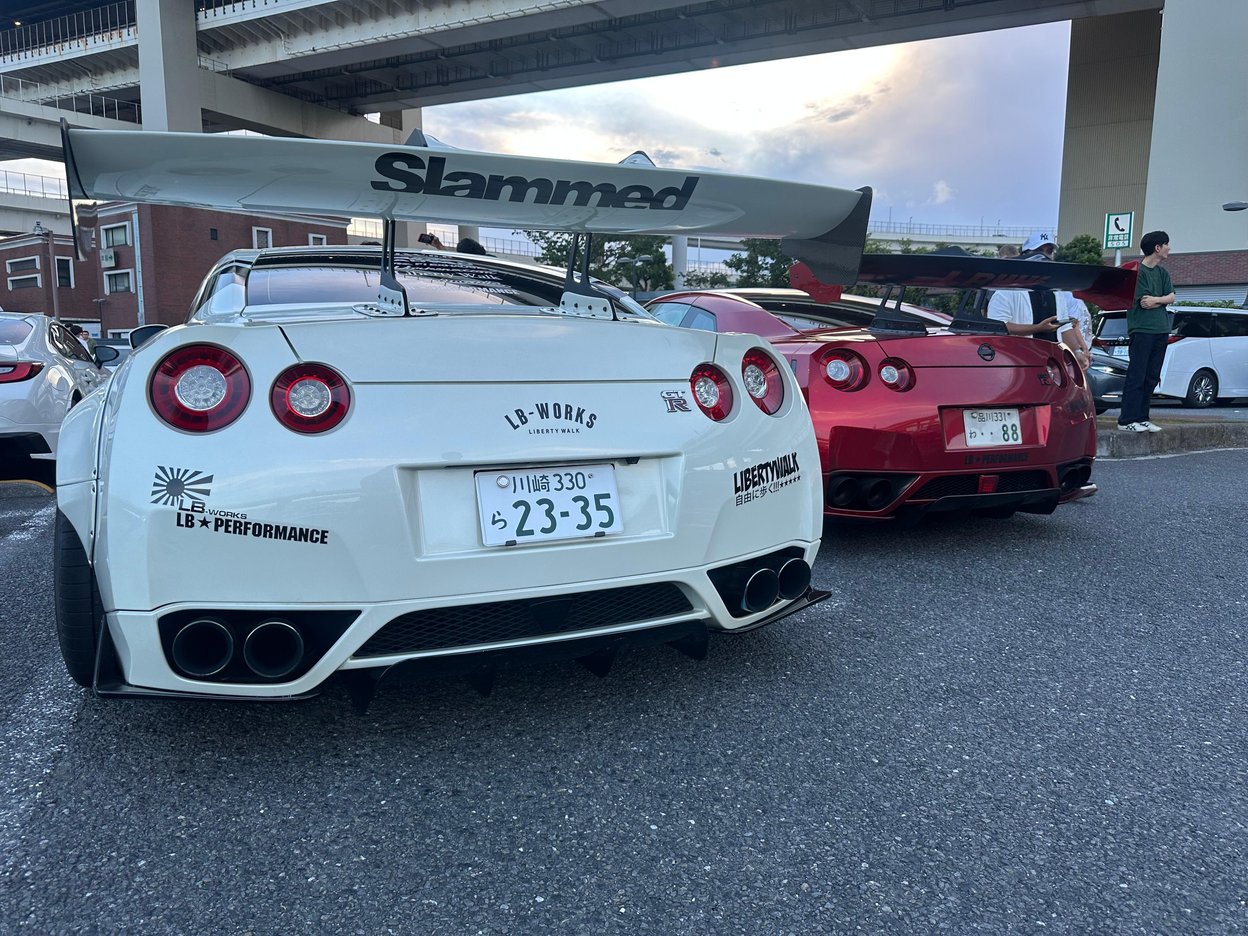
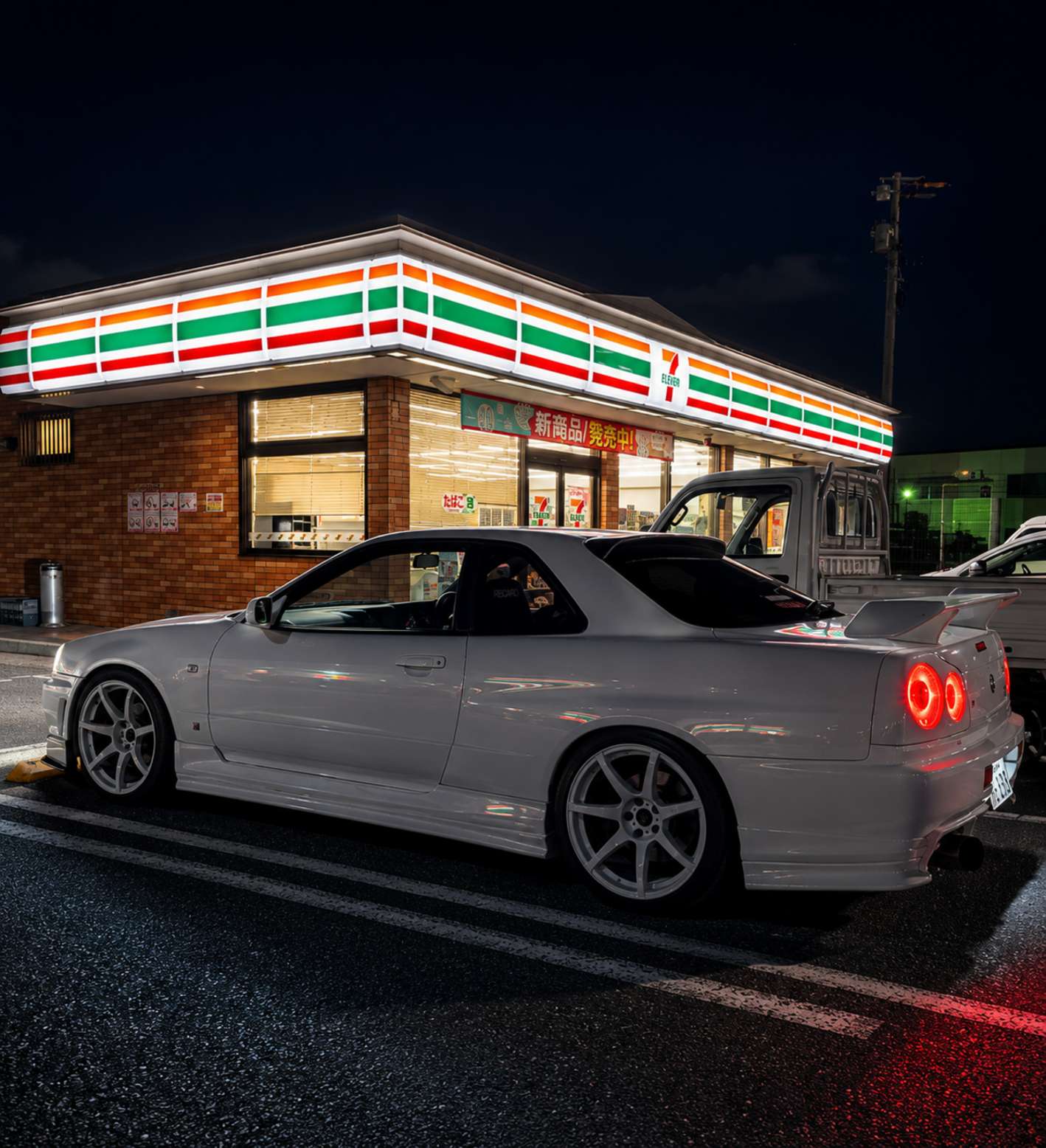
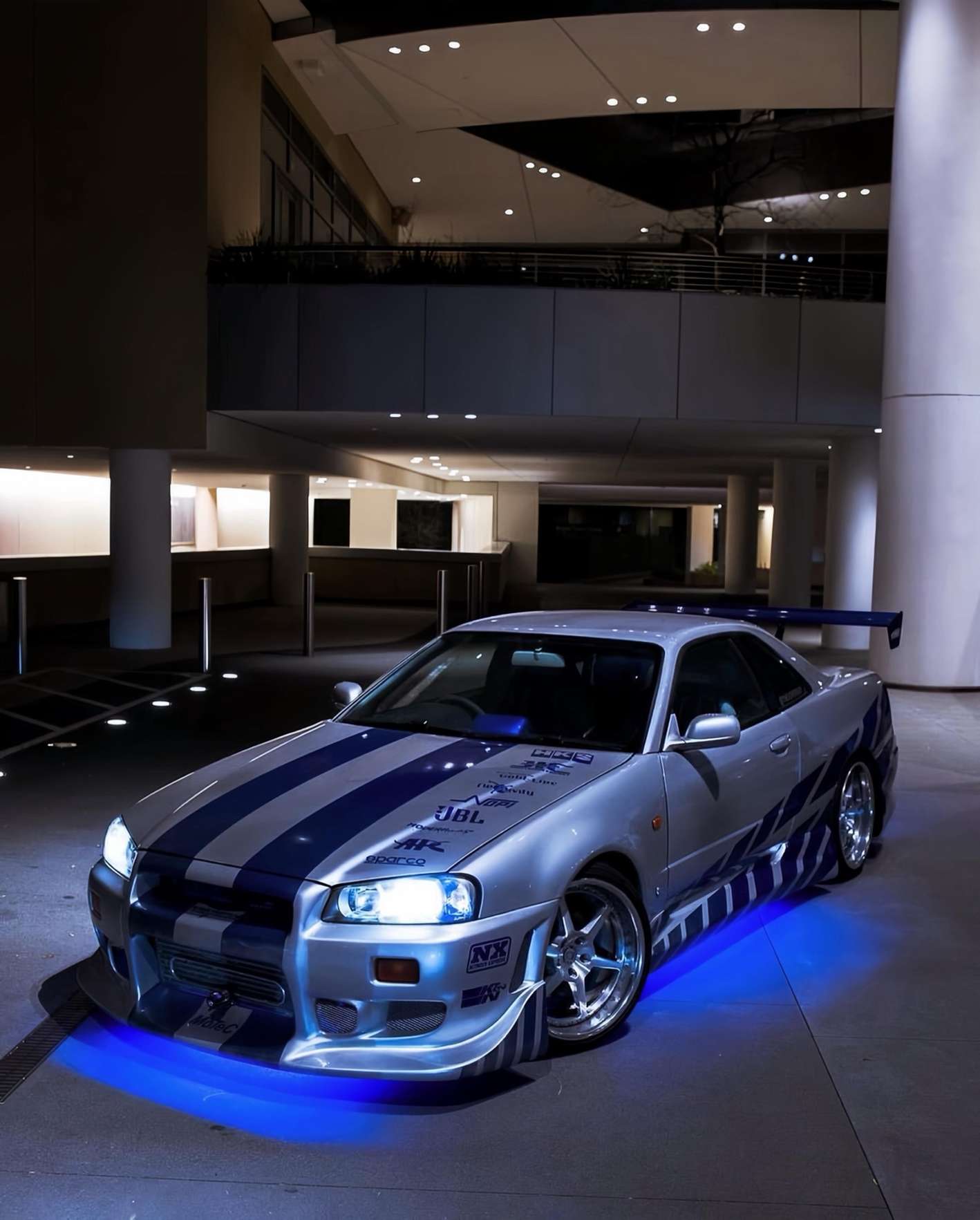
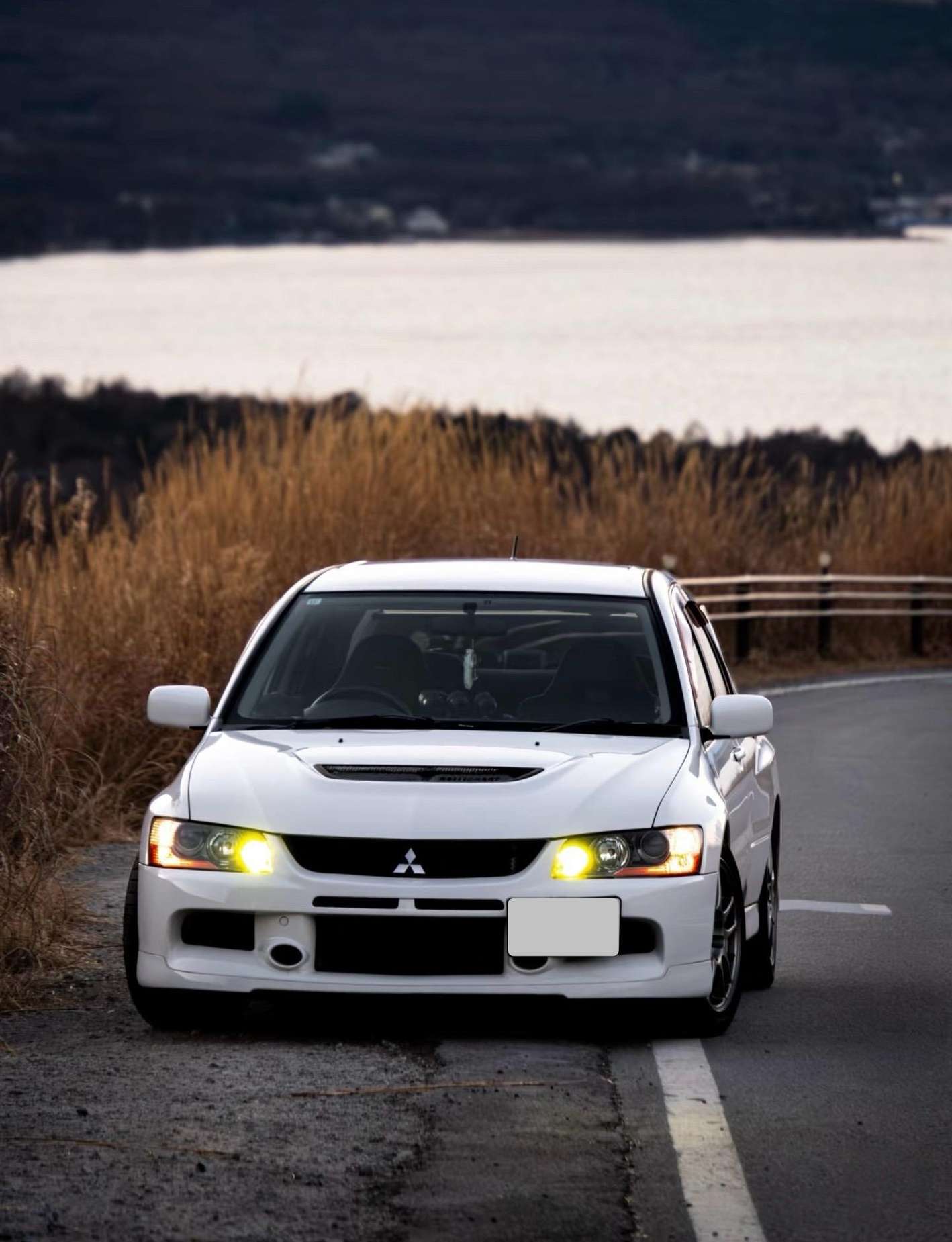
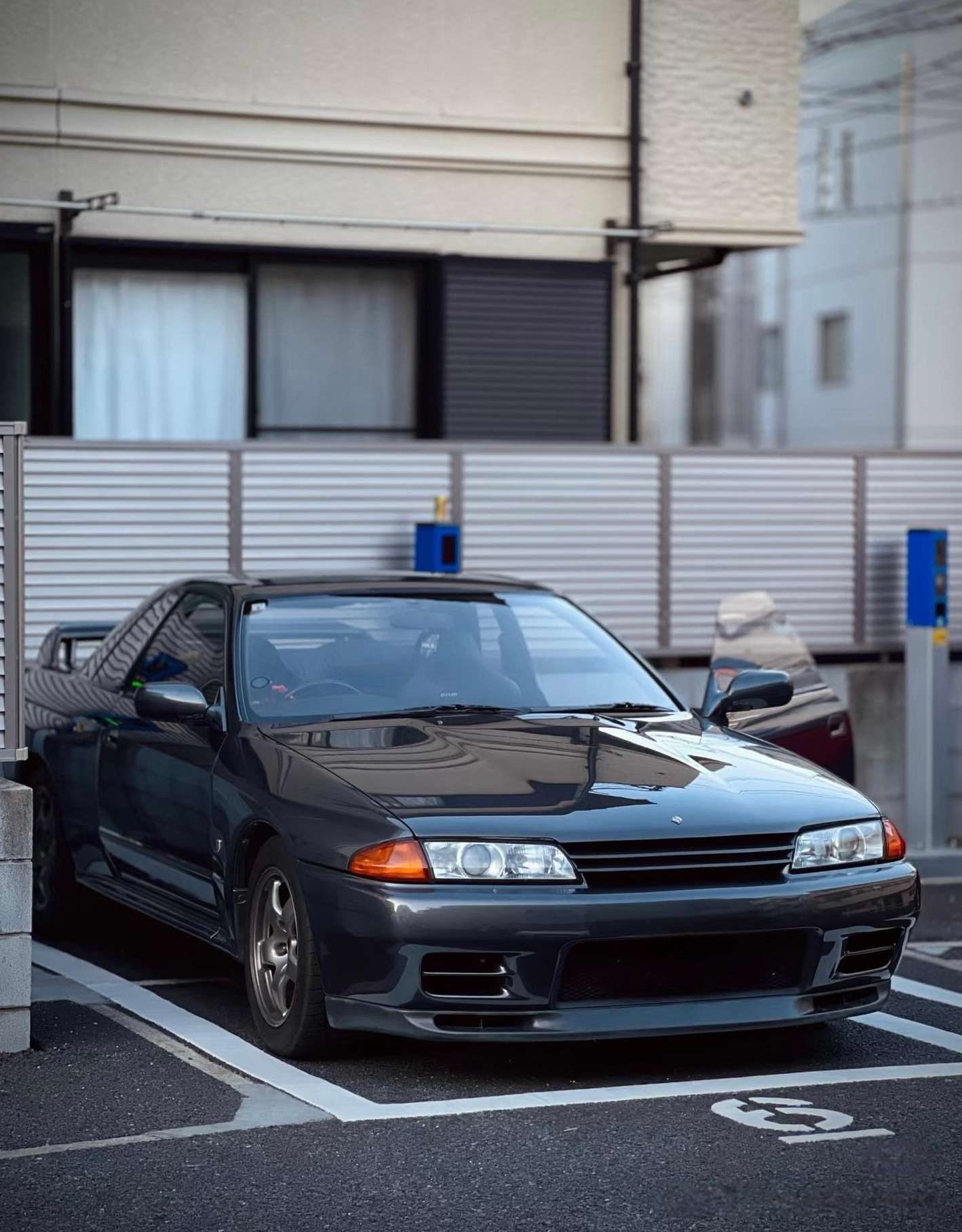
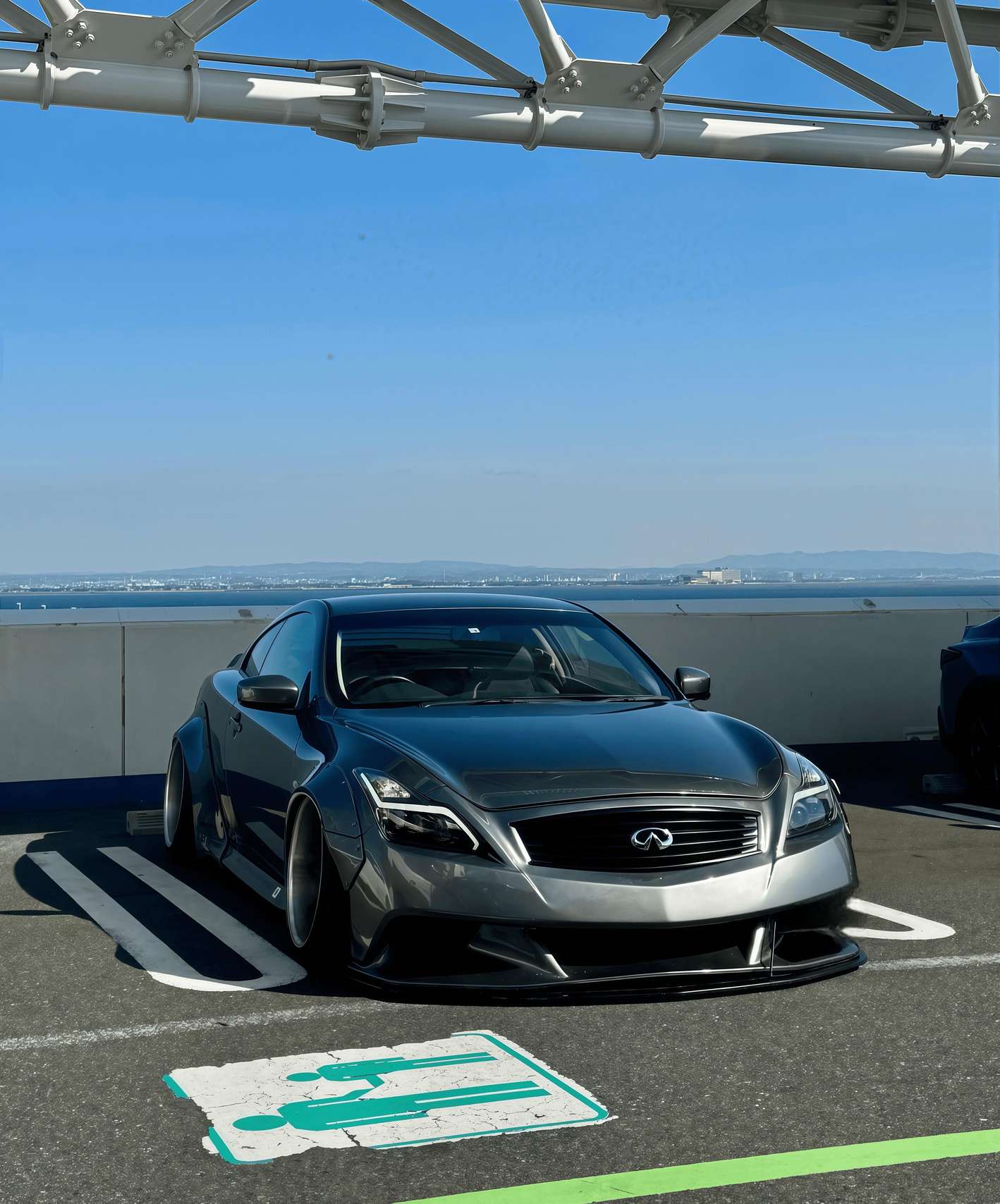
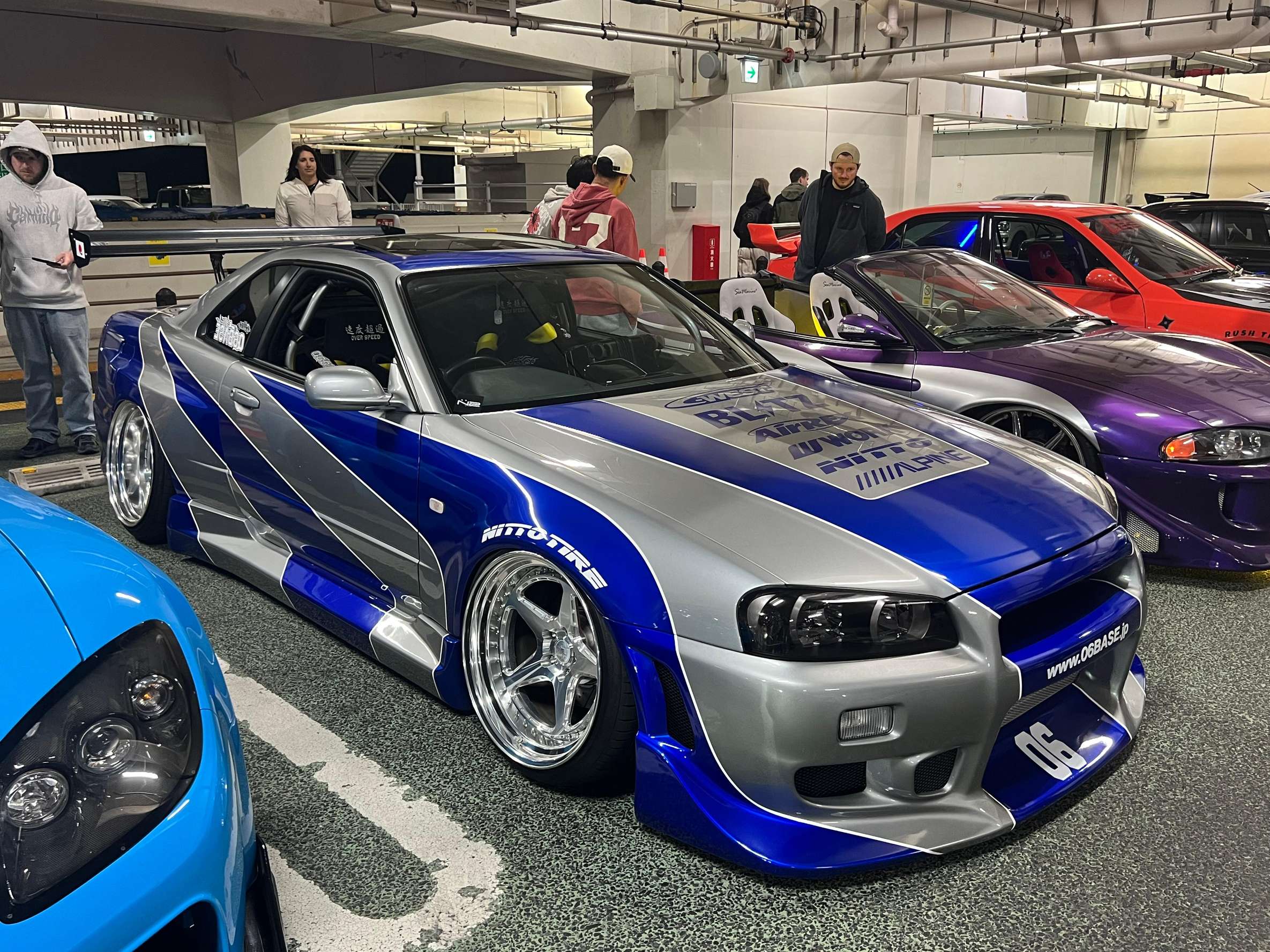
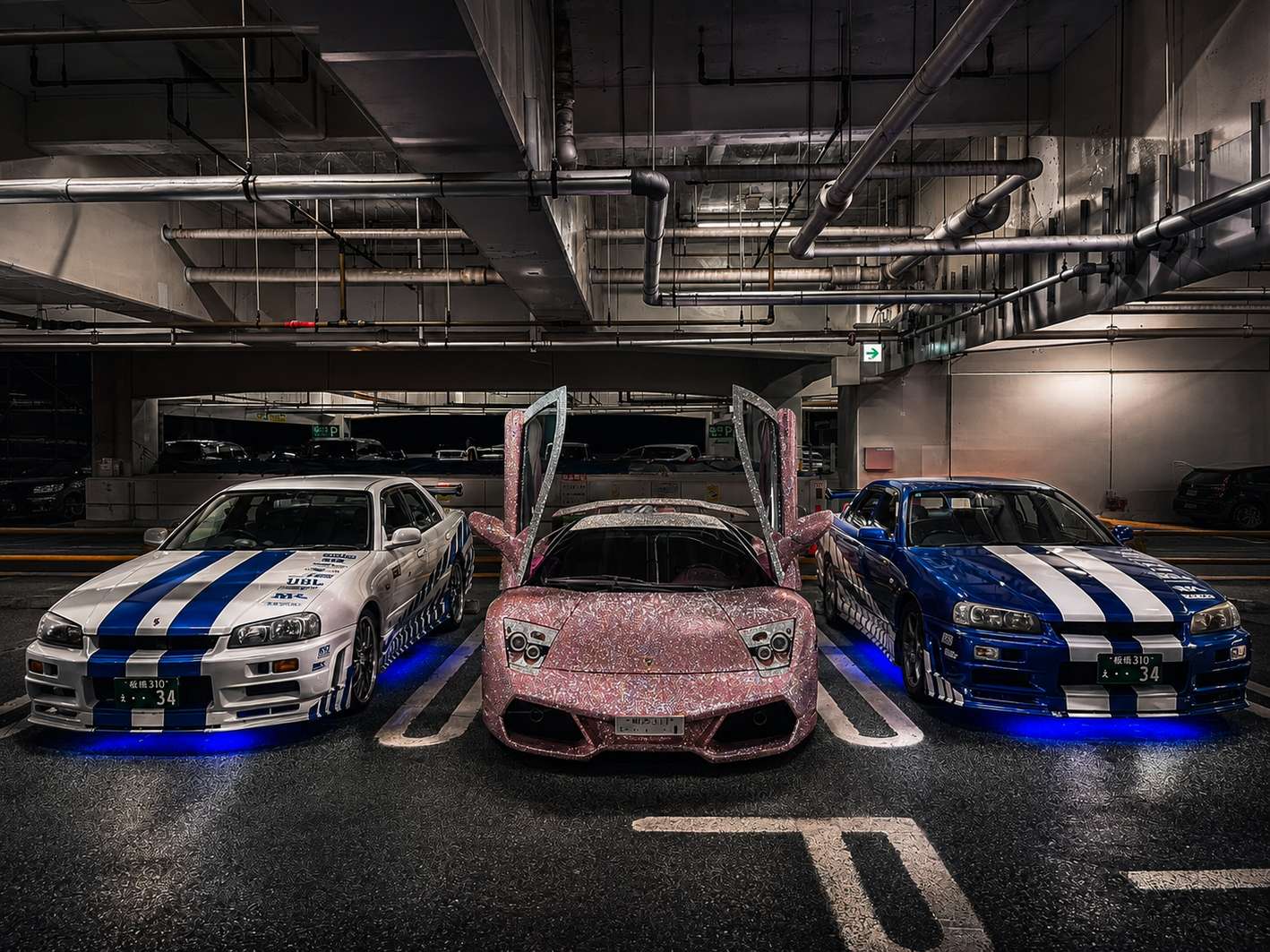
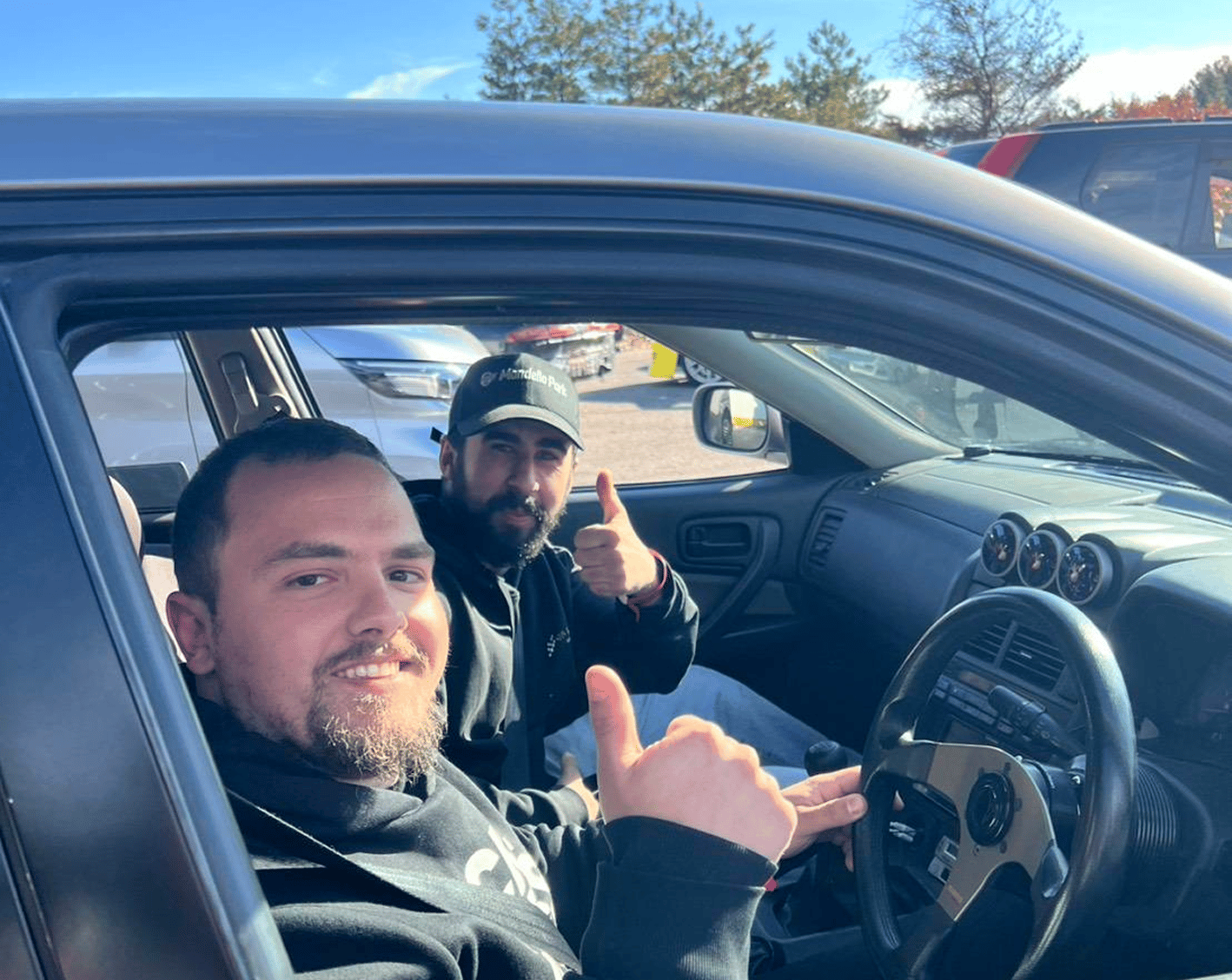
Midnight Bayshore Run Option, Enjoy complimentary hotel drop-off, no matter where you stay!English-speaking guide and JDM enthusiast: Feel free to ask any questions about modified cars.Ride in heavily modified cars such as Skyline ER34, Mitsubishi Evo VIII, IX & X, Mazda RX-7, Toyota Supra A80, Silvia S15, JZX100, Subaru WRX STI, Liberty Walk G37, Liberty Walk E92 M3, Skyline V35 & V36, Fairlady 300ZX, Mitsubishi Eclipse, Type R, Rocket Bunny 86, BMW E46 M3, etc., to Daikoku PA.You will be sharing the same car with JDM fans from all over the world, and enjoying this exciting and thrilling JDM night together!All-inclusive pricing: ETC tolls and fuel costs are covered.Driver & photographer: Capture your experience at the best photo spots along the route.
Not included
No pets allowed in the vehiclesNo going to any illegal street-racing spots outside the Daikoku parking areaMidnight Bayshore Run Option : This experience does not include Tokyo Tower sightseeing and AUTOBACS shopping stops.
Finding the right JDM driving fit for your Wangan night
Green marks the lowest price. Each price says whether it is per person or per group.
Tour
Price
Duration
Pickup
Languages
Best for
Our pick
Tokyo Drift Ⅲ: Fast·Furious Daikoku PA Modified JDM Car Ride
4.7★ (1,358)
from $109per person
3 - 4 hours
yes
English, Japanese, Traditional Chinese
riders who want a modified Skyline or Evo with a pure midnight Bayshore run
Most reviewers credit their driver: friendly, easy to talk to, safe on the expressway and quick with car talk.
Best surprise
Many did not expect Daikoku to be busy on a Monday or Thursday, and several got a second car meet thrown in.
Most common wish
Several reviewers wished the night ran longer, asking for extra time at the Daikoku car meet itself.
How to book your JDM driving night on the Wangan route
01
Pick your night
Choose a date that suits the kind of night you want. Weekend evenings draw the biggest Daikoku crowds, and tours run roughly three to four hours with a late return.
Pro tipWeekday nights run quieter at the meet, so you have more room to look around.
ImportantMost of these JDM driving tours can be cancelled up to 24 hours before for a full refund, so lock the date early and keep that window in mind.
02
Choose the right option
Each JDM driving tour splits into options that change the car and the route. The Midnight Bayshore Run cuts Tokyo Tower and Autobacs for pure expressway driving, while the 4-hour options add Daikoku PA, Shibuya and a tuning shop.
Pro tipIf the Wangan cruise itself is why you searched, the Bayshore option is the one to pick; it also includes free hotel drop-off anywhere in the city.
Common mistakeBooking the cheapest option and expecting a specific car. Seating and models depend on what is available that night.
03
Pay and get confirmed
After payment you get an email confirmation. Provide a contact such as WhatsApp or Instagram when asked, because the operator messages you before starting time if anything changes.
Pro tipTurn your messaging notifications on. A schedule change sent an hour before departure is easy to miss on silent.
RecommendedReply to the operator's email as soon as it lands so your pickup details are settled well before the night.
04
Sort pickup and meeting point
Some of these tours include hotel pickup and drop-off; others ask you to reach a set meeting point in the city. Check the option you chose and confirm your location after booking.
ImportantBring your passport or ID on the night. You show it or your voucher QR code when you arrive, and a phone screenshot is fine on most tours.
Common mistakeArriving late. Some operators cannot refund no-shows, so build in train or traffic time.
05
On the night itself
Dress warm with comfortable shoes, because part of the evening stands outdoors at the meet. Meet your driver, join the car with other JDM fans, and expect about an hour on the ground at Daikoku PA.
RecommendedEat beforehand and skip big bags. Sports cars have little luggage space and no food is served on board.
Pro tipIf police close Daikoku that night, you can reschedule or take a full refund, and many tours simply divert to Umihotaru PA instead.
The basics every JDM driving guest should know
Can stop the dayGood to knowGood news
01
ChoosingWhat it is, who it suits, when to go
4
Which car
On most tours you cannot pick your exact car, though you can say which models you like and some let you request one. Private options name the car up front, such as an R34 Skyline or a GT-R. If a particular car matters to you, ask before booking.
Sharing
The cheaper options are shared rides, so you may sit in the same car with JDM fans from other countries. Private tours keep the car to your group and let you adjust the pace and stops. Larger groups may be split across two cars that drive and park together.
Included
Expressway tolls, fuel and parking are covered on these tours, and so is photo help at the stops. What costs extra: meals, drinks, souvenirs and entrance fees such as Tokyo Tower. Tipping is not part of the experience in Japan.
Daikoku timingCan stop the day
Daikoku PA is an informal meet with no schedule, and police can close the lot without notice. On Thursday to Saturday nights closures tend to happen by about 8:30 pm, so operators often pull pickups forward to late afternoon. Weekday nights rarely end in a closure.
02
BookingHow far ahead, and what happens if plans change
2
Booking
Sort out your ride before you land in Tokyo. Tours sell out and turning up hoping for a seat is a gamble. If you want a specific car such as a GT-R, book several days ahead, because the cars are privately owned and sometimes under maintenance.
Cancellation
You can cancel up to 24 hours before the start for a full refund. If Daikoku PA is closed on the night, most tours move to another spot such as Umihotaru or Tatsumi, and some offer a full refund instead if you prefer not to continue.
03
Before you goPapers, health, what to bring
2
DocumentsCan stop the day
You ride as a passenger on these tours, so no international driving permit is needed. Bring your passport or ID card to show at the meeting point, and add a contact method such as WhatsApp or Instagram after booking so the operator can reach you.
Age and health
Each tour sets its own limits, and they are not the same. Common restrictions exclude babies under one, children under ten, pregnant women and older guests, with some tours capping at 60 or 70 years. Check the limits on the option you choose before booking.
04
On the dayWhere to be, when, and how you get there
1
Pickup
Most of these rides collect you from your hotel or a set meeting point, and a few drop you back anywhere in central Tokyo at the end. Check the pickup options for the date you want before you book, since arrangements differ between tours.
05
During the tourWhat is expected of you
2
Rules
No alcohol, drugs or smoking in the cars, and no pets. Leave big suitcases behind, since space in a sports car is tight. Drifting is illegal on public roads and is not part of any of these rides. Keep your phone notifications on, because operators send updates before departure.
Photos
Photography is welcome and guides take pictures at the best spots along the route. At the meet, never sit on or touch a car without asking the owner, and ask before photographing interiors or posting cars online. Drones are banned.
A JDM driving night on the Wangan - what to know before you book
The Bayshore Route is a real 62-kilometre expressway down Tokyo Bay, and a guided JDM driving run puts you on it after dark. What the games never tell you: police can close Daikoku PA on any night, and pickup times decide everything.
Yokohama· 35.63° N, 139.79° E
If you only remember three things
1
Tours run 3 to 4 hours, and about an hour of that is on the ground at Daikoku PA.
2
Cars fill the Daikoku lot from 5 pm, and the busiest hours run from 8 or 9 pm to midnight.
3
Police can close Daikoku without notice, most often on weekend nights, so book a tour whose fallback you accept.
Is a JDM driving night on the Wangan actually worth it
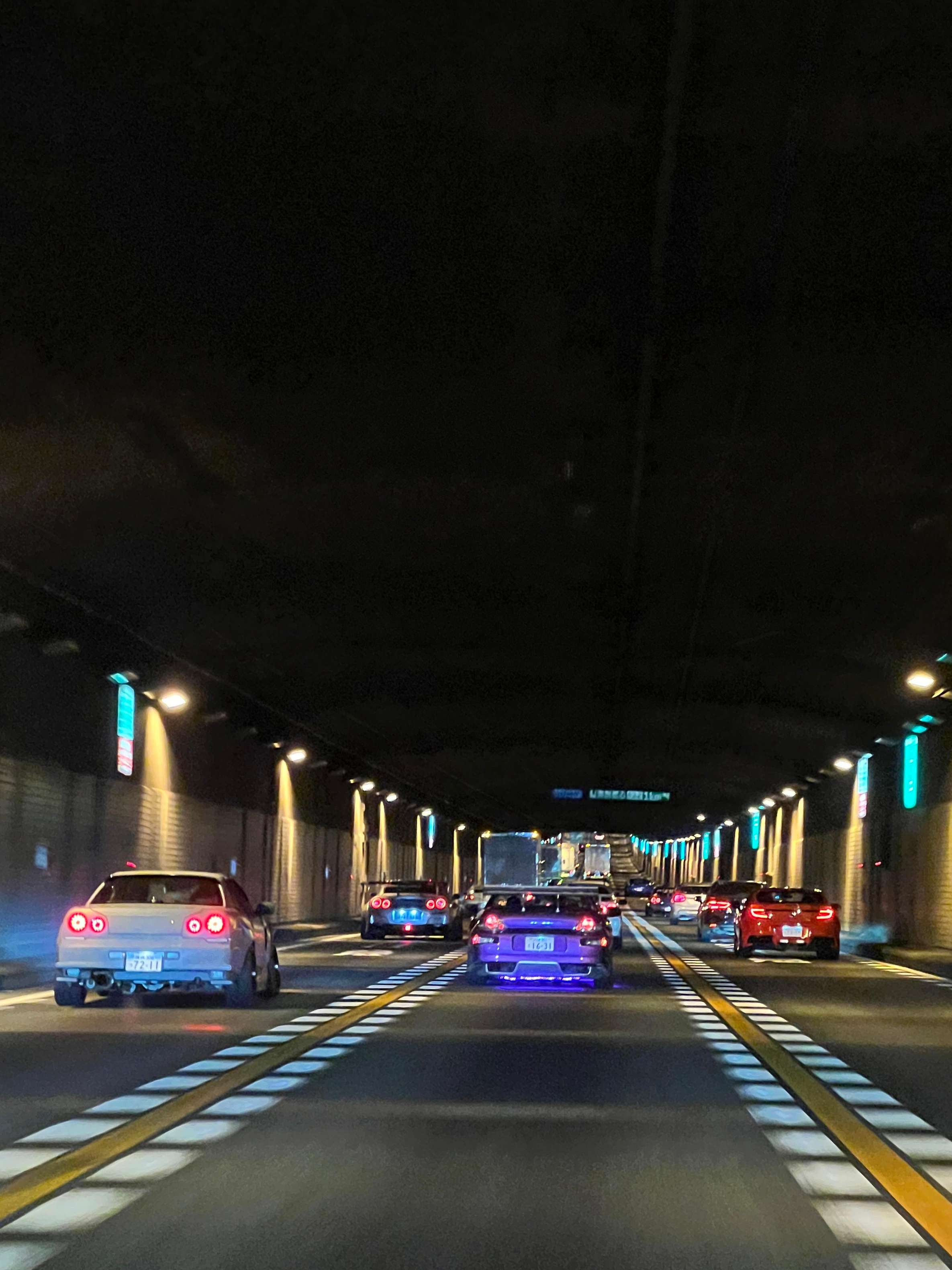
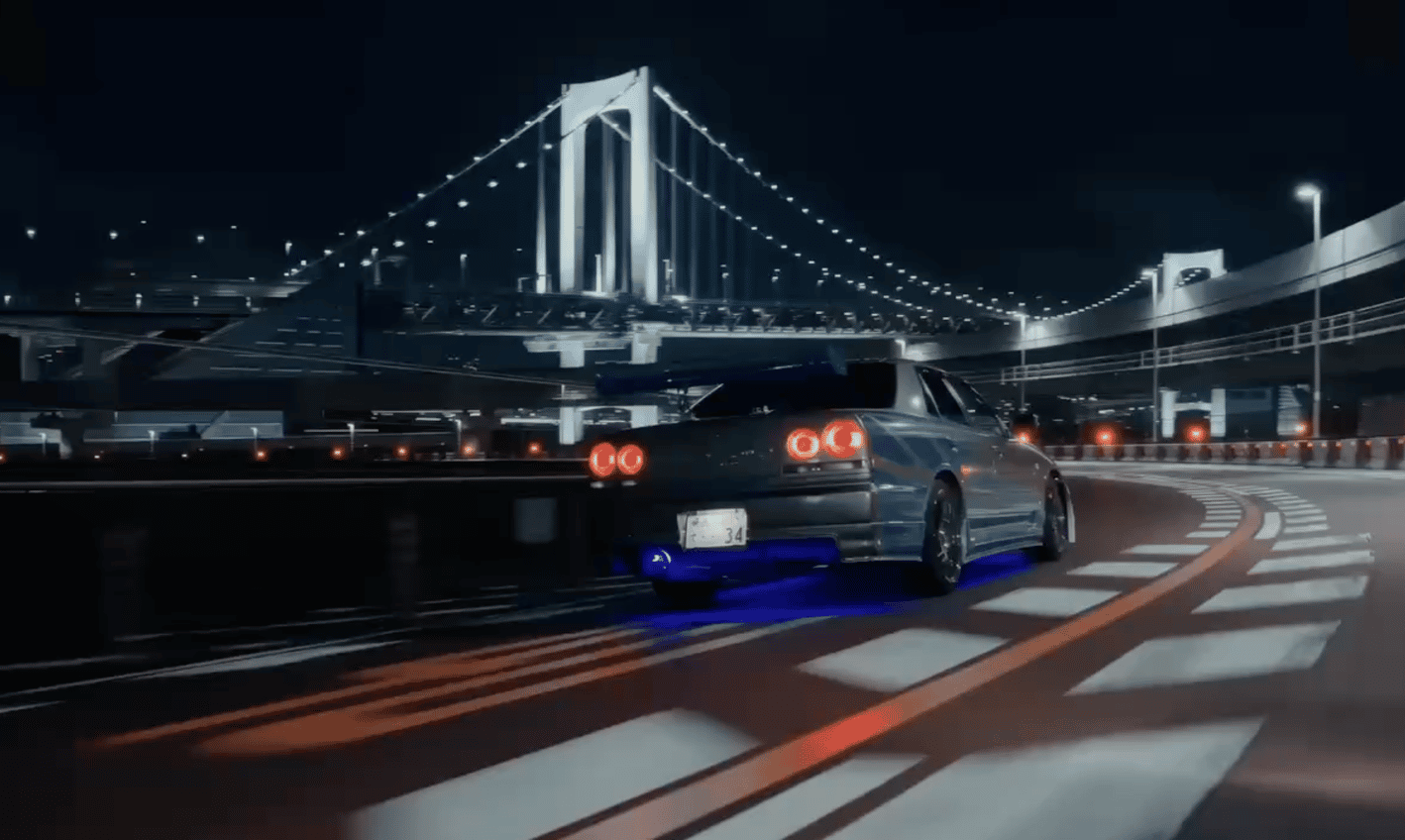
Rainbow Bridge lifts the car over the water, a tunnel swallows it again, and somewhere in the next lane a convoy of modified Skylines is running the same road.
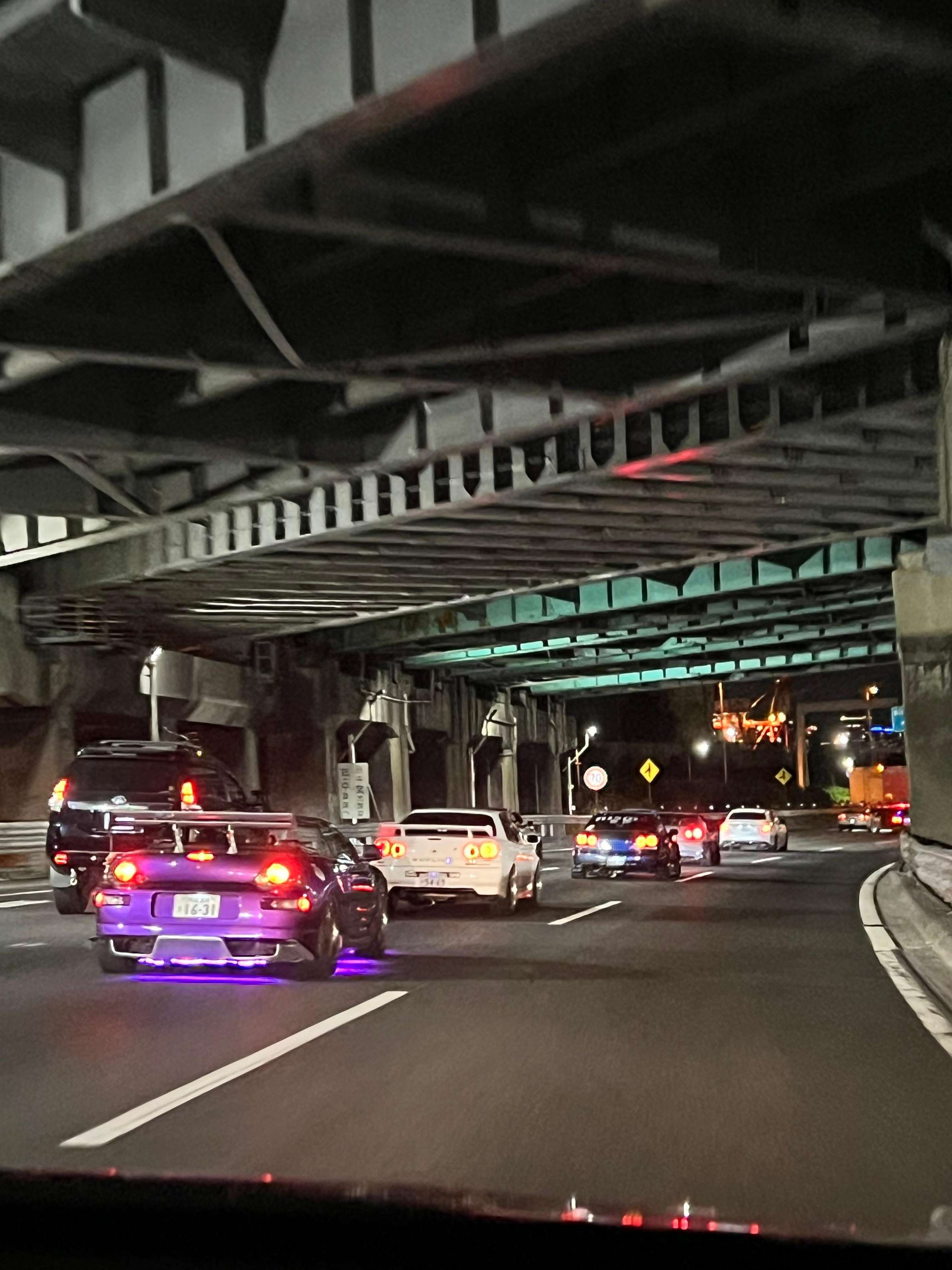
The Bayshore Route is the Wangan of the games: a wide, open stretch of Shuto Expressway, 6 to 8 lanes in places, running along Tokyo Bay between Yokohama and Ichikawa.
From the late 1980s to 1999 its long straights hosted the Mid Night Club, the street racers whose 300 km/h runs gave the route its name worldwide.
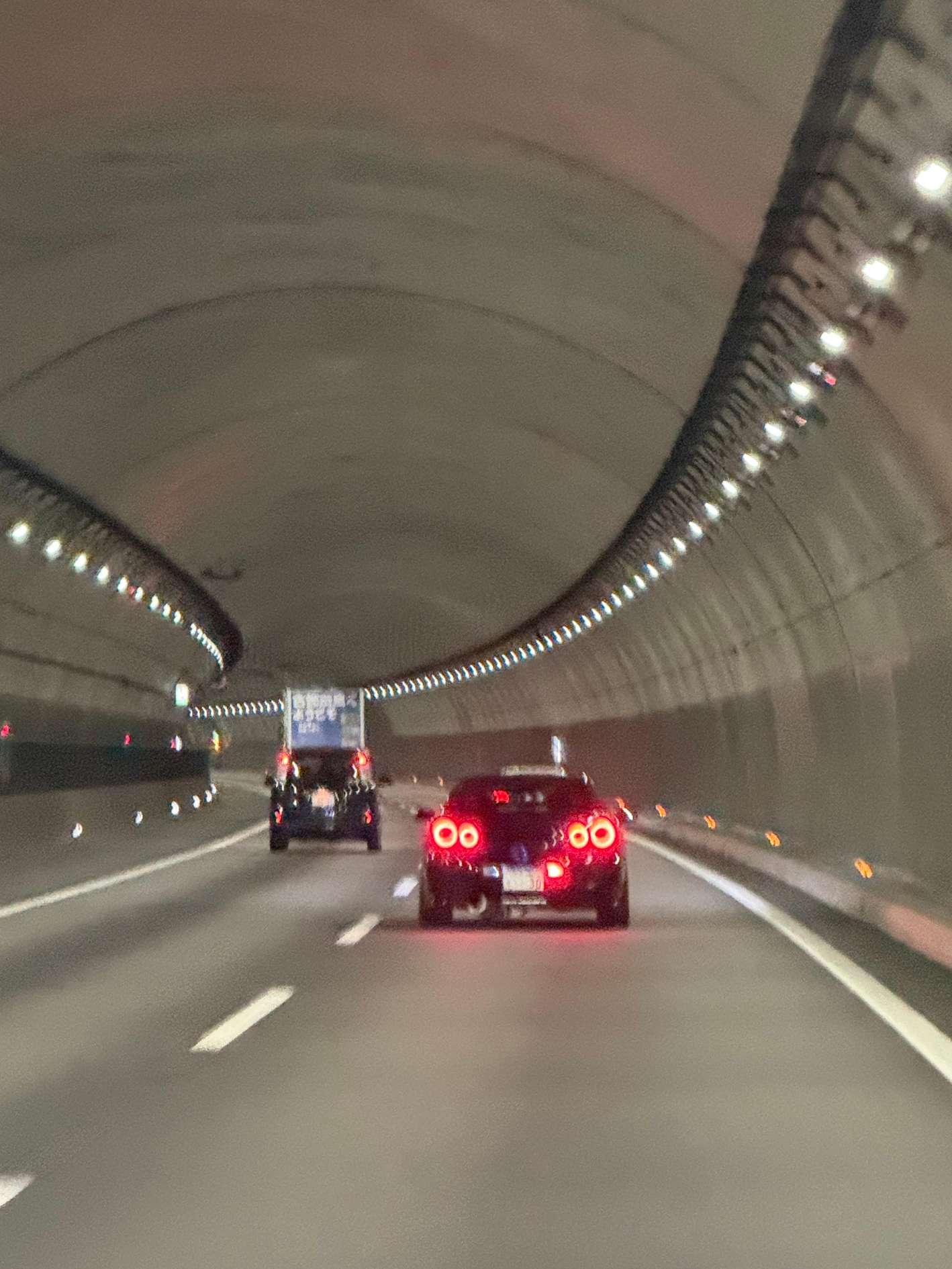
Today it is a regulated public road with ordinary speed limits, and the honest way to experience it is a safe, legal night drive with a guide. Through the tunnels you will still see convoys of JDM and supercar owners out doing the same thing, a real-life slice of Wangan Midnight.
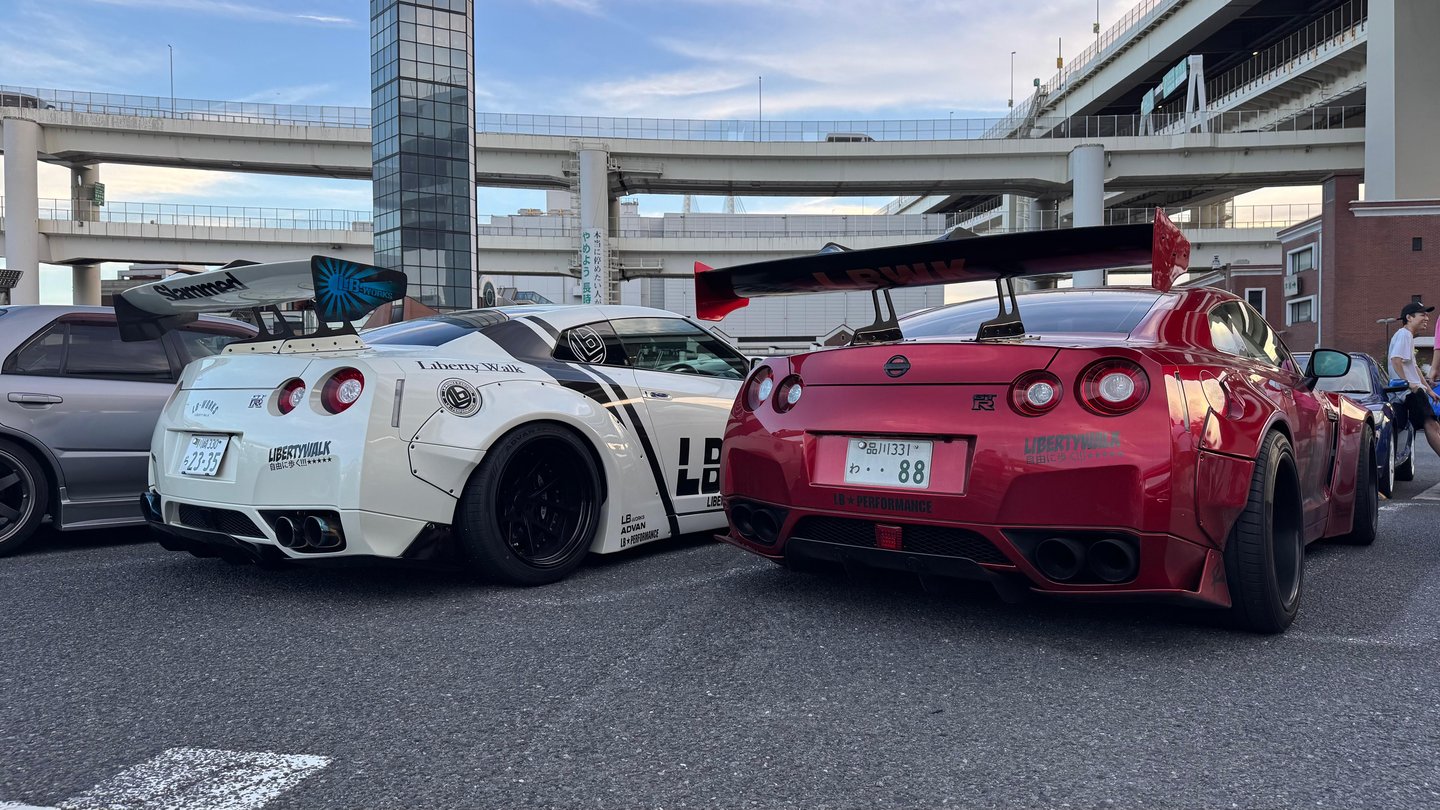
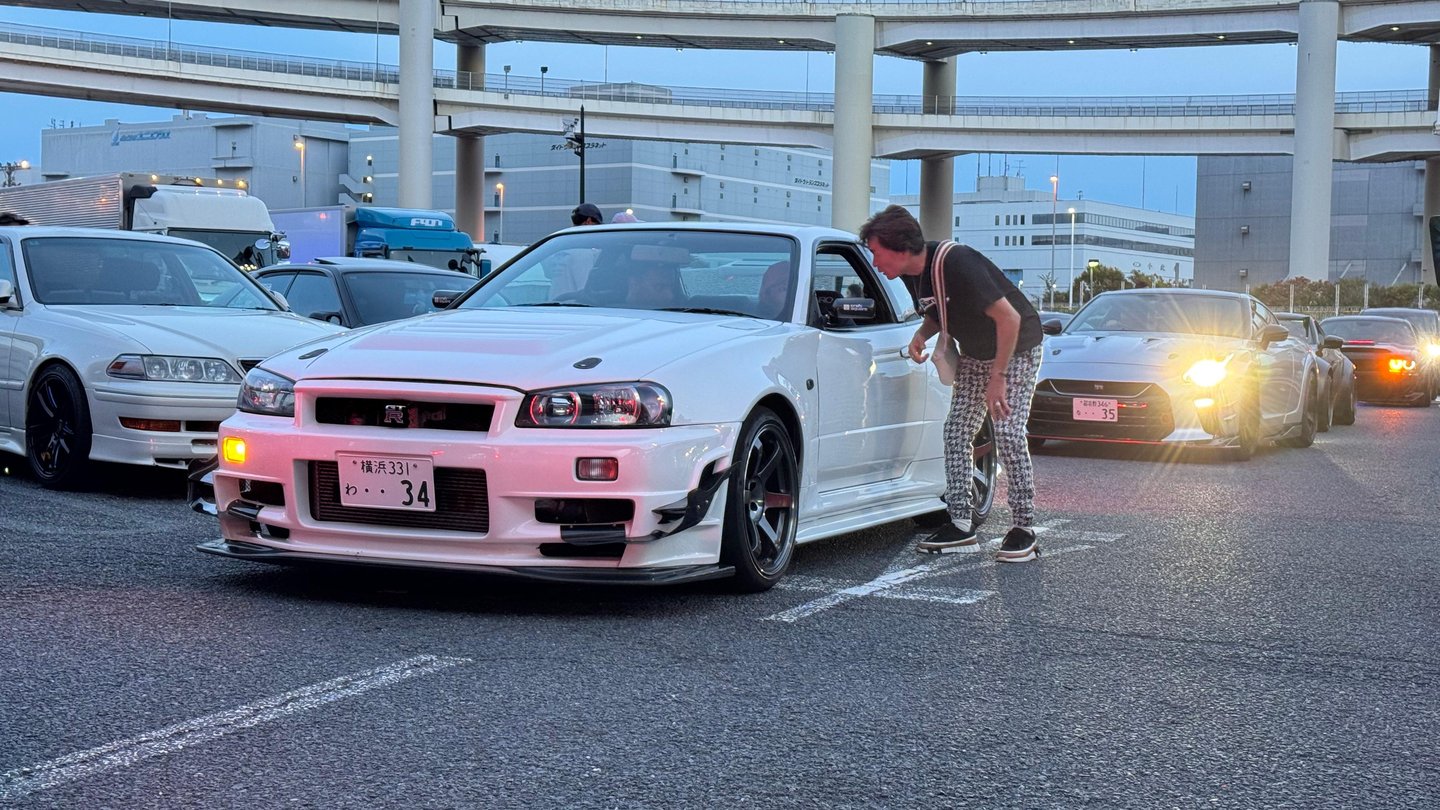
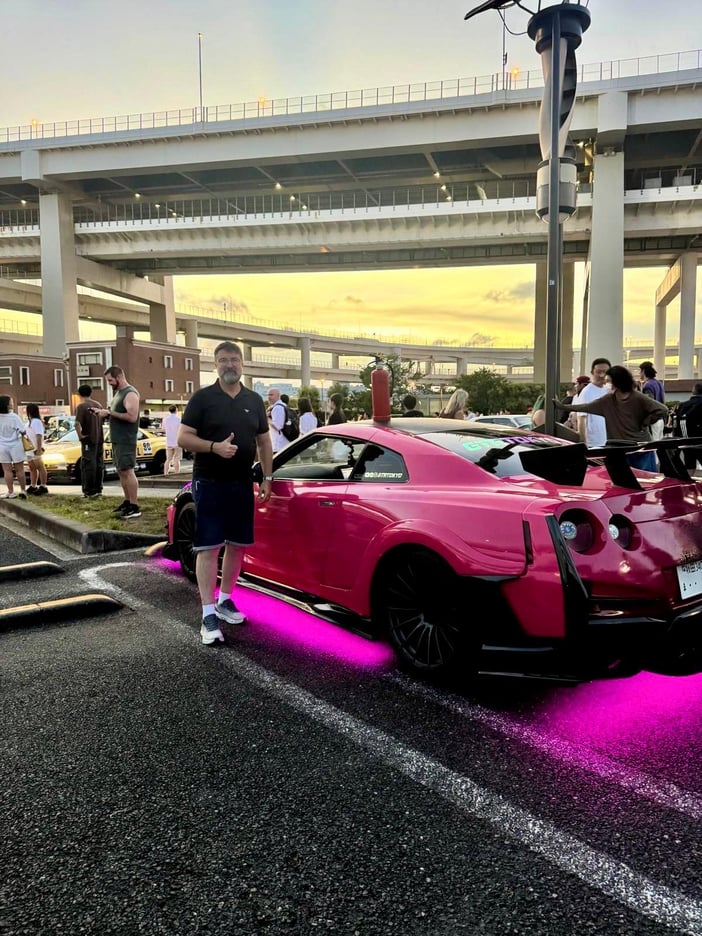
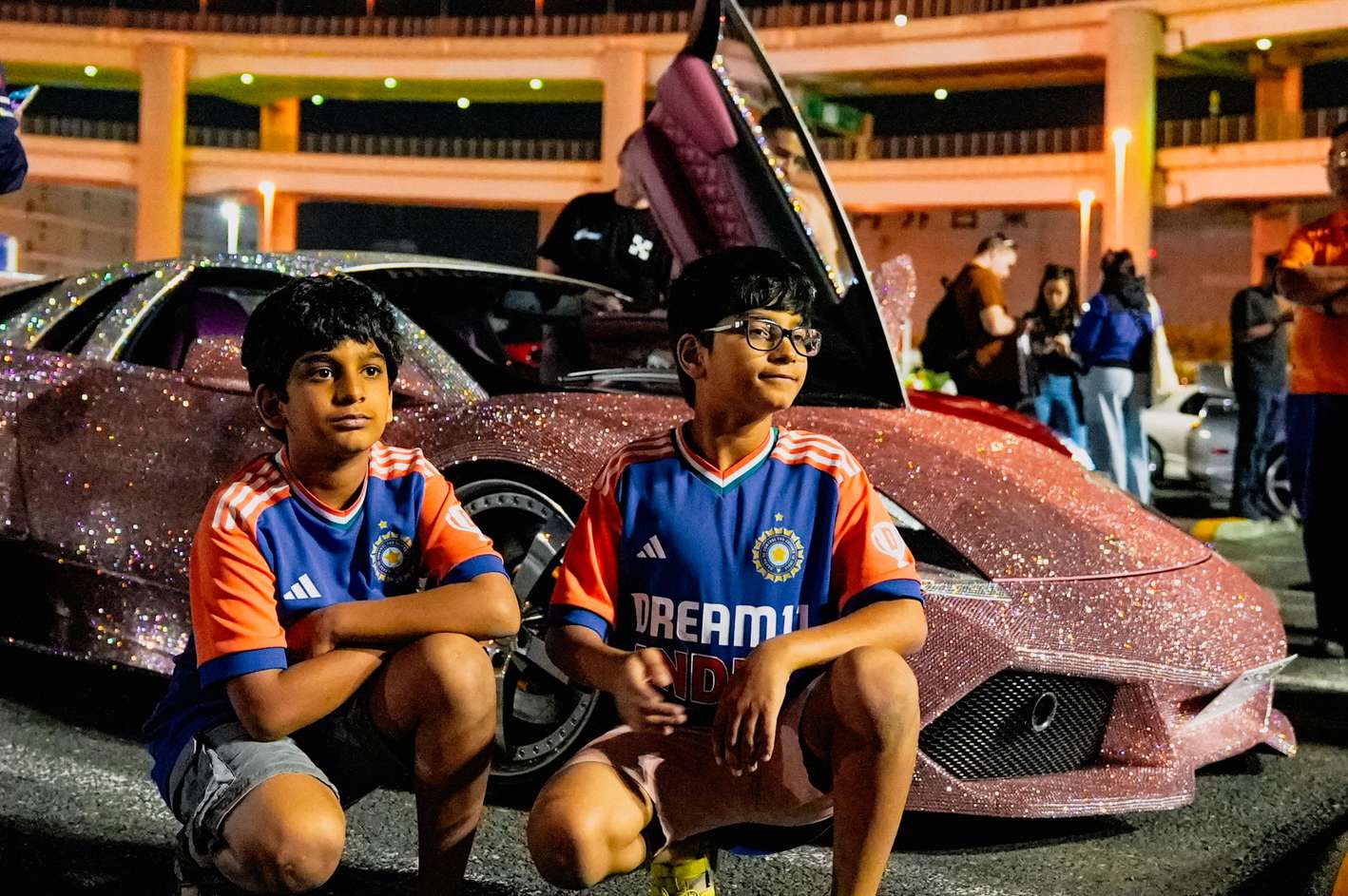
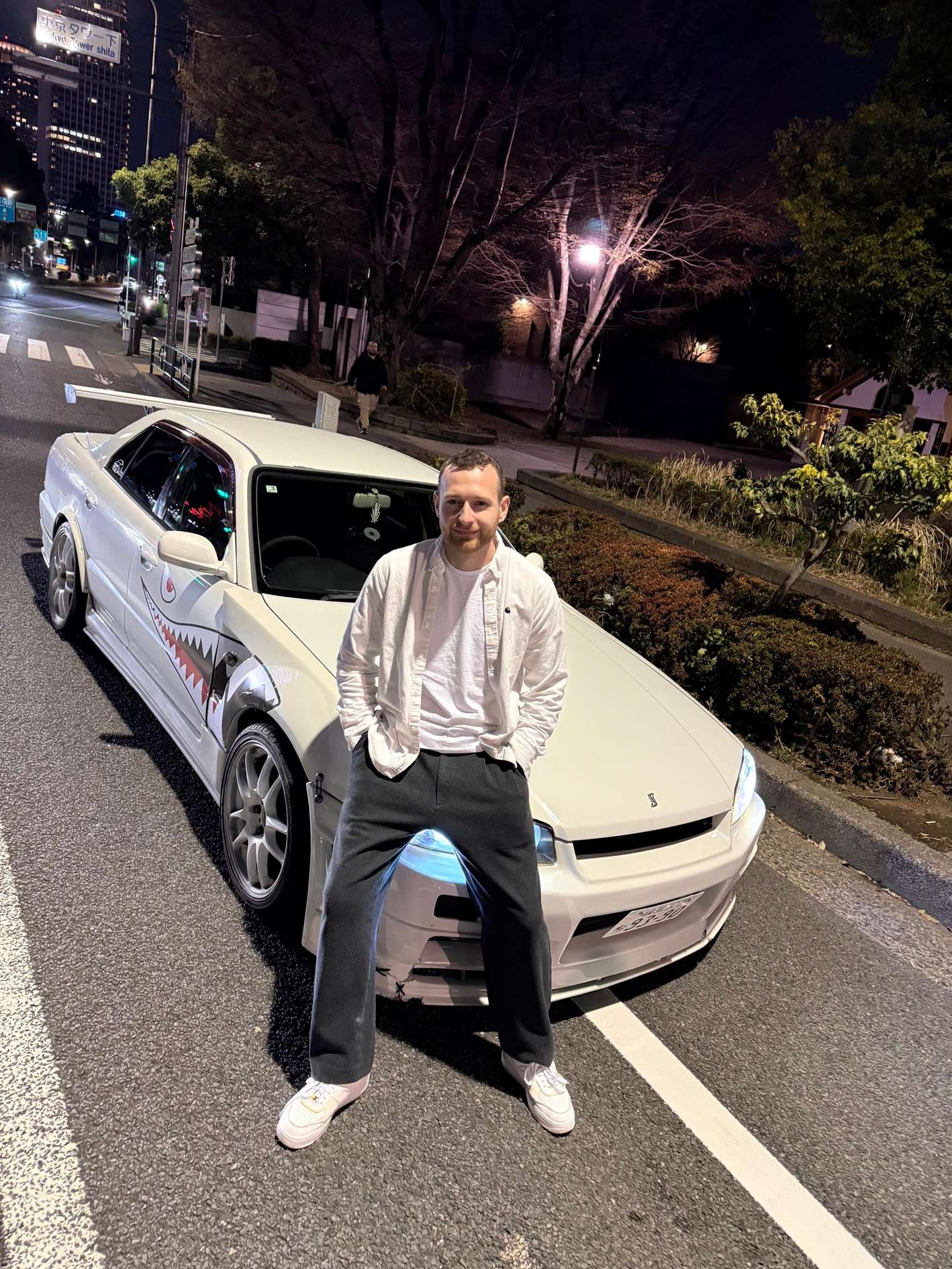
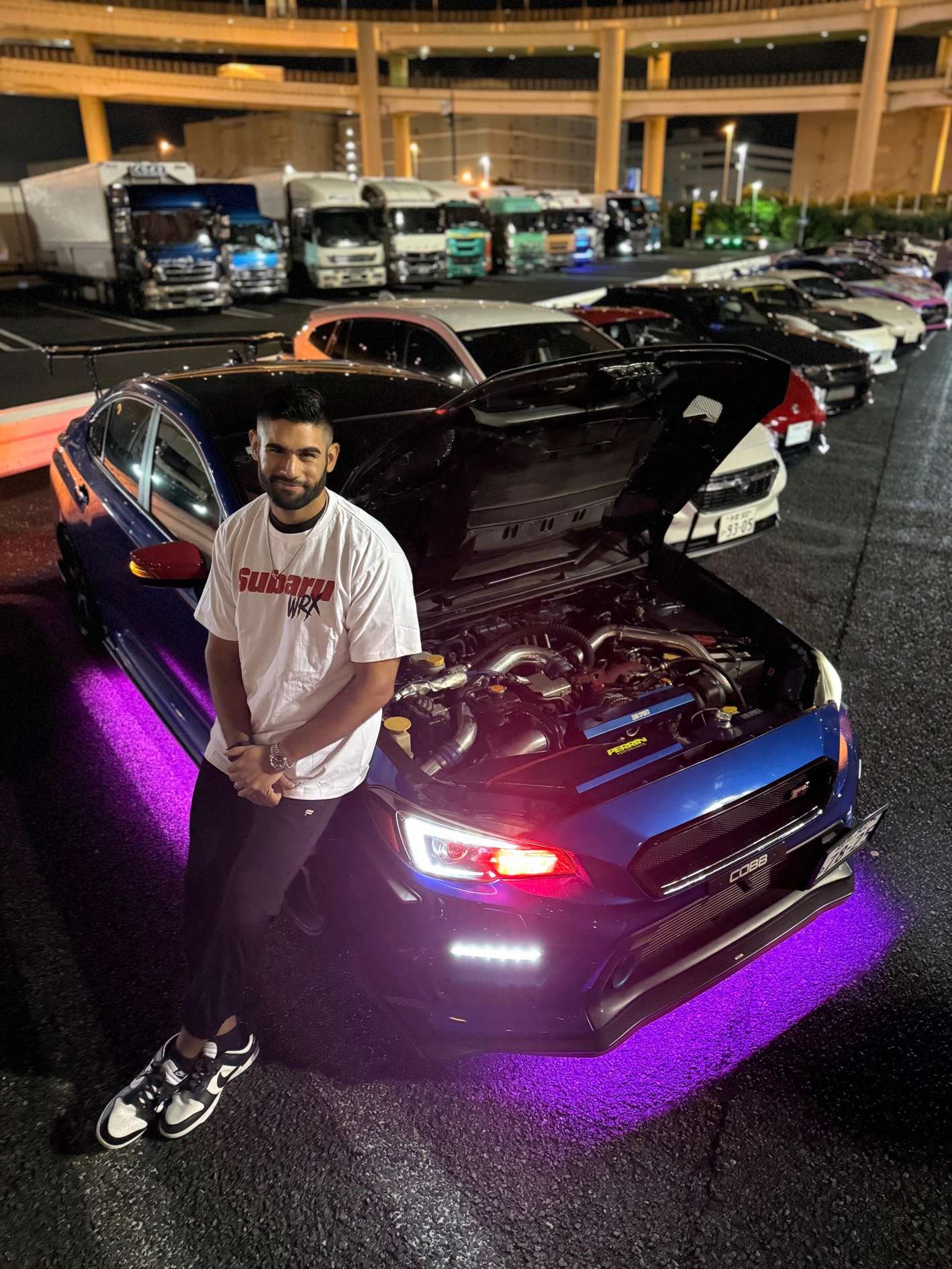
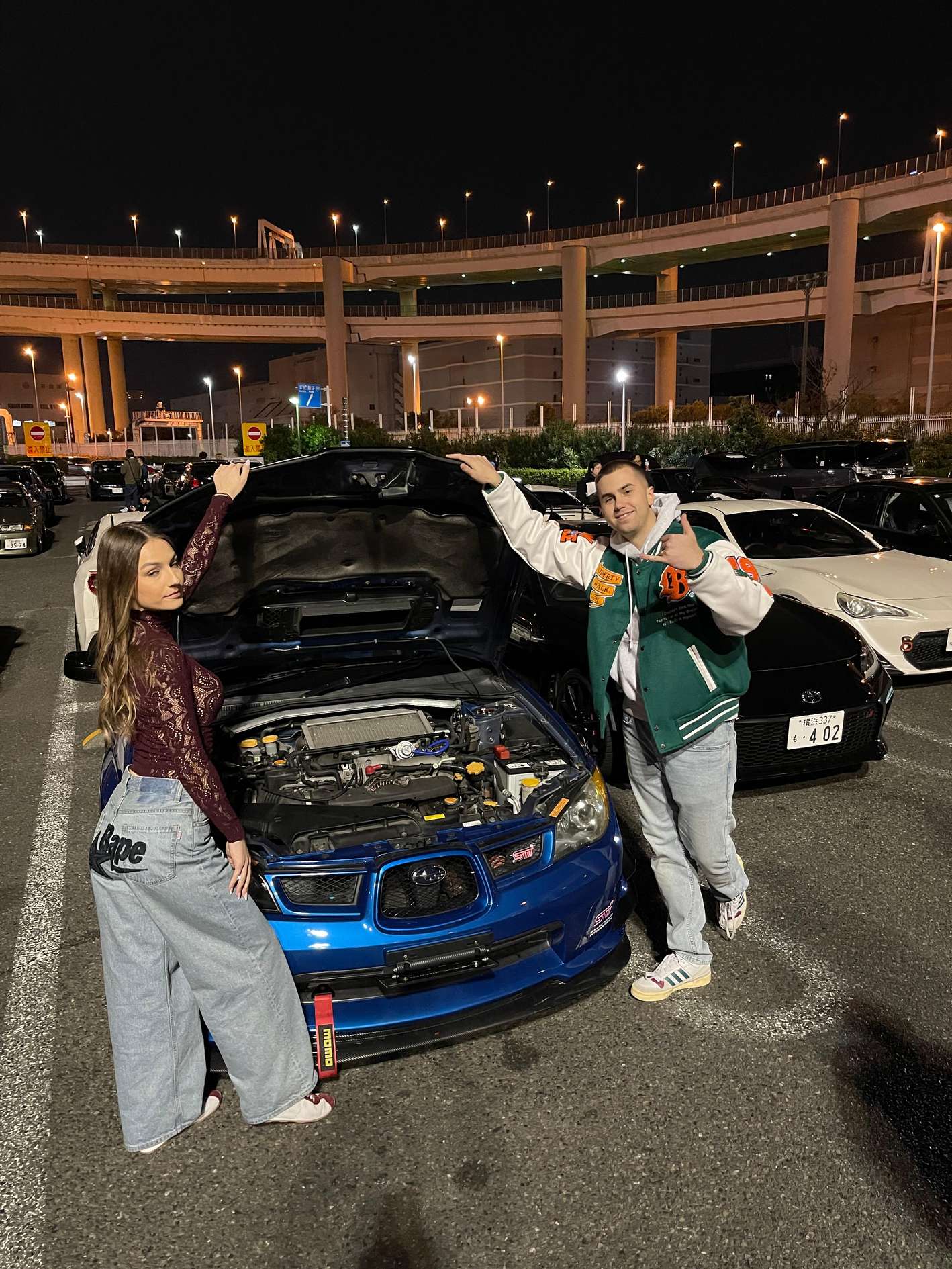
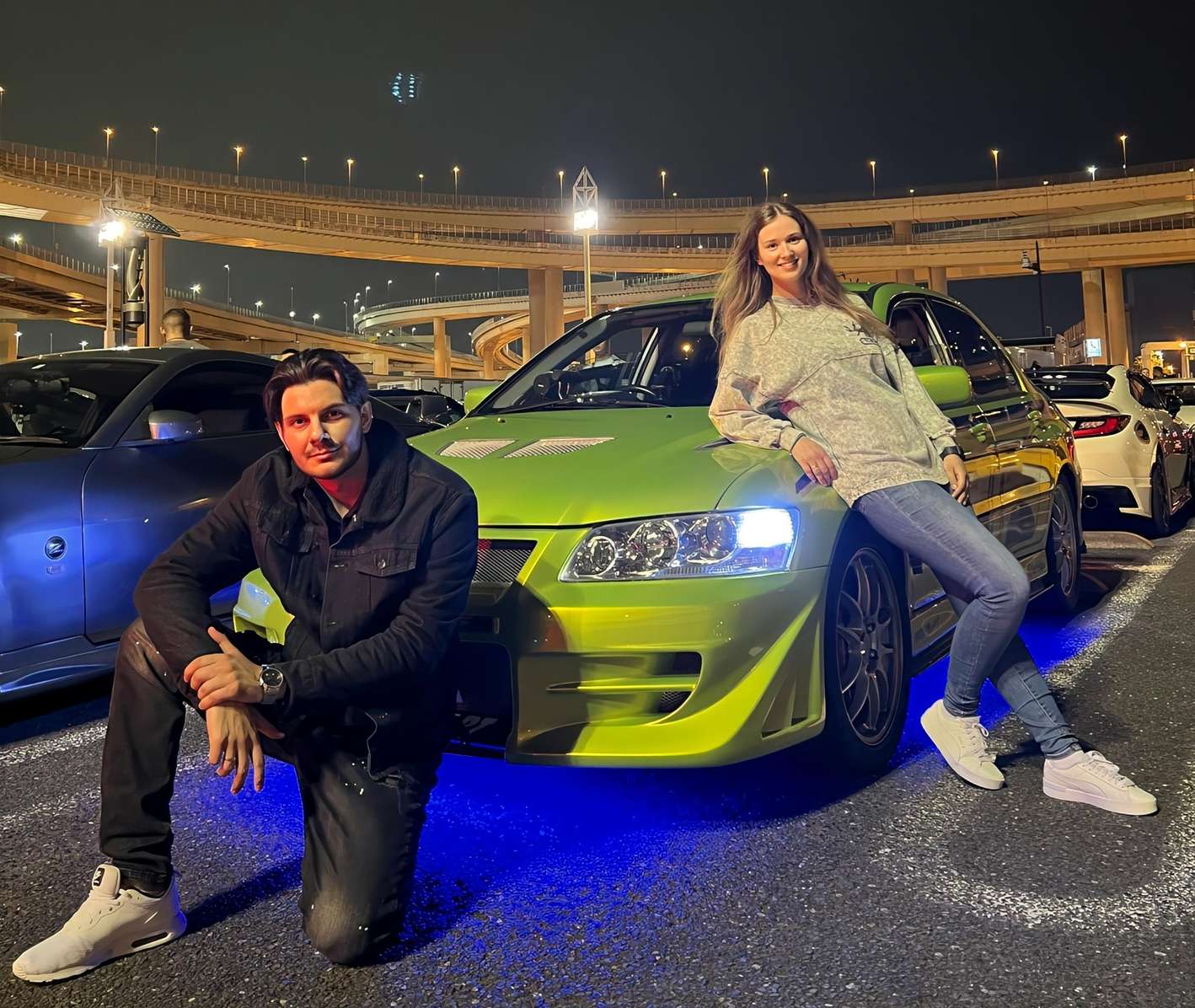
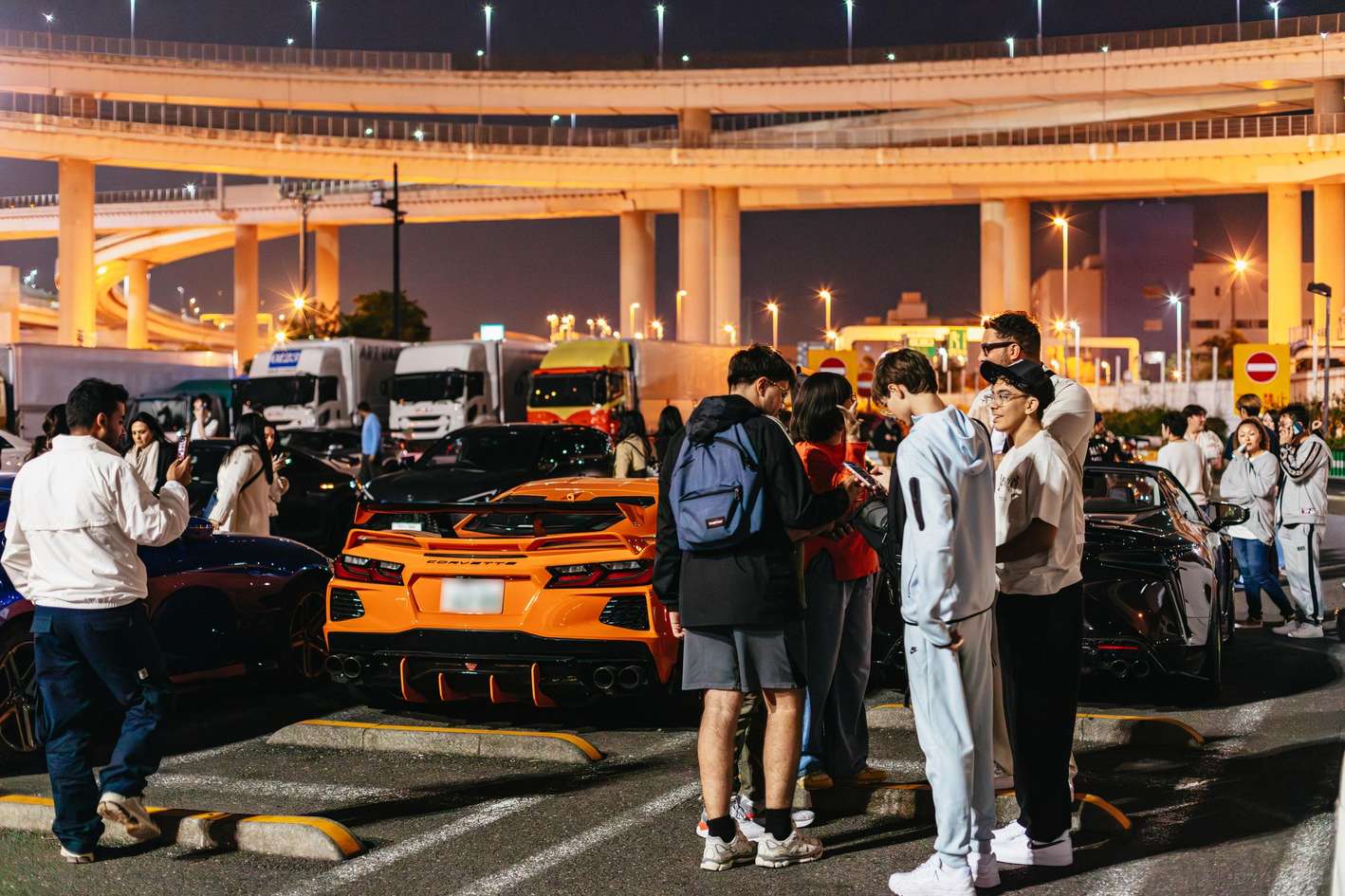
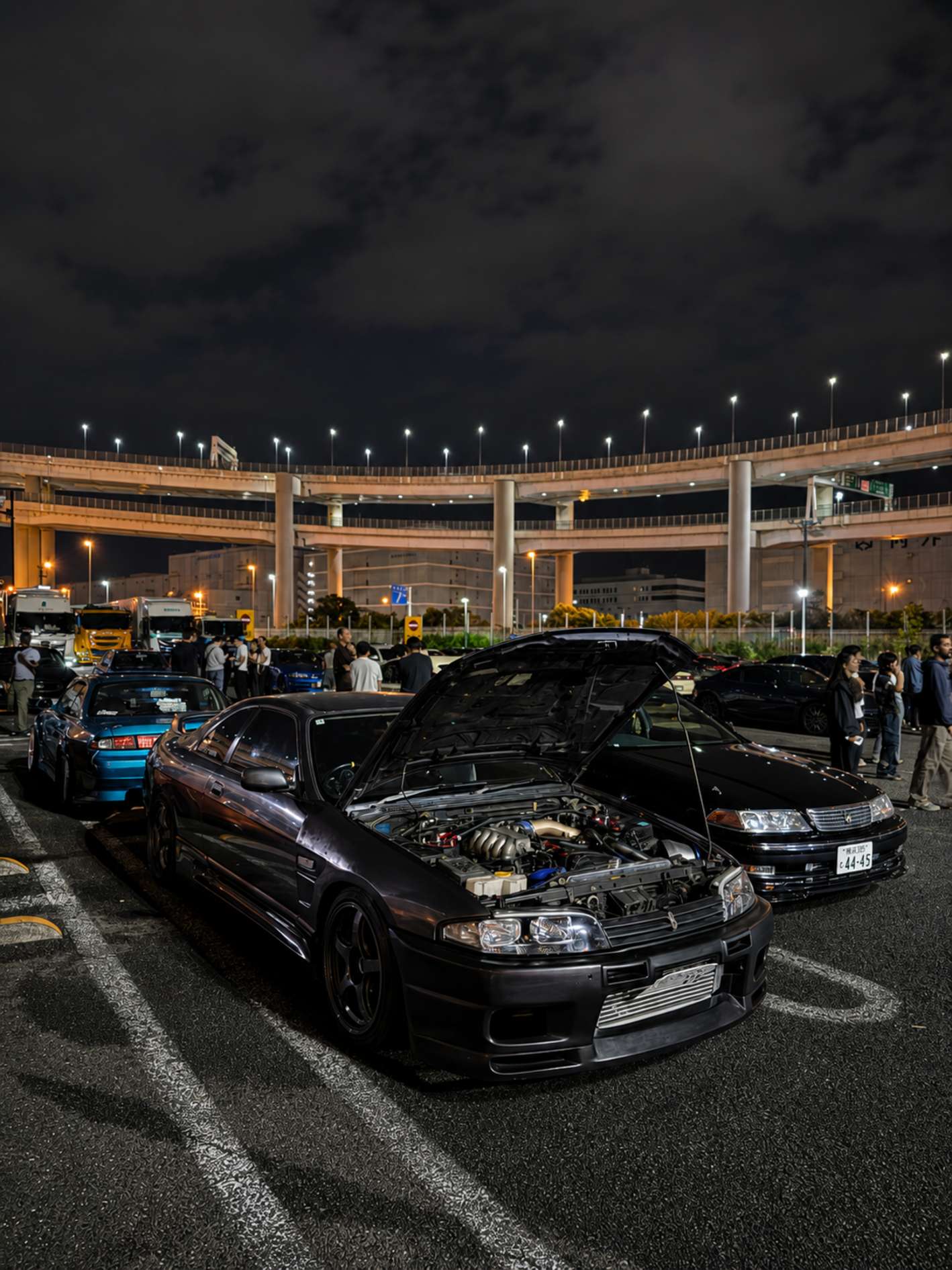
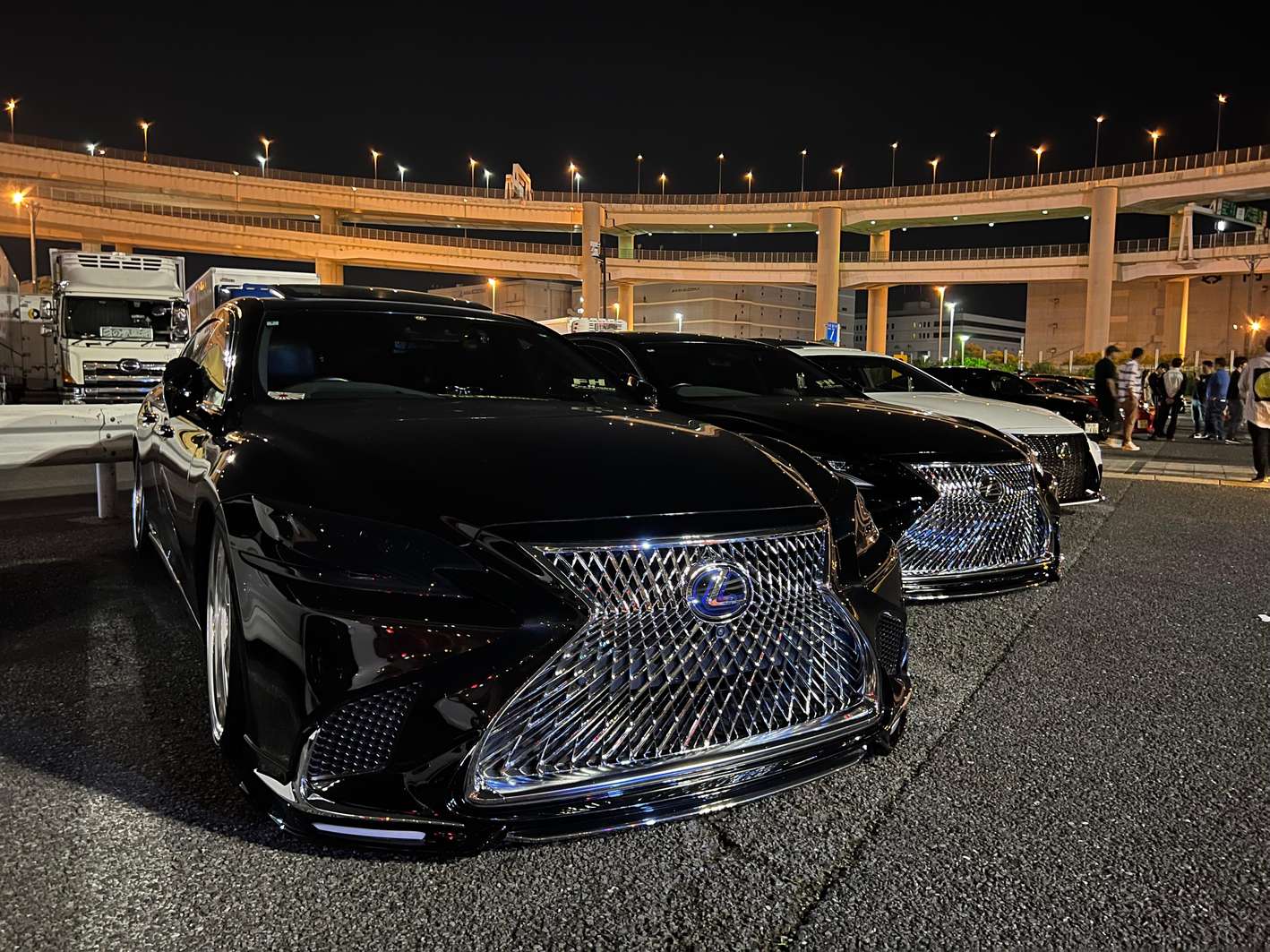
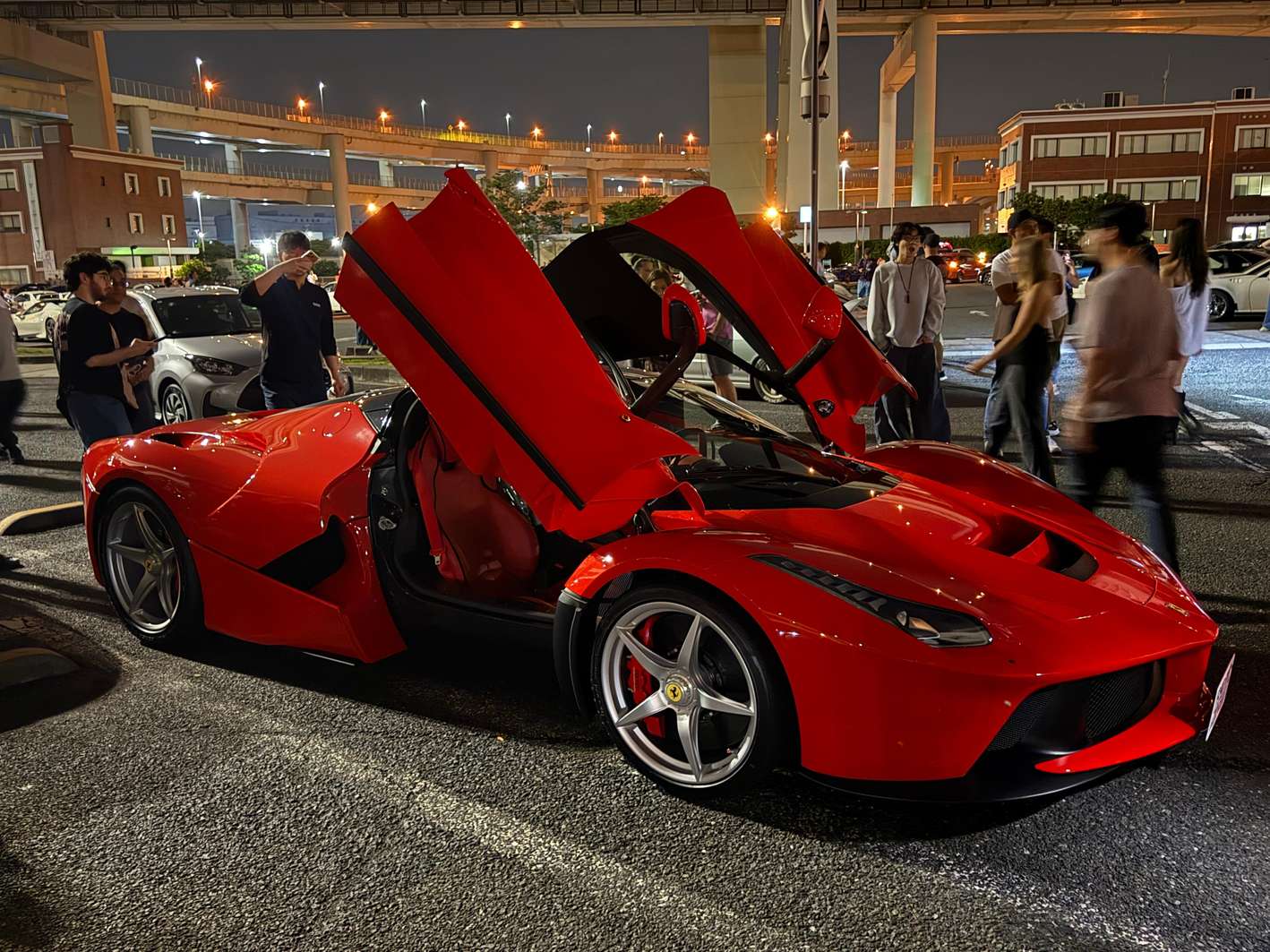
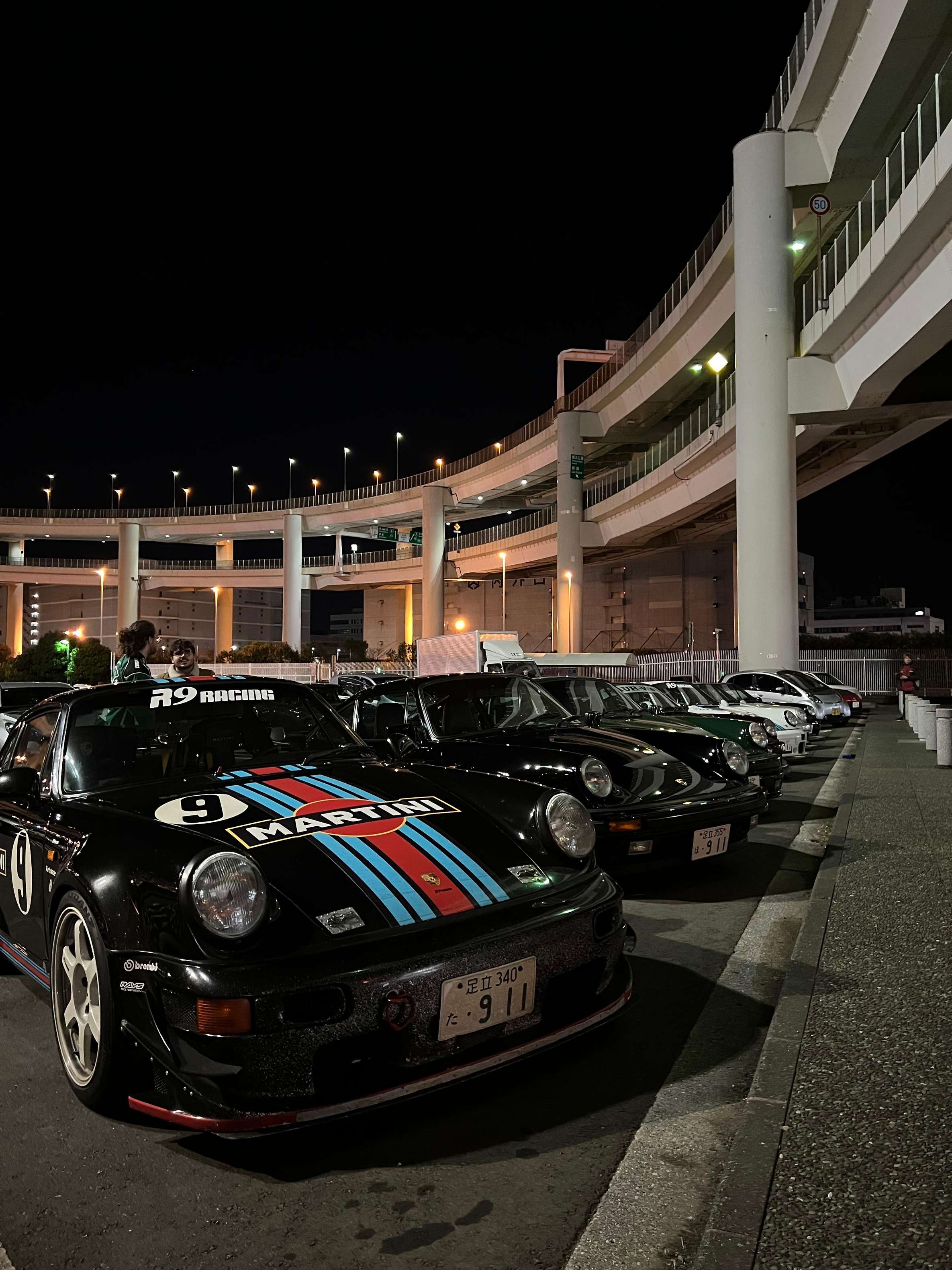
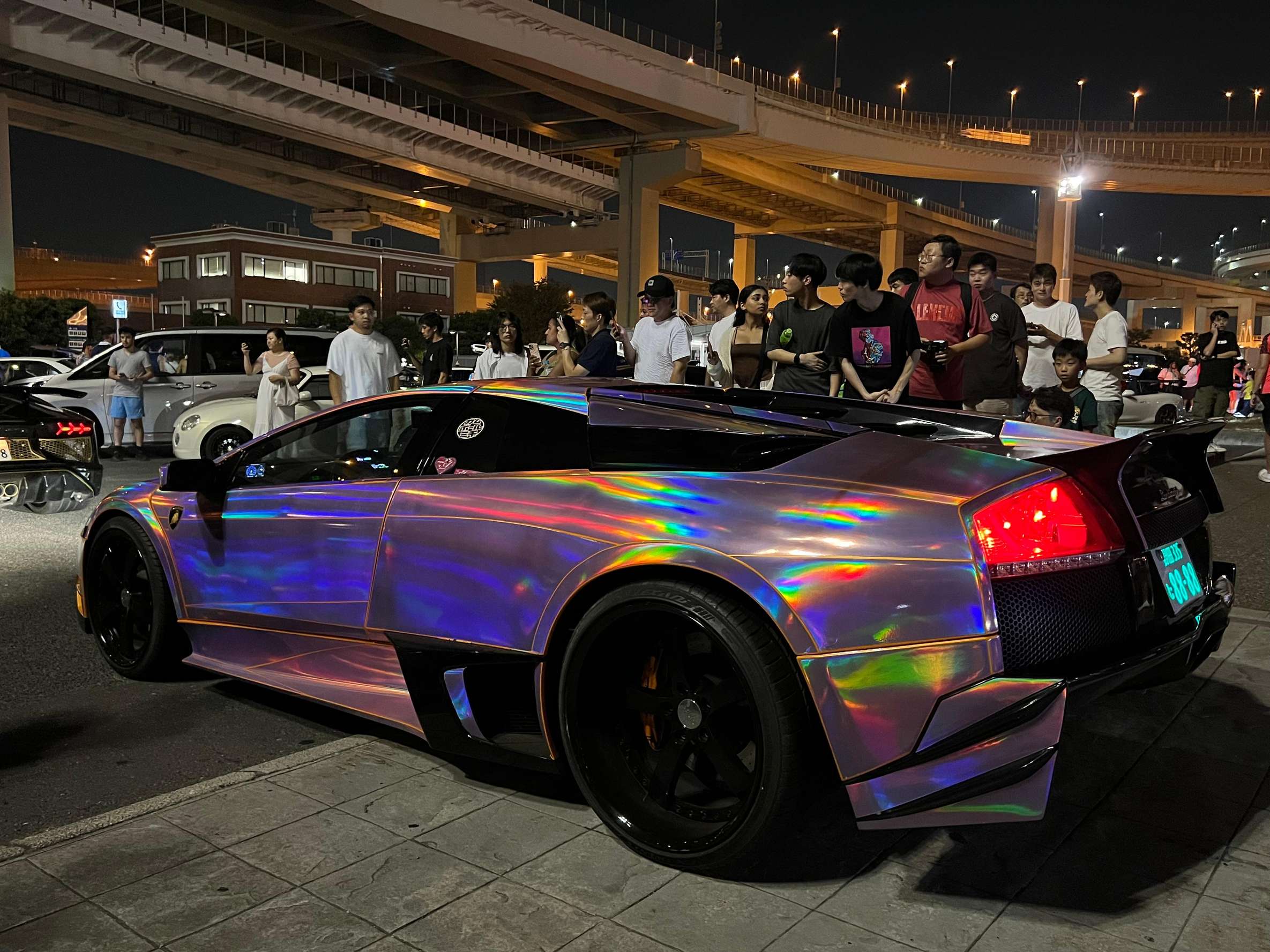
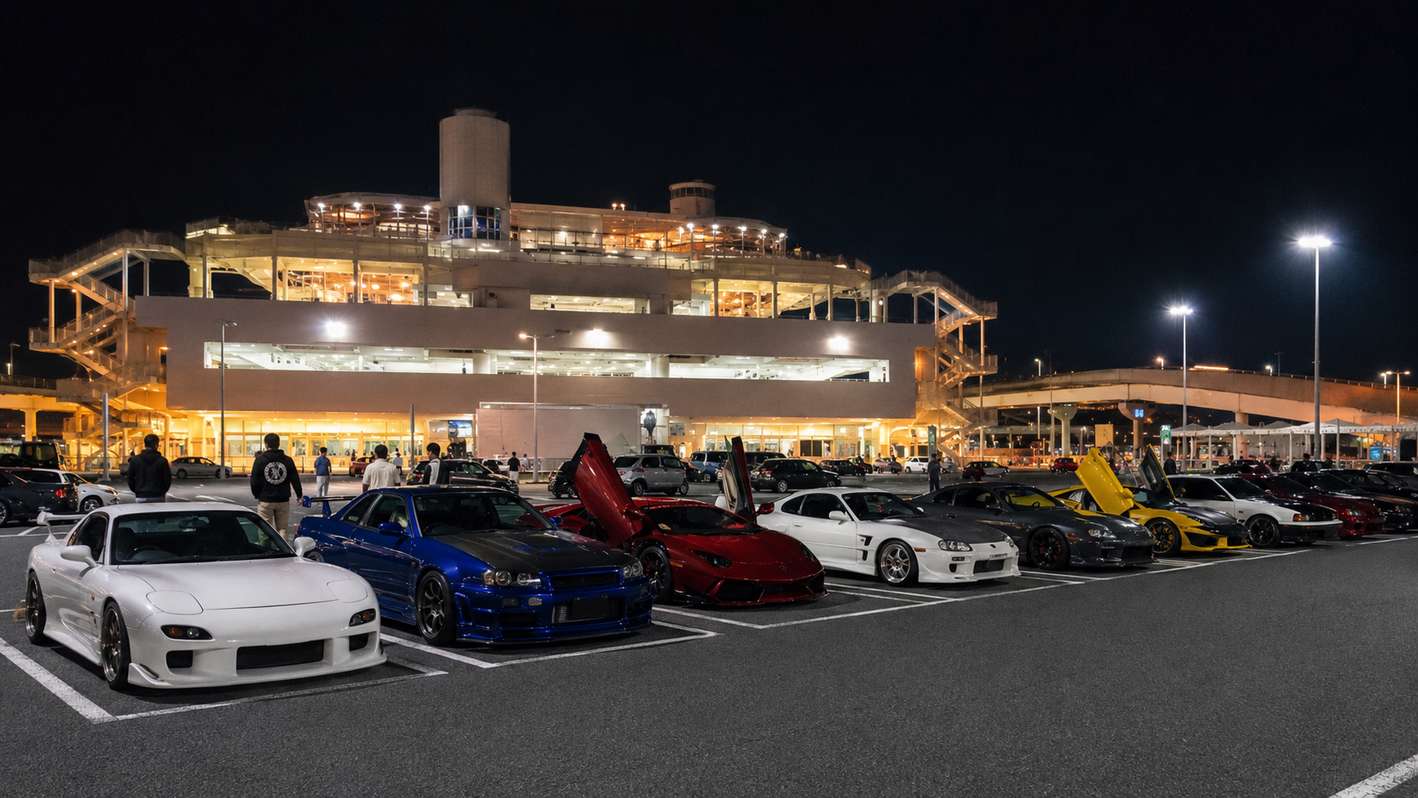
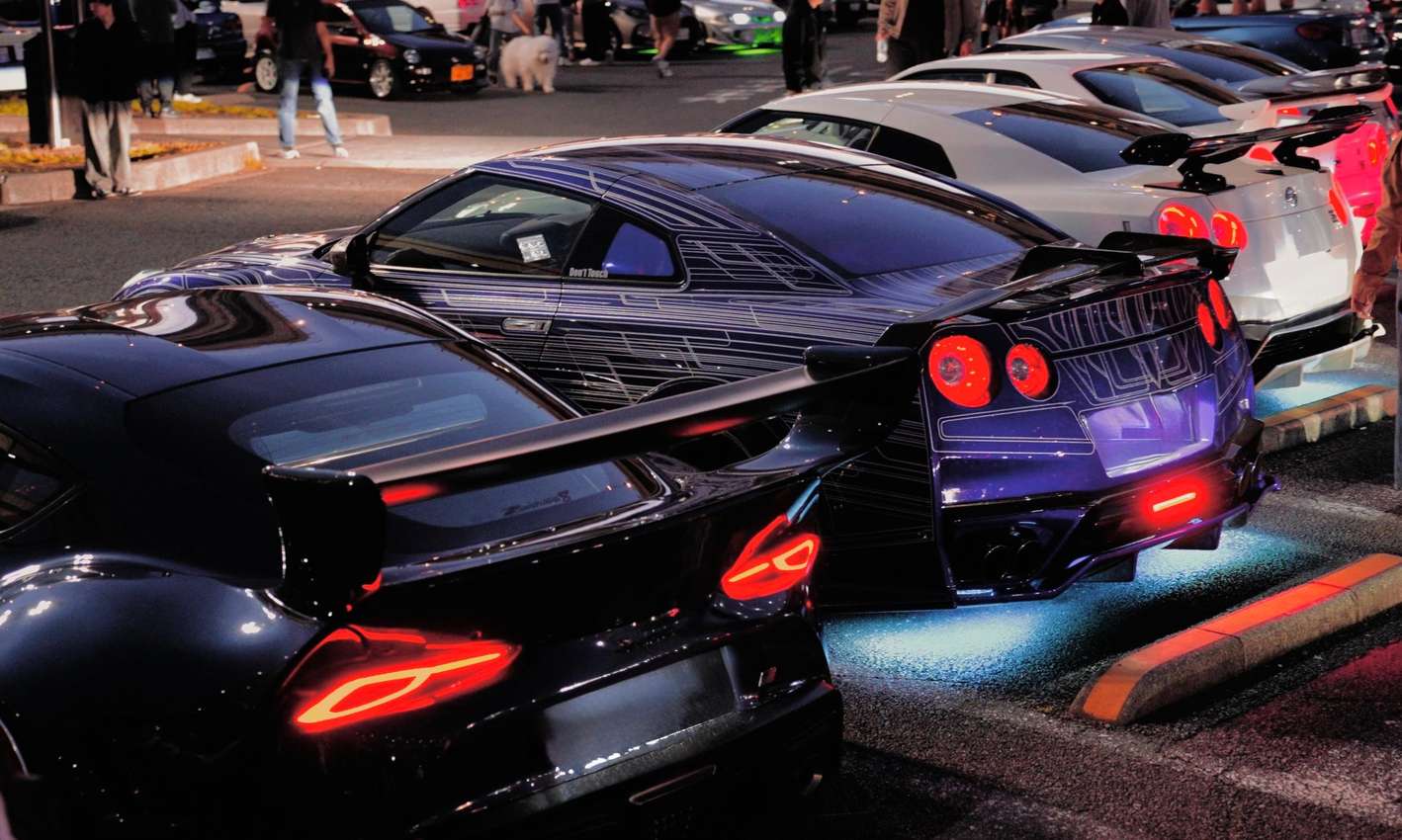
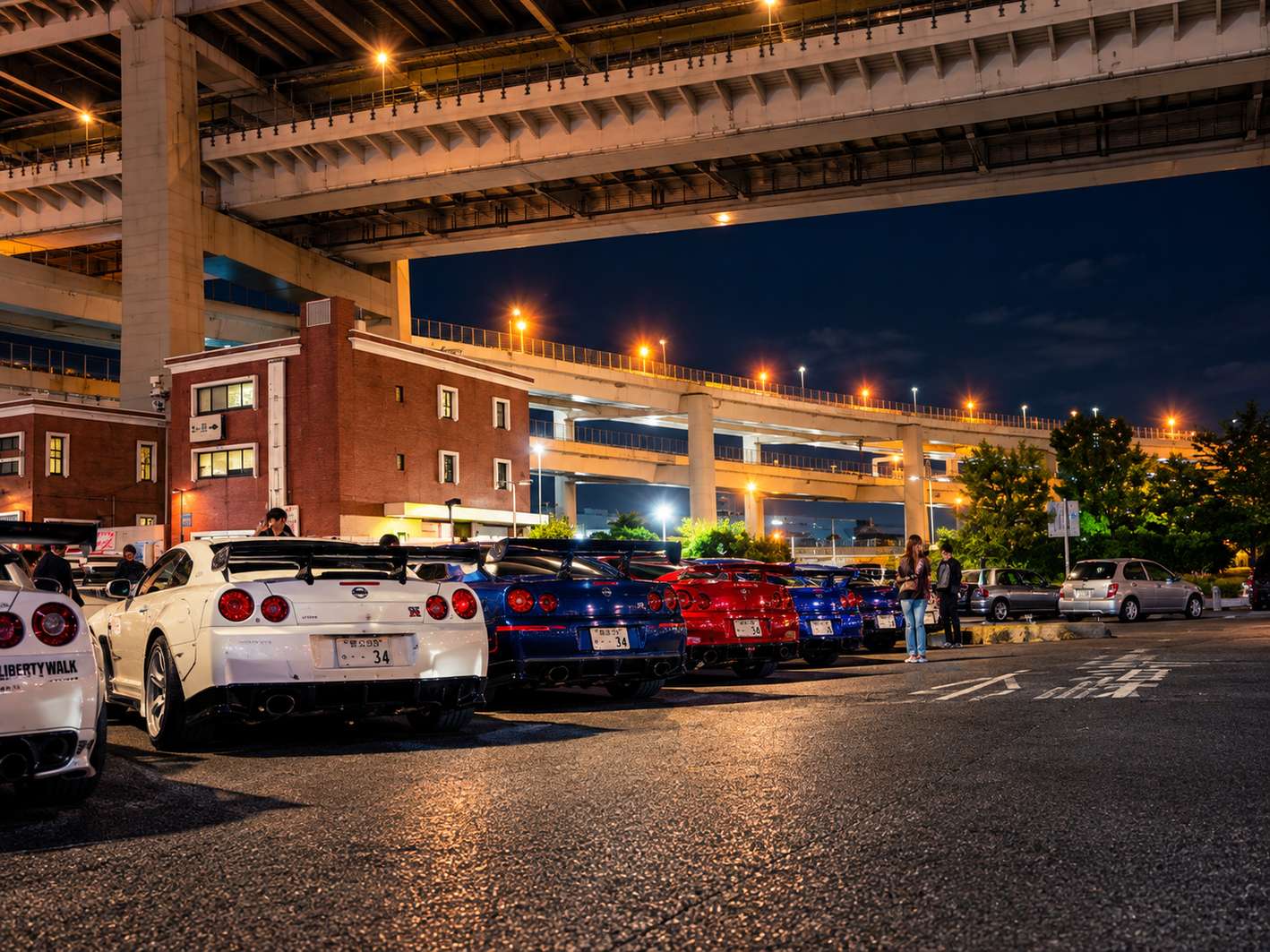
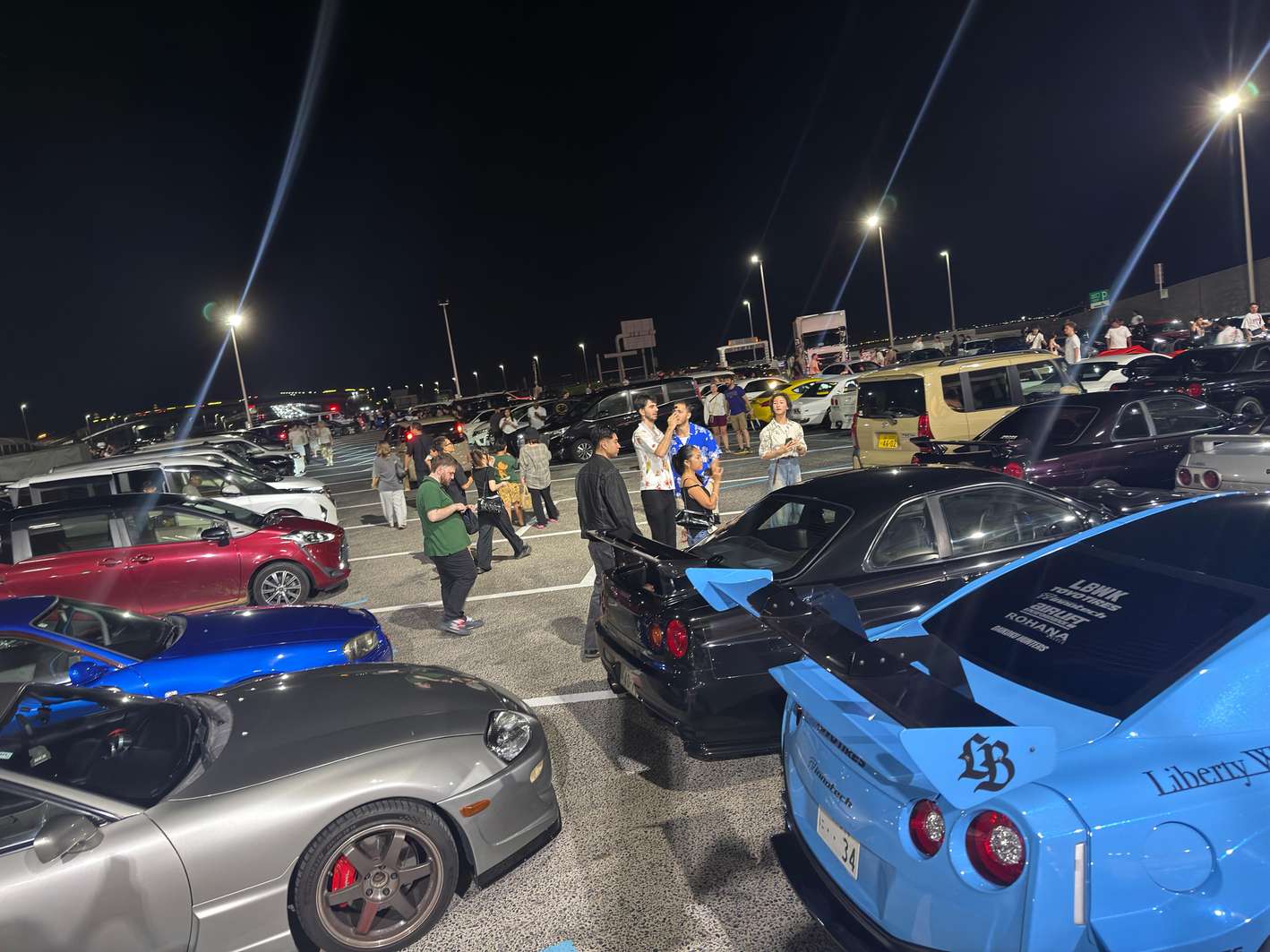
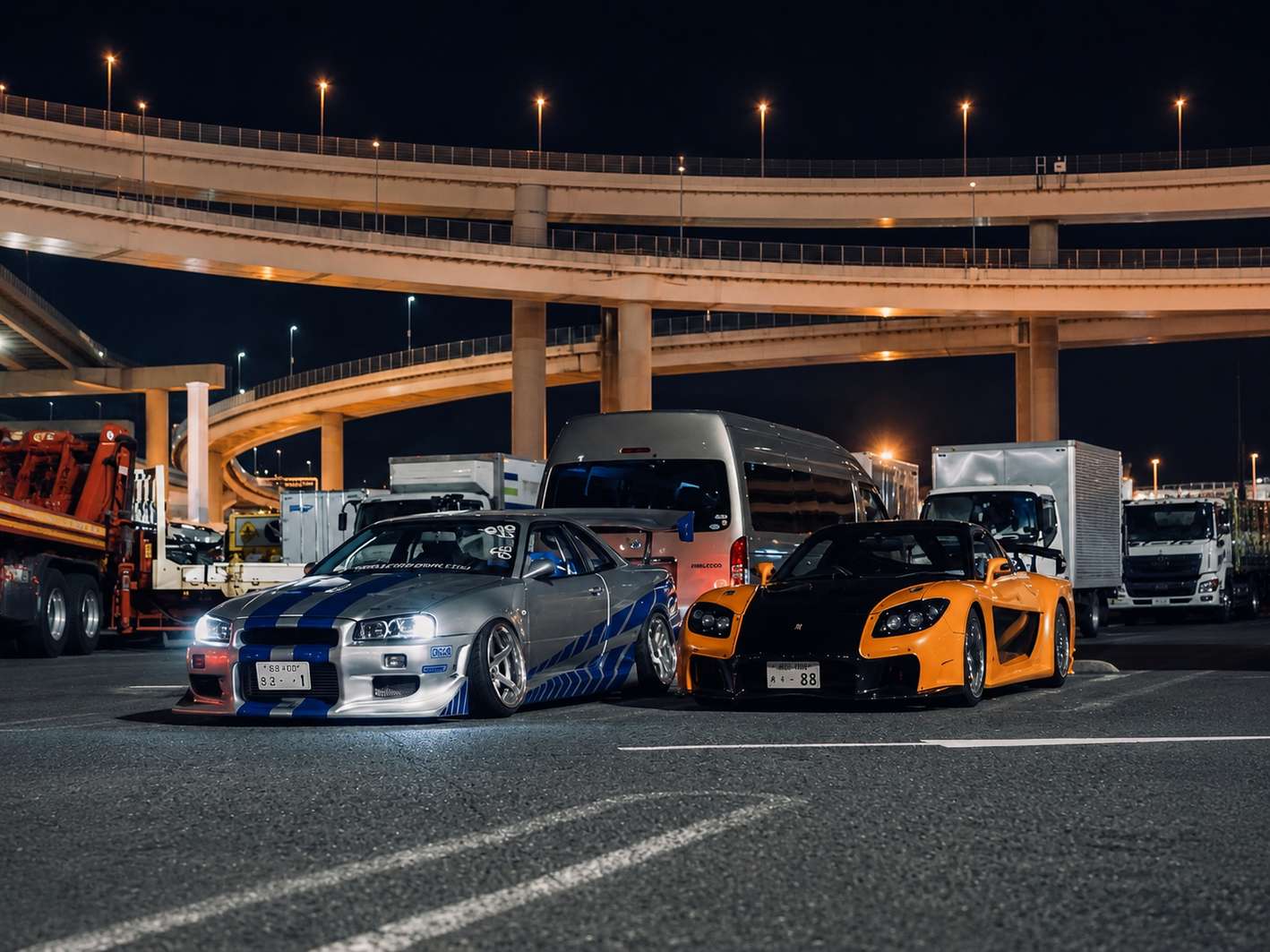
At the Kanagawa end sits Daikoku Parking Area, the most photographed car meet spot in Japan. Think Cars and Coffee, but at night: an informal gathering, no organiser, no lineup, owners who show up on any evening. There is exactly one thing that can cut the night short, and no schedule anywhere tells you when.
The one thing that can change your night
The Daikoku PA meet can be closed by police without notice on any given night, and tours cannot guarantee entry Pick a tour whose fallback policy you accept, and count the meet itself as a bonus on top of the drive
A tour whose plan survives a shutdown still gives you the route, the bridge and the bay. That is the baseline the games promised, and the meet is the extra hour on top.
Tour for this
Tokyo: Wangan Highway Night Drive to Daikoku & Tokyo Tower5.0★ (1) · 3 hours · Free cancellation
The stops that shape a JDM driving night, in order
A standard evening runs three to four hours, and it follows a shape most of these tours share. You meet the guide, sort out your seat in a modified JDM car, and head for the expressway.
The run down the Bayshore is the part people remember: open lanes, bay views, Rainbow Bridge lit against the skyline.
The centrepiece is Daikoku PA. Daikoku gets about an hour on the ground, the longest stop of the night, while the rest of the time goes on pickup, the expressway cruise and the return.
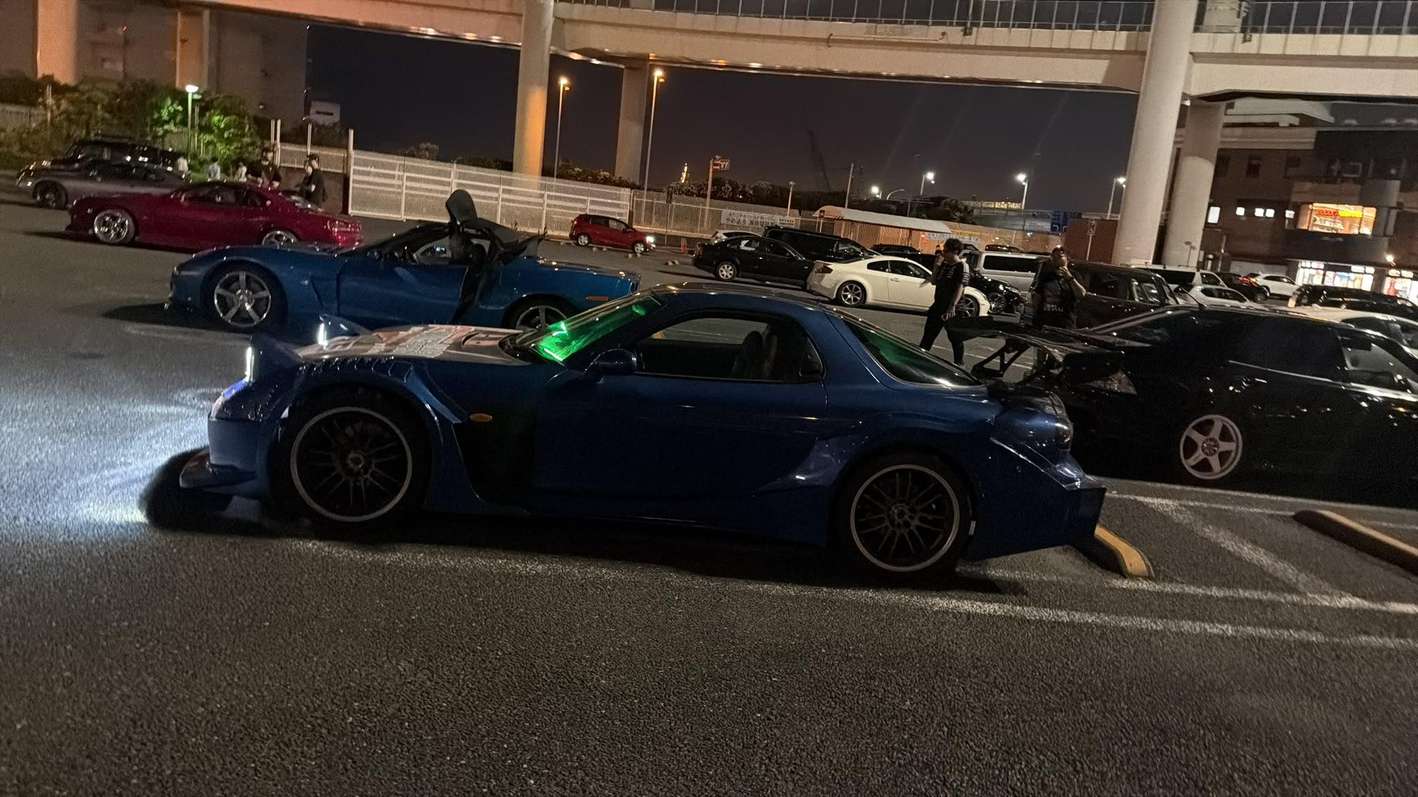
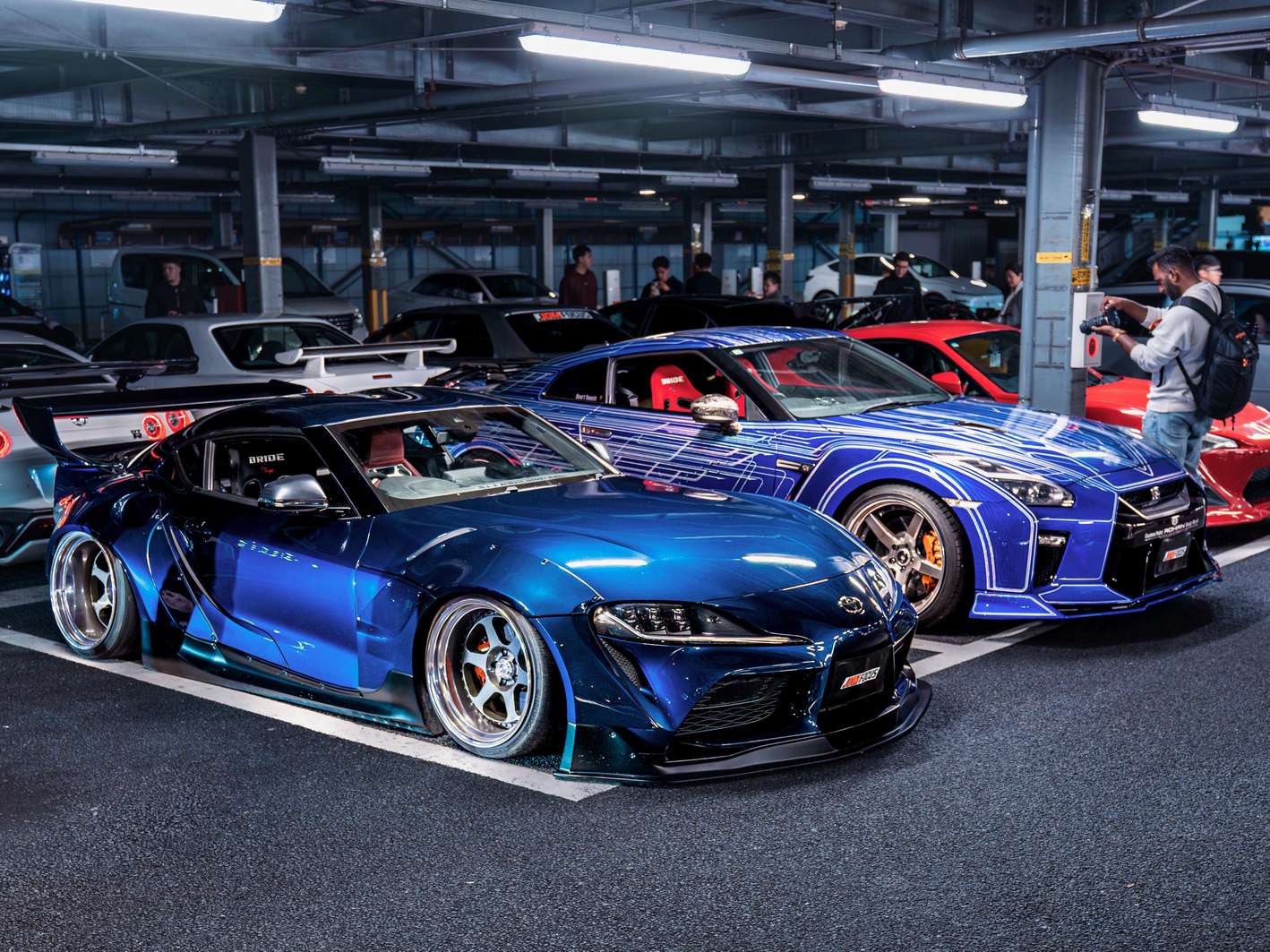
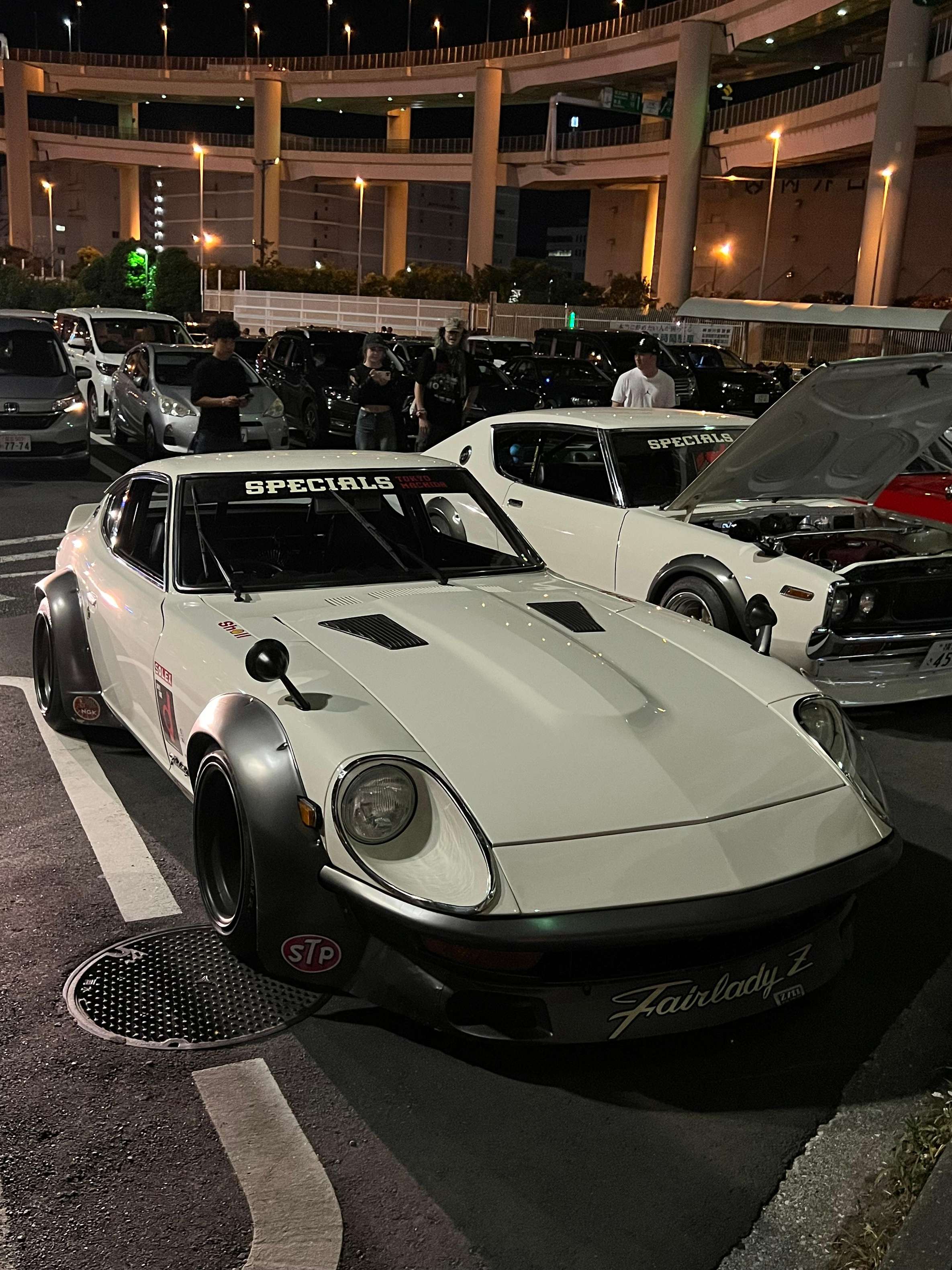
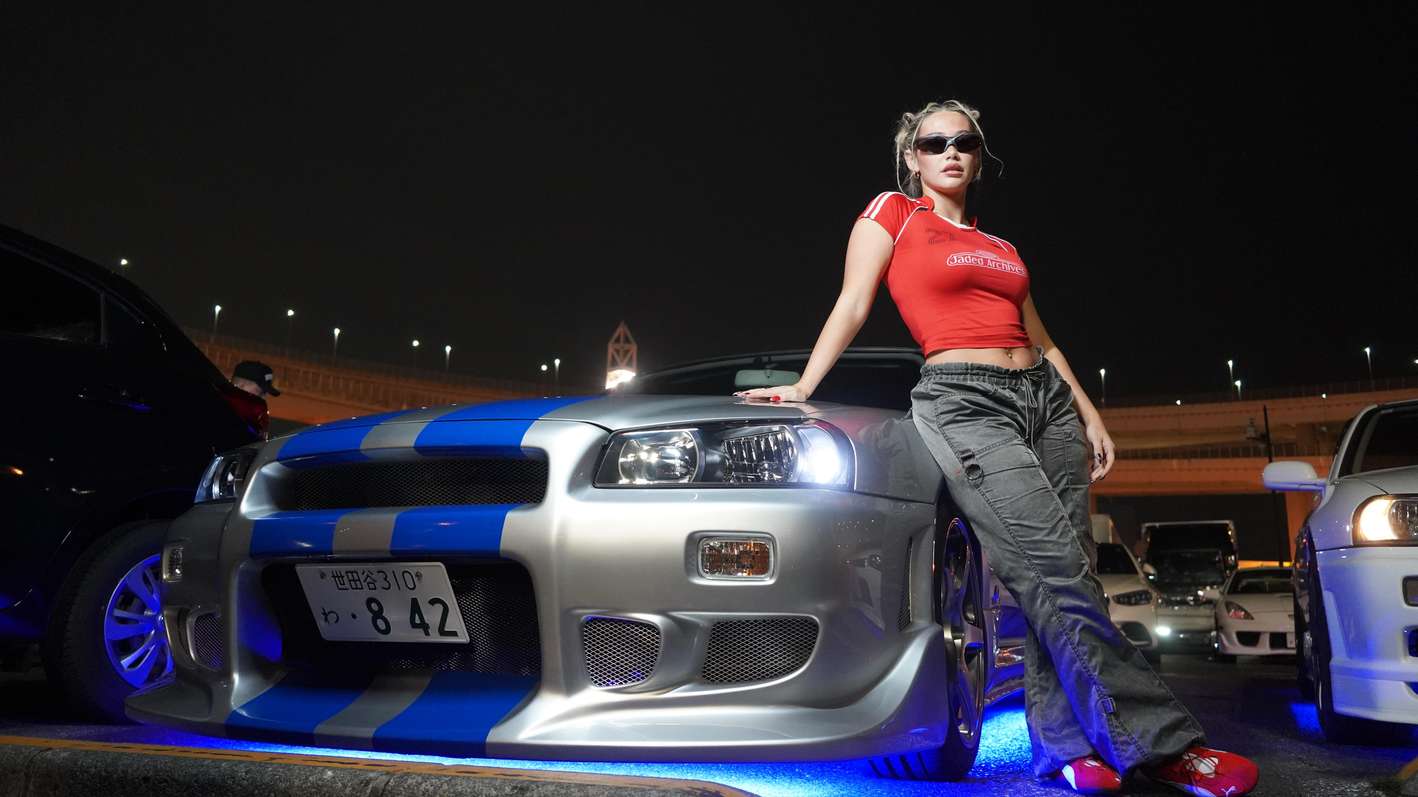
That is when tuned Skylines, Supras and home-built specials roll into the lot around you, and a guide who knows the scene explains what you are looking at and takes photos on request.
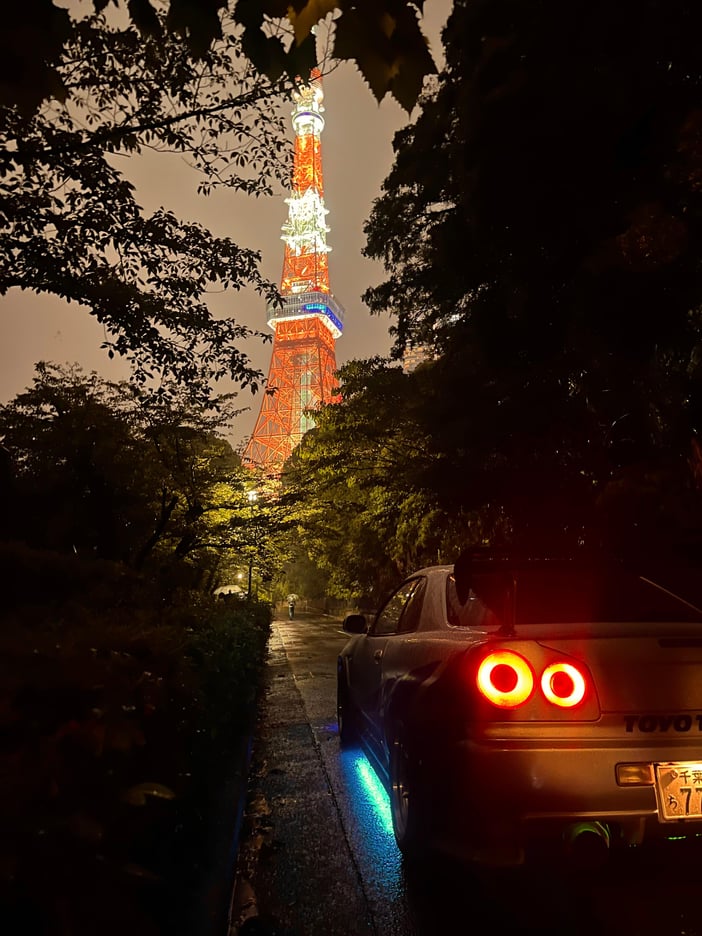
On the way back, most itineraries add a photo stop at Tokyo Tower, and some roll through Shibuya Crossing first. The Tokyo: Wangan Highway Night Drive to Daikoku & Tokyo Tower tour covers exactly this route in three hours, with the meet, the bridge and the tower in one run.
How the evening unfolds
1
Early evening pickup
You meet the guide and get your seat in the car
Start times vary; many shared tours collect guests from a set meeting point
2
The expressway run
The cars head down the Wangan and across Rainbow Bridge
Short photo points along the way
3
Daikoku PA
About an hour walking the lot among the cars
The longest stop of the night
4
Tokyo Tower and the return
Night photos, then the drive home
Central Tokyo drop-off on many tours
Read that shape against your own evening: the hour you care about most is the one in the middle, so a later start pushes the Daikoku hour deeper into the busy window, and an earlier start trades crowd size for daylight photos.
Tour for this
Tokyo: Fast & Furious Daikoku JDM Night Tour - EVO,WRX&More4.9★ (534) · 4 hours · Hotel pickup · Free cancellation
Timing decides how much car you actually see. Cars start rolling into Daikoku from around 5 pm, and there is a golden-hour cluster between 5 and 6 when the light is still good for photos. Around 7 pm the lot thins while people eat, then it builds again.
Two counts of the peak agree in spirit. The busiest hours run from 8 or 9 pm to midnight, with 9 pm the single most active hour of the week; a wider look at both the lot and the expressway puts the good stretch from 9 pm to 1 am.
The first counts the crowded hours at their fullest, the second adds the quieter tail of the night when the lot stays deep. Either way, after 9 pm is where you want to be standing.
The standard tour window of 7 to 9 pm catches the lot while it is still filling, which is why it is worth looking at the later departure options rather than the earliest.
Best times of day for the Wangan Drive on the Bayshore Route
Late afternoon4:30 pm to 6 pm
Pickups start and the first cars roll into Daikoku; the golden-hour light is the best of the day for photos, but the lot is only beginning t…
Early evening6 pm to 8 pm
The standard tour window: the Bayshore and Rainbow Bridge are running and Daikoku is filling, though it thins briefly around 7 pm while peop…
Night Peak8 pm to 11 pm
The peak of the whole week: the highest car count, the widest variety and the best atmosphere, with 9 pm the single most active hour on the …
Late night11 pm to 1 am
Still deep in the peak window with the fullest lot, and late departures around 10:30 pm land here; after midnight it thins but committed own…
QuietBusyThe busiest
The night window in those figures carries the highest car count, the widest variety and the best atmosphere of the week.
If you can shift dinner earlier in the day and stay out late, do it; an early slot trades crowd size for photos in better light, which is a fair swap if the camera matters more than the crowd.
Tour for this
Tokyo: JDM Night Run in EVO, WRX & Skyline to Daikoku4.9★ (996) · 3 - 4 hours · Hotel pickup · Free cancellation
How to choose between the Wangan JDM driving tours
The listings blur together after the third one, so narrow it on four things. First, how the night splits its time: Daikoku-heavy tours give the meet the full hour, while others pad the drive with Tokyo Tower, Shibuya or a stop at A-PIT Autobacs, Tokyo's big car-supply store.
Second, length: most versions run three to four hours, and longer does not always mean more road.
Third, group or private. Shared rides cost less and you may share a car with other travellers; private bookings fit a family or a group and let you bend the stops.
Fourth, language: English is the default on most of these runs, and guides are enthusiasts who answer questions, but a few operators cannot guarantee fluency in German, Italian or French.
On duration, the evenings on this page sit at two ends of a short range.
How long do JDM driving tours in Tokyo take?
4 hoursUltimate Daikoku Car Meet duration
3 hoursGTR VIP Daikoku journey duration
Both sit inside the three-to-four-hour band, so the choice comes down to stops and car more than clock time.
The convoy format is worth a look if you want the scene as well as the seat.
The Tokyo: The Fast and the Furious Tokyo Drift JDM Convoy Tour runs three hours with Japan's largest JDM night fleet, a choice of cars including a Supra 80 and a Skyline R34, and photo stops at Daikoku, Tokyo Tower and Shibuya.
Regulars add one check: confirm tolls and fuel are included, because on some operators they land on top of the fee and add up fast on the expressway.
Tour for this
Tokyo: The Fast and the Furious Tokyo Drift JDM Convoy Tour4.9★ (164) · 3 hours · Free cancellation
Start by checking where the tour actually meets you. Some run from Yokohama, some from central Tokyo or Shibuya, and a good number include pickup, so the cheapest ticket is not always the one that starts closest to your hotel.
On the Daikoku & Tokyo Drift Vibes tour English is the default, and drop-off back in central Tokyo is part of several operators' service.
The return is the part to plan. Daikoku PA sits far from central Tokyo by car, and the expressways home in the evening can jam up badly.
Tours end late: a three-hour run that starts in the evening rolls back close to midnight, and Tokyo's trains generally stop around midnight. Know your last train before you book a late slot, or accept that a taxi from the drop-off finishes the night.
Getting there and back
Hotel pickupMost Wangan tours collect you and drop you back in central Tokyo
Easy
Train to the meeting pointTrains run from around 5 am to midnight, so a late return needs a plan
Moderate
Taxi or rideshare homeWorks in central Tokyo, but the bay parking areas themselves have no walk-in access
Moderate
Reaching Daikoku on footThe parking areas sit inside the expressway system, reachable only by car
No access
If you skip pickup, build in buffer for finding the meeting point; Tokyo addresses defeat anyone without a map app, and arriving late costs you your seat with no refund. The one way that never works is walking: the bay parking areas sit inside toll expressways with no entrance on foot.
Tour for this
Tokyo: Night JDM Car Cruise to Daikoku PA or Alternate Stop4.8★ (732) · 3 hours - 4 days · Hotel pickup · Free cancellation
Dress for two settings: a low sports car and an open parking area by the water. Winter nights in Tokyo drop to around freezing, and you will be standing outside at Daikoku for the better part of an hour, so a real coat earns its space from December to February.
In the humid summer months, light clothes and a light jacket for the bay breeze are enough.
Operators ask for comfortable shoes and clothes specifically, because you climb in and out of cars with deep sills and then walk the lot.
Rain rarely kills the meet; visitors have found plenty of cool cars in a shower, and one operator runs the tour in rain regardless, so a compact umbrella or thin rain layer is a sensible stow.
Two phone habits matter. Keep WhatsApp notifications switched on, because operators message before departure if anything changes. And carry your voucher as a QR code on the phone; showing it on screen is accepted, no printing needed.
One more thing the tours do not include: food. Eat dinner and bring water before you join, since most of these evenings have no meal stop, and the stops that do exist are car stops.
What to bring and wear for a Tokyo night drive
Dec to Feb: warm coat, glovesNights drop to about 0.5 to 3°C with the odd snow day, and you stand around open parking areas, so a real winter layer matters
Mar to May and Sep to Nov: light jacketEvenings sit around 9 to 22°C and feel cool once the sun is down, so one warm layer over normal clothes is enough
Jun to Aug: light, breathable clothesNights stay warm at 19 to 25°C and humid, so dress light and expect a muggy evening rather than a chilly one
Comfortable shoes and clothesTour operators ask for this directly; you get in and out of low sports cars and walk around the parking areas
Compact umbrella or rain jacketOne operator runs the tour even in rain, and only severe storms reschedule, so you may be outside in a shower
Camera or phone with space for photosOperators tell you to bring a camera; the night stops at Daikoku PA and Tokyo Tower are built around photos
Phone with WhatsApp notifications onOperators message you before the activity starts if anything changes, so keep notifications active
Voucher QR code on your phone
Work down that list against your travel month first: the coat or the breathable layer is the biggest decision, and everything under it fits in a small bag.
Tour for this
Tokyo Daikoku PA Local Speed Tour: Tuned JDM, RX7, GTR, LC500, M54.9★ (103) · 3.5 - 4 hours · Hotel pickup · Free cancellation
What happens if Daikoku shuts your JDM driving night
Say it plainly: the police close the Daikoku meet regularly, and on Thursday, Friday and Saturday nights they have been shutting it down by about 8:30 pm, sometimes as early as 7.
The entrance closes without notice once the lot fills, most often on weekend nights, and once it is shut do not count on it reopening. Closures are decided on the night, so there is nothing to look up in advance.
What happens next depends on the operator. Most tours do not end; the night diverts to a fallback lot, most often Umihotaru PA out on its artificial island or Tatsumi PA closer in.
Policies differ: some make the diversion free, one adds a detour charge, and several offer a full refund if you decline the alternative lot. Rescheduling is usually on the table too.
Operators answer the risk in a second way: Friday and Saturday pickups get pulled forward to late afternoon, so the group is inside the lot before the shutdowns start. If you can only travel at weekends, prefer a tour with that earlier window, and read the fallback terms before you pay.
When the night changes
If this happens
What happens then
Daikoku PA closes early
The tour usually diverts to Umihotaru PA or Tatsumi PA and continues
You decline the alternative lot
Several tours offer a full refund instead
It rains
Tours normally run, and light rain rarely empties the meet
Plans change before departure
Message the operator through WhatsApp, the channel they use for updates
You want the deepest lot
Book a Friday or Saturday pickup moved forward to the late afternoon window
The lesson from those terms is simple: the drive never dies on a closure, and the money only comes back if you say so at the time. Decide before departure what you would take, the alternate lot or the refund.
Tour for this
Tokyo: Fast & Furious Tokyo Drift III Experience4.8★ (5,784) · 3 - 4 hours · Free cancellation
Daikoku exists because owners bring their cars there, and their patience is the fragile part of the whole scene. Some locals have already stopped bringing theirs after disrespectful visitor behaviour, and the police act on complaints.
Ask before touching any car. Never sit on, lean on, touch or enter one without the owner's permission, however good the photo would be. Ask before photographing a car, especially close-ups and interiors, and think before posting. Stay out of the roadways; pedestrians wandering across live lanes are the reason these meets draw unwanted attention.
The habits that end an entire evening for everybody are the loud ones: revving, burnouts, blocking lanes. They are precisely what brings the police, and the lot empties for everyone.
Leave quietly, take your rubbish with you, and if an owner is busy or not in the mood, walk on to the next car. Compliment a build if you want a conversation started; that works far better than a camera pointed at the door.
What nobody tells you
Revving and burnouts are what get meets shut down
One exhaust note can cost the whole lot its night
Drones are banned at meets
Tokyo sits inside a restricted no-fly zone
Asking what a car cost lands badly
Compliment the build instead; prices are a sore point with owners
None of this is complicated, and guests who follow it regularly end up talking to owners. That conversation is the part of the meet no photo replaces.
Tour for this
Tokyo Drift Ⅲ: Fast·Furious Daikoku PA Modified JDM Car Ride4.7★ (1,358) · 3 - 4 hours · Hotel pickup · Free cancellation
Where drifting fits in a JDM driving night, and where it doesn't
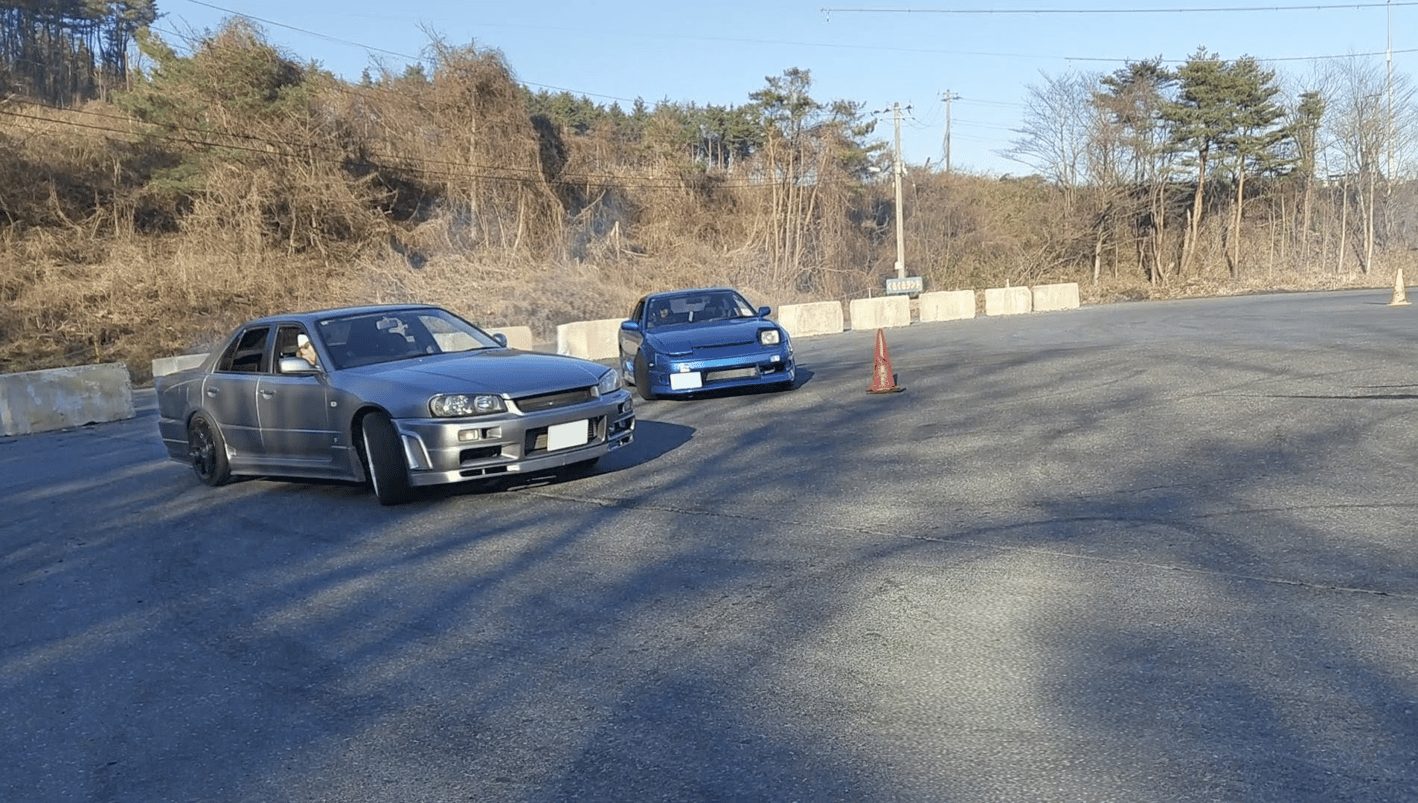
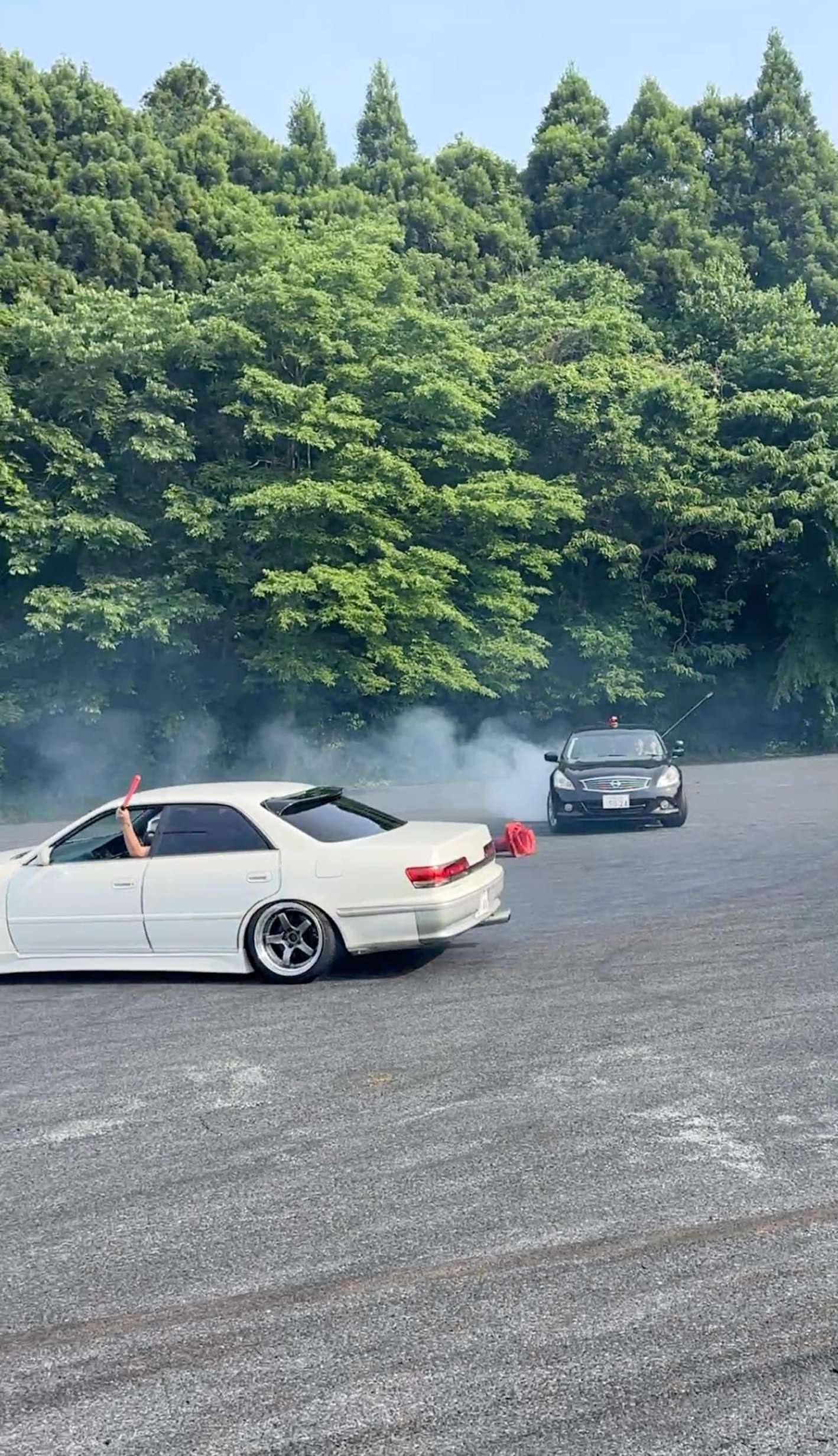
Set the expectation now: drifting on public roads is illegal in Japan, and none of these Wangan tours includes it.
Daikoku is a parking lot, not a circuit; anyone sliding tires there summons the police, and the underground racing scene you may be picturing is both illegal and heavily policed. The tours deliver speed as a legal, controlled ride on public roads and nothing beyond that.
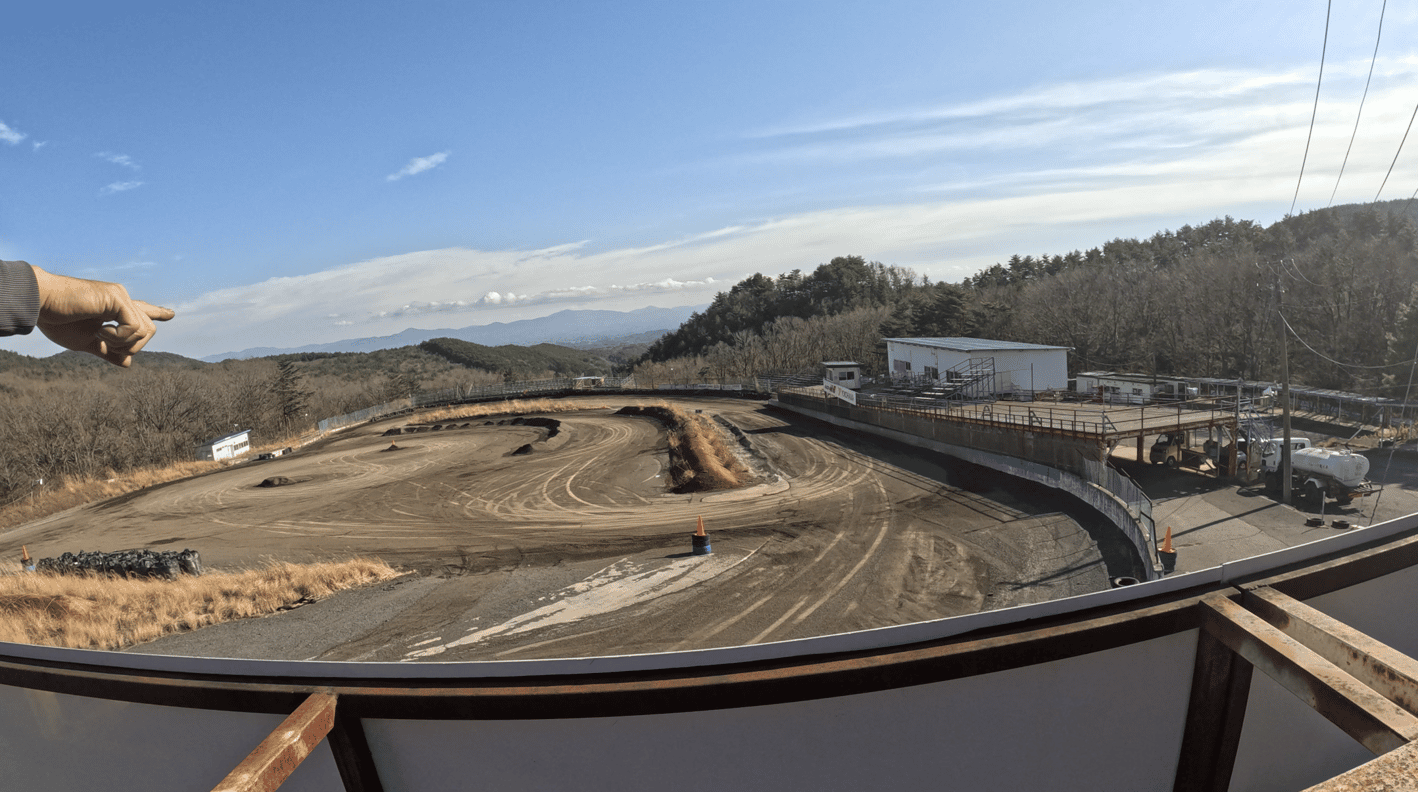
The legal answer exists, and it is good. Ebisu Circuit, north of Tokyo, is the drift home for visitors: full-day schools with pro instruction, and dedicated beginner courses called Kurukuru Land, where the second one has a wet surface that makes slides easier to hold.
Complete novices start with circle drills around cones and pick up the basics in about an hour. Helmets and safety gear are supplied; you bring long sleeves, long pants and closed shoes.
What people get wrong
MythThe Wangan tour ends in drifting
Reality
Public-road drifting is illegal in Japan and no tour offers it
MythDaikoku is a show with a guaranteed lineup
Reality
It is an informal gathering, and the cars change night by night
MythYou can find a street drift spot as a tourist
Reality
Locals keep those places secret; being invited is the only realistic way in
For watching rather than doing, D1 Grand Prix runs a round in Tokyo in October, and its final round usually lands in Odaiba in November. Mobara Circuit and Nikko Circuit, both near Tokyo, host drift events through the year.
Tour for this
Tokyo JDM Legends: Daikoku PA & Modified Car Experience4.8★ (85) · 4 hours · Free cancellation
Driving the route yourself instead of a JDM driving ride
If you want your own hands on the wheel, start with paperwork before you leave home. Japan recognises an International Driving Permit from the 1949 Convention, or for licences from Switzerland, Germany, France, Belgium, Monaco and Taiwan, your home licence plus an official JAF translation arranged in advance.
US visitors need the IDP issued by AAA or AATA, and it must exist before arrival; it cannot be sorted in Tokyo.
The rentals are scattered. OnlyJDM keeps stores near Haneda Airport in Ota and up in Adachi. Omoshiro Rent-a-Car has Tokyo branches in Chiyoda, Koto, Meguro and Shibuya-Higashi, though its R34 GT-R sits at the head office out in Noda, Chiba. Others hand over cars near Shibuya Station, in Matsudo and around Nihombashi.
Reality check on the drive itself: you keep left in a right-hand-drive car, central Tokyo parking is scarce and costly, expressway tolls add up fast, and a damage excess on a tuned car can be serious. City streets are slow and narrow; the bay expressways are where a car actually comes alive.
How to choose a self-drive JDM drive in Tokyo
Check
Why it matters
Our pick
Licence paperwork valid in Japan
Without the right permit the rental is impossible on the day
The guided rides on this page need no licence at all; you ride as a passenger
Damage excess plus tolls and fuel
Excesses can run high and tolls stack up on the expressways
Guided tours fold tolls, fuel and parking into the booking
Pickup location
Several JDM shops sit far out in Ota, Adachi or Chiba
Most guided tours meet or collect you centrally
Real road time
Transfers, traffic and waiting eat a short rental
A 3 to 4 hour guided run is almost entirely moving time
Weigh those four against each other and the guided ride wins for most visitors, especially anyone short on days in Japan. The self-drive path pays off for drivers with spare days, the right documents and a reason to want the wheel.
Driving yourself
Rent a car in TokyoCompare cars from the rental companies in one search, then pick yours.
More car culture around the bay for the rest of your trip
One night rarely covers it, and the bay route hands you the rest. Tatsumi PA, a smaller expressway stop on the Wangan, draws exotic cars and has night views across the water; like Daikoku, it is reachable only by car, which is what keeps the crowd honest.
Umihotaru PA sits on an artificial island out in Tokyo Bay, reached through the 9.5 km Aqua-Line tunnel, and makes a good second stop or a fallback on a bayshore night.
Off the expressway, A-PIT Autobacs Shinonome is Japan's most famous automotive lifestyle store, easy to reach without a car, and its parking lot often holds interesting metal; some tours build in a shopping stop there. The Odaiba bay area rounds out the route.
Downtown offers walkable options for the nights you have no car at all. The Akihabara UDX underground garage fills with itasha and tuned cars on Friday and Saturday nights, free to enter, and the streets around Shibuya Crossing draw car spotters in the evening.
Quiet backups exist too: exotic cars along Meiji Jingu Gaien on the right days.
A second evening writes itself from that spread: one night on the expressway with a tour, one night on foot in Akihabara or Shibuya, and Autobacs on any afternoon in between.
Demand has a calendar. April is the busiest month for these tours, followed by October and September, with March and November also above average.
In those months book several weeks ahead, and if you have your heart set on a specific car such as a GT-R, confirm it days out; operators ask for model confirmation at least 48 hours before, because the cars are privately owned and sometimes under maintenance.
The quiet months flip the rule. June, February and December are the sleepiest, and travelers there often book late, some the same day; one booked almost 45 minutes before departure and still made the run. If your dates land in those months, you can gamble on a late booking and usually win.
The one habit to drop in any season is leaving the decision until you are already in Tokyo. Tours sell out, seats in a three- or four-seat sports car are few, and turning up hoping for a ride is a gamble people lose.
How busy it gets, month by month
April: 5 out of 5 for how busy it gets.
HighestMar to Apr, Sep to Nov
In betweenJan
LowestFeb, May to Aug, Dec
Darker: a higher how busy it gets score, out of 5
Tap a month to read it.
Those month figures tell you which traveler you are: a spring or autumn visitor books weeks out, a winter or midsummer visitor can wait until the trip has shape. Either way, the booking happens before the flight, on a chosen date.
Max was friendly and a skilled driver, fun rides, never felt unsafe. He made the cars easy to appreciate even without car knowledge. Great for thrills or Tokyo sightseeing. Thanks for the ride!
A guided Wangan night delivers the route the games promised, with about an hour on the ground at Daikoku and the bay skyline in between. Book a tour with tolls included and a fallback you accept, aim your stop inside the 9 pm peak, and keep your manners clean in the lot.
Go ifYou want the Bayshore Route run with Daikoku PA in a single evening, riding as a passenger with no licence neededYou can stay out late and want the deepest lot, between 9 pm and 1 amYou are travelling in a quiet month and can commit early anyway
Skip ifYou expect drifting or street racing as part of the night; it is illegal on public roads and no tour includes itYou need a guaranteed car meet or a fixed schedule; closures are decided on the nightYou cannot handle a late finish, since most tours end near midnight
Our pick to book
Tokyo Drift Ⅲ: Fast·Furious Daikoku PA Modified JDM Car Ride4.7★ (1,358) · 3 - 4 hours · Hotel pickup · Free cancellation
JDM driving tours on the Wangan Bayshore Route - FAQ
Questions travelers ask before booking a guided JDM drive on the Wangan Bayshore Route, answered plainly.
Yokohama2026
The bay highway opened up under the lights on the way to Daikoku, then an hour among GT-Rs and Supras. Pick a weekend date and book a few days ahead.
Do the guided JDM driving tours actually cruise the Wangan Bayshore Route?
Yes. Several of the guided rides run the Wangan and the C1 Loop as part of the night itinerary, crossing Rainbow Bridge with the Tokyo Bay skyline around you. One operator runs a dedicated Midnight Bayshore Run option that skips the sightseeing stops.
What is the night drive on the Wangan Highway actually like?
The route runs 62 kilometers along Tokyo Bay, with wide sections of six to eight lanes, sub-sea tunnels and long open straights. Visitors describe convoys of modified JDM and supercars moving through the tunnels as a real-life slice of Wangan Midnight. In the late 1980s it was the home course of the Mid Night Club.
Is the Wangan drive or the Daikoku PA car meet the main focus?
On most of these rides Daikoku PA is the main stop, with about an hour on the ground versus short stops elsewhere. That said, the drive between stops can be as memorable as the meet, especially along the bay.
Do I need an international driving permit to join one of these tours?
No. On a guided ride a professional driver handles the car and you ride as a passenger, so no driving license or permit is needed. A permit only matters for self-drive options or rentals.
How long do the Wangan night drives last, and when do they run?
Most run three to four hours, departing in the evening and returning late. Friday and Saturday nights draw the biggest car crowds at Daikoku, though weekday nights still have cars and are far less likely to end in a police closure.
What happens if Daikoku PA gets closed by police?
The lot can close with no notice, most often on weekend nights from around 8:30 pm. Guides then move the meet to a fallback spot such as Umihotaru or Tatsumi PA, and several operators offer a full refund if you would rather skip the alternative.
Which cars do I ride in on a guided JDM driving tour?
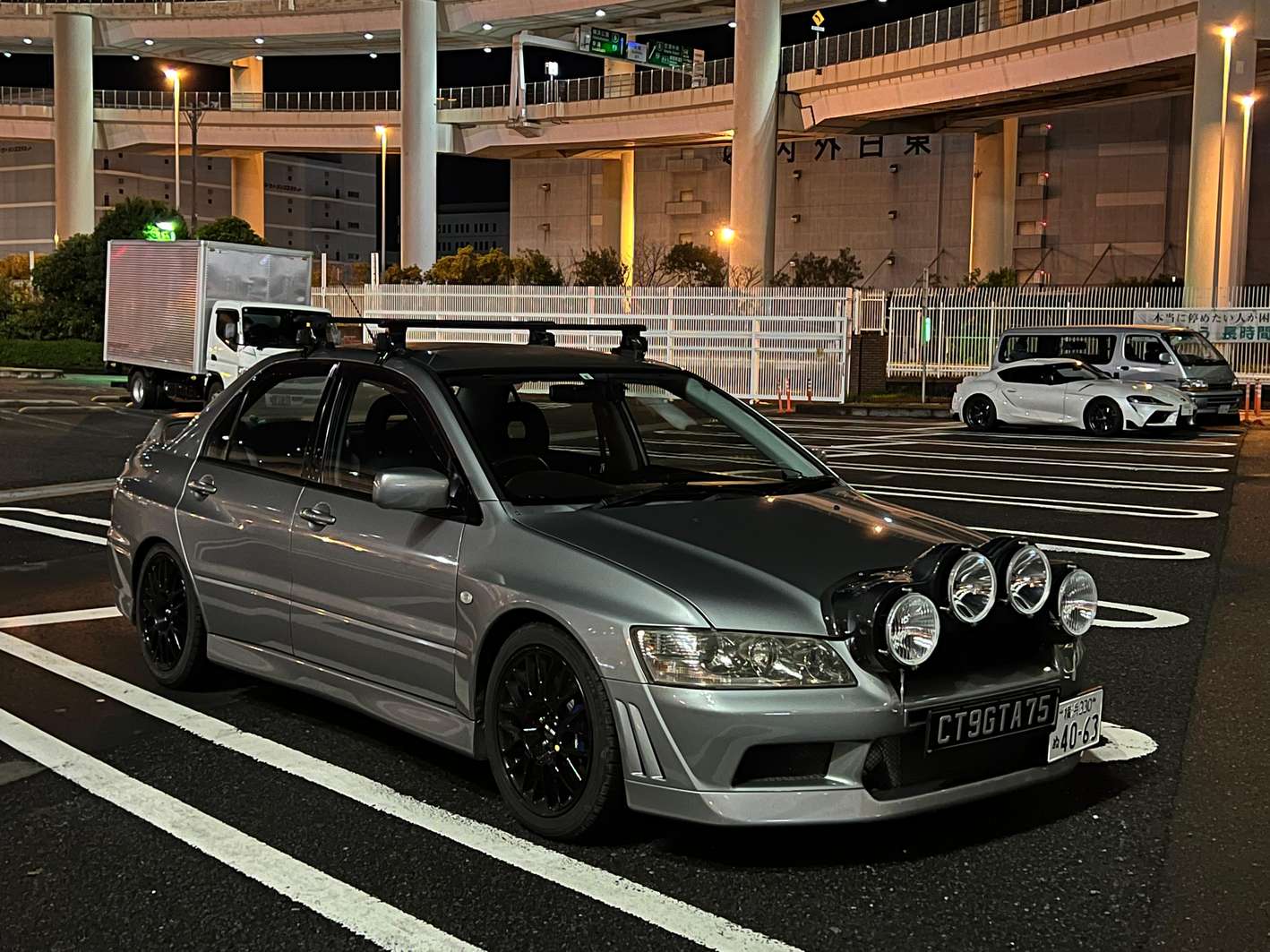
Expect genuine Japanese performance cars: Skyline R34 and ER34, Lancer Evolution, Subaru WRX STI, Supra, Silvia S15, RX-7 and GT-Rs, some heavily modified. Operators are explicit about running manuals and real sports cars, never vans. Seating depends on the model, so your group may split across two cars that travel together.
Can I go drifting on the Wangan Route?
No. Drifting on public roads is illegal in Japan, so these tours cruise the expressways at ordinary speed limits. Legal drifting happens at circuits, and the Ebisu Circuit north of Tokyo runs a full-day drift school with beginner courses and pro instructors.
How far ahead should I book a Wangan drive in Tokyo?
Book a few days out rather than on the day. April, September and October are the busiest months, when a week ahead is safer, and one operator asks guests to confirm a specific GT-R model at least 48 hours before, since the cars are privately owned and sometimes under maintenance.
What should I bring for a night JDM driving tour?
Comfortable shoes and clothes for walking around the meets, a camera or a charged phone, and a light jacket, since parts of the evening happen outdoors by the water. Most tours include no food or drinks, so eat beforehand. Turn on WhatsApp notifications, because operators send updates before departure.