
Likely to sell out
3 hours - 4 days·English, Chinese
4.8(732)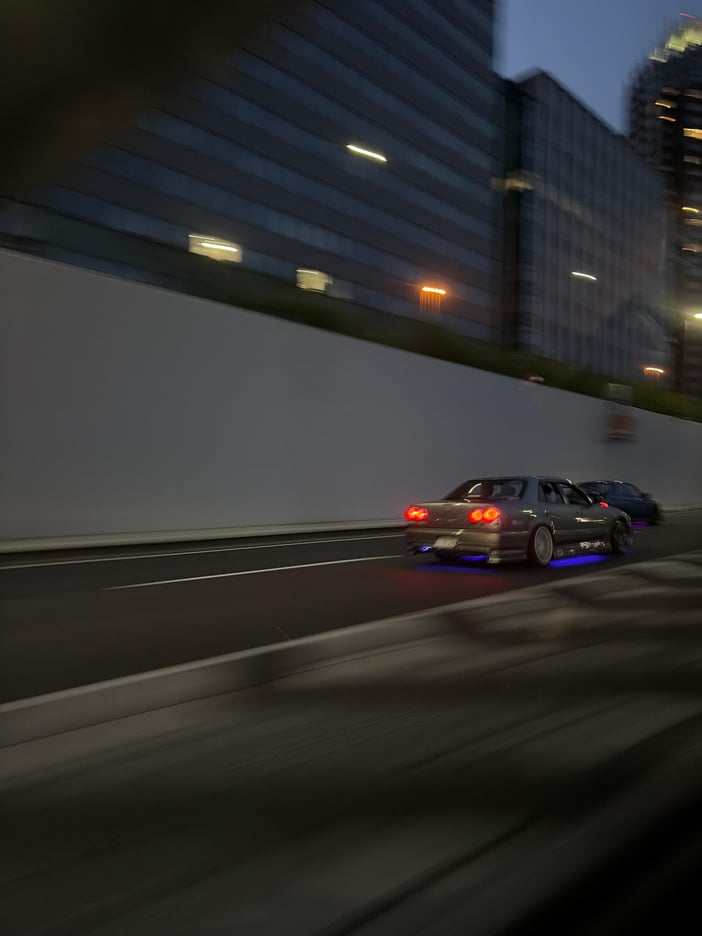
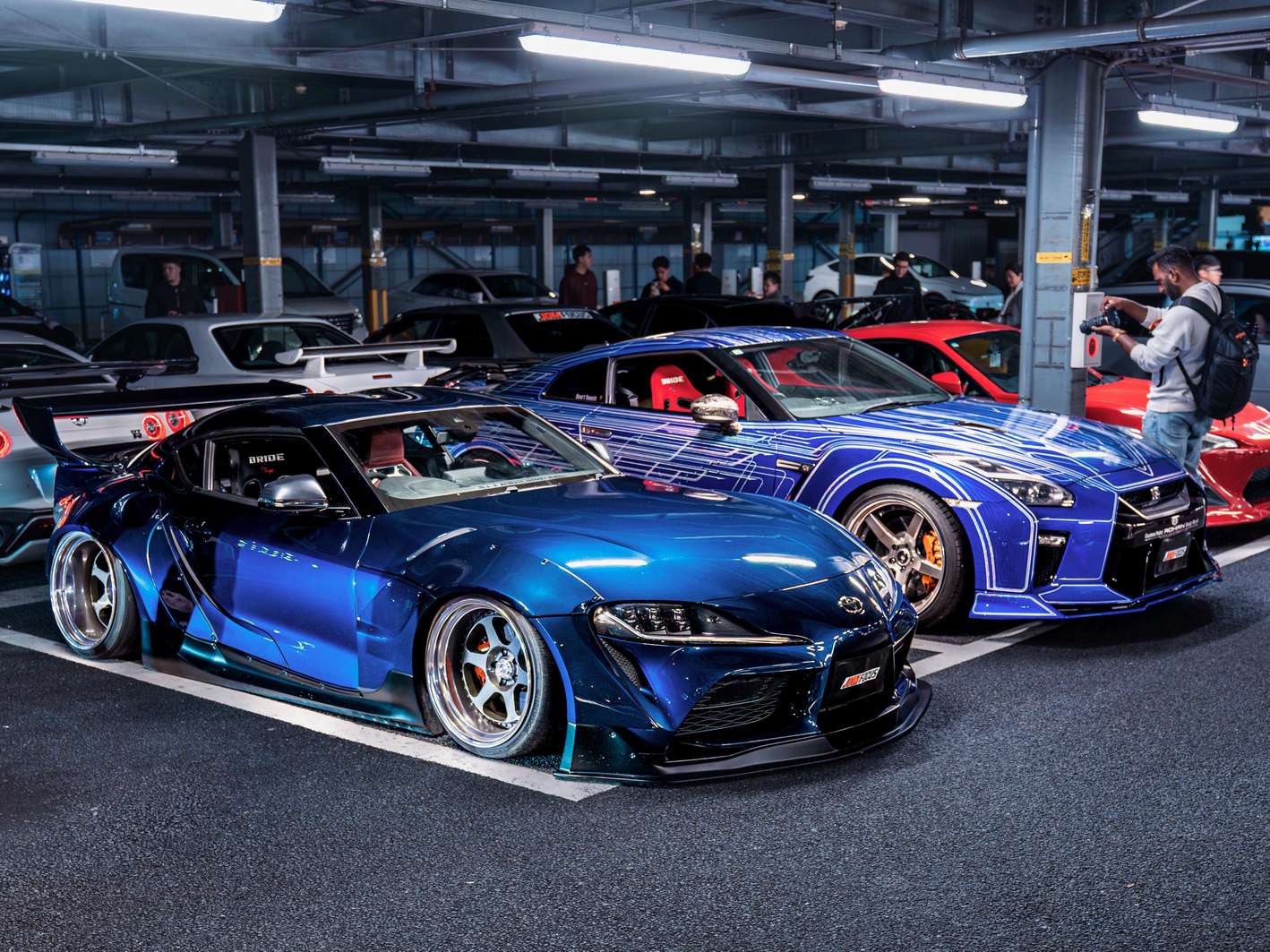
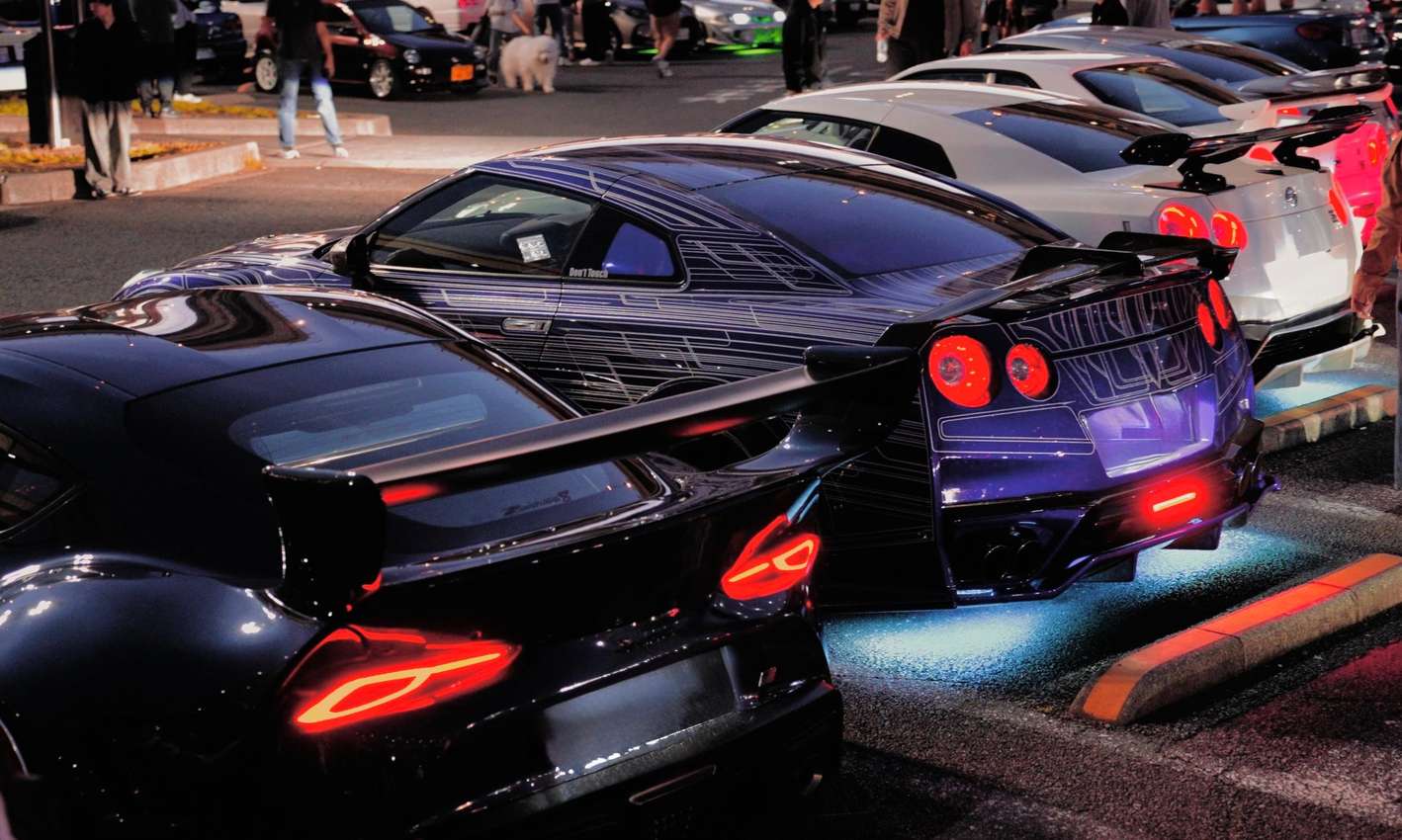
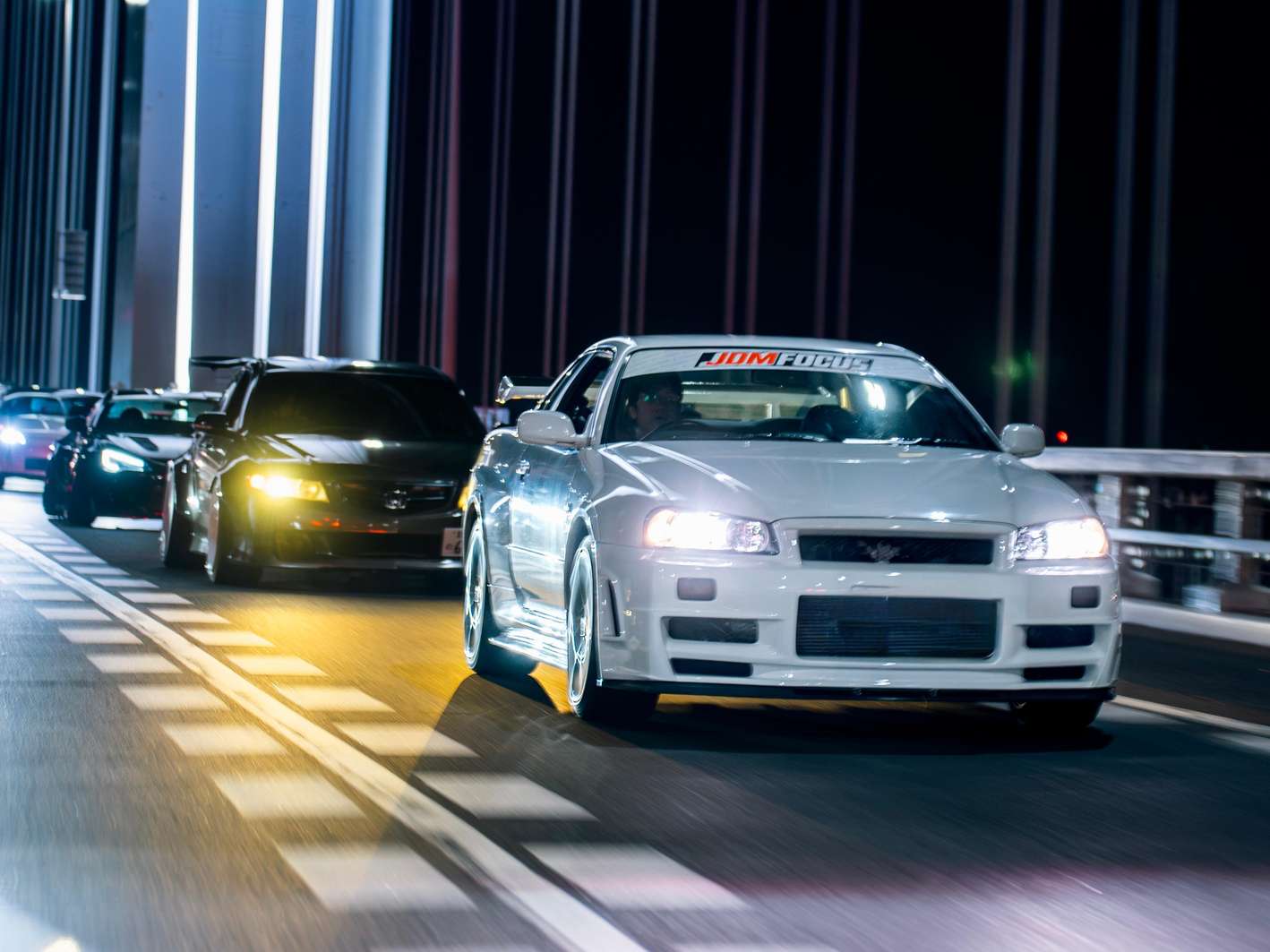
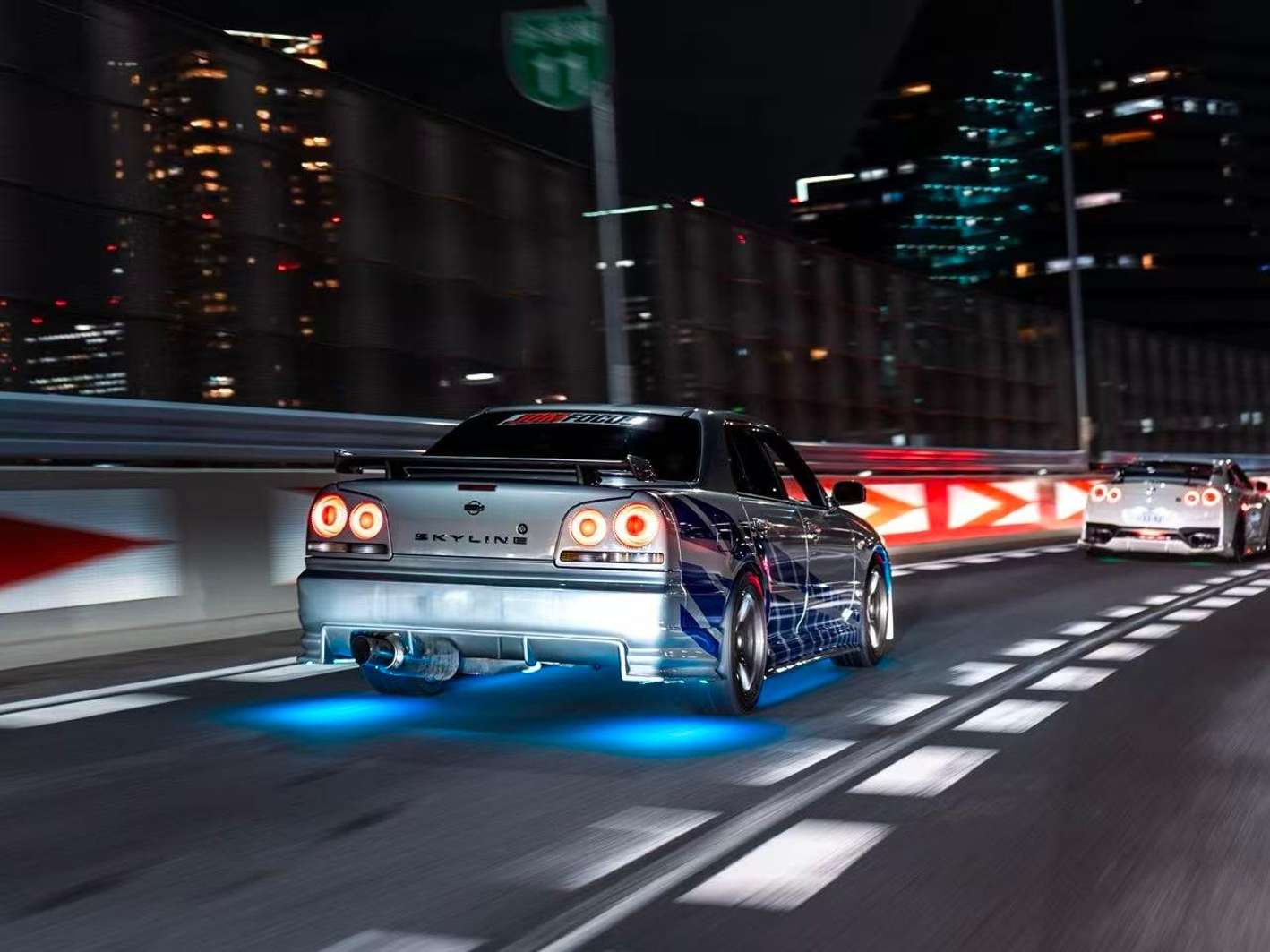
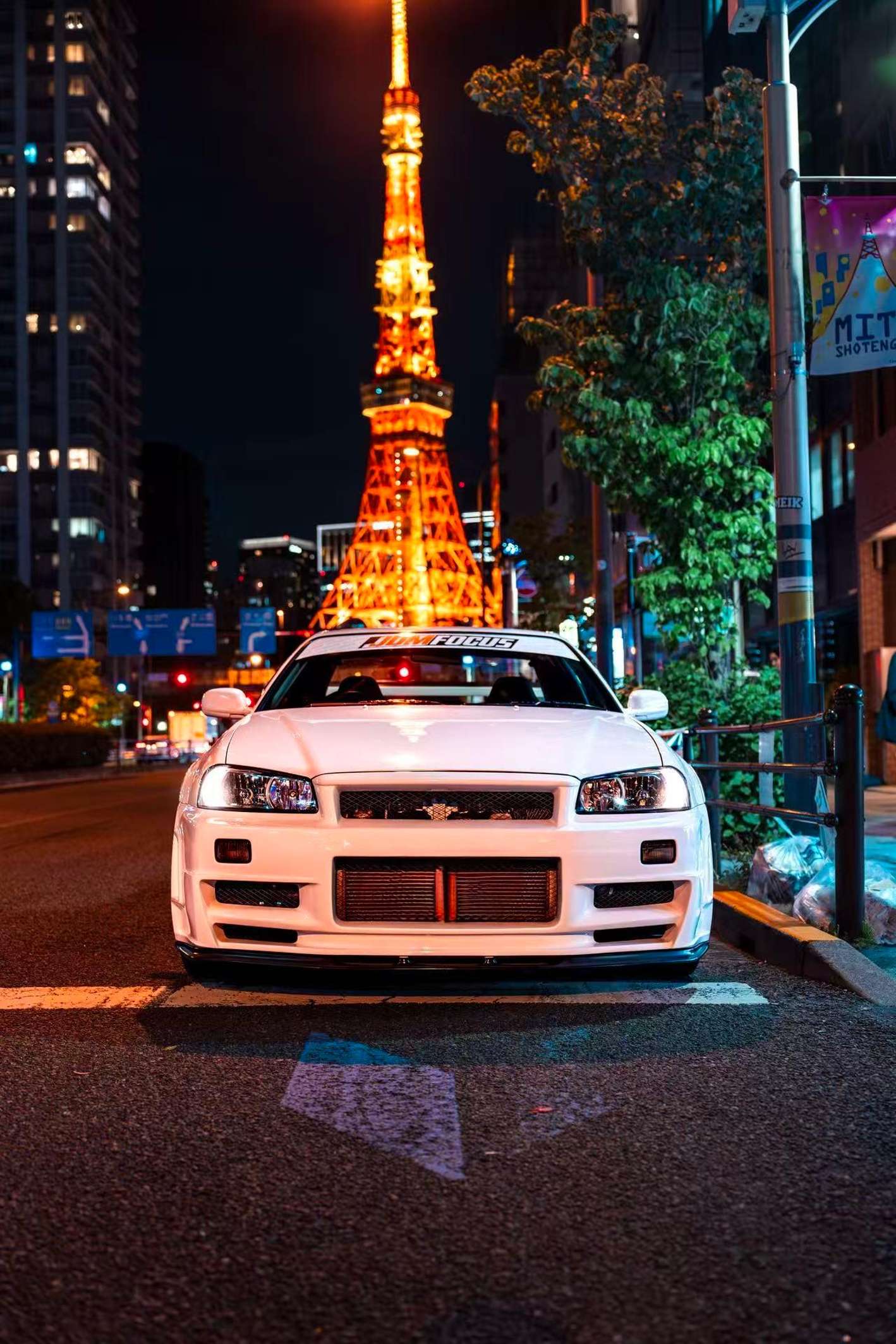
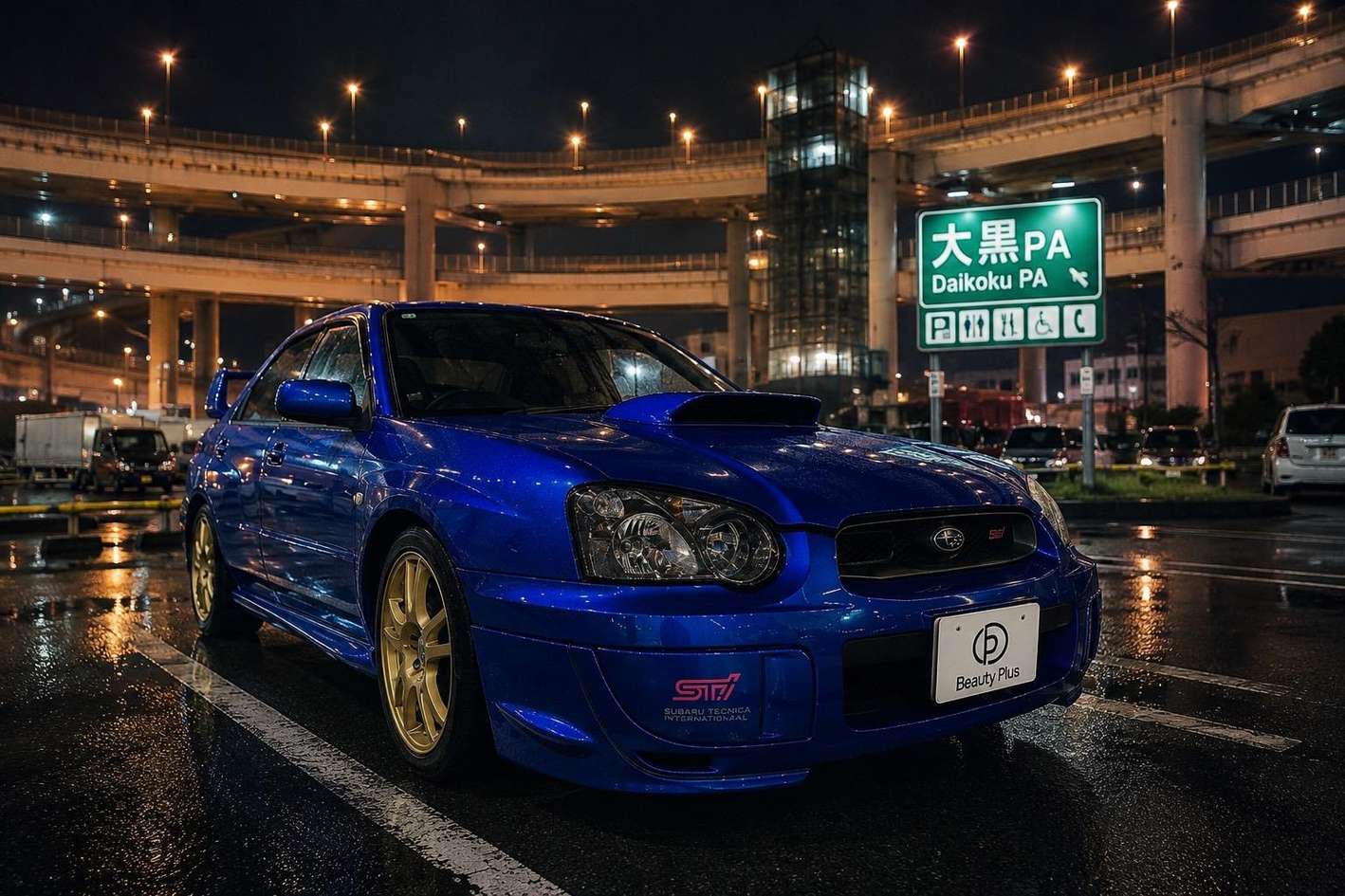
Tokyo:Night JDM Car Culture Cruise, Daikoku PA Experience
Free cancellationHotel pickup includedIn English and Chinese
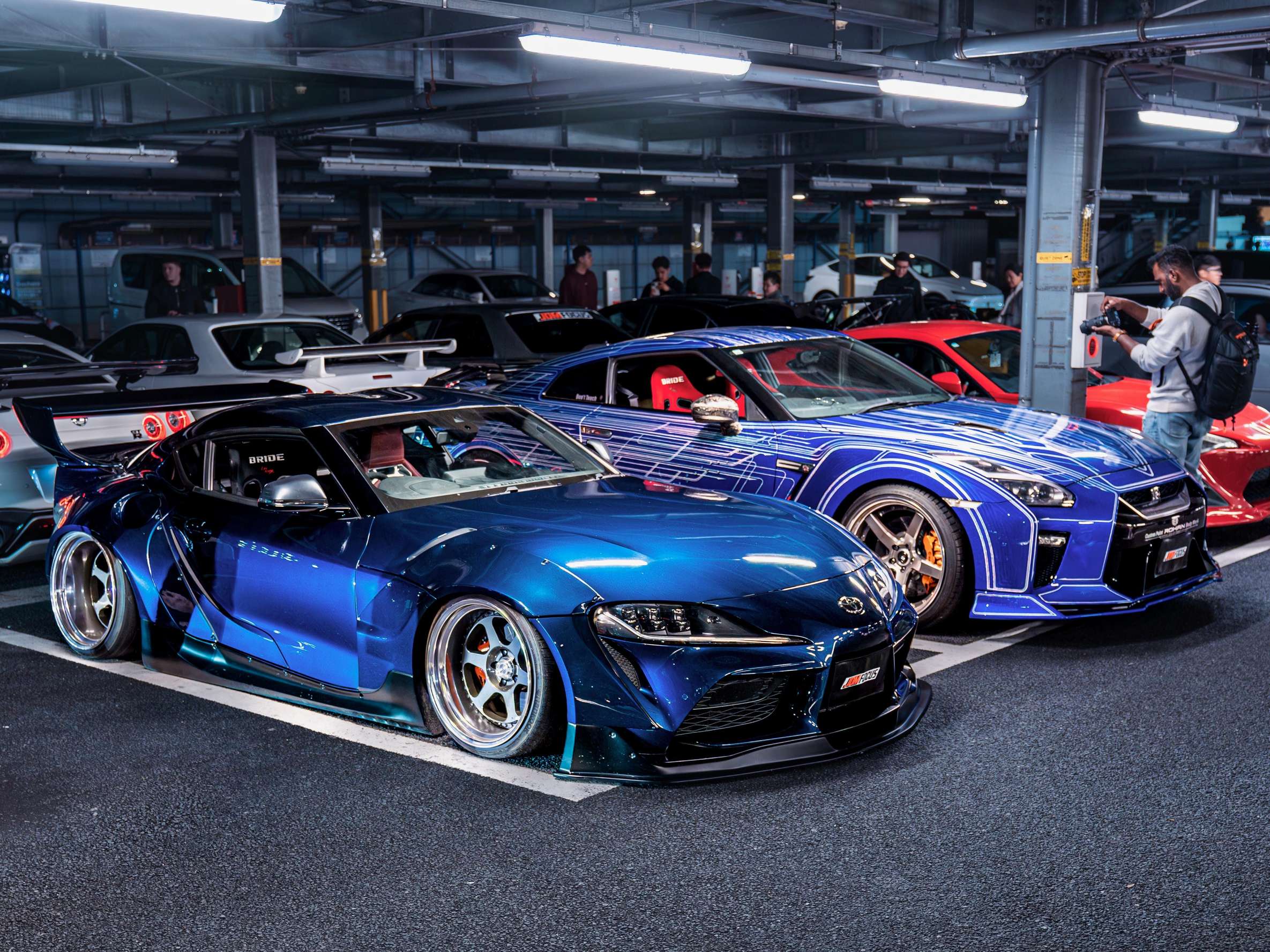
Find the itasha garage under Akihabara, then ride a real JDM car to Daikoku PA. Choose a date and book ahead with English-speaking local drivers - expressway tolls, fuel and photo stops covered, and free cancellation up to 24 hours before your night run.
"10/10! Our driver Chen explained everything as we went. Hung out at the car meet for ages and got great pics under the tower. Felt totally safe and it lived up to expectations."
A free parking garage three minutes from Akihabara Station has become one of Tokyo's most reliable car-spotting stops. Here is how to get in, what the security actually enforces, and how the night compares with the bay meets.
The UDX underground garage is free to walk into; only parking costs money.
Wrapped itasha concentrate on the B2F level, and the garage is fully enclosed, so rain never ruins the cars.
It is a working lot: look quickly, keep moving, and never touch or lean on a car.
Stopping to photograph cars can get you moved on by security, and repeat visits have brought police and fines.
For the big bay meets at Daikoku you need a car or a tour; for itasha on foot, UDX wins.
Walk in, keep to marked walkways, stay quiet and leave the cars alone unless an owner offers. Take photos quickly and discreetly, then move on. If staff ask you to leave, do so calmly and come back another time, since repeat visits can bring police and a fine.
The garage sits a short walk from Akihabara Station, and you reach it by elevator. Walking in costs nothing; only the parking spaces cost money, and those belong to the cars. On Friday and Saturday nights the lower levels fill with tuned machines, many of them itasha wrapped in anime decals.
If wrapped cars are the draw, head for B2F. That is where the itasha concentrate, and the collection changes week to week as owners rotate their builds.
One thing first-timers miss: the garage is fully enclosed, so rain never ruins the artwork. On a wet night when the outdoor meets thin out, this is the spot that stays busy.
The rhythm matters. This is a working public parking garage, and the cars come and go all night.
Drivers are parking or leaving, and the people who get the most out of the evening are the ones who look quickly, keep moving, and let the traffic flow. Linger in a lane and security will find you.
The evening has its own shape. Early on the upper levels are quiet and the first cars trickle in. On Friday and Saturday nights the lower levels fill, and late is when B2F is at its fullest, with owners swapping in fresh builds.
On Saturdays and Sundays the itasha crowd builds through the afternoon, with 20 to 30 decorated cars on a typical weekend day.
The garage starts filling from around 6 pm, and arriving before 8 pm gets you the highest density of cars before owners roll out.
On weekdays the garage is mostly commuter cars by day, with only some enthusiast cars still parked in the evenings; meets are far quieter th…
Friday and Saturday nights from about 8 pm are the peak, when the most JDM and itasha builds are parked on the B1 and B2 levels.
Gatherings can run to midnight, but on Saturday nights many owners start clearing out around 9 to 10 pm, and crowded meets risk being disper…
Read that line and plan backwards from it: if you want the wrapped cars at their best, arrive late on a Friday or Saturday, and take the quiet upper levels as your warm-up lap.
Akihabara UDX sits about three minutes on foot from JR Akihabara Station's Electric Town Exit. Leave through that gate, cross the Akiba Bridge, and the building is straight ahead. Suehirocho Station on the Ginza Line and the Tsukuba Express Akihabara A1 exit are each about three minutes away too.
From Tokyo Station it is a four-minute ride on the JR Yamanote or Keihin-Tohoku Line, then the short walk. From Haneda Airport, take the Tokyo Monorail to Hamamatsucho and change to the Yamanote Line, about half an hour in total. A taxi from Haneda runs about 31 minutes without traffic.
Rain has its own route: the AKIBA ICHI arcade on the first floor lets you reach the building almost entirely under cover.
The table below lines up the main ways in, with the time each one takes and where it works best.
The train wins from almost anywhere in central Tokyo, and the walk from the station is short enough that rain is the only reason to think twice. If you are coming straight from the airport, the monorail transfer beats a taxi once traffic is factored in.
Public transport is the same story in more detail, and it is worth a look if you are staying outside the usual hotel districts.
Either way you arrive on foot, which is the whole point: this is one of the few Tokyo car spots you can reach without a car of your own.
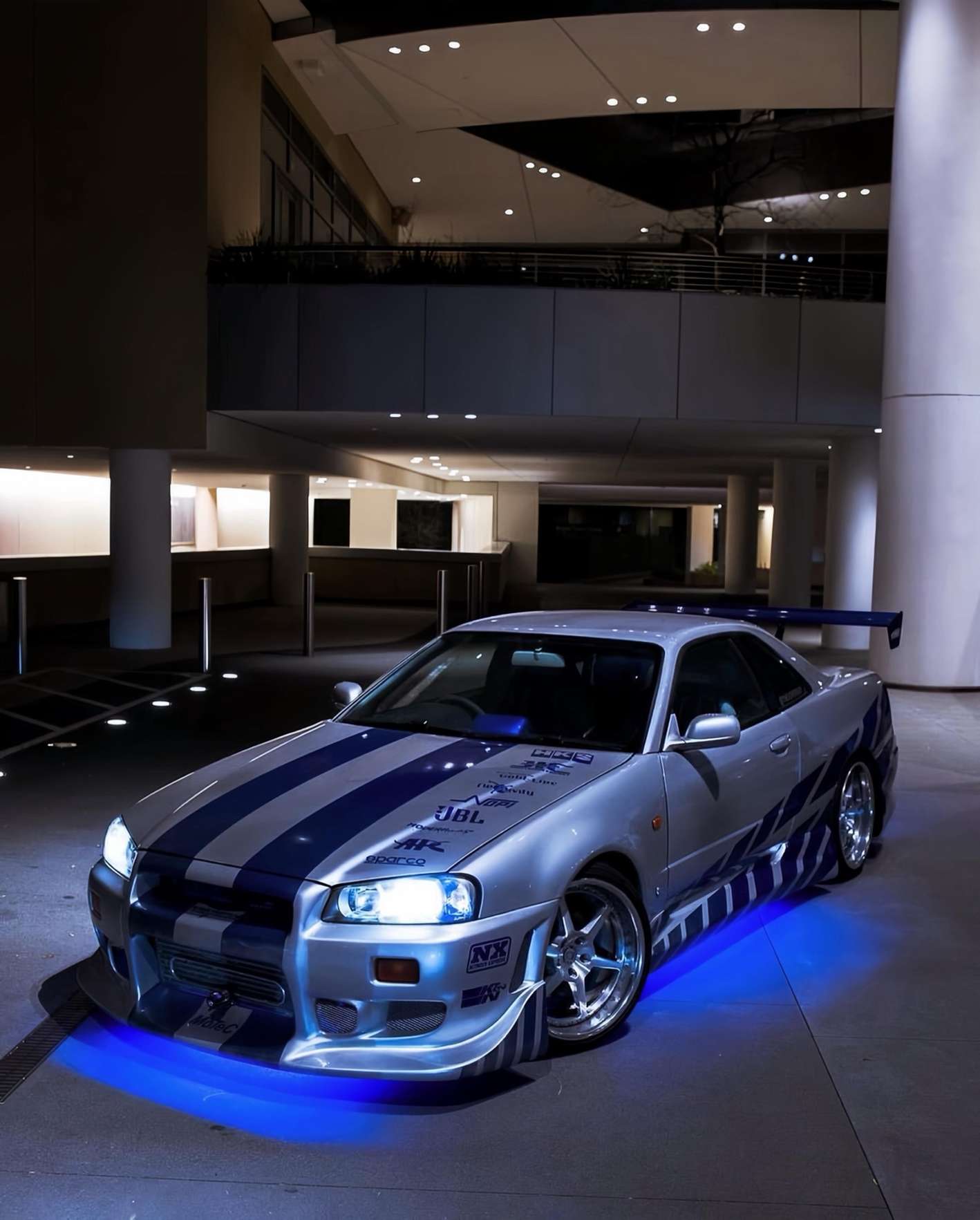
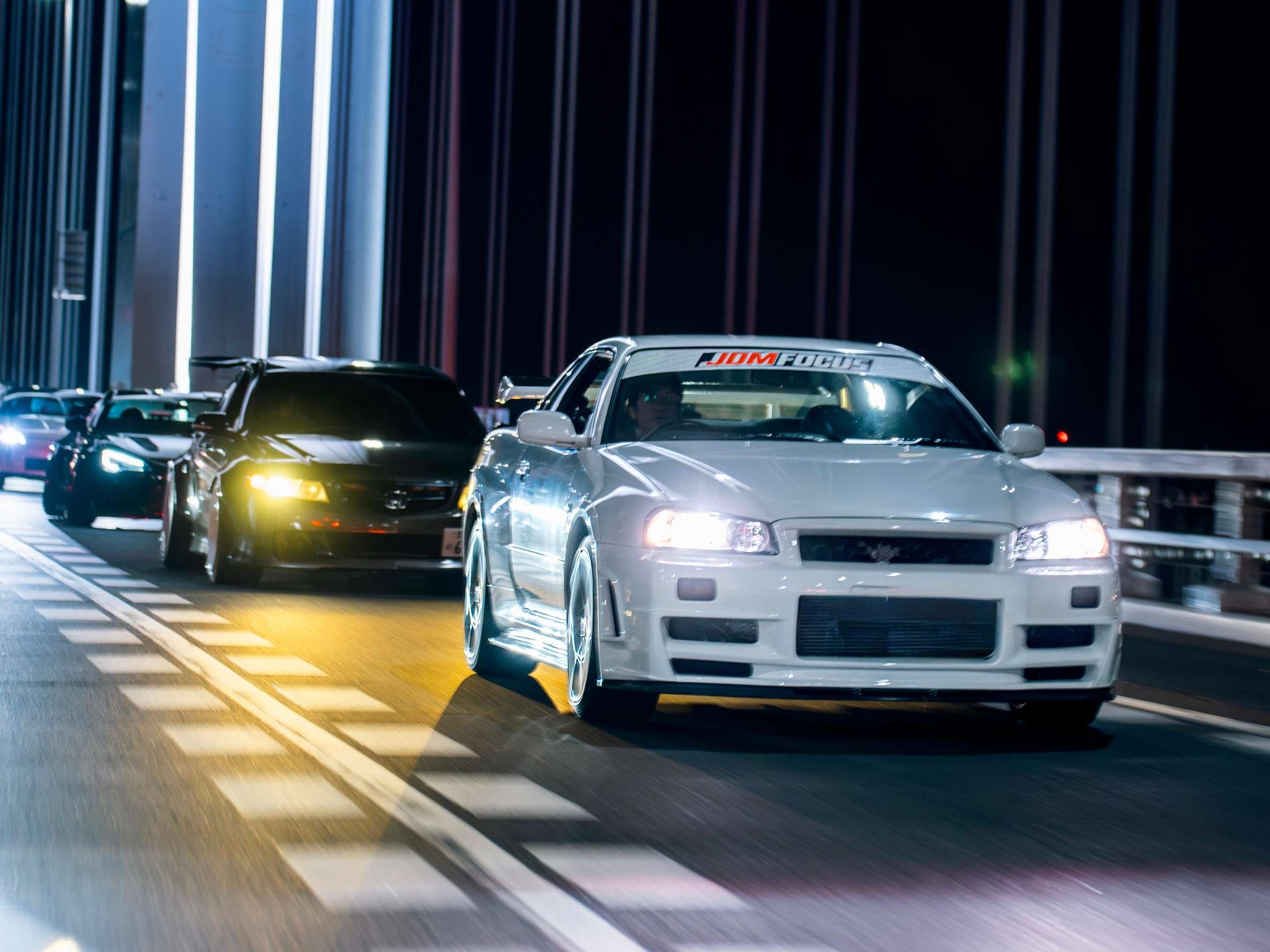
The garage has tightened security, and the rules are simple enough to follow without thinking about them. Never touch, lean on, or set anything on a car. Ask before photographing close-ups, especially interiors and engine bays, and blur or crop license plates before posting anything online. No flash into cabins or faces at night.
Keep your voice down and stay out of the driving lanes. The lanes are active with moving cars, and blocking them is what prompts staff to call the police. Signs in the lot prohibit loitering, so this is a place to keep moving. Drones are banned; Tokyo sits in a restricted no-fly zone.
The stakes are real. Stopping to photograph cars can get you moved on by security, and repeat visits have brought police and a fine. An unauthorized gathering planned here in January 2017 was shut down entirely: the operator closed the garage and police were called.
The upside is that owners who are up for a chat will talk. Strike up a conversation about the build and you might hear an AE86's 4-AGE revved for you. Compliment the car; never ask what it cost or whether it is for sale.
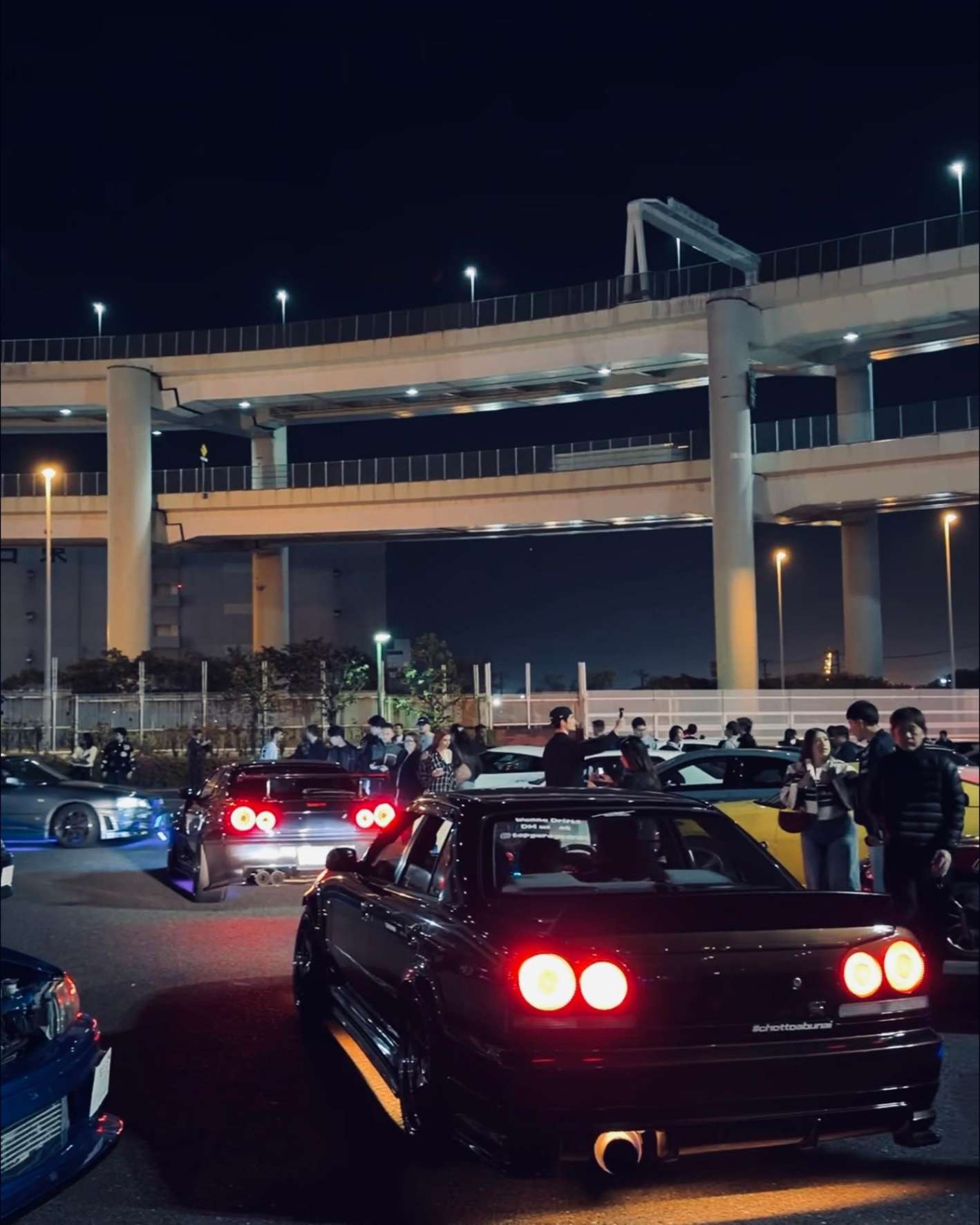
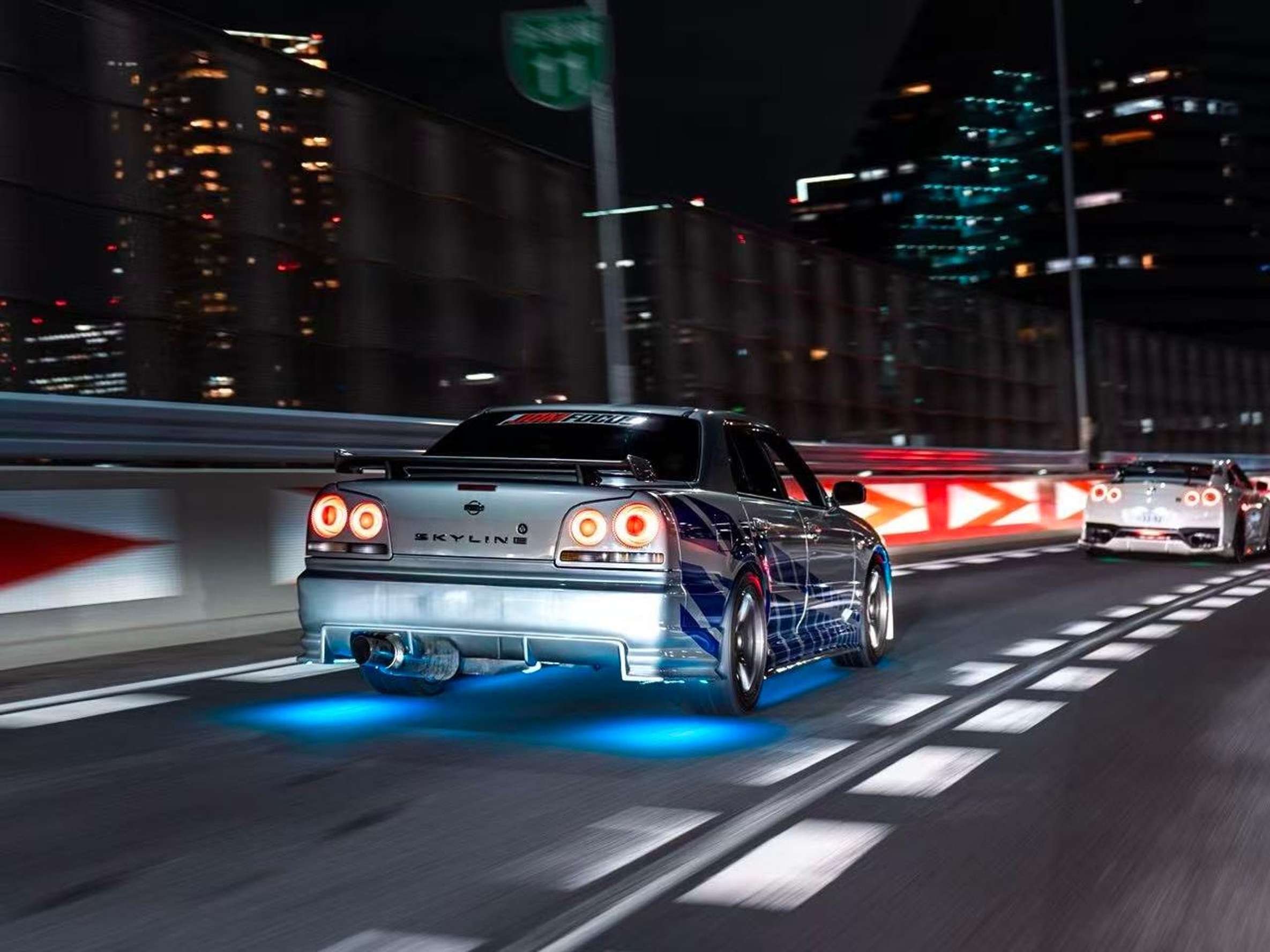
The choice comes down to what you want to see and how you want to stand. UDX is quiet, free, and walkable, three minutes from a train station, with itasha and anime cars on B2F.
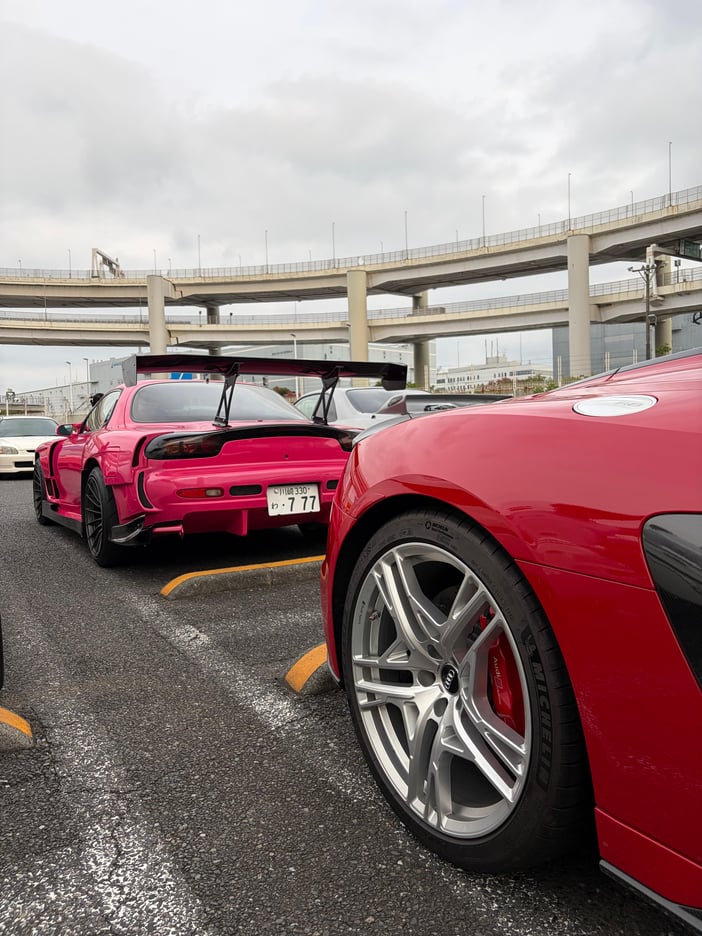
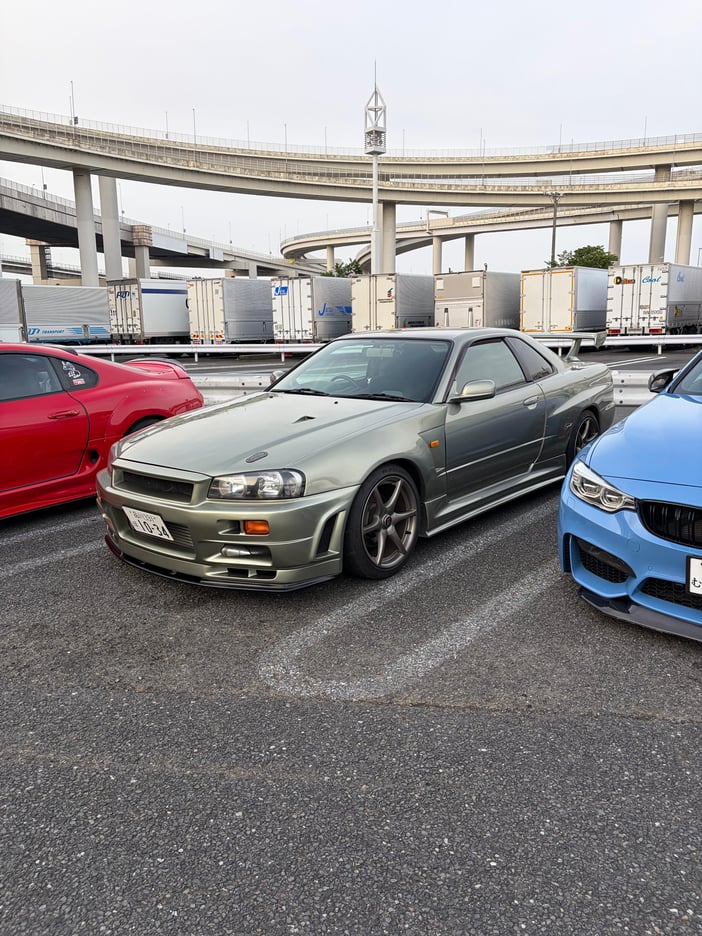
The bay meets are louder and bigger: Daikoku PA draws supercars, JDM legends and kei trucks, with bigger turnouts on weekends and Sunday mornings in good weather often bringing groups of Lamborghinis.
The trade is access. Daikoku sits inside the Shuto Expressway and legally prohibits pedestrians, bicycles and scooters; the only way in is driving. UDX you walk into.
Etiquette is the same at both: no touching, ask before photos, stay out of the roadways at the parking areas. At Daikoku you park only in marked spaces and leave by driving out.
Before weighing the two side by side, it helps to see the full map of where Tokyo's meets happen, because UDX is only one of several walkable options.
That list settles the first question: if you have no car, UDX, Shibuya and the Akihabara Station front are your realistic nights, and the bay lots belong to the tours.
Now the two styles head to head, on the points the choice actually turns on.
| Location and Access | Local Etiquette | Parking and Logistics | Atmosphere | |
|---|---|---|---|---|
| Akihabara UDX | 3-min walk from Akihabara Station | No touching, low noise, ask before photos | Free underground garage, B2F | Quiet itasha and anime-car spotting |
| Other Tokyo Meets | Car-only via expressway, no pedestrians | No touching, stay out of roadways | Marked spaces only, drive in and out | Supercars, JDM legends, kei trucks |
Put simply: pick the row that matches your evening. Walkable and calm points to UDX; supercars and hundred-car lots point to a guided run out to the bay.
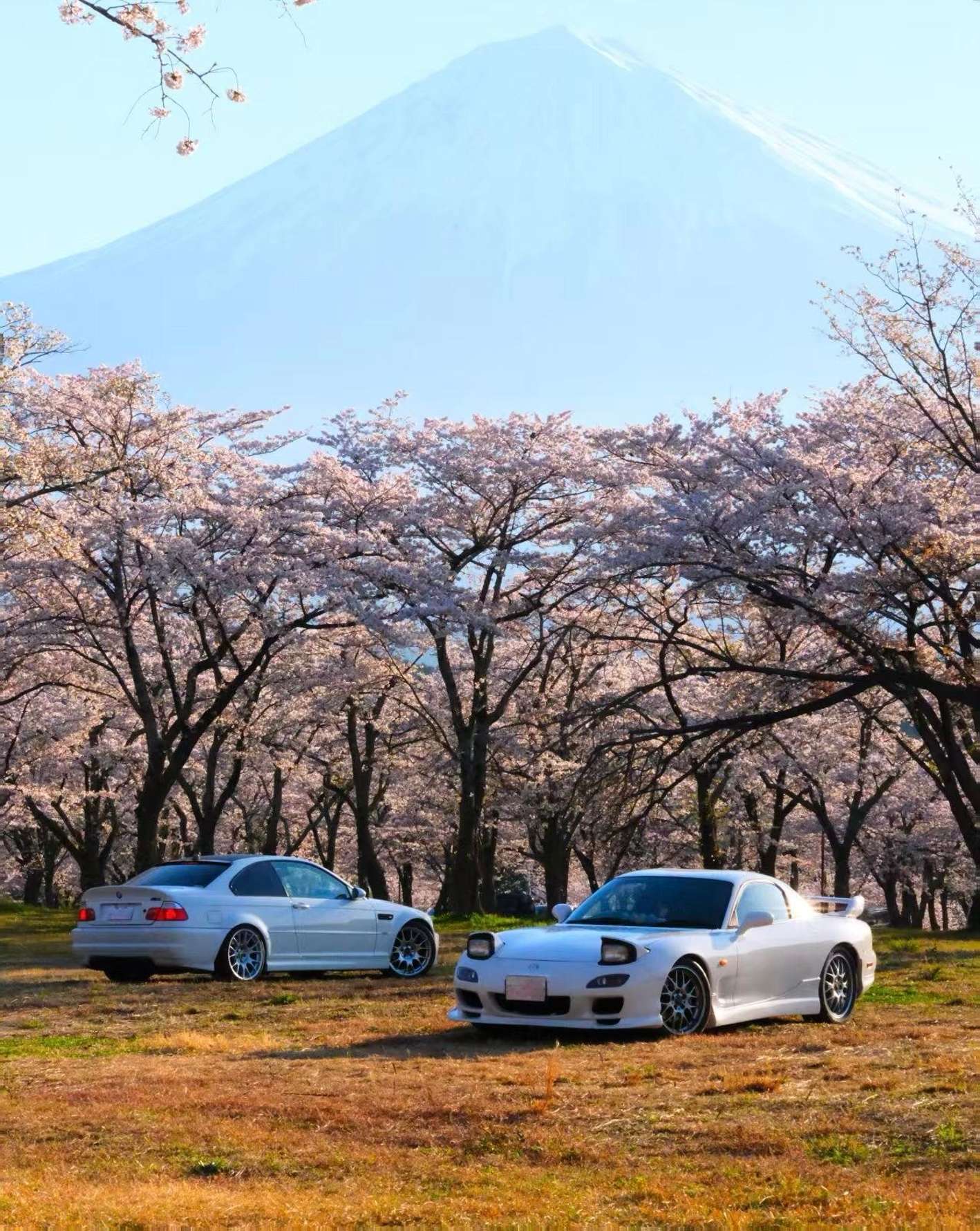
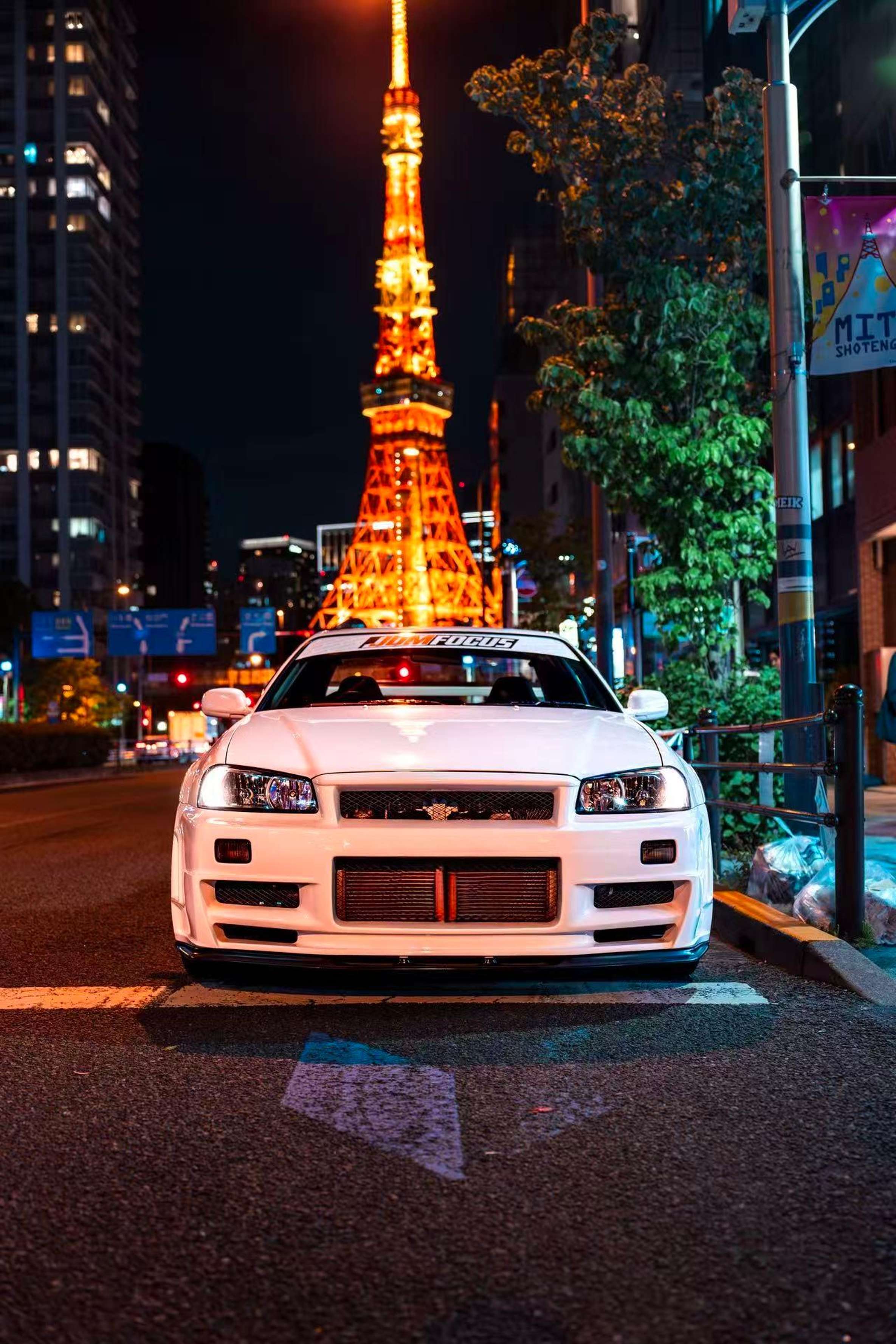
No train, bus or footpath reaches Daikoku PA. A taxi can drop you off but cannot pick you up again, so the practical way in is a guided JDM tour: the operator collects you from your hotel in the car itself and drives you in via the expressway, about an hour from central Tokyo.
Go in knowing the odds. Police regularly shut the Daikoku meet down, and on Thursday, Friday and Saturday nights closures come by about 8:30 pm.
Closures are decided on the night by the expressway operator working with police, so there is no schedule to check in advance. Once the entrance has closed, do not count on it reopening.
Operators plan around this. Many pull Friday and Saturday pickups forward to 4 pm or 5 pm to beat the closure. When the lot shuts, most tours divert to a fallback such as Umihotaru or Tatsumi PA and keep the night going, and several tours give a full refund if you decline the alternative lot.
The routes table shows how each way in stacks up, and why the tour row is the one that works.
Every row except the guided tour leaves you stranded in a tollway rest stop with no way home, so the tour is the only option worth booking.
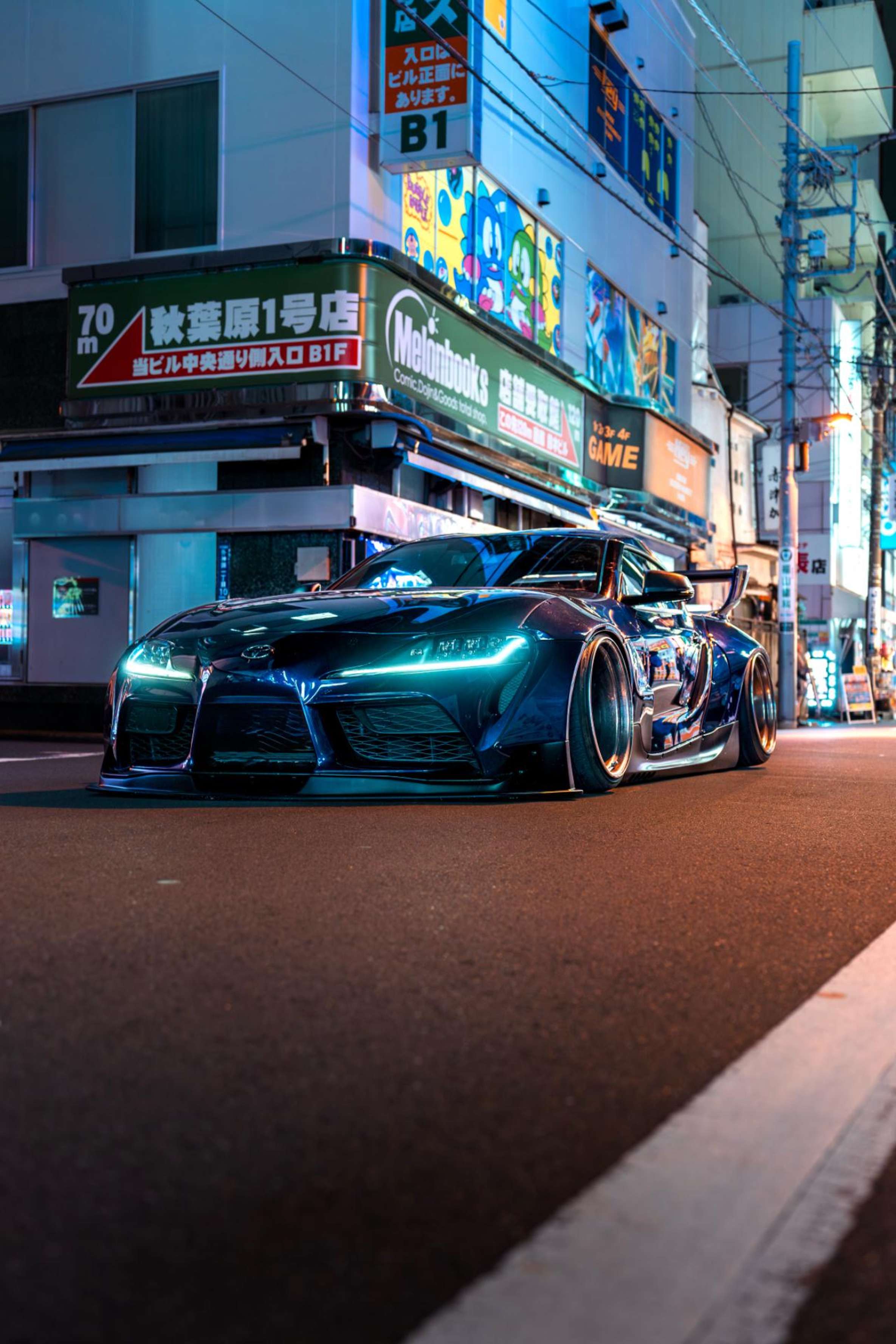
Tokyo's car scene publishes almost nothing in advance. The Daikoku gathering is self-organizing, with no official calendar and no coordinating group, so nobody can tell you in March what the lot will look like on a Friday in June.
What you can do is check close to your dates. Many Japanese meets only publish event information about a month ahead, and permissions can be withdrawn at short notice, so an event on a list may not actually happen.
Curated English-language listings with maps and daily updates exist, the Discover JDM app tracks events and meets, and one Instagram page keeps a Google Sheet of scheduled car events across Japan.
Always keep a second venue in mind. Some meets lose official permission and never come back. If Daikoku PA is closed on your night, tours typically propose an alternative such as Umihotaru PA, or you can reschedule or take a full refund.
UDX itself is your built-in backup: enclosed, free, and running regardless of what the police do at the bay.
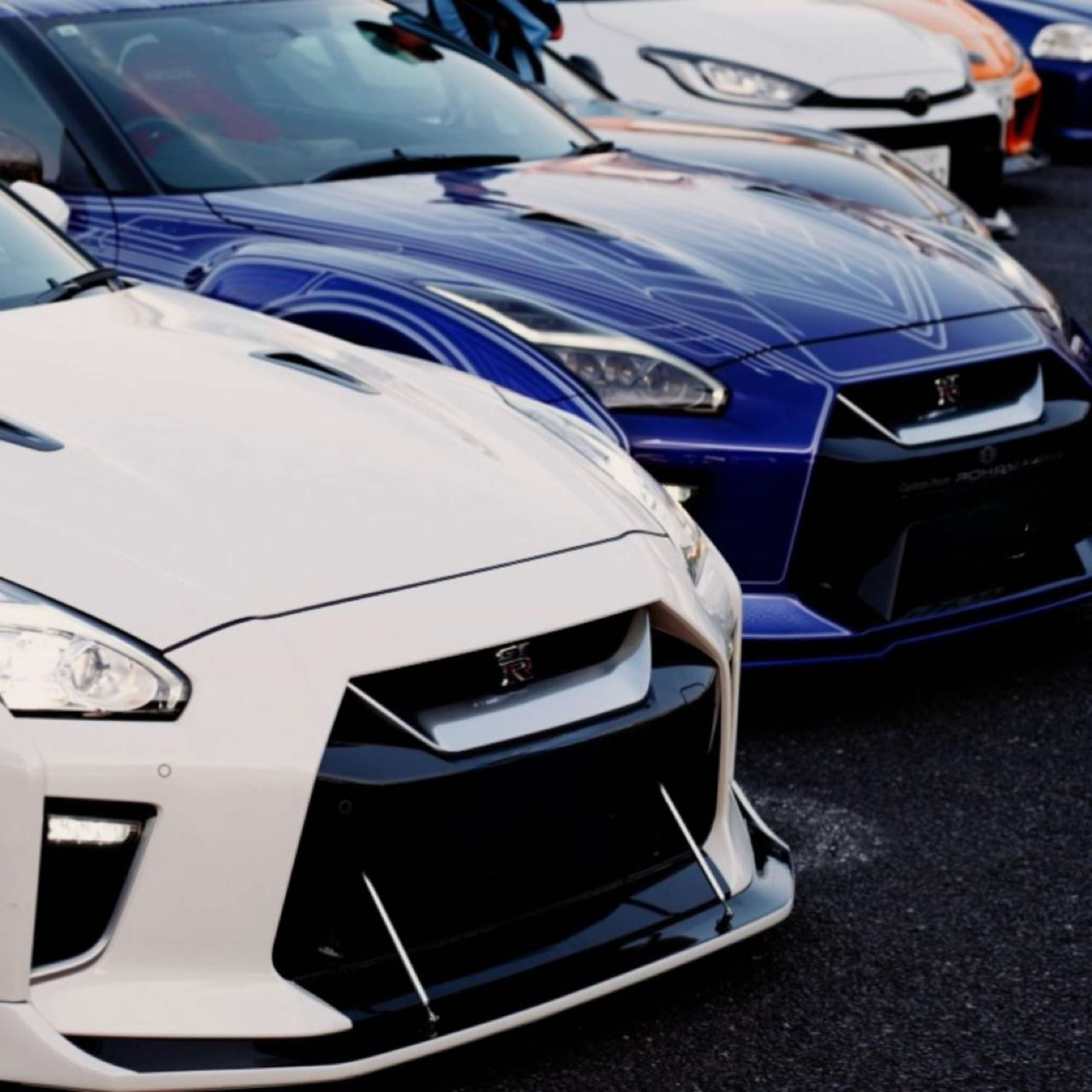
Crowds at the meets swing with the season more than with any event calendar. Summer and early autumn are the peak: July and September run at the top of the scale, with August and October close behind, and weekend nights in those months draw the biggest turnouts at Daikoku and the bay lots.
Winter is the quiet stretch. December and February sit at the bottom, and January is only slightly busier. Cold nights thin the casual crowds, though the regulars still show up, and Daikoku nights run from about 1°C on winter evenings to over 25°C in midsummer.
Spring sits in the middle. March edges up, April and May settle back, and June climbs as the warm nights return. November cools off again after the October peak.
The month-by-month scale below shows the swing at a glance, so you can match your dates to the crowd you want.
July: 5 out of 5 for how busy it gets.
Tap a month to read it.
How busy it gets (out of 5): Jan 2, Feb 1, Mar 3, Apr 2, May 2, Jun 3, Jul 5, Aug 4, Sep 5, Oct 5, Nov 3, Dec 1
Read it as a trade-off: peak months buy atmosphere and sell-out risk, while a February weeknight buys space to look at the cars, with UDX's indoor garage making the cold irrelevant either way.
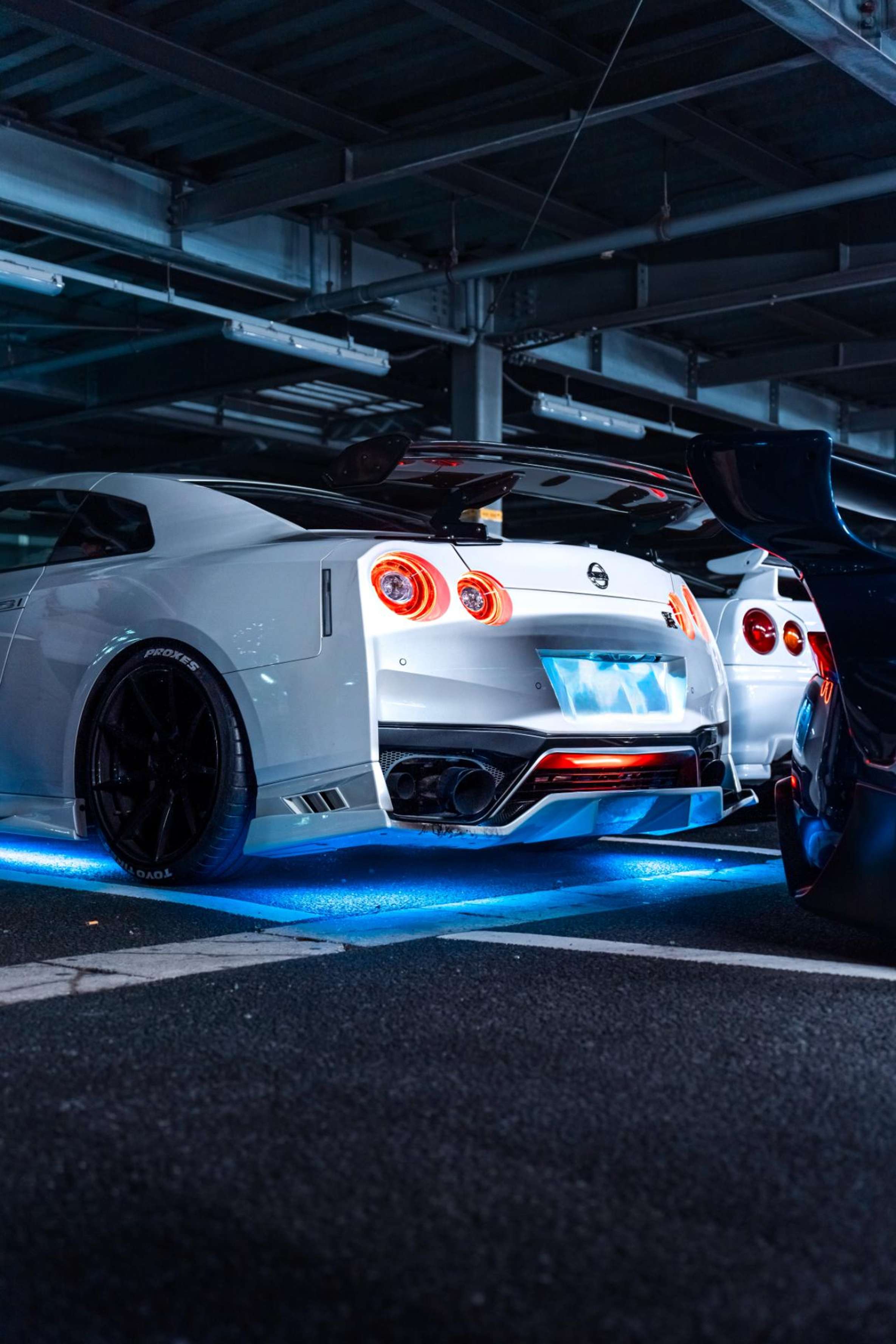
The garage rarely fills a whole night, and Akihabara sits in the middle of a walkable pocket of Tokyo worth using.
Within twenty minutes on foot you can reach Kanda Shrine in about nine minutes, Yushima Seidō and the Holy Resurrection Cathedral at ten, and the Kyū-Iwasaki-tei Garden at eighteen. Ueno Park and Shinobazu Pond sit at the twenty-minute mark.
Museums cluster close too: the Meiji University Museum at fourteen minutes, the Tokyo Waterworks Historical Museum at seventeen, and the Currency Museum of the Bank of Japan at eighteen.
If you would rather ride, a short drive opens more options. The Artizon Museum is nine minutes away, the National Showa Memorial Museum and Koishikawa-Kōrakuen garden about eleven, and Tokyo Daijingu twelve.
The list below puts the nearest stops in walking order, with the drive-only picks at the end.
Pick one shrine or museum from the walk list and the garage stops being a quick look and becomes a full Akihabara evening.
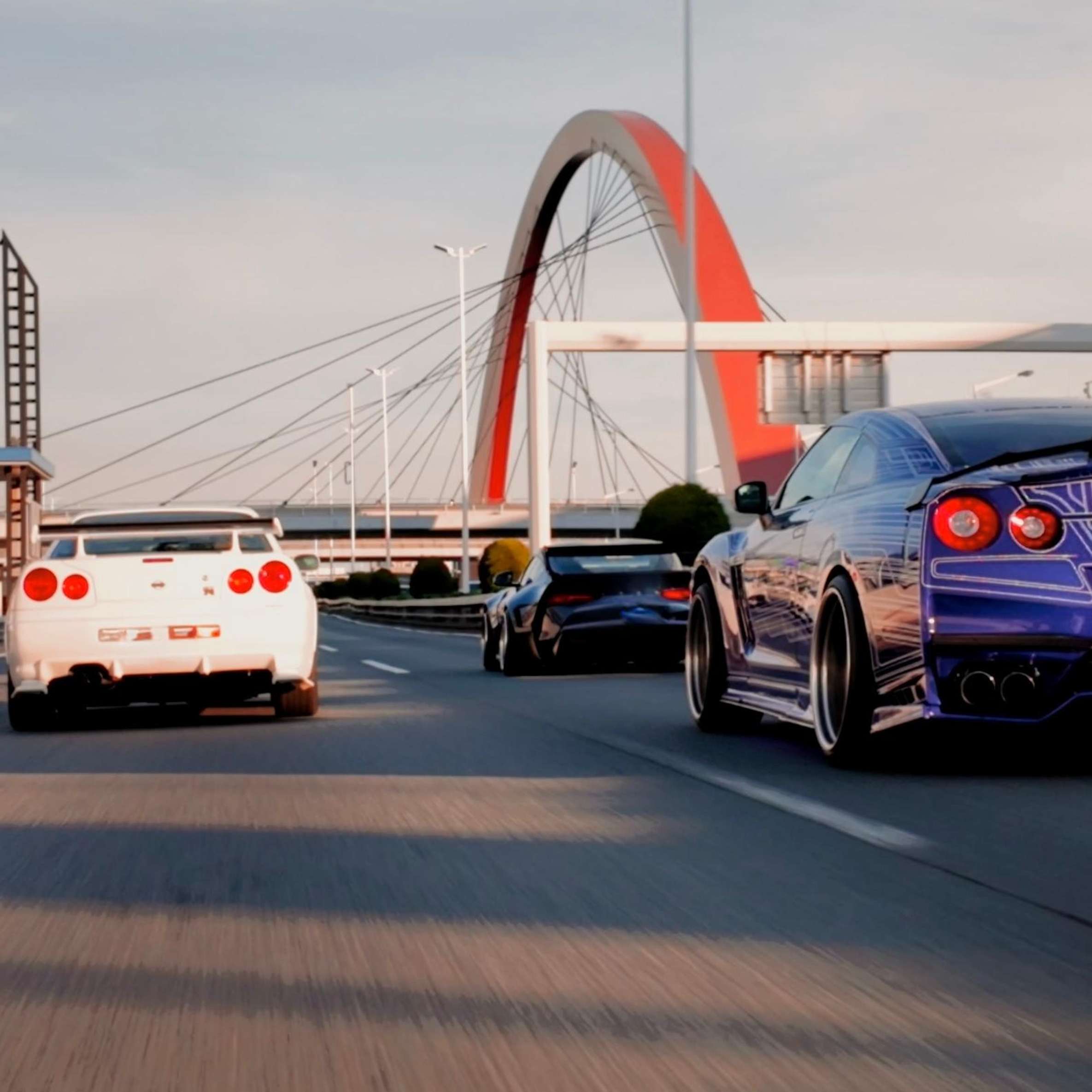
Dress for standing around outdoors at night, whatever the season. Tokyo meet nights run from about 1°C in winter to over 25°C in midsummer, and even on warmer evenings a light jacket earns its place once the sun goes down.
Comfortable shoes matter more than anything else; you will spend the night standing and walking in a garage or a parking lot.
Bring a camera, and check the weather before you head out. Rain rarely kills a meet, and at UDX it cannot touch the cars at all, but heavy rain or police activity can close a parking area, so know your fallback before you leave the hotel.
Sort the practical side before the day. Tours sell out, and turning up in Tokyo hoping for a ride is a gamble.
After booking, give the operator a contact method such as WhatsApp or Instagram, turn notifications on, and reply when the confirmation email arrives, usually within 48 hours. If something changes on the night, that message is how you find out before the start time.
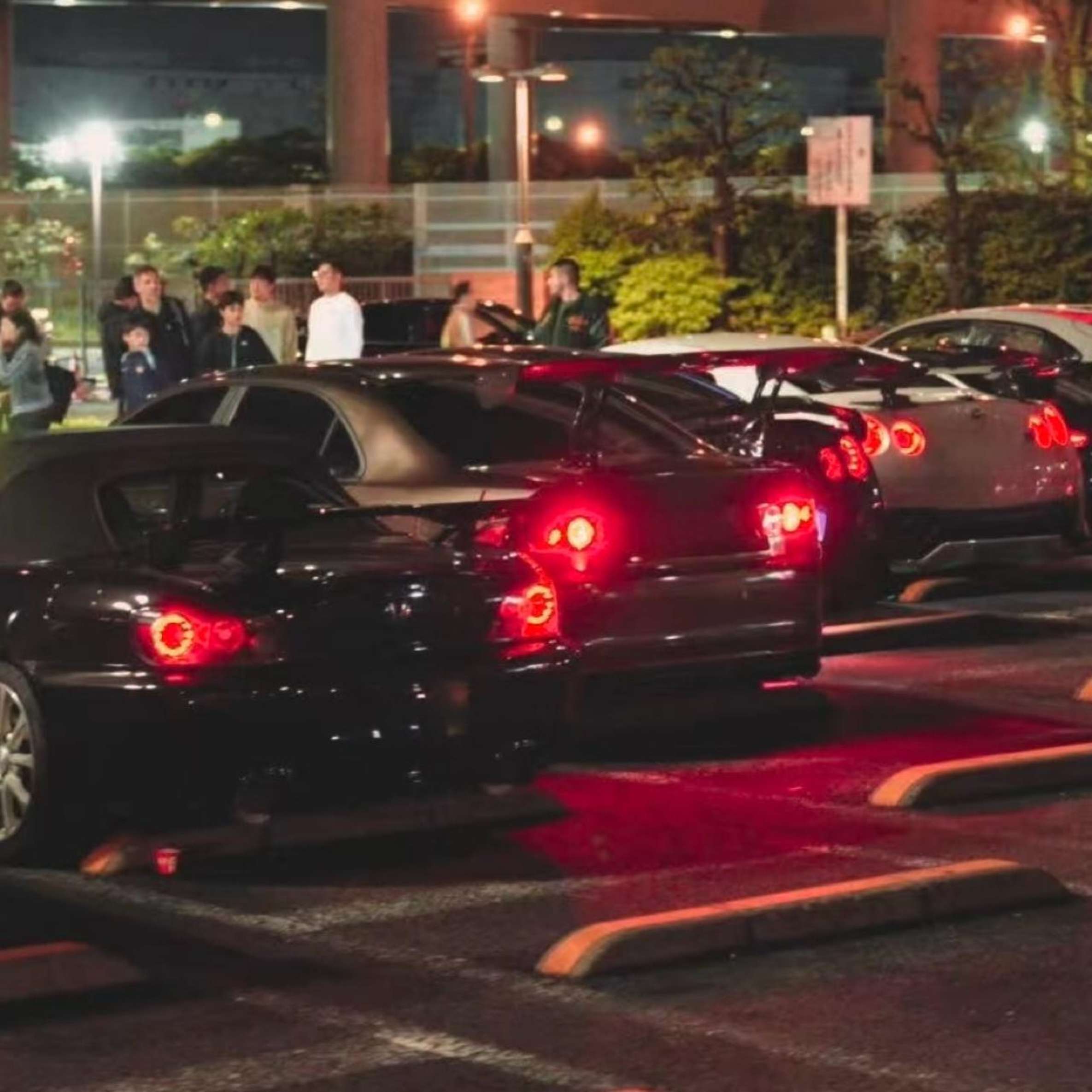
UDX is a working garage that happens to hold some of Tokyo's best itasha, free to walk into and three minutes from the train.
Go for the wrapped cars and the calm; the show, if you want one, is at the bay. For supercars and hundred-car nights, book a guided run to Daikoku and treat UDX as your backup.
Tatsumi PA is the quiet option among Tokyo's parking-area meets, reached only by car on the expressway.
Read the guide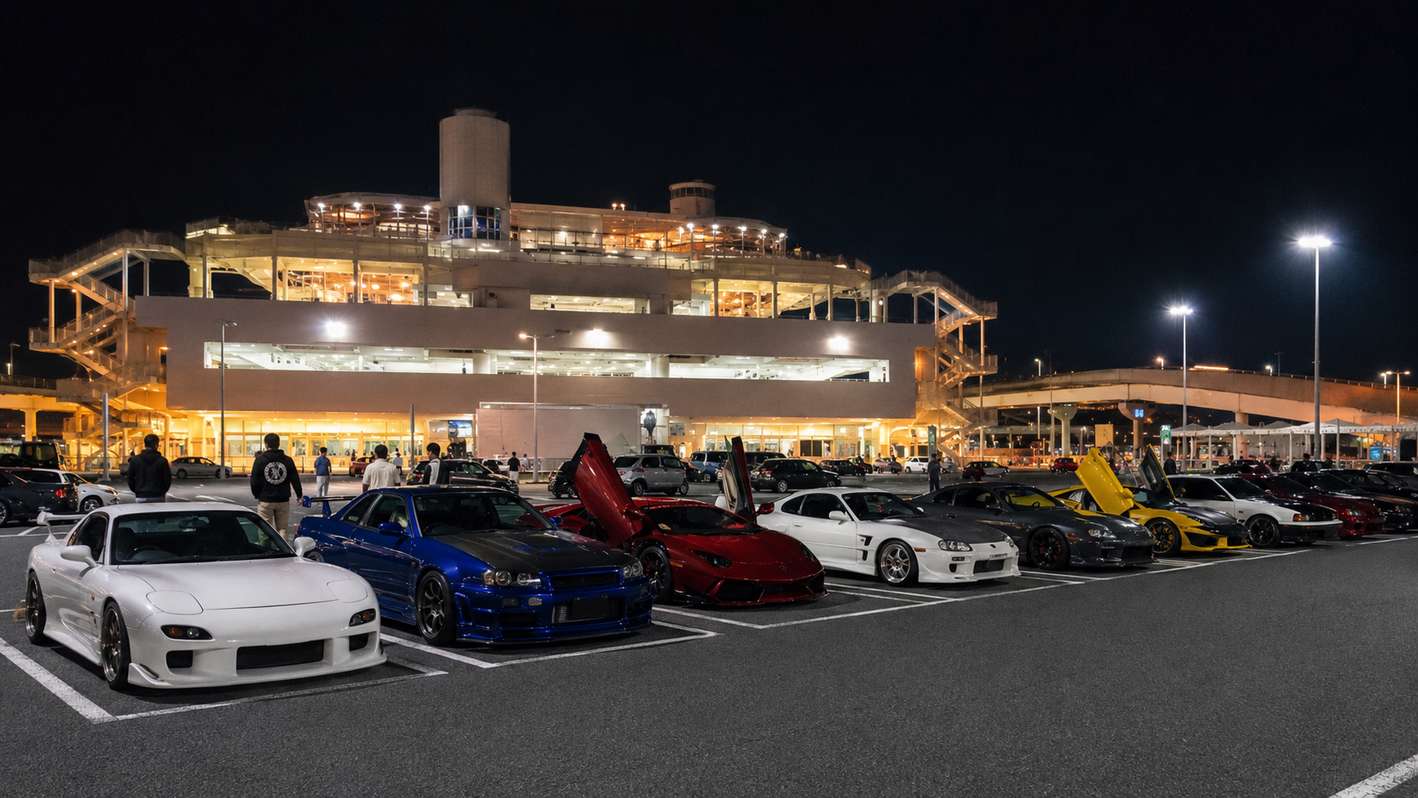
Umihotaru PA pairs wide bay views with a possible car meet under a roof, best on weekend evenings.
Read the guide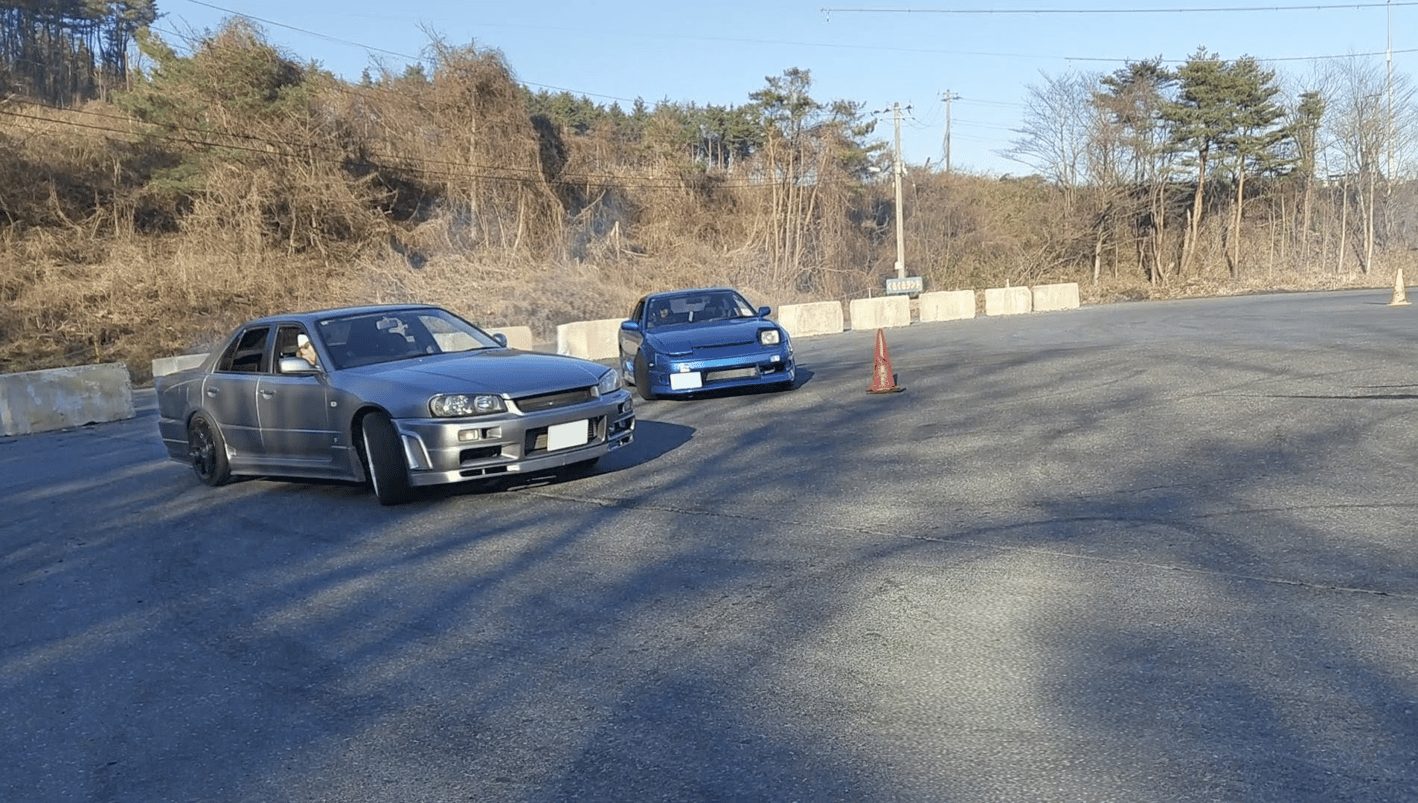
City Circuit Tokyo Bay is a scheduled event with selected cars, motorsports talks and karting, minutes from Aomi Station.
Read the guide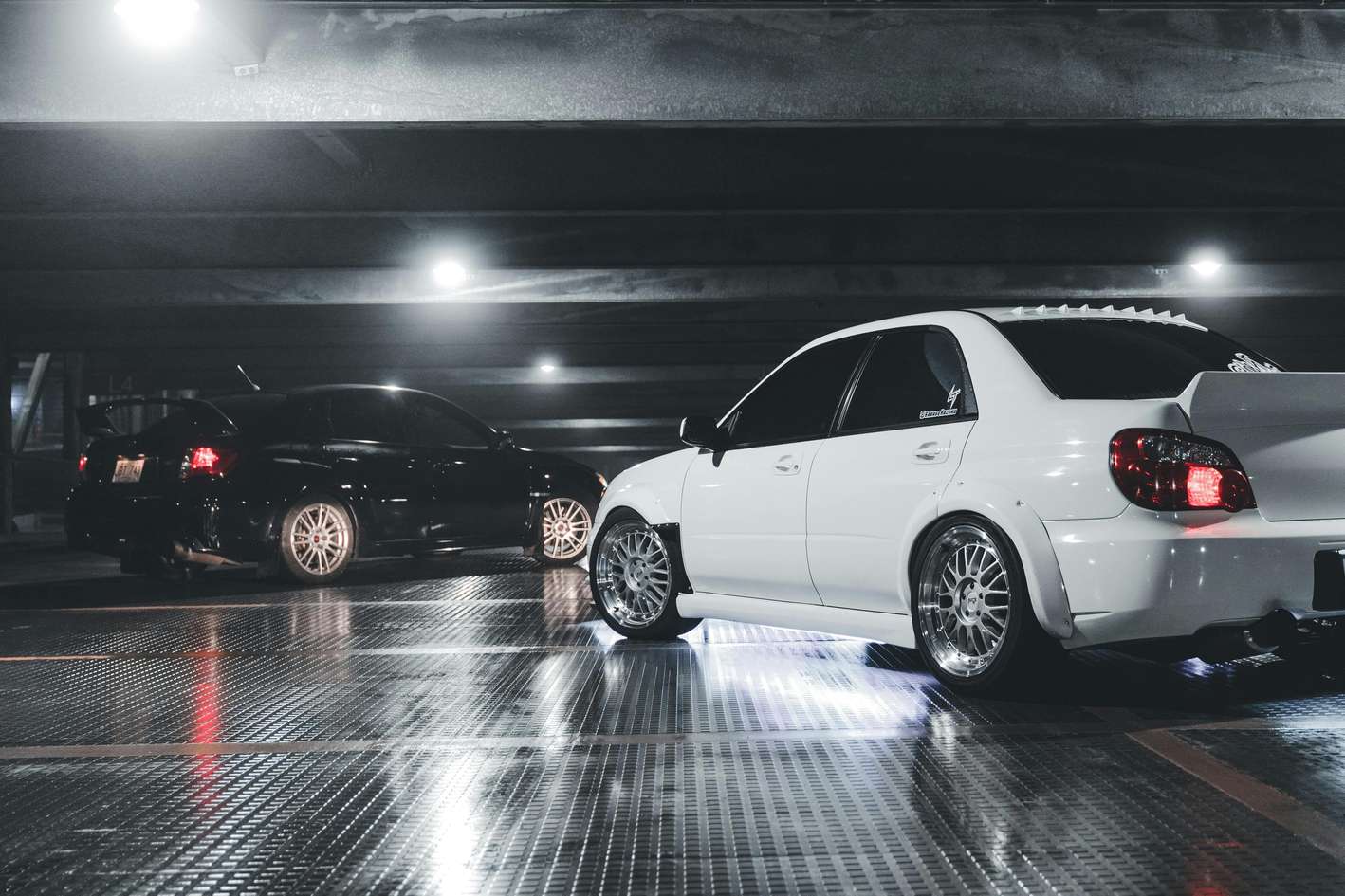
Higashi Osaka PA draws a big Friday and Saturday crowd of modified and exotic cars, liveliest from 10 pm to midnight.
Read the guideFour other places to see Japanese car culture, each with its own crowd, timing and way of getting there.
A small, calm gathering of about ten cars on a typical night
Tatsumi Parking Area sits on the Tokyo side of the bay, a smaller stop where enthusiasts sometimes gather. A typical night brings roughly ten cars, against a hundred or more on big Daikoku nights, so the pace is slower and owners are easier to talk to.
There is no pedestrian or public-transport entrance, so you need your own car or a guided tour. Restroom access late at night is unreliable, so plan around that.
A dry evening draws more cars than a rainy one, and the usual etiquette applies: ask before taking close-up photos and never touch or lean on a car.
A roofed parking lot on an island in Tokyo Bay, meet runs rain or shine
Umihotaru is a working rest area on an artificial island halfway along the Aqua-Line toll road. The parking lot is covered, so the gathering carries on even in rain, and the bay views, restaurants and shops are part of the visit whatever the cars do.
Cars show up most nights these tours run, with Saturday around 10 pm the clearest reported peak. Allow about an hour and a half.
By public transport you take a train to Kawasaki Station and a highway bus from bay 22, so plan the return before you set out. Severe storms can close the Aqua-Line, so check conditions first.
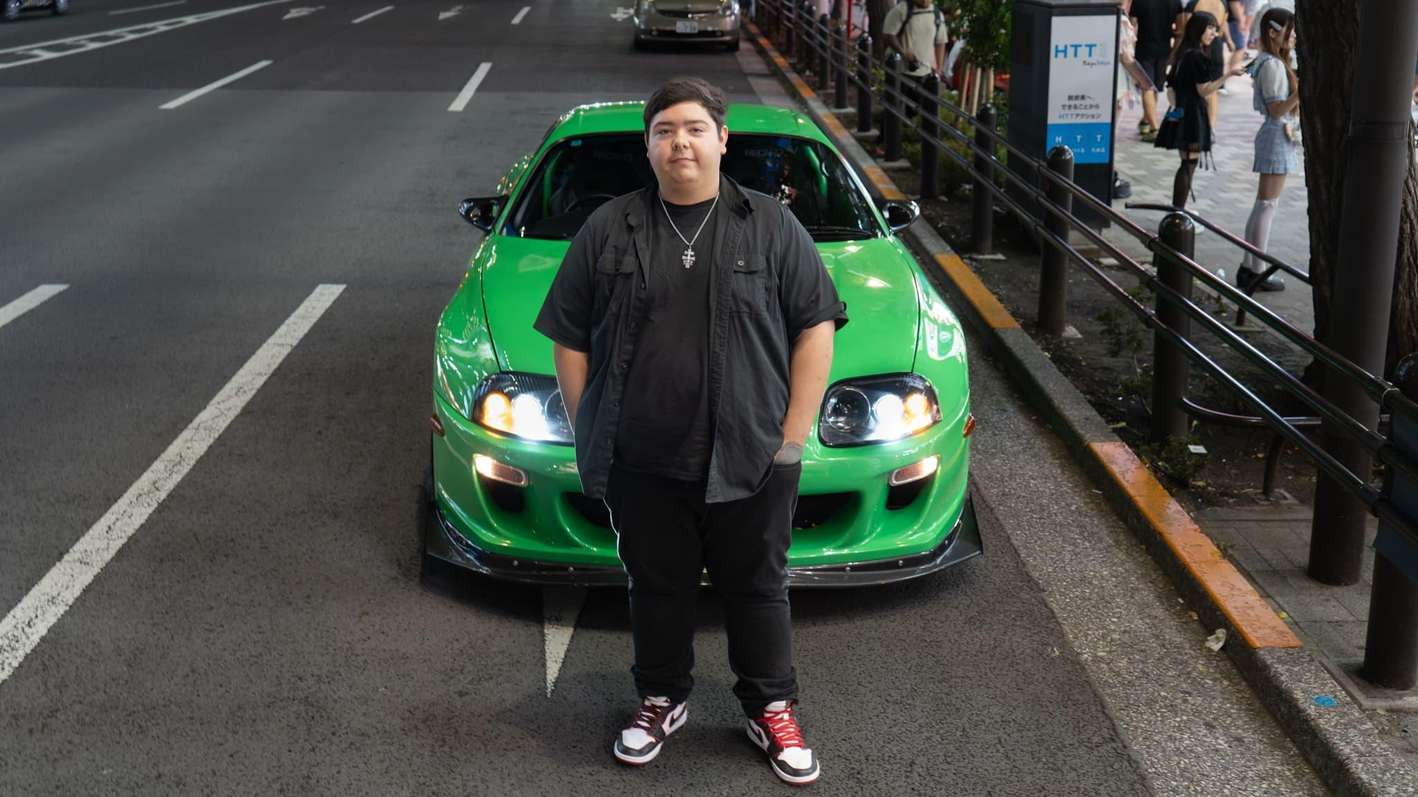
3.5 hours · ★ 5.0 (62)Tokyo Drift Daikoku: Modified Supra Night JDM ExperienceFrom $190 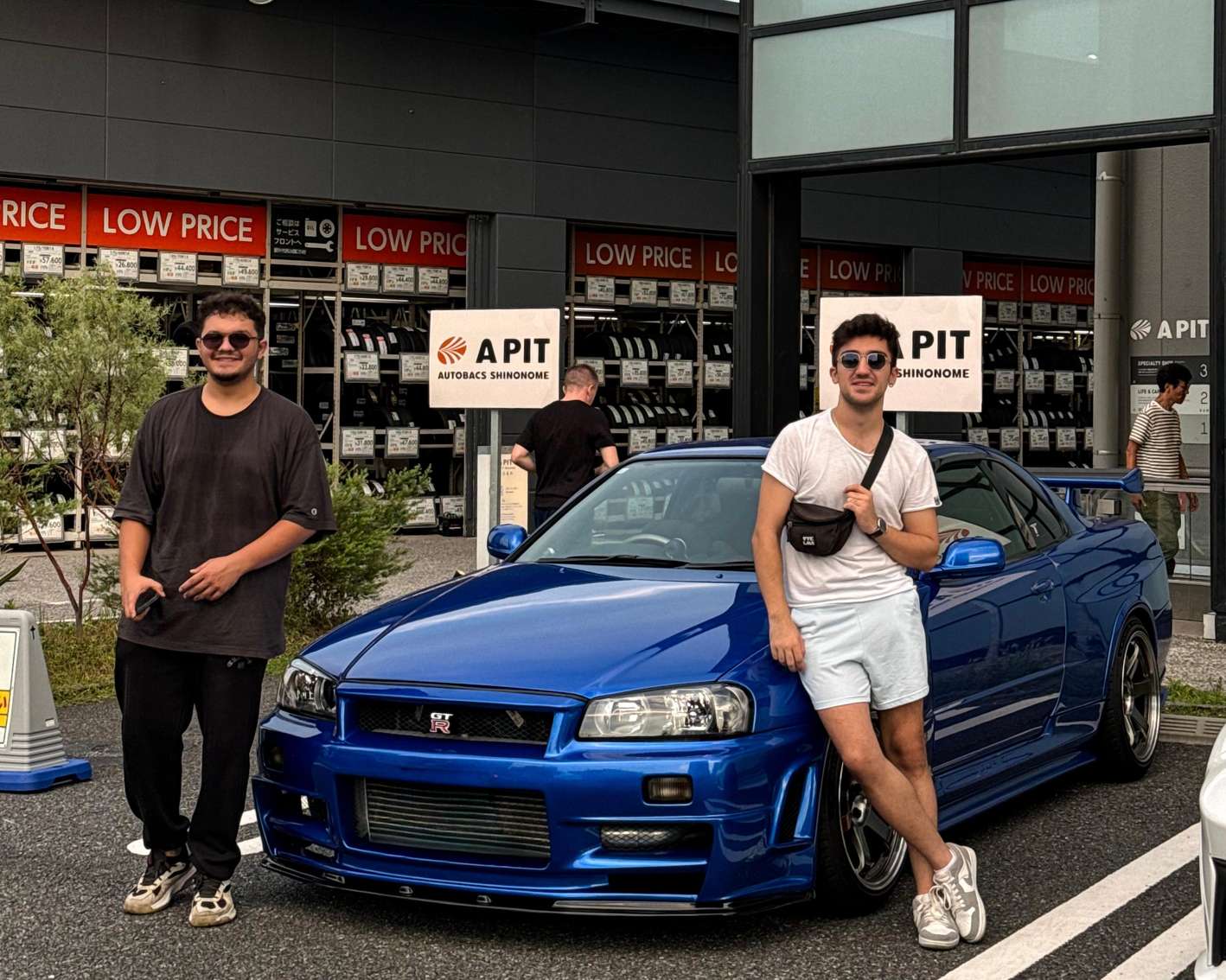 3 hours · ★ 4.9 (181)【R34】Daikoku PA Private Tour, Tokyo JDM Night ExperienceFrom $444 /group
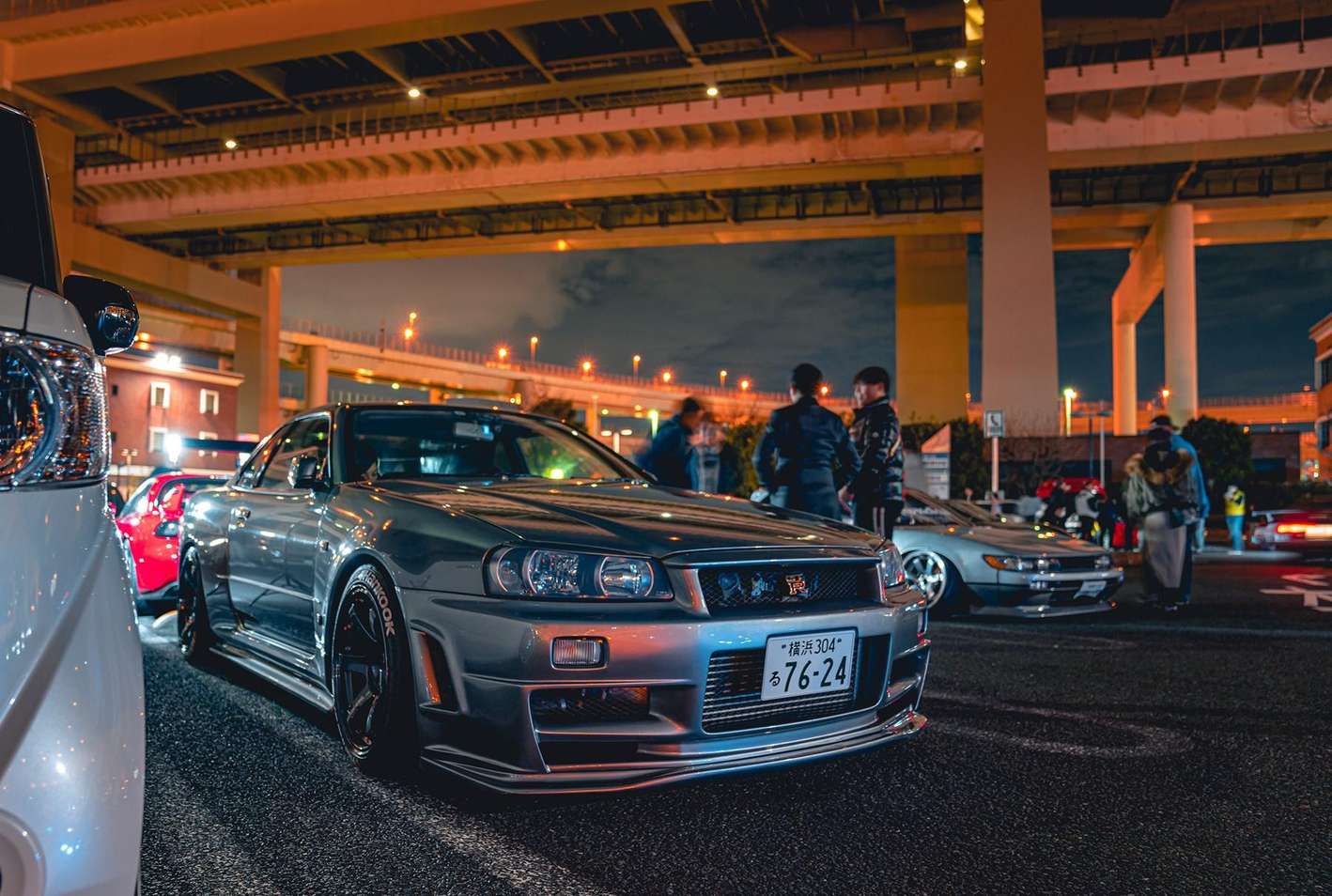 3 - 4 hours · ★ 4.9 (183)Daikoku & Tokyo Private JDM Tour in 700HP R34 GT-RFrom $595 /group
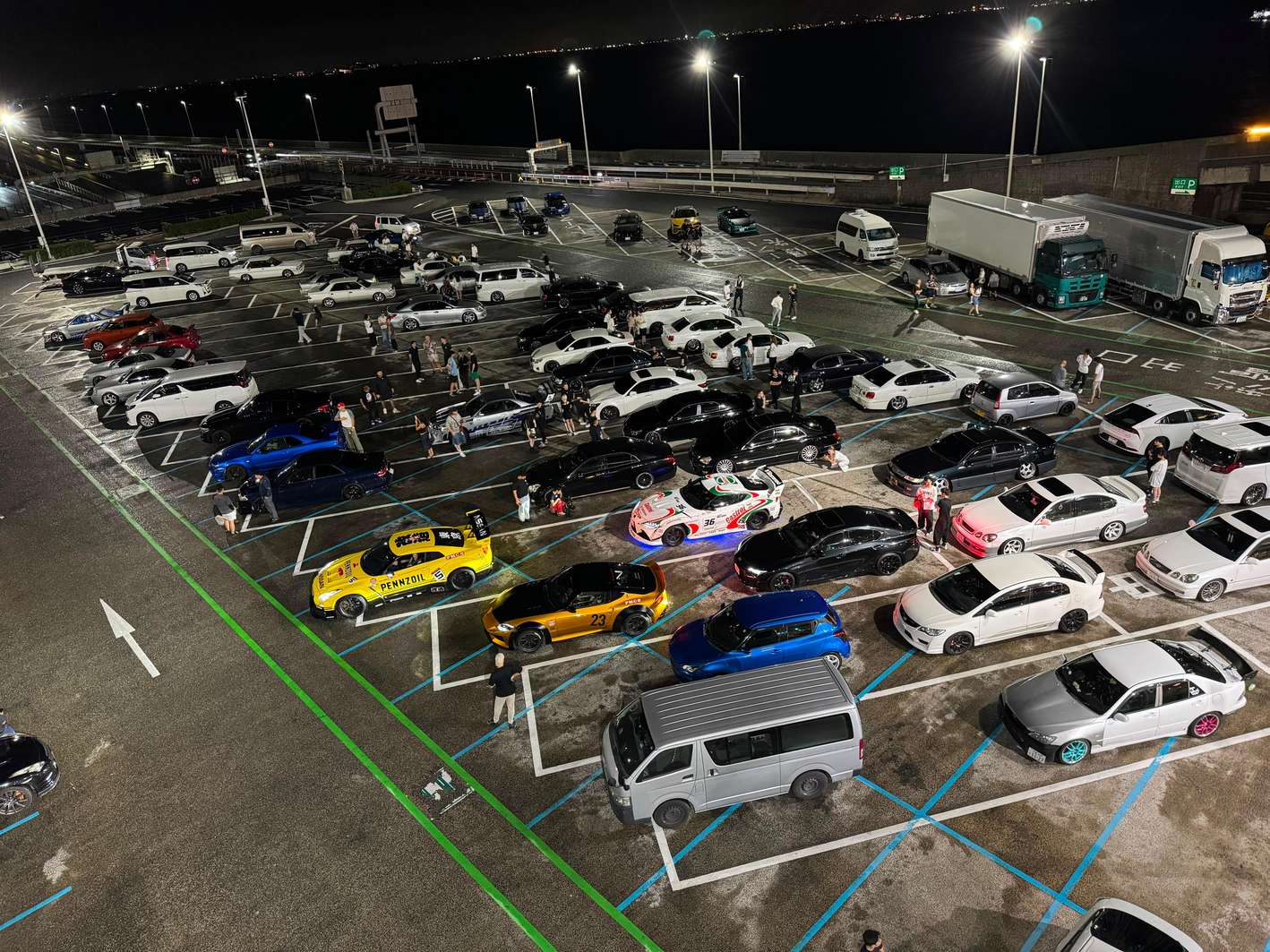 4 hours · ★ 4.8 (85)Tokyo: JDM Legends Ride in a Modified Car to Daikoku PAFrom $108
A structured evening with about 50 selected cars, talks and karting
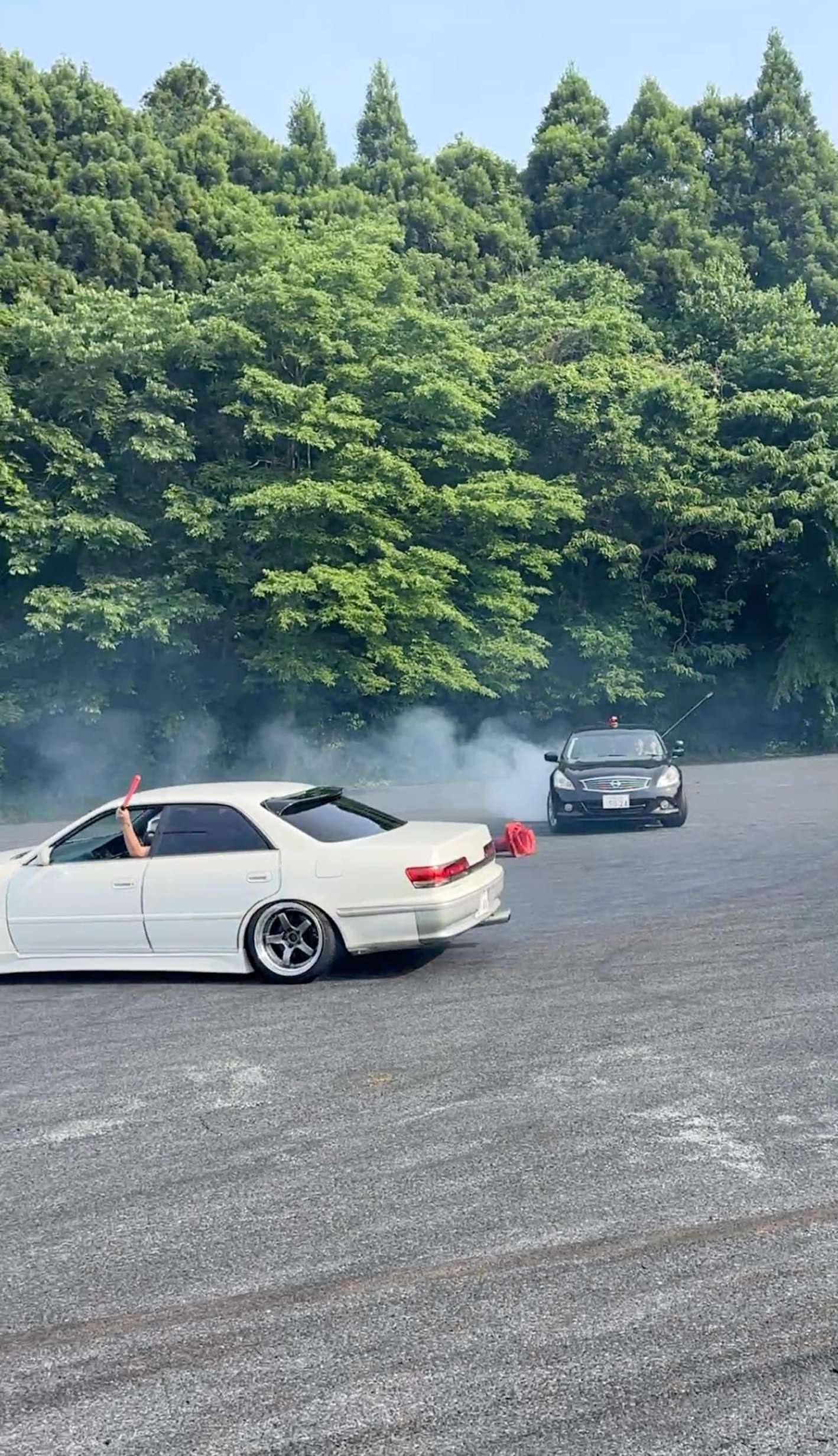
City Circuit Tokyo Bay is a purpose-built EV kart circuit that stages a more structured evening than an informal parking-area meet. On its scheduled dates it runs from 6 pm to 10 pm, with about 50 selected cars, motorsports talks and karting in one place.
No license is needed to ride. Riders need to be at least 150 cm tall for the driver seats and 105 cm for the kids' kart or passenger seat.
The circuit stays open in rain, though the weekly race is cancelled if it rains. Aomi Station on the Yurikamome sits right beside it, and food is limited to light snacks, so eat before you arrive.
Osaka's answer to Daikoku, with over 250 cars on busy weekend nights
Higashi Osaka Parking Area is considered Osaka's version of Daikoku. Enthusiasts gather most Friday and Saturday evenings, with over 250 cars on busy nights: Skyline GT-Rs, tuned Supras, Lamborghinis, lowriders and drift Nissans.
Late evening between 10 pm and midnight is the most active time, police are on site, and the meet ends with a loud group departure.
The lot sits on a toll expressway and can only be reached by car, so plan a rental, a tour or a willing taxi driver. The meet gathers on the downbound side toward Matsubara, which has a 24-hour 7-Eleven. Turnout is a lottery, so treat any sighting as a bonus.
Compare Tokyo's most popular car meet locations side by side and pick the spot that fits your night.
Tatsumi PA draws a night crowd by the water; find out how to approach a visit there with confidence.
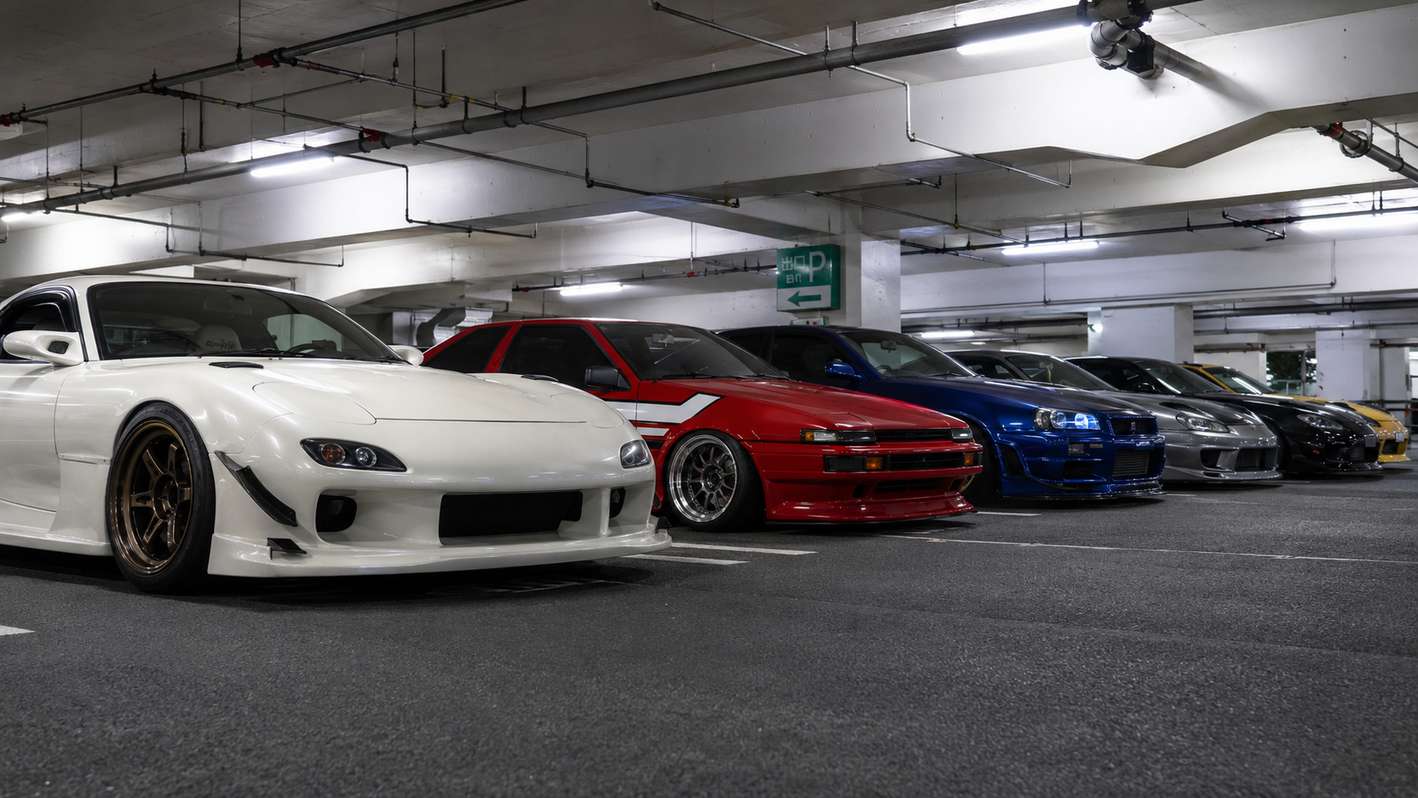
Umihotaru sits mid-bay on the expressway; see what the meet there is like and how to plan a stop.
City Circuit Tokyo Bay runs as an evening event on set dates, so timing decides whether you catch it.
Higashi Osaka PA hosts meets most Friday and Saturday evenings; get the location details before you go.
Daikoku is the famous one; learn how to check its status, get there by car, and follow the visitor rules.
Sunday mornings in good weather bring the biggest turnouts at Daikoku; find the best day and hour for you.
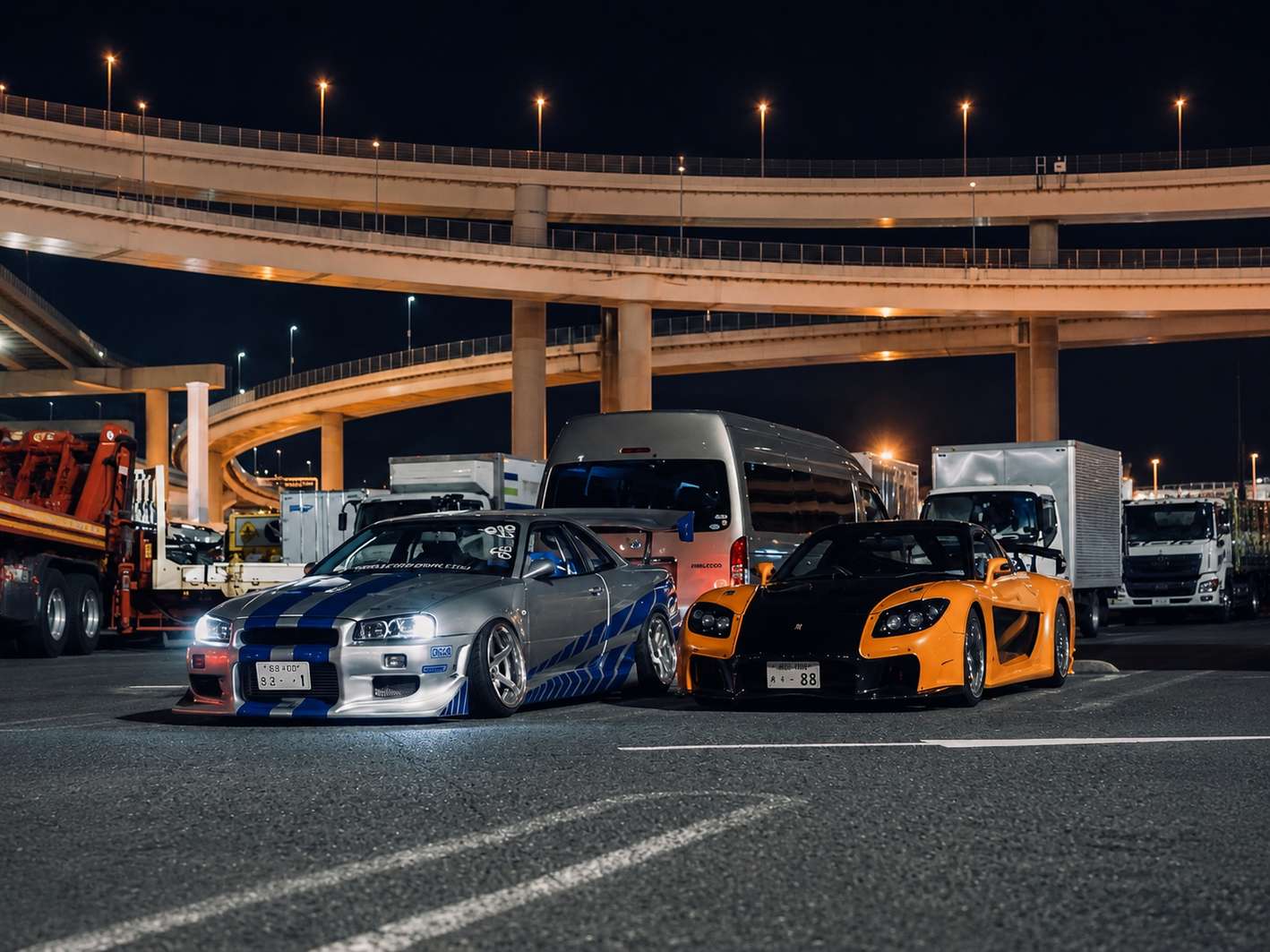
Daikoku sits on a toll highway with no train or foot access; get clear directions and transport routes.
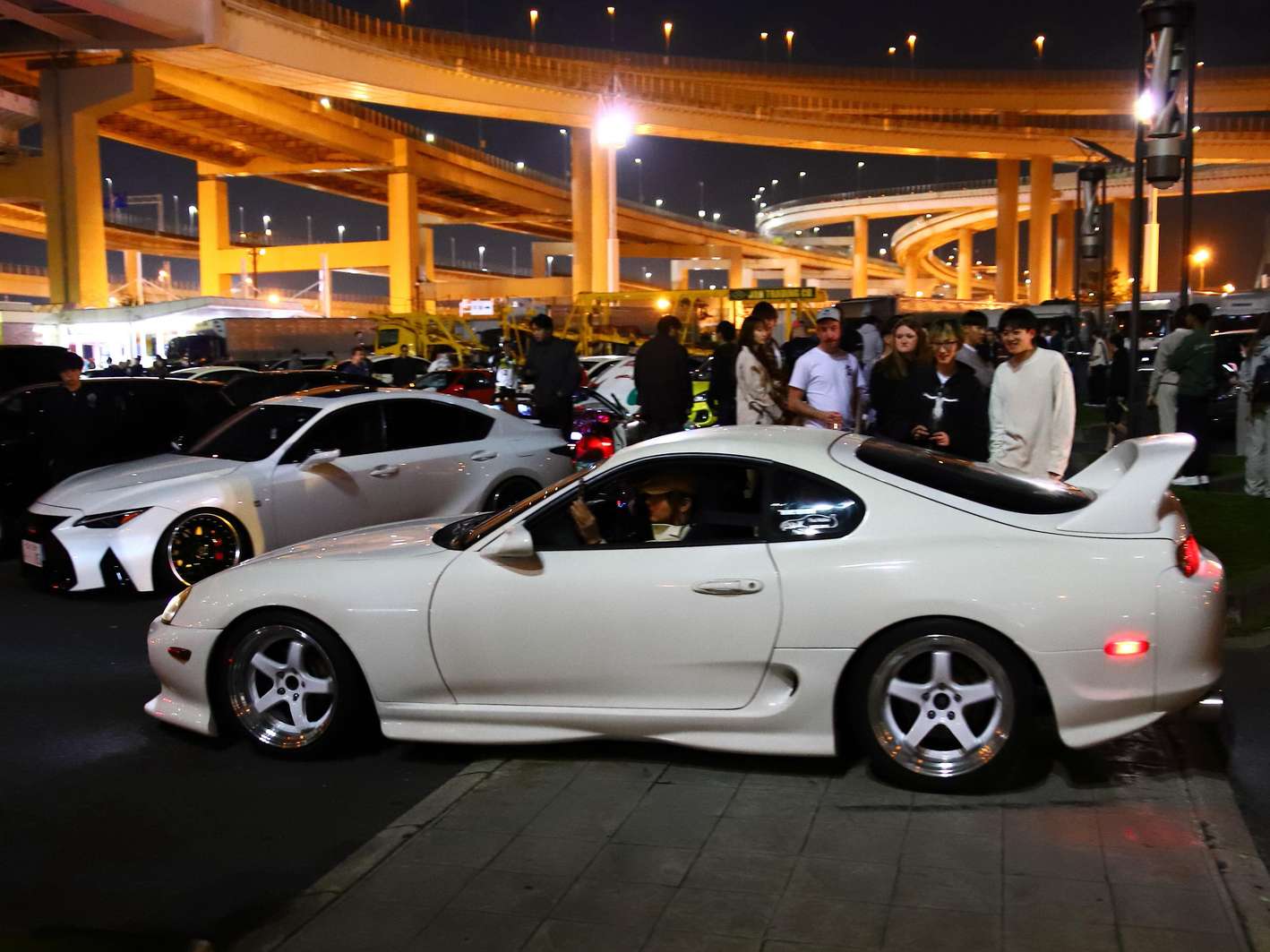
Worried about police activity or first-visit rules? Get a straight answer on who can go and what to expect.
Ride to the Daikoku meet in a modified Supra and see what that night experience includes.
See the Daikoku meet from a Porsche Macan; find out what that quieter ride option looks like.
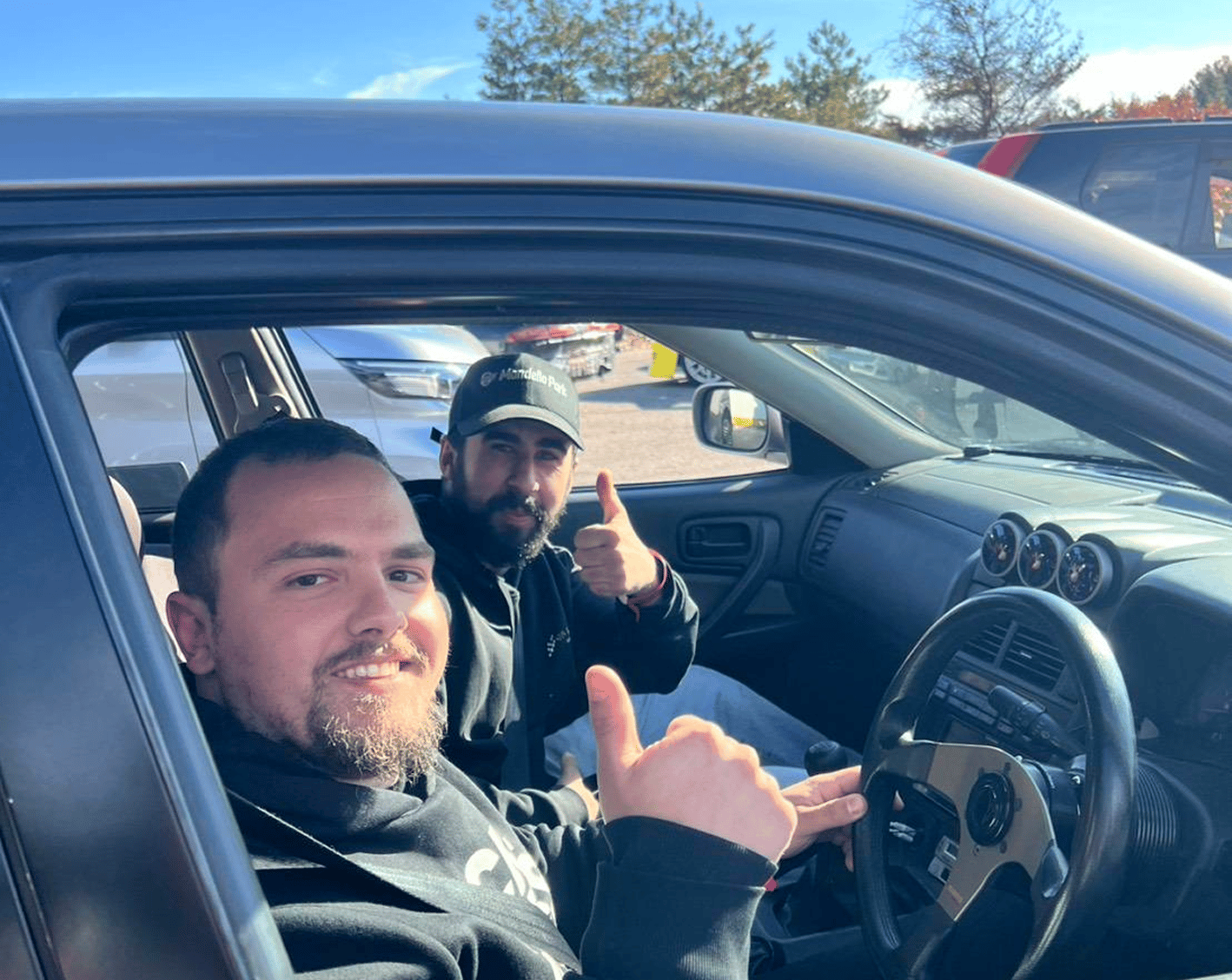
Drifting on public roads is illegal in Japan; learn where you can legally watch it or try it yourself.
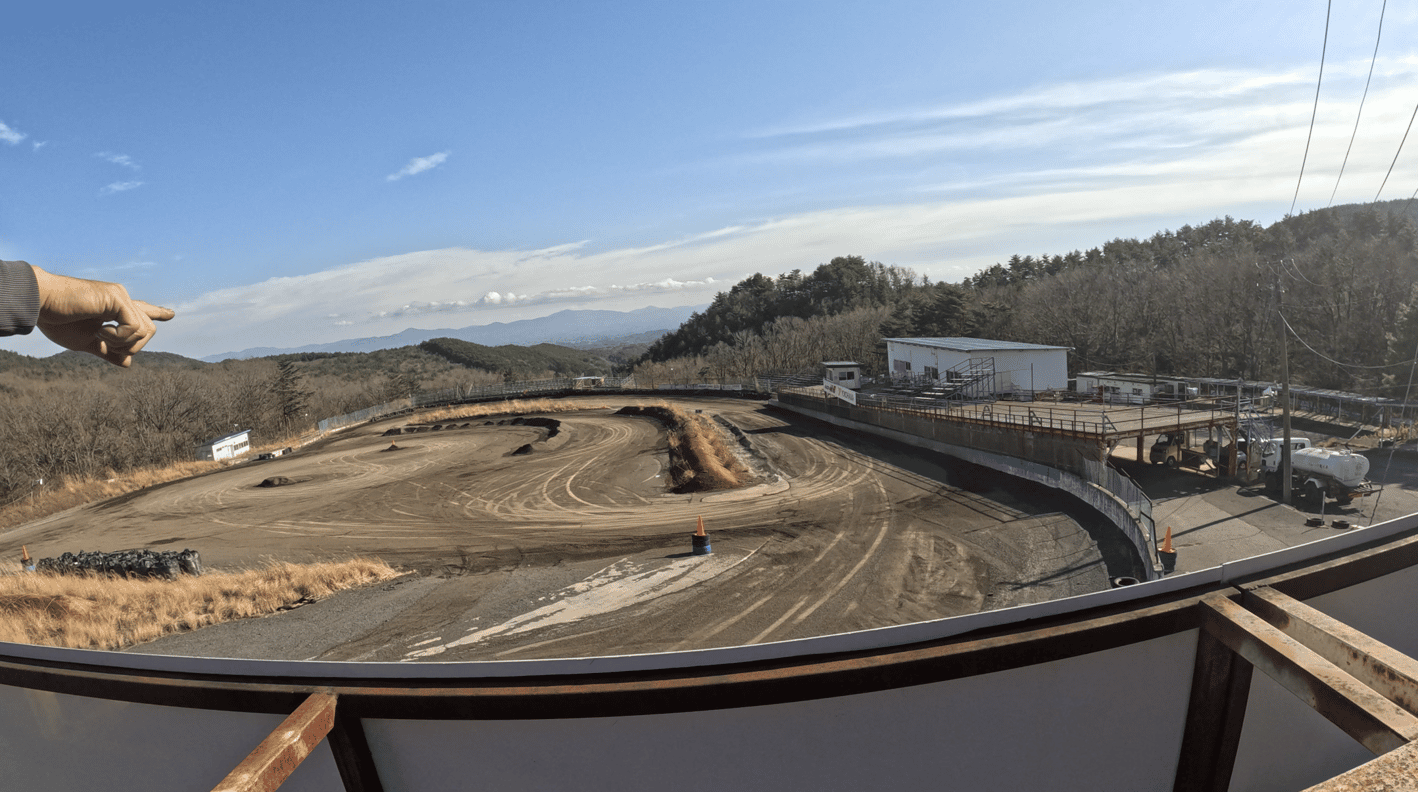
Want to see real drift competition? Find the circuits and events near Tokyo where it actually happens.
Beginners learn donuts and figure eights with patient instructors; see what a proper drift lesson involves.
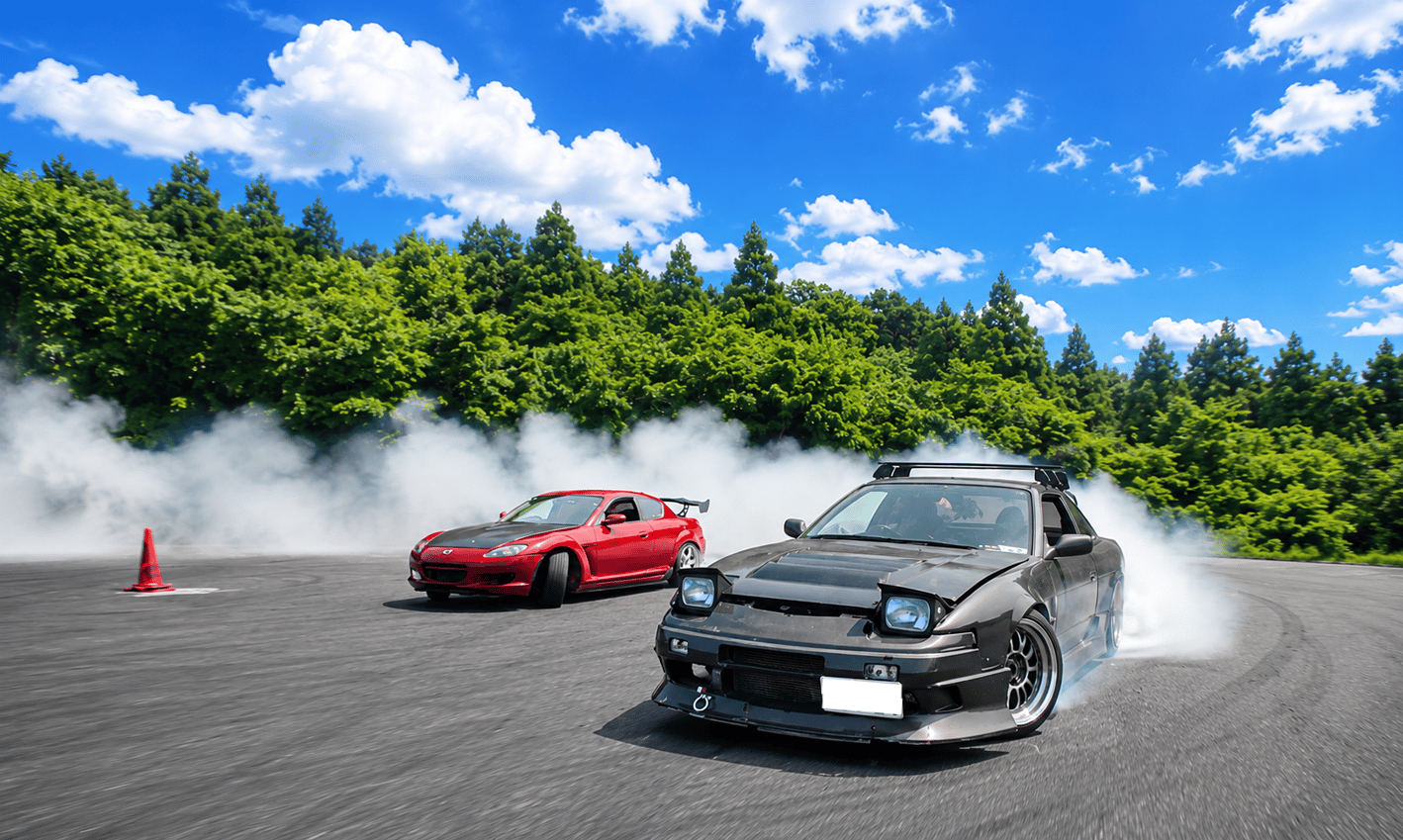
Turn the urge to drift yourself into a bookable track day; compare the self-drive options step by step.
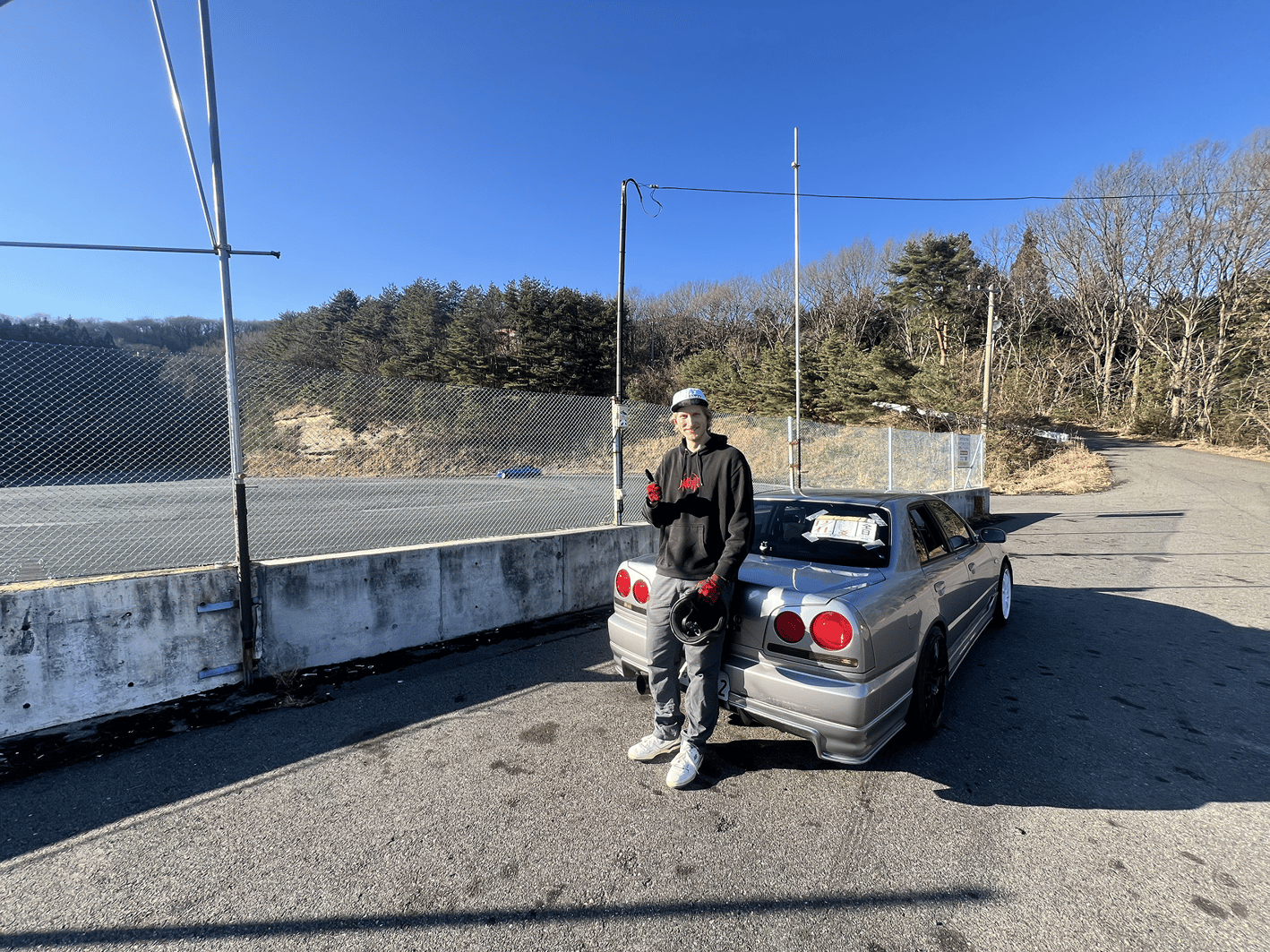
Guided drift rides and track experiences compared, so you can pick the one that matches your nerve.
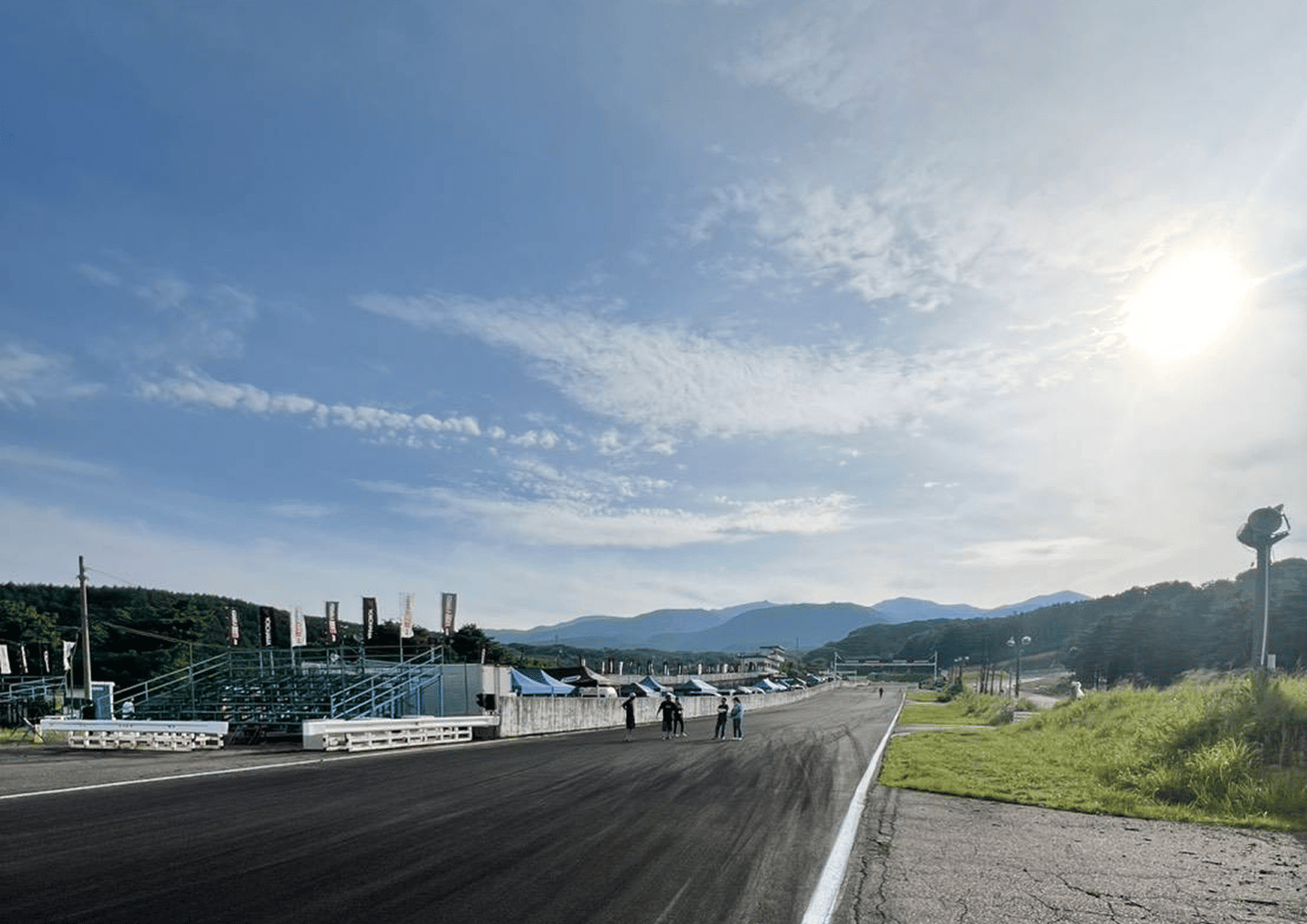
Ebisu Circuit is the legal home of Japanese drifting; see how the full-day outing from Tokyo works.
Not sure which kind of JDM experience suits you? Compare the tour types and find your fit.
Join Tokyo's nighttime car meet scene on a guided trip; see what the core experience delivers.
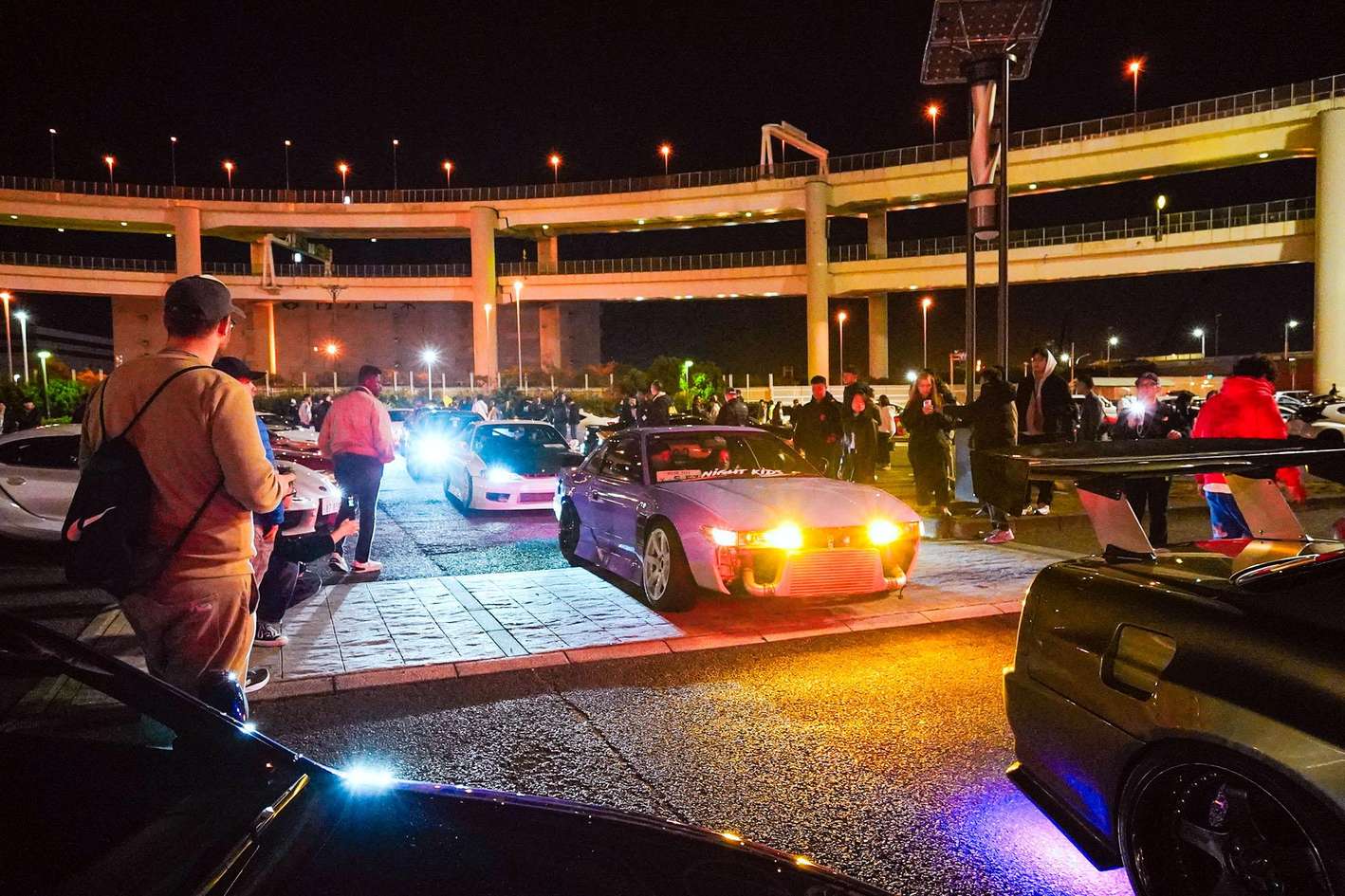
Daikoku after dark is the classic night drive; compare the night tour options and pick your ride.
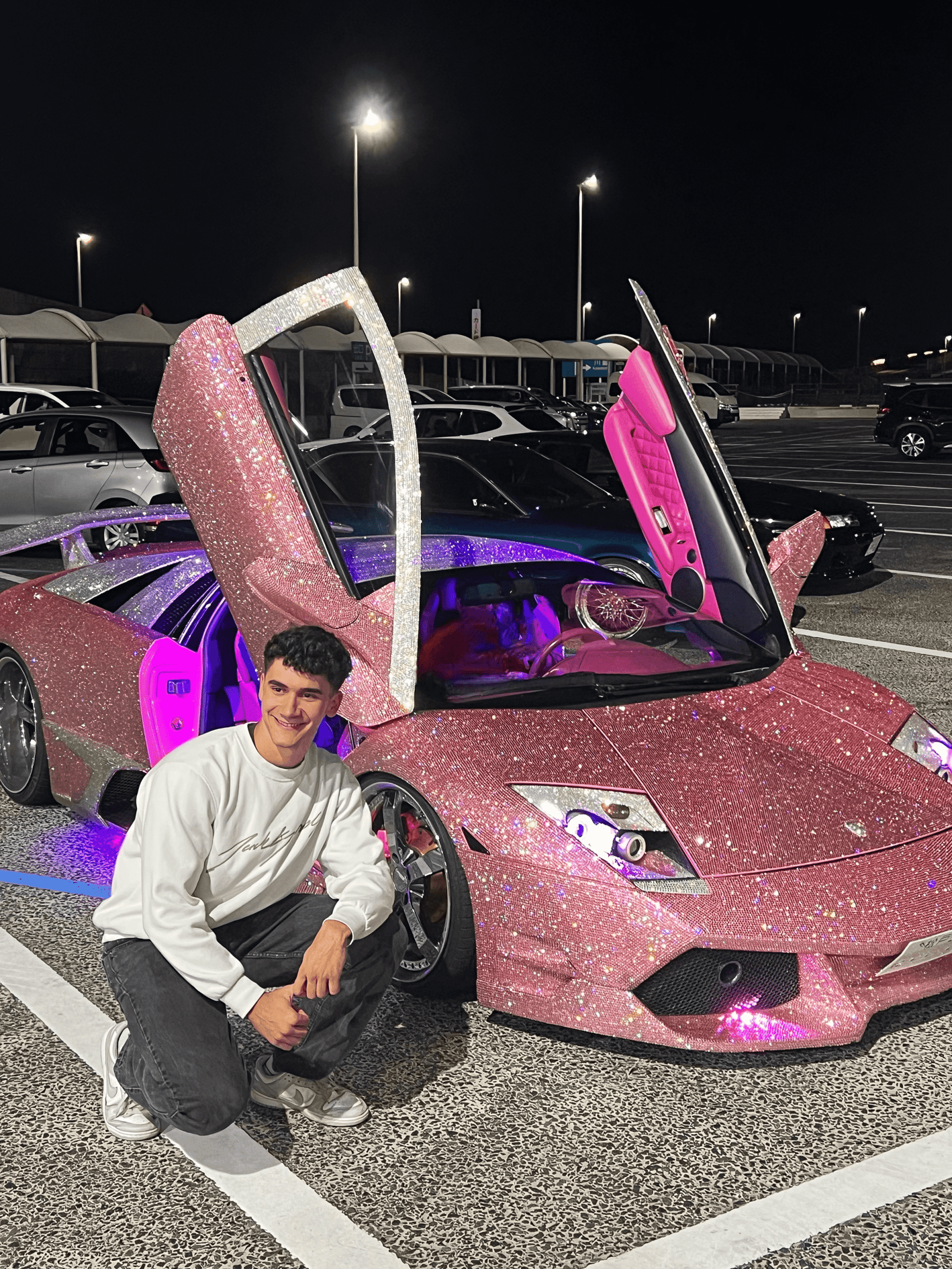
The Wangan and Bayshore Route are the roads the scene is tied to; find the tours that cruise them.
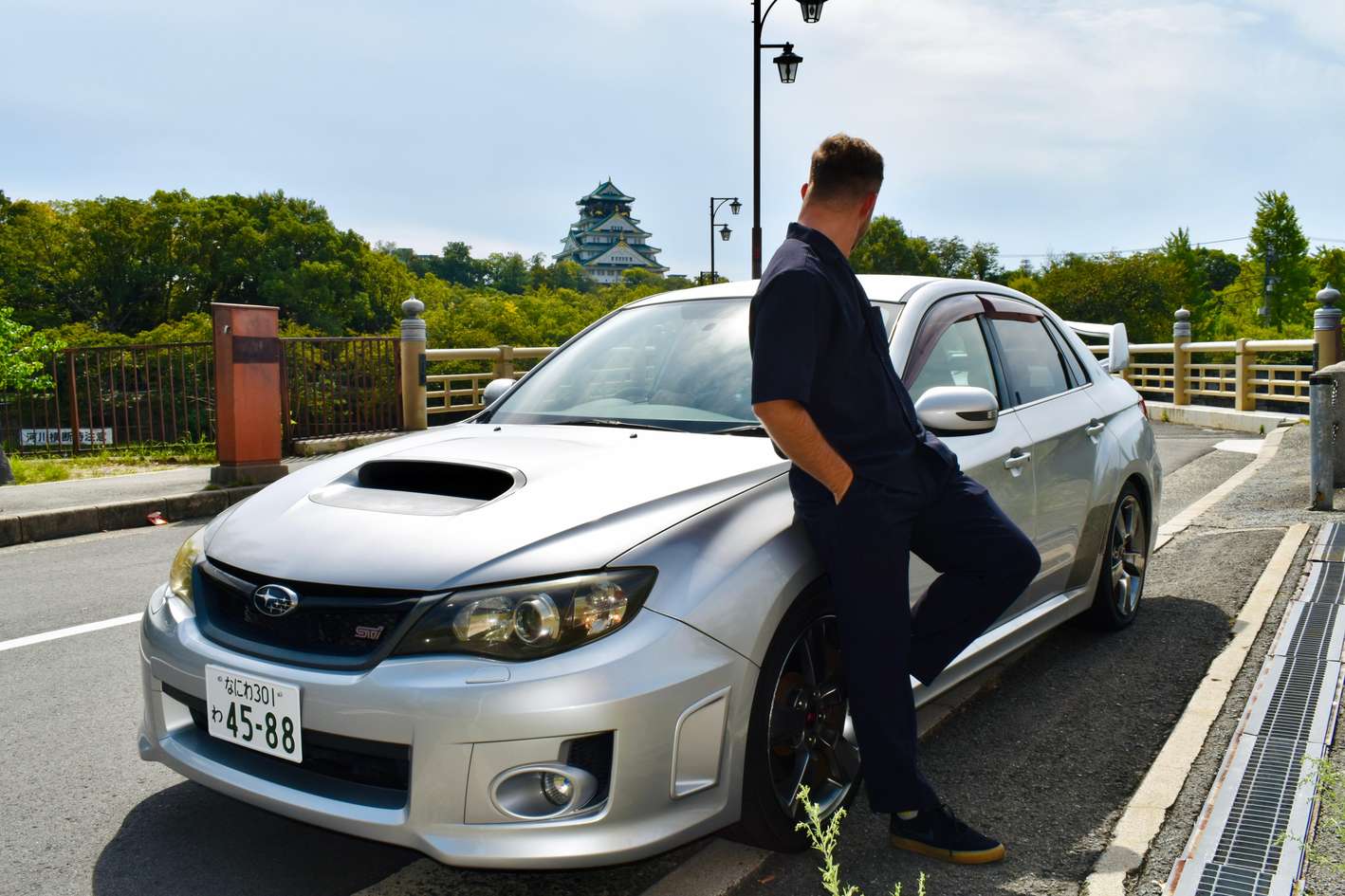
Want to drive rather than ride? See the difference between a rental tour and a guided driving experience.
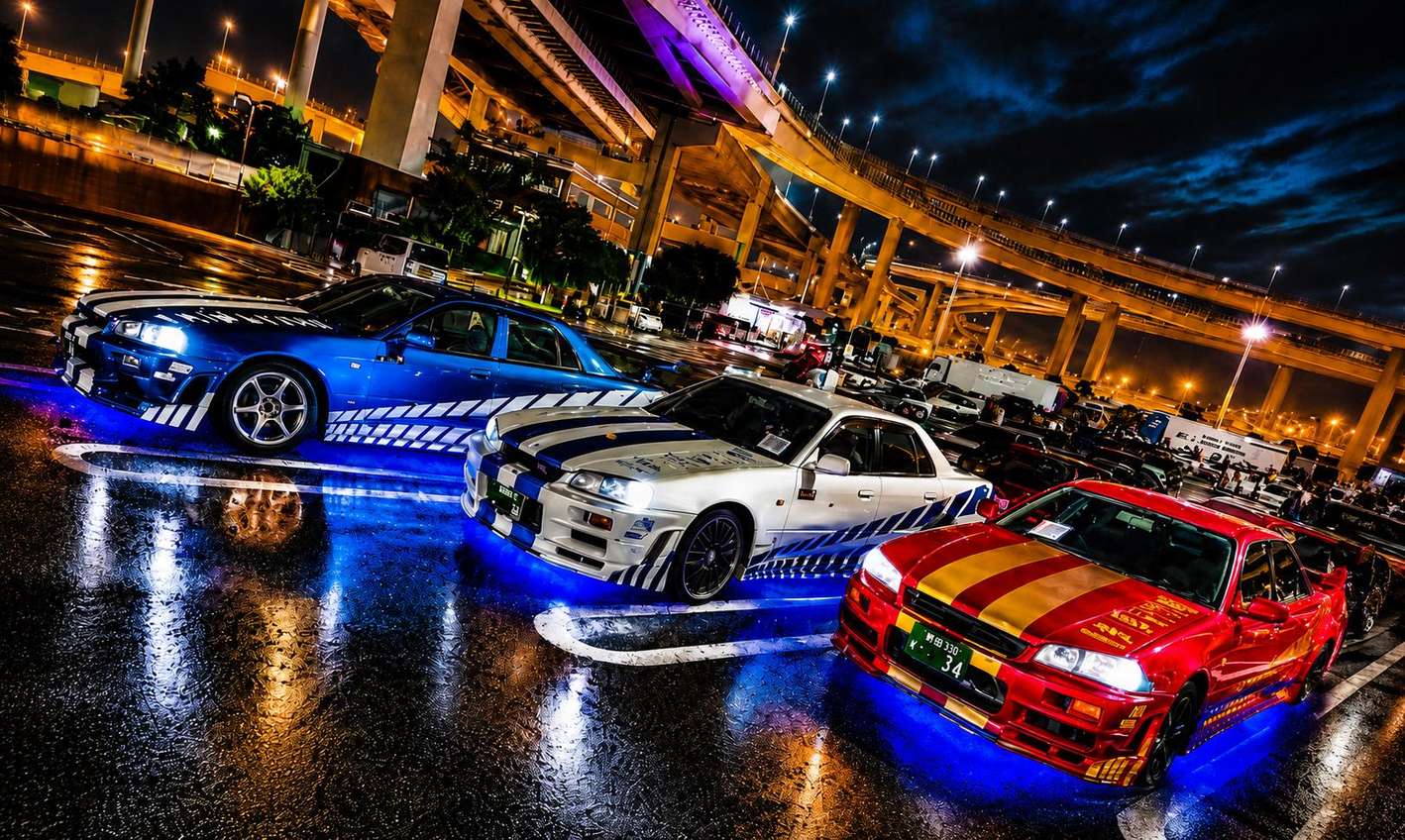
Prefer your own car and driver at Daikoku? See what a private JDM tour includes and costs in time.
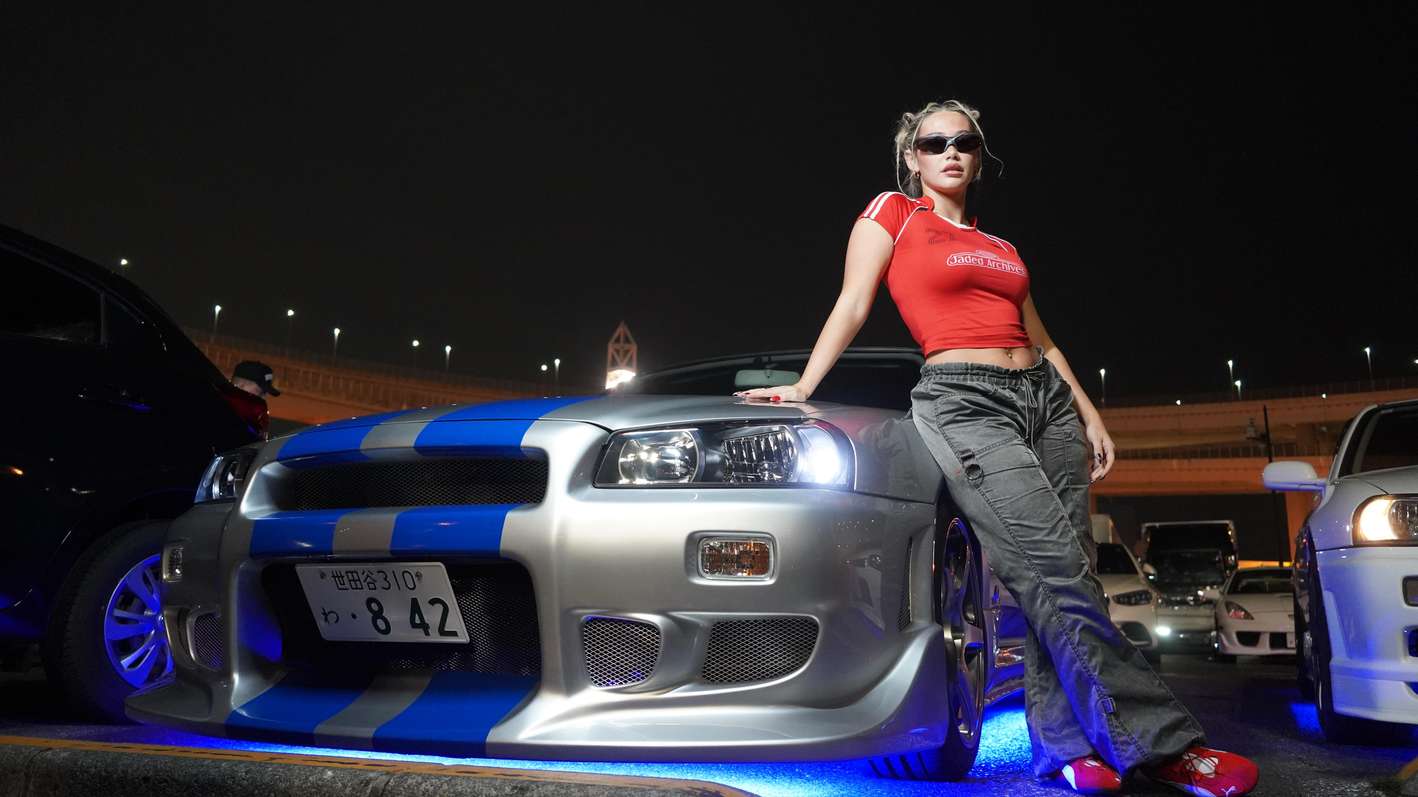
From GT-Rs to GR86s, compare the JDM sports cars you can actually drive in Tokyo and book one.
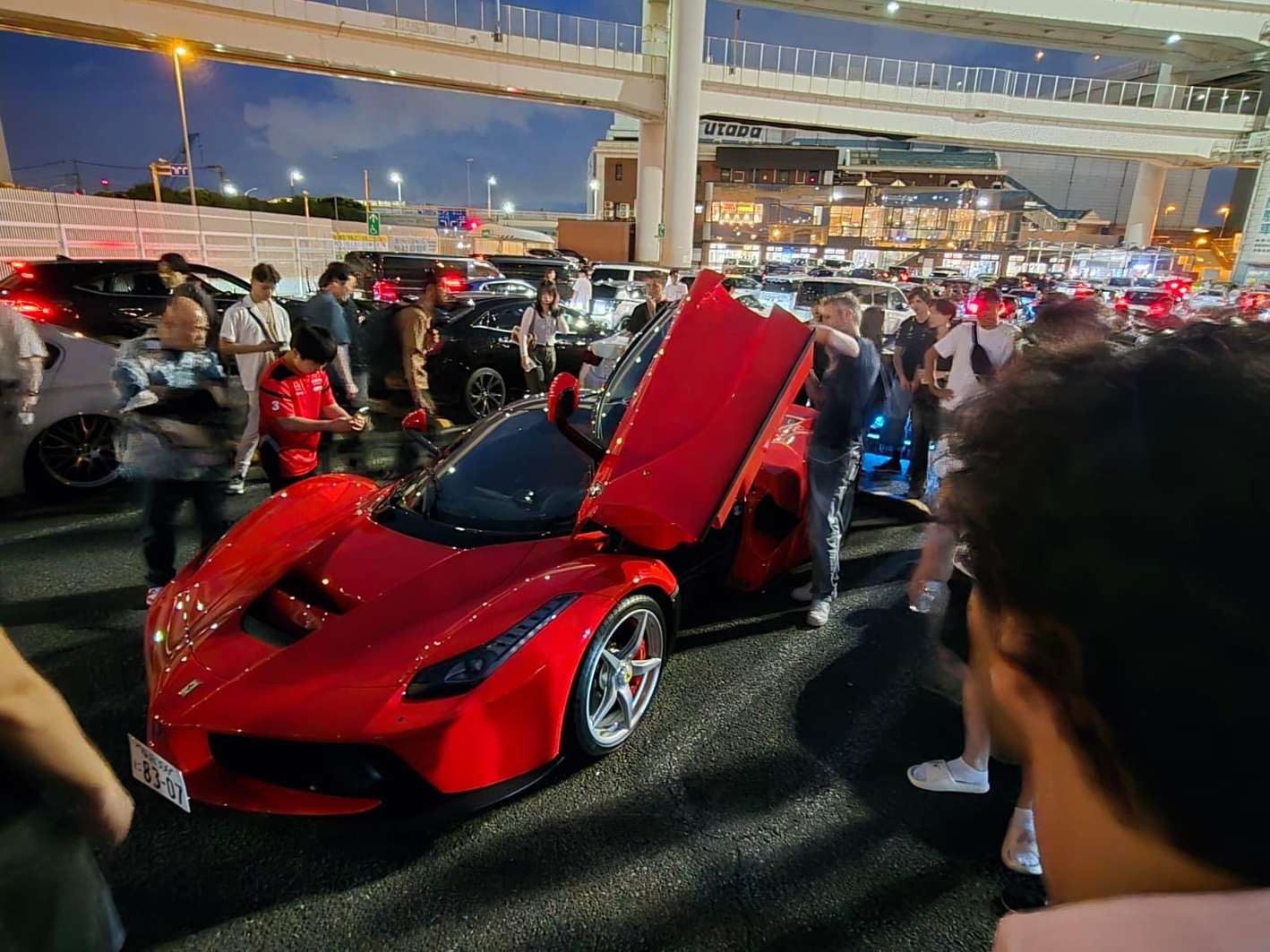
Looking for an AE86 in Tokyo? Get a direct answer on availability and the closest alternatives.
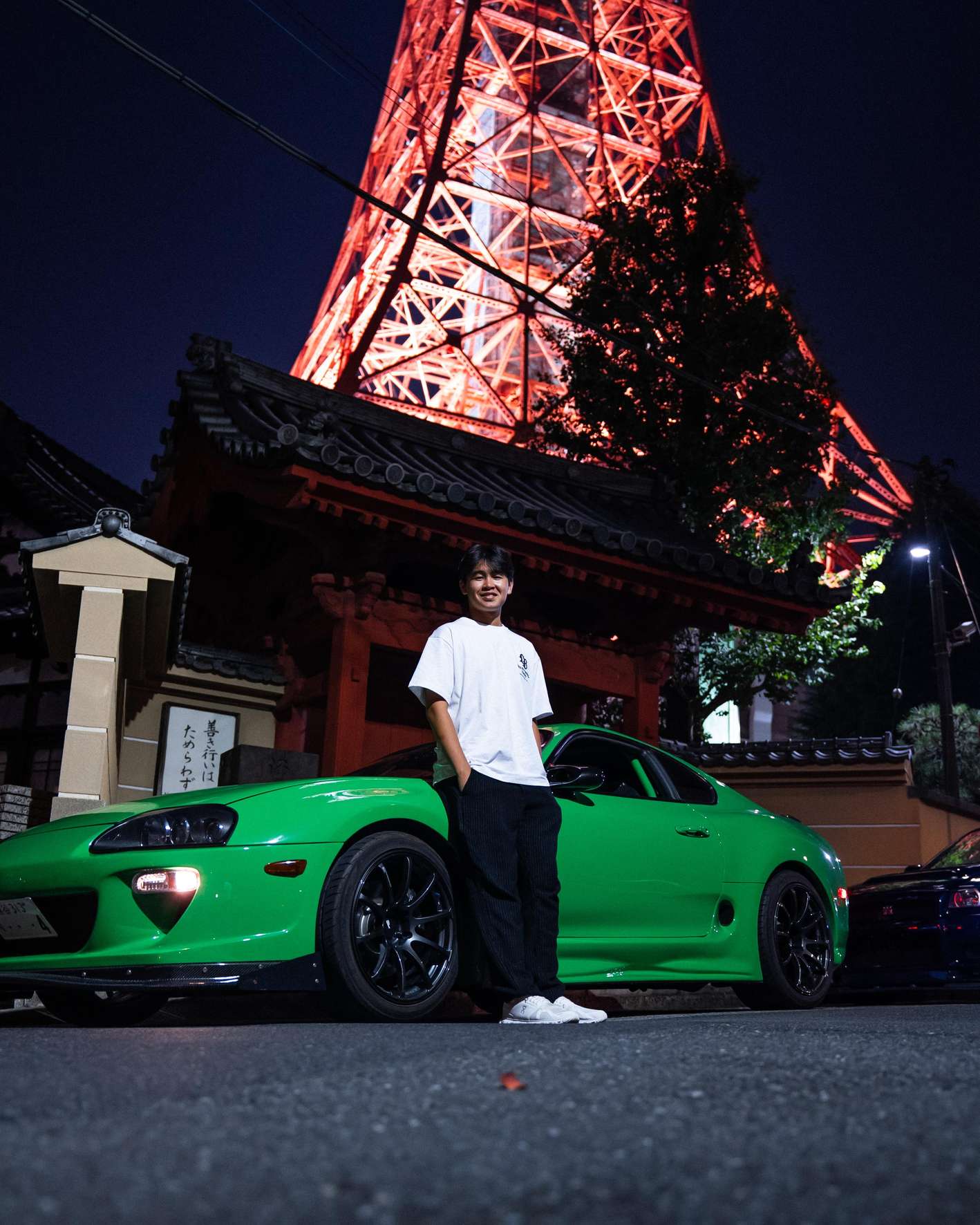
Can you rent and drive a Supra in Tokyo? Get the answer and make the next choice easily.
R32 GT-R seekers: tell a self-drive rental from a guided ride and find the closest available option.
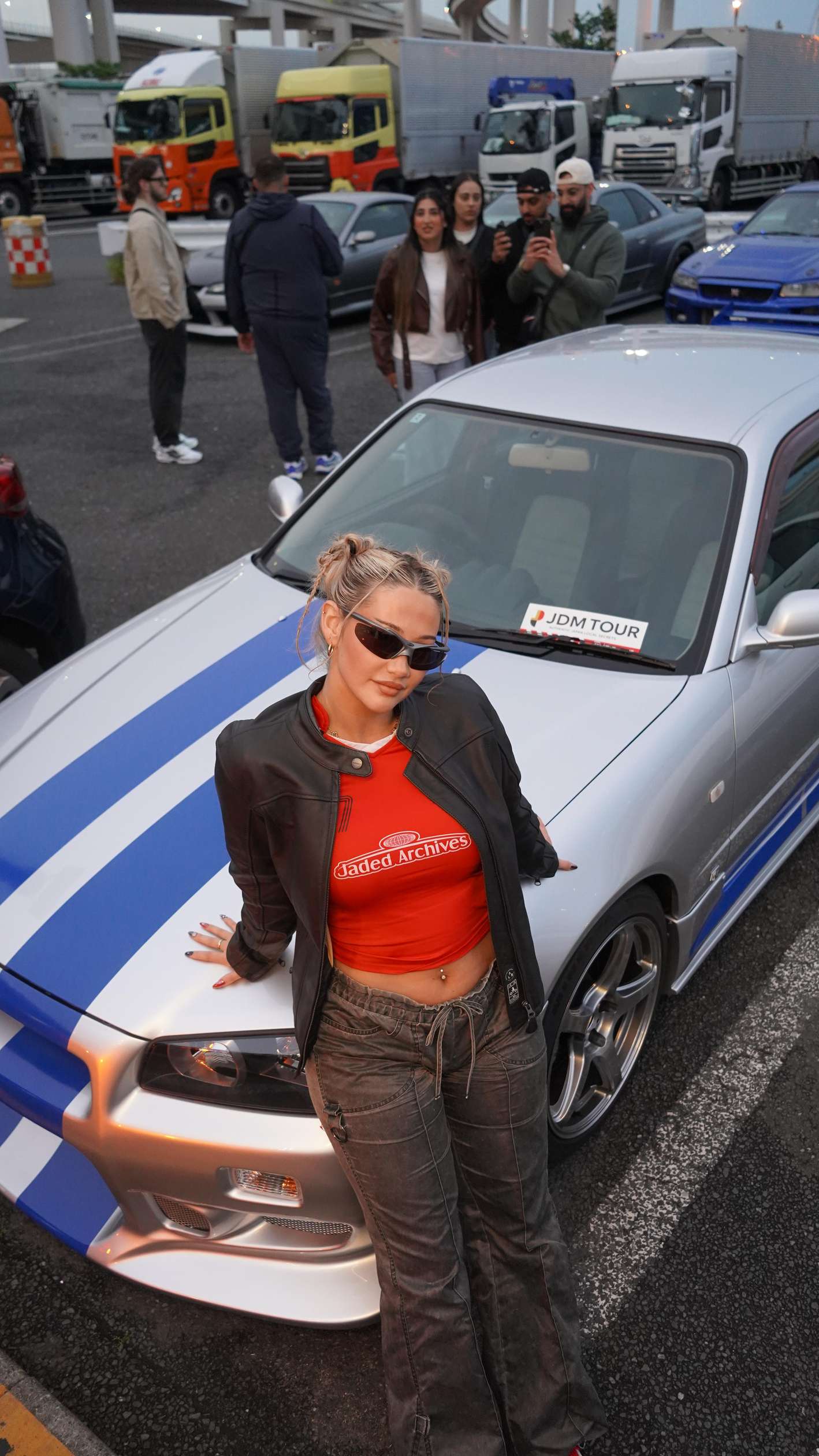
The R34 Skyline is the car everyone asks about; compare driving it yourself against a guided ride.
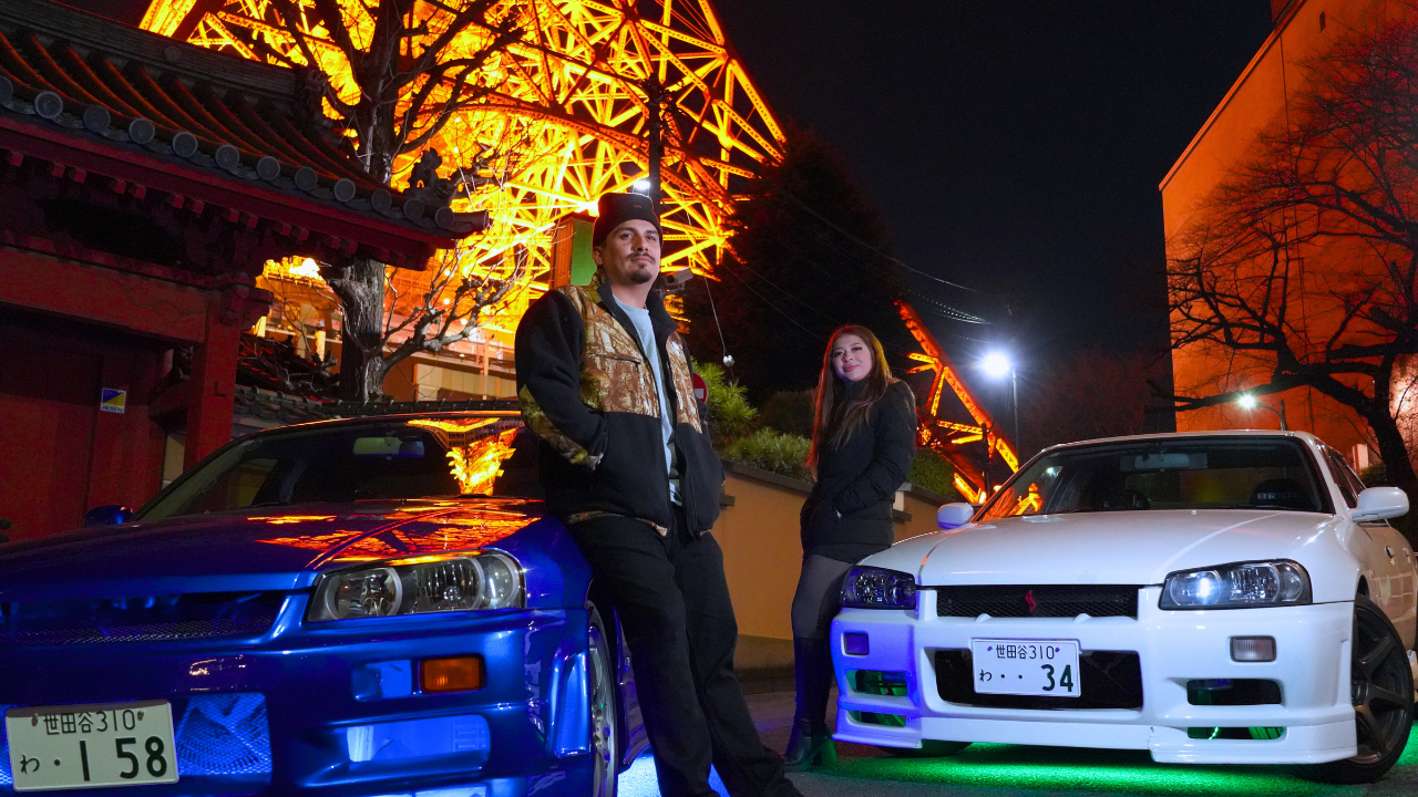
R35 GT-R options laid out clearly, from passenger rides to self-drive, so your request is understood.
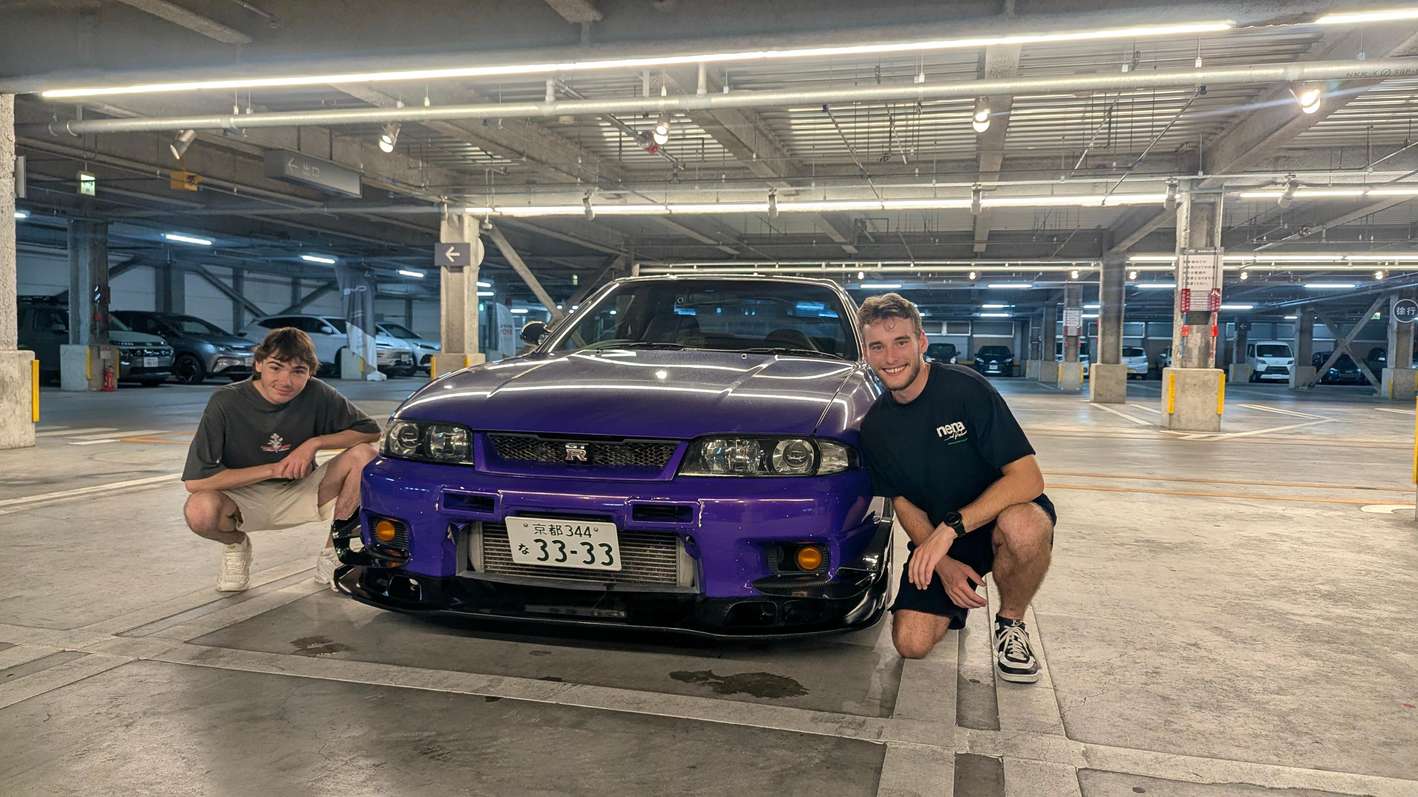
Kyoto has its own meetup scene; see what to expect there and how to fit it into your trip.
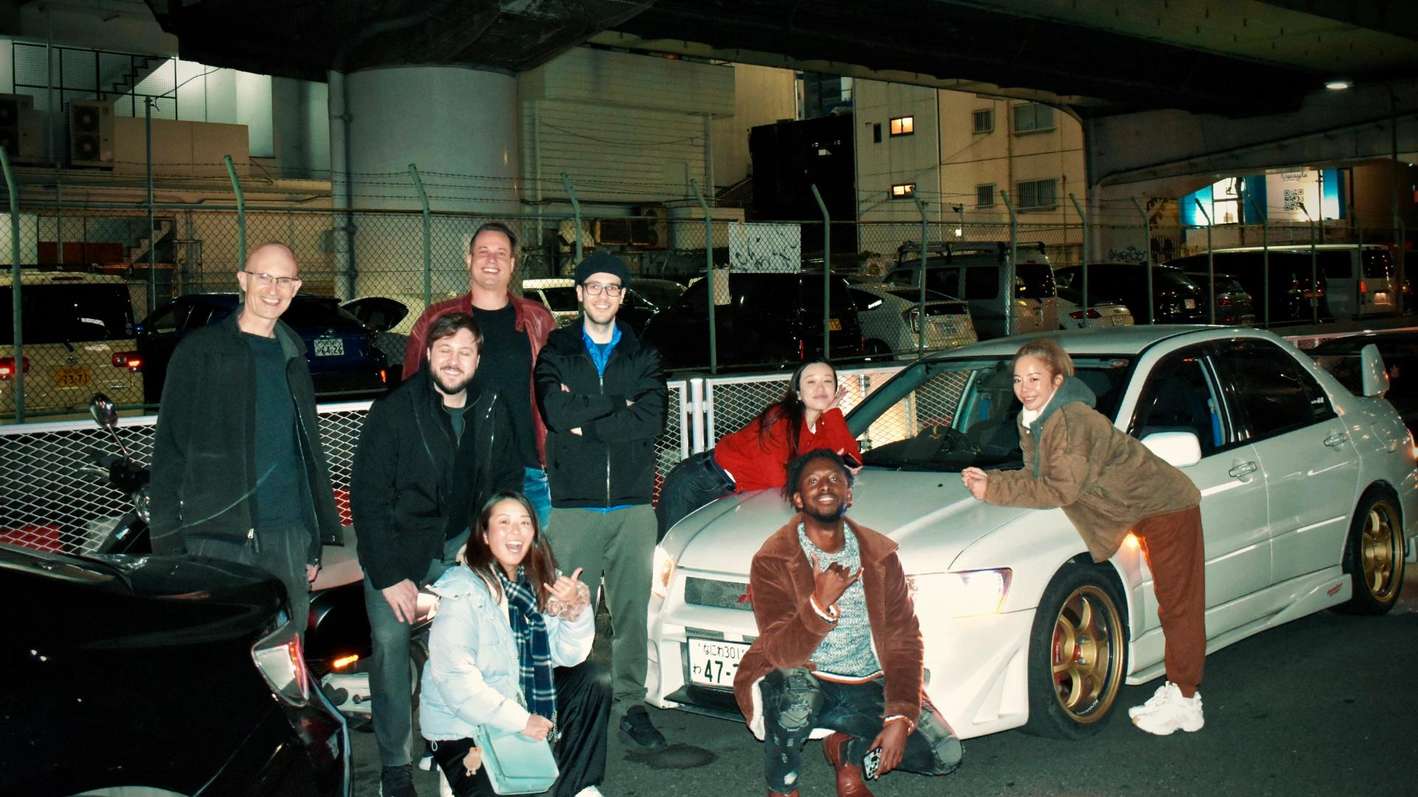
Osaka's night meets and parking areas explained, with direction on where to spend your evening.
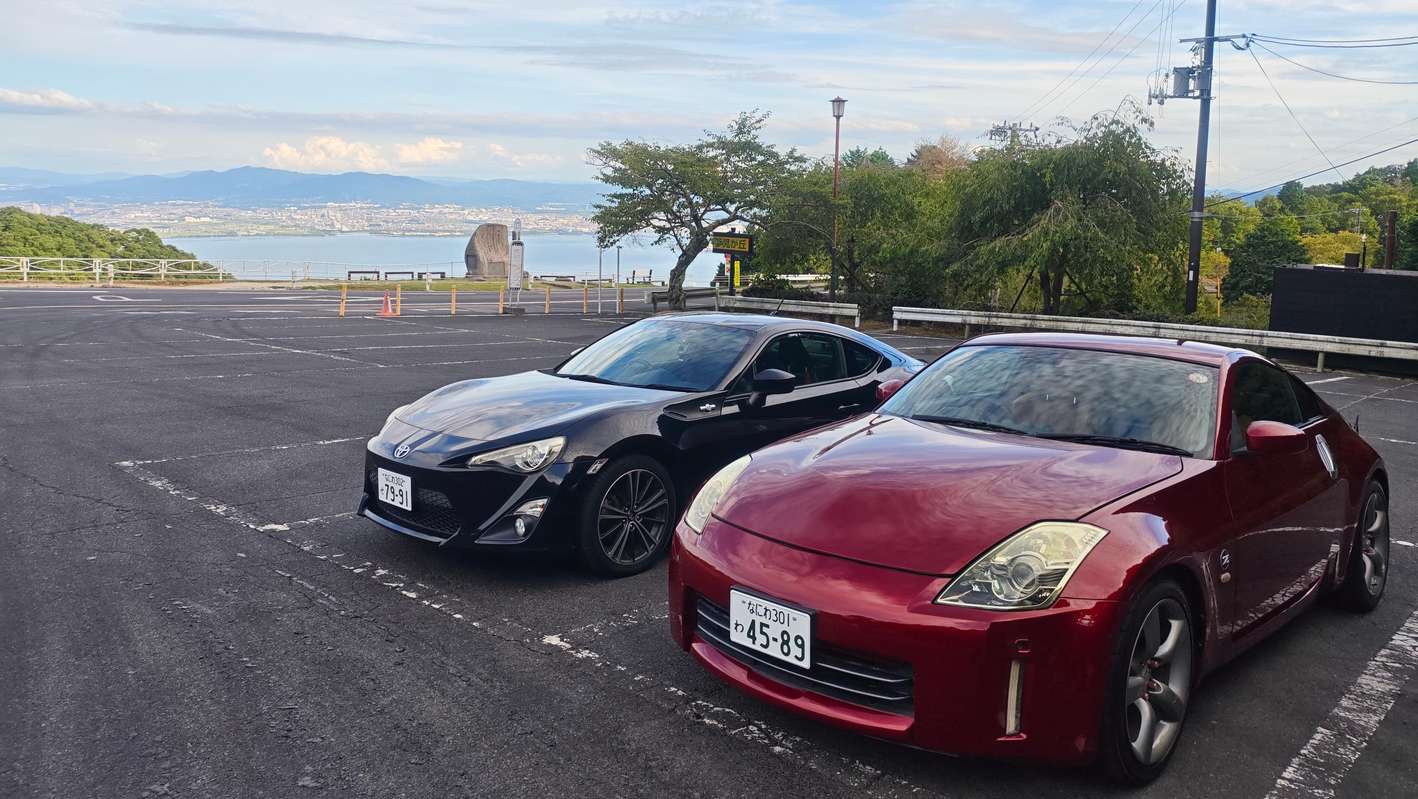
Heading to Osaka instead? Compare the JDM sports car rentals there and find a self-drive option.
Quick answers on hours, access, photos and etiquette at the Akihabara UDX underground parking garage.
The garage is open 24 hours, but the gathering has no fixed schedule.
It runs on weekend afternoons and Friday and Saturday evenings: enthusiast cars start filling the garage from around 6 to 7 pm, the densest hours are roughly 8 pm to midnight, and on Saturday nights many owners begin leaving around 9 to 10 pm.
Take the elevators down from the UDX building, which sits close to Akihabara train station. Walking in is free; only parking costs money. Wrapped cars tend to gather on the B2F level, so head there first.
Itasha, cars covered in anime and manga decals, are the signature here, and owners bring them from all over east Japan on weekends. Expect 20 to 30 itasha on Saturdays and Sundays, up to 50 on busy days, alongside RX-7s, GT-Rs, supercars, stance cars and kei cars.
No. UDX is a working public parking garage where enthusiasts, photographers and visitors gather informally. There is no organizer, entry fee or guaranteed lineup, so what you see depends on the day and the weather.
Photography is part of the appeal, but stay discreet. Stopping to photograph cars can get you moved on by security, and repeat visits have brought police and a fine. Ask owners before close-ups, and keep walkways clear.
Calm and civilized. Meets there are usually small, friendly gatherings of locals with a few overseas visitors, and people keep the noise down. Owners take pride in their builds and are happy to talk about them.
Yes. When a gathering grows too crowded or draws attention, parking management or police can disperse it early, and meets at UDX have been shut down before. Arrive within the dense evening hours, keep noise low and avoid blocking traffic so the scene stays welcome.
The lot has signs prohibiting loitering, so keep moving rather than settling in. Never touch or lean on a car without asking, keep your voice down, and take any trash with you. Security staff can ask people to leave if they gather inappropriately.
Guided night tours run from Tokyo to Daikoku PA, the most famous meet spot in Japan, reachable only by car. You ride in a modified JDM car such as a Skyline, Evo or Supra, cruise the Wangan Route and Rainbow Bridge, and spend time walking the meet. Most outings last three to four hours.
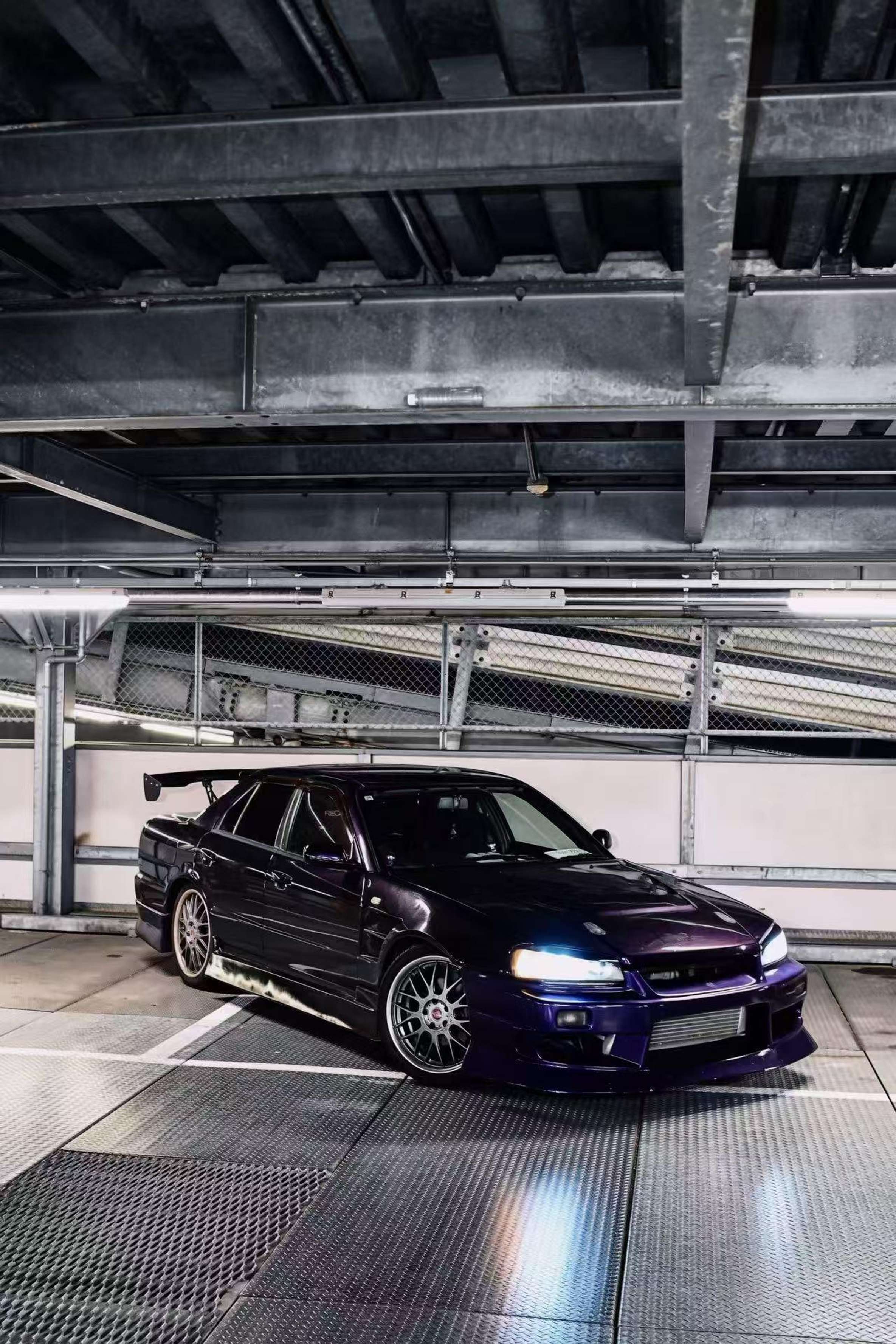
Ride a modified JDM car from Akihabara to the Daikoku PA meet, with pickup available and free cancellation up to 24 hours ahead.